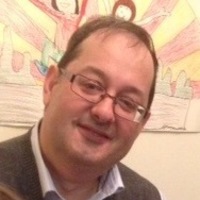
Ramsey McGlazer is an Associate Professor specializing in twentieth-century European and Latin American literature, film, and critical theory. His research engages with poetry, politics-aesthetics intersections, critical carceral studies, and feminist/queer/psychoanalytic frameworks. He holds a Ph.D. in Comparative Literature and Critical Theory from UC Berkeley (2015) and previously taught at the University of St Andrews and Brown University’s Pembroke Center. McGlazer’s work interrogates modernist critiques of progress, radical psychiatry movements, and the interplay between aesthetic practices and institutional critique. His acclaimed monograph Old Schools: Modernism, Education, and the Critique of Progress (2020) won the American Association for Italian Studies First Book Prize. Current projects include The Clinic and its Double , exploring mid-century radical psychiatry and avant-garde art. He serves as Senior Editor of Critical Times and Coeditor of Italian Culture , and has translated key works like Rita Segato’s The War Against Women . McGlazer’s writing appears in venues such as Los Angeles Review of Books and n+1 . Research interests span Surrealist provocations, Brazilian artist Lygia Clark’s propositions, and transnational feminist solidarities. His scholarship bridges literary analysis with critical engagements in carceral studies, postcolonial theory, and decolonial thought.
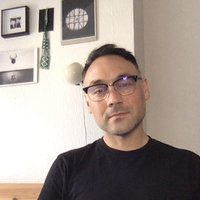
Jun Uchida is the Asian Cultures and Society Professor and Professor of History at Stanford University, holding dual appointments in the Department of History and the Center for East Asian Studies. His research focuses on modern East Asian history, Japanese colonialism, migration, and diaspora. He has served as Director of the Center for East Asian Studies (2016-2019) and currently leads the Asian Cultures and Society program. Uchida holds a Ph.D. from Harvard University and has held fellowships at institutions including the Weatherhead Center for International Studies and the Social Science Research Council. His current book project traces the transpacific diasporic activities of Ōmi merchants from Shiga Prefecture, examining their roles in Japan’s imperial expansion. Key research areas include Japanese settler colonialism, colonial Korea, and transnational migration patterns. Uchida has authored influential works like Brokers of Empire (2011), which won the John K. Fairbank Prize, and has contributed to journals such as the Journal of Japanese Studies and Past & Present . Education: Ph.D. in History, Harvard University (2001) M.A. in History, University of California, Berkeley (1996) B.A. in History, Cornell University (1995) Uchida’s teaching spans modern Japanese history, colonial studies, and transpacific themes. He advises doctoral candidates and chairs graduate admissions committees. His awards include the NEH Fellowship (2019-2020) and the Stanford Pattee Fellowship (2013-2014). He maintains active roles in professional organizations such as the American Historical Association and the Association for Asian Studies.
Joanna Pawlik is an Associate Professor and Head of the Department of Art History at the University of Sussex, within the School of Media, Arts and Humanities. Her research focuses on modern art and literature, emphasizing transnationalism, avant-gardism, and protest movements. She has been funded by prestigious grants like the Leverhulme Trust and the AHRC. Her 2021 monograph Remade in America , awarded the MSA First Book Prize, examines Surrealism's role in American activism post-1940. Current research explores fascist iconography in American art (1945–1980), funded by a Leverhulme Fellowship. Education: PhD in Art History, University of Sussex (2003–2008) MA in Art History, York University, Canada (2021–2022) BA Hons in Art History, University of East Anglia (2018–2021) Research Interests: Her work investigates surrealism's transnational legacies, anti-fascist art, feminist/queer methodologies, and postwar American visual culture. She examines how surrealist principles intersect with race, gender, class, and activism in movements like the Beat Generation and Black Arts Movement. Grants & Awards: Leverhulme Research Fellowship (2020–2022) Leverhulme Trust Grant 'Radical America: Afterlives' (2016) MSA First Book Prize (2021) Professional Activities: Co-director of the SAVAnT Doctoral School promoting interdisciplinary American visual studies. Supervises PhD projects on postwar American art, anti-fascism, and feminist/queer art history. Engages in public scholarship through interviews and exhibitions.
Luca Somigli is a Professor at the University of Toronto, holding the Emilio Goggio Chair in Italian Studies. His research focuses on European and Italian modernism, avant-garde movements, futurism, detective fiction, genre literature, and comics. Born in Florence, he earned a Laurea from the Università degli Studi di Firenze and a PhD in Comparative Literature from SUNY Stony Brook. Educational Background: PhD, State University of New York at Stony Brook Laurea, Università degli Studi di Firenze Luca's scholarship explores tensions between modernism and postmodernism, colonial narratives in Italian crime fiction, and the intersection of visual narratives with cultural themes. His recent publications include co-edited volumes on futurism and modernism, alongside articles analyzing authors like Marinetti, Pirandello, and Camilleri. Key research trends include: Colonialism in Italian historical fiction Symbolist and avant-garde artistic movements Visual storytelling in comics and film The legacy of fascist ideology in literature Scientific awards highlight his contributions: the 2019 Visiting Scholar at Université de Haute-Alsace and the 2003 American Association for Italian Studies Book Award. Luca has co-authored works with scholars like Federico Luisetti and Eleonora Conti, and his conference presentations address neomodernist novels and modernist historiography. He serves as Chair of the Department of Italian Studies (2021-present) and previously as Associate Chair – Graduate (2020-2021).
Ana Antic is a Professor in the Department of English, Germanic and Romance Studies at the University of Copenhagen, Faculty of Humanities. She is also affiliated with the Centre for Culture and the Mind, where she leads an ERC-funded project titled Decolonising madness: Transcultural psychiatry, international order and the birth of a ‘global psyche’ . Her academic journey includes a PhD in Modern European History from Columbia University (2012) and prior appointments at universities in the UK and US before joining the University of Copenhagen in August 2020. PhD in Modern European History, Columbia University (2012) Ana Antic’s research lies at the intersection of social and cultural history, focusing on the history of modern Europe, war and violence, and the 'psy' sciences—particularly psychiatry and psychoanalysis. Her work critically explores the decolonisation of psychiatric practices and concepts in the second half of the 20th century, examining how transcultural psychiatry emerged in the aftermath of WWII and during decolonisation. She investigates how Western and non-Western experts redefined the relationship between culture, race, and the individual psyche, and whether new frameworks succeeded in moving beyond colonial legacies. Her recent publications reflect a strong trend in global and transnational history, especially in the fields of transcultural psychiatry, Cold War science, and postcolonial mental health. The articles span interdisciplinary journals in history, global health, and medical humanities, often emphasizing decolonial critique and the politics of knowledge. A recurring theme is the role of experts from the Global South and Eastern Europe in shaping global psychiatric discourse. She has received multiple prestigious awards, including: Fraenkel Prize for Contemporary History (2016) British Academy Rising Star Engagement Award (2017) ERC Starting Grant (2019) Dan David Prize (March 2023) Ana Antic is actively involved in research leadership and academic collaboration. She currently heads the DNRF Centre for Culture and the Mind and leads a major ERC-funded project. She has organized international conferences and workshops, including the DECOLMAD Workshop and New Perspectives in Transcultural and Postcolonial Psychiatry . While no direct list of PhD students is provided, her leadership roles suggest active supervision and mentorship. Her work bridges history, psychiatry, and global health, contributing to a deeper understanding of the cultural and political dimensions of mental health. She is involved with the Centre for Culture and the Mind, a research environment that fosters interdisciplinary work on the intersections of culture, cognition, and history. Her project Decolonising madness brings together historians, anthropologists, and mental health professionals to re-examine the foundations of global psychiatric knowledge.
Dr Anthony Faramelli is a Lecturer in Visual Cultures at Goldsmiths, University of London, serving as Programme Leader for the BA in Fine Art and History of Art, and co-Leader of the PhD in Visual Cultures. He holds a PhD in Critical Humanities from The London Graduate School, Kingston University (2014). His research focuses on psychosocial studies, coloniality, institutional analysis, digital cultures, and psychotherapy aesthetics, with notable works including Resistance, Revolution and Fascism: Zapatismo and Assemblage Politics (2018) and The Mass Psychology of Fascism in the Age of Machines (forthcoming). He is affiliated with the Goldsmiths Centre for Migrant Futures and the Psychosocial Studies Association. Faramelli also consults for mental health and housing organizations, applying institutional psychotherapy principles in practice. Education: PhD in Critical Humanities (2014), The London Graduate School, Kingston University Research Interests: Coloniality, institutional psychotherapy, digital surveillance, micro-fascist movements, Fanon’s ethico-aesthetic paradigm, Zapatismo, and decolonial mental health practices. His work bridges psychoanalytic theory, political philosophy, and postcolonial critique. Recent Projects: Refugee Cartographies (mapping Latin American diaspora networks), and critical analyses of the Alt-Right and algorithmic fascism. He has presented at conferences such as the IV Jornadas Deleuze in Buenos Aires and the Université Le Havre-Normandie. Professional Roles: Editor of Deleuze and Guattari Studies , Executive Board member of the Psychosocial Studies Association, and consultant for Southwark Council’s Housing Solutions.
Mia Fuller is the Gladyce Arata Terrill Distinguished Professor of Italian Studies at the University of California, Berkeley. A cultural anthropologist and urban-architectural historian, she explores connections between physical space and political power, particularly in the context of Italian colonialism and fascism. Her work has earned the International Planning History Society book prize. Current projects include a revised Italian edition of Moderns Abroad and a new book Monuments and Mussolini . On sabbatical leave during Fall 2024. Research focuses on: Colonial architecture and urban planning in Italian colonies (Libya, Ethiopia, Eritrea) Memory studies and fascist-era monuments Discourse on modernism under authoritarian regimes Cultural identity formation through built environments Postcolonial mobility and architectural legacies Her recent publications (2015-2025) analyze Italian colonial cities, fascist architecture, and postcolonial urban studies, demonstrating consistent engagement with architectural history, urban planning, and political power dynamics. Key themes include colonial memory, modernist design's politicization, and spatial manifestations of authoritarianism. Scientific awards: International Planning History Society book prize for Moderns Abroad: Architecture, Cities, and Italian Imperialism Contact: miafull@berkeley.edu
Galadriel Ravelli is a Lecturer at the School of Politics, Languages and International Studies, University of Bath. Her research focuses on colonial histories, neo-fascist movements, and migration governance, particularly in post-colonial contexts. She examines the memory of colonial deportations from Libya to Italy and their legacy in Europe, as well as transnational neo-fascist networks. Her work contributes to understanding the intersections of identity, power, and historical memory in modern political dynamics. Recent research includes analyzing colonial displacement narratives, post-colonial Italy’s migration policies, and the revival of neo-fascist ideologies through transnational media. Her publications explore themes such as Italianness identity, refugee crisis framing, and the role of transnational magazines in sustaining extremist networks. Ravelli has participated in media initiatives to raise awareness about colonial heritage, including an online exhibition on Libyan deportations to Italy and educational projects in UK schools addressing colonial legacies. Her contributions align with global efforts to address historical injustices and promote inclusive narratives.
Elena Bacchin is a Professor of Modern History at the University of Vienna’s Faculty of Historical and Cultural Studies, Department of History. She previously held academic positions as Associate Professor (2023-2024) and Assistant Professor (2021-2023) at Ca’ Foscari University of Venice, a Marie Sklodowska-Curie Global Fellow (2019-2022) at Columbia University and Ca’ Foscari, and a Lecturer at Queen Mary University of London (2017-2018). PhD in History, University of Padua (2007-2010) Doctoral Student, Scuola Normale Superiore, Pisa (2011-2015) Her research focuses on the transnational history of the 19th and 20th centuries, particularly political actors such as exiles, foreign fighters, and deportees. She examines the circulation of people, ideas, and practices across borders and their influence on political mobilization, repression, and the development of international solidarity networks. Her work also explores the history of nationalism, cultural history, and the relationship between political and religious identities. She contributes to UN Sustainable Development Goals 10 (Reduced Inequalities) and 16 (Peace, Justice, and Strong Institutions). Recent publications analyze political deportation during the Risorgimento, memory of exiles in Fascist Italy, and transnational humanitarian movements. These studies emphasize forced migration, penal colonies, narrative construction, and the intersection of international law with state security. Marie Sklodowska-Curie Fellowship Fellow at Remarque Institute, New York University Fellow at University of St Andrews Principal Investigator of the PRISON project (Italian Ministry of Research) As Principal Investigator of the PRISON project, she investigates political repression and international solidarity networks. Her academic collaborations include visiting scholar appointments at the University of California San Diego, University of Oxford, and New York University.
Julia Hell is a Professor in the Department of Germanic Languages and Literatures at the University of Michigan. She holds affiliations with the Center for European Studies and the Weiser Center for Europe and Eurasia. Her research focuses on German culture, particularly post-fascist and post-communist literature and visual arts, imperial studies, and the aesthetics of ruins. She has authored influential works such as Post-Fascist Fantasies (1997) and The Conquest of Ruins (2019), and co-edited Ruins of Modernity (2010). Hell has organized international conferences on topics like 'Ruins of Modernity' and has been a visiting scholar at the Institute for Advanced Study (Princeton). Education : Ph.D., German Literature, University of Wisconsin-Madison (1989) Her research interests span ruin studies, imperium studies, and political theory, with a focus on the intersections of art, politics, and history. Recent projects include analyses of Las Vegas as a 'ruinopolis' and the ethics of scenes of execution in Peter Weiss’s works. Hell has received awards including the MLA’s Scaglione Prize and ACLS Fellowship. Her articles explore themes like imperial decline, post-Communist subjectivity, and the Holocaust’s cultural legacy. She teaches courses on German literature, philosophy, and colonialism.
Prof. Dr. Kenny R. Cupers is Professor of Architectural History and Urban Studies at the University of Basel , affiliated with the Department of Social Sciences in the Faculty of Humanities and Social Sciences . He co-founded and leads the Urban Studies division, focusing on the intersections of architecture, urbanism, colonialism, and planetary design in African and European contexts. PhD, Harvard University (2010) M.Sc. and B.Sc. in Architecture, Catholic University of Leuven Studies in Visual Culture and Urban Theory, Goldsmiths College, London His research centers on architectural modernism, housing, infrastructure, and decolonization . Key themes include the planetary politics of design, coloniality of infrastructure, and the role of architecture in state transformation. He is currently working on two book projects in Kenya: one on unmaking the plantation system through arts and architecture, and another on post-independence Nairobi’s urban history. Recent publications include The Earth that Modernism Built: Empire and the Rise of Planetary Design (2024) and The Social Project: Housing Postwar France (2014). He leads the Sinergia project Governing through Design (2020–2025) and previously directed the SNF-funded How Infrastructure Shaped Territory in Africa (2018–2022). His work appears in journals such as e-flux Architecture , Antipode , and Architectural Theory Review . Scientific Awards: No specific awards listed in the provided text. As an educator, Cupers promotes engaged pedagogy and collaborative research, co-editing What is Critical Urbanism: Urban Research as Pedagogy (2022). His public research projects include Swiss Corporate Coloniality and Lamu Futures . He has advised multiple PhD and Master’s students, though specific names are not listed. He is part of a vibrant research team including Dr. Ernest Sewordor, Dr. Laura Nkula-Wenz, and Dr. Prita Meier. Laboratories and Research Teams: Urban Studies, University of Basel Critical Urbanisms Program Sinergia Project: Governing through Design How Infrastructure Shaped Territory in Africa (completed) Infrastructure Space and the Future of Migration Management (completed)
Rose-Anne Gush is an Assistant Professor at the IZK Institute for Contemporary Art, TU Graz. She is an art historian, theorist, and educator with a focus on political aesthetics, transnational surrealism, and critical engagements with capitalism and gender. Academic Affiliations: TU Graz (IZK), University of Leeds, University College London, University of Applied Arts Vienna Key Research Areas: Political Aesthetics, Global Art, Extractive Capitalism, Feminist Theory, Trauma and Memory Her research explores how art navigates the spatial and temporal dimensions of capitalist modernity, with projects like The Work of Art in the Age of the Planetary Mine (2025) and collaborations with Philipp Sattler on lithium extraction. Her articles in FKW , Third Text , and Performance Research interrogate intersections of body, violence, and historical memory. Scientific awards include the Juliane and Franz Roh Post-Doctoral Fellowship (2020) and a DFK Paris Research Grant (2021). Her teaching spans universities in Europe and the UK, including Slade School of Fine Art and University of Leeds.
Ståle Holgersen is a part-time lecturer at the School of Humanities, Education and Social Sciences at Örebro University , Sweden. His work focuses on the intersections of capitalism, class struggle, and environmental crises, particularly in urban contexts. Holgersen critiques neoliberal urban planning, housing policies, and climate governance, emphasizing the need for ecosocialist alternatives. Academic Rank: PartTime Lecturer Email: stale.holgersen@oru.se Research Interests include political ecology, far-right environmentalism, urban sustainability critiques, housing justice, and Marxist theory. His recent publications analyze Sweden's climate policy shifts, urban housing crises, and the rise of eco-fascism. The 15 most recent articles (2021–2025) span themes like far-right ecologies , urban capitalism , class-based housing struggles , and ecosocialist strategies . These works often employ dialectical and critical theoretical frameworks.
Charles L. Leavitt IV is the William Payden Associate Professor of Italian and Film at the University of Notre Dame, serving as Director of Graduate Studies in Italian. His research focuses on modern and contemporary Italian literature and film, with specialties in post-war cultural history, Fascism/Resistance studies, and minoritized cultures. He co-directs the Primo Levi Digital Commentary project and holds affiliations with the Kellogg Institute for International Studies and the Nanovic Institute for European Studies. Leavitt’s work has been honored with major awards, including the 2020 AAIS Visual Studies Book Prize for Italian Neorealism: A Cultural History and the 2022 Society for Italian Studies Essay Prize. Education: Ph.D. (Literature), M.A. (Italian Studies), and B.A. (Comparative Literature) from the University of Notre Dame and University of Oregon. His teaching spans Italian literature, cinema, and comparative studies, with a focus on post-war and contemporary contexts. He organizes the Italian Research Seminar and Modern Roads to Rome lecture series, and serves on editorial boards for Italian Studies , Italianist , and Annali d'italianistica . Key research areas include Italian Jewish culture, African American-Italian cultural intersections, and the legacy of Fascism. His current book project examines African American soldiers’ roles in Allied-Occupied Italy. Leavitt’s scholarship bridges film, literature, and history, emphasizing transnational cultural flows and Italian contributions to global culture. Award-winning educator, Leavitt has received teaching excellence awards from the University of Reading and University of Notre Dame. His work integrates interdisciplinary approaches, combining close textual analysis with broader historical and cultural frameworks to explore identity, memory, and resistance in 20th-century Italy.
Angelica Pesarini is an Assistant Professor at the University of Toronto with affiliations to the Centre for Diaspora & Transnational Studies, The Global Migration Lab, and the Department of Italian Studies. Her work critically examines Black Italian and Black Mediterranean experiences through the lenses of race, gender, and colonial/postcolonial dynamics. Research Focus: Black Italia, postcolonial Italy, racialization of immigration discourse, oral history as counter-narrative, decolonizing public spaces, and Afro-descendent cultural production Key Projects: Co-founder of The Black Mediterranean Collective, author of Future anthology contributions, co-translator of seminal Black feminist texts into Italian Current Work: Book on mixed-race Black Italian women's lived experiences during East Africa's colonial period, BLM's impact in Italy Her publications explore intersections of colonial memory, racial violence, and diasporic identity. While her scholarship engages transnational social justice movements, it maintains a specific focus on Italy's unacknowledged racism and the erasure of Black Italian narratives. She actively participates in Italian and international anti-racist initiatives. Notable Contributions: Analysis of George Floyd's global resonance vs. underreported Italian racial violence, critiques of performative antiracism