

Kris Wisniewski is a Lecturer in Forensic Science at Keele University's School of Chemical and Physical Sciences. He leads the MSc Forensic Science Programme and teaches across all degree levels, including modules like Counterfeits, Fakes and Forgeries and Environmental and Wildlife Forensics. PhD in Analytical Chemistry (2016) MA in Teaching and Learning in Higher Education (2021) His research focuses on forensic geoscience for military and wildlife crime investigations, geophysical methods in clandestine grave detection, and virtual learning environments in higher education. Collaborations include UK Police Service County Forces and the Geological Society of London's Forensic Geoscience Specialist Sub-Group. Recent publications emphasize geophysical monitoring of burial sites, non-invasive detection of military structures, and UAV applications in forensic investigations. He is also part of the Forensic Geoscience Research Group at Keele University.
جستجوی استاد راهنمای دانشگاهی
برای مسیر پژوهشیتان، استاد راهنما، استاد دانشگاه و پژوهشگر مناسب را پیدا کنید و با آنها ارتباط بگیرید.
نمایش ۱۶-۳۰ از ۴۴ استاد راهنما
اطلاعات پروفایلها از صفحات عمومی دانشگاهها گرفته شده و ممکن است بهروز نباشد.

Ivan Hernandezمشاهده پروفایل
دانشیار
Dr. Ivan Hernandez is an Associate Professor of Industrial-Organizational Psychology at Virginia Tech, directing the Computational Outreach Lab. He holds roles as a College of Science Diversity Fellow and Data Science Faculty Fellow, and affiliates with the Center for the Future of Work Places and Practices. His research focuses on expanding labor rights to nonhuman animals, promoting workplace equity, and developing computational tools for worker support. Education: Ph.D. Social/Organizational Psychology, University of Illinois at Urbana-Champaign (2015) M.S. Applied Measurement, University of Illinois at Urbana-Champaign (2014) M.A. Social Psychology, University of Illinois at Urbana-Champaign (2012) B.S. Psychology (Minor: Statistics), University of Florida (2009) Research Interests: Dr. Hernandez advocates for nonhuman animal rights within workplaces and society, emphasizing ethical labor considerations. He also explores computational methods to address workplace disparities and improve equity through data-driven strategies. Recent work includes winning the 2023 SIOP Machine Learning Competition for innovative approaches in labor rights. Awards: 2023 SIOP Machine Learning Competition Winning Team Leader Teaching and Advising: Teaches courses like PSYC 2084 (Social Psychology) and PSYC 6014 (Quantitative Methods). Currently accepting students interested in nonhuman animal rights advocacy in workplaces. Advises via email with a specific subject line. Labs & Teams: Leads the Computational Outreach Lab, focusing on applying data science to workplace challenges and advocating for ethical labor practices.

Matthew Vollmer is Professor in the Department of English at Virginia Tech , serving as Director of both the M.F.A. and Undergraduate Creative Writing Programs. His academic career focuses on genre theory, narrative experimentation, and the intersection of spirituality with contemporary storytelling. Key research areas include: Creative writing pedagogy Genre conventions and subversion Religious and secular identity formation Post-pandemic existential inquiry Family memoir and memory reconstruction His 2023 memoir All of Us Together in the End investigates grief, faith, and supernatural phenomena through personal experience. Earlier works like Permanent Exhibit (2023) and Gateway to Paradise (2015) showcase his signature style of intellectual collage and philosophical reflection. Scientific and literary contributions include: Editor of A Book of Uncommon Prayer Co-editor of Fakes anthology Pushcart Prize recognition Best American Essays selection
- Creative Writing
- Genre Theory
- Memoir
- +۳ مورد دیگر
Dr. Shahzad Mumtaz is a Lecturer at the School of Natural and Computing Sciences, University of Aberdeen, where he contributes to research and education in computational health and data science. His work bridges artificial intelligence and healthcare, focusing on real-world applications in medical data modeling and digital health tools. Research Interests: His research spans biomedical informatics, machine learning, natural language processing, electronic health records (EHR), phenotype libraries, and medical image analysis. He is particularly active in developing tools for clinical data standardization, such as the Carrot tool for OMOP CDM, and in AI-driven solutions for fraud detection, deepfake identification, and clinical decision support. His interdisciplinary work integrates computer science with public health and clinical medicine. Publication Trends: His recent publications (2023–2025) emphasize AI applications in healthcare, including deep learning for fake medical image detection, NLP for financial text analysis, and vision transformers for weather and skin cancer classification. He frequently collaborates on large-scale health data initiatives like CO-CONNECT and the UK Phenotype Library, reflecting a strong focus on scalable, interoperable digital health infrastructure. Scientific Contributions: Core contributor to the CO-CONNECT project for national health data access during the pandemic. Developer of the Carrot tool for improving OMOP data curation. Active in advancing phenotype library standards and EHR-based research. Advising and Grants: While no formal students or grants are listed in the provided text, his extensive collaborative work suggests active involvement in research teams and potential supervision of graduate researchers. He is likely engaged in funded projects related to health data science and AI, given the scale and scope of his publications. Labs and Teams: Dr. Mumtaz is affiliated with research initiatives at the University of Aberdeen focused on biomedical informatics and trusted research environments. He collaborates with multidisciplinary teams across the UK, particularly in projects involving NHS data, digital phenotyping, and AI safety in healthcare.
Richard Bottمشاهده پروفایل
مدرس پارهوقت
Richard Bott is a Part-Time Lecturer in the School of Humanities at Macquarie University, specializing in Ancient History and Archaeology. His work focuses on authentication of ancient artifacts, particularly forged papyri and sculptures, and protection of cultural heritage in conflict zones. His educational background includes: MRes in Ancient History (Distinction) from Macquarie University (2019) BA (Hons) in Classics from Victoria University of Wellington (2018) BSc in Criminology from Victoria University of Wellington (2016) BSc in Psychology from Victoria University of Wellington (2016) BA in Classics from Victoria University of Wellington (2016) Bott's research spans Ancient History, Archaeology, and Cultural Heritage with emphasis on forgery detection in antiquities. He investigates historical forgeries like the Sheikh Ibada Fakes, analyzes authentication methodologies for papyri, and examines looting impacts on Sudanese cultural heritage. His work bridges academic scholarship with practical museum studies and digital humanities applications. His 2024-2025 publications reveal strong interdisciplinary trends, combining Egyptology with digital cataloguing systems and conflict archaeology. Key themes include provenance research, public engagement with forged artifacts, and international cooperation for heritage protection. His scientific recognition includes: Macquarie Ancient History Association Prize for best MRes thesis (2018) Bott actively contributes to public discourse through platforms like The Conversation, addressing urgent heritage crises. While no formal advising roles are documented, his collaborative research with museum directors demonstrates engagement with professional practice. His work shows particular focus on post-conflict heritage management and digital solutions for authentication challenges.
- Ancient History
- Archaeology
- Papyrology
- +۳ مورد دیگر
Theofanis Tsiambokalos serves as Assistant Professor of Ancient Greek Philology in the Department of Philology at the University of Patras since 2025, following seven years of research and teaching appointments at the Universities of Trier (Germany) and Ghent (Belgium). His academic trajectory includes extensive international collaboration during doctoral studies at Zurich, Freiburg, and Trier. His educational foundation comprises: Classical Philology studies at National and Kapodistrian University of Athens Postgraduate specialization in Ancient Greek Philology at same institution PhD from National and Kapodistrian University of Athens Visiting doctoral research at Zurich, Freiburg, and Trier universities Dr. Tsiambokalos's research interrogates rhetoric-philosophy interfaces in antiquity, with signature contributions to Plutarchan studies, Pre-Socratic textual transmission, and Byzantine philological traditions. His methodological rigor bridges historical analysis with contemporary theoretical frameworks, particularly examining ethical dimensions of ancient discourse and the evolution of scholarly practices from manuscript cultures to digital humanities. The monograph Plutarch and Rhetoric (2024) exemplifies his innovative approach to reconstructing intellectual contexts. His 15 most recent publications (2020-2025) reveal thematic concentration on Plutarch's ethical-political thought, Pre-Socratic fragmentology, and ancient information ecosystems. The work demonstrates consistent engagement with textual criticism across Greek, Latin, and Byzantine sources, while edited volumes like Fake News in Ancient Greece (2025) pioneer interdisciplinary methodologies connecting classical scholarship to modern media studies. Key trends include manuscript tradition analysis, rhetorical education reconstruction, and reception history tracing from antiquity to Diels' modern editions. He teaches undergraduate courses including Ancient Greek Themes, Texts of Second Sophism, Sophocles and the city, and Material Forms and Erotic Metamorphoses: Lucretius and Ovid, alongside specialized postgraduate seminars. His office in Building K7 maintains regular consultation hours Monday 15:00-16:00 and Tuesday 12:00-14:00, with additional appointments via email.

Tasha Dobbin-Bennett is an Associate Professor of Art History and Studio Art at Oxford College, Emory University. She previously served as Papyrologist at the Beinecke Rare Book and Manuscript Library (Yale University) from 2014 onward before joining Oxford College in 2015. Her academic career combines Egyptological research with interdisciplinary approaches in forensic anthropology and museum studies. Education: BBus, Massey University, New Zealand (1999) MA, University of Auckland, New Zealand (2008) M.Phil., Yale University (2011) Ph.D., Yale University (2014) Research interests span: Ancient Egyptian conceptions of decomposition and mortuary practices Interdisciplinary study of forensic anthropology applied to religious texts Egyptomania's impact on museum collection practices (19th-20th centuries) Ethics of artifact repatriation and forgery identification Archaeological fieldwork in Egypt Influence of climate on cultural perceptions of the human body Publications and presentations reflect her expertise in: Ancient Egyptian religious texts Mummification history Archival analysis of papyri and rock inscriptions Cultural perceptions of death and preservation Her work bridges art historical analysis with scientific methodologies, particularly in studying how decomposition concepts were recorded and interpreted in antiquity. Awards : James Osborne Fellowship (2023) Phi Beta Kappa faculty award (2020, 2024) William J. Horwitz Dissertation Prize (2014) Teaching includes foundational courses on art history from prehistory to modern eras, with specialized modules on Egyptian art (10,000 BCE–30 BCE), studio paper-making, and ethics in collecting. Her courses like DISC 101Q integrate interdisciplinary themes such as repatriation debates and cultural representation in media.
- Art History
- Egyptology
- Forensic Anthropology
- +۹ مورد دیگر
Alfredo Buonopane is a Temporary Professor at the University of Verona’s Department of Roman History. His research focuses on Roman epigraphy, socio-economic history of the Roman world, and the history of epigraphy, particularly in the 17th-18th centuries. He contributes to the Corpus Inscriptionum Latinarum and oversees data integration in the Epigraphic Database Rome (EDR). His work bridges archaeology and epigraphy, analyzing inscriptions to reconstruct Roman economic practices, trade networks, and social structures. Notable projects include studying funerary steles, measuring instruments, and forgeries. He also explores Theodor Mommsen’s influence on Italian scholarship and the cultural significance of ancient artifacts in modern contexts. Publications span 2023-2025, addressing topics like artisans’ roles, epigraphic falsifications, and regional archaeology in Aquileia and Verona. His interdisciplinary approach integrates art history, museum studies, and legal-historical analysis.
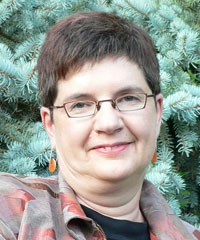
Janet Catherine Berlo is a prominent scholar in Native American art and visual culture, specializing in museum studies, materiality, and Indigenous representation. She has authored and co-authored influential texts such as Native North American Art and Not Native American Art: Fakes, Replicas and Invented Traditions . Her work critiques colonial narratives in museums and explores intersections of art, politics, and identity. She teaches graduate and undergraduate courses on topics like Folk and Outsider Art , Gender and Representation , and Museums and 'the Other' . Her research spans textile exhibitions, Indigenous aesthetics, and contemporary art's relationship with ecology and materiality. Berlo has held prestigious awards, including the Lifetime Achievement Award from the Native American Art Studies Association and a Guggenheim Fellowship. She has curated exhibitions like Past Forward: Native American Art from Gilcrease Museum and contributed to major museum projects internationally. Her grants and fellowships include an NEH Fellowship and Mellon Scholar residency. She collaborates extensively, co-authoring works with scholars like Chelsea Herr and Ruth Phillips. Her research bridges historical and contemporary Indigenous art, emphasizing ethical representation and cultural preservation.
- Native American Art
- Museum Studies
- Visual Culture
- +۴ مورد دیگر
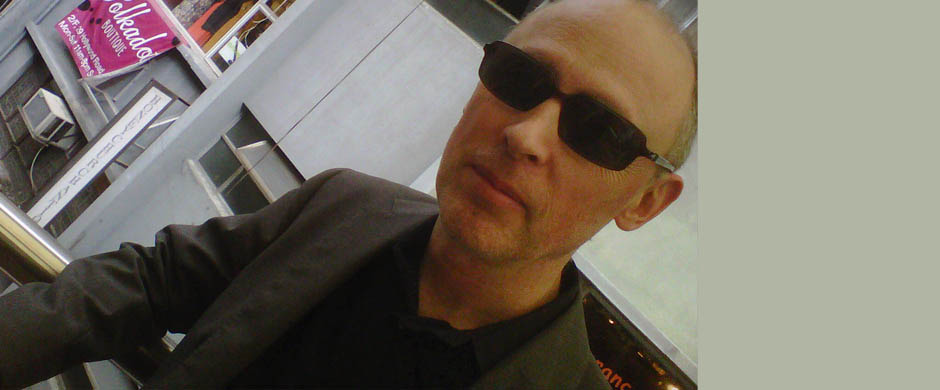
Jonathan Hay is the Ailsa Mellon Bruce Professor of Fine Arts at New York University’s Institute of Fine Arts. He holds a PhD from Yale University (1989) and a B.A. from the School of Oriental and African Studies, University of London (1978). His research focuses on Chinese art history, emphasizing interconnections between artistic practices, visual culture, and broader socio-political contexts. Key areas include late-imperial China, decorative arts, and the integration of non-Western perspectives into art historical discourse. Education: PhD, Art History, Yale University, 1989 B.A., School of Oriental and African Studies, University of London, 1978 Hay’s work challenges traditional Eurocentric methodologies, advocating for dialogue with scientific thought and non-Western traditions. His books include Shitao: Painting and Modernity in Early Qing China (2001) and Sensuous Surfaces: The Decorative Object in Early Modern China (2010, supported by a Guggenheim Fellowship). He has received awards such as the Guggenheim Fellowship and a prizewinning contribution to The Artful Recluse catalog. Research Interests: Complexity in art history, cross-cultural exchanges, macrohistorical frameworks, Ming-Qing trauma studies, and the role of ornament in decorative arts. Hay leads initiatives like the IFA Portals digital project, including the Historiography and Chinese Pictorial Art portals. He also co-founded the China Project Workshop, fostering dynamic discussions on Chinese art. Awards: Guggenheim Fellowship (for Sensuous Surfaces ) Prize for The Artful Recluse: Painting, Poetry, and Politics in 17th Century China catalog His current projects include a monograph on 10th-century artist Guo Zhongshu and a theoretical work ARTWORK: Topologies of Artistic Form .
- Chinese Art History
- Decorative Arts
- Art Theory
- +۳ مورد دیگر

Paul Bertrandمشاهده پروفایل
پژوهشگر ارشد
Paul Bertrand is a Research Fellow at the Catholic University of Louvain (UCLouvain) in Louvain-la-Neuve, Belgium, holding the Shelby Cullom Davis Center Fellowship for Spring 2025. His research centers on Medieval History, European History, and Historical Forgeries, with a focus on critical analysis of medieval political structures and documentary authenticity. His work examines how fabricated regimes and documents functioned within medieval societal frameworks. His 2025 publication "Forging the European Middle Ages: An Essay on the Regimes of Fake" represents current scholarship in History and Medieval Studies, exploring subfields including Medieval Political Systems, Historical Forgeries, and Document Authentication through rigorous source criticism methodologies.

Steven Wagnerمشاهده پروفایل
مدرس ارشد
Dr. Steven Wagner is a Senior Lecturer in International Security at Brunel University's Department of Politics, History and the Brunel Law School. His research explores the intersection of intelligence history, British imperial policy, and Middle Eastern conflicts during the Palestine Mandate era. Current affiliation: Brunel University (College of Business, Arts and Social Sciences) Prior roles: SSHRC Postdoctoral Fellow at McGill University Education: DPhil (Oxford), MA & BA (Calgary) Research Focus: Wagner specializes in intelligence history, examining how British intelligence shaped policy in the Middle East, particularly regarding the Arab-Zionist conflict, espionage dynamics, and counterinsurgency failures during 1917-1947. His work combines multilingual archival analysis with historical methodology. Publication Trends: His scholarship spans intelligence failures in contemporary conflicts (2024) to historical espionage frameworks (2023), with consistent emphasis on British statecraft, propaganda analysis, and geopolitical strategy. Articles often connect wartime intelligence practices to broader policy implications.

Cheryl Scully is a Teaching Fellow in Forensic Science at Keele University, serving as Deputy Programme Director for Study Abroad/Work Placement Year and Engagement Tutor within the Lennard-Jones School of Chemical and Physical Sciences. She earned an Honors Bachelor of Science in Forensic Science with molecular biology/biochemistry specialization from the University of Windsor (2015) and a Master of Science in Forensic Science with merit from the University of Strathclyde (2016), where her thesis utilized micro-CT for bone tool mark analysis at the Centre of Anatomy and Human Identification. In 2021, she completed a Postgraduate Diploma in Higher Education Practice. Her primary research investigates food fraud detection through metabolic profiling, combining expertise in forensic science, biochemistry, and molecular biology. Her teaching portfolio spans Forensic Identification and Investigation (including digital forensics), Criminalistic Methods, Counterfeits/Fakes/Forgeries analysis, and Advanced Forensic Topics, reflecting applied research integration into pedagogy. She received recognition as a Fellow of the Higher Education Academy (FHEA) in 2021 for teaching excellence.
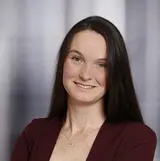
Maria Weidinger serves as a Researcher at the Chair of Medieval History within the Faculty of History and Social Sciences at the Catholic University of Eichstätt-Ingolstadt. As a Scientific Associate, she actively contributes to academic research and teaching while maintaining office hours in the University Allee/Central Library Building (Room UA-120). Her research centers on Medieval History with specialized focus on religious communication systems, as evidenced by her dissertation project "Heavenly Letters in the Middle Ages." She critically examines social structures through topics like medieval travel (using portulan charts), death rituals, heresy, and monastic life, while incorporating source criticism methodologies and regional studies of medieval Italy. Her work frequently addresses modern parallels to historical misinformation through analyses of "fake news" and forgeries in medieval contexts. Teaching remains integral to her role, with innovative courses designed to dismantle popular misconceptions about the Middle Ages. Current offerings explore medieval geography and navigation, while recent seminars have investigated crisis narratives in the "Dark Ages," bishop-led local history editing, and cultural landscapes of medieval Italy. Her pedagogical approach emphasizes hands-on engagement with primary sources and interdisciplinary perspectives across all instructional levels.
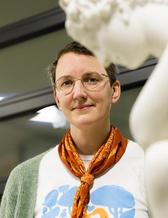
Matilda Amundsen Bergström is a Researcher at the Department of Literature, History of Ideas, and Religion at the University of Gothenburg. Her work focuses on early modern women's intellectual history, particularly Scandinavian women philosophers and poets from the 17th and 18th centuries. Dr. Bergström completed her doctoral thesis titled "As a Sappho. Three Early Modern Authors and their Strategies of Publication, Self-Presentation and Rhetoric" at the University of Gothenburg in 2019. Her research examines how early modern women writers like Louise Labé, Katherine Philips, and Hedvig Charlotta Nordenflycht presented themselves as heirs to Sappho's poetic tradition. Her primary research interests include early modern women poets and philosophers, with special focus on ethics, rhetoric, and issues of authority. Dr. Bergström is currently leading the project "A Happy Life. Women's Moral Philosophy in 17th- and 18th-Century Scandinavia," funded by Riksbankens jubileumsfond, which explores how Scandinavian intellectuals like Birgitte Thott, Hedvig Charlotta Nordenflycht, Agneta Horn, and others philosophized about happiness and the meaning of a good life. She is also part of the Swedish Research Council-funded project "Making Enlightenment Happen. Gothenburg Women in 18th-Century Swedish Public Life," which investigates how female authors, printers, editors, journalists, actors, translators, and readers contributed to the Enlightenment in late 18th-century Gothenburg. Dr. Bergström's extensive publication record demonstrates a consistent focus on early modern women's intellectual contributions, particularly examining Hedvig Charlotta Nordenflycht's philosophical thought. Her scholarship spans from 2014 to 2024 and shows a clear trajectory of deepening engagement with women's philosophical and literary contributions during the Enlightenment era. Her work frequently addresses themes of gender, authority, self-presentation, and the intersection of literature and philosophy in the early modern period, with particular attention to rhetorical strategies employed by women writers to establish credibility in intellectual spheres. Dr. Bergström has received research funding from prestigious institutions including Riksbankens jubileumsfond and the Swedish Research Council for her projects on women's intellectual history. Her collaborative work, such as the edited volume "Faking it! The Performance of Forgery in Late Medieval and Early Modern Culture" with Philip Lavender, demonstrates her engagement with broader scholarly conversations beyond her primary focus on Scandinavian women writers. As an active researcher in comparative literature, Dr. Bergström continues to develop her monograph on Hedvig Charlotta Nordenflycht's philosophical thought while engaging with contemporary scholarship on gender, literature, and philosophy. Her work bridges historical research with ongoing discussions about women's intellectual contributions and the recovery of marginalized voices in philosophical and literary history, making significant contributions to the field of early modern women's studies.