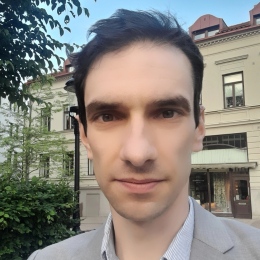
Jaap Zevenbergen is a Full Professor at the University of Twente's Faculty of ITC, specializing in Land Administration and Geo-Information Management. He holds a PhD from Delft University of Technology (2002) and degrees in Geodetic Engineering (Delft) and Law (Leiden University). His research focuses on international land governance, digital transformation of property institutions, and pro-poor land tools, with projects in Africa, Southeast Asia, and Eastern Europe. He has contributed to UN Habitat initiatives and World Bank programs, emphasizing sustainable development goals (SDGs 1, 11, 13). Key roles: Theme leader at TU Delft's OTB Institute (2003–2010), Portfolio Manager for MSc Land Administration at ITC. Teaching: MSc programs in Land Administration, GIMA, and International Land Management. Research interests include: Land Administration Domain Model (LADM) implementation, legal-technical integration in geo-ICT systems, and post-disaster/post-conflict land governance. He has authored/co-authored over 340 publications and edited books like Real Property Transactions . Notable achievement: Co-winner of the 2018 FIG-Survey Review Prize for land policy analysis. Current projects explore 3D cadastral systems, UAV applications in land registration, and ethical geospatial practices. He advises on land reforms in Greece and Egypt and collaborates with institutions like UN Habitat and the World Bank.
Adrian Perrig is a Full Professor at the Department of Computer Science at ETH Zürich. He leads research in network security, distributed systems, and internet architecture, focusing on projects like the SCION secure internet architecture and its commercialization through Anapaya Systems. His work emphasizes secure communication, denial-of-service defense, and public key infrastructure (PKI) innovations. Affiliations: ETH Zürich, Institute for Information Security Key Contributions: SCION, SAGE, RHINE, F-PKI Research interests include path-aware networks, cryptographic protocols, and resilient systems. His publications span over 295 results since 2005, with notable awards including the Best Paper Award (CoNEXT 2021) and ANRP 2023. He has contributed to foundational work in secure routing, DNS security, and GPU attestation. Scientific awards include Best Paper Awards at CoNEXT and ACM SIGCOMM, as well as recognition for applied networking research. His work bridges academia and industry, addressing challenges in global network security and scalability.
Nigel Bosch is an Assistant Professor in the School of Information Sciences (iSchool) at the University of Illinois Urbana-Champaign, with a joint appointment in the Department of Educational Psychology. He is also a faculty affiliate at the National Center for Supercomputing Applications (NCSA) and Illinois Informatics. His primary research focuses on machine learning and human-computer interaction applications in education, with particular emphasis on affective computing, metacognition, and online learning environments. Bosch holds a PhD in Computer Science from the University of Notre Dame, followed by a postdoctoral research position at the National Center for Supercomputing Applications. His research explores machine learning applications in education, including automatic emotion measurement in programming education, metacognition analysis through natural language processing, and ethical implications of AI in learning. He also investigates wearable technologies for health monitoring and algorithmic bias mitigation in educational data. Bosch’s work is supported by grants from the National Science Foundation (NSF), the Institute of Education Sciences (IES), and the University of Illinois. He leads the (Human + Machine) Learning lab, which develops innovative technologies for educational analytics, AI ethics, and human-centered computing.
Reza Etemad is a Professor at EHL Hospitality Business School (part of HES-SO), specializing in marketing and hospitality technology. His research focuses on human-robot interaction, healthcare technologies in elderly care, and the application of technology in service delivery. He has led multiple projects funded by HES-SO and private partners, including studies on service robots' ethical implications, connected health technologies for seniors, and virtual agents in B2B/B2C contexts. Notable achievements include extending the Technology Acceptance Model (TAM) to healthcare and robotic service contexts, analyzing cultural impacts on online shopping risks, and investigating customer perceptions of revenue management practices in restaurants. He has published widely in journals such as International Journal of Hospitality Management and International Journal of Social Robotics , with a focus on bridging technological advancements and human-centric service solutions. Education: BSc in Hospitality from EHL. Key Projects (2010-2021): Led projects totaling over 298,600 CHF, including studies on robot ethics, smart home healthcare, and virtual agent impacts on B2B platforms. Awards: None explicitly listed, though his impactful research has driven industry-relevant insights. Labs/Teams: Collaborates with researchers like Justine Gentinetta and Valentina Clergue on robotics and healthcare tech. Partnerships include Touchmind for B2B digital solutions. Future Work: Expanding studies on AI ethics in service robots, sustainable healthcare technologies, and post-pandemic digital education strategies. His work emphasizes balancing technological innovation with ethical considerations, particularly in preserving human interaction's role in healthcare and hospitality sectors.
Professor Matt Garratt is a faculty member at the University of New South Wales (UNSW Canberra), School of Engineering and IT, serving as AI theme lead for the Defence Trailblazer Universities initiative with over $200 million in funding. His primary research focuses on sensing, guidance, and control for autonomous systems within robotics and unmanned aerial vehicles. Garratt's research spans robotics, swarm intelligence, and autonomous systems with emphasis on bio-inspired navigation techniques and adaptive flight control. His work addresses critical challenges including terrain following using vision systems, landing UAVs on moving platforms, and developing self-organizing swarms. He integrates artificial intelligence, computer vision, and machine learning to advance unmanned systems capabilities in complex environments. Analysis of his recent publications reveals strong trends in bio-inspired UAV navigation (particularly honeybee behavior modeling) and swarm robotics applications. His work increasingly incorporates deep learning for perception tasks while addressing real-world challenges like gas plume detection and adversarial robustness in 3D vision systems. The research demonstrates consistent progression toward practical implementation of autonomous systems in dynamic environments. Professor Garratt has secured over $7.7 million in external research funding as Chief Investigator on 33 grants. He actively mentors graduate students with scholarships available for Masters and PhD research in robotics and AI, focusing on: UAV path planning and adaptive control systems Swarm robotics collective motion optimization Bio-inspired autonomous navigation techniques Computer vision for robotic perception He co-founded the UNSW Canberra AIR (AI and Robotics) Group (AIR Lab), which drives research in trusted autonomy, swarm intelligence, and AI integration for defense applications. The lab develops practical solutions for autonomous systems operating in complex, real-world environments while maintaining ethical AI frameworks.
Dr. Abdolmajid Erfani is an Assistant Professor in the Department of Civil, Environmental, and Geospatial Engineering at Michigan Technological University. He holds a PhD in Civil Engineering from the University of Maryland, College Park (2023), an MSc in Construction Engineering and Management from the University of Tehran (2019), and a BSc in Civil Engineering from the same university (2017). His research focuses on construction economics, smart construction technologies, data-driven infrastructure management, workforce development, and AI applications in project delivery. Dr. Erfani leads studies on workforce equity in transportation and construction industries, leveraging big data and natural language processing. He has published over 30 peer-reviewed papers and received prestigious ASCE awards including the 2024 Arthur M. Wellington Prize and Thomas Fitch Rowland Prize. He serves on the editorial board of the ASCE Journal of Management in Engineering. His recent grants include a National Cooperative Highway Research Program project (PI, 2024–2027) on price adjustment clauses for construction risk sharing and a Minnesota DOT-funded initiative (PI, 2025–2027) on leveraging transportation investments for economic equity. He also co-leads a Federal Railway Administration project (Co-PI, 2025–2028) aimed at promoting railroading careers. Research interests span equity analysis, AI modeling, and predictive analytics for infrastructure resilience. He integrates LinkedIn data and machine learning to study gender disparities in career progression, achieving groundbreaking insights in leadership dynamics within construction sectors.
Christopher Brooks is an Assistant Professor at the University of Michigan's School of Information, specializing in educational technologies and data science education. He directs the Educational Technology Collective (etc), a multidisciplinary research group focused on learning analytics, educational data mining, and collaborative learning systems. His work bridges computer science and education, with a focus on improving teaching methods through AI-driven tools and platforms. Research Interests: Development and impact assessment of educational technologies Predictive modeling for student success Data science pedagogy Privacy in smart home technologies Publications reflect a focus on learning analytics, MOOC design, and educational AI, with notable contributions to conferences like CHI, LAK, and AIED. Awards include multiple best paper recognitions. Teaching includes applied data science courses at UMich and Coursera. He leads the Master of Applied Data Science (MADS) program and collaborates with institutions like Microsoft to build AI-driven educational tools.
Min Lee is a Full-time Assistant Professor of Computer Science at Singapore Management University's School of Computing and Information Systems (SCIS). Holding a PhD from Carnegie Mellon University (2021), Lee specializes in Artificial Intelligence with a focus on Human-AI Collaborative Systems and their applications in healthcare. Their research bridges technical innovation with human-centric design, emphasizing trustworthiness, explainability, and accessibility in AI systems. Research interests include decision-making optimization, human-machine collaboration, and AI-driven solutions for healthcare challenges such as stroke rehabilitation, elderly care monitoring, and clinical decision support. Lee has pioneered low-cost AI/robotic solutions for post-stroke rehabilitation exercises, integrating socially assistive robotics with real-time feedback mechanisms. Recent work highlights AI's role in enabling trustworthy clinical decision-making through explainable AI (XAI) techniques like counterfactual explanations and gradient-based methods. Their systems address ethical concerns in predictive healthcare and advocate for stakeholder-inclusive design processes. Awards and grants: No specific awards mentioned in the profile, though research has been supported through collaborative projects with clinical partners and iterative user evaluations involving therapists and patients. Advising focuses on multidisciplinary projects spanning AI, healthcare, and human-computer interaction. Current advisees include BHOSALE Rimmon Saloman, TRAN Truong Thuy, and YANG Xinlin. Lee collaborates closely with clinical stakeholders to translate technical advancements into practical healthcare solutions, emphasizing iterative design and real-world applicability. Labs/teams: Active in SCIS's AI and Data Science initiatives, leading projects on intelligent decision support systems, socially assistive robotics for rehabilitation, and human-centered AI ethics frameworks.
Fenglong Ma is an Associate Professor at Pennsylvania State University, affiliated with the Institute for Computational and Data Sciences and the Center for Socially Responsible Artificial Intelligence. His research focuses on data mining, healthcare informatics, machine learning, natural language processing, and multimodal learning. He holds a Ph.D. from the University at Buffalo (2019) and degrees from Dalian University of Technology. His work addresses challenges in federated learning, medical AI, adversarial robustness, and multimodal systems. Key contributions include innovations in quantization for large language models, federated knowledge injection, and medical vision-language benchmarking. Recent publications explore topics like collaborative fairness in federated learning, robust medical vision-language models, and adversarial attack mitigation. His research bridges theory and practical applications in healthcare, cybersecurity, and personalized recommendation systems. He leads the PSU Data Science Lab and collaborates on projects involving AI ethics, multimodal data integration, and scalable medical foundation models.
Alvaro Fernandez Quilez is an Associate Professor in Artificial Intelligence at the Department of Electrical Engineering and Computer Science, Faculty of Science and Technology, University of Stavanger. He leads the Stavanger AI Laboratory (SAIL), fostering interdisciplinary AI research with a focus on healthcare and education applications. Research Interests: His work centers on responsible AI, emphasizing ethics, fairness, transparency, and uncertainty in AI systems. He applies deep learning and machine learning techniques to medical imaging, particularly in prostate cancer and neurodegenerative diseases like Alzheimer’s and Parkinson’s. His research integrates algorithmic innovation with clinical relevance, addressing challenges in data scarcity, bias, and model interpretability. The recent publications highlight a strong trend in developing and evaluating AI models for diagnostic support in radiology and neurology. Key themes include uncertainty quantification, self-supervised learning, synthetic data generation via GANs, and fairness analysis across gender and centers. The work spans from foundational AI methods to their clinical translation in multi-center studies. Teaching and Academic Leadership: He coordinates the course DAT105 - AI for everyone and has contributed as a guest lecturer in bioinformatics, technological foundations, and PhD ethics, particularly on AI and ethics. He is also enrolled in a PhD supervisory qualification program, underscoring his growing role in graduate education. Advising and Grants: While specific students and grants are not listed in the text, his leadership of SAIL and active publication record suggest involvement in research supervision and project funding. His collaborations span multiple institutions and disciplines, indicating strong team-based research efforts. Laboratories and Teams: He leads the Stavanger AI Laboratory (SAIL), which serves as the central hub for AI research at the University of Stavanger, promoting collaboration across departments and with external partners in healthcare and technology.
Navid Rekab-saz is an Assistant Professor at the Institute of Computational Perception, Johannes Kepler University Linz (JKU), Austria. He is actively involved in research and teaching, offering courses such as Natural Language Processing and Natural Language Processing with Deep Learning . He maintains regular office hours and is accessible via email and a dedicated booking system for meetings. His research focuses on natural language processing , information retrieval , fairness and bias in AI , and recommender systems , with applications in humanitarian action and ethical AI. He employs deep learning and machine learning techniques to address challenges in bias mitigation, explainability, and domain adaptation. His work often bridges technical innovation with societal impact, especially in developing inclusive and fair AI systems. The recent publications of Navid Rekab-saz reflect a strong trend in debiasing strategies , parameter-efficient learning , and evaluation of societal biases in search and recommendation systems. His research spans from foundational work on word embeddings and retrieval models to applied studies in humanitarian NLP and gender bias in user queries. He frequently collaborates with a broad network of researchers and contributes to the development of datasets and benchmarks. Scientific Awards: Best Student Paper Award at ISMIR 2022 for 'Traces of Globalization in Online Music Consumption Patterns and Results of Recommendation Algorithms' Advising and Grants: Navid Rekab-saz has advised and collaborated with numerous students and researchers, many of whom are co-authors on his publications. While specific grant details are not listed in the provided text, his extensive publication record in top-tier venues suggests active involvement in funded research projects, likely supported by national or European funding bodies. He is also engaged in interdisciplinary research, particularly at the intersection of technical AI and legal or social implications. Labs and Teams: He is a core member of the Institute of Computational Perception at JKU, where he contributes to research projects in computational linguistics and AI. He collaborates closely with the team led by Prof. Markus Schedl and participates in initiatives related to music information retrieval, fairness in AI, and humanitarian applications of NLP.
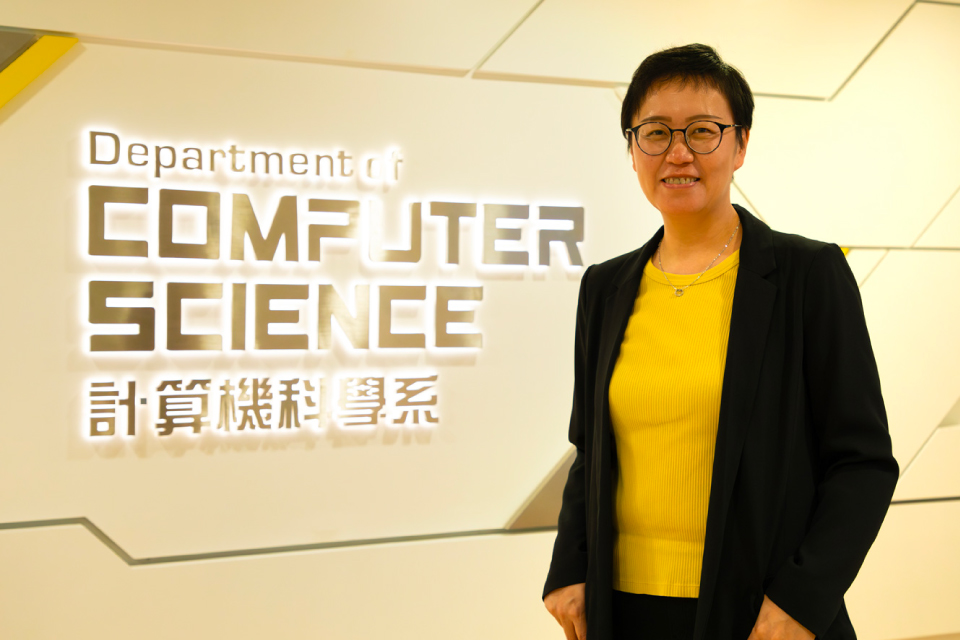
Professor Li Chen is a full Professor and Associate Head (Research) in the Department of Computer Science at Hong Kong Baptist University (HKBU), with an affiliate appointment at the Academy of Wellness and Human Development. She leads the Positive Intelligence Lab , focusing on intelligent technologies for human well-being. Her research spans conversational AI, explainable AI, recommender systems, and human-computer interaction. Education: PhD in Computer Science, Swiss Federal Institute of Technology in Lausanne (EPFL), Switzerland (Nominee for Best PhD Thesis Award) Master in Computer Software and Theory, Peking University, China Bachelor in Computer Science, Peking University, China Her research interests revolve around personalized conversational and explainable AI, with applications in entertainment, education, e-commerce, and mental well-being. She has published over 150 papers in top venues including ACM TOIS, IJHCS, CHI, SIGIR, AAAI, RecSys, and UMAP . Her work has been recognized with awards such as the RecSys Best Student Paper Award (2024), CHI Honourable Mention (2022), and multiple best paper awards at UMAP and UMUAI. The most recent publications reflect a strong trend toward fair, explainable, and user-centric recommender systems , with increasing integration of large language models , mental health applications , and conversational agents . Her research emphasizes user feedback, negative sampling techniques, and evaluation frameworks grounded in real user behavior. Scientific Awards & Recognition: President’s Award for Outstanding Performance in Teaching (Individual), HKBU (2024/25) President’s Award for Outstanding Performance in Research Supervision (2022/23) World’s Top 2% Most-Cited Scientists, Stanford University (2021–2024) ACM Senior Member (2015) RecSys’24 Best Student Paper Award CHI’22 Honourable Mention Award UMAP’20 Best Student Paper Award UMUAI 2018 Best Paper Award THE Awards Asia 2021 Excellence and Innovation in the Arts (Co-I) Professor Chen is actively involved in mentoring PhD and Master’s students such as Wanling Cai and Yuhan Zhao, who have co-authored award-winning papers. She has secured research funding through grants like the HKBU IRCMS Project. Her editorial leadership includes serving as Co-Editor-in-Chief of ACM Transactions on Recommender Systems (TORS) , Associate Editor for ACM TiiS , and Editorial Board Member for UMUAI . She has chaired major conferences including ACM RecSys’23 (General Co-Chair), RecSys’20 (Program Co-Chair), and UMAP’18 (Program Co-Chair). She leads the Positive Intelligence Lab , which conducts interdisciplinary research on AI for well-being. The lab has developed datasets like the Intent Annotation of Recommendation Dialogue (IARD) and focuses on user-centric AI design, mental health chatbots, and personalized recommendation interfaces.
Olga Russakovsky is an Associate Professor in the Computer Science Department at Princeton University. She serves as Associate Director of the Princeton AI Lab and Chair of the Board of Directors at AI4ALL, a nonprofit dedicated to diversity in AI leadership. Her research focuses on computer vision, machine learning, human-computer interaction, and fairness in AI. She specializes in developing AI systems that reason about the visual world, emphasizing fairness, accountability, and transparency. Her work integrates computer vision with ethical AI frameworks, and she is affiliated with Princeton’s Center for Statistics and Machine Learning and Center for Information Technology Policy. Her publications address biases in datasets, explainable AI, and generative models. Her recent research trends include: Bias detection in datasets (e.g., CelebA, ImageNet) Interactive and explainable AI systems Generative models like diffusion and vision-language integration Deepfake detection and AI forensics Conceptual learning and few-shot training Scientific awards: NSF CAREER Award for fairer computer vision systems Co-founder of AI4ALL and Stanford AI4ALL outreach programs She advises students through AI4ALL initiatives and leads the Visual AI Lab, which focuses on robust, inclusive AI development. Her work bridges technical innovation with societal impact, particularly in diversity-focused education.
Haipeng Luo is an Associate Professor at the Thomas Lord Department of Computer Science, University of Southern California, holding the IBM Early Career Chair. He previously worked as a Postdoctoral Researcher at Microsoft Research, NYC, and has held visiting roles at Google and Amazon. His research focuses on developing practical machine learning algorithms with strong theoretical guarantees, particularly in online learning, bandit problems, reinforcement learning, and game theory. PhD in Computer Science, Princeton University (2011–2016) BSc in Computer Science, Peking University (2007–2011) His work spans adversarial and stochastic environments, addressing challenges in reinforcement learning, game dynamics, calibration, and omniprediction. Recent publications highlight advancements in regret minimization, game equilibrium computation, and robust optimization frameworks. Key contributions include algorithms for zero-sum games, bandit problems with feedback graphs, and theoretical analyses of convergence properties in multi-agent systems. Scientific accolades include Best Paper Awards at COLT 2021, COLT 2018, NeurIPS 2015, and ICML 2015. He has received prestigious grants such as the NSF CAREER Award (2020), Google Faculty Research Award (2020), and NSF CRII Award (2018). His students have secured academic and industry positions, and he actively teaches graduate courses in machine learning and online optimization.
Isaac Taylor is a Lecturer in the Department of Philosophy at Stockholm University. His research intersects political philosophy, ethics, and emerging technologies, with a focus on AI accountability, counterterrorism ethics, and public goods theory. Research Interests: AI ethics and autonomous systems governance Counterterrorism moral frameworks Public goods and distributive justice Security policy and just war theory Recent Publication Trends: His 2025 work explores AI agency and explainability. Earlier studies analyze collective responsibility for autonomous weapons, algorithmic sentencing limits, and minimalist approaches to conflict resolution.