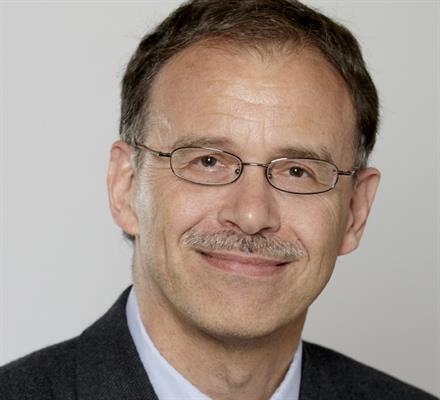
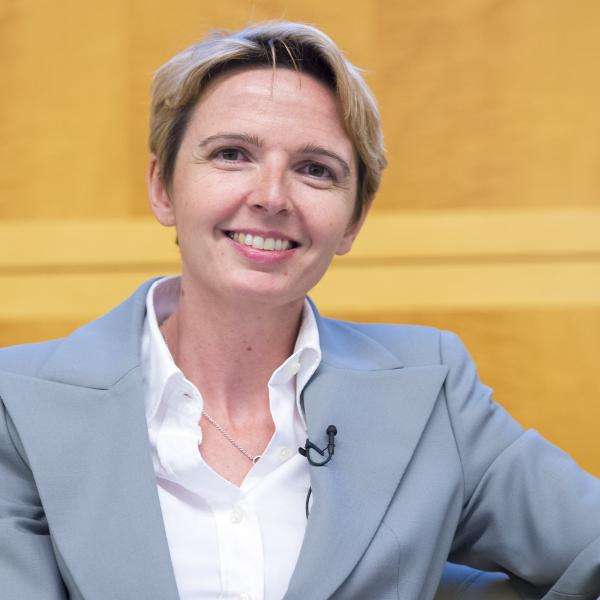
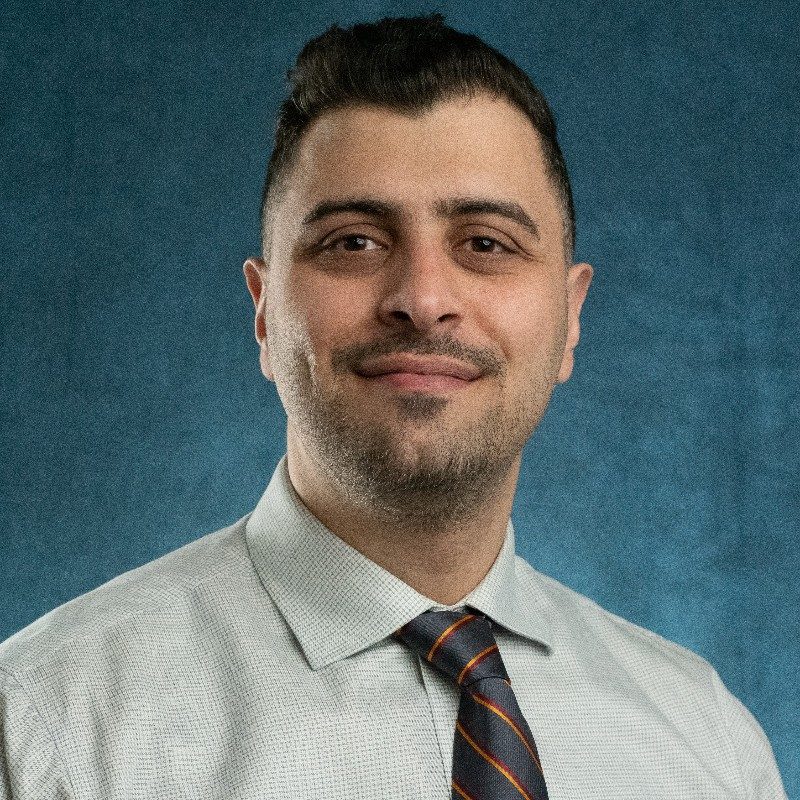
Yingguang Chu is an Associate Professor at the Institute of Mechanical and Electrical Engineering, University of Southern Denmark, specializing in Mechatronics. His research focuses on co-simulation systems, digital twins, and marine engineering applications. Research Interests : Digital twin technologies, co-simulation frameworks, marine crane systems, hydraulics, and control algorithms. Projects : Active participant in the ShippingLab II project (2024-2027) on digital twins and human factors in vessel performance. Research Output Trends : Recent work emphasizes physics-inspired neural networks for mobile machinery dynamics, environmental load sensitivity analysis, and Vico-based co-simulation systems for marine operations. Publications frequently address crane path planning, digital twin implementation, and dynamic response optimization. Scientific Awards : IEEE Robotics and Automation Magazine Best Paper Award (2024) Teaching Responsibilities : Supervises master's theses on topics like CFD simulations, membrane valve systems, and fluid mechanics, while teaching mobile hydraulics courses.
Charles E. McCulloch, PhD, is a Professor and Division Head of Biostatistics in the Department of Epidemiology and Biostatistics at the University of California, San Francisco (UCSF) School of Medicine. Before joining UCSF, he served at Cornell University for 18 years, including as Professor and founding Chair of the Department of Statistical Science. He co-authored three textbooks and authored the Institute of Mathematical Statistics monograph Generalized Linear Mixed Models . Research Interests: Longitudinal data analysis Correlated, non-normal data models Latent class models Effects of misspecification on prediction Publication Trends: Dr. McCulloch's recent work spans biostatistical applications in neurology (brain AVM rupture risk modeling), nephrology (dialysis outcomes), cardiology (heart sound diagnostics), and geriatrics (aging-related bone density and mental health interventions). His methodological contributions focus on statistical efficiency, virtual twins for longitudinal studies, and model misspecification impacts. Advising & Collaborative Experience: With over 20 years of statistical consulting experience, Dr. McCulloch has collaborated on clinical trials and epidemiological studies across major journals like NEJM , JAMA , and Statistical Methods in Medical Research .
Nan Yang is a Professor at the University of Miami, holding the Leslie O. Barnes Professorship in the Management department of the Miami Herbert Business School. With expertise spanning operations research and supply chain management, Professor Yang has established herself as a leading researcher in dynamic pricing, inventory management, and supply risk mitigation strategies. Professor Yang's research focuses on critical areas including: Dynamic pricing and inventory management under demand and supply uncertainty Supply chain risk management with unreliable suppliers and random yields Pricing postponement strategies and their impact on supply chain coordination The effects of online reviews on consumer behavior and operational decisions Pharmaceutical supply chain dynamics and pricing mechanisms Her publication record demonstrates a consistent research trajectory in operations management, with recent work focusing on the complex interactions between pricing decisions, inventory management, and supply risk. Her 2024 paper on assemble-to-order systems with exogenous lead times represents a significant theoretical contribution to inventory theory. A notable pattern in her research is the application of sophisticated stochastic modeling techniques to address real-world supply chain challenges, particularly those involving uncertainty and correlation among risk factors. Professor Yang has published extensively in top-tier operations management journals including Operations Research, Manufacturing & Service Operations Management, and Production and Operations Management. Her collaborative research often involves complex mathematical modeling and game-theoretic approaches to analyze strategic interactions in supply chains. Professor Yang maintains an active research agenda with recent publications addressing emerging challenges in supply chain management under uncertainty. Her work provides valuable insights for businesses seeking to optimize their operational decisions in volatile market environments.
Emilio Russo is a Full Professor in the Department of Economics, Statistics and Finance at the University of Calabria, Italy, where he has maintained continuous academic appointments since 2003. His career progression includes teaching assistant positions (2003-2007), Researcher (2007-2015), Associate Professor (2015-2024), and Full Professor (2024-present), with consistent teaching responsibilities in Financial Mathematics and Mathematical Methods for Economics across undergraduate and graduate programs in Economics, Business Administration, and Mathematics. He holds a Degree in Statistics and Actuarial Science (cum laude, 2003) from the University of Calabria, an MPhil from Brunel University (2005), and a PhD in Computational Methods for Economic and Financial Forecasts and Decisions from the University of Bergamo (2006). His research focuses on mathematical finance and actuarial mathematics, particularly option pricing theory, interest rate models, regime-switching frameworks, and insurance policy valuation under stochastic environments. Analysis of his recent publications reveals a dominant trend in developing lattice-based numerical methods for pricing complex financial derivatives and insurance products under multiple risk factors, including fractional Brownian motion, stochastic volatility, and regime-switching dynamics. His work frequently addresses path-dependent features in variable annuities, surrender options, and the impact of exogenous factors on policyholder behavior, with strong emphasis on computational efficiency and model flexibility. Professor Russo serves as Principal Investigator for the PRIN 2022 project "Building resilience to emerging risks in financial and insurance markets" and Task Leader for PNRR 2022's "Age-It" project (Spoke 6, Work Package 5). He actively contributes to academic discourse as a reviewer for Quantitative Finance, Journal of Computational and Applied Mathematics, Scandinavian Actuarial Journal, and other leading publications. He is a core member of the University of Calabria's research group "Metodi quantitativi per l'economia, la finanza ed il management," which specializes in quantitative decision-making models for finance, actuarial science, industrial economics, and logistics using mathematical programming, econometric techniques, and statistical methods.
Ronald Balvers is a Professor of Finance and holds the Michael Lee-Chin & Family Chair in Investment & Portfolio Management at the DeGroote School of Business, McMaster University. His academic appointment is within the Finance and Business Economics department, where he contributes significantly to research and teaching in financial markets and investment strategies. Dr. Balvers' research focuses on asset pricing, financial markets, and investment strategies, with particular interest in explaining global market anomalies, risk premia, and the predictability of returns, predominantly from the perspective of advances in firm-level productivity. His work integrates theoretical modeling with empirical analysis to explore how information, risk, and macroeconomic factors influence asset valuation and investor behavior. His expertise spans multiple areas including commodity markets, digital currencies, climate finance, and ethical investing. Analysis of his recent publications reveals a consistent focus on asset pricing models, market anomalies, and investment strategies across global markets. His research demonstrates strong interdisciplinary connections between finance, economics, and environmental studies, particularly in how productivity gaps and climate factors affect financial markets. Balvers frequently employs quantitative methods and empirical analysis to test theoretical models against real-world market data. Dr. Balvers has served as a referee for academic journals, indicating his standing within the scholarly community, though specific awards or honors are not mentioned in the available information. His advising activities and research grants are not explicitly detailed in the provided information, though his extensive publication record suggests active mentorship of graduate students and potential grant-funded research projects. His work with the Lee-Chin Family Institute for Strategic Business Studies indicates institutional research support. While specific laboratory or research team information isn't provided, his collaborations with multiple co-authors across various publications suggest he works within research networks focused on asset pricing and financial market analysis.
Hannes Keernik is an Associate Professor in Climate Physics at the University of Tartu's Faculty of Science and Technology, Institute of Physics, starting from September 2025. He also serves as an Analyst at Tallinn University of Technology's School of Information Technologies, Department of Software Science since November 2024, and previously worked as a Research Fellow in Climate Physics at the University of Tartu. Education: PhD in Environmental Physics, University of Tartu (2011-2015) MSc in Environmental Technology, University of Tartu (2008-2011) BSc in Environmental Technology, University of Tartu (2005-2008) Keernik's research focuses on climate physics and atmospheric science , with particular expertise in aerosol-cloud interactions, industrial pollution effects on weather systems, and climate change impacts in the Baltic region. His work combines field measurements, remote sensing data analysis, and climate modeling to investigate how anthropogenic aerosols influence cloud formation, precipitation patterns, and regional climate. He has made significant contributions to understanding how industrial emissions can trigger snowfall and alter cloud properties through complex microphysical processes. His publication record shows a strong focus on aerosol physics and climate monitoring, with recent work analyzing how anthropogenic aerosols from industrial sources glaciate liquid-water clouds, produce snow, and reduce cloud cover. He has contributed to major European collaborative projects on aerosol phenomenology and developed novel methodologies for atmospheric water vapor measurement using GNSS data. His research bridges atmospheric physics, environmental monitoring, and climate change science with practical applications for environmental policy. Professional Affiliations: Member of the International Association of Geodesy Inter-Commission Committee on 'Geodesy for Climate Research' (2024-present) Member of the GCOS Reference Upper-Air Network (GRUAN) task team on GNSS Precipitable Water (2024-present) Member of the European Geosciences Union (2013-present) Keernik actively contributes to teaching at the University of Tartu, offering courses in Environmental Physics and Advanced Atmospheric Sciences. His research has been supported by multiple European and Estonian grants, including projects with the European Commission, Estonian Research Council, and European Centre for Medium-Range Weather Forecasts. As Principal Investigator for 'Increasing the Awareness and Uptake of CAMS Products in Estonia,' he leads efforts to integrate advanced atmospheric data into Estonian environmental monitoring systems.
Valentina Bruno is a Professor of Finance and Kogod Faculty Excellence Fellow at the American University Kogod School of Business . She earned a Master in Finance and Economics and a Ph.D. in Finance from the London School of Economics . Prior to joining American University, she worked at the World Bank in the Financial Sector Strategy and Policy Group and the International Finance Team. Her research bridges macroeconomics and finance, focusing on global financial markets' interaction with the real economy and the role of the US dollar in transmitting global financial conditions. Current affiliations include Research Fellow at the Center for Economic Policy Research and Faculty Research Member at the European Corporate Governance Institute . She serves as Associate Editor at the Journal of Banking and Finance and has been a visiting scholar at the Federal Reserve Board and Council on Foreign Relations . Research Trends: The 2023-2025 articles highlight her work on the US dollar's systemic influence in global finance, while earlier publications (2013-2018) explore corporate governance, macroprudential policies, and commodity markets. Topics span Global liquidity and risk transmission Financial stress and corporate bond markets Exchange rate dynamics Commodity price volatility Macroprudential regulation effectiveness Scientific Awards & Recognition: Recipient of the Kogod Faculty Excellence Fellowship, CEPR Research Fellowship, and ECGI Faculty Research Membership. Her work has been featured in the Financial Times , Wall Street Journal , and Bloomberg , with articles published in leading journals like the Review of Economic Studies and Review of Financial Studies .
Assoc. Prof. Nadia Marinova, PhD holds an academic position at the New Bulgarian University , serving in the Department of Administration and Management . With a career spanning since 1996, she has held administrative roles such as Director of the Center for Distance Learning and coordinated numerous national/international projects. Education includes a PhD in Project Management from NBU and a Master's in Economics from UNSS Sofia. She teaches courses like Marketing Strategies in Tourism and Project Management in International Tourism . Her research focuses on Marketing, Tourism, Management, and Project Management , with recent work analyzing business model changes during pandemics, IoT applications in radar systems, and risk management in tourism. While her publications address both theoretical and practical aspects, collaborative projects with organizations like ENYC and EU programs dominate her career. Her projects include EU-funded initiatives like Transborder Integrated Tourism Business Center and industry collaborations with Lukoil Neftochim Burgas. She has contributed to youth policy frameworks and developed training modules for sustainable transport and leadership programs.
Erik Sverdrup is a Senior Lecturer in the Department of Econometrics & Business Statistics at Monash University. His research focuses on causal inference, statistical computing, and data science, with applications spanning mental health analytics, econometrics, and machine learning. Recent work has emphasized treatment effect heterogeneity, survival analysis, and algorithm development for complex healthcare and financial datasets. Research Interests: Causal inference, treatment effect modeling, statistical computing, mental health analytics, financial risk analysis. Key Collaborations: Involved in multi-institutional studies with applications to psychiatric research, veterans' health, and global disability assessment. Email Contact: Erik.Sverdrup@monash.edu
Dr. Vernon Hoeppner serves as Professor in the Division of Respirology, Critical Care and Sleep Medicine at the University of Saskatchewan, where he pioneered North America's first Directly Observed Therapy (DOT) program for tuberculosis treatment. His career spans clinical practice, provincial TB program leadership, and research focused on health equity among Indigenous populations in Saskatchewan and the Canadian prairies, emphasizing that "therapy is only as good as relationships and trust with patients and communities." His research interests center on Tuberculosis epidemiology , Respiratory medicine , and Health disparities , with particular focus on Indigenous health outcomes, treatment adherence, and social determinants of disease. Hoeppner's work integrates clinical practice with public health strategy, examining TB transmission dynamics, cost-effectiveness of interventions, and genomic epidemiology of Mycobacterium tuberculosis strains. Analysis of his 2014-2025 publications reveals evolving research trajectories: early work concentrated on TB transmission in Indigenous communities and treatment protocols, while recent studies expanded into genomic epidemiology (2024), health economics of latent TB treatment (2020), and climate-disease interactions in pandemic modeling (2025). His scholarship consistently addresses health inequities through both quantitative epidemiological methods and qualitative patient-centered approaches.
Peter J. Carnevale serves as Professor of Management and Organization at the University of Southern California's Marshall School of Business, holding courtesy appointments in Psychology and Communication departments. His research program examines negotiation and mediation dynamics across organizational, labor-management, real estate, community, and international contexts through rigorous laboratory experiments and field studies. Supported extensively by National Science Foundation grants, his work bridges theoretical insights with practical conflict resolution applications while addressing fundamental questions about human decision-making in disputes. Carnevale's research centers on the psychological and social mechanisms underlying conflict resolution, with particular emphasis on emotional influences, framing effects, and cross-cultural variations in negotiation behavior. His investigations explore how cognitive biases, moral considerations, and temporal factors shape bargaining outcomes, while recent work increasingly examines technology-mediated interactions including virtual reality environments and human-computer negotiation. The integration of creativity in problem-solving and ethical dimensions of deal-making represent distinctive threads throughout his scholarly contributions. Analysis of Carnevale's recent publications reveals three dominant trajectories: the psychological impact of virtual communication interfaces on negotiation dynamics, the strategic role of time pressure and emotional expression in bargaining, and the interplay between moral cognition and cooperative behavior. These themes consistently demonstrate experimental sophistication while maintaining strong relevance to real-world dispute resolution practices across multiple domains. His scholarly contributions have received significant recognition including: Jeffrey Z. Rubin Theory-To-Practice Award from the International Association for Conflict Management for exceptional impact on both theoretical frameworks and practical applications in negotiation Carnevale has chaired the Conflict Management Division of the Academy of Management and maintains active research programs funded by competitive National Science Foundation grants. His work demonstrates sustained commitment to translating laboratory findings into actionable insights for mediators, negotiators, and conflict resolution practitioners worldwide. While specific advisees aren't documented in available materials, his teaching responsibilities for doctoral students in Management and Organization indicate active mentorship within USC's academic community. His experimental research utilizes controlled laboratory environments to investigate fundamental negotiation processes, often incorporating innovative methodologies like virtual confederates and emotion-tracking technologies. This work occurs within interdisciplinary collaborations spanning psychology, management, and communication disciplines, reflecting the integrative nature of his conflict resolution scholarship.
Dr. Ariel Greiner is an NSERC Postdoctoral Fellow in the Department of Biology at the University of Oxford and Pennsylvania State University, supervised by Dr. Katrina Davis and Dr. Katriona Shea. Her interdisciplinary research applies mathematical and statistical modeling to conservation challenges, with current focus on optimizing coral reef management in Melanesia through value-of-information frameworks and socioeconomic integration. Her academic foundation includes: PhD in Ecology and Evolutionary Biology from the University of Toronto (supervised by Dr. Martin Krkošek, Dr. Marie-Josêe Fortin, and Dr. Emily Darling) Bachelor of Science from McGill University (research with Dr. Andrew Gonzalez on ecosystem functioning debts and global genetic diversity patterns) Dr. Greiner's research centers on coral reef resilience under anthropogenic pressures, employing network theory and dynamical systems to model connectivity, regime shifts, and climate impacts. Her work bridges theoretical ecology with practical conservation, emphasizing equity in scientific practice. Recent publications demonstrate methodological innovation in state-space modeling, macrogenetics, and disease epidemiology while maintaining consistent focus on coral reef sustainability. Analysis of her 15 most recent publications reveals dominant themes in coral reef dynamics (73% of works), with significant contributions to disease modeling (13%) and conservation genetics (13%). Temporal trends show increasing integration of socioeconomic factors since 2021, while mathematical approaches consistently emphasize network connectivity and stability analysis across all publications. Her accolades include: Excellence in Doctoral Research Award (Canadian Society of Ecology and Evolution) Harold H. Harvey Prize for Academic Leadership NSERC Doctoral Scholarship NSERC Postdoctoral Fellowship Supported by NSERC funding throughout her career, Dr. Greiner has collaborated extensively with the Wildlife Conservation Society (WCS) Fiji and Melanesia, including fieldwork surveying Fijian reefs. While no formal advisees are documented, her work demonstrates strong mentorship through collaborative publications and educational contributions like the 'Ten Simple Rules' modeling guide. Her current Melanesian reef project exemplifies her signature approach: integrating mathematical optimization with community engagement to develop context-specific conservation strategies that balance ecological resilience and human needs.
Feras Batarseh serves as an Associate Professor in the Department of Biological Systems Engineering at Virginia Tech, where he directs the Artificial Intelligence Assurance and Applications Lab (A 3 Lab) at the Virginia Tech Research Center in Arlington. His work bridges artificial intelligence, cyberbiosecurity, and critical infrastructure systems with a focus on water and agricultural applications. His educational background includes: JM in Law from George Mason University (2022) Postgraduate Certificate in Project Leadership from Cornell University (2016) Ph.D. in Computer Engineering from the University of Central Florida (2011) M.Sc. in Computer Engineering from the University of Central Florida (2007) Dr. Batarseh's research centers on AI Assurance —developing frameworks for trustworthy, explainable, and ethical AI systems—applied to Cyberbiosecurity challenges in water infrastructure and Smart Agriculture . His work tackles data bias, dark data, and causality in real-world deployments, with applications in securing water supply systems, optimizing precision farming, and analyzing international agricultural trade. Key innovations include context-aware deep learning for wastewater treatment and causal AI for policy impact assessment. His recent publications (2023-2025) reveal a concentrated effort to address national security threats through cyberbiosecurity, with 60% of articles focusing on water systems security and 30% on agricultural policy applications. The research integrates generative AI, causal inference, and human-AI teaming to solve problems ranging from K-9 handler collaboration to global food supply chain resilience. As director of the A 3 Lab, Dr. Batarseh leads interdisciplinary projects funded by federal and industry partners, mentoring graduate students in AI deployment for critical infrastructure. Current initiatives include the ACWA testbed for intelligent water systems and frameworks for friendshoring in agricultural trade.
Mario Liebensteiner is a Junior Professor (tenure track W3) for Economics with a focus on Energy Markets and Energy System Analysis at Friedrich-Alexander University Erlangen-Nuremberg (FAU). He is affiliated with the Department of Business, Economics, and Social Sciences (FAU WiSo) and contributes to the interdisciplinary research focus on Energy Markets and Energy System Analysis. Liebensteiner is also a member of the expert panel Energy Systems of the Future (ESYS) of the German Academies of Sciences and Humanities, providing expertise on energy transition and market design. Liebensteiner completed his doctorate in economics at Vienna University of Economics and Business (WU Vienna) and earned his diploma in economics from Johannes Kepler University Linz (JKU Linz) and City University of Hong Kong. Prior to his current position, he worked as a postdoctoral and pre-doctoral researcher at Technical University of Kaiserslautern and Vienna University of Economics and Business. His research focuses on the economic analysis of energy markets, environmental policy, and the transition to sustainable energy systems. Liebensteiner examines the interplay between renewable energy integration, carbon pricing mechanisms, electricity market design, and the challenges of sector coupling in the energy transition. His work investigates how market structures and policy instruments affect investment decisions, system flexibility, and emissions reduction in the power sector, with particular emphasis on the German energy context. He employs both theoretical modeling and empirical analysis to address these complex energy economics questions. Analysis of Liebensteiner's recent publications reveals a strong focus on the economic dimensions of the energy transition, particularly examining the interactions between renewable energy integration, carbon pricing, and electricity market design. His work increasingly addresses the challenges of sector coupling, flexibility needs in power systems, and the socio-economic impacts of energy policies. A notable trend is his examination of both theoretical market mechanisms and their practical implementation in the German context, with growing attention to cross-border electricity trade effects and the integration of hydrogen technologies in future energy systems. Member of the expert panel Energy Systems of the Future (ESYS) of the German Academies of Sciences and Humanities Research published in leading energy economics journals including Energy Economics, Applied Energy, and Energy Policy Liebensteiner collaborates with researchers across disciplines through the Energy Campus Nuremberg (EnCN) and participates in strategic partnerships with energy sector companies organized in the Nuremberg Energy Region (Energieregion Nürnberg eV). His research is connected to the DFG Collaborative Research Center on gas networks and markets, suggesting involvement in significant research funding. While specific grants aren't detailed in the provided information, his publication record in high-impact journals indicates successful research funding acquisition. Liebensteiner is part of the Energy Markets and Energy Systems research group at FAU WiSo, which collaborates closely with engineers at the Energy Campus Nuremberg (EnCN). This interdisciplinary team works on the transformation of electricity and gas sectors, sustainable mobility concepts, sector coupling issues, and business models for decentralized smart energy systems. The research group maintains strategic partnerships with numerous energy sector companies through the Nuremberg Energy Region, aiming to implement secure, cost-effective, climate-friendly, and sustainable energy solutions.
Professor Yuichiro Kawaguchi is a distinguished faculty member at Waseda University's Faculty of Commerce and Graduate School of Business and Finance, where he serves as a Professor specializing in Real Estate Economics and Financial Engineering. With decades of academic and professional experience, he has established himself as a leading expert in Japanese and Asian real estate markets, contributing significantly to both theoretical frameworks and practical applications in real estate finance. Education: 1979: National Defense Academy of Japan, Faculty of Engineering Professor Kawaguchi's research primarily focuses on Real Estate Economics and Real Estate Financial Engineering, with particular emphasis on market dynamics, risk management, and valuation methodologies. His work bridges theoretical finance concepts with practical real estate applications, examining how spatial factors, market cycles, and institutional frameworks influence property markets. He has pioneered approaches to real options analysis in real estate development and has extensively studied the Japanese housing market's unique characteristics and challenges, including its prolonged stagnation period and recovery patterns. His research integrates econometric techniques with financial theory to develop more accurate forecasting and valuation models for commercial and residential properties, with recent work incorporating big data analytics and text mining to understand market sentiment and its impact on real estate investment trusts. Analysis of Professor Kawaguchi's extensive publication record reveals a consistent progression from traditional valuation methods toward more sophisticated approaches incorporating spatial analysis, real options theory, and market microstructure considerations. His interdisciplinary research connects economics, finance, urban planning, and data science to address complex questions in real estate investment and policy, with particular focus on the Japanese market context and its implications for other Asian economies. Scientific Awards: Japan Society of Civil Engineers Technology Development Award (Geographic Information System for Urban Railway Planning) - May 2003 Applied Surveying Society Paper Encouragement Award - 1992 First Applied Surveying Paper Best Award - November 1985 Professor Kawaguchi has supervised numerous graduate students through research guidance seminars at Waseda University and has secured significant research funding through multiple Japan Society for the Promotion of Science Grants-in-Aid for Scientific Research projects. His current research projects include 'Social Dynamics of Real Estate Markets' (2014-2017) which applies text mining to analyze the relationship between news sentiment and real estate stock prices, and 'Long-term perspectives on the housing price and financial system in Japan' (2012-2015) which examines the relationship between soaring property prices and investment inhibition in Japan's economic growth context. As Director of the Institute of Real Estate Studies at Waseda University (2022-2026), Professor Kawaguchi bridges academic research with practical applications in the real estate industry, contributing to scholarly knowledge and professional practice through publications, committee work with government agencies including the Cabinet Office and Ministry of Land, Infrastructure, Transport and Tourism, and industry collaborations with major financial institutions.