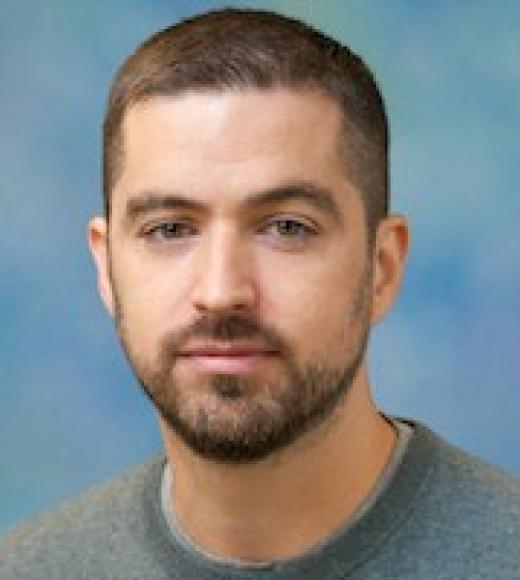
Xiangyu Zhu is a faculty member at the University of Chinese Academy of Sciences (UCAS), School of Artificial Intelligence, and affiliated with the State Key Laboratory of Multimodal Artificial Intelligence Systems, Chinese Academy of Sciences, Beijing, China. His research focuses on Computer Science , Artificial Intelligence , and 3D Face Reconstruction . His work spans Face Recognition , Image Processing , and Computer Vision , with recent advancements in Masked Face Recognition , 3D Avatar Reconstruction , and Face Anti-Spoofing . He has contributed to Neural Network Architectures for High-Fidelity 3D Face Modeling and Image Fusion . Xiangyu Zhu has co-authored numerous high-impact publications in journals like IEEE Transactions on Image Processing and conferences such as CVPR and ICCV , including recent works on Diffusion Models , Mamba Networks , and Weakly Aligned Feature Fusion . His research emphasizes Deep Learning and Optimization Techniques for Computer Vision applications.
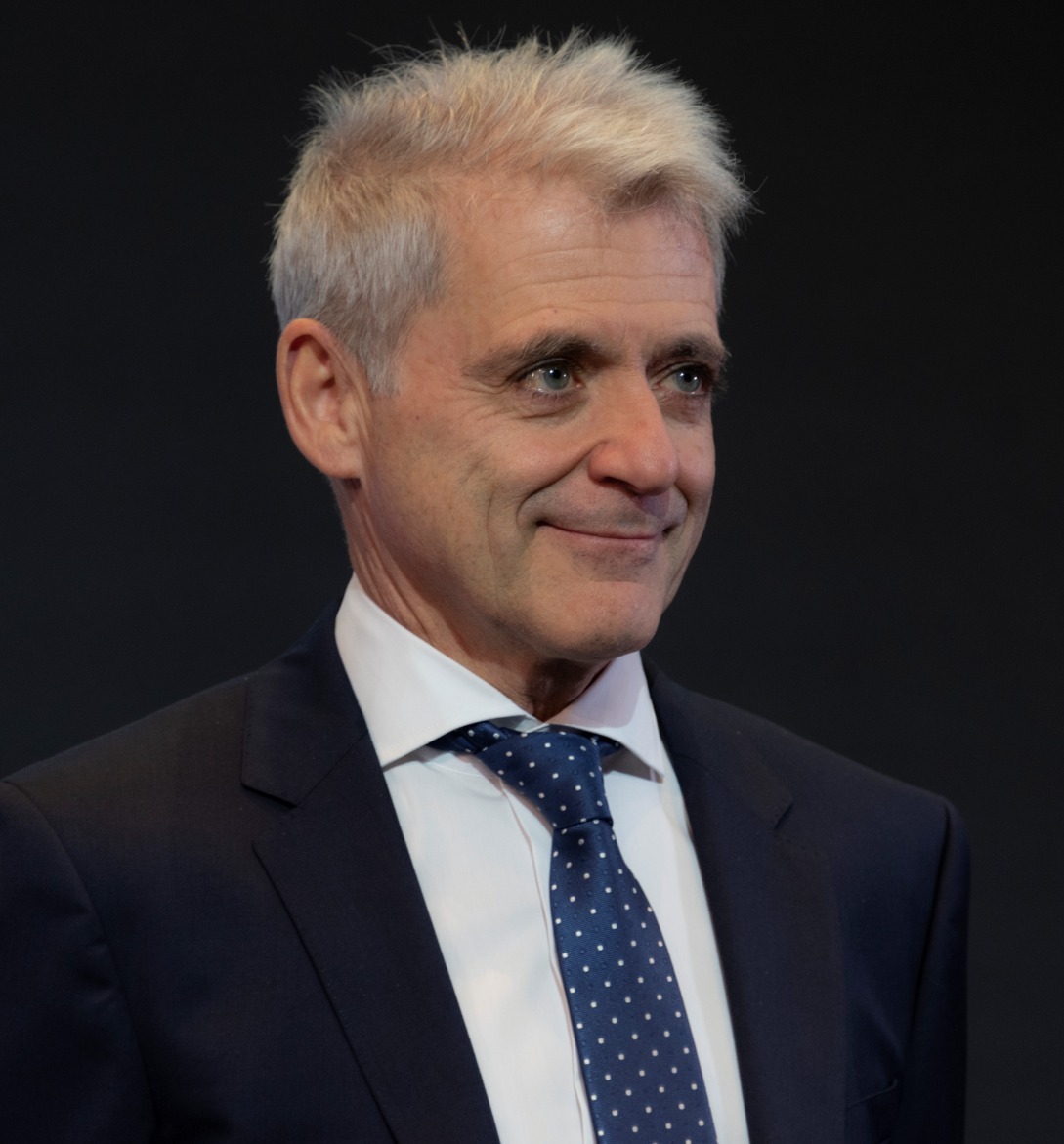
Dr. Bo Liu is an Associate Professor in the School of Computer Science at the University of Technology Sydney (UTS), where he serves as a core member and director of the AI Security and Privacy (AISP) Research Lab at the Australian Artificial Intelligence Institute (AAII). With expertise spanning cybersecurity, privacy protection, AI and machine learning, and wireless communications, Dr. Liu has established himself as a leading researcher in the field of AI security and privacy. Dr. Liu earned his PhD from the Department of Electronic Engineering at Shanghai Jiao Tong University in 2010. His academic journey at UTS has progressed from Senior Lecturer (November 2019-December 2022) to his current position as Associate Professor (January 2023-present). Dr. Liu's research focuses on the critical intersection of artificial intelligence and security, particularly addressing emerging threats in the age of advanced AI systems. His work spans multiple dimensions of security and privacy, including deepfake detection, privacy-preserving data synthesis, AI model security, and fair machine learning. He has pioneered approaches to detect AI-generated content, protect visual privacy through de-identification techniques, and address the complex relationship between algorithmic fairness and privacy preservation. His publication record demonstrates significant contributions across multiple cutting-edge research areas, with particular emphasis on detecting and mitigating threats from generative AI systems. His recent work reveals a strong focus on deepfake detection across multiple modalities (images, video, and audio), privacy-preserving techniques for sensitive data, and the security implications of emerging AI architectures like Retrieval-Augmented Generation systems. Dr. Liu has secured substantial research funding, including as Lead Chief Investigator on multiple ARC Discovery and Linkage Projects, totaling over $3.5 million AUD. His industry collaborations include partnerships with the NSW Department of Planning and the Reserve Bank of Australia, demonstrating the practical applicability of his research. As an academic leader, Dr. Liu serves as Associate Editor for IEEE Transactions on Broadcasting and actively contributes to the academic community through conference organization, peer review for top-tier venues, and assessment for ARC grant schemes. He also teaches courses including Penetration Testing, Ethical Hacking and Offensive Security, and supervises Masters and PhD students in cybersecurity and privacy research.
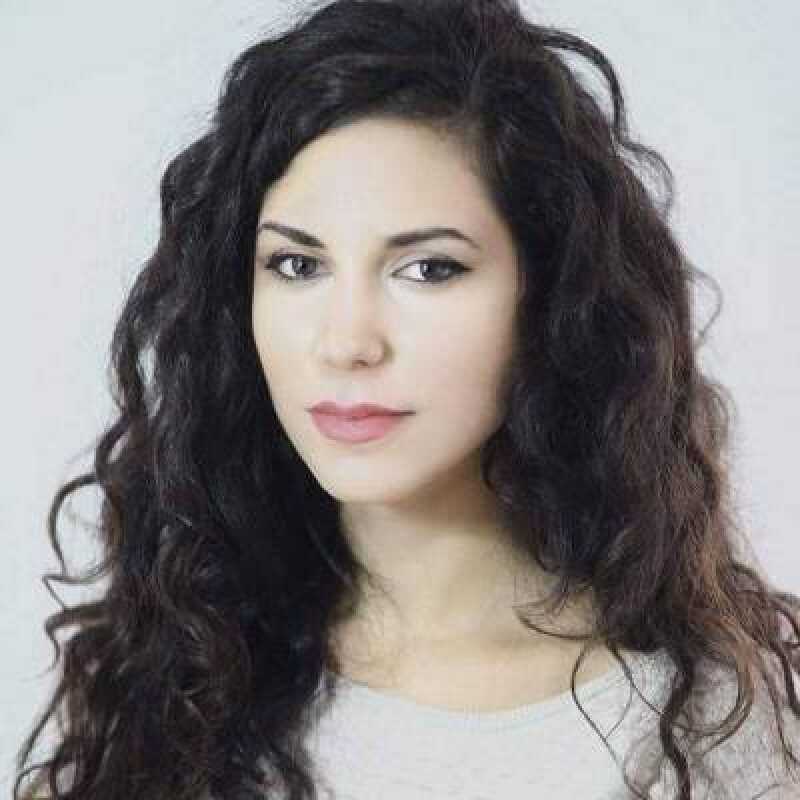
Santiago Barreda is an Associate Professor in the Department of Linguistics at the University of California, Davis, specializing in speech perception and phonetic analysis. His research examines how acoustic properties of speech convey speaker characteristics including age, gender, and physical attributes. Education: Ph.D. in Linguistics (Phonetics), University of Alberta, 2013 M.A. in Hispanic Studies (Language and Linguistics), University of Western Ontario, 2008 B.A. in Linguistics and Spanish Language and Literature, University of Western Ontario, 2006 Research Focus: Dr. Barreda employs behavioral experiments and statistical modeling to investigate perceptual mechanisms in speech recognition. His work bridges theoretical phonetics with practical applications, particularly in vowel normalization techniques and formant tracking algorithms. Key questions address how listeners extract speaker identity from acoustic cues and interpret social characteristics through vocal signals. Publication Trends: Recent publications (2020-2025) reveal three dominant themes: computational phonetic tools (FastTrack, phonTools), perception of social/physical speaker characteristics from children's voices, and interdisciplinary public health research on speech-related aerosol transmission. His work demonstrates strong methodological consistency in combining acoustic analysis with perceptual validation. Scientific Awards: No scientific awards were mentioned in the source material. Advising and Grants: The provided documentation does not specify graduate student advising roles or external grant funding. Technical Contributions: Dr. Barreda develops open-source phonetic analysis software including FastTrack (Praat-based formant tracking) and the phonTools R package, which have become standard resources in acoustic phonetic research.
Botond Kőszegi is a Professor of Economics at the Faculty of Economics and Business, University of Bonn. His primary contact information includes the university email bkoeszeg@uni-bonn.de and phone number +49 228 73-60399. His research profile is prominently featured on the University of Bonn's economics department website. Kőszegi's research spans multiple areas within behavioral economics, with particular focus on how psychological factors influence market outcomes. His work examines consumer behavior in competitive markets, particularly when consumers exhibit systematic biases or misunderstandings. He has made significant contributions to understanding reference-dependent preferences, self-control problems, and how market structures interact with consumer naivete. His theoretical frameworks have important implications for consumer protection policies, especially in financial markets where consumers face complex decisions with limited attention. His publication record demonstrates consistent high-impact contributions to top economics journals including the Quarterly Journal of Economics, American Economic Review, Review of Economic Studies, and Econometrica. His recent work (2021-2025) shows increasing focus on digital markets, ecosystem competition, and the welfare implications of online steering practices. The progression of his research indicates a deepening exploration of how behavioral factors shape market outcomes across various contexts, from traditional consumer markets to emerging digital platforms. Kőszegi frequently collaborates with Paul Heidhues, with whom he has co-authored numerous influential papers. His collaborative network also includes researchers such as Matthew Rabin, Takeshi Murooka, and Philipp Strack. His work has been featured in major media outlets including the Financial Times and Zeit Online, indicating real-world policy relevance. His research program has evolved from foundational work on reference-dependent preferences to increasingly complex applications in digital markets and consumer protection. This trajectory reflects both theoretical depth and practical relevance, addressing pressing questions about how to design markets and regulations that account for realistic consumer behavior.
Jüri Raud (born August 6, 1972) is an Associate Professor in Plasma Spectroscopy at the Institute of Physics, Faculty of Science and Technology, University of Tartu. He has been a dedicated researcher at the University of Tartu since 2000, progressing from Senior Engineer to Research Fellow, Senior Research Fellow, and currently Associate Professor since 2021. His academic career spans over two decades of research in plasma physics with significant contributions to plasma spectroscopy, plasma chemistry, and plasma medicine applications. His educational background includes: Doctoral Degree in Physics (2009), University of Tartu Master's Degree in Physics (2001), University of Tartu Undergraduate studies in Physics (1995-1999) and Geology (1990-1995), University of Tartu Raud's research focuses on plasma spectroscopy, plasma chemistry, and plasma medicine, with particular emphasis on plasma diagnostics, gas discharge physics, and medical applications of plasma. His work bridges fundamental plasma physics with practical applications in materials science and medicine, especially in understanding plasma-liquid interactions and their biomedical implications. He has made significant contributions to understanding ionization processes in various gas mixtures and their applications in plasma medicine. His recent publications (2022-2024) demonstrate a strong focus on plasma diagnostics, plasma medicine applications, and plasma-material interactions. The research trends show a clear progression toward medical applications of plasma, with numerous studies on plasma-activated water, reactive species production, and their effects on cancer cells. His work also maintains strong foundations in fundamental plasma physics, particularly in ionization coefficients and discharge characteristics across various gas mixtures. Raud has been actively involved in teaching physics at both the University of Tartu and Masaryk University, covering courses in computer hardware, electromagnetism, and laboratory physics. He serves as Chairman of the gas discharge physics seminar at the University of Tartu and as the EFDA JET Technical Contact Person for Remote Participation on fusion experiments in Estonia. His research group focuses on plasma spectroscopy techniques, plasma diagnostics, and the development of plasma applications in medicine and materials processing. The team collaborates extensively with international partners in the field of plasma physics and fusion research, contributing to both fundamental understanding and practical applications of low-temperature plasmas.
Sir Paul Collier is a distinguished Professor of Economics and Public Policy at the Blavatnik School of Government, University of Oxford, where he also directs the Centre for the Study of African Economies. He serves as the Oxford Academic Director of the International Growth Centre, a collaboration between the London School of Economics and Oxford University. Professor Collier has established himself as a leading authority on development economics, particularly focusing on African economies, poverty reduction, and the political economy of development. His academic journey includes significant public service, having served as Director of the World Bank Research Development Department from 1998 to 2003. He currently advises the International Monetary Fund Strategy and Policy Department and writes regularly for major publications including The Independent and The New York Times. His extensive contributions to economic thought have been recognized with numerous prestigious awards. Professor Collier's research interests span a wide range of critical development issues. He has made significant contributions to understanding the "bottom billion" - the poorest populations in the world - and has developed innovative approaches to addressing regional inequality, natural resource management, and the political barriers to development. His work consistently bridges academic rigor with practical policy applications, making complex economic theories accessible to policymakers and the general public alike. His publications reveal a consistent focus on practical solutions to development challenges. Recent works have examined urbanization in developing countries, the relationship between elections and economic performance, infrastructure investment in Africa, and the cultural foundations of economic success or failure. His research demonstrates how institutional design, cultural factors, and appropriate policy frameworks can enable neglected regions to "spiral up" toward prosperity. A.SK Social Science Award (2013) Arthur Ross Prize (for The Bottom Billion) Handesblatt Prize (for The Future of Capitalism) Adam Smith Prize by Glasgow's Philosophical Society (2023) Global Citizenship Award by Belgium's cooperative movement (2018) Professor Collier is actively engaged in advising governments on practical approaches to regional renewal. His recent work emphasizes the importance of local agency, collective learning, and moral leadership in addressing the challenges faced by neglected communities in both developed and developing countries. He challenges conventional economic orthodoxies that prioritize market forces alone and advocates for more nuanced, context-specific policy approaches that recognize the complex interplay of economic, social, and political factors in development processes.
Prof. Helen Blank is a Professor leading the Multisensory Perception Group and the Prediction in Communication Lab at the Institute for Systems Neuroscience, University Medical Center Hamburg-Eppendorf. Her work focuses on understanding how sensory information is integrated and predicted in contexts like speech perception and face recognition. She holds a Marie Curie Fellowship for her research on prior information's role in human communication. Fluent in German, English, and French, she contributes to experimental medicine and systems neuroscience. Her research spans predictive coding, neuroimaging, and clinical applications in Parkinson’s and developmental disorders. Education: Not explicitly stated in text, inferred as advanced degrees in neuroscience or related fields. Her research interests emphasize multisensory integration, predictive processing in speech and vision, and the neural bases of perception. Recent articles explore topics such as pupil responses to auditory surprise, face expectation hierarchies, and audio-visual speech processing. Awards include the Marie Curie Fellowship supporting her predictive communication work. She leads interdisciplinary teams within the Center for Experimental Medicine, advancing knowledge on perceptual mechanisms and their clinical implications.
Jean Ponce is a Professor at Ecole Normale Supérieure - PSL and a Global Distinguished Professor at New York University's Courant Institute and Center for Data Science. He serves as Scientific Director of PRAIRIE Interdisciplinary AI Research Institute and co-founded Enhance Lab, commercializing super-resolution imaging software. His research focuses on computer vision, machine learning, robotics, and image processing. Ponce has held roles at Inria, MIT, Stanford, and the University of Illinois, and is an IEEE and ELLIS Fellow. He has served as chair of major conferences like CVPR, ECCV, and ICCV, and authored the textbook 'Computer Vision: A Modern Approach.' Research interests include statistical models for exoplanet detection, neural networks for 3D reconstruction, and self-supervised learning. His work combines theoretical foundations with practical applications in astrophysics, robotics, and imaging. Notable awards include the IEEE CVPR Longuet-Higgins Prize (2016, 2020) and ICML Test-of-Time Award (2019). Key projects include Enhance Lab's high dynamic range imaging and PRAIRIE's interdisciplinary AI initiatives. Ponce's articles explore cutting-edge topics like neural object priors, geodesic motion planning, and satellite image analysis. His contributions bridge academic research and industrial applications, emphasizing both fundamental theory and real-world impact.
Autumn M. Womack is an Associate Professor in the Department of African American Studies and the Department of English at Princeton University. Her work bridges literary scholarship, archival research, and curatorial practice, with a focus on 19th- and 20th-century African American literary culture. She teaches courses on African American literature, race and media, and Toni Morrison’s creative process, often incorporating the Toni Morrison Papers housed at Princeton University Library. Her research centers on the intersections of literature, visual technologies, and archival practice. She is particularly interested in how material evidence—such as photographs, letters, and manuscript drafts—reveals new dimensions of black life and aesthetic production. Her pedagogy emphasizes critical engagement with primary sources, encouraging students to let archival objects guide their inquiry rather than imposing preconceived theses. Womack’s recent publications and projects reflect a strong focus on African American literary history, data and racial representation, and the creative process of major writers like Toni Morrison and Charles Chesnutt. Her work spans archival exhibitions, scholarly monographs, critical editions, and public-facing essays in venues like The Paris Review , Los Angeles Review of Books , and The Times Literary Supplement . Modern Language Association’s William Sanders Scarborough Prize (2022) Shortlisted for the Modernist Studies Association’s First Book Prize She has advised numerous students through her courses and research supervision, though specific names are not listed. Her curatorial leadership of the exhibition Toni Morrison: Sites of Memory exemplifies her commitment to public scholarship and interdisciplinary collaboration. She is currently working on a book titled The Wanderer , exploring Morrison’s creative process, and co-editing a volume on Morrison and Black archival practice with Kinohi Nishikawa. Womack’s lab or research team includes graduate students and collaborators engaged in archival research, literary analysis, and curatorial projects centered on the Toni Morrison Papers. Her future work continues to expand the understanding of black literary life through material culture and narrative innovation.
Dr. Emma Axelsson is a Lecturer at the School of Psychological Sciences, University of Newcastle, Australia. Her research focuses on cognitive and social development in typically and atypically developing children, with specific interests in early word learning, sleep-related memory consolidation, screen time effects on development, and infants' social category representations using eye-tracking technology. Doctor of Philosophy, University of East London Bachelor of Arts (Honours in Psychology), University of Queensland Dr. Axelsson's research spans multiple disciplines including cognitive neuroscience, memory and attention, and child development. She explores how sleep patterns interact with learning outcomes, investigates screen time's impact on preschoolers' cognition, and examines visual processing of bodies and faces in developmental contexts. Her recent publications highlight trends in screen time research, with 2025 studies analyzing executive function and sleep interactions, and 2024 work examining cross-species social evaluation mechanisms. Earlier articles (2022-2013) cover temperament effects on word learning, body perception mechanisms, and longitudinal developmental studies. Dr. Axelsson supervises multiple PhD and Masters projects related to screen time, sleep, and neurodevelopmental outcomes. Her research team collaborates internationally through networks like ManyBabies and Healthy Minds (Hunter Medical Research Institute).
Dr. Francesca Carbone is a Lecturer in Social and Developmental Psychology at the School of Psychology, University of Kent. She completed her PhD at the University of Naples "L'Orientale" studying emotional processing through prosody and semantics, followed by postdoctoral fellowships at CNRS (Aix-Marseille University) and University of Kent. Education: PhD in Psychology (University of Naples "L'Orientale") Her research focuses on cognitive, emotional, and psychophysiological mechanisms underlying art reception and emotional communication. Current projects examine physiological speech production mechanisms and how facial expressions mediate emotional prosody perception. She also investigates film's cognitive effects on open-mindedness. Recent publications in Language Resources & Evaluation , Motivation and Emotion , and Quarterly Journal of Experimental Psychology demonstrate expertise in emotional semantics, prosody analysis, and media effects. Publications span experimental studies on speech interaction, film cognition, and multimodal emotion perception. Teaching responsibilities include module convenorship and instruction in advanced developmental psychopathology, child development, cognitive development, and psychology fundamentals.
Prof. Dr. Johanna Rahner serves as Professor of Dogmatics, History of Dogma and Ecumenical Theology at the Catholic Theological Faculty of the Eberhard Karls University of Tübingen since 2014. She also holds the position of Director of the Institute for Ecumenical and Interreligious Research at the same institution. Her research interests span a wide range of theological topics including: Biblical Hermeneutics for Systematic Theology (especially Christology), Ecumenical theology and its ecclesiological problem areas, the relationship between religion, culture, educational processes, politics and society, interaction of contemporary culture with worship and theology of the sacraments, theoretical foundations of dialogue between world religions in a globalized world, relationship between reason and faith, theology and philosophy, theology and natural sciences, patchwork religiosity and subjective religious pluralism, and religiosity of children and adolescents with special consideration of youth and cult literature and pop music. Prof. Rahner's publications demonstrate a consistent focus on contemporary challenges facing the Catholic Church, ecumenical dialogue, and the intersection of theology with modern culture. Her work frequently addresses the Second Vatican Council's implications for contemporary theology, the relationship between science and faith, and the practical application of theological concepts in interreligious contexts. She has made significant contributions to understanding eschatology, ecclesiology, and the practical application of theological concepts in interreligious contexts. Wissenschaftlicher Beirat des Kuratoriums zur Vorbereitung des Reformationsjubiläums 2017 Ökumenischer Arbeitskreis evangelischer und katholischer Theologen Editorial-Board der Ökumenischen Rundschau Wissenschaftlicher Beirat der Europäischen Melanchthonakademie, Bretten Societas oecumenica AG der deutschsprachigen katholischen Dogmatiker und Fundamentaltheologen Europäische Gesellschaft für Katholische Theologie. Deutsche Sektion e.V. AGENDA – Forum katholischer Theologinnen e.V. Prof. Rahner has been involved in several significant research projects including Moralische Urteilsfindung im säkularen Diskurs als Herausforderung für die christlichen Konfessionen, Intergenerationelle LehrerInnen-Ausbildung, Theorie und Praxis des interreligiösen Lernens, Kirche und Bildungsregime in Lateinamerika, Reformationsgedenken und Ökumene, and Grundfragen theologischer Anthropologie in Auseinandersetzung mit aktuellen naturwissenschaftlichen Modellen. She leads the Institute for Ecumenical and Interreligious Research, which serves as a hub for scholarly research on contemporary challenges in interfaith relations and ecumenical theology.
Michael P. Bradley is a Professor in the Department of Physics and Engineering Physics at the University of Saskatchewan, affiliated with the College of Arts and Science. He holds a Ph.D. from MIT and is a Professional Engineer (P.Eng.). His research focuses on precision measurement techniques, plasma-based nanofabrication, and quantum metrology, including work on diamond NV-centre magnetometers and superconducting watt balance systems. He leads the University of Saskatchewan Plasma Physics Laboratory (U of S PPL) and has received a Canada-UK Joint Quantum Technology grant for quantum sensor development. Education BSc (Honours) in Applied Physics, University of New Brunswick Ph.D. in Physics, Massachusetts Institute of Technology (MIT) Research Interests Bradley specializes in quantum magnetometry , plasma processing , semiconductor nanostructures , and precision electromagnetic measurements . His lab develops novel techniques for materials characterization and fabrication, including plasma immersion ion implantation (PIII) for micro- and nano-scale engineering, graphene doping, and silicon photonics. Recent work includes advancements in diamond NV-centre magnetometry for quantum technologies. Grants & Collaborations Recipient of a prestigious Canada-UK Joint Quantum Technology grant (2023). Collaborated internationally, including at the Bureau International des Poids et Mesures (BIPM) in France, where he contributed to superconducting watt balance prototypes for redefining mass standards. Teaching Teaches courses in optics, thermodynamics, and planetary astronomy, including EP421: Optical Systems & Materials and ASTR104: Planetary Astronomy .
Piotr Winkielman is a Professor of Psychology at the University of California, San Diego (since 2007), with affiliations at Warwick Business School (UK) and the Warsaw School of Social Sciences and Humanities (Poland). His research focuses on the interplay of emotion, cognition, embodiment, and consciousness in social cognition, employing methods from social/cognitive psychology and neuroscience. Key interests include unconscious emotion processing, facial mimicry, decision-making under emotional influence, and the neural basis of social perception. Education: PhD in Social Psychology (1997), University of Michigan MSc in Psychology (1991), University of Bielefeld, Germany BSc in Psychology (1988), University of Warsaw, Poland Research Interests: Winkielman explores how fleeting affective reactions influence behavior without conscious awareness, studying facial feedback mechanisms, emotional contagion, and the role of physiological signals in decision-making. His work bridges theories like Affect-As-Information and Facial Feedback, while challenging assumptions about the necessity of conscious processes in emotion. Grants & Funding: Supported by NSF Grant BCS-0350687 for studies on unconscious emotion and physiological feedback. Collaborations include projects on mimicry, stress effects, and cross-modal perception. Labs & Teams: Leads research at UCSD on embodied cognition and social neuroscience, with studies involving EEG, EMG, and behavioral experiments. International collaborations span UK, Poland, and Germany.
Univ.-Prof. Dr. Joachim Eigler is a Professor of Business Administration, specializing in Media Management at the University of Siegen's Faculty III. His roles include teaching courses such as Electronic Commerce, Media Business Administration, and supervising doctoral students. He actively contributes to research on media management strategies, Internet economics, and electronic business. Research Interests: Dr. Eigler focuses on optimizing business strategies in media industries, leveraging new media technologies, and addressing challenges in media company operations. His recent work explores trustworthiness in media programming, reputation management for creative professionals, and personnel optimization in cinema operations. Advising & Students: He has mentored doctoral students including Dr. Jonas Brühl (on cinema operator-distributor cooperation), Dr. Samaneh Azarpour (strategic mindset training in media firms), and Dr. Birthe-Marie Mosen (networking in media industries). His team includes secretariat member Silke Pistor. Labs/Teams: Leads the Chair of Business Administration (Media Management), collaborating with researchers like Timo Jenne and industry practitioners. His research often intersects with practical business challenges faced by media providers and start-ups.