Dr.-Ing. Sebastian Vorköper is affiliated with the Institute of Communications Engineering at the University of Rostock , part of the Faculty of Computer Science and Electrical Engineering . His research focuses on orthogonal/non-orthogonal relay networks , information theory , channel coding , time/frequency synchronization , and hardware implementation of transmission schemes . He has supervised numerous theses, including: Bachelor Theses: Peter Bartmann (2011): Implementation of route-finding algorithms in meshed networks Rabee Yasin (2011): AM transmitter implementation Master/Diploma Theses: Robert Amling (2008): OFDM performance analysis in relay networks Rana Al-Salim (2010): Carrier frequency offset in OFDM relay networks Mike Rogge (2011): Wireless MIMO-OFDM FPGA/DSP implementation His work emphasizes practical applications of communication theory, including MATLAB/Simulink prototyping and FPGA-based system design.
Prof. Dr. Manfred Hild is the head of the Neurorobotics Research Laboratory at Berlin University of Applied Sciences and Technology (BHT). He teaches in the Humanoid Robotics program and has led numerous national/international research projects. Affiliations: BHT: Founder of Neurorobotics Research Laboratory (NRL) Sony Computer Science Laboratory (Paris) - Visiting Researcher Fraunhofer Institute for Autonomous Intelligent Systems - Sankt Augustin, Germany Research Focus: Humanoid robotics, sensorimotor control systems, distributed embedded systems, nonlinear dynamic systems, and recurrent neural networks. Additional interests in sound analysis/synthesis using programmable hardware (FPGAs). Education: Mathematics and Psychology at University of Konstanz, followed by doctorate in Computer Science at Humboldt University in Berlin (2008). Notable Achievements: Developed autonomous robotic systems covering electronics, mechanics, firmware, adaptive control systems, and higher-order behavior with linguistic interfaces.
Paul Chang is a Control/MR Engineer and PhD student at the Max Planck Institute of Biological Cybernetics, working in the High-field Magnetic-Resonance Group since 2013. His doctoral research focuses on real-time feedback B0 shim systems for ultra-high field MRI to improve magnetic field homogeneity and image quality. His educational background includes: MSc in Control Systems from Imperial College London (2011-2012) with thesis on chemical sensing software development BSc (Eng) in Mechatronics from the University of Cape Town (2007-2010) with additional majors in Mathematics and Economics Chang's research integrates control theory, digital electronics, and biomedical engineering to solve MRI challenges. He specializes in fractional/integer PID controllers, real-time field monitoring systems, and embedded controller implementation using FPGA technology. His work addresses critical limitations in ultra-high field MRI related to B0 field inhomogeneity caused by physiological artifacts and hardware limitations. His publication record demonstrates consistent interdisciplinary innovation across biomedical sensing and control systems. Key themes include the development of Parylene C-based pH sensors for neural applications, MRI-guided neurosurgical planning tools, and advanced control algorithms for hydraulic and MRI systems. This reflects a strong pattern of translating theoretical control concepts into practical biomedical solutions with emphasis on real-time system implementation. Chang contributes to the High-field Magnetic-Resonance Group's core mission through hardware development (field cameras, shim amplifiers), software implementation (asymmetric multiprocessor systems on Zynq 7020 boards), and algorithm design for dynamic shimming. His technical expertise spans FPGA programming, Siemens gradient system interfacing, and spherical harmonic function computation for magnetic field correction.
Prof. Görschwin Fey is a Professor at the Institute of Embedded Systems at TUHH since 2017. He earned his Diploma in Computer Science from Martin-Luther-University Halle-Wittenberg (2001) and his Dr.-Ing. from the University of Bremen (2006). Previously, he led the Department of Avionics Systems at DLR and the Reliable Embedded Systems group at the University of Bremen. His research focuses on Electronic Design Automation (EDA), embedded system reliability, debugging, and design understanding. He actively participates in committees for IEEE DDECS and ETS since 2011. His funded projects include the DFG Research Training Group CAUSE (2024-2029) and the BMBF-funded Di-ExViPaS initiative. Notable research areas include fault localization in CPS, FPGA-based ML acceleration, and automated model generation for CPS testing. Publications span cyber-physical systems robustness, hardware security, and decision-tree-based system modeling. He collaborates with institutions like the European XFEL and University of Bremen on large-scale facility analysis and safety-critical systems. His work emphasizes bridging formal methods with practical engineering challenges in embedded and cyber-physical domains.
Associate Professor Dr. Marcus Stoffel is a faculty member at RWTH Aachen University, serving within the Faculty of Mechanical Engineering as head of the Chair and Institute of General Mechanics. His research integrates advanced computational mechanics with cutting-edge machine-learning techniques, focusing on viscoplastic material modeling, neural network surrogates, biomechanical systems, and neuromorphic computing. Education: While explicit degrees are not listed in the text, his title of Dr. and rank of Associate Professor at a leading German technical university imply doctoral and post-doctoral qualifications in mechanical engineering or a closely related discipline. Research Interests: Computational viscoplasticity and damage mechanics Physics-informed neural networks and spiking neural architectures Machine-learning-enhanced finite element methods Crashworthiness and structural optimization Biomechanics of musculoskeletal tissues and medical devices Sustainable neuromorphic computing for engineering applications Publication Trends: Across 2023–2025, Stoffel’s articles reveal a rapid pivot toward AI-accelerated engineering, coupling neuromorphic processors with traditional solid-mechanics problems such as viscoplastic beam response and membrane instabilities. Recurrent themes include surrogate modeling via spiking neural networks, generative learning for design optimization, and data-driven biomechanical analyses of spinal instrumentation and cartilage. Scientific Awards: No specific awards are mentioned in the provided text. Funding & Teams: While individual grants are not detailed, the extensive publication output and involvement in interdisciplinary projects (e.g., neuromorphic computing, biomechanics, crashworthiness) indicate robust external funding. He leads the Institute of General Mechanics, supervising a research group that bridges theoretical mechanics, numerical methods, and experimental biomechanics. Laboratories & Facilities: Stoffel’s team operates within the Institute of General Mechanics at RWTH Aachen, equipped with advanced finite-element computing resources, experimental biomechanical rigs (e.g., spine test rigs and bioreactors), and neuromorphic hardware platforms for sustainable AI research.
Dr. Oliver Gerberding is a Junior Professor (W1 with tenure track to W2) in Experimental Physics at the University of Hamburg’s Faculty of Mathematics, Informatics and Natural Sciences. As head of the Gravitational Wave Detection research group at the Institute of Experimental Physics, he focuses on advancing laser interferometry for gravitational wave astronomy, particularly in ground-based (Einstein Telescope) and space-based (LISA) detectors. His work intersects precision metrology, quantum technologies, and photonics. Academic Career: 2019–present: Junior Professor at University of Hamburg; 2016–2019: Postdoctoral Researcher at Max Planck Institute and Leibniz Universität Hannover; 2014: PhD in Physics (supervisors: Karsten Danzmann, Gerhard Heinzel). Research Pillars: Scattered light suppression, seismic noise mitigation, tunable coherence techniques, and ultra-stable laser systems for gravitational wave detectors. His recent publications demonstrate breakthroughs in stray light suppression (40 dB in Michelson interferometers), picometer-stable optical benches for space missions, and seismic noise analysis in XFEL systems. He leads institutional roles in the Einstein Telescope’s Instrument Science Board and co-initiated the WAVE seismic network. His group mentors PhD students in experimental gravitational wave physics.
Jonas Kantic is a Ph.D. student and Researcher at the Chair of Integrated Systems within the Faculty of Electrical Engineering and Information Technology at Technical University of Munich . Holding a Master of Science in Technical Informatics from Leibniz University Hannover, his work focuses on AI acceleration architectures and embedded systems design. Education Master's in Technical Informatics (2017-2020), Leibniz University Hannover Chinese Language Studies (2018-2019), Beijing Foreign Studies University Bachelor's in Technical Informatics (2013-2017), Leibniz University Hannover Research Focus Specializes in reservoir computing architectures Expertise in FPGA-based AI acceleration Investigates temporal/spatial compression techniques Develops efficient edge AI inference systems Applies machine learning to motorcycle control systems Works on hyperdimensional computing models Supervision Mentored 5+ students in RNN accelerators, CNN optimization, and stochastic computing Collaborates with industry partners (BMW Motorrad, NXP Semiconductors) Publications 2024 - Complex & Intelligent Systems: Cellular Automata for Reservoir Computing 2024 - IEEE NorCAS: FPGA Implementation for High-Speed Reservoir Models 2021 - Current Directions in Biomedical Engineering: Hearing Aid CNN Optimization
Prof. Dr.-Ing. Jörg Wollert serves as Professor and Director of the Institute for Applied Automation and Mechatronics within the Department of Mechanical Engineering and Mechatronics at Aachen University of Applied Sciences. He actively teaches Mechatronics and Embedded Systems while participating in university governance through the Rectorate Commission for Research and Development. His research spans embedded systems implementation across industrial automation and automotive domains, with particular emphasis on wireless building technologies (Thread, AllJoyn, IEEE802.15.4), industrial communication protocols (OPC-UA, IO-Link, CAN-FD, BroadR-Reach), and safety-critical architectures. Current projects involve FPGA-based safety stacks, autonomous vehicle networking, and secure embedded communication solutions using Arduino platforms. As Director of the Institute for Applied Automation and Mechatronics and affiliate of the Institute for Mobile Autonomous Systems and Cognitive Robotics (MASKOR), he supervises numerous final theses in embedded system design. His laboratory work focuses on practical implementations including delta kinematics robots, vehicle control systems, and building automation demonstrations for lighting, HVAC, and wireless HART protocols.
Dr. Ir. Anh Vu Doan is a Lecturer at the Technical University of Munich (TUM) under the Chair of Integrated Systems and a Senior Project Leader at Infineon in Neubiberg, Germany. With a Belgian-Vietnamese background and prior residence in Japan, he has held academic roles including postdoctoral fellowships at Keio University and TUM, as well as teaching assistant and stand-in lecturer positions at Université libre de Bruxelles (ULB) and IÉSEG School of Management. Research Interests: Embedded systems design Combinatorial optimization Problem modeling and decision aiding Approximate computing and 3D-stacking memory Machine learning reliability and safety Network-on-Chip (NoC) optimization Recent Publications focus on neuromorphic systems, power optimization for multicore processors, adversarial attacks in ML, and multi-objective design strategies using genetic algorithms. His work bridges hardware-software co-design and sustainable mobility decision frameworks. Scientific Awards: Erasmus-Mundus Grant (EASED program) JST/CREST Research Program Education: MSc in Electrical Engineering (ULB, 2009) PhD in Engineering Sciences (ULB, 2015)
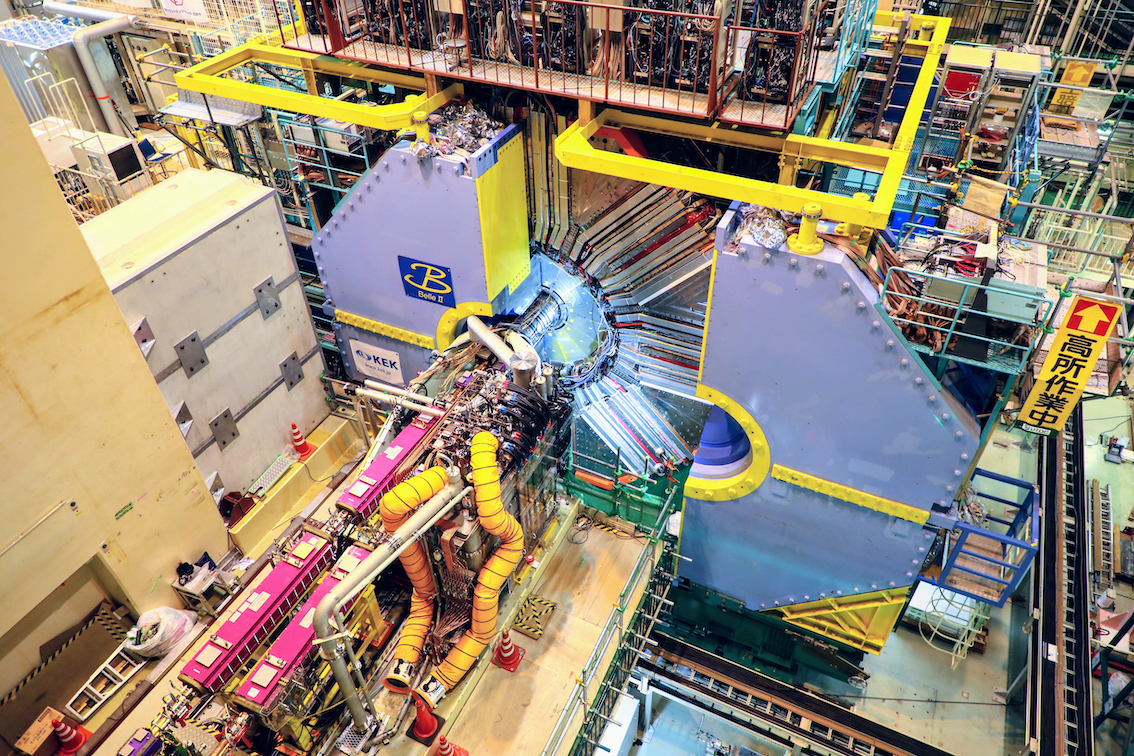
Prof. Dr. Torben Ferber is a Professor at the Karlsruhe Institute of Technology (KIT), leading the Institute of Experimental Particle Physics (ETP). His research focuses on flavor physics in B-meson decays, searches for dark photons, axion-like particles, and long-lived particles at the Belle II experiment, and future projects like LUXE and DELIGHT. He contributes to detector software development and real-time machine learning algorithms for tracking systems. Teaching responsibilities include undergraduate courses on programming, statistics, and particle physics, as well as advanced graduate courses on flavor physics and modern data analysis methods. His group actively collaborates on Belle II's electromagnetic calorimeter reconstruction and explores cutting-edge technologies like GPU acceleration and FPGA-based tracking. Research trends in recent articles emphasize machine learning applications in track reconstruction, CP-violation studies in B-meson decays, and searches for dark matter signatures. His work addresses unresolved questions in the Standard Model, such as discrepancies in CKM matrix element measurements and the origin of matter-antimatter asymmetry. Outreach activities include VR particle detector demonstrations, LEGO models, and masterclasses for students. Supervision of theses spans topics like GPU-accelerated algorithms, FPGA hardware design, and Belle II data analysis. The group adheres to a Code of Conduct promoting inclusivity and respect in academic collaboration.
Vladimir Loncar is a researcher specializing in machine learning, FPGA optimization, and high-energy physics computing. His work focuses on accelerating neural networks and scientific algorithms using hardware-aware techniques. Notably, he contributes to the hls4ml framework for FPGA deployment of machine learning models, and has applied these methods to particle physics experiments like LHCb and the HL-LHC. His research spans symbolic regression, recurrent neural networks, and real-time data processing for large-scale physics detectors. Key projects include developing resource-efficient inference systems (e.g., Tailor for CNN optimization), benchmarking frameworks for GNN-based surrogate models, and latency-critical implementations for collider experiments. Loncar's work bridges theoretical physics and computational engineering, emphasizing practical applications in experimental particle physics, quantum simulations, and autonomous detector control. He collaborates extensively with institutions like CERN and the sPHENIX collaboration.
Dongming Xu is a Professor at Sun Yat-sen University's School of Data and Computer Science, Department of Information Systems, with an extensive publication record spanning over two decades in the field of Information Systems. His scholarly contributions demonstrate expertise in intelligent agent systems, e-learning environments, digital innovation, and knowledge management, with recent work expanding into healthcare informatics, 5G technology, and FPGA design. Xu's research interests focus on the intersection of technology and human behavior, particularly examining how digital systems can enhance learning, financial management, healthcare delivery, and disaster response. His work employs both theoretical frameworks and practical implementations, often utilizing intelligent agents, machine learning techniques, and socio-technical perspectives to address complex information system challenges. Analysis of Xu's 15 most recent publications reveals a strategic evolution in research focus, beginning with foundational work in intelligent agent-supported systems and virtual learning environments, expanding into knowledge management and digital disruption theory, and most recently incorporating advanced technical implementations in wireless communications and hardware design. This progression demonstrates both theoretical depth and practical application across multiple domains. Multiple publications in top-tier Information Systems journals including Information Systems Journal, Journal of Global Information Management, and Decision Support Systems Regular contributions to premier conferences such as PACIS, ICIS, HICSS, and AMCIS Interdisciplinary research connecting computer science, business, healthcare, and social sciences Xu has established productive research collaborations with scholars across multiple institutions, particularly working with Huaiqing Wang, Jun Shen, Tingru Cui, and Geng Sun. His research has received consistent funding support, enabling sustained investigation into evolving information technology challenges. Current work shows increasing emphasis on AI applications in healthcare, advanced communication technologies, and digital platform ecosystems.
Randy H. Katz is a distinguished Professor in the Department of Electrical Engineering and Computer Sciences at the University of California, Berkeley's College of Engineering. With an extensive publication record spanning over two decades, he has established himself as a leading researcher in computer systems, distributed computing, and energy-efficient architectures. His work bridges theoretical foundations with practical implementations in cloud computing, networking, and smart infrastructure systems. Professor Katz's research interests span a broad spectrum of computer systems topics, with particular emphasis on energy-efficient computing, distributed systems design, and infrastructure for emerging applications. His work on FireSim represents a major contribution to FPGA-based system simulation, while his research on energy-aware datacenters and smart grids addresses critical sustainability challenges in computing infrastructure. He has pioneered approaches in serverless computing, blockchain systems, and mobile augmented reality that balance performance with energy constraints. Analysis of Professor Katz's recent publications reveals a strong focus on hardware-software co-design for emerging computing paradigms. His work consistently addresses the tension between performance and energy efficiency across multiple domains including cloud infrastructure, smart buildings, and mobile systems. A notable trend is his focus on making complex systems more accessible and manageable through innovative abstractions like FireSim for hardware simulation and Cirrus for serverless machine learning workflows. Scientific Awards: IEEE James H. Mulligan, Jr. Education Medal (2010) - Recognizing his exceptional contributions to engineering education Professor Katz has advised numerous PhD and Master's students who have gone on to influential positions in both academia and industry. His research has been supported by major grants from NSF, DARPA, and industry partnerships with leading technology companies. His work on Mesos, a cluster resource management system, has had significant industry impact, and his energy-efficient computing research has informed datacenter design practices across the industry. His research group at UC Berkeley has been instrumental in developing frameworks like FireSim for hardware acceleration and FirePerf for performance profiling. These tools have become important resources for the computer architecture community, enabling researchers to explore new hardware designs with unprecedented efficiency. His work on smart buildings through projects like SnapLink demonstrates his commitment to applying computing research to solve real-world sustainability challenges.
Yannick Le Moullec is a researcher affiliated with Tallinn University of Technology, specializing in wireless communication technologies, Internet of Things (IoT), and 6G network optimization. His work focuses on energy-efficient systems, device-to-device communication, UAV swarms, and hybrid machine learning models for microfluidic imaging. He has contributed to NB-IoT, RIS-based communication, and federated learning frameworks. Education : Not explicitly mentioned Research Trends : His recent publications emphasize 6G networks, device-to-device discovery, UAV coordination, and edge computing. He explores synergies between reinforcement learning and stochastic resource allocation. Grant Activity : No specific grants listed Labs & Collaborations : Collaborates with teams across Estonia, France, and international institutions on IoT and embedded systems, particularly in healthcare and emergency communication contexts.
Stefan Johann Rupitsch is a Professor at the University of Freiburg, leading the Professorship for Electrical Measurement Technology and Embedded Systems since December 2020. He holds a prominent role in academic and industrial research collaborations, focusing on interdisciplinary fields such as sensor systems, biomedical engineering, and embedded technologies. His work bridges theoretical research with practical applications, including drug delivery systems, environmental monitoring, and disaster response technologies. **Education**: Information not explicitly provided in the text. **Research Interests**: His primary research areas include wireless sensor networks, ultrasound imaging for biomedical applications, magnetic nanoparticle localization, and energy-efficient embedded systems. He has pioneered advancements in magnetomotive ultrasound for drug targeting and developed innovative sensor platforms for industrial and environmental monitoring. His projects often integrate machine learning and robotics to enhance system precision and autonomy. **Projects**: As a project manager or coordinator, he oversees initiatives such as wireless microsensor probes for tree canopy monitoring (B1), cochlear implant sensing (CIAS), and disaster-site radar systems (avaRES). Recent efforts focus on sustainable sensor technologies for wear part optimization (Smart Belt) and gas infrastructure resilience (LEAKALERT). **Grants & Advising**: Rupitsch has supervised numerous theses in fields like sensor design, AI for building acoustics, and earthquake monitoring. He actively participates in reviewing academic works and industry projects, reflecting his leadership in technical communities. **Labs & Teams**: His research is conducted through collaborations with the Microsystems for Biomedical Imaging Laboratory and the Sustainability Performance Center, emphasizing interdisciplinary teamwork and real-world impact.