معرفی
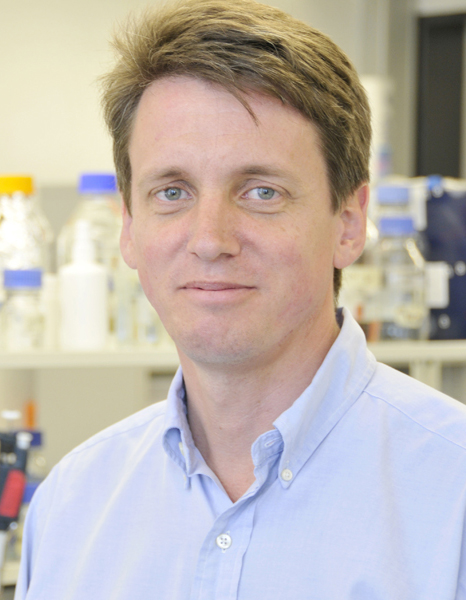
Associate Professor Dr. Marcus Stoffel is a faculty member at RWTH Aachen University, serving within the Faculty of Mechanical Engineering as head of the Chair and Institute of General Mechanics. His research integrates advanced computational mechanics with cutting-edge machine-learning techniques, focusing on viscoplastic material modeling, neural network surrogates, biomechanical systems, and neuromorphic computing.
Education: While explicit degrees are not listed in the text, his title of Dr. and rank of Associate Professor at a leading German technical university imply doctoral and post-doctoral qualifications in mechanical engineering or a closely related discipline.
Research Interests:
- Computational viscoplasticity and damage mechanics
- Physics-informed neural networks and spiking neural architectures
- Machine-learning-enhanced finite element methods
- Crashworthiness and structural optimization
- Biomechanics of musculoskeletal tissues and medical devices
- Sustainable neuromorphic computing for engineering applications
Publication Trends:
Across 2023–2025, Stoffel’s articles reveal a rapid pivot toward AI-accelerated engineering, coupling neuromorphic processors with traditional solid-mechanics problems such as viscoplastic beam response and membrane instabilities. Recurrent themes include surrogate modeling via spiking neural networks, generative learning for design optimization, and data-driven biomechanical analyses of spinal instrumentation and cartilage.
Scientific Awards:
No specific awards are mentioned in the provided text.
Funding & Teams:
While individual grants are not detailed, the extensive publication output and involvement in interdisciplinary projects (e.g., neuromorphic computing, biomechanics, crashworthiness) indicate robust external funding. He leads the Institute of General Mechanics, supervising a research group that bridges theoretical mechanics, numerical methods, and experimental biomechanics.
Laboratories & Facilities:
Stoffel’s team operates within the Institute of General Mechanics at RWTH Aachen, equipped with advanced finite-element computing resources, experimental biomechanical rigs (e.g., spine test rigs and bioreactors), and neuromorphic hardware platforms for sustainable AI research.