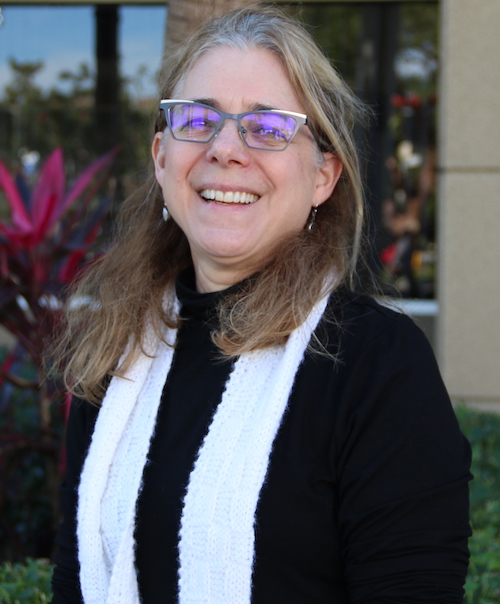
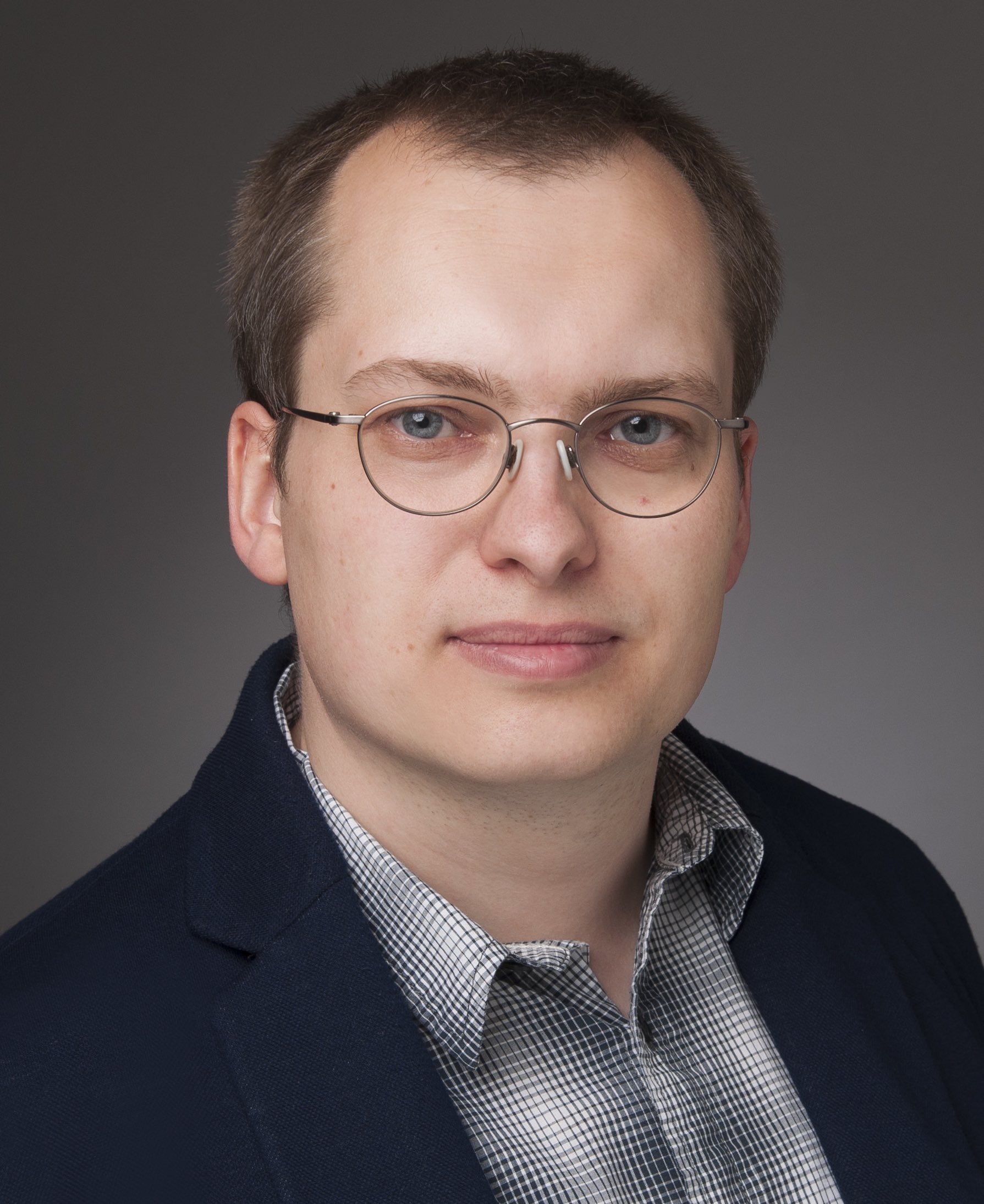
Dr. Teresa Wilcox is a Professor in the Department of Psychology at Florida Atlantic University's Charles E. Schmidt College of Science. Her research focuses on infant cognition, perception, and the functional organization of the infant brain, particularly in understanding social and mechanical entities. She employs advanced methodologies such as violation-of-expectation, eye tracking, action tasks, and functional near-infrared spectroscopy (fNIRS). Ph.D., Psychology, University of Arizona (1993) M.S., Child Development, University of California, Davis (1988) B.A., Psychology, Bethel University (1985) Her work explores how infants acquire knowledge about physical, mechanical, and social entities, with a strong emphasis on neural activation patterns and behavioral responses. Recent publications highlight her expertise in fNIRS signal analysis, infant-mother synchrony, and object individuation. Dr. Wilcox leads the Infant Cognition and Language Lab (ICLAB), where her team investigates brain dynamics in early development. Dr. Wilcox's research trends include tensor decomposition for fNIRS data, social perception in neuromarketing contexts, and the role of visual cues in infant cognition. Her work bridges cognitive science, neuroscience, and developmental psychology, contributing foundational insights into early knowledge acquisition.
Patricia Gerván is a Lecturer at the Institute of Psychology and the Department of Developmental and Clinical Child Psychology at Eötvös Loránd University, Budapest. Her work focuses on adolescent neurodevelopment through the interplay of biological maturation and cognitive/emotional processes. Specializes in developmental psychology and cognitive neuroscience Investigates sleep's role in learning and brain plasticity Studies neurodevelopmental disorders like Williams syndrome Examines maturation-dependent motor and cognitive function Her recent research explores sleep spindle clustering post-visual training, biological maturity's impact on executive function, and motor skill development in adolescents. Publications show interdisciplinary focus on neurodevelopmental disorders and human neurophysiology. While no explicit awards or student advisement details appear in the scraped text, her work spans neurodevelopmental screening methods, pandemic-related stress responses, and music therapy applications for motor function improvement.
Paweł Korpal is an Assistant Professor at the Department of Translation Studies, Faculty of English, Adam Mickiewicz University in Poznań. His interdisciplinary research bridges psycholinguistics, conference interpreting, and emotional language processing, employing psychophysiological methods like galvanic skin response (GSR), eye-tracking, and heart rate monitoring. BA in English (2010) and Danish (2012), Adam Mickiewicz University MA in Conference Interpreting (2012), Scandinavian Studies (2014), and Psychology (2017), Adam Mickiewicz University Ph.D. in English Linguistics (2016) and D.Litt. in Linguistics (2023), Adam Mickiewicz University His research focuses on stress and emotion in simultaneous and community interpreting, particularly how traumatic content affects interpreters' mental well-being and how psychophysiological indicators (e.g., stress, emotional arousal) correlate with performance. He investigates numerical data processing, coping strategies, and the impact of remote interpreting settings through grants like the National Science Centre's 'The compassionate interpreter' (2021–2024) and AIIC Research Grant (2021–2022). The 15 most recent publications highlight trends in cognitive load during simultaneous interpreting, bilingual emotional processing, and methodological advancements in eye-tracking and physiological measurement. These works span journals like Perspectives , Target , and Polish Psychological Bulletin , reflecting his expertise in stress indicators, interpreter training, and emotional contagion. START scholarship (2018) Ministry of Science and Higher Education scholarship (2019) Fulbright Senior Award (2020/21) POLITYKA Science Awards finalist (2022) Korpal actively participates in academic outreach, organizing thematic panels at conferences (e.g., IATIS 2021, 10th EST Congress 2022) and serving on the Young Academy of Europe's board (2019–2022). He peer-reviews for journals such as The Interpreter and Translator Trainer and Translation Research and Practice .
Prof. Dr. Katharina Spalek serves as Professor of Psycho- and Neurolinguistics at Heinrich Heine University Düsseldorf's Faculty of Arts and Humanities within the Institute of Linguistics since her appointment in August 2021. Her research examines human language processing across multiple linguistic levels—from phonetics to narrative discourse—with particular emphasis on focus alternatives and memory mechanisms. Current affiliations include leadership of ERC-funded projects and active participation in international research collaborations. Her educational background spans German linguistics and psychology studies at Heidelberg University, University of Oxford, and Humboldt University Berlin, culminating in a doctoral degree from Radboud University Nijmegen (2005). Postdoctoral research followed in the USA and UK before her 2007 appointment as junior professor at Humboldt University Berlin. Spalek's research trajectory evolved from language production in monolingual/bilingual speakers toward language comprehension, investigating how humans process sounds, words, phrases, and narrative discourse. Recent work integrates electrophysiological (ERP), behavioral, and computational methods to explore focus alternatives, cross-linguistic variation (including Vietnamese tonal systems), and the interplay between linguistic and visual information. Her experimental paradigms frequently employ picture-word interference, recall tasks, and discourse analysis to uncover cognitive mechanisms underlying alternative set representation. Analysis of her 15 most recent publications (2019-2024) reveals three dominant trends: (1) neurocognitive investigation of focus alternatives using ERP methodology, (2) cross-linguistic studies of intonation and tonal processing, and (3) computational modeling of human performance in language tasks. These works consistently bridge theoretical linguistics with experimental validation, emphasizing memory encoding for contextual alternatives and individual differences in processing. ERC Starter Grant for 'focus alternatives in the human mind' (2016) Posterpreis at 17th Herbsttreffen Patholinguistik (2023) Her ERC-funded research program examines how focus particles and pitch accents modulate alternative set representation in production and comprehension. Current projects investigate neural correlates of discourse memory, Vietnamese intonation patterns, and computational models of human language processing limitations. Collaborative work spans institutions in Germany, Netherlands, and Vietnam, with methodological emphasis on controlled experiments and cross-linguistic comparison. Spalek leads the Psycho- and Neurolinguistics research group within the Institute of Linguistics, utilizing facilities for ERP recording, eye-tracking, and behavioral experimentation. Her team conducts interdisciplinary research at the intersection of linguistics, cognitive science, and neuroscience, with particular focus on how information structure shapes language processing and memory.
Sybille Caffiau serves as an Associate Professor in the Computer Science Department at the University of Grenoble Alpes, France, where she is affiliated with the Grenoble Computer Science Laboratory (LIG) within the College of Engineering. Her research focuses on Human-Computer Interaction (HCI) with specializations in smart home systems, end-user development, and voice-based interaction technologies. She maintains an active research program through the Human-Computer Interaction Engineering Team (IIHM/ECMI). Her primary research interests center on making smart home technologies more accessible through innovative interaction paradigms. Key areas include context-aware programming languages like CCBL (Cascading Contexts Based Language), voice interface design for ambient assisted living, tactile feedback mechanisms, and task model comprehension. Her work bridges theoretical HCI principles with practical applications in real-world smart home environments, particularly focusing on user-centered design approaches that empower inhabitants as developers of their own living spaces. Analysis of her recent publications reveals a consistent focus on improving end-user programmability in smart homes through novel language design (CCBL), empirical validation of voice interfaces, and educational frameworks for HCI engineering. Her research demonstrates strong interdisciplinary connections between interaction design, programming language theory, and accessibility considerations, with particular emphasis on creating systems that accommodate diverse user needs including elderly populations and people with visual impairments. Through projects like SWEET-HOME and VocADom, Caffiau has contributed significantly to voice-based interaction in smart home environments, developing corpus collections and evaluating system performance against user experience metrics. Her work on educational frameworks for HCI engineering demonstrates commitment to advancing pedagogy in the field through structured case studies and practical teaching methodologies.
Sergiy Denysov serves as Professor in the Department of Information Technology at Oslo Metropolitan University's Faculty of Technology, Art and Design. He is an active member of the Mathematical Modeling research group, focusing on the intersection of computational physics and quantum information systems. His research spans: Quantum Computing and Noisy Intermediate-Scale Quantum (NISQ) devices Statistical mechanics of complex systems Stochastic processes including Lévy flights and Markovian dynamics Spectral theory of random operators Machine learning applications in physical modeling Mathematical foundations of quantum information Analysis of his 2021-2025 publications reveals strong emphasis on quantum-classical algorithm synergies, spectral properties of quantum operations, and anomalous diffusion phenomena. His work consistently bridges theoretical physics with computational implementations, particularly through Python-based tools for stochastic process modeling. Denysov actively contributes to the Mathematical Modeling research group, which develops analytical and computational frameworks for physical systems across quantum information, statistical mechanics, and complex dynamics domains.
Sebastian Sauppe is a Senior Assistant and Ambizione Fellow at the University of Zurich's Department of Psychology, where he leads the research area 'Cognitive and Developmental Neuroscience of Language' within the Developmental Psychology: Infancy and Childhood unit. His work bridges language processing, cognitive neuroscience, and ontogenetic development, with fieldwork conducted on under-researched languages including Äiwoo in Solomon Islands. Education: Recipient of Max Planck Society's Otto Hahn medal for psycholinguistic dissertation work Current Roles: SNSF Ambizione grant holder, National Geographic Explorer Dr. Sauppe's research focuses on linguistic diversity and language processing , examining how grammatical structures interact with real-time comprehension and production. His work on incremental processing investigates neural mechanisms of sentence construction, while event cognition studies explore how language shapes semantic role representation. He also examines child development of language-cognition interfaces and interactive language use in social contexts. His methodology combines mobile EEG, eye-tracking, and behavioral paradigms across diverse linguistic environments. Analysis of his recent publications reveals strong emphasis on cross-linguistic validation of processing principles (particularly agent preference phenomena), neural correlates of syntactic variation, and methodological innovation in field psycholinguistics. His work consistently bridges theoretical linguistics with cognitive neuroscience, with increasing focus on developmental trajectories. National Geographic Explorer (awarded by National Geographic Society) Otto Hahn Medal (Max Planck Society for outstanding dissertation work) As an Ambizione grant holder, Dr. Sauppe leads independent research while mentoring junior researchers. His fieldwork in Solomon Islands demonstrates commitment to ecological validity and linguistic diversity. Current projects involve mobile EEG studies of language processing in naturalistic settings and cross-species comparisons of event cognition with great apes. His research group collaborates extensively across Europe and with field linguists worldwide, developing novel paradigms for studying language in under-documented contexts. Dr. Sauppe maintains active laboratory work at the University of Zurich while conducting periodic field expeditions. His team utilizes mobile neuroimaging equipment for cross-cultural studies and collaborates with primatology researchers on comparative cognition projects. The lab emphasizes methodological rigor in both controlled laboratory and naturalistic field settings.
Adrian Staub is a Professor in the Department of Psychological and Brain Sciences at the University of Massachusetts Amherst. He directs the UMass Eyetracking Laboratory and focuses on psycholinguistics, particularly the cognitive processes underlying language comprehension and production. His work frequently employs eye-tracking methodologies to investigate syntactic parsing, word recognition, and predictability effects in reading. PhD in Psychological and Brain Sciences (2008), University of Massachusetts Amherst Research Interests Staub's research spans psycholinguistic theory, eye movement analysis during reading, and methodological issues in psychological science. He studies how readers process syntactic structures, recognize words, and integrate predictability information. His recent work includes investigations of function word errors in reading, statistical power in language research, and the theoretical foundations of the replication crisis in psychology. Recent Publications His publications examine phenomena such as the 'Sentence Superiority Effect,' the effects of predictability on lexical processing, and methodological challenges in eye-tracking research. These studies span diverse topics including cross-linguistic comparisons (e.g., Italian, French, Chinese), computational modeling of reading processes, and theoretical debates in psycholinguistics. Academic Roles Since January 2023, Staub has served as Editor-in-Chief of the Journal of Memory and Language . He has also acted as guest editor for a special issue on eye movements in reading at 50. His teaching includes graduate seminars on the replication crisis and undergraduate courses on the psychology of reading. International Collaborations Staub has held visiting appointments at institutions including the Labex EFL Project in Paris, the University of Salzburg, and the University of Milan-Bicocca. These roles reflect his engagement in international research networks focused on reading cognition and eye-tracking methodologies.
Professor Karl R. Gegenfurtner is a distinguished researcher in visual perception at Justus-Liebig-University Giessen, where he has served as Professor for General Psychology since 2001. His work bridges the gap between sensory processing, visual cognition, and motor control, with a particular focus on color vision and eye movement research. His educational background includes a Diploma in Psychology from the University of Regensburg (1986) and a Ph.D. in Experimental Psychology from New York University (1990), followed by postdoctoral work at the Howard Hughes Medical Institute and NYU's Center for Neural Science. Before joining Giessen, he was a research scientist at the MPI for Biological Cybernetics in Tübingen (1993-2000) and Professor for Biological Psychology at Otto-von-Guericke University Magdeburg (2000-2001). Professor Gegenfurtner's research centers on information processing in the visual system, particularly the relationship between low-level sensory processes, higher-level visual cognition, and sensorimotor integration. His work investigates how complex scenes and objects are perceived in natural environments, how they are represented in the brain, and how visual information drives motor systems. His specific interests include color vision, color constancy, eye movement control, visual processing during eye movements, and the neural mechanisms underlying visual perception. His recent publications reveal a strong focus on color processing in both biological and artificial systems, saccadic suppression mechanisms, color categorization, and the interaction between visual perception and eye movements. His work combines psychophysical methods with computational modeling and increasingly incorporates deep learning approaches to understand visual processing. 2024: Russell Devalois Memorial lecture UC Berkeley 2024: ICVS Verriest medal 2024: Pineapple Science Award 2019: Palmer Lecture of the Colour Group (GB) 2019: Turrell Lecture Berlin 2016: Wilhelm Wundt medal of the German Society for Psychology 2014: Rank Prize Funds Lecture at the European Conference of Visual Perception Since 2015: Member, German National Academy of Science (Leopoldina) Professor Gegenfurtner has served on numerous editorial boards including Journal of Vision (Associate editor since 2018), Vision Research, and Perception. He was President of the Vision Science Society (2012/2013) and serves on the fellowship selection committee for the Alexander von Humboldt-Foundation. His research has been supported by prestigious grants including an ERC Advanced Grant (2020-2025) for "Color 3.0: an object-oriented approach to color" and multiple DFG-funded collaborative research centers. He leads research projects investigating predictive mechanisms in peripheral vision, the origins of color categories, and neurOscientific workflow assistance (NOWA). His laboratory continues to push the boundaries of visual neuroscience, with recent work exploring color processing using deep neural networks and investigating visual phenomena in virtual reality environments.
Michael Hahn is a Tenure-Track Professor (W2) at Saarland Informatics Campus, Saarland University, where he directs the Language, Computation, and Cognition Lab (LaCoCo). He is affiliated with the Departments of Language Science and Technology and Computer Science, and holds additional distinctions as an ELLIS Member and ELIZA Fellow. Dr. Hahn received his PhD from Stanford University in 2022, advised by Judith Degen and Dan Jurafsky. His academic journey has positioned him at the forefront of research bridging artificial intelligence, cognitive science, and linguistics, with a focus on understanding language models and human cognition through computational approaches. His research interests include: Information Processing in LLMs and the Brain Abilities of Language Models and how they are learned through theoretical and empirical methods Understanding Inner Workings of Language Models via mechanistic reverse-engineering Computational Cognition and Neuroscience, modeling human language processing and perception Dr. Hahn's publications reveal a strong emphasis on theoretical foundations of language models, with significant contributions to understanding transformer architectures, language model capabilities, and their relationship to human cognition. His work spans from establishing formal frameworks for length generalization to developing methods for neural activation analysis, consistently appearing in top-tier venues including ICML, ICLR, ACL, and NeurIPS. His scientific recognition includes: Best Paper Award at ACL 2024 for "Why are Sensitive Functions Hard for Transformers?" Second Prize at ICML 2024 Mechanistic Interpretability Workshop for "InversionView for reading out information from neural activations" Recognition as Outstanding Area Chair at EMNLP 2024 Dr. Hahn actively mentors students and researchers, supervising PhD students, postdoctoral researchers, and research assistants. His lab has demonstrated remarkable productivity, with multiple papers accepted at premier conferences including three at NeurIPS 2024 and works at ICLR 2025 and ICML 2025. He is also involved in the academic community through co-organizing workshops and delivering invited talks. The Language, Computation, and Cognition Lab (LaCoCo) serves as a hub for cutting-edge interdisciplinary research, investigating the fundamental connections between machine learning, language, and the human mind, with a particular emphasis on understanding the relationship between artificial and human intelligence.
Reito Salonen is a Project Planner at the Department of Educational Sciences , Institute of Humanities and Social Sciences (HSSH) , University of Helsinki , and a key researcher in educational sciences, particularly focusing on collaborative learning, visual attention in teaching, and virtual learning environments. Research Interests include: Collaborative geometry problem-solving dynamics Teacher visual attention in co-teaching settings Emotional states in virtual learning Evidence-centered design in educational assessment Physiological measures for learning analytics Sociodigital practices post-COVID-19 distance learning Notable Research Trends from his publications (2025-2024) involve interdisciplinary methods combining educational psychology, eye-tracking technology, and data-driven assessment frameworks to study student-teacher interactions and digital learning resilience.
Madeleine Stepper is a Researcher at the University of Tübingen's Faculty of Science, Department of Psychology, specializing in the Evolutionary Cognition Research Group under Prof. Dr. Bettina Rolke. She has been a scientific staff member since completing her Ph.D. in Cognitive Science at the same institution. Her academic background includes: B.Sc. in Cognitive Science (2011-2014) from University of Tübingen M.Sc. in Cognitive Science (2014-2016) from University of Tübingen Research Internship at University of Aberdeen's School of Psychology (2018) Stepper's research centers on visual perception mechanisms, particularly object correspondence processes, attentional systems, and motion perception. Her experimental work investigates how visual working memory, spatial attention, and feature-based attention interact to resolve perceptual ambiguities in dynamic visual scenes. She employs rigorous psychophysical methodologies to dissect cognitive processes underlying human vision, with emphasis on how object history, size illusions, and voluntary attention modulate perceptual organization. Analysis of her 2016-2021 publications reveals a cohesive research trajectory focused on experimental cognitive psychology. Her work consistently bridges theoretical frameworks in visual cognition with empirical testing, demonstrating expertise in Ternus display paradigms, attentional modulation experiments, and motion perception studies. The publications show progressive methodological sophistication while maintaining core focus on object correspondence mechanisms. No scientific awards were documented in the source materials. Stepper contributes to academic training through practical seminars in Experimental Psychology and Experimental Cognitive Science for bachelor students. Her involvement in the DFG-funded project "Mechanisms of object-based correspondence" during her Ph.D. demonstrates participation in competitively awarded research funding. She regularly presents findings at major vision science conferences including ECVP, VSS, and TeaP. She operates within the Evolutionary Cognition Research Group, which investigates cognitive processes through interdisciplinary approaches combining experimental psychology, neuroscience, and evolutionary perspectives. The group maintains active collaborations across European institutions as evidenced by her Aberdeen internship and co-authorships with international researchers.
Gunilla Stenberg is a Professor in the Department of Psychology specializing in Developmental Psychology at Uppsala University. Her contact information indicates she maintains an active academic position with a university email address and telephone number. She is based at Von Kraemers allé 1A och 1C in Uppsala, Sweden. Professor Stenberg's research focuses primarily on infant social cognition, with particular emphasis on social referencing, imitation, and social learning mechanisms. Her work investigates how infants interpret social cues from adults, particularly in ambiguous situations, and how they develop expectations about adult responsiveness. She has made significant contributions to understanding how infants use social information from others to guide their behavior and learning. Her research portfolio reveals consistent scholarly output across more than three decades, with recent publications showing continued active engagement in developmental psychology research. Her work often employs innovative methodologies, including head-mounted cameras for measuring gaze direction in infants. The research demonstrates evolving interests from foundational social referencing studies to more complex investigations of third-party observation and conformity in preschoolers. Professor Stenberg frequently collaborates with researchers such as Clara Schmitow, Kahl Hellmer, and Christine Fawcett, indicating strong research networks in developmental psychology. Her publications appear in leading journals including Infancy , Interaction Studies , and Infant Behavior and Development .
Charis Li serves as Assistant Professor of Marketing and Academic Director of the Doctorate in Business Administration (DBA) at Grenoble Ecole de Management, where she investigates psychological mechanisms shaping consumer behavior in evolving marketplaces through identity, generosity, and visual processing frameworks. Her academic credentials include: Master of Science in Behavioral Economics from University of Wisconsin PhD in Marketing from University of Florida Research focuses on consumer psychology in critical domains: examining how visual processing influences sharing economy participation through eye-tracking and VR methodologies, analyzing generosity mechanisms in sustainable consumption patterns, and evaluating pedagogical innovations in management education. Her interdisciplinary approach bridges experimental psychology with real-world business applications across social media and sustainability contexts. As DBA Academic Director, she mentors doctoral candidates while teaching research methods and sustainability courses across all academic levels. Her leadership integrates quantitative (machine learning, field experiments) and qualitative (netnography, interviews) methodologies to address contemporary marketplace challenges.
Celine Frank is a predoctoral researcher and PhD student at the Chair for Social Psychology at Technische Universität Dresden and the University of Cologne. Her work focuses on ambivalence, judgment and decision-making, prosocial behavior, and cross-cultural psychology. Current Role: Research Associate (2023–present) at TU Dresden PhD Studies: Since 2022 at the University of Cologne Education: M.Sc. Psychology (2022) and B.Sc. Psychology (2019) from the University of Cologne Her research examines how ambivalence influences adherence to public health guidelines and decision-making processes, particularly during crises like the COVID-19 pandemic. She applies methods from social psychology and behavioral science, with a focus on cross-cultural comparisons. Celine's publications highlight her contributions to understanding ambivalence in preventive health behaviors across the U.S. and Germany. She utilizes empirical data analysis and experimental designs to explore these psychological dynamics. Scientific Award: Junior Start-Up Grant Eye-tracking Ambivalence (2022) Celine collaborates with Prof. Dr. Iris Schneider and Prof. Dr. Andreas Glöckner at the Social Cognition Center Cologne, integrating her research with institutional expertise in social psychology and decision-making theories.