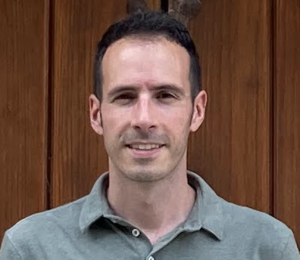
Manuel Pulido-Azpíroz is an Assistant Professor of Spanish and Linguistics at The Pennsylvania State University, with affiliations in the Department of Spanish, Italian, and Portuguese. His research focuses on second language acquisition, cognitive science, and psycholinguistics, particularly exploring how adults process and learn multiword units and how individual cognitive differences affect L2 learning outcomes. He directs the CoALA lab (Cognition of Adult Language Acquisition), utilizing methods like ERP, eye-tracking, and corpus data analysis. Key research themes include the role of input optimization, cognitive load, and cross-linguistic influences in L2 acquisition. His recent work examines nested collocations, Zipfian input effects, and neural correlates of L2 processing. Pulido holds a PhD and MA from Penn State and an MA from the University of Navarra.
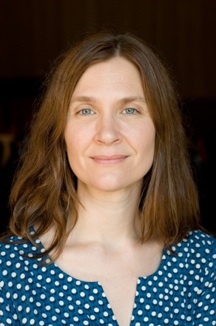
Charles Perfetti is a Distinguished University Professor in the Department of Psychology at the University of Pittsburgh's Dietrich School of Arts & Sciences, where he directs the Reading and Language Laboratories. His research examines cognitive and neural foundations of reading across languages, with emphasis on word identification, comprehension, bilingual processing, and neural accommodation to writing systems. His primary research investigates reading comprehension through integrated lexical quality frameworks, neural mechanisms of language processing (using fMRI and ERP), cross-linguistic comparisons of reading acquisition, and second language learning. Recent work explores Chinese-English bilingual processing, neural correlates of text integration, and universal characteristics of reading systems. Publications over the past 15 years demonstrate consistent themes: cognitive architecture of reading, neural plasticity in literacy development, bilingual lexical representation, and methodological innovations in measuring reading processes. Strong emphasis on writing system variation characterizes his comparative research program. Distinguished Scientific Contribution Award, Society for the Scientific Study of Reading (2004) Chancellor's Distinguished Research Award (2000) Elected to FABBS 'In Honor Of' Program (2017) Distinguished Scholar Award, AERA Research in Reading and Literacy SIG (2017) He currently advises graduate students Geoffrey Lizar and Weiqi Wang, and leads NSF-funded projects on reading across writing systems. As Director of the Learning Research & Development Center, he oversees collaborative projects integrating cognitive science with educational applications.
Dr. David Hamilton is a Teaching Professor in Psychology at the University of Strathclyde, where he joined as a Teaching Associate in 2022. He specializes in leveraging Virtual Reality (VR) and Generative Artificial Intelligence (AI) as pedagogical tools to enhance learning outcomes, empathy, and perspective-taking in educational settings. His research aligns with UN Sustainable Development Goals, particularly addressing quality education (SDG 4) through innovative teaching methodologies. Hamilton teaches on modules such as B9200 - Introduction to Mental Health Difficulties and C8201 - Cognition and Neuropsychology , alongside supervising undergraduate and postgraduate research projects. He leads two notable projects: Behind the Prompts (examining AI-driven learning) and Virtual StatsLab (using VR to improve statistical comprehension). His research interests focus on educational technology, with studies analyzing VR adoption barriers, statistics anxiety in students, and AI integration in curricula. Collaborations with colleagues like Dr. March and Dr. Brisco highlight interdisciplinary teamwork in advancing educational practices. Hamilton’s work emphasizes practical applications of technology in classrooms, aiming to bridge gaps between theoretical knowledge and real-world skills through immersive and adaptive learning environments.
Jesse Snedeker is a Professor in the Department of Psychology at Harvard University, within the Faculty of Arts and Sciences. Their research investigates the cognitive and linguistic mechanisms underlying language acquisition and processing in children, with a particular focus on naturalistic contexts and developmental trajectories. Education: University of Washington, B.A., 1994 University of Pennsylvania, M.A., 1996 University of Pennsylvania, Ph.D., 1999 Dr. Snedeker's research centers on psycholinguistics and cognitive development, especially how children learn language through interaction, context, and prediction. Their work integrates behavioral, electrophysiological (EEG), and eye-tracking methodologies to explore lexical processing, syntactic generalization, and semantic integration in both typical development and autism. A strong emphasis is placed on naturalistic paradigms and real-world language input. The recent publications reflect a cohesive research program examining language acquisition through meta-analytic, experimental, and methodological lenses. Themes include the role of caregiver input, form- and meaning-based prediction, cascaded processing in production, and innovative data collection techniques like webcam eye-tracking. The work spans cognitive psychology, developmental science, and neuroscience, often employing advanced tools to study real-time language use in children. Scientific Awards: No awards listed in the provided text. Dr. Snedeker leads the Snedeker Lab at Harvard, mentoring graduate and undergraduate researchers involved in studies on language and cognition in autism and typical development. Their lab conducts both in-person and online studies, contributing to foundational knowledge in language acquisition. While specific grants are not mentioned, the breadth and technical sophistication of the research suggest sustained funding support. Future work appears to be advancing naturalistic methods and deepening understanding of interactive language learning.
Elika Bergelson is an Associate Professor in the Department of Psychology at Harvard University, where she leads the Bergelson Lab (BLAB) within the Laboratory for Developmental Studies. Her research investigates how infants learn language from their surrounding linguistic, visual, and social environments. She previously held faculty positions at Duke University and the University of Rochester, and her work bridges developmental psychology, cognitive science, and linguistics. PhD in Psychology, University of Pennsylvania (2013) Postdoctoral Researcher, University of Rochester (2013–2014) Research Assistant Professor, University of Rochester (2014–2016) Assistant/Associate Professor, Duke University (2016–2022) Associate Professor, Harvard University (2023–present) Her research focuses on early lexical development, particularly how infants comprehend words before they can speak. She is best known for identifying the “comprehension boost” — a rapid improvement in word understanding around 12–14 months. Using eye-tracking, EEG, corpus analysis, and behavioral methods, her lab explores how sensory input, social interaction, and language exposure shape learning. She also studies language development in blind and deaf/hard-of-hearing infants to understand the role of sensory modalities in acquisition. The recent articles reflect a strong focus on naturalistic language input, cross-linguistic comparisons, and developmental mechanisms. Themes include the impact of parental talk, the relationship between tonal language experience and music processing, and the structure of early vocabularies. Her work increasingly incorporates large-scale data and cross-cultural collaboration, as seen in her PNAS and Science publications. Scientific Awards: NIH Early Investigator Award FABBS Early Career Award Bergelson mentors students and researchers at all levels and is committed to open science, sharing data via HOMEBANK, Databrary, and GitHub. She actively engages in science communication, with media features in the NIH Director’s Blog, BBC, ABC Australia, and Harvard Gazette. Her lab emphasizes diversity, equity, and inclusivity in both research participation and training. The Bergelson Lab is part of Harvard’s Laboratory for Developmental Studies and continues the SEEDLingS project’s legacy while expanding into new domains like atypical development and cross-linguistic studies.
Faouzi Alaya Cheikh is a Professor of Computer Science at NTNU, affiliated with the Faculty of Information Technology and Electrical Engineering. He holds a BSc in Electronics (ENIT, Tunisia, 1992), MSc in Signal Processing (TUT, 1997), and a Dr. Tech. in Signal Processing (TUT, 2004). His career includes roles as an Associate Professor at Gjøvik University College (2006–2015), researcher at TUT (1994–2006), and Electronics Engineer at Société Tunisienne de l'Éléctricité et du Gaz (1992–1993). He leads the Intelligent Systems and Analytics (ISA) research group at NTNU. His research focuses on machine learning, 3D imaging, video surveillance, biometrics, and healthcare applications. Notable projects include Alameda , HiPerNav , and INID . Key areas of innovation include liver surgery visualization, polyp segmentation, facial expression recognition, and IoT-driven healthcare solutions. His work bridges computer vision, medical imaging, and biomedical signal processing. Publications span 2018–2025, emphasizing biomedical applications, autonomous systems, and deep learning frameworks. Recent contributions include real-time liver resection planning, polyp segmentation networks, and emotion recognition for neurological care. Collaborations span industries and institutions globally, addressing challenges in healthcare technology, surgical navigation, and smart cities.
Kwangmin Lee is an Assistant Professor in the Department of Special Education and Literacy Studies at Western Michigan University, where he specializes in TESOL and language assessment. His research integrates quantitative methodologies with applied linguistics to advance understanding of second language reading and writing assessment. Research Interests: Dr. Lee's work centers on language testing and assessment, particularly using statistical and psychometric approaches to analyze second language learners’ performance. His expertise includes educational measurement, research methods in TESOL, and the validation of assessment tools. He investigates areas such as automated writing evaluation, rater reliability, test motivation, and the cognitive aspects of reading and writing in EFL contexts. The recent publications highlight a strong trend in psychometrics, validity, and the application of advanced quantitative techniques—including item response theory, confirmatory factor analysis, and machine learning—to problems in language assessment. His work frequently appears in top-tier journals such as Language Testing , Assessing Writing , and System . Scientific Contributions: Published in leading journals in applied linguistics and language assessment Focused on improving the validity and reliability of language tests Developed and validated assessment instruments for writing self-efficacy and critical thinking Explored technological and cognitive dimensions of language learning and testing Advising and Grants: While specific students or funded grants are not mentioned in the available text, Dr. Lee’s research profile suggests active mentorship potential in quantitative research methods and language assessment. His methodological rigor positions him to lead or contribute to large-scale research initiatives, particularly those involving data-driven evaluation of language programs. Labs and Research Teams: There is no explicit mention of a lab or research team in the provided information. However, his interdisciplinary focus on measurement, statistics, and language learning suggests potential collaboration with educational research centers or language technology initiatives.
Brian W. Dillon is a Professor of Linguistics at the University of Massachusetts Amherst, directing the Computational Sentence Processing Lab. He specializes in psycholinguistics, focusing on real-time sentence processing, working memory, and cross-linguistic studies. Dillon holds a Ph.D. from the University of Maryland and a B.A. from SUNY Buffalo. Research : Investigates how cognitive resources like attention and memory influence language comprehension, with studies on languages such as English, Mandarin, Turkish, and Irish. Key projects include syntactic ambiguity resolution, neural network modeling of syntactic processing, and working memory dynamics in sentence interpretation. Recent Work : Published on eye-tracking methods, language model surprisal and garden path effects, and binding theory. Collaborates on NSF-funded projects exploring syntactic dependency formation and interference in agreement processing. Awards : Received the Distinguished Paper Award at CoNLL 2022 for contributions to syntactic surprisal modeling. Labs & Teams : Leads the Computational Sentence Processing Lab, focusing on experimental and computational methods. Current team includes PhD students like Özge Bakay and Satoru Ozaki, with alumni in academic and industry roles.
Dr Yuanchen Xu is a Lecturer in Computer Science in the Department of Computing & Informatics at Bournemouth University, Faculty of Science and Technology. He holds a PhD in Computer Science (2022) and an MSc in Computing from De Montfort University, and brings over 8 years of industry experience in full-stack software development. Research Interests: His work centers on computational intelligence, including fuzzy logic, rough set theory, neural networks, and grey systems, applied to complex real-world problems involving uncertainty and stochastic decision-making. His primary applications are in cybersecurity, particularly proactive incident response informed by cyber threat intelligence, and intelligent decision support systems. The recent publications reflect a strong focus on integrating business processes with cyber threat intelligence models, developing efficient computational methods using rough sets, and exploring human-centric intelligent systems such as motivation-aware e-learning tools. The research spans disciplines of cybersecurity, artificial intelligence, and human-computer interaction. Scientific Grants: Psychological aspects and cyber threat intelligence (BU Computing QR, awarded October 21, 2024) Teaching and Supervision: Dr Xu leads key units including Security Operations (SecOps) and Introduction to Information Systems Analysis. He also supervises undergraduate final year projects and postgraduate research students. He is actively involved in both undergraduate and postgraduate teaching profiles. Laboratory and Research Environment: While specific lab affiliations are not explicitly mentioned, his research is conducted within the Department of Computing & Informatics at Bournemouth University, likely involving collaboration with cybersecurity and AI research groups.
Corey A. Smith is a Professor in the Department of Ophthalmology & Visual Sciences at Dalhousie University's Faculty of Medicine, focused on retinal imaging and optical coherence tomography angiography (OCTA) . His research balances experimental methods with clinical relevance , emphasizing 3D image analysis and artificial intelligence applications in understanding retinal diseases like glaucoma. Research priorities : interdisciplinary collaboration, OCTA optimization, clinical data integration Students : Masters and Honours students in biomedical engineering and medical sciences Recent publications highlight his work in macular perfusion density , ganglion cell asymmetry , and transsynaptic vascular changes . Awards and educational background are not explicitly mentioned in the provided texts, though opportunities for trainees are advertised.
Fred Feng is an Associate Professor in the Industrial and Manufacturing Systems Engineering department at the University of Michigan-Dearborn's College of Engineering and Computer Science. His work bridges human factors, data science, and transportation safety. Ph.D. in Industrial and Operations Engineering from University of Michigan, Ann Arbor (2015) M.S. in Mechanical Engineering from Tsinghua University (2009) B.E. in Automotive Engineering from Tsinghua University (2006) Research Focus: Human factors in automated vehicles, road safety analysis, human-machine interaction design, and data-driven modeling of mobility systems. His work combines naturalistic driving data with statistical and computational methods to improve transportation safety for vulnerable road users. Publication Trends: Recent work (2022-2023) explores micro-mobility sustainability frameworks and safety-critical scenarios for autonomous vehicles. Earlier studies (2017-2019) focused on driver distraction detection, overtaking behavior analysis, and vehicle dynamics modeling. Grants: Recipient of multiple competitive grants including NSF CAREER funding (2022-2027) and multiple industry-sponsored research projects with Toyota and Ford.
Ilona Södervik is a Senior Lecturer at the Department of Education, University of Helsinki, with affiliations to the Helsinki Institute of Sustainability Science (HELSUS) and the Centre for University Teaching and Learning (HYPE). She also serves as a Visiting Professor at the STEAM Didactics Centre, Vytautas Magnus University (2025–2028). Education: Doctorate in Educational Sciences with a focus on Life Science Pedagogy Research Interests: Ilona's work centers on expertise development in university teacher education and life sciences (biology, pharmacy, medicine). She investigates conceptual understanding in authentic case-processing, adaptive expertise cultivation, and sustainability competences integration. Her research bridges pedagogy, genetics, physiology, and AI literacy in curricula. Recent Publications Trends: Over the past years, her research outputs emphasize interdisciplinary STEAM education, sustainability competences, AI integration in curricula, and perceptual learning in medical education. Key methodologies include eye-tracking and project-based learning frameworks. Scientific Awards: Nuorten Tiedeakatemia (Young Scientist Academy) recognition (2021) Projects & Supervision: She leads initiatives like TROUPER (Erasmus+) and STEAM-oriented interdisciplinary projects. Her supervision includes doctoral candidates in teacher education and life sciences pedagogy. Labs & Collaborations: Active in the SEE/PLAE laboratory, focusing on educational technology and teacher training collaborations between Finland and Lithuania.
Glenn W. Harrison is the C.V. Starr Chair of Risk Management & Insurance and Distinguished University Professor at Georgia State University's J. Mack Robinson College of Business. He is the Director of the Center for the Economic Analysis of Risk (CEAR) within the Maurice R. Greenberg School of Risk Science. With over 200 publications in top economics journals, he is a leading figure in experimental and behavioral economics, risk analysis, and policy evaluation. Ph.D. in Economics, UCLA Master of Arts, UCLA Master of Economics, Monash University Bachelor of Economics (Honours), Monash University, Australia His research focuses on the economics of risk, uncertainty, and insurance, with significant contributions to experimental economics, law and economics, international trade policy, and environmental economics. He has pioneered methods for eliciting subjective beliefs and risk preferences, and critically examined policy tools like contingent valuation and carbon taxation. The recent articles reflect a strong trend in behavioral and experimental economics, particularly in measuring risk and time preferences, belief elicitation, and applications to public health (e.g., smoking, gambling, pandemic response) and insurance. His work bridges theoretical rigor with real-world policy impact, especially in developing countries and litigation contexts. Scientific Awards and Honors: C.V. Starr Chair of Risk Management & Insurance Distinguished University Professor Professor Harrison has advised numerous government agencies and private litigants, including the World Bank, U.S. EPA, Swedish and Danish governments, and counsel in major tobacco and pharmaceutical litigation resulting in multi-billion dollar settlements. He has not publicly listed advisees but has led extensive research teams and collaborative projects through CEAR. He directs the Center for the Economic Analysis of Risk (CEAR), a multidisciplinary hub fostering dialogue among economists, psychologists, engineers, and policy makers on fundamental and applied risk issues. CEAR supports signature research, sponsored projects, workshops, and global collaborations to advance rigorous policy debate on risk.
Jason Orlosky is an Associate Professor at Augusta University, with academic appointments in both the College of Allied Health Sciences and the School of Computer and Cyber Sciences. He is affiliated with the Department of Computer & Cyber Sciences and leads the ARVR Lab, a research group focused on augmented and virtual reality, eye tracking, and intelligent interaction systems. His work bridges computer science, health education, and human-computer interaction, with strong international collaboration with Osaka University. Research Interests: His research spans augmented and virtual reality (AR/VR) , gaze-based interaction , intelligent agents , vision augmentation , and educational technology . He explores how biometrics like eye tracking and pupillometry can detect cognitive states and enhance user experience in XR environments. His lab develops novel interfaces for remote collaboration, teleoperation, and immersive learning, particularly in healthcare and training contexts. His recent publications (2021–2024) reflect a strong focus on practical and theoretical advances in XR, including gaze-driven interaction techniques, VR sickness mitigation, display prototyping, and educational applications. Themes include user comfort , ergonomic design , cognitive load assessment , and safety in mobile AR . His work appears in top venues such as IEEE VR, IEEE Transactions on Visualization and Computer Graphics, and ACM conferences. Scientific Awards: Outstanding Faculty Award, Augusta University (2023) Best Paper, Augmented Human International Conference (2016) Best Paper, International Conference on Intelligent User Interfaces (2013) Best Presentation Honorable Mention, IEEE VR (2024) Best Paper Nominee, ISMAR (2024) Advising and Grants: Dr. Orlosky mentors graduate students in the MS and PhD programs in Computer Science through the ARVR Lab. He offers full funding and tuition waivers for PhD students on a competitive basis. He serves as faculty advisor for the Game Design Club and Girls Who Code College Loop, and has organized international programs such as the Augusta University–Osaka University Summer Study Abroad. While specific grants are not listed, his lab's sustained activity and funding availability suggest active grant support. Labs and Teams: He leads the ARVR Lab at Augusta University, part of the Cyber-Physical Systems group, which collaborates with the Cybermedia Center at Osaka University. The lab focuses on building hardware and software for immersive interaction, with projects in outdoor AR, remote collaboration, and educational simulations.
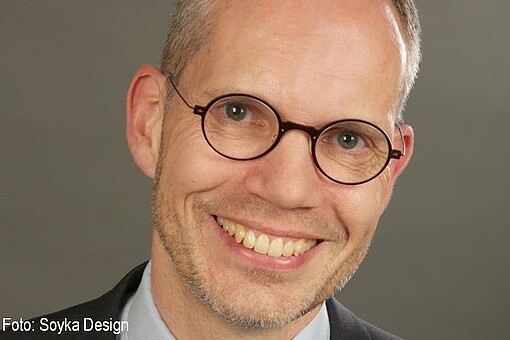
Oliver Baumann serves as Professor of Mathematics and Physics at the Department of Industrial Engineering within the Faculty of Engineering and Computer Science at Hamburg University of Applied Sciences (HAW Hamburg). His office is located in Room 0.17b at Ulmenliet 20, 21033 Hamburg, with office hours held Wednesdays 10:00–11:00 by email appointment. His academic background includes a physics diploma from CAU Kiel, a diploma thesis in applied optics at JGU Mainz, and a doctorate in astronomy from MPIA Heidelberg. Prior to his professorship, he worked as a scientific employee at Carl Zeiss AG in Oberkochen. Baumann's research spans applied and technical optics , experimental physics , and scientific image processing , with emphasis on optical measurement technology and precision mechanical-optical systems. His work bridges theoretical physics with industrial applications in aerospace, medical technology, and optical instrumentation. Key projects include radar system optimization for field mouse detection, fluorescence imaging evaluation in medical contexts, and photovoltaic-heat transport system design. His publications reveal strong focus on optical engineering (75% of works), instrumentation patents (60%), and educational methodologies (20%). Recent trends show increasing specialization in medical optics applications since 2016, alongside consistent contributions to astronomical instrumentation. Graduates' award for particularly dedicated teachers: 'Golden Duck' 2023 Graduates' award for particularly dedicated teachers: 'Golden Duck' 2019 Graduates' award for particularly dedicated teachers: 'Golden Duck' 2018 Graduates' award for particularly dedicated teachers: 'Golden Duck' 2017 Graduates' award for particularly dedicated teachers: 'Golden Duck' 2016 Baumann actively supervises graduate theses while serving as Chairman of the Examination Board for HWI bachelor's and master's programs. He holds multiple institutional roles including BAFöG representative, Deputy member of Faculty Council LS, and DAAD reviewer for Nigeria (PTDF). His professional affiliations include the European Optical Society (EOS), German Society for Applied Optics (DGaO), German Physical Society (DPG), and University Teachers' Association (hlb). His research activities center around precision mechanical-optical systems development, with emphasis on imaging technologies and measurement instrumentation. Current projects focus on optical metrology applications in aerospace and medical technology sectors.