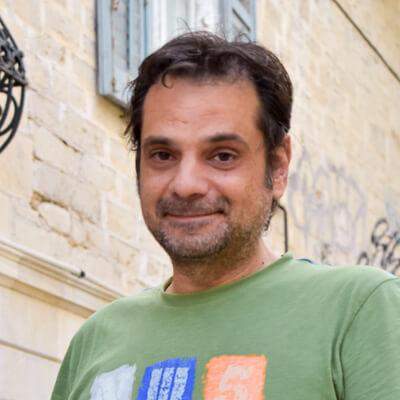
Michael Grubb is an Assistant Professor Adjunct at Yale School of Medicine, researching cognitive mechanisms of attention and perception. His work bridges experimental psychology and computational approaches to understand information processing in visual systems. His research examines how expectations, information value, and learning history shape attentional processes using eye-tracking and computational modeling. Publications demonstrate progressive integration of machine learning methods with traditional cognitive psychology paradigms. Recent work shows strong trend toward computational modeling of attentional processes using deep learning approaches. Research Areas: Attentional capture mechanisms Value-driven attention Information-seeking behaviors Computational modeling of perception Dr. Grubb collaborates with researchers in neuroscience and artificial intelligence to develop predictive models of attention.
Whitney Fleming is a Research Fellow at Bangor University's School of Environmental and Natural Sciences, specializing in environmental psychology, human-nature interactions, and well-being. Her research examines how biodiversity, social factors, and accessibility influence natural environment experiences through interdisciplinary methods. Employed quantitative surveys, experiments, and qualitative analysis Focuses on sensory engagement (visual, auditory) with nature Investigates governance beliefs and environmental stewardship Her recent projects include Nature's Symphony: Exploring the Wellbeing Benefits of Directed Listening (Leverhulme Trust-funded) and a UKRI initiative addressing health inequalities in Deaf communities. She mentors PhD candidate Joe Roy and offers postgraduate research opportunities at Treborth Botanic Garden. Selected Scientific Awards : Zuckerman Postdoctoral Scholar Fellowship Her work contributes to UN Sustainable Development Goals like Good Health and Well-Being, Sustainable Cities and Communities, and Life on Land. Current teaching includes modules on environmental data analysis, conservation practice, and social issues in forest management.
Joost C. Dessing is a Lecturer at Queen's University Belfast's School of Psychology, affiliated with the EPIC research group. He holds a Marie Curie FP7 Career Integration Grant to study eye-hand coordination in spatial and temporal contexts, extending to applications in sports and human-robot interactions. His academic journey includes an MSc (2001) and PhD (2005) from Amsterdam's Faculty of Human Movement Sciences, followed by postdoctoral work in the Netherlands and Canada. Education: MSc in Human Movement Sciences, Vrije Universiteit Amsterdam (2001) PhD in Human Movement Sciences, Vrije Universiteit Amsterdam (2005) Research interests focus on neural mechanisms underlying eye-hand coordination, particularly in dynamic tasks like catching, hitting, and robotics collaboration. He employs behavioral experiments, TMS, and computational modeling in real/virtual environments. Recent work includes VR-based goalkeeper studies and deep learning for human-robot intention inference. Key research trends revealed through publications include advancements in gaze estimation frameworks, collaborative robotics datasets, and applied sports biomechanics. His work bridges fundamental neuroscience with practical applications in manufacturing and sports. Awards include the Best PhD Thesis award (2005), Center for Open Science Challenge Award (2018), and QUB Research Seed Fund (2021). He actively promotes Open Science, serving as co-lead for the UK Reproducibility Network. Advising/grants: Marie Curie FP7 Grant (2012-) Supervising 3 PhD students (e.g., Valkanidis on goalkeeping, Adebayo on human-robot learning) Labs/teams: EPIC research group, collaborations with EEECS department (Prof. McLoone).
Prof. Gerald Ackner is a Professor at the University of Applied Sciences Furtwangen, based at the Tuttlingen campus. His research focuses on human factors in automated driving systems, driver behavior analysis, and human-machine interaction (HMI) design. He specializes in optimizing driver assistance systems, collision warning strategies, and visual attention management in automotive interfaces. His work bridges cognitive science and engineering, with a strong emphasis on improving road safety through better understanding of driver-system interactions. Key research interests include: Design and evaluation of proactive voice assistance systems in automated vehicles Reduction of unnecessary collision alarms through adaptive assistance strategies Analysis of non-driving task engagement in highly automated environments Development of LED-based visual attention guidance systems His publications from 2016-2025 consistently address challenges in automated driving safety, with a thematic focus on: Driver-vehicle interface design Collision avoidance system efficacy Driver behavior under automation Human perception vs. system perception discrepancies He participated in the interdisciplinary UR:BAN-MV research project, contributing to urban mobility HMI design and driver behavior prediction. His work reflects a commitment to both theoretical and applied research in automotive human factors.
Gustavo Heidner is an Assistant Professor of Kinesiology at Montclair State University within the College for Community Health . His research focuses on biomechanics and motor control, particularly the diagnosis/treatment of mild traumatic brain injury (mTBI) and its effects on balance, motor control, and decision-making. He also explores virtual reality applications for motor learning paradigms and high-stress encounters like law enforcement responses. His teaching responsibilities include courses such as PEMJ 321 (Kinesiology) and PEMJ 324 (Basic Motor Learning). Educational Background: BSc in Exercise Science and Physical Education (Pontifical Catholic University of RS) MA in Exercise Science: Biomechanics (Indiana State University) PhD in Bioenergetics and Exercise Science: Biomechanics and Motor Control (East Carolina University) Research Interests: Combines biomechanical analysis with neurobehavioral studies to address real-world challenges such as mTBI rehabilitation and decision-making under stress (e.g., law enforcement scenarios). Recent work includes studies on visual-motor control during deadly force encounters and the neural correlates of fatigue vs. concussion. Key Contributions: Over 20 peer-reviewed publications in areas like gait adaptations, police officer motor response variability, and virtual reality-assisted motor training. Research emphasizes translational applications for public safety and clinical practice.
Fazilat Hojaji Najafabadi is an Associate Professor in the Department of Computer Science & Information Systems, affiliated with Lero – the SFI Research Centre for Software. Their research focuses on AI-driven analytics in gaming and simulated racing, machine learning applications, and software governance frameworks. Formerly a Senior Software Analysis & Design Leader at ICT Organization of Isfahan Municipality (2018–2020), they hold a PhD in Software Engineering from the University of Isfahan, alongside a Master’s in Information Technology and Management from Amirkabir University of Technology and a Bachelor’s in Computer Science from Isfahan University of Technology. Research Interests: Machine learning for driver behavior analysis, telemetry data modeling, esports performance prediction, and governance frameworks for service-oriented architectures. Their work combines theoretical models with practical applications in software engineering and automotive simulations. Publications: Recent contributions include studies on AI techniques for esports KPI identification, sim racing performance prediction via telemetry, and frameworks for optimizing model-driven systems. Their work bridges machine learning with real-world applications in gaming and automotive domains. Labs/Teams: Active member of Lero, Ireland’s national software research center, contributing to interdisciplinary projects in AI and software engineering.
Robert Bregovic holds the position of Assistant Professor (tenure track) in Computing Sciences. He earned his Engineer degree from the University of Zagreb, Croatia (1998) and a Doctor of Science (Technology) in Information Technology (2003). His research focuses on Light Field Engineering, Signal Processing, 3D Displays, and Filter Design. Key contributions include advancements in light field reconstruction techniques (e.g., Shearlet Transform applications), datasets like the CIVIT dataset for integral microscopy, and editorial roles in journals such as IEEE Transactions on Multimedia. He actively reviews for prestigious conferences and journals, including ISPA and ICASSP. His work spans over 90 publications since 2000, with recent emphasis on projection-based light field displays and anti-aliasing solutions. Education: PhD in Information Technology (2003) Engineer in Technology (University of Zagreb, 1998) Research Contributions: Light Field Displays 3D Scene Rendering Signal Processing for Imaging Systems Activities: Guest Editor for Signal Processing: Image Communication (2024) Reviewer for multiple top-tier journals and conferences
Annika Maria Désirée Melinder is a Professor at the Department of Psychology, University of Oslo, and Director of the Cognitive Developmental Psychology Research Unit (EKUP). Her research integrates developmental, clinical, and legal psychology, focusing on cognitive development, emotional memory, social cognition, and child trauma. She employs advanced methods such as EEG and eye-tracking in infant studies and conducts field research on forensic interviewing and child protection systems. Ph.D. in Psychology, University of Oslo, 2000–2004 Visiting Scholarship, University of California, Davis, 2001–2002 Specialist in Clinical Psychology, Institute of Nic Waal, Oslo, 1994–1997 Candidate Psychol., University of Gothenburg, Sweden, 1984–1990 Her research interests center on cognitive development, particularly emotional memory, social cognition, executive functions, and empathy in children. She investigates infants’ joint attention, emotional regulation, and early social cognition. Her work also explores face recognition bias in children and the interplay between working memory and learning. In witness psychology, she examines child memory, suggestibility, repeated interviews, and stress effects, contributing to improved forensic interviewing practices. Her clinical research focuses on neuro-cognitive dysfunctions in trauma-exposed children, including those in child protection, adolescents with self-harm behaviors, children prenatally exposed to methadone, and youth with chronic fatigue syndrome (ME). The most recent publications highlight her focus on disruptive mood dysregulation disorder (DMDD), child stress biomarkers (e.g., hair cortisol), forensic interviewing quality, and expert psychological reports in child protection. Her work increasingly integrates neurobiological, behavioral, and legal perspectives to improve child welfare outcomes. Mid-career award, American Psychological Association (APA), 2022 Fellow, Association for Psychological Science (APS), 2019 Grant from Ministry of Children and Equality (≈22 million NOK), 2006–2012 Bjørn Christiansen’s award for best article in Norwegian Journal of Psychology, 2003 Fellow, Center of Advanced Studies, Norwegian Academy of Science, 2003–2004 She has supervised 20 master’s students and multiple PhD candidates. She has received significant research grants from the Norwegian Research Council and Ministry of Children and Equality. Her lab includes five PhD students, two senior researchers, and research assistants. She is actively involved in editorial and advisory roles, including as Associated Editor of the British Journal of Developmental Psychology and member of national scientific and ethical committees. Her interdisciplinary collaborations include researchers from UC Davis, Harvard, and Uppsala University.
Dr. Rosanna Olsen is an Associate Professor (Status Only) at the University of Toronto and a Scientist at the Rotman Research Institute (RRI), Baycrest. She leads the Olsen Lab, which investigates the neural organization of human memory systems using advanced neuroimaging techniques (fMRI, MEG), eye-tracking, and studies of amnesia patients. Her research focuses on medial temporal lobe function, memory formation across lifespan, eye-movement patterns in memory, thalamo-cortical interactions, and early biomarkers of cognitive decline in aging. Education: • PhD in Psychology (Cognitive Neuroscience) from Stanford University • Postdoctoral fellowship at Rotman Research Institute Research Focus: The Olsen Lab specializes in: 1) Structural and functional characterization of medial temporal lobe subregions in memory-impaired populations; 2) Neural oscillations and short-delay memory maintenance; 3) Eye-movement patterns as indirect memory measures; 4) Roles of thalamic nuclei in associative memory; 5) Promoting diversity in neuroscience. Methodologies include high-resolution MRI, fMRI, MEG, and behavioral paradigms. Article Trends: Recent publications (2020-2024) predominantly explore hippocampal subfield volumetry, aging-related memory decline, eye-movement patterns, thalamic contributions to memory, and inclusive academic practices. Over 70% involve neuroimaging analyses, with consistent focus on preclinical Alzheimer's biomarkers and hormonal influences on cognition. Advising: Actively mentors graduate students (Psychology, University of Toronto) and oversees postdoctoral fellows. Current trainees include 4 PhD candidates and 2 postdocs researching thalamic memory pathways, oscillatory dynamics, and visual discrimination in aging. The lab employs 5 research assistants. Lab & Collaborations: Directs the Olsen Lab at Baycrest with 11 active members. Collaborates with Drs. Jennifer Ryan (Baycrest), Brad Buchsbaum (Baycrest/UofT), Morris Moscovitch (UofT), and international consortia including the Hippocampal Subfields Group. Research has been featured in Science Daily and Neuroscience News .
Brent Chamberlain is an Associate Professor at the Department of Landscape Architecture and Environmental Planning , College of Agriculture and Applied Sciences , Utah State University. His work bridges geovisualization , information visualization , GIS , and environmental psychology to enhance scientific inquiry, decision-making, and communication of environmental data. PhD and MS in Forestry (specializations in GIS, Environmental Planning, and Psychology) from the University of British Columbia BA and BBA in Computer Science and Business Administration from Pacific Lutheran University His research focuses on digital modeling techniques—including gaming, virtual reality, and 2D/3D/4D simulations—to study landscape representation, geovisual analytics, landscape ecology, and environmental psychology. Key subfields include spatial memory , wayfinding , cultural ecosystem services , and AI-driven urban design . Recent work explores smart cities , machine learning applications , and disability-inclusive urban planning . Chamberlain’s publications highlight trends in virtual reality , eye-tracking technologies , and geospatial decision support systems . He investigates how immersive visualization and biometric feedback improve landscape assessments and urban health studies. Awards include the Fulbright Scholar (2024), multiple Scientific Excellence Top Paper recognitions (2023, 2022), and Researcher of the Year (2023, 2022) at Utah State University. He received the Michael Smith Foreign Study Supplement (2009) and NSERC Canada Graduate Scholarship (2009). Teaching : Courses like Advanced Geospatial Analysis , GIS for Environmental Planning , and Landscape Architecture Research Methods since 2016, with prior roles at Kansas State University. Mentoring : Supervised 21 graduate students in Landscape Architecture and related fields, including Kawsar Uddin, Mary Claire Jensen, and Phillip Fernberg. Chamberlain leads the VIVID Laboratory (Visualization, Instrumentation, and Virtual Interaction Design), focusing on immersive technologies for environmental research, grants, and student opportunities.
Marina Alexandra Pedro Andrade is an Associate Professor in the Department of Mathematics at ISCTE - University Institute of Lisbon and an Integrated Researcher at ISTAR-Iscte (Research Center in Information Sciences, Technologies and Architecture). Her academic qualifications include a PhD in Quantitative Methods (ISCTE-IUL, 2007), a Master's in Applied Mathematics - Probability and Statistics (Faculty of Sciences - University of Lisbon, 2001), and a Bachelor's in Applied Mathematics - Probability and Statistics (Faculty of Sciences - University of Lisbon, 1998). Her research focuses on Mathematics , Probability and Statistics , Stochastic Processes , Bayesian Statistics , and Computational Modeling , with applications spanning forensic science, drug design, architectural rehabilitation, and ergonomics. She employs advanced statistical methods to solve real-world problems, such as DNA analysis for forensic identification and mathematical modeling of queueing systems. Her publications reflect interdisciplinary collaboration, with recent work exploring virtual reality's impact on human behavior, problem-based learning in mathematics education, and proteasome inhibitor design. She frequently utilizes Bayesian networks, stochastic modeling, and computational frameworks across diverse domains. In academic management, she serves on the Scientific Council (2023-2027) and has organized conferences like the International Conference on Advanced Research in Technologies, Information, Innovation and Sustainability (ARTIIS 2023). She coordinates courses including Mathematics I/II (Economics) and Probabilities and Stochastic Processes (Computer Engineering). She has supervised 1 doctoral thesis and 8 master's projects, covering topics from third-sector strategy to UAVs in firefighting. Her research project 'Transformation Grammars' (2004-2019) developed shape-grammar methodologies for housing rehabilitation in collaboration with European institutions.
Kimberly Garcia is a researcher at the University of St. Gallen, focusing on mixed reality systems, contextual understanding, and explainable AI frameworks. Her work bridges human-computer interaction with industrial applications through projects like FoodCoach (automated diet counseling), GEAR (gaze-enabled AR feedback), and BLEARVIS (object identification in ubiquitous environments). Research Focus: Context-aware mixed reality interfaces Knowledge graph construction for environmental and health domains Explainable AI for cyber-physical systems Temporal scene understanding with contextual identifiers Recent Publications Highlight: Cross-domain applications of machine learning in AR systems, sensor fusion for object identification, and semantic tools for greenhouse gas accounting. All publications demonstrate interdisciplinary collaboration with computer scientists and domain experts. Key Collaborations: Regular co-authorship with Simon Mayer and Jannis Rene Strecker on human-AI interaction frameworks and sensor-based systems.
Vassilis Papakostopoulos is an Assistant Professor at the Department of Product and Systems Design Engineering, University of the Aegean, specializing in Ergonomics. His academic background includes a PhD in Cognitive Psychology (Panteion University, 2008), MSc in Ergonomics (Loughborough University, 1998), and BSc in Psychology (University of Crete, 1996). He has extensive research experience in driver behavior analysis, human-robot interaction, and workplace design. His research focuses on visual perception, motor coordination, and ergonomics applications in transportation systems. Key areas include advanced driver assistance systems (ADAS), human factors in autonomous vehicles, and safety in urban environments. He has contributed to major EU-funded projects such as interACT, ASK-IT, and PReVENT, addressing challenges in traffic safety and human-machine interaction. Teaching responsibilities include undergraduate and graduate courses on ergonomics, user-centered design, and product development. He has published over 20 peer-reviewed articles, emphasizing holistic approaches to driver behavior analysis and interdisciplinary ergonomics applications. As Greece’s representative in the Centre for Registration of European Ergonomists (CREE), he promotes professional standards in ergonomics practice. Recent research trends include autonomous vehicle interactions, motorcycle safety, and organizational policies affecting risky driving behaviors. His work bridges historical ergonomic principles (e.g., ancient Athenian court design) with modern challenges in smart city infrastructure and human-robot collaboration.
Kimberly Sheen, PhD , is a Lecturer in Digital Design and Communication at the School of Design , University of Leeds. Her work bridges user experience (UX), educational technology, and cognitive ergonomics, with a focus on accessible and equitable design. Her research explores: Cognitive ergonomics in digital interfaces Educational technology adaptation during pandemics Equity in hybrid/online learning environments Interactive design for electronic textbooks Recent publications include studies on hybrid teaching technologies (2022), UX frameworks for pandemic-era degree apprenticeships (2021), and cognitive ergonomics in digital reading (2018). She won the Hong Kong Ergonomics Society’s Student Project Award for her PhD work. Kimberly holds a PhD in Design and Technology from Hong Kong PolyU, an MSc in Human-Computer Interaction with Ergonomics from UCL, and a BA in English Literature with a minor in Communications. She serves as Deputy Programme Leader for the MA in Digital Design and Communication, teaching courses on UX, web design, and hybrid learning systems. Her consultancy projects with external companies focus on data dashboard redesign and telepresence robotics.
Harald Reiterer is a researcher affiliated with the University of Konstanz , Germany. His work spans Human-Computer Interaction (HCI) , Augmented Reality (AR) , Virtual Reality (VR) , and Mobile Health over three decades. Key Research Areas : Cognitive workload measurement, collaborative immersive analytics, spatial memory in AR/VR, hybrid user interfaces, persuasive technology for health behavior change. Scientific Contributions include designing AR/VR systems for collaborative workflows, evaluating ergonomic patient transfers, and developing tools for visualizing spatio-temporal data. His recent work focuses on haptic props for AR, cognitive load assessment via eye tracking, and multimodal feedback in VR cockpits. Publication Trends : 15+ recent papers on AR/VR interaction techniques, mixed reality visualization, and health-focused digital interventions.