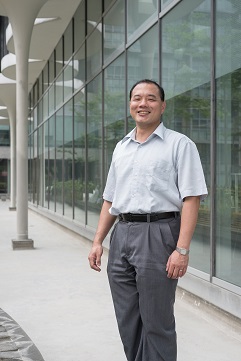
Joseph Tao-yi Wang is a Distinguished Professor in the Department of Economics at National Taiwan University (NTU). He holds a PhD from UCLA and previously served as a Postdoctoral Scholar and Visiting Associate at Caltech. His research spans experimental economics, neuroeconomics, game theory, and behavioral economics, with a focus on strategic decision-making, market design, and learning in games. Wang directs the Taiwan Social Sciences Experimental Laboratory (TASSEL), which hosts large-scale experimental research and conferences like the 2017 APESA. His work integrates eye-tracking, pupillometry, and machine learning to study cognitive processes in economic decisions. Wang is also active in educational innovation, developing flipped classroom models with experiments for economics courses. His publications consistently explore behavioral deviations from game-theoretic predictions, such as overcommunication in sender-receiver games and learning patterns in auctions. Recent work emphasizes reproducibility in management science and AI applications in education. Wang’s research uses diverse methodologies—from neuroimaging to field experiments—to test economic theories in real-world contexts. Wang mentors through NTU’s Berkeley Economics Student Assistant Program (BESAP) and organizes mini-courses for high school students. He has not received scientific awards per the available data.
Akshay R. Rao is a Professor and General Mills Chair in Marketing at the University of Minnesota's Carlson School of Management . He holds a PhD in Marketing from Virginia Tech and has served as founding Director of the Institute for Research in Marketing (2005-2010) and Chairman of the Marketing & Logistics Management Department (2003-2006). Rao has also held visiting positions at MIT and Hong Kong University of Science & Technology. Bachelor of Arts in Economics (Honors), Madras University (1978) Master of Business Administration in Marketing, XLRI - Xavier School of Management (1980) Doctor of Philosophy in Marketing, Virginia Polytechnic Institute and State University (1986) Rao's research spans consumer behavior, pricing strategy, brand management , and political marketplace segmentation , with recent work examining vaccine hesitancy , political ideology effects on consumer behavior , and fake news dynamics . His work appears in top journals including Journal of Consumer Research , Journal of Marketing , and Harvard Business Review , covering topics from neuromarketing to information economics . Scientific recognition includes: Robert Ferber Award (1987) Harold Maynard Award (2000) Distinguished Alumnus, XLRI (2011) He has testified before the Federal Trade Commission and served on editorial boards of Journal of Consumer Research and Journal of Marketing . Beyond academia, Rao consults for global firms like 3M and Medtronic, and has conducted the Minnesota Orchestra twice in 2024-2025.
Dr. Konstantin Bauman is an Associate Professor in the Department of Management Information Systems at Temple University's Fox School of Business. He holds a PhD in Mathematics (Geometry and Topology) from Moscow State University and dual Master’s degrees in Mathematics and Machine Learning from prestigious Russian institutions. His research focuses on machine learning, data science, and context-aware recommender systems, emphasizing novel methods for predicting customer preferences and designing personalized recommendation frameworks. Education: PhD in Mathematics (Geometry and Topology), Moscow State University MS in Mathematics, Moscow State University MS in Machine Learning, Moscow Institute of Physics and Technology/Yandex School of Data Analysis Research Interests: Data Science and Analytics Machine Learning and Recommender Systems Context-Aware Systems and Text Mining Technology-Enhanced Learning Recent Work Trends: His publications emphasize context-aware recommendation algorithms, privacy concerns in personalized systems, and applications of hyperbolic embeddings. He also explores device impact on employee feedback and cryptocurrency investor behavior using multimodal data analysis. Awards: None explicitly listed in the provided materials. Advising/Grants: No formal advisees listed; his work at Yandex and NYU involved leading machine learning teams and tackling large-scale data science challenges. Labs/Teams: Active in the MIS department at Temple, contributing to research on adaptive learning systems and enterprise machine learning applications.
Alexandra Papoutsaki is an Associate Professor of Computer Science at Pomona College since 2017. Her research focuses on Human-Computer Interaction , particularly in webcam-based eye tracking and shared gaze for remote collaboration . Ph.D. in Computer Science from Brown University M.Sc. in Computer Science from Brown University B.Sc. in Computer Science from Athens University of Economics and Business Her work spans personal informatics , crowdsourcing methodologies , and remote usability testing , with recent projects examining collaborative drawing interfaces, baby tracking reflection, and digital health communities. Earlier contributions include computational biology research in genome-wide survival analysis and pan-cancer mutation networks. Key trends in her publications include: Remote collaboration tools enhanced by eye tracking Personal data systems for health and creative domains Foundational work in crowdsourcing quality control Interdisciplinary approaches combining computer science with psychology and medicine Scientific recognition includes: NSF CRII Grant (2020-2022) Wig Distinguished Professor Award (2020) Best Paper at RECOMB (2013) She has developed multiple open-source platforms including WebGazer for scalable eye tracking and Remotion for mobile usability testing. Her research team has published extensively in top venues like CHI, IMWUT, and IJCAI.
Dr James Herbert-Read is an Associate Professor and Whitten Lecturer in Marine Biology at the Department of Zoology, University of Cambridge. He serves as Deputy Head of Department (Postgraduate Education) and leads the Marine Behavioural Ecology Group. His research focuses on understanding how animals, particularly marine organisms, collect and process information from their environments to make behavioral decisions, with emphasis on social interactions, adaptation mechanisms, and ecological constraints. His group employs theoretical frameworks, controlled experiments, and quantitative field studies to investigate behavioral diversity in marine species. Key themes include collective behavior, predator-prey dynamics, camouflage strategies, and the impacts of environmental stressors on animal decision-making. Recent publications highlight work on lionfish vocalization mechanisms, cuttlefish camouflage, citizen science applications in marine research, and behavioral responses to visual and acoustic noise. Scientific awards and affiliations include: Whitten Lecturer in Marine Biology Associate Professor, University of Cambridge He has supervised research projects on topics such as: Social attraction in invasive fish species Evolution of coordinated movement Neurophysiological basis for leadership in shoals Maternal effects on offspring exploration
Florian 'Floyd' Mueller is a Professor of Future Interfaces at Monash University in Melbourne, Australia, where he directs the award-winning Exertion Games Lab within the Department of Human-Centred Computing (ranked among the top 20 HCI departments globally). Previously, he held positions at RMIT University, Stanford, University of Melbourne, Microsoft Research, MIT Media Lab, Fuji-Xerox Palo Alto Labs, Xerox Parc, and Australia's CSIRO. Mueller is a member of the prestigious ACM SIGCHI Academy, an honorary group recognizing leaders who have made substantial contributions to Human-Computer Interaction (HCI). Professor Mueller's research focuses on the intersections between technology, the human body, and play. He originated the concept of "Exertion Interface," arguing that we should not just design "easy-to-use" interactions when "hard-to-use" interactions can also be beneficial. His work spans movement-based interactions, whole-body interfaces, uncomfortable interactions, somaesthetics, and exertion games. Mueller's research methodology often employs research through design, design ethnography, and autoethnography to explore these novel interaction paradigms, incorporating mixed-reality, augmented reality, virtual reality, electronic muscle stimulation, biosensors, wearables, and drones. His recent publications demonstrate a continued focus on bodily interactions and human-computer integration, with particular emphasis on emerging subfields like WaterHCI and SportsHCI, brain-computer interfaces, and gustosonic (taste and sound) experiences. Mueller's work has evolved from foundational exertion game concepts to more sophisticated explorations of human-computer integration where technology becomes seamlessly woven into the fabric of human experience. Professor Mueller's contributions have been widely recognized with numerous awards including: Inaugural honouree of the Australian Design Centre's Design Honours Tall Poppy award for "intellectual and scientific excellence" 10 "Best Paper Honorable Mentions" (top 5%) from premier HCI conferences 2 "Best Paper" awards (top 1%) at CHI PLAY and CHI Shortlisted for the European Innovation Games Award (alongside Nintendo's WiiFit) Nokia Mindtrek Ubimedia Award Mueller has successfully secured some of Australia's largest and most competitive research grants, achieving a remarkable 14% success rate on Australian Research Council Discovery Project applications. He has served as General co-Chair for CHI PLAY'18 and CHI'20, becoming the first Australian-based researcher to spearhead HCI's highest-ranked publication outlet, and is currently General co-Chair for CHI'24. He is Associate Editor for tier A journals including Elsevier's IJHCS (International Journal of Human-Computer Studies) and ACM's IMWUT (Interactive, Mobile, Wearable and Ubiquitous Technologies). As director of the Exertion Games Lab, Mueller leads a research team whose innovations have been experienced by over 20,000 users across 3 continents and featured on the BBC, ABC, Discovery Science Channel, and Wired magazine. The lab has produced groundbreaking work in bodily interfaces, co-founding the CHI PLAY conference series and establishing new research directions in SportsHCI and WaterHCI through recent "Grand Challenges" papers. Mueller's lab continues to push boundaries with projects exploring brain-to-brain interfaces, lucid dreaming induction, and novel gustosonic experiences.
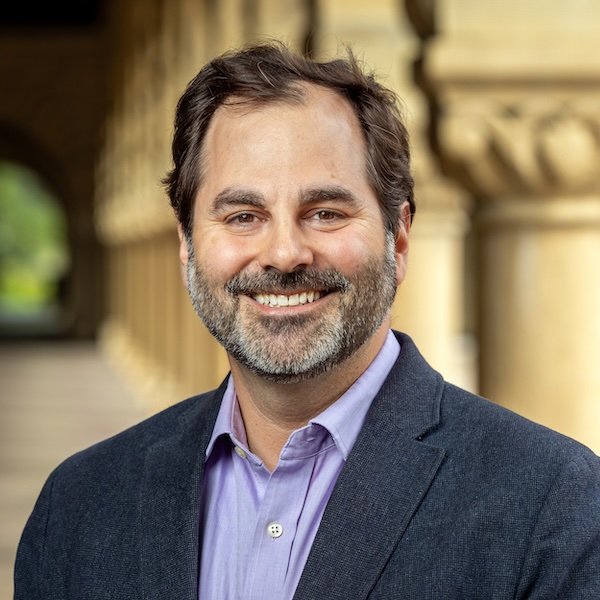
Michael C. Frank is the Benjamin Scott Crocker Professor of Human Biology at Stanford University and Director of the Symbolic Systems Program. He leads the Stanford Language and Cognition Lab and has pioneered large-scale collaborative projects including Wordbank (open vocabulary data), MetaLab (developmental meta-analyses), ManyBabies (replication network), childes-db (language transcripts), and Peekbank (eye-tracking repository). His research examines children's language learning and its interaction with social cognition, utilizing computational modeling, large datasets, and open science frameworks. Key interests include: Mechanisms of early language acquisition Pragmatic inference in social contexts Cross-cultural variability in cognitive development Data-driven approaches to developmental science Reproducibility and meta-scientific innovation Recent publications (2022-2025) demonstrate strong emphases on: 1) Novel methods for measuring language environments and cognitive abilities, 2) Computational models of learning and perception, 3) Cross-cultural investigations of social cognition, and 4) Infrastructure for open developmental science. The majority employ multimodal data, meta-analytic techniques, and large-scale collaborations. He teaches courses including Experimental Methods, Developmental Psychology, and interdisciplinary seminars on language, cognition, and computation. His lab maintains active research teams across multiple continents through initiatives like ManyBabies and LEVANTE.
Zohreh Sharafi is an Assistant Professor of Software Engineering in the Department of Computer and Software Engineering (GIGL) at Polytechnique Montréal. Previously, she served as a Senior Research Fellow in the Department of Electrical and Computer Engineering at the University of Michigan, Ann Arbor, where she worked with Dr. Westley Weimer and was awarded the prestigious NSERC Postdoctoral Fellowship. Prior to her academic career, she worked as a software engineer at Morgan Stanley, contributing to the firm's electronic trading platform and serving as principal architect of SURF, a market data simulator. Her educational background includes a Ph.D. in Computer Engineering from École polytechnique de Montréal under the supervision of Dr. Giuliano Antoniol and Dr. Yann-Gaël Guéhéneuc, a Master of Applied Science in Software Engineering from Concordia University, and a Bachelor of Computer Engineering from the University of Tehran. Dr. Sharafi leads the SENSE Lab, a multidisciplinary software engineering research laboratory focused on understanding problem-solving strategies developers use during software development, with particular attention to human factors such as gender and native language. Her research combines human-centric design with experimental methodologies, investigating cognitive processes involved in software development using biometric measures including eye tracking and neuroimaging. Current active projects include evaluating trustworthiness perceptions of software artifacts and studying the role of creativity in software engineering tasks. She has made significant contributions to understanding how gender influences program comprehension and code review processes. Her publication record demonstrates a strong focus on empirical methods in software engineering, particularly eye tracking and neuroimaging techniques to study developer cognition. Her work spans program comprehension, code review, requirements engineering, and the impact of human factors on software development processes. She has developed methodological frameworks for conducting eye tracking studies in software engineering and has made notable contributions to understanding how visualization techniques affect software development tasks. NSERC Postdoctoral Fellowship NSERC Discovery Grant Program and Launch Supplements (Sep 2024-Sep 2029) IVADO Startup & Operation Fund (Jan 2022-Jan 2023) Scholarship for Doctoral Studies from Fonds de Recherche du Quebec Distinguished Reviewer Awards from IEEE ICPC 2020 and ACM FSE 2024 Dr. Sharafi actively mentors students including Mahta Amini (PhD Candidate, IVADO Scientifique en résidence 2024 Laureate), Cameron Cherif (PhD Candidate), Sara Yabesi (Master's Student), and Anthonia Njoku (Graduate research intern). She serves on numerous conference organizing committees including as Local Arrangement Chair for SANER 2025, Program Co-chair for SEMLA 2024, and as a reviewer for top-tier journals including IEEE Transactions on Software Engineering and ACM Computing Surveys. Her research is supported by multiple grants focused on understanding human factors in software engineering through empirical methods. At Polytechnique Montréal, Dr. Sharafi directs the SENSE Lab which brings together computer scientists, cognitive scientists, and software engineering researchers to investigate the cognitive aspects of software development. The lab employs advanced methodologies including eye tracking, functional near-infrared spectroscopy (fNIRS), and functional magnetic resonance imaging (fMRI) to study how developers comprehend, navigate, and modify software systems. Current projects examine trustworthiness perceptions in code review, the role of creativity in software engineering tasks, and gender differences in software development processes.
David Peeters is an Associate Professor at Tilburg University's Department of Communication and Cognition, part of the Tilburg School of Humanities and Digital Sciences. His research focuses on multimodal communication, multilingualism, and digital communication, leveraging immersive virtual reality (VR) technologies combined with EEG, eye-tracking, and fMRI. He explores neurobiological underpinnings of language, including neuropragmatics, non-verbal communication, and multilingualism. His work is supported by grants such as the NWO Veni and Tilburg University Fund. Peeters teaches courses on virtual reality, language psychology, and digital literature integration in education. He is a Research Fellow at the Donders Institute and President of the Tilburg Young Academy. Key research interests include the role of gesture and iconicity in second language acquisition, bilingual language switching in immersive environments, and the impact of dataism on academic publishing. He collaborates with libraries and schools to integrate digital literature into curricula and public collections. His scientific awards include the NWO Veni Grant and a Fellowship from the International Max Planck Research School for Language Sciences. His research bridges cognitive science, linguistics, and technology, emphasizing ecologically valid experimental paradigms.
Prof. Dr. Yanjun Ren is a Professor at the College of Economics and Management, Northwest A&F University (NWAFU), China, and has been an IAMO Visiting Research Fellow since May 2024. Prior to his IAMO role, he conducted research at Christian-Albrechts-Universität in Kiel, Germany, from 2012 to 2019. PhD in Agricultural Economics focusing on Food Consumption, Income Inequality, and Health-related Issues in China Former Research Assistant/Associate at Kiel University’s Chair of Agricultural Market Analysis (2012–2019) Dr. Ren’s research spans food chains, consumer behavior, and applied econometrics. His work explores how socioeconomic factors, digital transformation, and policy interventions shape food consumption, nutritional outcomes, and environmental sustainability in China and Central Asia. Key themes include food waste reduction, carbon labeling, internet use in rural economies, and intergenerational health behaviors. His 15 most recent articles (2023–2025) emphasize digital agriculture, sustainable consumption, and health economics. Topics include carbon-labeled products, television/media’s role in nutrition, contract farming sustainability, and the socioeconomic determinants of dietary choices. His methodology integrates econometric modeling, eye-tracking experiments, and spatiotemporal analysis. Email: ren@iamo.de
Chen Ran, PhD, is an Assistant Professor in the Department of Neuroscience at Scripps Research in San Diego. His laboratory focuses on understanding how the brain processes internal sensory signals from visceral organs, such as hunger, satiety, nausea, and visceral pain. Using advanced techniques like in vivo two-photon calcium imaging, optogenetics, and circuit tracing, his team maps the functional architecture of brainstem circuits responsible for interoceptive processing. Key contributions include the discovery of a 'visceral homunculus' in the brainstem and the development of novel calcium indicators for high-resolution neuronal activity tracking. Education : PhD in Biology, Stanford University (2017) Bachelor of Science in Biology, Peking University (2011) Research Interests : Dr. Ran’s work integrates experimental and analytical approaches to decode how visceral stimuli are transduced into conscious sensations. Current projects investigate the coding logic of mechanical, chemical, and thermal signals from internal organs, with implications for developing therapies for obesity, diabetes, visceral pain, and eating disorders. The lab employs cutting-edge tools to visualize and manipulate neural circuits in awake behaving mice, linking circuit-level activity to physiological states. Awards & Honors : NARSAD Young Investigator Award (2022) NIH K01 Career Development Award (2023) Simons Collaboration on the Global Brain Award (2022) Harvard Brain Science Initiative Award (2021) Grants & Funding : Supported by NIH, Simons Foundation, and private philanthropy, his research bridges basic science and translational medicine. Current grants focus on brainstem circuit mapping and developing therapeutic targets for interoceptive disorders. Labs & Affiliations : Dr. Ran leads an interdisciplinary team at Scripps Research’s Neuroscience Department, collaborating with engineers, geneticists, and clinicians to advance interoceptive neuroscience.
Patrick Sturt is a Reader in Psychology at the University of Edinburgh's School of Philosophy, Psychology and Language Sciences. His research focuses on syntactic processing in language comprehension, computational models of incremental parsing, anaphor resolution, and eye movements in reading. With over 100 publications and more than 3,300 citations, he is a recognized expert in psycholinguistics and language processing. Dr. Sturt's research interests span multiple areas of language processing. He investigates how humans comprehend sentences in real-time, with particular focus on syntactic structures, agreement phenomena, and anaphoric reference. His work often employs eye-tracking methodologies to examine the moment-by-moment processing of linguistic information. He has made significant contributions to understanding how readers handle syntactic ambiguities, garden-path sentences, and the role of prediction in language comprehension. His recent publications demonstrate a strong focus on cross-linguistic studies, particularly examining language processing in Mandarin Chinese and Korean. Many of his studies investigate how syntactic and semantic information interact during comprehension, and how linguistic structures like honorifics, classifiers, and non-canonical word orders are processed. His work bridges theoretical linguistics with experimental psycholinguistics, providing empirical evidence for models of sentence processing. Dr. Sturt actively supervises PhD students including Carine Abraham, Wenjia Cai, Chiuchou Hao, Ruomeng Zhu, and Christy Gu. He teaches Psychology of Language 1 and 2 at the MSc level, as well as Data Analysis for Psychology in R for first-year undergraduates. His teaching reflects his research expertise, providing students with both theoretical knowledge and practical analytical skills. Based in Room G29 of the Psychology Building at 7 George Square, Edinburgh, Dr. Sturt maintains regular office hours on Tuesdays from 3-4pm, providing accessibility to students and colleagues. His email address is patrick.sturt@ed.ac.uk.
Lesya Ganushchak is Assistant Professor in Educational Sciences at Erasmus School of Social and Behavioural Sciences, Erasmus University Rotterdam. Her research employs cognitive neuroscience methods to examine language processing, reading development, and educational interventions. Using EEG/ERP and eye-tracking methodologies, she investigates cognitive mechanisms underlying self-monitoring, lexical access, and sentence production. Recent publications demonstrate her focus on evidence-based educational interventions: Meta-analyses of reading proficiency interventions (2024) Inference-making development in early readers (2023) Behavioral nudges improving online learning engagement (2022) Her ORCID profile documents extensive research output with collaborative networks spanning cognitive psychology and education research.
Gunnar Blohm is an Assistant Professor in the Department of Biomedical and Molecular Sciences at Queen's University, affiliated with the School of Medicine and Faculty of Health Sciences. His research focuses on sensorimotor neuroscience, particularly 3D sensorimotor control, eye-hand coordination, and computational modeling of neural processes. He holds a Ph.D. from Université Catholique de Louvain and has held postdoctoral positions at York University and his alma mater. Cross-appointed to the School of Computing, Department of Psychology, and Department of Mathematics and Statistics, he is also Vice-Director of the Connected Minds initiative. His research integrates behavioral experiments, brain imaging (MEG/EEG), and patient studies to understand how sensory information is transformed into goal-directed actions. Key areas include visuomotor transformations, multisensory integration, and Bayesian processes in neural computations. Blohm leads the Computational Sensorimotor Neuroscience Lab, emphasizing collaborative projects like Neuromatch Academy and contributions to open science initiatives. Affiliated with Queen's Centre for Neuroscience Studies and Ingenuity Labs, his work bridges computational approaches with clinical applications, aiming to develop frameworks for understanding brain dysfunction and clinical tools. His recent articles explore topics like saccade dynamics, pupil responses, and generative adversarial collaborations in scientific discourse.
Scott MacKenzie is an Associate Professor at the Lassonde School of Engineering, York University, where he leads research in Human-Computer Interaction (HCI). He holds a Ph.D. from the University of Toronto (1992) and specializes in interaction devices, mobile computing, and human performance modeling. His work emphasizes accessibility, text entry systems, and assistive technologies. He maintains an active research group focused on advancing HCI through empirical studies and innovative design. Education: Ph.D. in Computer Science, University of Toronto, 1992 Dr. MacKenzie’s research explores how interaction techniques can enhance user performance and accessibility. Key areas include touch-based interfaces, gestural input, and systems for users with disabilities. His recent work investigates eye-tracking for wheelchair control, mid-air gesture interaction, and text entry methods for VR environments. His publications reflect a focus on practical applications of HCI principles, such as improving mobile device usability and evaluating novel input methods. Notable contributions include studies on soft keyboards, tilt-based interaction, and accessibility solutions for motor-impaired users. Labs/Teams: Affiliated with the Lassonde School of Engineering’s research initiatives in interactive systems and human-centered computing.