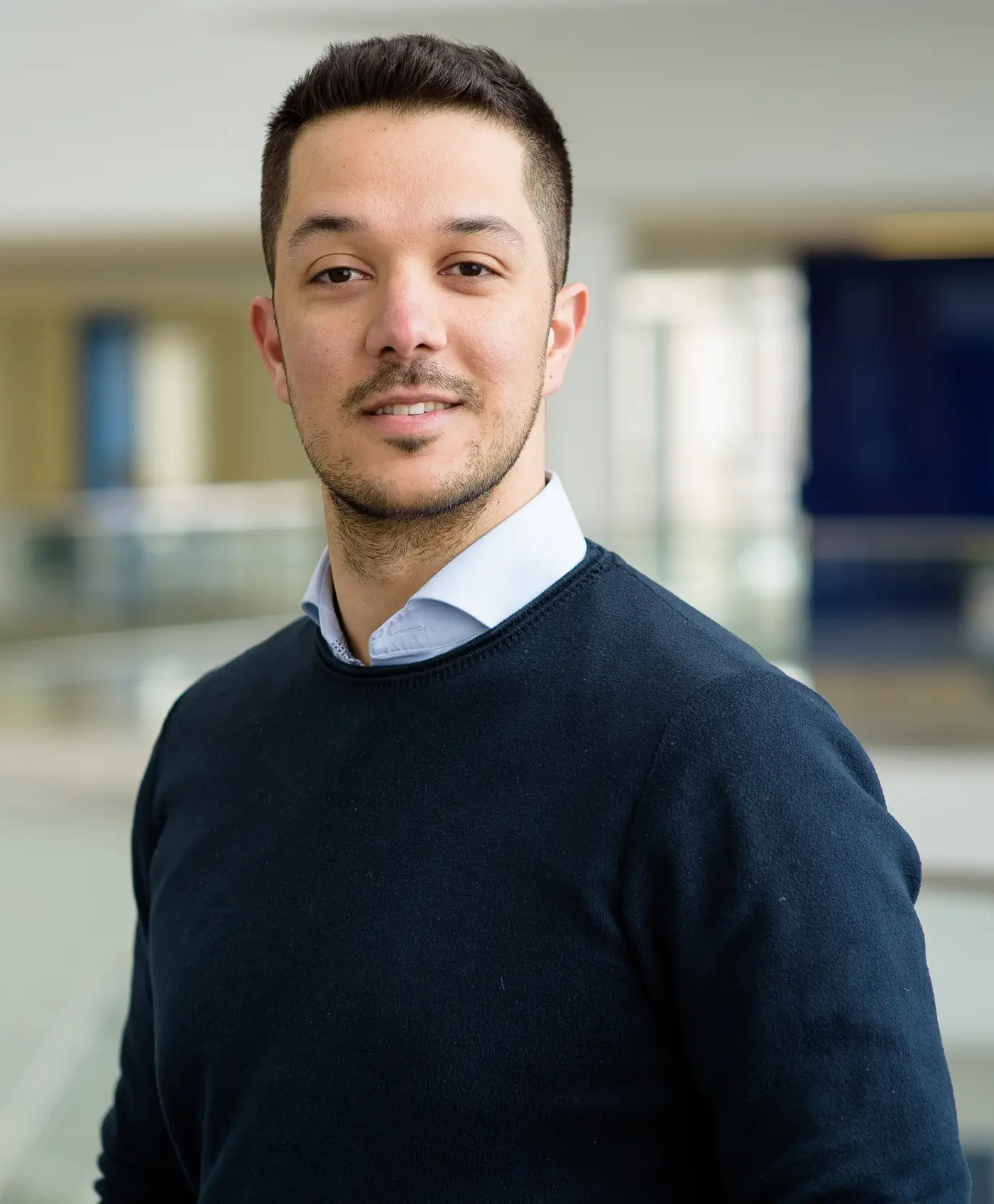
Julian Quodbach is an Assistant Professor at the Division of Pharmaceutics , Utrecht Institute for Pharmaceutical Sciences ( Utrecht University ). He specializes in additive manufacturing (3D printing) for personalized medication and tablet disintegration phenomena . Education: PhD from Heinrich Heine University Düsseldorf Prior Positions: Postdoc at Uppsala University, research roles at Düsseldorf His research focuses on 3D printing for individual/small-batch medications , addressing challenges in process understanding , drug release , and clinical translation . He investigates tablet disintegration and pharmaceutical process optimization for personalized therapies . Recent publications analyze 3D printing applications across inflammatory bowel disease , parkinson's disease , and pediatric formulations , exploring machine learning and material science . Collaborations span Sweden , Germany , and Netherlands . He leads the Task Force Additive Manufacturing for APV e.V. and the Pharma3DPI workstream . His work addresses real-world challenges like process fluctuations , batch traceability , and tablet quality in additive manufacturing .
Gianluca Percoco is a Full Professor at the Department of Mechanics, Mathematics & Management, Politecnico di Bari (Poliba), specializing in manufacturing technologies and systems. His research focuses on advancing 3D printing methodologies for soft robotics, sensors, and biomedical applications. Department: Mechanics, Mathematics & Management Research Themes: Additive manufacturing, material extrusion, bioinspired structures His recent work explores ironing process optimization for improved sensor sensitivity, electromagnetic assistance in silicone-based soft robotics, and machine learning for predicting interlayer adhesion in multi-material printing. Publications from 2023-2025 highlight innovations in 3D printed sensors , self-healing polymers , and microfluidic devices . Contact: gianluca.percoco@poliba.it | Tel: +39 080 596 3267
Gianni Stano is an Assistant Professor at the Department of Mechanics, Mathematics & Management, Politecnico di Bari (Bari Polytechnic University), Italy. His research focuses on advanced additive manufacturing techniques and their applications in soft robotics, sensors, and multi-material systems. Academic Rank: Assistant Professor Department: Mechanics, Mathematics & Management Field: Manufacturing Technology and Systems (ING-IND/16) Email: gianni.stano@poliba.it Research Interests Stano's research explores the intersection of additive manufacturing , soft robotics , and smart materials . Key areas include: Multi-material 3D printing and interfacial adhesion optimization Biomimetic and MRI-guided fabrication of anatomical structures Development of silicone-based electromagnetic actuators and grippers Embedded sensor and actuator integration in soft robotics Process parameter modeling for polymer-based additive manufacturing Self-healing materials and assembly-free smart structures Article Trends Stano's recent publications (2023-2025) emphasize multi-material extrusion printing , bioinspired design , and machine learning applications in manufacturing. His work addresses challenges in: Void reduction and layer adhesion in polymers Electromagnetic actuation for untethered soft robots Piezoresistive sensor optimization through process parameters Self-healing polymer fabrication via Diels-Alder chemistry Embedded electronics and copper feature integration Lithium-ion battery manufacturing using material extrusion
Marianna Kontopoulou is a Professor and Associate Dean (Academic) at the Department of Chemical Engineering, Queen’s University, Canada. She earned her PhD and MEng from McMaster University and Dipl. Eng from Aristotle University of Thessaloniki. Her research focuses on polymer blend and composite development for industrial applications, including automotive, additive manufacturing, and conductive polymers. 1999–Present: Faculty Member, Queen’s University 2013–2017: President, Canadian Society of Rheology 2008–2012: Vice President, Canadian Society of Rheology Her work involves polymer processing, reactive modification, and functional materials. She leads a lab equipped with advanced compounding, rheology, and materials characterization tools. She has co-authored over 150 publications and serves as Editor for the Americas of International Polymer Processing . Research Interests Development of graphene-based nanocomposites for electrical conductivity Bioplastics and sustainable polymer blends 3D printing of thermoplastic biopolyesters Mechanical and rheological properties of polymer foams Compatibilization techniques for immiscible polymer blends Microplastics characterization in environmental systems Scientific Awards 2010 Morand Lambla Award, Polymer Processing Society Laboratory & Facilities Her lab features Haake Polylab mixers, twin-screw extruders, DSM micro-compounder, 3D bioplotter, and advanced rheometers. She utilizes Queen’s Materials Characterization Lab for GPC, DSC, TGA, and mechanical testing.
Associate Professor Andres Meos has been a member of the Faculty of Medicine at the University of Tartu since 1984, currently serving as Associate Professor of Pharmaceutical Chemistry within the Institute of Pharmacy. His career spans over four decades, progressing from assistant to associate professor, and he has been instrumental in teaching and research in pharmaceutical chemistry and chemical analysis. Education Tartu 7th Secondary School, 1975 Tartu State University, Faculty of Pharmacy, 1981 PhD (Candidate of Biological Sciences in Pharmacology), Institute of Pharmacology, USSR Academy of Medical Sciences, Moscow, 1986 Research Interests Andres Meos focuses on pharmaceutical chemistry , chemical analysis , and drug delivery systems . His research integrates advanced analytical techniques, nanotechnology, and formulation science to develop innovative dosage forms and therapeutic strategies. Key themes include: 3D printing and extrusion-based fabrication of personalized pharmaceuticals Electrospinning of fibrous matrices for antimicrobial and wound-healing applications Stability and quality control of bioactive compounds in nutraceuticals and pharmaceuticals Development of biorelevant assays for multifunctional wound dressings Publication Trends Meos’s recent publications (2020-2025) demonstrate a clear trajectory toward advanced manufacturing technologies in pharmaceutics, particularly 3D printing and electrospinning , alongside rigorous analytical method development . His work spans from fundamental formulation studies to translational applications in wound care and personalized medicine. Grants & Projects He actively participates in the Estonian Research Council–funded project “Development of biorelevant assays for the analyses of multifunctional antimicrobial wound dressings for the treatment of wound infections” (PRG1507, €760,450, 2022-2026). Laboratory & Collaborations Meos collaborates extensively with national and international partners, including Nordic POP and the 14th World Meeting on Pharmaceutics, fostering interdisciplinary research in drug delivery and pharmaceutical technology.
Melik Dölen is a Professor in the Department of Mechanical Engineering at Middle East Technical University (Ankara Campus). He holds a B.Sc. from Istanbul Technical University (1990), M.Sc. from the University of New Hampshire (1994), and Ph.D. from the University of Wisconsin-Madison (2000). His research spans Precision Engineering , MEMS , Smart Electrical Drives , and Manufacturing Optimization . Specializes in additive manufacturing, CNC machining, and hybrid systems. Utilizes neural networks for predictive modeling in mechanical systems. Develops FPGA-based controllers for industrial automation. His recent work focuses on adaptive toolpath generation for 3D printing, hybrid manufacturing trends, and optimization algorithms. He has not received any publicly listed scientific awards. Email: dolen@metu.edu.tr
Sheila Sutjipto is a Postdoctoral Research Fellow at the School of Mechanical and Mechatronic Engineering, University of Technology Sydney (UTS). Her research focuses on robotics, virtual reality, and human-robot interaction, with applications in mining safety, assistive technology, and industrial automation. She has published extensively in top robotics conferences and journals, demonstrating expertise in teleoperation systems, digital twin technology, and sensor fusion for robotic applications. Dr. Sutjipto's research spans multiple domains of robotics and human-computer interaction. Her work particularly emphasizes virtual reality interfaces for robot teleoperation , digital twin technology for industrial applications , and multi-modal perception systems . She has made significant contributions to mining safety through rock scaling robotics, assistive technology for visually impaired individuals, and haptic feedback systems for industrial robots. Her interdisciplinary approach integrates mechanical engineering, computer vision, and human factors to develop intuitive and safe robotic systems. Dr. Sutjipto's recent publications demonstrate a strong trajectory toward practical applications of robotics in challenging environments. Her work on digital twin-based teleoperated rock scaling robots addresses critical safety issues in mining operations. She has also pioneered multi-modal perception systems combining RGB, event cameras, and LiDAR for assistive robotics. A consistent theme across her publications is enhancing human-robot interaction through intuitive interfaces, whether via virtual reality, haptic feedback, or annotation-assisted control systems. Dr. Sutjipto has been involved in several funded research projects, including the HALO rock scaling robot project (stages 2 and 3), IntelliForce Tooling for hydraulic safety, and integration of live surround video for VR digital twins. She has collaborated with industry partners like Ausdrill and BTP Parts Pty Ltd. Her grant history shows a strong industry-academia collaboration focused on practical robotics applications. Dr. Sutjipto appears to be part of the robotics research group at UTS's School of Mechanical and Mechatronic Engineering. Her collaborations suggest involvement with teams focused on mining robotics, assistive technology, and industrial automation. She frequently collaborates with researchers like G. Paul, D.T. Le, and K. Nguyen, demonstrating strong interdisciplinary teamwork across engineering disciplines.
Sabine Hild is a Professor at the Institute of Polymer Sciences, Johannes Kepler University Linz, with extensive expertise in polymer materials and advanced manufacturing. Her current research portfolio includes: Leading the CHASE 2 project developing recyclate-based materials Co-directing the Biomimicry Center for Biomedical Engineering Investigating cerebrospinal fluid rheology for medical applications Her research focuses on: Polymer composite development using cellulose/aramid fibers Stereocomplexation techniques for PLA enhancement Sustainable material systems including mycelium-based electronics Polymer interdiffusion phenomena in co-extrusion processes Recent publications demonstrate strong emphasis on: Advanced characterization of polymer interfaces Innovations in material extrusion additive manufacturing Structure-property relationships in biocomposites She maintains active academic engagement with: 58 contributed talks and 55 poster presentations 29 invited lectures at international conferences Supervision of 13+ student researchers
Davide Masato is an Assistant Professor in the Department of Plastics Engineering at the University of Massachusetts Lowell's Francis College of Engineering. He holds a Ph.D. in Industrial Engineering from the University of Padova (Italy) and previously served as a post-doc researcher there and a visiting scholar at the University of Bradford (UK). His research tackles polymer processing, sustainable manufacturing, and micro injection molding, funded by NASA, US ARMY, and REMADE. Education includes: Ph.D. Industrial Engineering, University of Padova (2018) M.S. Mechanical Engineering, University of Padova (2014) B.S. Industrial Engineering, University of Padova (2011) Research interests span polymer processing , micro injection molding , and sustainable manufacturing , with innovations in mold engineering, surface texturing, and recycled materials. His work integrates experimental and simulation approaches to optimize manufacturing efficiency and reduce environmental impact. Recent publications (45+ journals) focus on injection molding advancements, recycled polymers, surface engineering, and sustainable processes. Trends include high-impact studies on laser texturing, pressure-controlled molding, and hybrid manufacturing techniques. Awards and honors: Teaching Excellence Award (2021) Global Innovation Talent Award (2020) Best Paper Award, SPE Injection Molding Division (2018) Honorable Mention Awards, World Congress on Micro and Nano Manufacturing (2017) He advises capstone projects and graduate research, with funding from federal grants and industry. Projects include thermoforming of recycled plastics, 3D-printed tooling, and sustainable material development. His lab, the Masato Research Group, focuses on polymer circularity and collaborates with international partners.
Jay Hoon Park is an Associate Professor and Associate Chair for Master's Studies in the Plastics Engineering Department at the University of Massachusetts Lowell's Francis College of Engineering. Previously, he held postdoctoral positions at MIT and the U.S. Army Research Laboratory. His academic credentials include a Ph.D. from Cornell University and a B.S. from Johns Hopkins University, both in Chemical Engineering. Park's research focuses on: Advanced polymer processing and extrusion technologies Electrospinning and multiscale fiber manufacturing Additive manufacturing with functional composites Polymer nanocomposites and hierarchical structures Smart textiles and filtration materials His publications demonstrate strong emphasis on sustainable materials, protective equipment innovation, and additive manufacturing optimization. Notable scientific awards include: Department Teaching Excellence Award (2023) KICHE President Young Investigator Award (2022) Cornell's Austin Hooey Dissertation Award (2013) His research has been supported by grants from DoD-NSRDEC, Oak Ridge Institute for Science and Education, and Society of Rheology. As Associate Chair, he oversees master's programs while leading research in materials innovation.
Aurélien Etiemble is an Assistant Professor at ECAM School of Engineering in Lyon, France, working within the Materials and Structures department. His academic career focuses on the intersection of advanced materials science and energy storage technologies, with particular emphasis on additive manufacturing processes and battery electrode characterization. Dr. Etiemble's research interests span multiple domains of materials engineering, with primary focus on Battery Energy Storage and Additive Manufacturing technologies. His work explores the fundamental relationships between material microstructure and performance in energy storage applications, particularly lithium-ion and metal hydride batteries. He has developed expertise in advanced characterization techniques including X-ray computed tomography, focused ion beam, and acoustic emission measurements to study material behavior under operational conditions. Analysis of his recent publications reveals a clear research trajectory focusing on improving manufacturing processes for advanced materials. His work spans from fundamental studies of thin-film metallic glasses with antibacterial properties to practical applications in battery technology and metal 3D printing. The publications demonstrate strong interdisciplinary collaboration across materials science, electrochemistry, and mechanical engineering domains. Dr. Etiemble maintains an active research network with collaborations across multiple institutions, particularly with researchers at INSA Lyon and CEA Liten. His work has been cited over 800 times, indicating significant impact in the fields of battery technology and additive manufacturing.
Justin Dirrenberger is an Associate Professor (Maître de conférences HDR) at Conservatoire National des Arts et Métiers (CNAM) with a joint appointment at Arts et Métiers ParisTech (ENSAM), where he leads the CoMet research team (Comportement et microstructure des Métaux) within the PIMM laboratory. His work bridges fundamental mechanics with industrial applications in additive manufacturing, focusing on architected materials for aerospace, biomedical, and space sectors. Dirrenberger's research centers on architectured materials—including auxetics, metamaterials, and lattice structures—with expertise in computational homogenization, laser-based metal processing, and multi-material 3D printing. Key areas include instability-induced pattern generation, mechanical behavior of heterogeneous media, and sustainable manufacturing processes. His methodology integrates numerical modeling (using Zébulon code) with experimental validation through advanced laser systems and mechanical characterization. Recent publications (2023-2025) reveal strong trends toward bioinspired 4D printing, lunar construction materials (ESA project), and laser-optimized metal lattice production. His work consistently appears in high-impact journals (Materials & Design, Small, Advanced Materials Technologies), demonstrating both theoretical depth and industrial applicability in lightweight structures and energy-absorbing systems. Dirrenberger currently leads five major projects: ANR MIRACLES (2024-2027): Resilient micro-lattices inspired by crystal plasticity H2020 REDI (2022-2027): European doctoral training with RMIT University ANR REDESIGN4D (2021-2026): Machine learning-driven adaptive composites ESA MOON-COMP (2022-2025): Lunar 3D printing for energy dissipation ANR ModuFEET (2021-2026): Reliable power electronics modules He previously directed CNAM's Materials Engineering Program (2017-2024) and led ANR SCOLASTIC (2015-2020) on laser-processed steel. The CoMet team operates within PIMM's advanced experimental ecosystem, utilizing Laser Choc (shock), Héphaïstos (thermal), and MESO 3D-Panam platforms for material processing. Current work focuses on translating computational models into printable architectures—from biomedical scaffolds to lunar construction materials—through close industry collaboration with aerospace, automotive, and space sector partners.
Cyrille Sollogoub is a Professor at Arts et Métiers ParisTech (ENSAM) and the National Conservatory of Arts and Crafts (CNAM), where he leads the Polymers & Composites (P&C) team at the PIMM Laboratory. He joined PIMM in 2011 after serving as a Lecturer at CNAM since 2003. His research bridges polymer physics, materials engineering, and sustainable technology. His work centers on: Nanostructuring multiphase polymer systems for enhanced barrier/mechanical properties Developing micro/nanolayer coextrusion processes for ultrathin functional films Studying confinement effects on polymer crystallization/rheology Designing membranes for electrochemical applications Advancing polymer recycling via reactive blending Recent publications (2023-2025) demonstrate strong focus on: Multilayer film mechanics and interfacial phenomena Biodegradable composites (PLA/PHB, PVA nanocoatings) Recycling of e-waste plastics Energy storage nanomaterials Tissue engineering scaffolds He supervises doctoral candidates in polymer science and collaborates extensively with European research consortia. Lab resources include advanced coextrusion lines, rheometry, and nanoscale characterization tools.
Jinki Kim serves as an Assistant Professor in the Department of Mechanical Engineering at Georgia Southern University, where he has been a faculty member since 2018. His research program bridges mechanical systems, materials science, and computational methods, with particular emphasis on experimental techniques for structural assessment and manufacturing processes. Professor Kim's academic credentials include a Ph.D. in Mechanical Engineering from the University of Michigan (2017), complemented by both M.S. and B.S. degrees in Mechanical and Aerospace Engineering from Seoul National University (2008 and 2006 respectively). His educational foundation supports his interdisciplinary research approach spanning mechanical systems and experimental dynamics. Research interests center on Smart Materials and Structures , Structural Health Monitoring , and Advanced Manufacturing , with specific expertise in video-based motion estimation, piezoelectric systems, and machine learning applications. His work demonstrates strong connections to piezoelectric engineering (81% fingerprint match) and structural health monitoring (51%), while contributing to UN Sustainable Development Goals in sustainable industrialization. Recent projects integrate deep learning with traditional engineering methods to solve practical problems in bioprinting and infrastructure assessment. Publication trends from 2023-2024 reveal significant focus on applying computational techniques to manufacturing and structural monitoring challenges. Five recent papers demonstrate consistent methodology using video-based vibration analysis combined with machine learning, particularly in bio-printing quality control and soil mechanics characterization. This work shows increasing interdisciplinary collaboration across mechanical, civil, and biomedical engineering domains. Professor Kim currently leads an active NSF grant ($500,000, 2023-2025) as Principal Investigator for bio-printed construct evaluation research. While specific student advising details aren't provided in the source material, his educational publication suggests active engagement in curriculum development for mechatronics and machine learning integration. His research group likely supports graduate students working on video-based monitoring systems and manufacturing applications. Though no formal lab name is specified, Professor Kim's research group focuses on experimental validation of structural systems using non-contact measurement techniques. The group's work combines mechanical testing with computational analysis, particularly in additive manufacturing quality assurance and structural health monitoring applications, utilizing video-based vibrometry as a core methodology.
Dr. Negin Amini is a Lecturer in Environmental Engineering at Deakin University's School of Engineering, which is part of the Faculty of Science Engineering and Built Environment. She is based at the Melbourne Burwood Campus and serves as an Associate Investigator in the ARC Centre of Excellence for Enabling Eco-Efficient Beneficiation of Minerals. Her educational background includes a PhD from Monash University (2019), with a thesis on energy efficient pre-treatment of lignocellulose biomass, and a Master of Engineering from the University of Melbourne. Dr. Amini's research focuses on creating circularity in industrial processes to reduce emissions and resource consumption. Her work spans multiple interconnected fields including circular economy principles, sustainability in engineering, minerals processing, biomass conversion technologies, particle technology, and additive manufacturing applications. She investigates how engineering solutions can transform waste streams into valuable resources while minimizing environmental impact across various industrial sectors. Her publication record demonstrates a strong trajectory in environmental and chemical engineering with increasing emphasis on sustainable materials processing. Recent work shows particular focus on dewatering technologies for mineral processing, bioinspired reagents for clay separation, and circular economy applications in 3D printing. Her research integrates experimental work with modeling approaches to address practical challenges in resource recovery and industrial sustainability. Dr. Amini has secured multiple research grants including: Development of a real-time immunosensor for airborne allergen detection (ARC Analog Program) Revealing the risks: Exploring the social implications of technology for recognizing viral threats Zero Waste 3D Printing project She currently supervises two doctoral students working on microbial-induced calcite precipitation for environmental remediation and novel polymer-based reagents for mineral separation. Her teaching portfolio includes courses in environmental systems, environmental health engineering, and engineering project management. Dr. Amini's research integrates laboratory experimentation with practical applications in industrial settings, focusing on creating sustainable solutions for resource-intensive industries.