معرفی
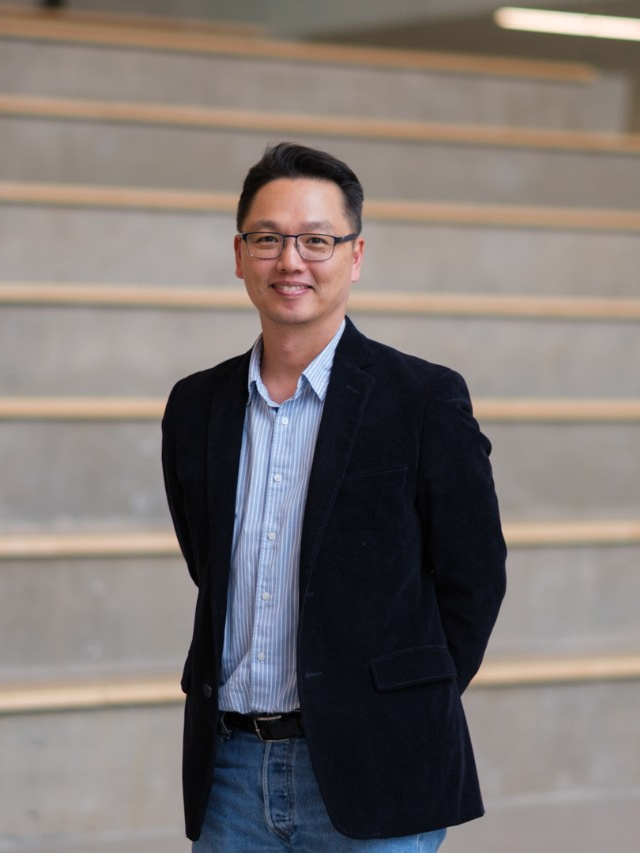
Jinki Kim serves as an Assistant Professor in the Department of Mechanical Engineering at Georgia Southern University, where he has been a faculty member since 2018. His research program bridges mechanical systems, materials science, and computational methods, with particular emphasis on experimental techniques for structural assessment and manufacturing processes.
Professor Kim's academic credentials include a Ph.D. in Mechanical Engineering from the University of Michigan (2017), complemented by both M.S. and B.S. degrees in Mechanical and Aerospace Engineering from Seoul National University (2008 and 2006 respectively). His educational foundation supports his interdisciplinary research approach spanning mechanical systems and experimental dynamics.
Research interests center on Smart Materials and Structures, Structural Health Monitoring, and Advanced Manufacturing, with specific expertise in video-based motion estimation, piezoelectric systems, and machine learning applications. His work demonstrates strong connections to piezoelectric engineering (81% fingerprint match) and structural health monitoring (51%), while contributing to UN Sustainable Development Goals in sustainable industrialization. Recent projects integrate deep learning with traditional engineering methods to solve practical problems in bioprinting and infrastructure assessment.
Publication trends from 2023-2024 reveal significant focus on applying computational techniques to manufacturing and structural monitoring challenges. Five recent papers demonstrate consistent methodology using video-based vibration analysis combined with machine learning, particularly in bio-printing quality control and soil mechanics characterization. This work shows increasing interdisciplinary collaboration across mechanical, civil, and biomedical engineering domains.
Professor Kim currently leads an active NSF grant ($500,000, 2023-2025) as Principal Investigator for bio-printed construct evaluation research. While specific student advising details aren't provided in the source material, his educational publication suggests active engagement in curriculum development for mechatronics and machine learning integration. His research group likely supports graduate students working on video-based monitoring systems and manufacturing applications.
Though no formal lab name is specified, Professor Kim's research group focuses on experimental validation of structural systems using non-contact measurement techniques. The group's work combines mechanical testing with computational analysis, particularly in additive manufacturing quality assurance and structural health monitoring applications, utilizing video-based vibrometry as a core methodology.