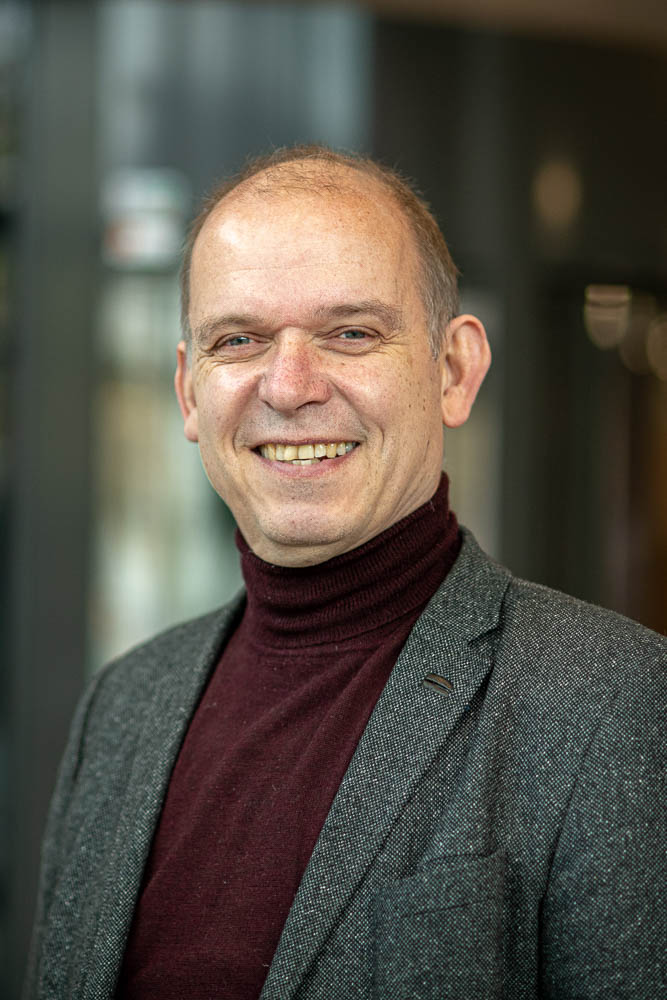
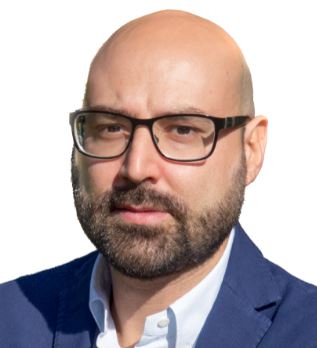
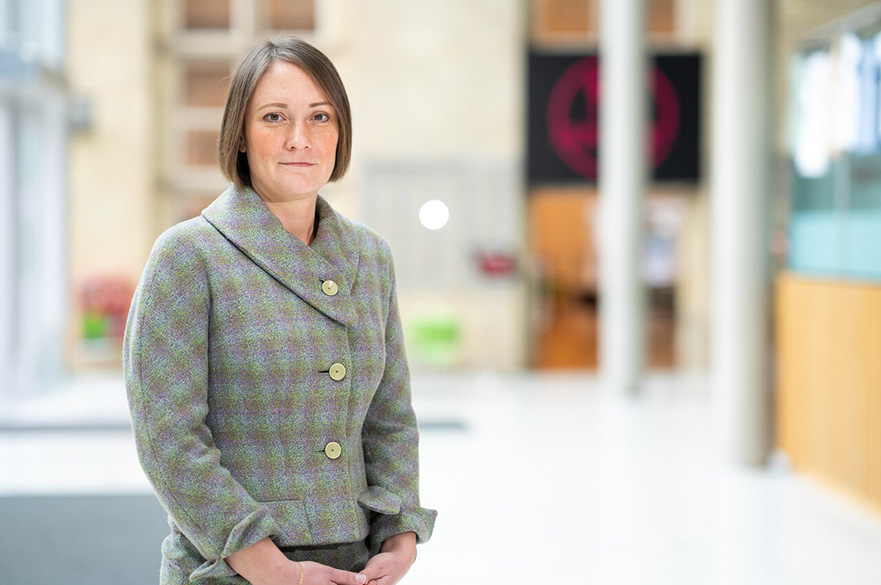
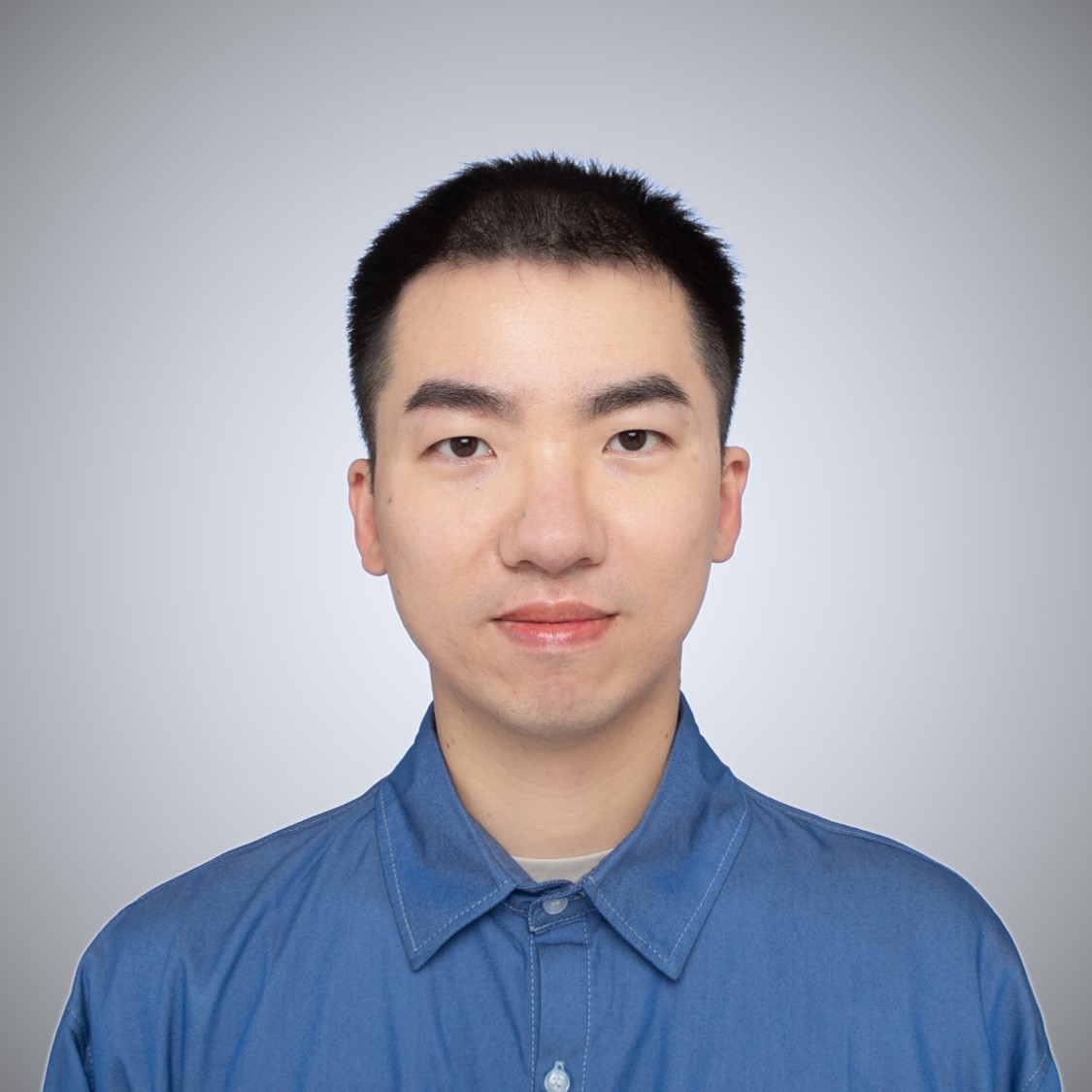
Peter M. Homyak is an Associate Professor in the Department of Environmental Sciences at the University of California, Riverside (UCR). He leads research on microbial and abiotic controls of soil trace gas emissions, focusing on nitrogen and phosphorus cycling in dryland and alpine ecosystems. His work integrates soil science, biogeochemistry, and climate change impacts. Homyak earned his Ph.D. in Soil and Water Science from UCR in 2012, following M.S. and B.S. degrees in environmental sciences. He has received prestigious awards including the 2017 S.A. Wilde Early Career Achievement Award and the 2016 Gene E. Likens Outstanding Publication Award. His research is supported by grants from NSF, USDA, and state agencies. Homyak mentors a diverse group of students, including PhD candidates Elizah Stephens and Aral Greene, and leads the Homyak Lab, which explores wildfire impacts, nitrogen cycling, and soil microbial resilience. Key research themes include mechanisms of nitric oxide (NO) and nitrous oxide (N2O) emissions, nitrogen saturation in xeric systems, and the role of pyrophilous microbes post-wildfire. He collaborates on global projects assessing dryland biogeochemistry and climate change consequences. Homyak also emphasizes STEM outreach, mentoring underrepresented students and engaging in K-12 education initiatives.
Hyemi Kim is an Adjunct Professor at the School of Marine and Atmospheric Sciences (SoMAS), Stony Brook University. Her research focuses on climate variability across subseasonal to decadal timescales, including topics like the Madden-Julian Oscillation (MJO), tropical-extratropical interactions, and extreme weather events such as atmospheric rivers and tropical cyclones. Education: Ph.D., 2008, School of Earth and Environmental Sciences, Seoul National University, South Korea Research Interests: Hyemi Kim's work spans four primary areas: (1) Climate prediction from subseasonal to decadal scales, (2) Tropical-extratropical interactions, (3) Extreme events (atmospheric rivers, storm tracks, tropical cyclones), and (4) Machine learning applications for subseasonal-to-seasonal (S2S) prediction. Publication Trends: Her research output emphasizes the MJO, its interactions with other climate modes (QBO, ENSO), and implications for extreme weather. Recent works analyze atmospheric rivers, storm tracks, and tropical cyclone activity, often linking these to large-scale climate variability. Publications frequently employ climate models (e.g., CESM1, SubX, NMME) to assess predictability and improve forecasting frameworks. Labs & Teams: She collaborates with institutions like the National Center for Atmospheric Research (NCAR) and contributes to multi-model experiments such as the Subseasonal Experiment (SubX) and North American Multi-Model Ensemble (NMME).
Dr. Jinan Allan is an Assistant Professor at Clemson University's College of Behavioral, Social and Health Sciences, Department of Psychology. She holds a PhD in Cognitive Psychology from the University of Oklahoma (2021), an MS from the same university (2018), and a BS in Mathematics-Statistics from Michigan Technological University (2015). She completed a postdoctoral fellowship at the Max Planck Institute for Human Development. Her research focuses on cognitive abilities, statistical numeracy, and their impact on decision-making in contexts like medical scenarios, cybersecurity, and extreme weather risks. She is affiliated with the Media Forensics Hub and teaches courses on judgment and decision-making. Education: PhD Cognitive Psychology, University of Oklahoma, 2021 MS Cognitive Psychology, University of Oklahoma, 2018 BS Mathematics-Statistics, Michigan Technological University, 2015 Research emphasizes behavioral science and psychometric methods to develop decision-making metrics. Key themes include risk communication for tornado/hurricane warnings, climate change judgments, and cybersecurity decision-making. Her work bridges cognitive psychology with real-world applications in disaster preparedness and public health. Recent publications analyze extreme weather response patterns, numeracy's role in science comprehension, and probabilistic risk communication strategies. She is currently reviewing graduate student applications for 2025-2026. Affiliations include the Media Forensics Hub at Clemson University, indicating interdisciplinary collaboration in digital security and information integrity.
Prof. Dr. Bernd Klauer serves as Deputy Head of the Department of Economics at the Helmholtz Centre for Environmental Research (UFZ) since 2017 and holds an Honorary Professorship for Sustainability and Water Resources Management at the University of Leipzig since 2015. He leads the Working Group on Social Science Water Research and contributes to interdisciplinary projects spanning Germany, EU, Jordan, and India. Doctorate in Economics (1997), University of Heidelberg Diplom-Mathematiker (1992), University of Heidelberg His research integrates water economics with ecological economics and governance frameworks, focusing on hydro-economic modeling, water resource governance, decision support systems, and multi-criteria evaluation. Key application areas include Food-Water-Energy Nexus, Integrated Water Resource Management, and EU Water Framework Directive implementation. The 15 most recent publications reveal a strong emphasis on coupled human-natural systems modeling, climate change adaptation in agriculture, water scarcity governance, and socioeconomic analysis of informal water markets. His work consistently bridges technical hydrological models with economic decision-making frameworks across diverse geographic contexts. Current projects include FUSE (Food-Water-Energy Nexus) and NexusFootprints, while completed initiatives like the Jordan Water Project demonstrate his commitment to transboundary water challenges. He collaborates extensively with hydrologists, ecologists, and policy experts.
Dr Ting Sun is an Associate Professor in Climate & Meteorological Hazard Risks at University College London , Department of Risk and Disaster Reduction. He earned his BEng (2009) and PhD in Hydrology (2013) from Tsinghua University , followed by a visiting period at Princeton University (2011–2012). After postdoctoral appointments at Tsinghua and the University of Reading , he held a NERC Independent Research Fellowship at Reading (2017–2022) before joining UCL in May 2022. Education PhD in Hydrology, Tsinghua University, 2013 BEng in Hydraulic Engineering, Tsinghua University, 2009 Visiting PhD Student, Princeton University, 2011–2012 Research Interests Dr Sun’s work converges on urban climate modelling across scales —from neighbourhood blocks to global grids—focusing on the impacts of weather and climate extremes such as heat waves and extreme rainfall in cities. He is the lead developer of the Surface Urban Energy and Water balance Scheme (SUEWS) and its Python wrapper SuPy , developed in collaboration with Prof Sue Grimmond’s micromet group. He also contributes as a core member of the Urban Multi-scale Environmental Predictor (UMEP) development team. His multidisciplinary expertise integrates hydro-climate dynamics, computational modelling, machine learning, built-environment processes, and public-health linkages . Research Trends from Recent Publications Across the 15 most recent articles, a clear trajectory emerges from high-resolution urban-process modelling toward integrated socio-environmental assessments . Studies published in 2024–2025 couple atmospheric models (WRF-SUEWS) with global building-morphology datasets (GLAMOUR) to quantify how cities alter rainfall patterns, temperature sensitivity, and heat-related mortality. Earlier works progressively refined SUEWS’s physical parameterisations and Python accessibility, while recent outputs leverage deep-learning remote-sensing tools (SHAFTS) and hybrid hydrological-neural architectures to deliver actionable insights for urban planning and climate adaptation. Scientific Awards & Fellowships NERC Independent Research Fellowship , University of Reading, 2017–2022 HEA Fellowship , University College London, 2023 Professional Service & Editorial Roles Topic Editor , Geoscientific Model Development (from 2025) Editorial Board Member , Scientific Data (from 2024) Peer review and consultancy for journals, conferences, and policy bodies Supervision of taught-course projects and research degrees External examining and mentoring Labs, Teams & Collaborations Dr Sun leads and collaborates within the UCL Department of Risk and Disaster Reduction , working closely with the micromet group at the University of Reading (Prof Sue Grimmond) on SUEWS/SuPy development. He is an active member of the UMEP consortium and maintains extensive international collaborations spanning Tsinghua University, Princeton, and numerous European research centres, underpinning a vibrant, interdisciplinary research network focused on urban climate resilience.
Professor Stephen Willis is a faculty member at Durham University , serving as Director of Research in the Department of Biosciences. His work bridges climate change ecology, conservation biology, and species distribution modeling, with extensive collaborations across academic (Universities of York, Leeds, Copenhagen) and non-academic institutions (RSPB, BirdLife International, NERC). He employs spatially explicit models, GIS, and remote-sensed data to analyze environmental change impacts on ecosystems, biodiversity, and range shifts in native/invasive species. Continental-scale protected area networks Trans-Saharan migratory birds Alpine ungulate population dynamics Deer-biodiversity interactions His recent research (2025-2023) focuses on wildlife hunting practices in Southeast Asia, acoustic monitoring innovations for waders, bias mitigation in ecoacoustic studies, protected area expansion for migratory birds, and systematic conservation status mapping. Earlier projects (2022-2010) examined carbon stock modeling, vulture foraging ranges, malaria risk projections, and climate-phenology mismatches. Supervision : He currently mentors PhD students in biodiversity monitoring, climate adaptation, and wildlife ecology, while past advisees completed research on topics like vulture land-use patterns, Rift Valley bird distributions, and butterfly range shifts. Collaborative networks span 15+ institutions globally.
Dr. Chijun Sun is an Assistant Professor in the Department of Earth and Planetary Sciences at the University of California, Davis. He holds a Ph.D. from The University of Texas at Austin (2021) and completed postdoctoral research as an ASP Fellow at the National Center for Atmospheric Research. His research focuses on paleoclimatology, utilizing biomarkers and climate models to reconstruct past climate changes and assess model performance. Key themes include orbital-to-millennial climate variability, ocean-atmosphere dynamics, and paleoextreme weather events. He integrates proxy data with high-resolution simulations to explore mechanisms driving abrupt climate shifts and their implications for future climate projections. Dr. Sun’s work emphasizes understanding climate forcings (e.g., volcanic activity, orbital changes) and their impacts on hydroclimate patterns, monsoons, and Arctic expansion. His lab recruits graduate students to advance interdisciplinary research at the intersection of geochemistry, climate modeling, and paleoenvironmental reconstruction. Current projects address the role of land-ocean interactions in Northern Hemisphere glaciation and the influence of meltwater events on deglacial climate dynamics. Education: Ph.D., The University of Texas at Austin (2021) Postdoctoral Training: National Center for Atmospheric Research (NCAR) Labs/Teams: UC Davis Paleoclimate Research Group His research bridges observational proxy records (e.g., biomarkers, isotopic analyses) with advanced climate models to address unresolved questions about climate system sensitivity and past climate extremes. Recent efforts focus on atmospheric rivers, mesoscale convective systems, and tropical cyclone dynamics under past and future climate scenarios.
Simone Fatichi is a Full Professor at the Department of Civil and Environmental Engineering, National University of Singapore (NUS), since July 2024. Previously, he held roles as Associate Professor at NUS (2020–2024), Research Associate/Lecturer at ETH Zurich (2011–2020), and postdoctoral fellow at the University of Firenze (2010–2011). He earned an International PhD in Civil and Environmental Engineering (2010) and MSc/BSc degrees in Environmental Engineering from the University of Firenze (Italy). His research focuses on hydrology, biogeosciences, and climate change impacts, addressing vegetation functioning, water/soil resources, carbon cycle dynamics, and urban ecohydrology. He leads developments of models like AWE-GEN (weather generator), Tethys-Chloris (ecohydrological model), and Urban Tethys-Chloris (urban model). His work spans global change effects in natural and urban environments, with emphasis on mechanistic process understanding. Key awards include the 2023 NUS Young Researcher Award, 2020 AGU Hydrologic Sciences Early Career Award, and the prestigious 2019 Antonio Feltrinelli Prize. He serves as an editor for Water Resources Research and reviewer for over 50 journals. His recent articles highlight urban climate impacts, soil carbon dynamics, and ecohydrological modeling advancements. His contributions bridge environmental engineering, climate science, and ecological processes, with applications to sustainable urban planning and natural resource management. Current projects include modeling crop yields under climate change and quantifying vegetation cooling benefits in cities.
Stephen Jane is a Society of Science Postdoctoral Fellow at the University of Notre Dame, affiliated with the Galvin Life Science Center and Freimann Life Science Center. His research focuses on the impacts of climate change on aquatic ecosystems, particularly the deoxygenation of lakes and its cascading effects on biodiversity, nutrient cycles, and human health. Jane employs multi-disciplinary approaches including long-term dataset analysis, field observations, and predictive modeling to understand planetary boundary frameworks and feedback mechanisms in lake systems. Key research themes include dissolved organic matter dynamics, thermal stratification impacts, and the interplay between climate drivers and aquatic oxygen levels. His work highlights critical thresholds in ecosystem resilience and explores hidden ecological consequences of extreme events like hurricanes. Jane has contributed to high-impact studies on lake browning, cold-water fish habitat loss, and the interplay between selenium and mercury bioaccumulation in food webs. Publications span over two decades of lake monitoring data, revealing global patterns of deoxygenation and its implications for Earth system stability. His datasets from 822 lakes and case studies like the Müggelsee provide foundational evidence for climate policy development. Jane’s research bridges environmental chemistry, biogeochemistry, and biodiversity conservation, emphasizing both local and global scales.
Dr. Anke Wonneberger is an Associate Professor at the University of Amsterdam's Faculty of Social and Behavioural Sciences, within the Communication, Organizations and Society department. She specializes in environmental communication, media studies, and climate change discourse. Her research explores how media frames environmental issues, public perceptions of sustainability, and the role of social movements and litigation in shaping policy. She is reachable at A.Wonneberger@uva.nl and active on LinkedIn , Google Scholar , and ResearchGate . Her work bridges communication theory and practice, analyzing media coverage of climate change, agricultural biotechnology, and energy policies. Recent studies include examining polarization around biomass debates in the Netherlands and the sociotechnical imaginaries of gene editing. She also investigates innovative methods like virtual reality to enhance public engagement with environmental challenges. Key themes in her research include the interplay between economic and environmental priorities, the role of litigation in climate responsibility, and cross-platform discourse dynamics. Her publications span over two decades, demonstrating sustained focus on environmental communication and its societal impacts. No scientific awards or grants are explicitly listed in the provided materials. Her teaching and academic contributions reflect her commitment to advancing communication science in environmental and social contexts.
Forest Isbell is an Associate Professor in the Department of Ecology, Evolution and Behavior at the University of Minnesota. As a prominent ecologist, his work focuses on biodiversity, ecosystem stability, and environmental change across natural and urban systems. Key Research Areas: Biodiversity, Grassland Ecosystems, Ecosystem Stability, Plant Traits, Invasive Species, Climate Change, Carbon Sequestration, Urban Ecosystems Recent Publications highlight spatial scaling laws, invasive species impacts on productivity, and biodiversity's role in carbon storage. His research integrates field experiments, modeling, and remote sensing approaches. Major Grants: NSF-funded Long-Term Ecological Research (LTER) projects, Spencer Foundation collaborations on tribal college STEM initiatives He actively contributes to science communication, with media coverage on prairie restoration challenges.
Rowena Hill is a Professor of Psychology at Nottingham Trent University's School of Social Sciences, specializing in disaster psychology and emergency response systems. She holds key roles including ESRC Policy Fellow for Climate Change, Honorary Research Lead for the Fire Fighters Charity, and Chair of the National Fire Chiefs Council's Academic Collaboration Group. Her work bridges academic research with policy, focusing on resilience strategies for emergency responders, community risk management, and mental health support systems. Education: Not explicitly stated in provided texts Her research emphasizes psychological health in emergency contexts, including pandemic response, climate adaptation, and familial impacts of frontline work. She has led over 60 evidence-based reports for UK pandemic policy during her 2020–21 secondment to the C19 National Foresight Group. Key interests include humanitarian assistance frameworks, public risk communication, and organizational resilience in critical sectors. Recent publications analyze firefighter wellbeing, police resilience training, and extreme weather preparedness. Notable achievements include establishing evaluation frameworks for fire service interventions and advising national security inquiries. Awards: Fellow of the British Psychological Society, Fellow of the Higher Education Academy Dr. Hill collaborates with governmental bodies and emergency services, contributing to policy development through evidence synthesis. Her work addresses systemic challenges in emergency service collaboration, climate change adaptation, and psychological support structures for responders and affected communities. She leads the NTU Emergency Services Research Unit, focusing on operational learning and health strategies for emergency personnel. Current projects explore long-term resilience in post-pandemic recovery and climate-related disaster preparedness.
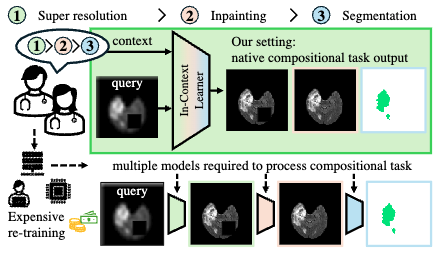
Prof. Dr. Erik Rodner is a faculty member at the University of Applied Sciences Berlin (HTW Berlin), where he serves as a Professor for Machine Learning and Data Science. He also contributes to the School of Engineering Sciences - Technology and Life. His research spans computer vision, machine learning, and biomedical applications, with a focus on learning with limited data, robust visual recognition models, and medical image analysis. He has developed innovative methods for medical diagnostics, industrial classification, and anomaly detection. Recent publications (2025-2016) highlight his expertise in visual in-context learning, semi-weakly segmentation, and active learning frameworks. He has collaborated with institutions such as ZEISS Group, Friedrich Schiller University Jena, and UC Berkeley. Scientific Awards: Award for Excellent Teaching (2023)
Prof. ZHUANG Yizhou is an Assistant Professor in the Department of Geography at Hong Kong Baptist University. His research focuses on weather and climate extremes, climate change attribution, and land-atmosphere coupling. With a Ph.D. in Meteorology from Peking University and extensive postdoctoral experience at UCLA, he brings significant expertise in atmospheric sciences to his academic role. Dr. Zhuang's educational background includes: 2019-2024: Postdoctoral Scholar, University of California, Los Angeles (UCLA), USA 2017: Visiting Graduate Researcher, University of California, Los Angeles (UCLA), USA 2015-2017: Visiting Research Scholar, University of Texas at Austin, USA 2013-2019: Ph.D., Meteorology, Peking University, China 2009-2013: B.S., Atmospheric Sciences (Remote Sensing Focus), Nanjing University of Information Science and Technology, China Dr. Zhuang's research spans multiple critical areas in climate science. His work on weather and climate extremes examines phenomena like wildfires, droughts, and floods. In climate change attribution , he investigates the human influence on extreme weather events, with several publications in PNAS demonstrating how anthropogenic warming has altered drought mechanisms and fire risks. His research on land-atmosphere coupling explores the complex feedback mechanisms between Earth's surface and the atmosphere. Additionally, he applies machine learning techniques and remote sensing technologies to analyze cloud formations and precipitation patterns. Analysis of Dr. Zhuang's recent publications reveals a consistent focus on drought mechanisms and fire weather risk in western North America. His work frequently employs advanced statistical methods like self-organizing maps and canonical correlation analysis to understand complex climate phenomena. A notable trend is his investigation of how anthropogenic climate change is fundamentally altering the nature of droughts, shifting from precipitation-deficit dominated to temperature-driven events, with significant implications for water resource management. Dr. Zhuang has received several prestigious awards for his research contributions: JIFRESSE Outstanding Leadership/Service Award, UCLA, 2023 Richard P. and Linda S. Turco Exceptional Research Publication Award, UCLA, 2023 China Scholarship Council (CSC) Joint Ph.D. Scholarship, 2015-2017 As an academic mentor, Dr. Zhuang supervises graduate students, with evidence of at least one student (G. Wang) whose work has been published under his supervision. He serves as a reviewer for numerous high-impact journals including Proceedings of the National Academy of Sciences (PNAS), Earth's Future, and Geophysical Research Letters. Additionally, he has mentored students in the UCLA Joint Institute for Regional Earth System Science and Engineering (JIFRESSE) Summer Internship Program, with his mentee Annie Rosen winning the 2024 Best JSIP Presentation Award. Dr. Zhuang maintains an active research group, as indicated by his personal website www.zhuangyz.org. His team focuses on climate extremes, attribution studies, and land-atmosphere interactions, with ongoing projects examining drought mechanisms, fire weather risks, and precipitation variability across different regions of the United States, particularly the western states and Great Plains.
Brian Colle is a Professor and Division Head of Atmospheric Sciences at Stony Brook University's School of Marine and Atmospheric Sciences (SoMAS). His research focuses on extreme weather, coastal meteorology, weather forecasting, and regional climate change. He leads the COMAP (COastal Meteorological And Prediction) group, which aims to improve understanding and forecasting of extreme weather events in coastal regions. Colle holds a Ph.D. from the University of Washington (1997). Education: Ph.D., University of Washington, 1997 Research Interests: Colle’s work spans severe convective storms, extratropical cyclones, precipitation dynamics, and climate impacts. His group employs numerical models like Weather Research and Forecasting (WRF) and collaborates on initiatives like the IMPACTS snowstorm study and OLYMPEX field project. Recent projects include analyzing storm surge flooding, microscale updrafts, and ensemble forecasting techniques. Publications Highlight Trends: Recent work emphasizes coastal flooding compounding effects, cyclone forecasting innovations, and immersive visualization tools for risk communication. His studies bridge atmospheric processes with societal impacts, addressing climate adaptation challenges in urban environments. Advising & Collaboration: Colle’s research involves interdisciplinary efforts with institutions like Brookhaven National Laboratory and the New York City Panel on Climate Change. His lab’s focus on high-resolution modeling and stakeholder engagement aims to enhance preparedness for extreme weather events. Labs/Teams: COMAP Lab focuses on coastal meteorology and numerical modeling, contributing to climate resilience strategies and disaster risk reduction.