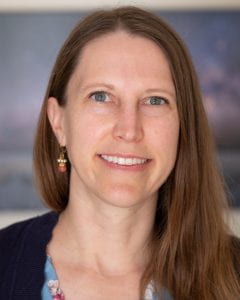
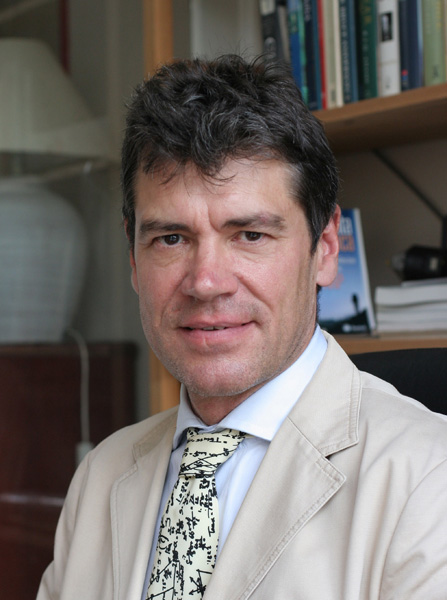
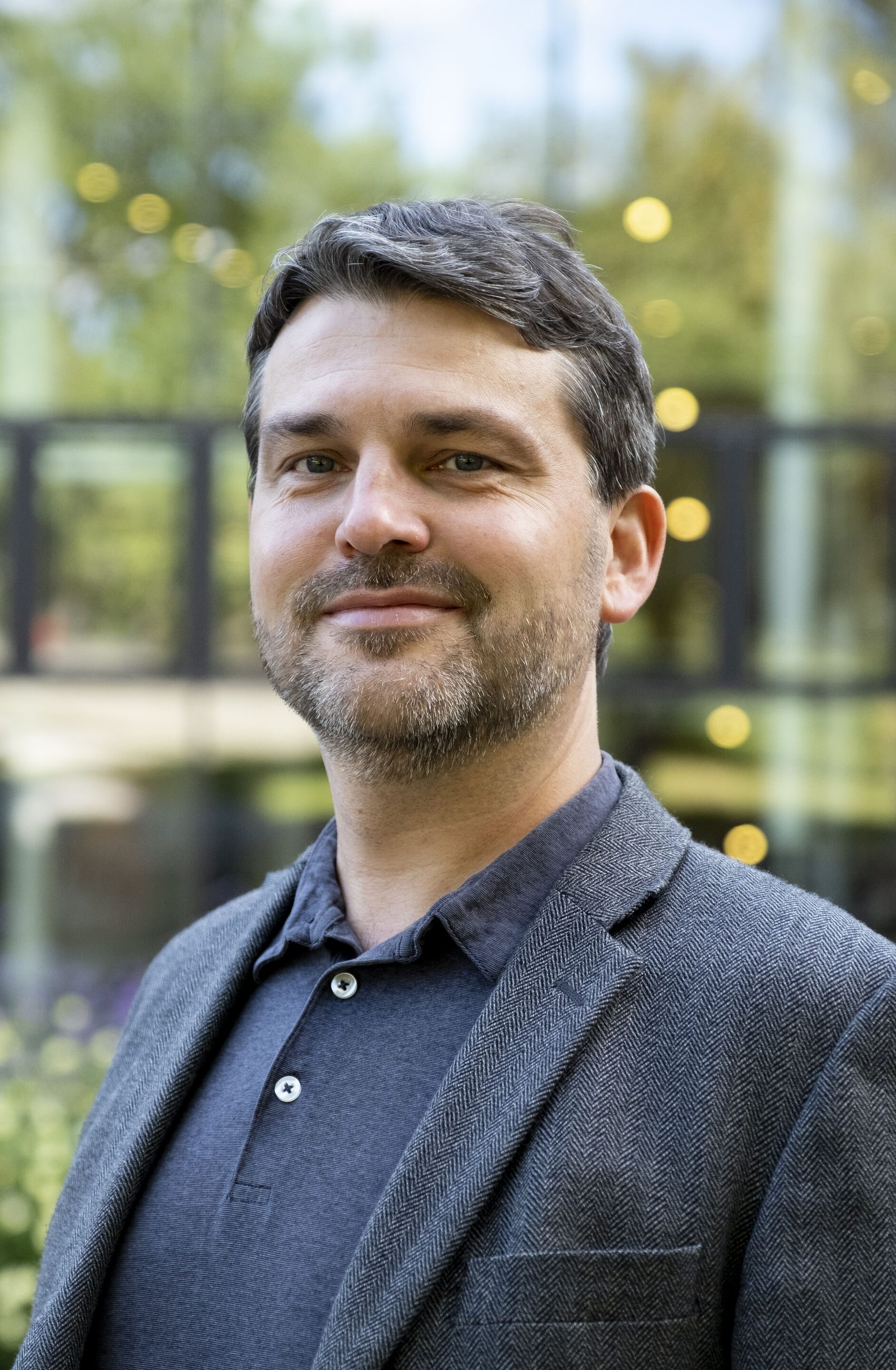
B. Scott Gaudi is the Thomas Jefferson Professor for Discovery and Space Exploration and University Distinguished Scholar at The Ohio State University's Department of Astronomy. A faculty member since 2006, he specializes in extrasolar planet discovery and statistical characterization via transits and gravitational microlensing. His work includes the 2008 discovery of the first Jupiter-Saturn analog. He chairs NASA's Exoplanet Exploration Analysis Group and contributes to the WFIRST mission. Awards include the Helen B. Warner Prize (2009), NSF CAREER Award, and NASA's Outstanding Public Leadership Medal (2017). Education: Ph.D. (2000), M.S. (1998) in Astronomy from The Ohio State University; B.S. (1995, summa cum laude, phi beta kappa) in Astrophysics from Michigan State University. Early research roles included a Menzel Postdoctoral Fellowship at Harvard-Smithsonian and a Hubble Fellowship at the Institute for Advanced Study. Research focuses on exoplanet demographics, gravitational lensing (e.g., Microlensing Follow-Up Network), and technology for starlight suppression. He has published extensively on microlensing techniques and large dataset analysis. Active in peer review for major journals and NASA mission evaluations. Professional contributions include leadership roles in exoplanet exploration initiatives and collaborations like the Kepler Mission, STARE Project, and STEPSS. His work bridges theoretical astrophysics with observational advancements in exoplanet detection.
Heather A. Knutson is Professor of Planetary Science at the California Institute of Technology (Caltech) and serves as Divisional Academic Officer for the Division of Geological and Planetary Sciences. Education PhD (2009): 'Portraits of Distant Worlds: Characterizing the Atmospheres of Extrasolar Planets' Research Focus Dr. Knutson leads observational studies of exoplanetary systems using space- and ground-based telescopes. Her work centers on: Atmospheric Characterization: Measuring compositions, temperature profiles, and climate dynamics of exoplanet atmospheres through eclipse observations Gas Giant Systems: Investigating prevalence of Jupiter analogues and their influence on inner planetary architectures Atmospheric Evolution: Studying mass loss mechanisms in close-in planets subjected to intense stellar irradiation Habitability Assessment: Evaluating conditions for potential life on terrestrial exoplanets Her research integrates multi-wavelength observations to reconstruct planetary formation histories and evolutionary pathways.
Katie Morzinski serves as an Associate Astronomer at Steward Observatory, University of Arizona, specializing in direct imaging of extrasolar planets to measure energy output and study atmospheric properties. She earned her Ph.D. from the University of California, Santa Cruz in 2011 and maintains active roles in astronomical instrumentation development. Her academic foundation includes: Ph.D., University of California - Santa Cruz, 2011 Dr. Morzinski's research spans exoplanets, planetary science, and Brown Dwarfs with expertise in high contrast imaging and occultation techniques. As an instrument scientist for MagAO and LBTI within the Center for Astronomical Adaptive Optics, she bridges observational astronomy and engineering innovation. Her work focuses on advancing direct imaging capabilities to characterize exoplanetary atmospheres and energy dynamics. Within the Center for Astronomical Adaptive Optics, she actively contributes to MagAO (Magellan Adaptive Optics) and LBTI (Large Binocular Telescope Interferometer) projects, driving technological advancements in high-contrast imaging systems. Her dual focus on instrumentation and science enables critical measurements of faint planetary companions near bright stars. No scientific awards were documented in the source materials. While student advising details remain unspecified, her instrument scientist role involves mentoring through the Center for Astronomical Adaptive Optics. Research grant specifics were not detailed in the provided information, though her instrumentation work implies ongoing project funding.
Alexandre Correia is an Associate Professor at the Universidade de Coimbra's Departamento de Física, specializing in planetary dynamics and exoplanetary systems. His research focuses on celestial mechanics, tidal evolution, and the detection of exoplanets. He holds a Doctorate in Astrophysique et Techniques Spatiales from Université Paris Diderot and an Agregação in Physics from Universidade de Aveiro. Key professional roles include leading projects like PHOBOS (exploring Phobos' composition) and MWGaiaDN (Galactic structure studies). He has supervised numerous PhD and MSc students, contributing significantly to understanding planetary formation and stability. His work spans over 136 publications, emphasizing dynamics of multi-planet systems, tidal effects, and resonant chains. Collaborations include international teams using facilities like CHEOPS, TESS, and SOPHIE. Notable achievements include simulating planetary systems with tools like RheoVolution and TIDYMESS, and discovering circumbinary planets.
Donald Campbell is an Adjunct Professor in the Department of Design at Monash University. His research focuses on healthcare quality improvement, patient safety, trauma care, and infection control design. He has led or contributed to six major research projects since 2005, including initiatives on hand hygiene systems, patient safety, and vascular disease prevention. Campbell has published extensively, with over 68 peer-reviewed outputs and a notable 2021 Good Design Award for the Hand Hygiene Management System. His work addresses UN Sustainable Development Goals related to good health and well-being. Key projects include redesigning hand hygiene procedures, improving healthcare data utilization, and translating health interventions for vulnerable communities. His research spans trauma care protocols, anticipatory care for preventable hospitalizations, and telehealth innovations. Campbell collaborates with multidisciplinary teams in Australia and internationally, addressing systemic challenges in healthcare delivery and patient outcomes. His recent articles analyze pandemic impacts on emergency departments, trauma resuscitation strategies, and coagulation management in severe bleeding. Campbell’s contributions bridge design principles with healthcare practice, emphasizing human-centered solutions to complex healthcare challenges.
William B. Moore is a Professor of Atmospheric and Planetary Sciences at Hampton University, affiliated with the School of Science. He holds a Ph.D. in Geophysics and Space Physics from UCLA (1997). His research focuses on planetary thermal and tidal dynamics, particularly studying Jupiter's moon Io and Earth's early heat-pipe era. He has contributed to NASA missions like Magellan (Venus) and Galileo (Jupiter), and co-founded the Hampton University Severe Weather Research Center. Dr. Moore's work bridges Earth and space sciences, exploring planetary evolution, exoplanet dynamics, and climate impacts on coastal communities. He has authored 60+ publications in journals like Science and Nature , with highly cited papers on mantle convection and planetary atmospheric evolution. His interdisciplinary research also addresses societal challenges, including climate change adaptation in low-elevation regions. Committees: Outer Planets Assessment Group, National Academy of Sciences Solar System Exploration Decadal Survey, Southeastern Universities Research Association Board (Space Science & Technology Chair) Outreach: Public astronomy events, media appearances, and educational initiatives promoting STEM diversity. Key projects include JUICE mission collaboration (ESA's Jupiter icy moons explorer) and studies on Venus tesserae, Ganymede interiors, and Chesapeake Bay vertical land motion monitoring.
Rob Wittenmyer is a Professor in the Centre for Astrophysics at the University of Southern Queensland. His research focuses on exoplanet detection, particularly using radial-velocity methods, and the study of planetary systems around evolved stars. He has contributed significantly to the analysis of data from missions like TESS, discovering and characterizing numerous exoplanets, including super-Jupiters, sub-Neptunes, and systems with unique orbital dynamics. Educations: BA from Williams College, MA from Boston University, MAstron from San Diego State University, PhD from University of Texas at Austin. Research interests include radial-velocity exoplanet detection, dynamics of multi-planet systems, and the demographics of giant planets. His work often involves collaborations with international teams to analyze large datasets from telescopes like HST and Gaia. Notable scientific outputs include studies on planetary systems such as HD 28185 and HD 222237 b, as well as contributions to understanding the occurrence rates of planets around giant stars. He actively supervises doctoral students in exoplanet research and has led projects like the Pan-Pacific Planet Search. Grants and collaborations include roles in the MINERVA-Australis project and the GALAH survey. His research highlights the interplay between stellar evolution and planetary system architectures.
Dr. Jason Ferguson is a Professor in the Department of Matematics, Statistics, and Physics at Wichita State University's Fairmount College of Liberal Arts and Sciences. He also serves as the Physics Help Room Coordinator. His research focuses on computational astrophysics, particularly the tabulation of mean opacities in stellar environments and the study of stellar populations like globular clusters. He collaborates with stellar evolution specialists to understand chemical enrichment in old star systems. Dr. Ferguson earned his Ph.D. from the University of Kentucky in 1997. His work bridges observational and theoretical astrophysics, with a strong emphasis on stellar models, isochrones, and galactic archaeology. His research interests include stellar opacities, stellar evolution, chemical abundance patterns, and the application of advanced modeling techniques like the BAyesian STellar algorithm (BASTA). His studies contribute to understanding Milky Way formation, stellar age chronology, and element origin studies. Key areas of focus in his publications include refining solar composition models, analyzing dwarf star ages with surveys like GALAH, and investigating globular cluster dynamics. His computational tools and datasets (e.g., VizieR catalogs) support broader astrophysical research.
Michael Perryman is currently affiliated with the University of Heidelberg and the Max Planck Institute for Astronomy in Heidelberg since 2010. Previously, he served as a Professor in the Astronomy Department at Leiden University (The Netherlands) from 1993 to 2009 and held positions at the European Space Agency (ESTEC, Noordwijk) from 1980 to 2009. He earned his PhD at the Mullard Radio Astronomy Group, Cavendish Laboratory, Cambridge between 1976 and 1979. His research interests span Astronomy , with a focus on Astrometry , Galaxy structure, Extra-solar planets , and Optical detectors . These areas reflect his contributions to understanding celestial mechanics, extrasolar planetary systems, and detector technology advancements. Scientific Awards : Shaw Prize in Astronomy (2022) Tycho Brahe Prize of the European Astronomical Society (2011) Honorary Doctorate, Faculty of Science, Lund University (Sweden) (2010) Eponymous naming of Minor Planet 10969 (2007) George Darwin Lecture, Royal Astronomical Society (1999) Academic Medal, Royal Netherlands Academy of Arts & Sciences (1997) Prix Janssen, French Astronomical Society (1996)
Eda SONBAŞ is a Professor of Physics at Adiyaman University, Turkey, and holds a Research Professor position at The George Washington University, USA. She specializes in astrophysics with a focus on Gamma Ray Bursts, X-ray Binaries, and Exoplanets. Her academic journey includes BSc, MSc, and PhD degrees from the University of Cukurova (Turkey) and the Special Astrophysical Observatory (Russia). She has conducted post-doctoral research at NASA-Goddard and the George Washington University. Dr. Sonbaş has been recognized with the BAGEP Young Scientist Award (2014). Her research explores transient astronomical phenomena, including ULXs and IMBHs, with notable contributions to understanding GRB afterglows and stellar occultations. She has led multiple TÜBİTAK-funded projects, such as ‘Investigation of Gamma Ray Burst Afterglows With Optical Observations’ and ‘X-ray and UV Spectral Correlation of Accretion Disks in Ultraluminous X-ray Sources’. Dr. Sonbaş has supervised numerous graduate students and contributed to international conferences as a scientific organizer and committee member. Her work bridges observational and theoretical astrophysics, with publications in leading journals like MNRAS and ApJ. She actively engages in scientific outreach, including projects like ‘Adyaman’da Yerden Goge Doga Seruveni’.
Smadar Naoz is a Professor at UCLA’s Department of Physics & Astronomy, holding the Howard and Astrid Preston Chair in Astrophysics. She is a member of the Bhaumik Institute for Theoretical Physics and serves on its executive committee. Her research spans theoretical astrophysics, focusing on dynamical problems from cosmology to black holes, gravitational waves, stars, and extrasolar planets. Notable contributions include the discovery of the Eccentric Kozai-Lidov (EKL) mechanism and studies on Supersonically-Induced Gas Objects (SIGOs). Education: PhD in Astronomy & Astrophysics from Tel Aviv University (advisor: Rennan Barkana), MSc from The Hebrew University (advisor: Nir Shaviv). Research interests emphasize triple-body system dynamics, planetary system evolution, and early universe structure formation. Her work bridges astrophysical scales, influencing fields like exoplanet dynamics and galactic evolution. Scientific awards include the UCLA Career Commitment to Diversity DEI Award (2019) and postdoctoral fellowships from IAU Gruber and Harvard-Smithsonian CfA. She advocates for diversity and inclusion in science, emphasizing human-centric approaches to scientific excellence. Her group actively explores topics such as Hot Jupiter formation, galactic center dynamics, and SIGOs’ role in globular clusters. Outreach efforts include workshops for neuro-diverse students and public engagement through media collaborations.
Sven Wedemeyer is a Professor at the Institute of Theoretical Astrophysics, University of Oslo, and a Principal Investigator at the Rosseland Centre for Solar Physics (RoCS), a center of excellence funded by the Research Council of Norway since 2017. He serves on the Institute board of the Institute of Theoretical Astrophysics as a permanent academic staff member (from January 2025) and is the PhD committee chair at the Institute. Internationally, he is a Member of the Council of the European Astronomical Society (EAS, since July 2024), a Co-opted board member of the European Solar Physics Division (ESPD) of the European Physical Society (EPS, since September 2024), and the EAS representative for ASTRONET (since October 2024). He also serves on the Advanced Grant (PE9) evaluation committee for the European Research Council (ERC AdG 2023) and the MSCAA/ERC reference group of the Research Council of Norway (since 2020). Professor Wedemeyer's research focuses on solar and stellar physics with additional interests in extrasolar planets. His work primarily utilizes realistic numerical simulations in comparison with space-borne and ground-based observations. His current major research activities include solar/stellar science at (sub-)millimeter and radio wavelengths, studies of the solar chromosphere using ALMA observations, and investigations into stellar activity. He is a lead of the solar/stellar science working group for the AtLAST consortium (The Atacama Large Aperture Submm Telescope) and coordinates an international team studying vortex flows in solar plasmas funded by the International Space Science Institute in Bern, Switzerland. His research has produced significant findings, including the discovery and explanation of magnetic tornadoes on the Sun, featured on the front page of Nature in 2012. His publication record demonstrates a strong focus on advancing observational techniques for solar and stellar physics at millimeter wavelengths, particularly through the Atacama Large Millimeter/submillimeter Array (ALMA). His recent work shows an increasing emphasis on connecting solar observations with stellar phenomena, developing new diagnostic tools for solar-stellar activity, and contributing to the development of next-generation telescopes like AtLAST. The interdisciplinary nature of his research spans solar physics, stellar astrophysics, and exoplanet science, with a consistent methodological approach combining numerical simulations with multi-wavelength observations. ERC-funded SolarALMA project (2016-2021) Initiator and co-ordinator of the SSALMON research network (since 2014) Discovery of magnetic tornadoes on the Sun featured in Nature (2012) Professor Wedemeyer has led multiple significant research projects including the EMISSA project (funded by the Research Council of Norway, 2019-2023), the ESO-funded ALMA Development Study 'High-Cadence Imaging of the Sun' (2018-2023), and the ERC-funded SolarALMA project (2016-2021). He serves as Norwegian representative at the Observing Programme Committee of the Nordic Optical Telescope and is actively involved in multiple international research networks including KOINet for exoplanet observations and the Extreme Precision Radial Velocity group. His leadership extends to coordinating the international team 'The nature and physics of vortex flows in solar plasmas' funded by the International Space Science Institute since 2018. Professor Wedemeyer leads the solar/stellar science working group within the AtLAST consortium and is instrumental in developing solar observing modes for ALMA. His work with the SSALMON research network connects over 80 researchers worldwide focused on solar simulations for millimeter observations. He also contributes to the Solar ALMA Science Archive (SALSA) and the Solar ALMA Library of Auxiliary Tools (SALAT), creating essential resources for the solar physics community working with ALMA data.
Jason W. Barnes is a Professor in the Department of Physics at the University of Idaho, part of the College of Science. He conducts research in planetary science, focusing on Titan and extrasolar planets, and is the deputy principal investigator on the NASA Dragonfly mission proposal. His research interests span planetary systems, astrophysics, and space exploration. Barnes uses data from NASA spacecraft to investigate the surfaces and compositions of planetary bodies, particularly Saturn's moon Titan and exoplanets orbiting other stars. His work bridges observational astronomy and theoretical modeling in planetary physics. The trend in his research, though no specific publications are listed, centers on planetary exploration, with emphasis on astrobiology potential and surface dynamics of extraterrestrial bodies. His involvement in high-profile NASA missions underscores his contributions to planetary science. Research Awards & Honors: None explicitly listed. Barnes advises students through his teaching and research mentorship in the physics program. He has been involved in significant research initiatives such as the Dragonfly mission, which may involve grant funding from NASA, though specific grants are not detailed. He contributes to academic outreach through the Society of Physics Students and undergraduate research experiences. He is associated with the Physics Department’s research groups focusing on planetary science and space instrumentation. His lab or team likely supports data analysis from space missions, particularly related to Titan exploration and exoplanet detection.
Alexis Brandeker is a Lecturer at the Department of Astronomy , Stockholm University . Research focuses on star and planet formation , exoplanetary systems , and astrobiology , particularly methods for detecting biosignatures through impact ejecta analysis and optical albedo measurements. Recent publications emphasize CHEOPS space telescope observations of exoplanet atmospheres, PLATO 2.0 mission design for planetary system characterization, and theoretical modeling of exoplanetary dust dynamics . Articles span 2014–2022 , highlighting expertise in photometric transits, asteroseismology, and biosignature detection techniques. Current work involves reflected starlight analysis in exoplanets, cloud-free atmospheric modeling , and future applications of space telescopes for planetary habitability studies.
Jason Nordhaus is an Associate Professor in the Department of Science and Mathematics at the National Technical Institute for the Deaf (NTID), part of the Rochester Institute of Technology (RIT). He joined NTID in 2014 and is a core faculty member of the Center for Computational Relativity and Gravitation (CCRG). Nordhaus holds a Ph.D. from the University of Rochester and previously worked at Princeton University. His research focuses on astrophysical phenomena such as common envelope evolution, binary star interactions, core-collapse supernovae, and planetary nebulae formation. He is also dedicated to expanding STEM opportunities for deaf and hard-of-hearing students through initiatives like AstroDance , a project using dance to communicate astrophysical concepts. Education: BA, BS, MS, Ph.D. from the University of Rochester. Research Interests: Nordhaus investigates magnetic fields in evolved stars, common envelope evolution, gravitational waves, and the dynamics of close binary systems. His work bridges computational astrophysics with observational studies, leveraging high-resolution data from missions like JWST to explore stellar death processes. He collaborates on projects funded by NSF and NASA, including studies of planetary nebulae shaping and relativistic effects in common envelopes. Grants & Outreach: Nordhaus has secured grants to advance multi-messenger astrophysics and improve STEM accessibility for underrepresented groups. Notable projects include the RITTU Partnership and Lost in Translation , addressing barriers for deaf students. His research has been featured in Nature Astronomy , Monthly Notices of the Royal Astronomical Society , and other journals. Affiliations: Core faculty at CCRG, member of the NSF Astronomy and Astrophysics Postdoctoral Fellow program, and contributor to initiatives promoting inclusive science education.