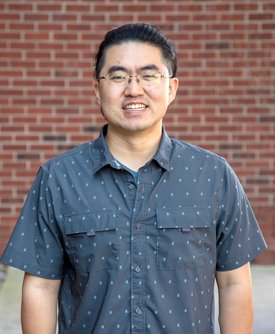
Thamani Freedom Gondo is affiliated with the Lund University Centre for Analysis and Synthesis , focusing on Food Science and Bioactive Compounds . Their work emphasizes analytical techniques for plant-based and marine food resources, particularly using supercritical fluid extraction . Key affiliations: Lund University, FORMAS-funded projects Research themes: Bioactive compound analysis, polyphenol characterization, sustainable food processing Recent publications highlight advancements in phlorotannin analysis from brown seaweeds and Lactiplantibacillus plantarum applications in non-dairy fermentation. Their 2023 work on ternary solvent systems demonstrated high selectivity in seaweed extraction.
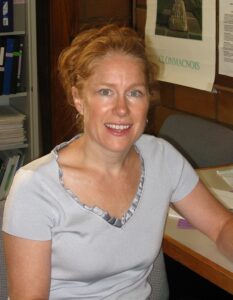
Dr. Qing Jin is an Assistant Professor of Food Science at the School of Food and Agriculture, College of Natural Sciences, Forestry and Agriculture, University of Maine. Her research focuses on economically-viable and environmentally-friendly food system innovation, with emphasis on value-added utilization of food waste and by-products through advanced processing technologies. Education: Ph.D. (2020) from Virginia Tech She teaches courses on food engineering principles (FSN 485), food engineering lab (FSN 486), food preservation (FSN 502), and co-teaches an advanced graduate seminar (AVS 633/FSN 671). Supported by the Maine Agricultural and Forest Experiment Station, her current Hatch project (ME022423) explores sustainable food industry solutions through biorefinery approaches. Her work spans food waste valorization, biofuels, bioproducts, and techno-economic analysis. Recent publications highlight her expertise in dietary fiber modification, fermentation optimization, biochar development, and polyphenol extraction from agricultural waste streams. She actively seeks undergraduate and graduate research assistants for her lab. Contact: qing.jin@maine.edu | Office: 109 Hitchner Hall | Phone: 207-581-1687
Dr Farhad Masoomi-Aladizgeh is a Research Fellow in the School of Life and Environmental Sciences at the University of Sydney. His work focuses on understanding how environmental stresses like heat and drought impact crop fertility, particularly in cereal crops. He holds a BSc, MSc, and PhD in Plant Biology. His research emphasizes male reproductive systems in plants and seeks to identify molecular mechanisms underlying abiotic stress susceptibility to enhance climate resilience in crops. Education includes advanced training in plant sciences, with a focus on molecular biology and stress physiology. Current research projects explore transcriptome responses to stress, stress tolerance gene identification in crop relatives, and ABA-mediated stress protection in rice. His publications span plant proteomics, stress physiology, and molecular protocols, with a strong emphasis on drought and heat tolerance mechanisms. Notable work includes developing universal nucleic acid isolation protocols and analyzing stress responses in rice and cotton. No scientific awards are listed, but his contributions to crop resilience research are significant. He advises no current students but collaborates on interdisciplinary projects involving genomic and proteomic approaches to agricultural challenges. Research is centered at the University of Sydney with potential collaborations in plant science labs focused on environmental stress mitigation strategies.
Shabaz Mohammed is an Associate Professor of Proteomics at the University of Oxford, holding joint appointments in the Departments of Chemistry and Biochemistry. Since 2020, he has served as Head of the Mechanistic Proteomics research programme at the Rosalind Franklin Institute. His research focuses on advancing proteomics technologies to study protein post-translational modifications and their roles in cellular processes, with applications in viral infections and disease mechanisms. Education: BSc in Chemistry, UMIST (now The University of Manchester), 1999 PhD in Biological Mass Spectrometry, University of Manchester, 2003 Postdoctoral Research, University of Southern Denmark (with Ole Jensen), 2005-2008 Postdoctoral Research, Utrecht University (with Albert Heck), 2008 Professor Mohammed's research centers on developing novel mass spectrometry approaches for large-scale characterization of protein post-translational modifications (PTMs). His group innovates in chromatographic techniques for single-cell proteomics, creates materials for PTM enrichment (glycosylation/phosphorylation), and applies these tools to study viral infections (SARS-CoV-2), cell cycle regulation, and signaling pathways. His work bridges chemistry, biochemistry, and cell biology to understand dynamic protein functions in health and disease. His recent publications (2023-2025) demonstrate strong emphasis on viral proteomics, particularly virus-host RNA-binding protein interactions, and innovations in mass spectrometry fragmentation techniques and chromatography. Key themes include viral remodeling of host cells, new labeling strategies for PTMs, and advancements in single-cell proteomics, with significant implications for understanding viral pathogenesis. Scientific Awards: No specific awards or fellowships were detailed in the source material. Advising and Grants: Information regarding graduate students supervised or specific research grants was not provided in the available text. As an active research group leader, Professor Mohammed likely mentors PhD students and secures competitive funding for proteomics research. Laboratories and Collaborations: Professor Mohammed leads a research group at Oxford focused on proteomics technology development. He collaborates extensively with the Ben Davis group on PTM detection materials and across the university on biochemical applications. At the Rosalind Franklin Institute, he heads the Mechanistic Proteomics programme to unravel protein functions through advanced proteomic methods.
David Latulippe is a Professor in the Department of Chemical Engineering at McMaster University. He joined McMaster in 2012 after postdoctoral work at Cornell University and a PhD at Penn State University, focusing on membrane filtration for DNA purification. His industrial experience includes roles at ZENON Environmental (now GE Water) in hollow-fiber membrane design for water treatment. Research interests include Membrane science and technology Bioprocessing of therapeutic viruses Microscale systems for biological applications Environmental engineering solutions for water treatment Current projects involve collaborations with industry partners like Ceapro and Aevitas, and the development of a biomanufacturing automation lab with Sartorius. Recent publications highlight advancements in Nanofiltration and microfiltration for viral vectors Conductive membranes for electrochemical applications Microfluidic systems for DNA analysis Environmental monitoring of biocides and microplastics Scientific recognition includes the Young Membrane Scientist Award (2014). Teaching activities focus on Fluid Mechanics (CHEMENG 2O04) and Industrial Separation Processes (CHEMENG 4M03).
Prof. Xing Yang is a Professor at KU Leuven's Institute for Sustainable Metals and Minerals (ISM2), leading the Process Engineering for Sustainable Systems (ProcESS) research group. His work focuses on developing membrane-based technologies for sustainable resource recovery and environmental protection, with strong emphasis on metallurgical and wastewater applications. His research centers on advanced membrane engineering for separation processes, particularly membrane distillation, electrodialysis, and solvent extraction-based systems. Key interests include designing stimuli-responsive membranes, optimizing ion-selective transport, and developing energy-efficient processes for metal recovery from end-of-life batteries and industrial waste streams. His work bridges materials science, chemical engineering, and environmental sustainability to address critical resource scarcity challenges. Analysis of his 15 most recent publications (2024-2025) reveals a dominant focus on lithium and transition metal recovery through electro-driven membrane processes. He pioneers innovations in membrane architecture – including macrocycle-based channels, zwitterionic coatings, and PVDF modifications – to achieve unprecedented selectivity in complex matrices. His research consistently targets industrial applicability, with demonstrated applications in battery recycling, wastewater valorization, and CO 2 capture systems. The ProcESS research group operates within KU Leuven's Institute for Sustainable Metals and Minerals, collaborating across metallurgy, environmental engineering, and materials science disciplines. Their work integrates experimental membrane fabrication with process modeling to develop scalable solutions for circular economy implementation in resource-intensive industries.
Frederick R. Haselton is a Professor of Biomedical Engineering, Chemistry, and Ophthalmology and Visual Sciences at Vanderbilt University’s School of Engineering. His research focuses on developing low-cost, accessible diagnostic technologies for global health challenges, particularly in resource-constrained settings. He leads the Haselton Lab, a multidisciplinary team advancing innovations like Adaptive PCR, coffee ring-based diagnostics, and quantum dot imaging systems. Education : Ph.D. in Bioengineering from the University of Pennsylvania; B.A. in Mathematics from Haverford College. Research Interests : Dr. Haselton’s work spans molecular diagnostics, nanotechnology, and global health. Key projects include: Adaptive PCR: A revolutionary PCR method using synthetic L-DNA for temperature-independent cycling, enabling point-of-care diagnostics. Coffee Ring Diagnostics: Leveraging evaporation phenomena to create simple malaria and tuberculosis tests requiring no electricity. Quantum Dot Imaging: Developing multispectral tools for retinal and cardiovascular disease monitoring. Global Health Collaborations: Leading LIGHT (Laboratories for Innovation in Global Health Technologies), a cross-disciplinary initiative addressing diagnostic needs in low-resource environments. Grants & Funding : Haselton has secured major grants from NIH, Bill & Melinda Gates Foundation, and others for projects like tuberculosis detection via magnetic bead systems and mobile-connected diagnostic tests. Labs & Teams : The Haselton Lab collaborates with faculty across engineering, medicine, and chemistry. Current personnel include postdocs, graduate students, and undergraduates working on projects ranging from HIV viral load monitoring to SARS-CoV-2 diagnostics.
Dr. Monica Giusti is a Professor and Associate Chair in the Department of Food Science and Technology at The Ohio State University's College of Food, Agricultural, and Environmental Sciences. She holds visiting faculty status at Universidad Nacional Agraria in Peru and leads the Giusti Phytochemicals Laboratory. Her research focuses on natural pigments, particularly anthocyanins, for applications in functional foods and natural colorants. Her investigations span: Chemistry and functionality of flavonoids Development of stable natural colorants Biological activity of polyphenols Food applications of phytochemicals Recent publications demonstrate strong emphasis on pyranoanthocyanin synthesis, thermal degradation pathways, and photochromic properties of pigments. Awards include Distinguished Professor recognition and election as NAI Fellow. Laboratory achievements: Presidential Fellowship awarded to student Danielle (2023) Multiple IFT Division awards for student presentations Collaborations with international scholars Research funding includes internal grants for pyranoanthocyanin color palette expansion and beautyberry characterization.
Professor M. Christina White is the William H. and Janet G. Lycan Professor in the Department of Chemistry at the University of Illinois at Urbana-Champaign. Her research focuses on organic synthesis and transition-metal catalysis, particularly enantioselective C-H oxidation methods. She has developed innovative strategies for direct functionalization of C-H bonds using small molecule transition metal complexes, aiming to achieve Nature-level efficiency in synthetic pathways. B.A. in Biochemistry, Smith College (1992) Ph.D. in Chemistry, Johns Hopkins University (1998) Postdoctoral Fellowship, Harvard University (1999-2002) Her work redefines reactivity principles for complex molecule synthesis through predictive mechanistic studies. Key collaborations include Novartis, Vertex, and Pfizer, with a strong emphasis on translating chemical innovation to pharmaceutical development. Recent projects highlight ligand-controlled regioselectivity and biocatalysis integration. 15+ major awards including AAAS Fellow, NSF CAREER, and ACS Synthetic Organic Chemistry Award Mentored 5+ graduates now in academic/pharma roles (e.g., Assistant Professor Wayne State University, Associate VP at Lilly) Leadership in the White Group, driving interdisciplinary collaborations and industrial partnerships
Trine Grønhaug Halvorsen is a Professor at the University of Oslo's Department of Pharmacy, within the Faculty of Mathematics and Natural Sciences. Her research focuses on developing innovative analytical methods for protein analysis in complex biological samples using mass spectrometry. She specializes in sample preparation techniques, smart sampling strategies, and biomarker quantification. Education: PhD in Drug Analysis (2003), Cand.pharm. (1998) Awards: Publication Award (2001) for pioneering liquid-phase microextraction work Research interests include molecularly imprinted polymers, antibody-based capture methods, and electromembrane extraction. Her work emphasizes improving analytical sensitivity and speed for low-abundance proteins in clinical and biomedical contexts. Recent articles highlight advancements in smart samplers, dried blood spot analysis, and LC-MS-based protein quantification. These studies address challenges in biomarker detection and clinical diagnostics. Labs/Teams: Pharmaceutical Analytical Chemistry Group, SmartProteinAnalysis@UiO Teaching: Courses in bioanalytical chemistry, drug analysis, and sample preparation
Katherine Lanigan is Professor of Chemistry in the Department of Chemistry and Biochemistry at University of Detroit Mercy's College of Engineering & Science, teaching General Chemistry, Quantitative Analysis, and Instrumental Analysis since joining the faculty in 2001. Her educational background includes: Ph.D. in Chemistry, University of Iowa (1996) B.S. in Chemistry, University of Dayton (1990) Dr. Lanigan's research integrates analytical chemistry with environmental science through two primary avenues: trace metal analysis in ecological systems using FAAS, XRF, and UV/vis spectroscopy, and investigations of photocatalytic reactions involving nanoparticles for contaminant degradation. Her secondary focus examines adsorbed species at liquid/solid interfaces of metal oxide films using ATR-FTIR, with recent expansion into cloud point extraction methods for metal preconcentration in water samples. These efforts address critical environmental monitoring and remediation challenges. Analysis of her 2015-2024 publications reveals dual expertise in environmental analytical chemistry and pedagogical innovation, with environmental work emphasizing practical metal detection techniques and education research developing theme-based water quality activities across instructional levels. Her scientific recognition includes: National Institute of Health ReBUILDetroit Pilot Project Course Development Award (2017, co-PI) UDMPU Faculty Research Awards (2016, 2015) Dr. Lanigan has mentored 38 students since 2002, with alumni pursuing dentistry (University of Detroit Mercy, Case Western, Michigan, Pennsylvania), medicine, and chemistry careers. Her secured funding supports both research instrumentation and educational development initiatives. The active Lanigan Research Group currently comprises Jisoo Kim, Heewoong Kim, and Tina Lee, with Kelly Cho, Alina Varghese, and Abdel El Sayed joining for Fall 2025 projects on photocatalytic nickel oxidation and drinking water metal analysis.
Elena Niculina Dragoi is a Lecturer at the Faculty of Chemical Engineering and Environmental Protection 'Cristofor Simionescu' at Gheorghe Asachi Technical University in Iasi, Romania. Her academic work integrates Artificial Intelligence and Machine Learning tools for solving complex problems in Chemical Engineering and Environmental Protection . With over 30 published papers and six active research projects, her contributions span process optimization, nanomaterials, and sustainable technologies. Teaches Applied Informatics (Years 1 & 4) and Artificial Intelligence at the Faculty of Chemical Engineering Contributes to Programming Engineering at the Faculty of Computer Science, University 'Alexandru Ioan Cuza' Engaged in interdisciplinary courses at the Faculty of Automatic Control and Computer Engineering Research Interests : Elena's work focuses on modelling and optimization (90% emphasis) of chemical processes using AI methodologies, with cross-disciplinary applications in environmental engineering (70%) and chemical engineering (95%). Her recent publications highlight innovations in: 3D-printed nanocomposite adsorbents for pollutant removal Metaheuristic optimization algorithms for industrial processes Hydrogen generation via nanocatalysts Electrochemical biosensors for environmental and health monitoring AI-driven wastewater treatment systems Green chemistry applications in pharmaceutical and dye removal
Tao Wen serves as an Assistant Professor in the Department of Earth and Environmental Sciences at Syracuse University's College of Arts and Sciences, where he joined the faculty in 2020. He directs two specialized research laboratories: the Hydrogeochemistry And eNvironmental Data Sciences (HANDS) Lab and the Noble Gases in Earth Systems Tracing (NEST) Lab, focusing on human-natural system interactions in water and elemental cycles. Education: Ph.D. in Geology, University of Michigan (2017) M.S. in Geology, University of Michigan (2014) B.S. in Environmental Sciences, University of Science and Technology of China (2011) Dr. Wen's research integrates field measurements, laboratory analyses, and advanced computational methods to investigate water-carbon cycles across spatial and temporal scales. His group employs noble gas geochemistry (He, Ne, Ar, Kr, Xe), isotopic tracing (O, H, C, N), and machine learning to assess impacts from energy extraction, urbanization, and climate change on freshwater systems. Key methodologies include ion chromatography, mass spectrometry, and geostatistical modeling for environmental data science applications. Recent publications demonstrate a pronounced shift toward data-intensive environmental science, with machine learning models increasingly central to analyzing freshwater salinization, methane migration pathways, and shale gas impacts. The research portfolio spans regional groundwater contamination studies to continental-scale freshwater analyses, consistently emphasizing the interplay between anthropogenic activities and natural processes in Earth-surface systems. Scientific Awards: Excellence in Review Award from Applied Geochemistry, International Association of GeoChemistry (2021) Dr. Wen serves as Editor for Applied Geochemistry (2023-present) and previously for Frontiers in Earth Science (2021-2024). He secured NSF funding for developing climate change data search engines and advises students through senior thesis projects and laboratory research in the WEN group. Media coverage of his work includes features in Popular Mechanics, Yahoo News, and AGU press releases regarding freshwater salinity trends and shale gas environmental impacts. The HANDS Lab develops machine learning tools for environmental data analysis while NEST Lab specializes in noble gas applications for tracing fluid migration and tectonic events, together supporting comprehensive investigations of water quality degradation mechanisms across diverse geological settings.
Koit Herodes is an Associate Professor in the Chair of Analytical Chemistry at the University of Tartu's Institute of Chemistry. His expertise includes chromatography, mass spectrometry, and analytical method development. He teaches courses such as Analytical Chemistry, Practical Chemical Analysis, and LC-MS Methods Validation, catering to both domestic and international students (EACH and AMS programs). Since 2001, he has advised numerous BSc, MSc, and PhD students across various curricula. Research interests focus on advanced analytical techniques, environmental analysis (e.g., antibiotic resistance, pharmaceutical residues), and sample preparation methodologies. His work spans pharmaceutical degradation in soils, biofilm antibiotic resistance, and NMR-based material characterization. He has pioneered derivatization reagents and micro-solid-phase extraction devices for amino compound analysis. Notable contributions include over 150 peer-reviewed articles since 2008, emphasizing methodological innovations in chromatography-mass spectrometry, environmental monitoring, and pediatric pharmacokinetics. His 2022 'Best Teacher' award reflects his dedication to education, particularly in bridging theoretical and practical aspects of analytical chemistry. Publications from 2023–2025 highlight trends in antibiotic resistance dynamics, sewage sludge-derived pharmaceuticals, and Arctic methane cycles. His work often integrates environmental and biomedical applications, addressing global challenges in healthcare and sustainability. Awards: Best Teacher, Institute of Chemistry, University of Tartu (2022) Advising spans 23 years, with over 50 student projects completed. Active in international collaborations, particularly within Baltic-Nordic analytical chemistry networks.
Aaron Diefendorf is a Professor of Geosciences at the University of Cincinnati within the College of Arts and Sciences. His research focuses on the application of organic geochemical techniques to address questions in paleoclimatology, biogeochemistry, and environmental science. He directs the University of Cincinnati Stable Isotope Laboratory, where his team analyzes biomarkers from sedimentary archives to reconstruct past climate and environmental conditions. Dr. Diefendorf's research interests center on isotope geochemistry, biogeochemistry, organic geochemistry, biomarkers, and stable isotope geochemistry. His work particularly emphasizes plant-derived biomarkers such as leaf waxes (n-alkanes) and diatom-derived highly branched isoprenoids (HBIs) as proxies for reconstructing past hydrological conditions. He investigates how these biomarkers form in modern ecosystems, their preservation in sediments, and their application to paleoclimate reconstruction across various timescales from the Holocene to deep time. His research spans diverse environments including midcontinental North America, the Sierra Nevada, Falkland Islands, and Arctic regions. The analysis of his recent publications reveals a strong focus on methodological development for biomarker analysis, seasonal and spatial variability studies of biomarker production, and their application to specific paleoclimate questions. His work increasingly integrates multi-proxy approaches, combining plant wax and diatom biomarkers with other geochemical indicators to provide more robust paleoenvironmental reconstructions. Recent research shows growing interest in applying these techniques to understand hydrological changes during significant climate transitions including the Little Ice Age and Holocene. Extensive research on plant wax n-alkanes as paleohydrological proxies Pioneering work on diatom-derived HBIs for paleoclimate reconstruction Studies on biomarker production in modern ecosystems to improve paleo-interpretations Applications to major climate events including the Paleocene-Eocene Thermal Maximum Development of analytical methods for biomarker extraction and analysis Dr. Diefendorf has established productive collaborations across multiple institutions and disciplines, working with researchers in geology, biology, environmental science, and climate science. His research has been supported by multiple NSF grants, including collaborative projects focused on biomarker development and paleoclimate applications. He actively engages in public science communication, including outreach at local farmer's markets in the Cincinnati community. His laboratory work focuses on the Stable Isotope Laboratory at the University of Cincinnati, where his team processes sediment samples, extracts organic compounds, and analyzes isotopic compositions using state-of-the-art instrumentation. The lab serves as a hub for interdisciplinary research, training graduate and undergraduate students in geochemical techniques while advancing methodological approaches in biomarker paleoclimatology.