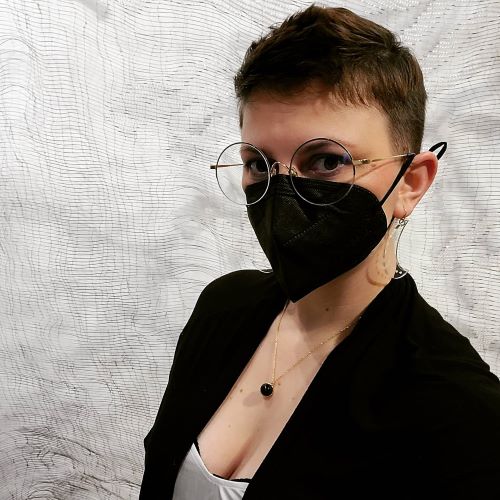
Meghan A. Watts is a Graduate Student and Lecturer at North Carolina State University, affiliated with the Department of Sociology and Anthropology. She holds a B.A. in Sociology and Women's and Gender Studies from the University of North Carolina-Chapel Hill (2019) and an M.S. in Sociology from NC State (2022). Her research focuses on critical theories of policing, critical environmental sociology, necropolitics, and critical pedagogy. Recent work includes examining liminal belonging in trans studies and analyzing social movements like Extinction Rebellion and the Ferguson uprising. Her academic publications span sociology, gender studies, and critical theory, with a focus on policing, environmental activism, and social justice. She teaches courses as an Instructor of Record, emphasizing critical pedagogy.
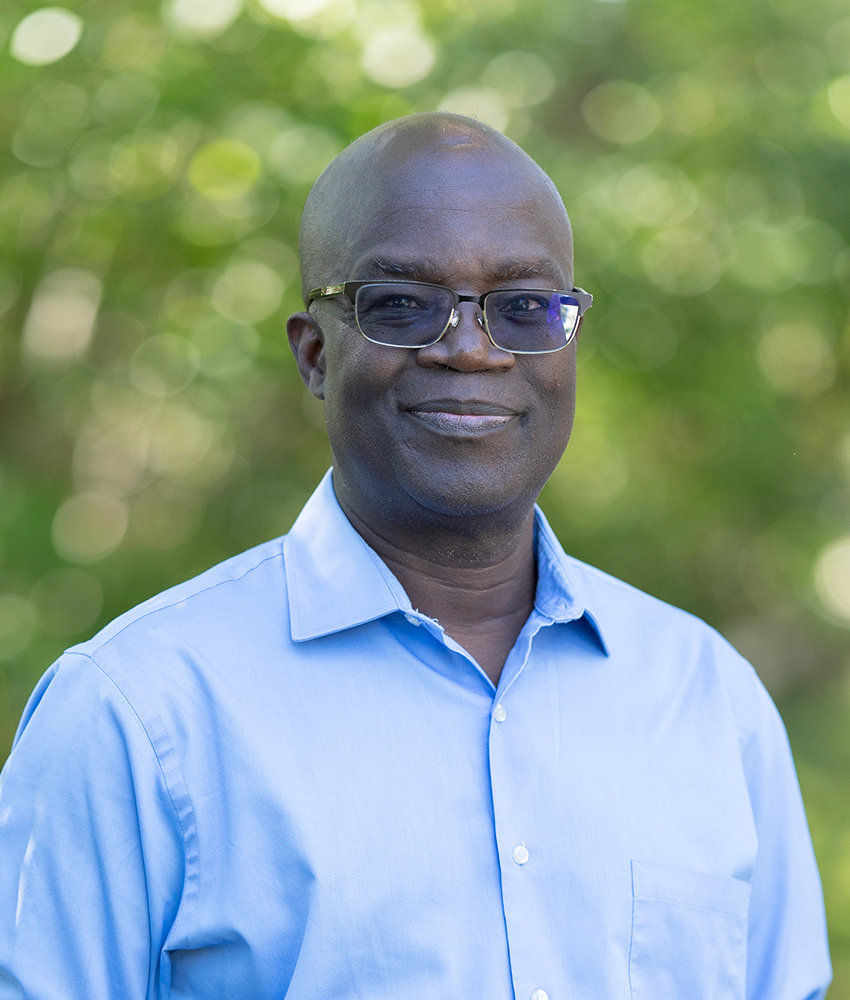
Rachidi Salako is an Assistant Professor in the Department of Mathematical Sciences at the University of Nevada, Las Vegas (UNLV). His research focuses on mathematical biology, epidemiology, and nonlinear dynamics, particularly in reaction-diffusion systems and structured population models. He examines the dynamics of epidemic models, including cross-diffusive mechanisms, spatial heterogeneity, and multi-strain interactions. His work applies tools from partial differential equations and dynamical systems to analyze persistence, endemic equilibria, and global dynamics in biological systems. Key areas include the impact of dispersal rates, demographic variations, and network structures on disease spread and population behavior. Salako's research also explores long-term behavior in diffusive epidemic models, such as SIS and multi-patch frameworks, with an emphasis on bifurcation analysis, stability, and asymptotic profiles. His articles address topics like saturation incidence mechanisms, mass-action transmission, and Lyapunov function constructions for global stability. While no educational background or awards are explicitly listed in the text, his contributions span theoretical and applied aspects of mathematical epidemiology and population dynamics.
Natasha Robinson is a Research Fellow at the Fenner School of Environment & Society, Australian National University. Her work focuses on fire ecology, threatened species management, and conservation biology. She holds a PhD from La Trobe University (2014) and a Bachelor of Agricultural Science (Honours) from the University of Queensland (2004). Research Interests: Fire Ecology and Management Threatened Species Monitoring Adaptive Management Strategies Conservation Biology Reintroduction Biology Recent publications highlight her expertise in mammal behavior, predator-prey dynamics, and genomic studies of endangered species. She collaborates widely, including with the NSW Department of Climate Change and CSIRO Publishing, where she serves as an Associate Editor of Wildlife Research . Her projects integrate fire and predator management to conserve threatened species, emphasizing evidence-based approaches to biodiversity protection.
Rashid Sumaila is a Canada Research Chair (Tier 1) in Interdisciplinary Ocean and Fisheries Economics and Professor at the University of British Columbia (UBC), affiliated with the School of Public Policy and Global Affairs and the Institute for the Oceans and Fisheries. His expertise spans bioeconomics, marine ecosystem valuation, and global fisheries policy, with a focus on issues like fisheries subsidies, IUU fishing, and climate change impacts on marine resources. Education: PhD in Economics (University of Bergen), B.Sc. in Quantity Surveying (Ahmadu Bello University). Affiliations: Directorships of major research groups including the Fisheries Economics Research Unit (FERU) and the Solving FCB Partnership. Research interests include the valuation of marine ecosystems, policy analysis for sustainable fisheries, and interdisciplinary approaches to ocean governance. His work emphasizes equitable solutions for global fisheries challenges, particularly in developing regions. Key contributions include pioneering studies on fisheries subsidies and intergenerational discounting in resource management. Awards: 2017 Volvo Environment Prize, 2019 Royal Society of Canada Fellowship, 2021 UBC Killam Professorship. Grants: Leadership in large-scale initiatives like the OceanCanada Partnership and Solving FCB, focusing on food-climate-biodiversity nexus. Advocates for transformative policies to ensure sustainable ocean economies, including basic income models for fisheries communities and moratoriums on harmful deep-sea mining.
Brian Peterson holds the position of Personal Chair of Advanced Laser Diagnostics within the School of Engineering at the University of Edinburgh, where he serves as a Professor in the Department of Mechanical Engineering. His research focuses on advanced experimental techniques for combustion and thermofluids, with particular emphasis on flame-wall interactions, turbulent flow dynamics, and pyrolysis processes. He actively supervises PhD students and leads multiple high-impact research projects funded by major international bodies. Research Expertise: Professor Peterson specializes in cutting-edge laser diagnostics including Particle Image Velocimetry (PIV), phosphor thermometry, and wavelet-based optical flow velocimetry (wOFV). His work investigates fundamental combustion phenomena in internal combustion engines, fire safety applications, and biomass combustion systems. Key contributions include high-speed measurements of flame-vortex interactions, pyrolysis front tracking in solid fuels, and surface temperature mapping during flame-wall quenching events. Publication Trends: Recent publications (2022-2025) demonstrate a strong focus on high-speed diagnostics for resolving transient combustion phenomena in narrow passages and turbulent boundary layers. His work integrates combustion science, fluid dynamics, and thermofluids to address challenges in engine efficiency, fire safety, and hydrogen combustion. The research consistently emphasizes experimental validation through advanced optical techniques capable of kHz-rate measurements. Research Leadership: Professor Peterson serves as Principal Investigator on multiple funded projects including: Unresolved fluid mechanics at liquid/gas interfaces for atomizing sprays (UKRI, 2023-2028) Premixed flame-wall interaction in turbulent boundary layers (EPSRC, 2021-2025) EPIC: Energy transfer Processes at gas/wall Interfaces under extreme Conditions (European Commission, 2017-2023) He has secured funding from EPSRC, UKRI, European Commission, and industry partners for combustion diagnostics and thermofluids research. Facilities and Collaborations: Based in the James Clerk Maxwell Building (Room 2.2415), he contributes to the Multiscale Thermofluids Research group and has developed specialized datasets on aerosol dispersion for virus transmission risk mitigation. His work involves international collaborations with institutions in Germany (Technical University of Darmstadt) and industry partners in automotive and energy sectors.
Jon Ludlam is a Senior Research Associate at the Department of Computer Science and Technology, University of Cambridge. His primary affiliation is with the Computer Architecture Group, focusing on advanced systems research. Research Interests: Computer Architecture Mobile Systems and Robotics Programming Languages & Verification Security & Systems Networking His work bridges theoretical foundations with practical implementations in distributed computing, cloud infrastructure, and virtualization technologies. Publications reflect a trajectory from early studies in materials physics (e.g., vibrational localization in disordered systems) to modern systems challenges in virtualization, unikernel optimization, and network-aware resource management. Notable contributions include Jitsu: Just-In-Time unikernel summoning and heterogeneous processor pool virtualization frameworks. No scientific awards listed. No advisees documented. Active in collaborative research within the department's Energy and Environment Group and Accelerate Programme for Scientific Discovery.
Unal Ufuktepe is an Adjunct Professor at the University of Missouri, located in 325 Math Science Bldg. His research focuses on mathematical biology, ecology, and dynamical systems, particularly in population dynamics models involving Allee effects and refuge mechanisms. He also explores computational tools like Mathematica for mathematical education and research. His research interests include predator-prey interactions, host-parasitoid dynamics, and discrete dynamical systems. He has extensively studied stability analysis, bifurcation theory, and the application of mathematical models to ecological systems. Recent work examines topics such as Wolbachia diffusion in mosquito populations and stability criteria in predator-prey systems with refuge strategies. He has also contributed to educational methodologies using Mathematica for visualizing discrete models and dynamical systems. Unal Ufuktepe has not been listed as having received scientific awards or grants in the provided materials. No information on lab affiliations or student advising is available.
Prof. Dr. Christof Schulz is a full Professor at the University of Duisburg-Essen, leading the Chair for Reactive Fluids within the Institute for Combustion and Gas Dynamics at the Faculty of Engineering. His work focuses on nanoparticle synthesis, combustion diagnostics, and energy materials, particularly in applications for catalysis, batteries, and renewable energy systems. He is a Principal Investigator in the Collaborative Research Centre/TRR 247, investigating catalyst nanoparticles using spray-flame synthesis. Education & Career: PhD (Physical Chemistry) from the University of Heidelberg (1997) Habilitation (Physical Chemistry) at the University of Heidelberg (2002) Chair for Combustion and Gas Dynamics (since 2004; renamed to Reactive Fluids in 2012) Research Interests: Advanced diagnostics for reactive flows, gas-phase synthesis of functional nanoparticles (e.g., for Li-ion batteries), plasma processes, and energy conversion materials. Key projects include scalable synthesis of graphene and perovskites for energy storage. Awards: Leibniz Award (2014) BMW Scientific Award (1999) Freudenberg Award (1999) Leadership & Roles: Board of Directors, International Combustion Institute (since 2012) Founding Director, NanoEnergieTechnikZentrum (NETZ) Editorial Board member of Applied Physics B , Proceedings of the Combustion Institute Labs & Collaborations: EMPI-RF (Energy and Materials Processes) IUTA (Institute of Energy and Environmental Technology) Leading teams in nanoparticle synthesis, applied spectroscopy, and combustion imaging.
Bo Tian serves as an Associate Lecturer in Motorsport Engineering within the College of Science and Engineering, where he leads experimental research on combustion processes for sustainable transportation applications. His work bridges fundamental flame dynamics with practical motorsport engineering challenges through advanced diagnostic methodologies. Dr. Tian's research program centers on three interconnected domains: Combustion characteristics of alternative fuels (biodiesel, waste cooking oil derivatives, and dual-fuel systems) Advanced laser diagnostics development (LII-PIV, multi-pass extinction, time-resolved thermometry) Soot formation mechanisms and emission reduction strategies in engine-relevant configurations His recent publications demonstrate a consistent focus on experimental combustion studies, with 75% of his work involving biodiesel and waste cooking oil fuels. Key methodological approaches include simultaneous velocity-flame imaging, soot quantification in pool and diffusion flames, and chemical kinetic analysis of emission formation pathways. This research directly addresses emissions challenges in high-performance combustion systems. No scientific awards or honors are documented in the available sources. Information regarding student advising, research grants, laboratory facilities, or collaborative teams is not provided in the source material, though his extensive co-authorship network suggests active research group participation.
Prof. Dr. Thomas Fartmann is a Professor at the University of Osnabrück, leading the Biodiversity and Landscape Ecology research group within the Faculty of Biology. His work focuses on understanding how land-use and climate change impact biodiversity, with particular attention to disturbance events such as windthrows and ecosystem restoration. He investigates plant, insect, and vertebrate communities, employing field studies, modeling, and biodiversity monitoring techniques. Research priorities include global change ecology, disturbance ecology, and restoration strategies for threatened ecosystems. Recent publications highlight concerns over insect extinctions and the ecological consequences of land-use changes. His methodologies span field experiments, re-survey studies, and laboratory analyses. No scientific awards are listed in the provided materials. Advising and grant activities are not detailed here, though his research group collaborates on projects addressing biodiversity crises and conservation strategies. Laboratory and fieldwork form the core of his team’s operations.
Sachiko Sakai is an Assistant Professor in the Department of Anthropology at California State University, Long Beach (CSULB). She holds a Ph.D. in Anthropology from the University of California, Santa Barbara (2014), an M.A. in Anthropology from CSULB (2001), and a B.A. in History from Rikkyo University, Tokyo, Japan (1989). Her research focuses on Southwestern US archaeology, cultural resource management, and Virgin Ancestral Pueblo prehistory, with expertise in luminescence dating, ceramic analysis, and archaeological chemistry. Dr. Sakai’s work integrates scientific methods such as luminescence dating, XRF analysis, and ceramic provenance studies to explore social interaction, resource utilization, and prehistoric adaptations. She has led projects like the Mt. Trumbull Prehistory Project and serves as Luminescence Lab Manager at CSULB’s IIRMES facility. Her fieldwork spans the US Southwest, Mesoamerica, and international sites in Guatemala, Honduras, and Nicaragua. Her publications emphasize ceramic production networks, chronological frameworks, and the application of geochemical techniques. She has contributed to special issues honoring Margaret Lyneis and co-edited volumes on Southwestern and Mesoamerican archaeology. Professional activities include roles in NAGPRA compliance and memberships in organizations like SAA, AAA, and SCA. Teaching specialties include archaeological field methods, California prehistory, and cultural resource management. She advises archaeological projects for federal agencies and collaborates with Indigenous communities on repatriation efforts.
Robert P. Loughman is the Department Chair and Associate Professor in the Department of Atmospheric and Planetary Sciences at Hampton University. He holds a Ph.D. in Atmospheric Sciences from the University of Arizona (1998) and a B.S. in Physics from the College of William and Mary (1993). His research focuses on improving understanding of the Earth-atmosphere system through remote sensing data analysis, particularly in radiative transfer modeling, aerosol retrieval, and limb scattering sensor applications. He has contributed to studies using satellite instruments like OMPS Limb Profiler and SAGE III. His teaching includes graduate courses in Atmospheric Radiative Transfer and Measurements. Education: B.S. Physics, College of William and Mary, 1993 M.S. Atmospheric Science, University of Arizona, 1995 Ph.D. Atmospheric Sciences, University of Arizona, 1998 Research Interests: Development of radiative transfer tools, aerosol property retrieval from limb scattering data, and validation of remote sensing systems. Key projects include analysis of volcanic aerosol clouds (e.g., Hunga Tonga eruption) and collaborative sensor comparisons (e.g., OMPS, OSIRIS, SCIAMACHY). Labs/Teams: Associated with the Hampton University Lidar Laboratory (HULL). Grants/Advising: No explicit grant details provided, but collaborates with NASA and international teams on sensor development and data analysis.
Steven Andrews is a Lecturer in Geography at the University of the Highlands and Islands (UHI) Inverness and serves as Project Coordinator for the Doctor Flow Country World Heritage Project at the Environmental Research Institute. He holds an Honorary Research Fellow position at the University of Aberdeen since 2015. His research focuses on climatic influences on sedimentation in continental settings, particularly in lakes and North Atlantic regions. He has conducted extensive fieldwork in East Greenland and Northern Scotland, contributing to hydrocarbon exploration studies through industry-funded projects. Education: PhD in Climatic Cyclicity from the University of Aberdeen (2008) Research Interests: Paleoclimatology, sedimentological records of extinction events (P-T & T-J), and North Atlantic basin studies Andrews has published extensively on topics including hydrocarbon trap dynamics, Triassic mudstones, and Boltysh Crater sedimentology. He was awarded the prestigious Polar Medal in 2024 for his contributions to Arctic research. His work bridges academic research with industrial applications in petroleum geology and environmental monitoring. Awards: Polar Medal (2024) Collaborations: Active in multi-institutional projects involving University of Aberdeen, industry partners, and international teams
Laura Sanz Martín is an Associate Professor at the Universidad Camilo José Cela (UCJC), affiliated with the Faculty of Law. She holds a Doctorate in Law from the Complutense University of Madrid (UCM) and has been a member of the Royal Academy of Jurisprudence and Legislation since 1999. Her primary research focuses on Roman Law, particularly women’s legal status in antiquity, tutelage systems, and the evolution of legal concepts into modern frameworks. She has authored multiple books, including La tutela en el derecho romano and Sociedad y derecho en la Hispania Romana . Professionally, she has served as Secretary of the Doctoral Commission at UCJC since 2023 and previously held academic leadership roles at the San Pablo CEU University. Her teaching contributions include pioneering courses on adapting legal education to the European Credit System (EEES) and digital methodologies. She has directed significant research projects on labor law, including analyses of telework and corporate surveillance’s impact on privacy rights. Her awards include the 3rd Premio de Iniciación a la Investigación San Raimundo de Peñafort (1997) for research excellence. She actively participates in international conferences, such as the Königswinter European Seminar (2007) and the Universidad de La Laguna Roman Law Symposium (2022). Her work bridges historical legal principles with modern challenges, emphasizing gender equity and technological adaptations in legal practice.
Dr Darren Jeffers is a Senior Lecturer in Physical/Environmental Geography at the University of Winchester's Department of Social Sciences. He holds a D.Phil from the University of Oxford, where he studied environmental change in Lebanon's Bekaa Valley during the last glacial period. His teaching focuses on geography modules including Biogeography and Conservation, Desert Environments, and Research Methods. His research investigates environmental change impacts on ecosystems, using lake sediments, tree rings, and museum collections. Current projects include Lebanon's Palm Islands environmental history and pollen nutrient content shifts under climate change. Teaching: BSc Geography program, Foundation Year modules Research methods: Paleoenvironmental reconstruction, experimental ecology Funding: Multiple grants including INQUA-PAGES and Quaternary Research Fund support Notable awards include the CC Reeves Scholarship and Council for British Research in the Levant grants. His work combines fieldwork in data-poor regions with lab-based analyses to understand long-term environmental dynamics.