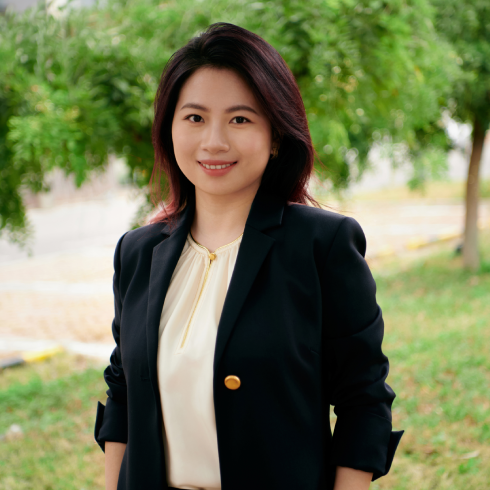
Susmita Sadhu is a faculty member in the Department of Mathematics at Georgia College & State University. Her research focuses on mathematical modeling of mass extinctions and ecosystem dynamics. She has published on topics such as the role of mathematical modeling in understanding mass extinctions and the gaps in knowledge regarding these events.
Michael E. Mann serves as Presidential Distinguished Professor of Earth & Environmental Science at the University of Pennsylvania and Director of the Penn Center for Science, Sustainability and the Media. A leading climate scientist with decades of research experience, he is renowned for his work on paleoclimatology, climate modeling, and climate change detection and attribution. Mann's research interests span multiple dimensions of climate science, with particular focus on: Reconstructing past climate conditions using proxy data Analyzing historical climate patterns to understand current changes Investigating extreme weather events and their connection to climate change Examining the societal dimensions of climate science communication Documenting and countering climate change disinformation campaigns His recent publications reveal a strong emphasis on the intersection of climate science with policy, communication, and political challenges. Mann has documented how climate change impacts are already being observed globally, analyzed compound climate events like drought-heatwave combinations, and explored historical climate transitions to inform our understanding of current changes. Mann has received significant recognition through his distinguished professorship, though specific awards aren't detailed in the provided information. His work has been instrumental in establishing the scientific consensus on anthropogenic climate change. As director of the Center for Science, Sustainability and the Media, Mann leads efforts to improve science communication, combat climate disinformation, and bridge the gap between scientific research and public understanding. His research group continues to produce significant work in climate science, with recent publications examining Pleistocene climate cycles and compound extreme events.
Zhang Feifei is a Professor and Doctoral Supervisor at Nanjing University's School of Earth Sciences and Engineering. He joined the university in 2019 after postdoctoral research at Yale University and the Natural History Museum of Denmark. His work bridges metal stable isotope geochemistry, paleoclimatology, and geobiology, with a focus on Earth's deep-time climate-environment co-evolution. Research Interests: Professor Zhang constructs multi-isotope tracer systems (Li, Ca, Sr, Zn, Ba, Fe, Mo, U) to decode paleoceanographic and paleoclimatic changes. Key themes include: Marine redox evolution during mass extinctions Diagenetic effects on carbonate geochemical proxies Quantitative modeling of silicate weathering, marine productivity, and carbon burial feedbacks Co-evolution of life and environment in the Neoproterozoic and Paleozoic Publication Trends: His recent articles (2022–2025) emphasize isotope proxy development, marine anoxia triggers for biotic crises, and Earth system modeling. Over 50% focus on Paleozoic/Neoproterozoic climate extremes, utilizing innovative metal isotopes (Tl, Ba, Li) to resolve uncertainties in paleoredox and weathering records. Awards & Honors: 2024: F.G. Houtermans Award (European Association of Geochemistry) 2023: National Natural Science Award of China, Second Class (Rank 3/5) 2022: Natural Resources Science and Technology Progress Award, Second Class (Rank 6/6) Grants & Leadership: He directs the Metal Isotope Laboratory and leads major projects, including an NSFC Special Project (2025–2026) on isotope-Earth system model coupling and a National Key R&D Program (2021–2026) on early Earth-life co-evolution. Current grant funding exceeds ¥8 million.
Dr. Jiaoyang Ruan is a distinguished Research Professor at Pusan National University and an IBS Young Scientist Fellow. Her academic trajectory includes a Ph.D. in Meteorology, Oceanography & Environmental Physics from Université Paris-Saclay (2017) and a BSc in Geology from China University of Geoscience Wuhan (2009). She has held progressive roles including ICCP Postdoc Research Fellow (2019–2023) and Associate Research Fellow at Sun Yet-sen University (2016–2019). Her research innovatively bridges paleoclimatology , human evolution , and geochemical analysis , with focus areas including: Climate impacts on hominin adaptation and genetic diversity Speleothem-based paleoclimate reconstructions Asian monsoon dynamics and isotope hydrology Model-proxy integration for Quaternary environments Global database development for climate proxies Publications demonstrate consistent output in high-impact journals (Science, Nature, PNAS), emphasizing climate-human interactions and proxy methodologies. Recent works (2022–2025) focus on hominin-climate linkages and monsoon systems, while earlier contributions (2014–2019) established expertise in speleothem geochemistry and isotopic calibration. Awards & Recognition: Young Scientist Fellowship, Institute for Basic Science (IBS) As an active contributor to global collaborations like the SISAL working group, she advances paleoscience infrastructure while mentoring through research networks. Lab resources and grants are unspecified in available data.
Stefano Ruggeri is a Full Professor of Criminal Procedural Law (SSD IUS/16) at the Department of Law, University of Messina, where he teaches Criminal Procedural Law, European and Transnational Criminal Justice, and the Law of Criminal Evidence. He graduated with honors from the University of Messina in 2000 and earned his PhD in Criminal Law and Procedure from the Sant'Anna School of Advanced Studies in Pisa in 2004. His academic career progressed from researcher at Magna Graecia University of Catanzaro (2005) to Associate Professor at the University of Messina (2007), culminating in his qualification as Full Professor in 2017. Professor Ruggeri's research focuses on the intersection of national criminal procedure with European and international legal frameworks. His work examines procedural guarantees in judicial cooperation, the European Arrest Warrant system, negotiated justice mechanisms, and the cultural dimensions of criminal jurisdiction. With over eighty publications spanning Italian, European, and comparative criminal justice, his scholarly output demonstrates consistent engagement with evolving legal standards and theoretical frameworks in criminal procedure. As an Experienced Researcher at the Alexander von Humboldt Foundation since 2014, Professor Ruggeri maintains strong international connections. He serves as a PRIN evaluator for the Italian Ministry of Education and as an ERC evaluator for the European Commission, reflecting his standing in the academic community. His editorial contributions include founding and coordinating Springer's 'Legal Studies in International, European, and Comparative Criminal Law' series and serving on multiple journal editorial boards. Experienced Researcher, Alexander von Humboldt Foundation (2014-present) PRIN evaluator, Italian Ministry of Education, University and Research ERC evaluator, European Commission Founder and coordinator, 'Legal Studies in International, European, and Comparative Criminal Law' (Springer) Member, editorial board of 'Procedura penale' series (Giappichelli) Professor Ruggeri actively contributes to academic discourse through invited presentations at national and international conferences and by organizing scholarly events at the University of Messina. His research trajectory shows increasing engagement with transnational criminal justice issues, reflecting the growing Europeanization of criminal procedure while maintaining strong roots in Italian legal tradition.
Lionel Cavin is a Full Professor in Genetics & Evolution at the University of Geneva, affiliated with the MuseumLab research team based at the Natural History Museum of Geneva (MHNG). His research focuses on the evolutionary histories of bony fishes, particularly coelacanths and actinopterygians from the Mesozoic Era. His research aims to decipher patterns and processes characterizing the evolution of bony fishes, which comprise three clades representing more than half of vertebrate diversity. He studies several aspects of the evolutionary history of ray-finned fishes (Actinopterygii), lungfishes (Dipnoi), and coelacanths (Actinistia) by analyzing their anatomy, phylogeny, diversity dynamics over time, and paleogeographic and paleoecological history. His work focuses on the Mesozoic Era (252-66 million years ago) with synthetic approaches, testing these perspectives using case studies based on fossil assemblages mainly from Western Europe, North Africa, the Near East, and Southeast Asia. Cavin's research relies on fine anatomical reconstructions based on direct observations, micro-CT, and synchrotron imaging. His main current research interests include coelacanths, which display remarkable anatomical features and evolutionary traits, such as an unexpected hearing function based on a lung-inner ear connection in some fossil forms, and exceptionally long morphological stases observed in lineages during the Cretaceous. His publication record shows consistent high-impact research output across multiple disciplines including paleontology, evolutionary biology, and ichthyology, with a particular emphasis on understanding evolutionary patterns in "living fossil" lineages like coelacanths. His work demonstrates how detailed fossil analyses can reveal unexpected bursts of morphological disparity even in lineages traditionally considered to evolve slowly. Among his notable scientific contributions is research demonstrating that coelacanths, despite being considered "living fossils" due to their slow morphological evolution, experienced an early Mesozoic burst of morphological disparity following the Permian-Triassic mass extinction. Cavin has been actively involved in numerous international collaborations, working with researchers across Europe, Africa, Asia, and South America to understand the global distribution and evolutionary history of ancient fish lineages. His work on the biogeography of mawsoniid coelacanths has demonstrated how wide geographic distribution may contribute to the resilience of certain lineages to extinction events.
Brian Kendall is an Interim Department Chair and Professor in the Department of Earth and Environmental Sciences at the University of Waterloo, where he holds a Canada Research Chair in Redox-Sensitive Metal Isotope Geochemistry (Tier 2). He leads a $1.5 million initiative to establish a cutting-edge mass spectrometry facility and strong research program in solid Earth geochemistry and environmental biogeochemistry at Waterloo. His educational background includes: Ph.D. in Earth and Atmospheric Sciences from the University of Alberta (2008) M.Sc. in Earth and Atmospheric Sciences from the University of Alberta (2003) B.Sc. (Honors) in Geology from the University of Alberta (2000) Professor Kendall's research focuses on using isotopes (both metal stable isotopes and radiogenic isotopes) to study a wide variety of geochemical processes. His work centers on three main areas : developing innovative geochemical methods that serve as process tracers for petroleum systems, ore mineralization, and biogeochemical cycles; understanding how mineral and petroleum deposits form to improve exploration strategies; and reconstructing the history of atmosphere and ocean oxygenation through time and its relationship to biological evolution, seawater chemistry and natural resource deposits. His extensive publication record demonstrates expertise in metal isotope geochemistry, particularly with uranium, molybdenum, and rhenium systems. His research spans from the Archean Eon to more recent geological periods, with particular emphasis on critical transitions in Earth's oxygenation history. Kendall's work often combines multiple isotope systems to provide robust constraints on past environmental conditions, with significant implications for understanding resource formation processes. Among his notable achievements: 2021 Canada Research Chair in Redox-Sensitive Metal Isotope Geochemistry (Tier 2) 2019 GAC W.W. Hutchison Medal 2016 Ontario MRI Early Researcher Award 2016 Jane Lang Excellence in Earth and Environmental Sciences Teaching Award Multiple Outstanding Performance Awards from the University of Waterloo Professor Kendall has supervised numerous graduate students through completion of their degrees, including multiple PhD and MSc theses focusing on metal isotope applications in paleoenvironmental reconstruction and resource exploration. His research group includes postdoctoral fellows, PhD students, MSc students, and undergraduate researchers working collaboratively on various aspects of metal isotope geochemistry. He leads the Metal Isotope Geochemistry Laboratory at Waterloo, which serves as a hub for innovative research in isotope geochemistry applications to Earth history and resource exploration questions. The laboratory supports advanced analytical capabilities that enable cutting-edge research in metal stable isotope systems.
Gheorghe Craciun is a Professor in the Department of Mathematics and Department of Biomolecular Chemistry at the University of Wisconsin-Madison . His research focuses on Mathematical and Computational Methods in Biology and Medicine , particularly in analyzing chemical reaction networks, dynamical systems, and algebraic geometry applications. He has taught advanced courses like Math 703 and organized workshops, including the Moshe Mendelson Memorial Lecture and the Moshe Mendelson Workshop on Mathematics of Reaction Networks . His recent publications explore topics such as Toric Differential Inclusions , Complex Balanced Equilibrium , and Reaction Network Stability . His work involves collaborations with researchers like Casian Pantea , Polly Yu , and Minh Binh Tran . He also contributes to interdisciplinary areas, including biochemistry , neuroscience , and genomics , applying mathematical frameworks to biological systems.
Professor David Selby is a distinguished geoscientist specializing in isotope geochemistry at Durham University's Department of Earth Sciences. With over two decades of academic experience, he has established himself as a leading expert in the application of the Re-Os isotope system to geological problems. His research spans economic geology, paleoclimate reconstruction, and the study of sedimentary systems, with significant contributions to understanding metallogenesis and Earth's historical climate changes. Dr. Selby earned his BSc from Southampton University in 1994 and completed his PhD at the University of Alberta, Canada in 1999. Following postdoctoral research at the same institution, he joined Durham University in 2005, progressing from Lecturer to his current position as Professor. His academic journey reflects a consistent focus on developing and applying the Re-Os isotope system to diverse geological contexts. Selby's research interests center on isotope geology applications to metallic ore genesis, timescale calibration, isotope stratigraphy, mass extinction events, paleoclimate, macroalgae, and the Anthropocene. He specializes in rhenium-osmium isotope studies of organic-bearing sedimentary rocks, sulfide minerals, and organic matter including macroalgae. His work involves developing laboratory techniques for extracting rhenium and osmium from geological samples, advancing methodologies in geochronology. Analysis of his recent publications reveals a strong focus on applying Re-Os geochronology to diverse geological problems, including oceanic anoxic events, porphyry copper deposits, paleoenvironmental reconstruction, and mineralization timing. His research demonstrates interdisciplinary approaches combining geochronology with structural geology, sedimentology, and climate science to address fundamental questions about Earth's history. William Smith Medal from the Geological Society of London (2025) Fellow of the Geological Society of America (2018) Durham University award for excellence in doctoral supervision (2014) William Smith Fund from the Geological Society of London (2009) Best Paper - Honourable Mention from the Canadian Society of Petroleum Geologists (2003) Professor Selby has supervised numerous doctoral students, including current PhD candidates Sirui Huang and Jennifer Taylor. His research has been supported by substantial grants including NSF-NERC Research Grant (2021-2024), Total Ph.D. Scholarships, NERC Catalyst Research Grants, and multiple industry-funded projects. He serves on editorial committees for the Journal of Geology and Exploration and the Society of Economic Geologists Fellowships. His research is conducted in the Source Rock and Sulfide Geochronology and Geochemistry Laboratory and Arthur Holmes Laboratory, which form an integral part of the Durham Geochemistry Centre. Current research projects include investigating climatic change on the Greenland Ice Sheet, tracking marine excursions in Baffin Bay, and studying temporal constraints of magmatism and mineralization.
Glenn Bark is a Lecturer in the Department of Geosciences and Environmental Engineering at Luleå University of Technology (LTU), where he conducts research on climate change solutions with emphasis on geological carbon storage. He serves as operations manager for LTU's first university-level research infrastructure, the LUMIA (Luleå Material Imaging and Analysis) lab center, and acts as a spokesperson for the Researchers Desk network focused on climate and biodiversity crises. Dr. Bark's research primarily investigates geological storage of carbon dioxide in bedrock (CCS), assessing Sweden's potential for carbon storage in both bedrock formations and mine waste materials. His work involves international collaborations with research groups across Sweden, Iceland, Norway, the USA, and India. Prior to his current climate-focused research, he studied geological processes related to gold ore formation and the occurrence of critical metals in the Earth's crust. His research interests span multiple interconnected domains: Geological Carbon Storage and CCS technologies Ore geology and mineral deposit formation Critical metals and their geological occurrence Mineral carbonation processes Advanced material analysis using imaging techniques Trace metal geochemistry in ancient ecosystems Analysis of his publication record reveals significant contributions across geological sciences and climate change mitigation, with recent work connecting mineralogy with environmental applications. His research bridges fundamental geological understanding with practical climate solutions, particularly in mineral carbonation and waste material valorization. Dr. Bark is actively engaged in science communication, frequently appearing in media outlets like SR Studio One and SVT News to discuss climate solutions. He regularly provides guest lectures for schools and organizations about climate change and mitigation strategies, making complex scientific concepts accessible to diverse audiences. As operations manager for the LUMIA lab center, he oversees the development of advanced analytical capabilities at the university for investigating various materials. This infrastructure supports interdisciplinary research requiring sophisticated material characterization techniques, connecting his geological expertise with broader engineering and environmental applications.
Blaine W. Schubert serves as Professor of Geosciences at East Tennessee State University within the School of Science, Engineering, and Math. He directs the Don Sundquist Center of Excellence in Paleontology and holds an adjunct professorship in Biological Sciences. International affiliations include Research Associate at Argentina's Museo de la Plata, while professional memberships span the Society of Vertebrate Paleontology, National Speleological Society, Southeastern Cave Conservancy, Tennessee Cave Survey, and Tennessee Herpetological Society. His research centers on late Cenozoic vertebrate paleobiology, specifically investigating Pleistocene extinctions, biogeographic patterns, cave paleontology, paleoecology, and systematic classification. Current projects analyze fossil amphibians, reptiles, and mammals to reconstruct ancient ecosystems and extinction dynamics, with significant fieldwork conducted at Tennessee cave sites and the Gray Fossil Site. Professor Schubert teaches Life Through Time, Paleontological Techniques, Topics in Paleontology, Seminar in Geosciences, and Paleoherpetology—courses emphasizing practical fossil analysis and evolutionary history. As Center Executive Director, he oversees research infrastructure supporting student fieldwork, fossil preparation, and international collaborations, particularly with South American institutions. The Don Sundquist Center of Excellence in Paleontology, under his leadership, drives integrated research connecting the Gray Fossil Site's rich Miocene-Pliocene deposits with broader questions about climate-driven extinction events. This work positions ETSU as a key institution for southeastern U.S. paleontological studies and provides students with direct access to active fossil excavation and analysis.
Petter Bøckman serves as a Senior Lecturer in the Department of Exhibitions and Public Services at the Natural History Museum, University of Oslo. Originally trained as a zoologist, he has evolved into a prominent science communicator who bridges academic research and public understanding through diverse media channels and educational activities. Bøckman's research interests span zoology, ecology, evolution, and museum pedagogy. His work focuses on making scientific concepts accessible to general audiences, with particular expertise in wildlife behavior, insect population dynamics, and historical perspectives on nature. He excels at connecting scientific principles to everyday observations and current events, transforming complex topics into relatable discussions about the natural world. Analysis of Bøckman's recent publications reveals a consistent focus on interdisciplinary science communication. His work spans from paleontological discoveries (mammoth research) to contemporary ecological phenomena (mosquito population patterns) and cultural connections to nature (Viking-era plant use). Rather than traditional academic research papers, his output primarily consists of media appearances, public lectures, and educational content designed to engage broad audiences with science. Bøckman maintains an exceptionally active presence across Norwegian media platforms, regularly appearing on NRK radio programs like 'Abels tårn,' writing for major newspapers, and participating in television segments. His communication style emphasizes clarity and relevance, connecting scientific concepts to observable phenomena in people's daily lives. He frequently addresses timely ecological questions that capture public interest, such as whether a particular year qualifies as a 'mosquito year' or explaining unusual animal sightings in urban environments. As an educator, Bøckman develops museum exhibitions, leads school group tours, and conducts teacher training courses. His expertise in museum pedagogy helps create meaningful connections between formal education and informal learning experiences. His work demonstrates a commitment to making science accessible, relevant, and engaging for diverse audiences across multiple platforms and formats.
Daniel Lehrmann serves as the Gertrude and Walter Pyron Professor in the Geosciences Department at Trinity University, where he teaches paleontology, sedimentary geology, basin analysis, and field geology courses. Originally from Wisconsin, he earned his B.S. and M.S. from the University of Wisconsin system before completing his Ph.D. at the University of Kansas. His research program focuses on marine sedimentary basin evolution, carbonate platform development, Earth's chemical and biological system changes, diagenetic processes, and mass extinction events. Lehrmann employs a comprehensive methodological approach including field work, satellite image analysis, GIS, petrography, geochemistry, biostratigraphy, and forward stratigraphic modeling. His fieldwork spans the Nanpanjiang Basin in south China, additional Chinese basins, and global sites including Indonesia, Japan, Turkey, Saudi Arabia, Italy, Mexico, the Gulf of Mexico, and central/western Texas. Lehrmann's recent publications reveal strong trends in Triassic carbonate platform evolution, Permian-Triassic boundary events, microbialite formation, and advanced analytical techniques including machine learning applications in carbonate petrography. His work demonstrates interdisciplinary integration of paleontology, sedimentology, geochemistry, and structural geology to address fundamental questions in Earth history. Erasmus Haworth Distinguished Alumni Honors in Geology Award from the University of Kansas SEPM best paper award Honorable mention for best paper in Palaios Lehrmann has co-advised graduate students at Rice University, Stanford University, the University of Alabama, and UTSA, while securing over $2 million in external funding from NSF, ACS Petroleum Research Fund, Fulbright Program, and oil companies over 25+ years. He serves as associate editor for the Journal of Sedimentary Research and AAPG Bulletin, and actively participates in geological organizations including the Geological Society of America, Southwest Research Institute, Edward Aquifer Authority, and Witte Museum. Lehrmann also provides geological support for UNESCO World Heritage sites in China and promotes AAPI diversity initiatives through the EAST executive committee.
Dr. Zhong Ling is an Assistant Professor of Economics at Cheung Kong Graduate School of Business (CKGSB). She holds a Ph.D. in Economics from Yale University and a B.A. in Mathematics and Economics from Swarthmore College (graduated with High Honors). Her primary affiliations include research roles at CKGSB where she focuses on labor dynamics, education economics, and workforce analysis. Her research interests center on three interconnected domains: Labor Economics : Examining wage structures, skill demands, and gender disparities in employment Economics of Education : Investigating returns on educational investment and policy impacts Personnel Economics : Analyzing employer-employee relationships and workplace organization Recent publications demonstrate a strong focus on pandemic-related economic impacts, including labor market transformations during COVID-19, epidemiological modeling for public policy, and resource allocation strategies during health crises. Her work frequently employs advanced statistical modeling and interdisciplinary approaches. Awards & Fellowships: University Dissertation Fellowship, Yale University (2018-2019) Carl Arvid Anderson Prize Fellowship (2017) Phi Beta Kappa induction (2013) Multiple Yale scholarships including Fan Family Fellowship and Daniel Lathrop Lawton Scholarship Media engagements include expert commentary for CGTN on China's birth rate policies and workforce involution trends, showcasing her public policy relevance.
Professor Stephen Martin holds a Chair in Social Entomology in the School of Science, Engineering & Environment at the University of Salford, Manchester. With a career spanning over three decades studying social insects, he is a leading expert in honey bee health, Varroa mite resistance, and viral pathogens affecting pollinators. His research bridges fundamental entomology with practical apiculture, seeking sustainable solutions to honey bee health challenges. His educational background includes: DSc from Bangor University (2006) PhD from Bangor University (1988-1989) Bachelor's degree in Zoology from Bangor University (1979-1983) MRes (1985-1987) Professor Martin's research focuses on the complex relationship between honey bees and their parasites and pathogens, particularly the Varroa mite and Deformed Wing Virus. He has developed innovative tools like the 'Varroa calculator' to help beekeepers manage mite infestations and created a graphic computer model of hornet colony growth used in teaching. His expertise spans hornet ecology, pest and diseases of honeybees, and chemical ecology of ants. Analysis of Professor Martin's recent publications (2020-2024) reveals a strong focus on understanding natural resistance mechanisms to Varroa destructor across different geographical regions. His work examines viral dynamics, particularly Deformed Wing Virus variants, and how they interact with host resistance behaviors like recapping. This research spans field studies in the UK, Cuba, South Africa, Brazil, and Hawaii, demonstrating an international collaborative approach to honey bee health challenges. Professor Martin has received significant recognition for his contributions: Honorary Fellow of the British Beekeepers Association (2024) Vice-chancellors Research Excellence award (2019) Japanese Society for the Promotion of Science 'Furosato award' (2008) With 13 active or recent research projects, Professor Martin maintains a robust research program directly engaging with beekeeping communities. His current major projects focus on helping UK beekeepers transition to Varroa treatment-free beekeeping (2022-2027) and understanding the evolution of natural Varroa tolerance mechanisms. His research is funded in part by beekeepers themselves, demonstrating practical relevance to the apiculture industry. Professor Martin leads the Varroa Resistant research group, which maintains an online presence at www.varroaresistant.uk. His team investigates natural resistance mechanisms in honey bees, viral pathogen dynamics, and sustainable approaches to honey bee health management, collaborating internationally while working closely with beekeeping associations to ensure research outcomes are practically applicable.