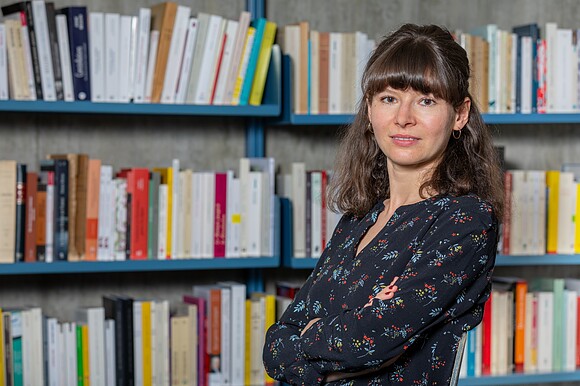
Crystal Bartolovich is an Associate Professor in the Department of English at Syracuse University, with affiliations to the Medieval and Renaissance Studies program. She holds a PhD in English from Emory University (1993) and has published extensively on intersections of early modern literature, Marxist theory, and postcolonial studies. Research focuses on agrarian capitalism, the commons, and ecological critique Teaching includes early modern literature, utopian theory, and critical writing workshops Her recent articles explore topics in Marxist ecology, Shakespearean analysis, and the Capitalocene. Scientific recognition includes research fellowships at the Folger Shakespeare Library and a Competitive Travel Grant from WERN (2022). She serves as President of the Syracuse University AAUP (2018-2020) and Faculty Liaison in the English department. Notable publications include co-editing Marxism, Modernity and Postcolonial Studies (Cambridge UP, 2002) and editing the journal Early Modern Culture .
Emanuel Sallinger is a Full Professor at TU Wien's Databases and Artificial Intelligence Group and Vice Dean of Academic Affairs for Business Informatics and Data Science. He leads the Knowledge Graph Lab, focusing on scalable knowledge-based systems, reasoning in knowledge graphs, and AI integration. His research spans computational logic, database theory, and blockchain applications. Education: PhD in Computer Science (awarded 'sub auspiciis praesidentis rei publicae'), Master's degrees in Computational Intelligence and Informatics Management, and a Bachelor's in Software and Information Engineering. Research Interests: Knowledge graphs (construction, reasoning, scalability), logic-based systems, AI/ML integration with databases, enterprise architecture modeling, and financial knowledge systems. His work emphasizes practical applications like enterprise modeling, sustainable waste management, and regulatory compliance. Grants & Projects: Lead Vienna Science and Technology Fund (WWTF)-funded Knowledge Graph Lab. Involved in projects like 'Knowledge Graph-driven Tour Management' (sustainability), 'SustainGraph' (waste processing), and 'Enterprise Architecture Knowledge Graphs'. Teaching: Offers courses on Knowledge Graphs, Generative AI, Database Systems, and research methodology. Supervises doctoral and master's students in AI, databases, and knowledge representation. Labs/Teams: Knowledge Graph Lab at TU Wien, collaborating with industry on blockchain-based systems, financial AI, and enterprise architecture frameworks.
Benyamin Davaji serves as an Assistant Professor in the Department of Electrical and Computer Engineering at Northeastern University, where he joined in January 2022. He holds additional appointments as a Center Member of The Plastics Center and Core Faculty of the Institute for NanoSystems Innovation (NanoSI). His work bridges microsystems engineering, nanofabrication, and data science to develop next-generation sensing technologies. Dr. Davaji's educational background includes: Postdoctoral Associate in Electrical and Computer Engineering at Cornell University (2016-2021) Ph.D. in Electrical Engineering from Marquette University (2016) His research centers on integrated microsystems with emphasis on mechanical wave-based sensing and computation, ultrasound transducers, bio-interfaces, and microcalorimetry. The Autonomous Integrated Microsystems (AIMS) Laboratory combines physics with AI/ML to invent novel sensors and computational devices through advanced nanofabrication. Key thrusts include power-sustaining architectures and analog/digital computational integration. Recent publications (2024-2025) reveal strong trends in MEMS/NEMS optimization using digital twins, plasmonically enhanced infrared detection, ferroelectric actuators for high-speed scanning, and ultrasound-enabled metrology. His work increasingly integrates machine learning for design automation and process optimization across semiconductor manufacturing and flexible hybrid electronics. Dr. Davaji advises graduate students including Yilmaz Arin Manav (PhD'28), who won the FLEX 2024 Future Student Poster Award. He has secured over $3 million in competitive funding as PI/Co-PI, including a $550k NSF grant for MEMS actuators, $330k NSF grant for quantum detectors, and $2M DARPA grant for inertial sensors. He directs the interdisciplinary AIMS Laboratory focused on MEMS, ultrasound, and calorimetric technologies. The lab collaborates extensively with NanoSI and The Plastics Center, developing autonomous microsystems for biomedical, environmental, and industrial applications through advanced manufacturing techniques.
Cynthia Vinzant is an Associate Professor in the Department of Mathematics at the University of Washington. Her research focuses on real algebraic geometry, combinatorics, and convex optimization, with applications to hyperbolic polynomials, determinantal representations, and convex algebraic geometry. She collaborates extensively on projects involving numerical ranges, quasicrystals, and geometric optimization problems. Research Interests: Real algebraic geometry and its connections to combinatorics and optimization Hyperbolic and log-concave polynomials Convex geometry and spectrahedra Applications in matrix analysis and statistical mechanics Her work spans theoretical advances in algebraic geometry and computational methods, including contributions to the study of principal minors, tropical geometry, and phase retrieval problems. Recent publications highlight her focus on Fourier quasicrystals, higher-rank numerical ranges, and combinatorial structures in matroids. Publications: Over 30 peer-reviewed articles, including influential works on quartic curves, determinantal representations, and log-concave polynomials. Grants & Collaborations: Active in interdisciplinary research, with projects supported by NSF and collaborations in algebraic combinatorics and geometric optimization.
Gaston Bacquet is a Lecturer in Education Studies at the University of Glasgow's School of Education, specializing in Culture, Literacies, Inclusion & Pedagogy. A Chilean teacher trainer and educator based in Scotland, he also holds qualifications as a meditation and yoga instructor. With extensive international teaching experience across K-12 and higher education systems in Chile, Japan, Saudi Arabia, Myanmar, the US, and UK, his work bridges practical pedagogy and theoretical innovation. His educational background includes a DipTESOL from Trinity College London, an MA in TESOL from the Institute of Education (UCL), and a PhD in Education from the University of Glasgow. Bacquet currently teaches in the MSc/MEd Education Studies program and leads the undergraduate Asian Religions course, while supervising dissertation students across the School of Education. Research interests center on nonviolence as transformative educational practice, with emphases on decolonial approaches, contemplative pedagogy, and inclusion of minoritized groups. His work integrates Buddhist philosophy, indigenous wisdom traditions, and international perspectives to challenge Western epistemological dominance. Key methodological commitments include participatory action research and qualitative approaches that prioritize community voices. Recent publications reveal evolving trajectories from language education toward decolonial nonviolence frameworks, with increasing focus on Global South contexts, indigenous knowledge systems, and teacher preparation. His 2024-2025 work shows intensified engagement with Buddhist-Christian dialogue, indigenous contributions to peace education, and practical applications of nonviolence in classroom power structures. As a supervisor, Bacquet mentors Master's students in inclusion, nonviolence, and educational ethics, welcoming PhD proposals aligned with his research interests. His professional activities span editorial roles with Cogent Arts and Humanities and SAGE Open , alongside active participation in international scholarly networks including the Comparative and International Educational Society and the European Network for Buddhist-Christian Studies. Professional affiliations reflect his interdisciplinary reach: British Educational Research Association (2021-present), American Educational Research Association (2022-present), International Society for Contemplative Research (2023-present), and the International Society for the Scholarship of Teaching and Learning (2025-present). His conference presentations consistently address nonviolence pedagogy, decolonial curriculum development, and participatory research ethics across global contexts from Chile to New Zealand.
Kathleen O'Connor Duffany, PhD, MEd, is an Associate Professor of Public Health in the Department of Social and Behavioral Sciences at the Yale School of Public Health . She serves as Director of Research and Evaluation at the Community Alliance for Research and Engagement (CARE) and Co-Director of the Yale-Griffin Prevention Research Center . Her work focuses on dismantling structural barriers to health equity through community-engaged research and policy advocacy. PhD in Chronic Disease Epidemiology/Social and Behavioral Sciences (2015), Yale School of Public Health MEd in Elementary and Special Education (1995), Boston College BA in Psychology and English (1991), College of the Holy Cross Dr. Duffany leads community-based participatory evaluations across diverse public health domains including food insecurity, breastfeeding support, maternal-child health, and vaccine equity. She directs the Community Impact Lab , which connects students with local organizations for equitable practice partnerships, and provides technical assistance for health departments statewide. Her research emphasizes translating findings into policy solutions through coalition-building and structural interventions. Recent publications demonstrate expertise in produce prescription programs , nutrition interventions in food pantries , and equity-focused workforce development . She has published extensively on health disparities in Frontiers in Public Health , Maternal and Child Nutrition , and International Journal of Environmental Research and Public Health , with methodological strengths in qualitative evidence synthesis and community-clinical linkages . Current projects examine person-centered food assistance models and structural determinants of mental wellbeing . At Yale, she teaches Community Health Program Evaluation to MPH and PhD students and leads annual Evidence-Based Public Health trainings for Connecticut health professionals. Her leadership roles include mentoring Vaccine Equity Fellows and directing formative evaluations of statewide health initiatives.
Carlo Baldassi is an Associate Professor at Bocconi University, where he has served as Director of the BSc in Mathematical and Computing Sciences for Artificial Intelligence (BAI) since 2023/24. He holds a background in Theoretical Physics from the University of Trieste and a PhD in Computational Neuroscience from the University of Turin. His research focuses on applying Statistical Mechanics to Machine Learning and Neural Networks, particularly studying loss landscapes, optimization problems, and the role of quantum annealing in nonconvex learning. He teaches courses in Machine Learning, Artificial Intelligence, and Computer Science, emphasizing Python and Julia programming. His work bridges theoretical physics and AI, exploring topics like synaptic stochasticity in low-precision neural networks and the efficiency of quantum vs. classical annealing. He has published extensively in top journals such as Physical Review Letters and Proceedings of the National Academy of Sciences , contributing to foundational understanding of neural network dynamics and optimization techniques. Teaching includes Machine Learning and Artificial Intelligence Computer Science I Machine Learning II Machine Learning and Artificial Intelligence Lab Research emphasizes large-scale inference problems, with a focus on the interplay between statistical mechanics and modern AI architectures.
Marie Kondrat is an Assistant Professor in the French Department at the University of Lausanne (UNIL), Faculty of Arts, appointed with conditional pre-tenure status beginning August 1, 2023. Her appointment reflects her international academic profile developed through teaching and research in the United States, France, and Switzerland. Her research focuses on theories of the image , the dynamic relationship between literary theory and cinema , and conceptual transfers between literary studies and other disciplines, particularly through translation. Her work spans 20th and 21st century literature across French, English, Italian, and Soviet linguistic traditions. At UNIL, she leads the “History and Current Events of Criticism” module and is responsible for theoretical instruction in the new MA specialization program in Comparative Literature (CIEL—Interdisciplinary Center for the Study of Literature). Her current research project, INVUES: image, literature, theory (2024–2027) , has been awarded funding under the FPFS Monique de Meuron Program for young academics, underscoring her emerging leadership in interdisciplinary literary studies. Her doctoral thesis, "Le Hors-champ: extensions de lieu," was recognized with two major awards: Latsis Prize (2022) Barbour Prize for Literary and Aesthetic Criticism Marie Kondrat has no listed advisees at this time. She does not appear to be involved in part-time teaching, nor is there any indication of retirement or prior staff status. No publications or email contact details are currently available in the provided text.
Miklós Koren is a Professor of Economics at the Central European University (CEU), Vienna. He serves as Head of the MS in Business Analytics Program and a Core member of the Economics Doctoral School. His research focuses on international trade, economic development, and the role of management in economic growth. He holds a Ph.D. from Harvard University (2005), an M.A. from CEU (2000), and a B.A. from Corvinus University Budapest (1999). Education: Ph.D. in Economics, Harvard University, 2005 M.A. in Economics, Central European University, 2000 B.A. in Economics, Corvinus University Budapest, 1999 Research Interests: Dr. Koren’s work examines the impact of managerial practices on economic development, trade policies, and firm performance. He has explored topics such as the effects of international experience on managerial talent, the role of expatriate CEOs in enhancing productivity, and the long-term implications of social distancing on industries reliant on face-to-face interactions. His research integrates empirical analysis with theoretical frameworks, often using large datasets to address questions of economic volatility and diversification. Key Contributions: He leads the CEU MicroData research group and has received an ERC Starting Grant for his work on trade and development. His publications span journals like the Quarterly Journal of Economics and PLoS ONE, addressing issues ranging from managerial skills in post-communist economies to the predictive power of machine learning in geospatial flows. Awards: Recipient of the Peter Kenen Fellowship and the Nicholas Káldor Prize, recognizing his contributions to economic theory and applied research. Grants & Labs: His research has been supported by grants from the European Research Council. He contributes to the development of research tools like the Stata package 'eventbaseline' for event study analysis.
Michael Tsapatsis is the 36th Bloomberg Distinguished Professor at Johns Hopkins University in the Whiting School of Engineering. He leads cutting-edge research in sustainable chemical engineering with focus on energy-efficient materials and processes. Education: Engineering Diploma (1988), University of Patras, Greece M.S. (1991), California Institute of Technology Ph.D. (1994), California Institute of Technology Postdoctoral Fellow, California Institute of Technology (1993-1994) Professor Tsapatsis pioneers hierarchical porous materials design for molecular separation and catalysis. His work integrates reaction engineering, mathematical modeling, and materials science to develop ultra-thin zeolite nanosheets and metal-organic frameworks that enable unprecedented selectivity in separation membranes and catalytic processes. The research group focuses on industrial scalability of these materials for cleaner chemical production. His publication trajectory reveals consistent innovation in nanomaterials for sustainable engineering, with landmark papers in Science and Nature demonstrating breakthroughs in membrane technology and catalytic conversion. These works establish foundational principles for molecular-sieving materials that balance selectivity, flux, and industrial viability. Major Honors: Alpha Chi Sigma Award for Chemical Engineering Research (AIChE) Breck Award (International Zeolite Association) Charles M.A. Stine Award (AIChE) David and Lucile Packard Foundation Fellowship National Science Foundation CAREER Award Camille Dreyfus Teacher-Scholar Award North American Membrane Society Fellowship Fellow, American Association for the Advancement of Science (2011) Member, National Academy of Engineering (2015) He directs a highly collaborative research program with extensive industrial partnerships and multiple patents. Current initiatives include the "Greener Skies Ahead" sustainable jet fuel project with the University of Alabama and Oak Ridge National Laboratory, and the DARPA-funded "Cornucopia" program developing air-to-food conversion technology with Johns Hopkins APL. His group trains students in molecular sieve membrane synthesis while advancing process intensification for decarbonization. The Tsapatsis Research Group operates at the forefront of materials-driven chemical engineering, translating fundamental discoveries in nucleation control and crystal growth into scalable separation and catalytic technologies for industrial applications.
Margaux Schindler is an Assistant Professor and Chair of the Interior Design Program at the California College of the Arts (CCA), where she plays a key leadership role in shaping design education. She is also a practicing designer and Founding Partner of SIZL Studio, an interdisciplinary design practice active in architecture, landscape, interior design, and objects. Educational Background: Bachelor of Science in Interior Design, Florida International University Visiting Diploma Student, Architectural Association, London Master of Architecture, University of Pennsylvania Her research and professional work focus on innovative spatial explorations and dynamic strategies for living environments. With a strong interdisciplinary approach, her interests span interior design, architectural design, landscape, and object-making, emphasizing complex, multifaceted projects across scales. Her practice-based scholarship bridges academic inquiry with real-world design challenges. Margaux brings over 20 years of professional experience from leading design firms including IwamotoScott Architecture, Kohn Pedersen Fox, Jaklitsch/Gardner Architects, and others in cities such as San Francisco, New York, Philadelphia, and Miami. This extensive industry background deeply informs her pedagogy and curriculum leadership. She is actively engaged in teaching and program development at CCA and shows no indication of part-time status, retirement, or emeritus standing.
Eunchun Park serves as an Assistant Professor in the Department of Agricultural Economics and Agribusiness at the University of Arkansas, concurrently holding the position of Director of the Experiment Station (DREX). A specialist in Bayesian spatial statistics and econometrics, his research focuses on agricultural risk analysis with particular emphasis on crop insurance mechanisms and financial commodity markets. His methodological expertise addresses critical data scarcity challenges in federal crop insurance premium calculations through advanced spatial modeling techniques. Dr. Park's academic foundation includes: Ph.D. in Agricultural Economics from Oklahoma State University (2017) M.S. in Food and Resource Economics from Korea University (2013) B.S. in Food and Resource Economics from Korea University (2010) His research program centers on extreme price and yield risk quantification in agricultural commodities, employing sophisticated Bayesian modeling frameworks to overcome data limitations in spatial risk assessment. Current work develops innovative approaches for measuring catastrophic risks in crop production systems and refining insurance rating structures through spatial smoothing of yield densities. This research bridges theoretical econometric advances with practical applications for risk management tools used by farmers and policymakers. Analysis of Dr. Park's recent publications reveals a consistent trajectory in spatial risk modeling for agricultural insurance systems, with increasing focus on prevented planting coverage factors, commodity market volatility around information releases, and climate-related production risks. His work demonstrates methodological progression from theoretical Bayesian frameworks toward actionable risk assessment tools, particularly through the application of kriging techniques to non-normal yield distributions and extreme event modeling. Dr. Park's scholarly contributions have been recognized through: Outstanding Contribution to Applied Risk Analysis Award (2020) from the Agricultural and Applied Economics Association Outstanding Graduate Student Paper Award (2018) from the Agricultural and Applied Economics Association Outstanding Doctoral Dissertation Award (2018) from the Southern Agricultural Economics Association While specific details of current advisees and grant funding are not provided in available materials, his active publication record in top agricultural economics journals suggests an ongoing mentorship role for graduate students and potential involvement in externally funded research initiatives related to agricultural risk management. His work on spatial smoothing techniques and extreme risk modeling likely informs collaborative projects with agricultural extension services and federal risk management agencies. No specific laboratory facilities or dedicated research teams are mentioned in the available documentation, though his methodological expertise suggests collaboration with spatial statistics and agricultural risk modeling groups within the university's research infrastructure.
Professor Zoran A. Ristić serves as Head of Department at the Department of Geography, Tourism and Hotel Management, Faculty of Natural Sciences and Mathematics, University of Novi Sad. With over 40 years of academic and professional engagement in wildlife management, he has established himself as Serbia's leading expert in hunting science and game biology. His research interests focus on Wildlife Management , Game Biology , and Hunting Tourism , with particular expertise in population dynamics of game species, hunting ground management, and sustainable utilization of wildlife resources. His work bridges academic research with practical applications through extensive collaboration with hunting associations across Serbia, Republika Srpska, and Croatia. Analysis of his recent publications reveals a strong trend toward integrating ecological monitoring with management practices , particularly in roe deer population genetics, habitat assessment using remote sensing, and disease surveillance in wildlife. His work consistently addresses practical challenges in game management while advancing methodological approaches. Silver Order of the Hunting Association of Yugoslavia (1986) Gold Order of the Hunting Association of Serbia (1995) University of Novi Sad Plaque for Best Rated Professor (2008-2013) Over 40 hunting association awards and diplomas Professor Ristić has mentored 1 doctoral student, 3 master's students, 15 specialist students, and 105 diploma students. His extensive grant portfolio includes leadership roles in over 15 major research projects funded by the Provincial Secretariat for Science, Ministry of Agriculture, and hunting associations, focusing on game population dynamics, habitat management, and wildlife health monitoring. He directs the Hunting Breeding, Protection and Scientific Research Commission of the Hunting Association of Vojvodina and serves on multiple editorial boards for hunting publications.
Alexandra Roulet serves as Assistant Professor of Economics at INSEAD and holds a CEPR Research Fellowship. Previously, she advised President Macron and Prime Minister Borne on economic policy from June 2022 to September 2023. Education: Ecole Normale Supérieure (Paris) PhD in Economics, Harvard University (2017) Research Focus: Her work centers on labour economics with specialized attention to gender wage disparities, job search dynamics, and unemployment insurance impacts. She integrates environmental economics through analysis of technological choices under market competition, and explores education economics via school tracking effects on mental health. Methodologically, she leverages administrative datasets and firm-level analysis for causal inference in policy-relevant contexts. Publication Trends: Recent outputs (2017-2022) reveal consistent investigation of labour market structures, particularly gendered firm-level wage effects and spatial job search behavior. Her research demonstrates interdisciplinary expansion into environmental innovation and educational policy, characterized by rigorous quasi-experimental designs using French administrative data. Scientific Recognition: 2017 Upjohn Institute Dissertation Award (co-winner) Professional Engagement: As an INSEAD faculty member, she contributes to graduate education and research supervision. Her government advisory role underscores direct policy impact, particularly in French economic strategy. The CEPR affiliation connects her to pan-European economic research networks for collaborative projects. Research Infrastructure: Her CEPR Research Fellowship provides access to extensive academic networks and policy forums, facilitating data-sharing partnerships and interdisciplinary collaboration across European institutions.
Shinichi NAKASUKA is a Professor at the Graduate School of Engineering, The University of Tokyo, specializing in Space Technology with primary focus on Spacecraft Systems development and space-based observation technologies. His research integrates Micro/Nano-satellites, Formation Flight, and Space Interferometry to advance autonomous space systems. Key contributions include development of densified pupil interferometry for infrared space telescopes, high-precision formation flight control for synthetic aperture systems, and adaptive optics applications in space environments. His work bridges spacecraft engineering with astronomical observation techniques, emphasizing practical implementation of novel space technologies through nano-satellite platforms. Professor NAKASUKA has secured continuous research funding through Japan's Grants-in-Aid program since 1995, with recent projects including: Performance verification of densified pupil interferometry on formation flight simulator Pyxis toward space infrared interferometers (2023-2026, Co-Investigator) Ground Demonstration Experiment of a Synthetic Aperture Telescope with High Precision Formation Flight and Adaptive Optics (2021-2023, Co-Investigator) Research on Practical On-Orbit Servicing Systems Using Nano-Satellite Technologies (2009-2011, Co-Investigator) Development and on-orbit operation of nano-satellite systems enabling rapid technology demonstration (2004-2006, Principal Investigator) Study on trial development of can-sized satellites through Japan-US collaboration (2002-2003, Principal Investigator) His leadership spans electric propulsion systems development, knowledge processing for space applications, and pioneering university nano-satellite programs. While specific student mentorship details are not provided, his extensive project portfolio indicates active supervision of graduate researchers in spacecraft systems engineering.