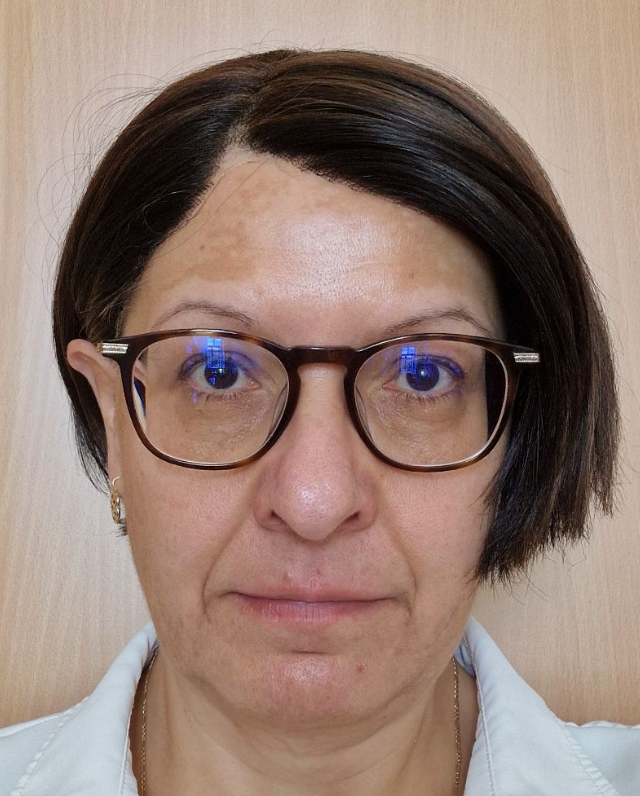
Hongxiu Li is an Associate Professor (tenure track) at Tampere University's Department of Information and Knowledge Management. She holds a PhD in Information Systems Sciences from Turku School of Economics (2011). Her research focuses on social robotics, data analytics, online health communities, and hospitality technology. She has contributed significantly to understanding human-robot interactions in service industries and VR applications in sports. Research Interests: Social robotics, data analytics, online health communities, hospitality technology, AI in service industries, and VR/AR applications. Notable Achievements: Recipient of the 2017 Information Systems Scientist Award. Professional Activities: Reviewer for multiple journals/conferences including European Conference on Information Systems and International Conference on e-Business. Her work emphasizes practical applications of technology in sectors like healthcare, hospitality, and education. Recent studies explore social robots' impact on hotel customer satisfaction and emotional responses to immersive VR sports experiences.
Shelley B. Brundage is a full-time Professor in the Speech, Language and Hearing Sciences department at George Washington University's Columbian College of Arts and Sciences. Her expertise lies in stuttering, fluency development, and virtual reality applications in speech therapy. She teaches undergraduate and graduate courses, including SLHS 6250: Stuttering, and has been recognized with prestigious awards such as the Morton Bender Teaching Award (2024) and ASHA Fellowship (2013-present). Dr. Brundage holds a Ph.D. in Communication Disorders from the University of Minnesota (1993), with a minor in Gerontology. Her research explores bilingualism's impact on disfluency, virtual reality in stuttering treatment, and the Scholarship of Teaching and Learning (SoTL). She has led grants including 'Measuring the effectiveness of virtual reality in stuttering therapy' (2024) and co-chaired the Oxford Dysfluency Conference (2023). Her work emphasizes interdisciplinary collaboration, evidenced by grants spanning healthcare teams and bilingual child development. She mentors students in clinical research and has pioneered virtual learning environments for healthcare communication skills. Brundage's contributions extend to clinical practice guidelines, including consensus assessments for stuttering across the lifespan. Grants: Japan Society for the Promotion of Science (2024) NIDCD R13DC0192 (2021-2022) Alzheimer’s Australia Dementia Research Foundation (2015) Awards: Morton Bender Teaching Award (2024) ASHA Fellow (2013-present) Innovation in Education Prize (2014) Brundage's research bridges clinical practice and technology, with over 25 peer-reviewed publications. She advocates for evidence-based pedagogy and has developed virtual reality tools to standardize stuttering assessments. Her lab focuses on advancing both clinical interventions and educational methodologies in communication sciences.
Irena Reifova serves as Associate Professor at the Department of Media Studies, Faculty of Social Science, Charles University in Prague, where she has maintained continuous faculty affiliation since 1999. Previous positions include Research Director at the Institute of Communication Studies and Journalism (2011-2015) and affiliation with the Film and TV School, Academy of Performing Arts, Prague (2005-2009). She currently holds the position of Vice-President of the European Communication Research and Education Association (ECREA). Her research expertise centers on Cultural Studies , Media Studies , and Memory Studies , with specialized focus on post-socialist mediated memory, television studies, and qualitative methodology. She investigates how media shapes collective memory and social inequalities in Eastern European contexts, particularly through reality television narratives and nostalgic representations, employing socio-constructivist frameworks to analyze mediated identity formation. Analysis of her 2012-2021 publications reveals consistent thematic concentration on class representation, shame mechanisms, and social distance negotiation in post-socialist media environments. Her work frequently examines generational identity construction and ontological security in digital transitions, with strong regional emphasis on Central and Eastern European media landscapes. Reifova maintains significant professional engagement as founding member and former Vice-Chair of ECREA's Central and East-European Network, editorial board member for CM: Communication Management Quarterly (Serbia) and Iluminace (Czech Republic), and organizer of the 6th ECREA conference in Prague (2016). She has led two nationally-funded research projects and contributed to COST Action IS0609 on audience transformations. Her academic service extends to media policy development and international scholarly networks including ECREA, IAMCR, ICA, and CEECOM, where she collaborates with media activists and regional researchers to advance understanding of media transformations in post-socialist societies.
Erkki Sutinen is a Senior Advisor and Professor of Computer Science (Interaction Design) at the University of Turku , currently leading the Future Tech Lab in Namibia. Since 2015, he has focused on design science research, co-creating digital solutions with stakeholders to address real-world challenges in education and development. He relocated to Namibia in 2019 to establish the University of Turku's first overseas campus, fostering Computing education and ICT4D initiatives in southern Africa. Education: PhD in Computer Science (1998, University of Helsinki), previously Professor at the University of Eastern Finland (1999-2015). Research Interests span educational technology , ICT4D , co-design , and digital theology . His work includes remote presence technology, mixed reality learning, and participatory design in African contexts. As an ordained Lutheran priest, he explores how interactive technologies can modernize faith expression. Publications highlight interdisciplinary efforts in Computing education, XR applications, and technology-driven solutions for development. Articles cover 3D hologram-based remote learning, digital games for youth engagement, and green computing curricula in Africa, reflecting his broad impact in Human-Computer Interaction, educational innovation, and sustainable design. Teaching emphasizes contextualized education and reforming pedagogical approaches through tools like Jeliot for programming education. He has supervised ~30 PhDs and authored ~300 papers, with a focus on the Global South. Labs & Collaborations: He leads the Future Tech Lab (ftlab.utu.fi) in Windhoek, Namibia, driving research on tailored technology solutions for African contexts, including software engineering training programs and startup ecosystem development.
Osku Torro is a Postdoctoral Research Fellow at Tampere University's Faculty of Built Environment, specializing in Civil Engineering. His research explores the organizational adoption of virtual reality (VR) and avatar-based interactions, with a focus on social VR applications for team collaboration and cohesion. Current affiliation: Tampere University Academic rank: Research Fellow Research Focus: Torro investigates how VR transforms workplace dynamics, particularly in social exchange and communication. His work bridges information systems science with practical applications in knowledge management and digitalization. Primary areas: VR in organizations, social interaction in immersive environments Secondary areas: Generative AI, IFC/GS1 standards, digital twins in building systems Article Trends: Recent publications highlight VR's role in collaboration platforms, digitalization challenges in real estate, and AI-driven data enrichment in building systems. Topics span from technical implementations (e.g., IFC/GS1) to behavioral studies (e.g., team cohesion in VR).
Dr. Eileen Bowman is an Assistant Professor in Education at University College Dublin's School of Education, serving as Director and Academic Lead of the Bachelor in Education, Gaeilge and/or Modern Languages program. She also leads the Modern Foreign Languages (MFL) strand in the Professional Master of Education (PME) program. Her academic roles include teaching modules on language pedagogy, curriculum design, and digital technology integration. Bowman holds a PhD from Le Mans University and certifications in school leadership and creativity in education. Her research focuses on language education, identity formation in learners, AI applications in pedagogy, and immersive technologies like VR in language classrooms. She co-authored Génial!1 and Génial!2 , textbooks for French Junior Cycle teaching, and founded the UCD Linguist Award to promote language learning. Bowman actively collaborates with institutions across Europe through Erasmus projects and serves on national advisory groups like the Foreign Languages Advisory Group (FLAG). Education: PhD in Education (Le Mans University), MA in Education (Le Mans University), PGDE in MFL (University of Plymouth) Key Roles: Director of BEd in MFL, MFL Academic Lead in PME, Research Supervisor, and member of UCD's Research Committee Professional Activities: Committee member of the Erasmus+ Alliance xR, AI sub-committee in UCD, and European Day of Languages organizer Recent accolades include the UCD Teaching Excellence Award (2024) and recognition for her innovative work in integrating technology and sustainability into language education. Bowman's teaching spans over 39 courses, emphasizing practical methods for MFL instruction and fostering inclusive learning environments.
Sergey Andreev is a Professor at the Faculty of Information Technology and Communication Sciences, Tampere University, where he holds a position in the Department of Electrical Engineering. His research focuses on advanced wireless communication systems, particularly in 5G/6G networks, mmWave technologies, UAV-based networks, and machine learning-driven network optimization. He is actively involved in projects addressing energy efficiency, resource allocation in heterogeneous networks, and the integration of non-terrestrial networks (NTNs) with terrestrial infrastructure. His work emphasizes practical applications such as extended reality (XR) communication, industrial IoT, and reliable service continuity in challenging environments. Andreev's recent publications highlight breakthroughs in federated learning for edge computing, delay-aware scheduling in integrated access and backhaul (IAB) systems, and the deployment of UAVs for enhancing urban network coverage. His contributions span theoretical frameworks to experimental validations, leveraging tools like ray tracing, digital twins, and reinforcement learning. He has also explored the interplay between user behavior and network performance in immersive applications, emphasizing real-world scalability and sustainability. His research often combines interdisciplinary approaches, such as merging machine learning with traditional signal processing techniques to tackle complex network challenges. While no specific awards are listed, his prolific publication record underscores his influence in the field. He has advised numerous projects but no formal student names are provided in the texts. His labs and teams likely focus on cutting-edge 6G research, though specific lab names are not mentioned.
Federico Manuri is a Fixed-term Researcher at the Department of Control and Computer Science (DAUIN), Politecnico di Torino, and a member of the College of Architecture and Design. He is actively engaged in research and teaching with a strong focus on augmented reality, human-computer interaction, and computer vision. His educational background is not explicitly detailed in the provided text, but his research and teaching activities indicate a strong foundation in computer science and engineering. Manuri's research interests span Augmented Reality , Virtual and Augmented Reality (VAR) , Human-Computer Interaction (HCI) , Human-Robot Interaction (HRI) , Collaborative Robotics , Computer Vision , and Human-Centered Design . His work integrates AI and immersive technologies into industrial and educational applications. The recent publications highlight a consistent focus on applying AI and computer vision to real-world challenges in sports analytics, industrial manufacturing, and education. Key themes include synthetic data generation for 3D reconstruction, immersive training using co-embodiment in VR, and AI-driven adaptive learning systems, reflecting a strong interdisciplinary and application-oriented research profile. His scientific contributions are recognized through publications in reputable journals and conferences such as IEEE AICT, SUSTAINABILITY, and IET Collaborative Intelligent Manufacturing, though no specific awards or fellowships are mentioned. Manuri supervises PhD student Luca Francesco Rossi , whose research focuses on entity identification using computer vision in dynamic environments, supported by an industrial collaboration with netventure Group. He is also involved in teaching multiple courses, including Extended Reality and Human-machine interaction , across engineering and design programs. He leads the commercial research project NextMind Applications as Scientific Manager. He is affiliated with the GRAINS - GRAphics and INtelligent Systems research group at DAUIN, which serves as the primary hub for his collaborative research activities in graphics, AI, and intelligent systems.
Kevin Gonyop Kim is a Lecturer for Spatial Computing and 3D Technologies at the Institute of Interactive Technologies, School of Computer Science, University of Applied Sciences and Arts Northwestern Switzerland (FHNW). He is actively contributing to the fields of interactive and immersive technologies, with a focus on spatial computing and human-centered design. His research interests span key areas in modern computing and interaction design, including: Spatial Computing Extended Reality (XR) 3D Interaction Design Human-Computer Interaction (HCI) Educational Technologies The publications and projects led by Dr. Kim reflect a strong trend toward immersive, user-focused technological innovation, particularly in applied educational and interactive environments. His work bridges technical development with pedagogical application, emphasizing usability and engagement. While specific awards and grants are not listed in the available text, his role as a lecturer at FHNW indicates active involvement in teaching, curriculum development, and applied research. He likely contributes to academic supervision and collaborative projects within the Institute of Interactive Technologies. Dr. Kim is affiliated with the Institute of Interactive Technologies at the FHNW Campus Brugg-Windisch, a hub for innovation in digital and interactive systems, where interdisciplinary teams work on cutting-edge technology solutions.
Dr. Albert Nowacki serves as an Assistant Professor in the Department of Russian, Ukrainian and Belarusian Literature at the John Paul II Catholic University of Lublin within the Faculty of Humanities. His academic career spans over two decades with significant contributions to Ukrainian literary studies, Polish-Ukrainian cultural relations, and the analysis of national identity formation in Eastern Europe. He maintains active scholarly engagement through numerous publications, conference presentations, and editorial responsibilities. Specializes in 20th century Ukrainian literature Focuses on Mykola Khvylovy's literary contributions Examines Ukrainian identity in post-Maidan and wartime contexts Investigates Polish-Ukrainian literary connections Contributes to translation studies methodology Nowacki's research trajectory demonstrates consistent focus on Ukrainian literary modernism, particularly the works of Mykola Khvylovy, while increasingly addressing contemporary issues arising from the Russian-Ukrainian conflict. His recent publications analyze refugee experiences, identity transformations in Donbas, and the cultural impact of war. His scholarly approach bridges literary analysis with sociopolitical commentary, offering valuable insights into how literature reflects and shapes national consciousness during periods of crisis. The interdisciplinary nature of his work connects literary studies with migration studies, trauma theory, and cultural diplomacy. His scholarly output reveals evolving thematic focus from historical literary analysis toward urgent contemporary issues. While maintaining his expertise in Ukrainian modernism, his recent work increasingly addresses the Russian-Ukrainian war's cultural dimensions, refugee experiences, and identity transformations. This evolution reflects both personal scholarly development and response to geopolitical realities affecting Eastern Europe. Medal srebrny 'Za Długoletnią Służbę' (2024) Medal Komisji Edukacji Narodowej (2022) Nagroda zespołowa III stopnia (2019, 2023) Nagroda indywidualna III stopnia (2020) Nagroda indywidualna IV stopnia (2011) Dr. Nowacki actively contributes to academic community through editorial work as Secretary of the editorial board for TEKA Komisji Polsko-Ukraińskich Związków Kulturowych. He organizes international conferences addressing Polish-Ukrainian cultural relations and has participated in numerous research projects, including EU-funded initiatives like Erasmus+ and PWP. His international collaborations extend to academic institutions in Ukraine, particularly through textbook development projects for Ukrainian minority schools in Poland. He has also served as a reviewer for research grant competitions at Wrocław University. As Secretary of the Commission of Polish-Ukrainian Cultural Associations of the Lublin Branch of the Polish Academy of Sciences, Nowacki plays a significant role in fostering academic collaboration between Polish and Ukrainian scholars. His involvement in organizing international conferences and editorial work demonstrates strong institutional engagement within the academic community focused on Eastern European studies.
Jeppe Kristensen is a Professor in the Department of Visual and Performing Arts at the University of Agder (UiA) , where he has been employed since January 2014. He is also actively involved as a playwright, stage instructor, and co-founder of the experimental theatre collective Fix&Foxy. He teaches practical theatre at both undergraduate and master's levels, including in the Literature, Film, and Theatre programme. Education: Trained as a dramaturg at the Department of Dramaturgy, Aarhus University. Former dramaturg at the Royal Theater in Copenhagen. Research Interests: Jeppe Kristensen’s primary academic focus is on contemporary theatre , especially where theatre interfaces with its broader environment—artistic, social, political, and media landscapes. His work explores experimental formats, intermediality, and theatre as a social practice. He is particularly interested in performances involving non-actors and the ethical dimensions of such work. His research also spans art and conflict, art with youth, and the reconfiguration of historical and musical crafts in education. Recent Publications and Artistic Output: His most recent works (2022–2025) reflect a strong trend toward performance as research , with themes of reality, identity, youth, and audience engagement. He frequently collaborates with artists like Pelle Brage and Cleo Højholdt, producing lecture performances, immersive shows, and critical reflections on theatrical practice. His publications appear in journals such as Peripeti and DRAMA , and in edited volumes on art and conflict. Scientific and Artistic Affiliations: Research Groups: Art and Children & Youth , Art and Conflict , Reconfiguring Historical, Musical Crafts Education (RHiMuCE) Guest Teacher: Norwegian School of Performing Arts (Copenhagen), Department of Aesthetics (Aarhus University) Advising and Grants: While no specific students or grant projects are listed in the available text, his involvement in bachelor’s-level supervision is implied through works like Performative anslag mod bacheloroppgaven , suggesting engagement with student research. His extensive collaborative output indicates a strong role in mentoring emerging artists and facilitating interdisciplinary projects. Labs and Creative Teams: Kristensen is a permanent half of the theatre company Fix&Foxy (fixfoxy.com), known for creating social experiments, video theatre, and happenings. The group works across societal spaces, often with marginalized communities, and engages in intermedial performance practices. He also collaborates with free artistic groups as a dramaturg, extending his influence beyond institutional boundaries.
Professor Patrick Langdon serves as Director of the Transport Research Institute at Edinburgh Napier University's School of Computing Engineering and the Built Environment (SEBE). He holds the position of Professor of Engineering Design, Transportation, and Inclusion and leads Ethics and Integrity initiatives for both SEBE and the School of Computing. With over 20 years of experience as an Experimental Psychologist, Langdon has established himself as a leading researcher at the intersection of cognitive science, artificial intelligence, and transportation engineering. Langdon's research spans multiple interconnected domains focused on human-centered design in transportation systems. His work centers on inclusive design principles for autonomous vehicle interfaces, human-machine interaction in complex environments, and the application of cognitive science to transportation challenges. Key research themes include designing for diverse user populations, predicting driver intent using Bayesian methods, enhancing situation awareness in multitasking scenarios, and developing ethical frameworks for human participation in technology research. His multidisciplinary approach bridges engineering, psychology, and computer science to address real-world transportation challenges. Analysis of Langdon's publication record reveals a consistent focus on human factors in automated transportation systems, with increasing emphasis on sustainable and inclusive mobility solutions. His work shows progression from foundational research in inclusive design to cutting-edge applications in autonomous vehicles and hydrogen-electric aviation. The publications demonstrate strong methodological diversity, incorporating experimental studies, theoretical frameworks, and real-world implementation projects that address both technical and social dimensions of transportation technology adoption. Langdon's research activities are supported by significant funding from diverse sources including Innovate UK, Engineering and Physical Sciences Research Council, European Commission, and industry partners. His leadership extends to major collaborative projects such as the HEART (Hydrogen Electric and Automated Regional Transportation) initiative, CAVForth automated bus service expansion, and research on inclusive kerb design for urban environments. These projects demonstrate his ability to translate theoretical research into practical transportation solutions with real-world impact. As Director of the Transport Research Institute, Langdon oversees a multidisciplinary team working at the forefront of transportation innovation. His research group focuses on the integration of cognitive science, artificial intelligence, and engineering design to create transportation systems that accommodate diverse user needs while advancing sustainable mobility solutions. The institute serves as a hub for collaboration between academia, industry, and government agencies working to shape the future of transportation.
Professor Linda Dryden is a distinguished scholar in the School of Arts and Creative Industries at Edinburgh Napier University, specializing in nineteenth-century literature with particular expertise in Joseph Conrad, H.G. Wells, and Robert Louis Stevenson. She serves as Director of Studies for multiple PhD candidates and leads the Centre for Literature and Writing (CLAW), contributing significantly to the university's research profile in literary studies. Her research interests center on fin de siècle literature, exploring the intersections between Gothic literature, science fiction, and imperial romance. Dryden's work examines how authors like Conrad and Wells navigated the boundaries of national identity, empire, and emerging modernism. She has made significant contributions to understanding the literary friendship between Conrad and Wells, as well as Stevenson's influence on later writers. Her scholarship often addresses themes of transnational identity, postcolonial perspectives, and the evolution of narrative forms during the transition to modernism. Dryden's publications reveal a consistent focus on literary relationships and genre evolution, with recent work analyzing Conrad's transnational identity in imperial fiction and Wells's science fiction as social commentary. Her research demonstrates how these authors engaged with contemporary scientific thought, particularly evolutionary theory, while challenging conventional narrative forms. Among her notable scholarly contributions are major projects including the Edinburgh Editions of Sir Arthur Conan Doyle (2019-2021), Conrad, Wells and Emergent Modernism (2012-2014), and foundational work establishing the Scottish Centre of Tagore Studies (ScoTs). She has secured significant funding from the Royal Society of Edinburgh, Carnegie Trust, and Scottish Funding Council to support these initiatives. As an academic supervisor, Professor Dryden has guided numerous doctoral students through completion, with research topics ranging from nineteenth-century seafaring literature to representations of feminist consciousness in Victorian poetry. Her leadership extends to organizing major academic events, including Conrad workshops at the Edinburgh International Book Festival and Robert Louis Stevenson Day celebrations.
Dr. Emma Whewell is an Associate Professor in Learning & Teaching at the University of Northampton, affiliated with the Faculty of Education, Arts, Science and Technology. She serves as Programme Leader for the BA Sports Development and Physical Education degree and Co-Lead for the Centre for Active Digital Education. Research expertise includes digital pedagogies, phenomenology, physical education, and inclusive practices Key projects: Headsets for Hope (immersive tech for SEN/D), Holiday Activities and Food Programme (PhD studentship), STEP Outside (outdoor learning), and DLAB2: Developing Changemakers (Erasmus+) Her research spans inclusion, access, and pedagogy, with current projects in extended reality, outdoor learning, and health and wellbeing. She has supervised MA students in Physical Education and is accepting PhD students. Research Outputs: 3 (2025), 6 (2024), 11 (2023), 6 (2022) Award contributions: All Party Parliamentary Group reports on fit and healthy childhood, mental health, and women's football Emma co-edits Advancing Education Magazine and contributes to staff development for HEA Fellowship. She collaborates internationally through eTwinning and Erasmus+ initiatives.
Dr. Anthony Basiel is a Module Leader in the Department of Science and Engineering at Solent University. He holds a DProf (Doctor of Professional Studies) and specializes in blended learning solutions, eLearning design, and the integration of AI into educational technologies. His work focuses on innovative webinar design, healthcare simulations using augmented reality, and Socratic discussion models to enhance creativity in blended learning environments. He has collaborated with institutions like Oxford University, the Natural History Museum, and the European Commission on eLearning projects. Education: His academic background includes a Master's (MSc/MPhil) in applied formative evaluation in eLearning and a thesis on eLearning pedagogy. He has also contributed to courses like BSc (Hons) Computer Science at Solent. Research Interests: AI in curriculum design, learning simulations, gamification for engagement, and the application of AI in assessment mapping. He has published widely on topics like healthcare simulations, immersive learning technologies, and future education models. Grants/Collaborations: Involved in projects such as the University of Gaza curriculum innovation (recognized by Advance HE) and the SchoRes International Conference as a keynote speaker. He is also a Visiting Lecturer at York Saint John University and part-time Dissertation Supervisor at the University of Winchester. Labs/Teams: Actively involved in developing tools like the 'Flat-pack Webinar Toolkit' and the 4-stage AI learning simulation model. His work extends to professional development through platforms like Premier Learning Institute.