Dr. Andrea Medovarski is an Associate Professor in the Department of Humanities at York University's Faculty of Liberal Arts and Professional Studies, specializing in Black diaspora cultural studies with focus on Canada's position within transatlantic slavery and colonial histories. Her research examines: Black Canadian literary and film productions Second-generation immigrant experiences in literature Postcolonial reinterpretations of Canadian identity Decolonizing pedagogical approaches Access barriers in postsecondary education Medovarski has published extensively on diasporic cultural expression in journals including TOPIA, Canadian Literature, and Journal of Postcolonial Writing. Her HEQCO-funded research investigates 'nontraditional' student experiences in higher education. As an editorial board member for Canadian Woman Studies/les cahiers de la femme and Inanna Publications, she supports feminist scholarship and promotes accessible knowledge dissemination.
Martina Wagner-Egelhaaf is a Senior Lecturer at the University of Münster (WWU Münster), continuing her role after retirement. She is affiliated with the Cluster of Excellence 'Religion and Politics,' focusing on Modern German Literature, Literary Theory, and interdisciplinary studies at the intersection of religion, politics, and culture. Her work emphasizes autobiography/autofiction, rhetorical analysis, and the interplay between legal and literary discourses. Affiliations: Cluster of Excellence 'Religion and Politics'; Former Head of multiple research projects (e.g., CRC 1385 'Law and Literature,' SFB 1150 'Kulturen des Entscheidens'). Education: Habilitation (1994, University of Konstanz); Doctorate (1987, University of Tübingen); Studies in Germanics, History, and English (1976–1987). Her research interests span transcultural entanglements, mediality, emotionality, and decision-making in literary and religious contexts. Notable projects include 'Demons: medialities between literature and art, religion and politics' and 'Figures of Hate. Prolegomena to a Literary and Cultural History.' Recent publications (2023–2025) explore normativity in law and literature, demonology in modern contexts, and crisis narratives in contemporary texts. She has received honors such as the 2003 Prize for the Advancement of Women and membership in the North-Rhine Westfalian Academy of Sciences. Awards: AcademiaNet recognition (2010); North-Rhine Westfalian Academy membership (since 2014). Wagner-Egelhaaf has advised over 40 doctoral students, many focusing on topics like autofiction, religious-political narratives, and literary theory. She actively participates in international collaborations, including fellowships at the University of Washington and the University of Kansas. Her academic leadership includes roles as Chair of the Literaturkommission für Westfalen and Co-Spokesperson of the Graduiertenkolleg 'Literary Theory as Theory of Society.' She contributes to editorial boards of major handbooks and journals, furthering the global discourse on German literature and culture.
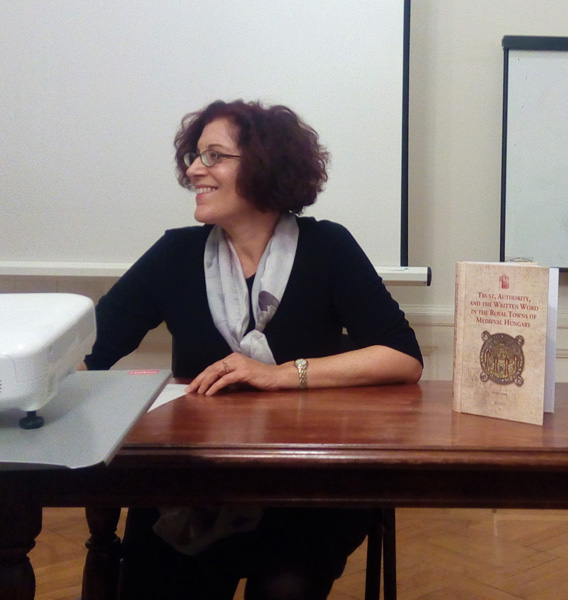
Professor Miri Rubin is a leading historian of medieval and early modern Europe, currently serving as Professor of Medieval and Early Modern History at Queen Mary, University of London, and Head of the School of History since 2012. She previously held positions at the University of Oxford (1989–2000) and the University of Cambridge (1984–1986). Her research explores religious cultures, Jewish-Christian relations, gender, and urban life in medieval Europe, with a focus on themes like charity, identity, and visual/material expressions of belief. Her major awards include a Leverhulme Major Research Award (2002–2005), Fellowship of the Royal Historical Society (1989), and Corresponding Fellowship of the Medieval Academy of America (2007). She has been a key figure in academic leadership, serving as President of the London Medieval Society (2007–2012) and on councils of prestigious institutions like the Medieval Academy of America. Miri Rubin actively engages with the public through media appearances (BBC, PBS, etc.), lectures, and initiatives like the Belgian-British Medieval Urban History Network. Her work bridges disciplines, emphasizing interdisciplinary approaches to medieval history.
Grace Pigozzi is an Assistant Professor of Elementary and Early Literacy at Purdue University Northwest. Her work emphasizes discovery-based learning, literacy engagement, and supporting diverse learners through creative expression. She holds a Ph.D. and focuses on research areas including reading fluency, language development, and multimodal learning approaches. Her teaching portfolio includes literacy methods, assessment strategies, and curriculum design for inclusive education. Key research interests involve digital spaces' impact on writing practices, particularly how adolescents negotiate identity through online platforms. Recent projects include a grade three reading initiative focused on challenging texts. Pigozzi has presented conference research on collaborative learning and identity formation in digital environments. Publications highlight innovative methodologies like connective case studies and virtual ethnography, alongside explorations of creative writing processes. She actively investigates how informal learning spaces (like gaming communities) can be leveraged in educational practices. Contact details include office location Hammond CLO 323 and email gpigozzi@pnw.edu. Professional interests extend beyond academia to include historical fiction reading, bicycling, and flying trapeze.
Nathalie Kuroiwa-Lewis is a Professor of English at Saint Martin’s University, located in Lacey, Washington. She holds a Ph.D. in Rhetoric, Composition, and English (RCTE) from the University of Arizona, alongside M.A. degrees in Theatre and English Rhetoric/Composition, and a B.A. in English Literature with a Spanish minor. Her academic affiliations include the College of Arts and Sciences and associated programs in Environmental Studies, Literary Studies, and Writing. Dr. Kuroiwa-Lewis’s research focuses on creative writing (multigenre poetry), environmental rhetoric , and the rhetoric of war . She explores intersections between classical rhetoric, trauma studies, and protest music. Her work often bridges ecological concerns with political discourse, as seen in publications such as The Chicxulub Event (2023) and Aeolus At Hanford (2022). Her recent courses include Advanced Creative Writing , Atomic Narratives , and Empowering Genres . She directs the Writing Center and the Writing minor program, advocating for student-driven academic and artistic expression. Her professional achievements include a 2013-2014 nomination for Outstanding Faculty Member and leadership roles in the Olympia Poetry Network. Her publications span over a decade, with recent works appearing in Cirque , Book of Matches , and Rhetoric and Guns . Her writing often blends scientific, historical, and literary themes, reflecting her interdisciplinary approach to rhetoric and creative expression.
Kim Scott serves as a John Curtin Distinguished Professor at Curtin University within the School of Media, Creative Arts and Social Inquiry. Her distinguished career uniquely bridges creative practice and academic scholarship, focusing on Noongar cultural revitalization, Indigenous Australian literature, and community-engaged research. Her research spans critical areas of Indigenous knowledge systems, including: Noongar language preservation through the Wirlomin Language Project Digital humanities applications like virtual reality for Stolen Generations commemoration Intercultural education frameworks for health sciences Cultural heritage preservation via initiatives such as Noongarpedia Postcolonial narratives in Australian literature and history Indigenous community-based knowledge systems Scott's interdisciplinary publications reveal a consistent trajectory toward integrating creative expression with scholarly rigor. Recent works demonstrate increasing focus on technological innovation for cultural preservation, with virtual reality projects addressing historical trauma alongside literary explorations of identity. Her scholarship actively bridges academic theory with community practice, particularly through language revitalization efforts and intercultural leadership programs. No scientific awards were documented in the provided text. Information regarding academic advising responsibilities and research grant funding was not specified in the available materials. Professor Scott leads significant collaborative initiatives including the Wirlomin Noongar Language and Stories Project, which develops educational resources for Noongar language transmission, and the Noongarpedia project that creates community-owned digital archives for cultural knowledge preservation across educational settings.
Shola (Olorunshola) Adenekan serves as Associate Professor of African Literature at Ghent University's Faculty of Art & Philosophy, Department of Languages and Cultures, where he leads the African Studies group. His academic journey spans multiple continents, having previously held positions as Assistant Professor of Literary and Cultural Analysis at the University of Amsterdam, a diaspora fellowship at the University of Ghana, and research positions at the Universities of Leeds, Bayreuth, and Bremen. Adenekan earned his PhD in African Studies from the University of Birmingham in 2012, following journalism training at the University of Westminster in 2001. His professional trajectory uniquely bridges journalism and academia, with early career experience at major media outlets including BBC News Online, The Guardian, and The Christian Science Monitor before transitioning to scholarly work. His research explores the dynamic intersection of African literature and digital technology, with particular focus on Yoruba print culture networks, sexuality in Africa, and digital humanities. Adenekan's work consistently examines how digital spaces transform literary production, community formation, and cultural expression across the continent, especially in Nigeria and Kenya. His scholarship reveals how online platforms enable new forms of literary engagement that circumvent traditional publishing constraints while fostering transnational communities. Analysis of Adenekan's publication record reveals a clear trajectory from early work on diaspora and national identity (2012-2014) toward increasingly sophisticated examinations of digital literary production, queer representation, and Yoruba cultural networks. His most recent publications demonstrate growing specialization in indigenous language media ecosystems and the material conditions of print culture in West Africa, culminating in his ERC-funded YorubaPrint project. Adenekan serves on the editorial board of Queer Studies in Media & Popular Culture as the principal expert on African queer writing and culture, and he publishes as editor of The New Black magazine . As Principal Investigator of the European Research Council Starting Grant project 'YorubaPrint' (2021-2027), Adenekan leads a research team including postdoctoral researchers and doctoral students. He actively mentors MA and PhD students in African literature, Yoruba studies, sexuality in Africa, African Digital Humanities, African cinema, and African book culture. His academic leadership extends to co-editing special issues on African Digital Humanities and developing a co-edited book on digital Africa. Adenekan's scholarly activities include directing research projects on Yoruba print culture networks and contributing to the academic community through conference participation, such as the African Literature Association's Lecture Series.
Peter A. Goddard is an Associate Professor in the Department of History at the University of Guelph's College of Arts. His research focuses on Catholic missionary activity, early modern European-Indigenous encounters, and the evolution of poverty concepts in the early modern world. He holds a D.Phil. from Oxford University (1990) and a B.A. from the University of British Columbia (1983). Dr. Goddard has served as Chair of the Department of History (2008-2013, 2021-2022), Interim Chair (2021-2022), and currently directs the Tri-University Graduate Program in History (2022-2025). His work examines the intersection of religion, colonialism, and cultural exchange, with a particular emphasis on Jesuit missions in New France and early modern theories of origins. His publications analyze topics like indigenous-European theological exchanges, demonology in colonial contexts, and the role of science in missionary endeavors. He has contributed to major journals such as Church History , Catholic Historical Review , and Canadian Historical Review , alongside edited volumes on colonial missions and early modern thought.
Emma Sheppard is a Lecturer in Sociology within the Department of Geography and Earth Sciences at Aberystwyth University, where she joined in 2023. Her work is rooted in Critical Disability Studies, intersecting with queer and crip theories to explore embodiment, time, and social justice. Education: PhD in Sociology, Edge Hill University (2017) MA in Gender, Sexuality, and Society, Birkbeck BA in Geography, Queen Mary University of London (2010) Her research explores disability and time, chronic pain, and trauma-informed approaches to teaching and research. She employs creative methods such as asynchronous quilting circles to investigate queer-crip futurity and notions of a 'good life.' Her work challenges normative health metrics like BMI and examines epistemological injustices in housing and welfare systems for neurodivergent people. Her recent publications reflect a strong trajectory in feminist and disability theory, with articles forthcoming in Feminist Theory and Housing and Society , and her 2023 monograph Chronic Pain, BDSM and Crip Time receiving significant attention. The thematic trends in her research include crip temporality, emotional resistance, disclosure, and the politics of care and pleasure. Scientific Awards: WIN Small Grant: Autistic Spaces of Welfare (2024) Workshop Grant: Neuro-affirming Welfare Spaces (2024) Emma has been actively involved in advising and grant acquisition, securing competitive fellowships focused on community-led research with autistic individuals. She has contributed to trauma-informed pedagogy through collaborative projects and public talks. She is a member of CASPR (Critical Approaches to Scholarship in Pain Research) and contributes to UN Sustainable Development Goals related to equity and inclusion. Labs and Research Groups: Member of CASPR (Critical Approaches to Scholarship in Pain Research) Co-organizer of research initiatives such as 'AberCollab: Bringing Bodies into Policy' and 'Relentless Injustice' conference Engaged in community-based participatory research with autistic communities
Dr. Adrienne Christian is a distinguished poet, writer, professor, and photographer with a PhD from the University of Nebraska and an MFA from Pacific University. Her work spans creative writing, literary arts, and visual storytelling, and has been widely published in leading literary journals. Her educational background includes: BA, University of Michigan MFA, Pacific University PhD, University of Nebraska Adrienne's research and creative interests focus on poetry, autobiographical expression, and interdisciplinary arts. Her work explores themes of identity, memory, love, and the Black female experience through lyrical and evocative language. She is deeply engaged in the literary community as a mentor, editor, and advocate for diverse voices. The recent publications in her portfolio reflect a strong trend in personal narrative, emotional depth, and feminist inquiry, often blending poetic form with lived experience. Her work resonates across genres and media, particularly in the intersection of text and image. Her notable awards include: Common Ground Review Poetry Award (2021) Two-time Pushcart Prize nominee Rita Dove International Poetry Award nominee (2016) University of Michigan’s Five Under Ten Young Alumni Award (2007) She has served as a jury member and editor for major literary prizes and is Associate Editor at Backbone Press. Her involvement in writing residencies and panels with organizations like Ms. Magazine and AWP highlights her leadership and mentorship in the field. Though no formal students are listed, her role in Cave Canem and other fellowships suggests significant advising and community building. Adrienne is a fellow of the Cave Canem, Furious Flower, and Callaloo writing residencies—prestigious programs that support Black and marginalized poets. These affiliations underscore her commitment to artistic excellence and equity in the literary world.
Professor Leszek Tymiakin is a distinguished academic at Maria Curie-Skłodowska University in Lublin, Poland, where he serves as a Professor in the Department of Polish Language Education within the Faculty of Languages, Literatures and Cultures. With a career spanning several decades, he has established himself as a leading scholar in Polish linguistics, particularly in the areas of persuasive competence, school discourse, and historical Polish language studies. His academic journey began at UMCS, where he earned his Master's degree in 1981, followed by his doctorate in 1989, habilitation in 2009, and finally achieving the rank of Professor in 2024 - all from the same institution. His deep connection to UMCS reflects his longstanding commitment to Polish linguistic scholarship. Professor Tymiakin's research interests span a wide range of linguistic domains, with particular expertise in persuasive communication among students, school discourse patterns, and the linguistic features of 17th-century Przemyśl residents. His work often bridges historical linguistics with contemporary educational applications, examining how language functions in various social and educational contexts. He has made significant contributions to understanding how students develop linguistic competence, particularly in persuasive and argumentative communication. His extensive publication record demonstrates remarkable breadth and depth across three decades. His recent work has focused on contemporary language issues including pandemic discourse, emotional expression in Polish song, and ageism in cultural representations. Earlier in his career, he conducted groundbreaking research on 17th-century Polish language as evidenced in Przemyśl testament documents, demonstrating his ability to connect historical linguistic analysis with modern educational applications. Professor Tymiakin maintains an active research agenda through collaboration with colleagues like Małgorzata Karwatowska, with whom he has published extensively on youth language and cultural representations. His work continues to influence Polish language education methodology and linguistic theory, particularly in understanding how students develop persuasive and argumentative skills. He remains actively engaged in academic mentoring and teaching, with current consultation hours listed for the 2024-2025 academic year, demonstrating his ongoing commitment to scholarly work and student development. His laboratory focuses on linguistic analysis of cultural texts and educational discourse, continuing to explore how language functions in various social contexts from historical documents to contemporary media.
Dr. hab. Anna Kucharska is an Assistant Professor at the Department of Language Acquisition and Didactics , Institute of Linguistics , John Paul II Catholic University of Lublin (Faculty of Humanities). Her work focuses on French and Italian as foreign languages, with particular emphasis on essay writing, argumentation theory, and cultural aspects in language education. Research Interests: Foreign language pedagogy, rhetorical devices, textual cohesion, enunciative theory, legal linguistics, and cross-cultural communication. Membership: Polish Neophilological Society, Associazione Internazionale Professori di Italiano, KUL Expert Team, and CKE National Exam Commission. Kucharska’s publications analyze linguistic and textual complexity in learner writing, causal expressions in essays, and cultural conceptualization in legal texts. She has presented extensively at international conferences and participates in textbook translation projects. Her scientific award includes the Erasmus+ Staff Mobility scholarship for teaching exchanges. Notable Publications: 2025: Student attitudes in French essay writing 2023: Contrastive analysis of Italian Civil Code terminology 2019: Classical vs. modern rhetoric in language education 2017: Textual complexity in intermediate Italian learners Kucharska serves as an external reviewer for national exams and contributes to academic projects like PWP - Vocational education in modern languages . Her work bridges theoretical linguistics with practical language teaching methodologies.
Donna Goldstein is a Professor of Anthropology with a focus on political anthropology, race, gender, and corruption in Latin America. Her work critically examines the intersection of power, violence, and cultural practices, particularly in Brazil and Hungary. Fields of Interest: Political Anthropology, Race and Ethnicity, Gender and Sexuality, Science and Technology Studies, Medical Anthropology. Goldstein’s research spans topics like illiberal politics during the Trump era, corruption in governance, and the cultural politics of childhood and violence. She has contributed to debates on nuclear expertise, pharmaceutical crime, and the historical reconstruction of ethnic identities. Her publications highlight the role of gesture and spectacle in politics, the ethical challenges of scientific research, and the structural violence embedded in health and social policies. She has engaged with comparative studies of environmental and health crises across regions. Goldstein is associated with the California Series in Public Anthropology and has reviewed works on sleep disorders, addiction, and beauty standards, reflecting her interdisciplinary approach. Notable Themes: Political Spectacle, Ethnographic Methodology, Structural Violence, Bioethics, Environmental Risk, Post-Truth Politics.
Dr. Jennifer Beer is a Professor in the Department of Psychology at the University of Texas at Austin, affiliated with the College of Liberal Arts. She holds roles in the Imaging Research Center and the Institute for Neuroscience. Her PhD is from the University of California, Berkeley. Her research focuses on social neuroscience, exploring self-processes, emotion regulation, and social cognition. Using methods like neuroimaging (fMRI) and behavioral observation, her lab investigates how self-perceptions and emotions influence social interactions. Recent work examines age-related dynamics in romantic relationships, linguistic patterns in social rejection, and the neural underpinnings of self-knowledge. Courses taught include advanced research methods and professional development in academic psychology. Her work emphasizes interdisciplinary approaches to understanding human social behavior. Research highlights include studies on emotional capital in marriage, the impact of apologies in rejection scenarios, and motivational biases in social evaluations. She advocates for open science practices and has contributed to discussions on reproducibility in psychological research. Her lab, the Self Regulation Lab, integrates cognitive neuroscience and behavioral science to address questions about self-regulation and social functioning. Publications span topics from conflict communication in aging couples to the role of medial prefrontal cortex in self-evaluation. While no specific awards are listed, her prolific output reflects sustained contributions to psychological science. Teaching responsibilities include seminars on grant writing and research ethics, emphasizing practical skills for academic careers.
Professor Raminder Kaur is Professor of Anthropology and Cultural Studies at the School of Global Studies, University of Sussex. She serves as Co-Director of the Sussex Asia Centre and has held leadership roles including Director of Doctoral Studies and Director of Equality, Diversity and Inclusion at the School of Global Studies. She is a Fellow of both the RSA (Royal Society for Arts) and RAI (Royal Anthropological Institute), where she serves on the RAI Film Committee organizing international film festivals. Her academic training includes a BA (Combined Hons) in Social Anthropology and Art and Archaeology and PhD from SOAS, University of London. She has held Research Fellowships at Brunel University, University of East Anglia, University of Manchester, and University of Erfurt. Her research spans Cultural Studies, Sociology, Anthropology, and Communication and Media Studies with focus areas including migration, race/ethnicity/gender, arts and aesthetics, heritage, public culture, censorship, religion and politics, human rights, energy, renewables, and 'cultures of sustainability'. Professor Kaur's scholarly output demonstrates a strong integration of visual anthropology, ethnographic methods, and social justice concerns. Her recent work explores censorship in South Asia, identity formation, liminal spaces, religious festivals, and the relationship between tradition and transformation. She uniquely bridges academic scholarship with creative practice through theatre, film, and multimedia production. Her research has been recognized with significant awards: Eurocities Award for Cooperation in Gdansk (2007) for the MCAAH report 'Delivering Shared Heritage' Fellowship in the Royal Society for the encouragement of the Arts, Manufactures and Commerce Fellowship in the Royal Anthropological Institute Professor Kaur has successfully supervised numerous doctoral students working on South Asian studies, migration, and cultural studies topics. She currently leads the POWERE project (Participation of Women in Renewable Energy) funded by UKRI, Pilgrimonics funded by Leverhulme Trust, and CO-POWeR (Consortium on Practices of Wellbeing and Resilience in BAME Families and Communities) funded by UKRI. Her creative work through Sohaya Visions includes theatre productions like EXODUS: ASIA, AFRICA, EUROPE; breaDth; and films including DISHOOM INDIA and PEOPLEBOROUGH that explore themes of identity, migration, and social justice.