- Ecohydrology
- Biogeochemistry
- Water Resources
- +۴ مورد دیگر
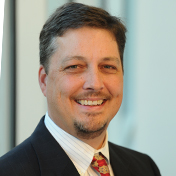
Diego Riveros-Iregui is a Professor in the Department of Geography at the University of North Carolina at Chapel Hill, recognized for pioneering research in ecohydrology and biogeochemistry. His work focuses on water-carbon-nitrogen interactions in tropical ecosystems, urban-rural gradients, and climate-impacted watersheds, employing high-frequency monitoring and advanced modeling techniques to address critical environmental challenges. His research interests center on tropical ecohydrology, particularly in Andean páramos and Galápagos Islands, examining carbon cycling in peatlands, nitrogen dynamics across land-use gradients, and stormwater impacts on urban streams. He integrates stable isotope analysis, machine learning, and field observations to study how geomorphology and climate variability regulate biogeochemical fluxes, with emphasis on vulnerable ecosystems facing anthropogenic pressures. Analysis of his 15 most recent publications (2021-2025) reveals dominant trends in high-resolution watershed monitoring, tropical carbon emissions, and urban hydrology. Key methodological innovations include machine learning for water use estimation, isotope-based tempestology, and bias correction in contaminant plume mapping, demonstrating interdisciplinary approaches spanning environmental engineering, climatology, and ecosystem science. Professor Riveros-Iregui has received the following scientific awards: Presidential Early Career Award for Scientists and Engineers (PECASE), the U.S. government's highest honor for early-career scientists, nominated by the National Science Foundation As a PECASE awardee, he leads NSF-funded research programs examining watershed processes across tropical and temperate regions. His collaborative work includes contributions to the EU-funded WELL CARE consortium on water security, though specific grant details and student mentorship records aren't documented in the source material. Current research priorities involve scaling point observations to watershed-level fluxes and assessing climate change impacts on island hydrology. While no dedicated laboratory is specified, his field studies leverage international partnerships in Ecuador's páramos and the Galápagos archipelago, focusing on microclimate-soil microbiome interactions and sustainable water resource management in high-elevation ecosystems.