Zackary Johnson , the Juli Plant Grainger Associate Professor of Biological Oceanography and Marine Biotechnology at Duke University, leads interdisciplinary research at the intersection of marine microbiology and biogeochemical innovation. Affiliated with the Nicholas School of the Environment and based at the Duke Marine Laboratory , his work spans microbial ecology, algal biotechnology, and climate mitigation strategies. Education: Ph.D. in Marine Science (Duke University, 2004), B.S. in Biology (MIT, 1994) Research Interests focus on marine microbial communities, particularly the model phytoplankton Prochlorococcus , algal cultivation for sustainable bioproducts, and the ecological impacts of ocean acidification. His lab investigates microbial interactions across diverse environments—from coastal estuaries to open-ocean gyres—and develops technologies for carbon-negative aquaculture systems. Publications highlight expertise in microbial biogeography, algal biofuels, and climate-resilient marine food webs. Recent work explores drone-based ocean color sensing, Gulf Stream eddy microbiomes, and the role of Labyrinthulomycetes protists in carbon export. Scientific Awards: Juli Plant Grainger Associate Professorship DOE and NSF-funded projects Grants include high-profile initiatives like the Marine Algae Industrialization Consortium (MAGIC) and REU Site program for coastal research training. His lab maintains a dedicated research site for studying microbial dynamics and sustainable algal cultivation.
Audrey Truschke is Professor of South Asian History and Director of Asian Studies at Rutgers University–Newark, within the Department of History, Faculty of Arts and Sciences. She holds a Ph.D. from Columbia University and specializes in the cultural, imperial, and intellectual history of early modern and modern India (c. 1500–present). Her scholarship bridges deep historical inquiry with urgent contemporary debates, particularly around religious identity, nationalism, and decolonization. Truschke earned her B.A. in Religious Studies from the University of Chicago (2004) and her Ph.D. in Middle Eastern, South Asian, and African Studies from Columbia University (2012). Her academic journey includes prestigious fellowships at Stanford University, the University of Cambridge, and the University of Sorbonne Nouvelle Paris III. Her research centers on South Asian history, with a focus on the Mughal Empire, Indo-Muslim rule, Sanskrit-Persian cultural exchanges, and the historical construction of Hindu identity. She critically examines how premodern histories are mobilized in modern political projects, especially Hindu nationalism (Hindutva). Her work spans cultural, intellectual, and religious history, emphasizing philology, translation, and the politics of historical memory. Truschke’s recent publications reveal a consistent trajectory: analyzing the evolution of religious and ethnic identities, particularly 'Hindu' and 'Han', through longue durée historical lenses. Her articles explore how empires, religions, and languages interacted in South Asia, and how these pasts are weaponized in the present. She frequently engages with themes of hegemony, identity formation, and the dangers of historical falsification, especially in the context of Hindutva ideology and its global manifestations. Scientific Awards and Honors: Karwaan Book Award (2022) National Endowment for the Humanities Public Scholars Fellowship (2021) Rutgers Board of Trustees Research Fellowship for Scholarly Excellence (2020) John F. Richards Prize in South Asian History, American Historical Association (2017) Andrew W. Mellon Postdoctoral Fellowship (2013–2016) Fulbright-Hays Doctoral Dissertation Research Abroad Fellowship (2009–2010) Truschke is an active advisor and mentor, though specific student names are not listed in the provided texts. She has secured significant research funding, including grants from the NEH and Princeton University Press. Her public scholarship includes contributions to the South Asia Scholar Activist Collective , the Hindutva Harassment Field Manual , and the Reporting Guide on Hindu Nationalism . She is currently writing a single-volume history of India for Princeton University Press, forthcoming in 2025. She is affiliated with several research initiatives, including the South Asia Scholar Activist Collective (SASAC), and maintains an active public presence through her personal website, media appearances, and public writings. Her work bridges the academy and public discourse, challenging dominant narratives and promoting historical accuracy in understanding South Asia.
Dr. Richard Culas is an Associate Professor in Agricultural Economics/Agribusiness at Charles Sturt University's School of Agricultural, Environmental and Veterinary Sciences. He holds degrees from the University of Peradeniya (BScAgr), Norwegian University of Life Sciences (MScAgEcon), Norwegian School of Economics (MEcon), and the University of Sydney (PhD). His expertise spans teaching, research, and advisory roles, including external PhD examining and peer-reviewing for 20+ journals. Dr. Culas' research focuses on agricultural economics, environmental economics, development economics, and agribusiness management. He has led and contributed to projects funded by ACIAR, Hort Innovation Australia, and the Soil CRC, totaling ~A$7.5m. Key projects include assessing organic fertilizer benefits and regenerative agriculture's socioeconomic impacts. His work addresses global challenges such as water resource management, climate-smart agriculture, and sustainable farming practices. He has published extensively in journals like Agricultural Systems , Australian Journal of Agricultural and Resource Economics , and Sustainability . Notable achievements include the Emerald Literati Award for Outstanding Reviewer (2018) and a team award for Research Excellence (2016). He has also contributed to curriculum development for Charles Sturt's Master of Agriculture program. His research and advisory roles include leadership in soil health projects, groundwater management in Pakistan, and value chain analyses in Bangladesh and Nepal. Dr. Culas collaborates internationally on climate adaptation strategies, trade policies, and food security initiatives, reflecting his commitment to bridging academic research with real-world agricultural challenges.
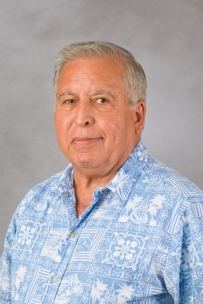
Aspy P. Palia is a Professor of Marketing at the Shidler College of Business, University of Hawaii at Manoa. He has held academic roles since 1984, including visiting professorships at institutions such as Singapore Management University, Chulalongkorn University, and the National University of Singapore. His research focuses on Marketing Decision Support Systems, Countertrade in Asia-Pacific, and experiential learning methodologies. He has published extensively in journals like European Journal of Marketing and Developments in Business Simulation and Experiential Learning , with a recent emphasis on virtual scaffolding and engagement in educational simulations. His work has earned multiple best paper awards and nominations. Dr. Palia's education includes a DBA in International Business from Kent State University (1985), an MBA from the University of Hawaii (1976), and a BS in Mechanical Engineering from the University of Bangalore (1966). His teaching spans global institutions, emphasizing strategic marketing and decision-making tools. Notable awards include the 2017 Marquis Lifetime Achievement Award and the 2011 Fellowship from the Association for Business Simulations and Experiential Learning. His research contributions bridge theoretical marketing frameworks with practical applications, particularly in leveraging technology for pedagogical innovation. Collaborations with organizations like the Japan America Institute of Management Science further underscore his engagement with global academic networks.
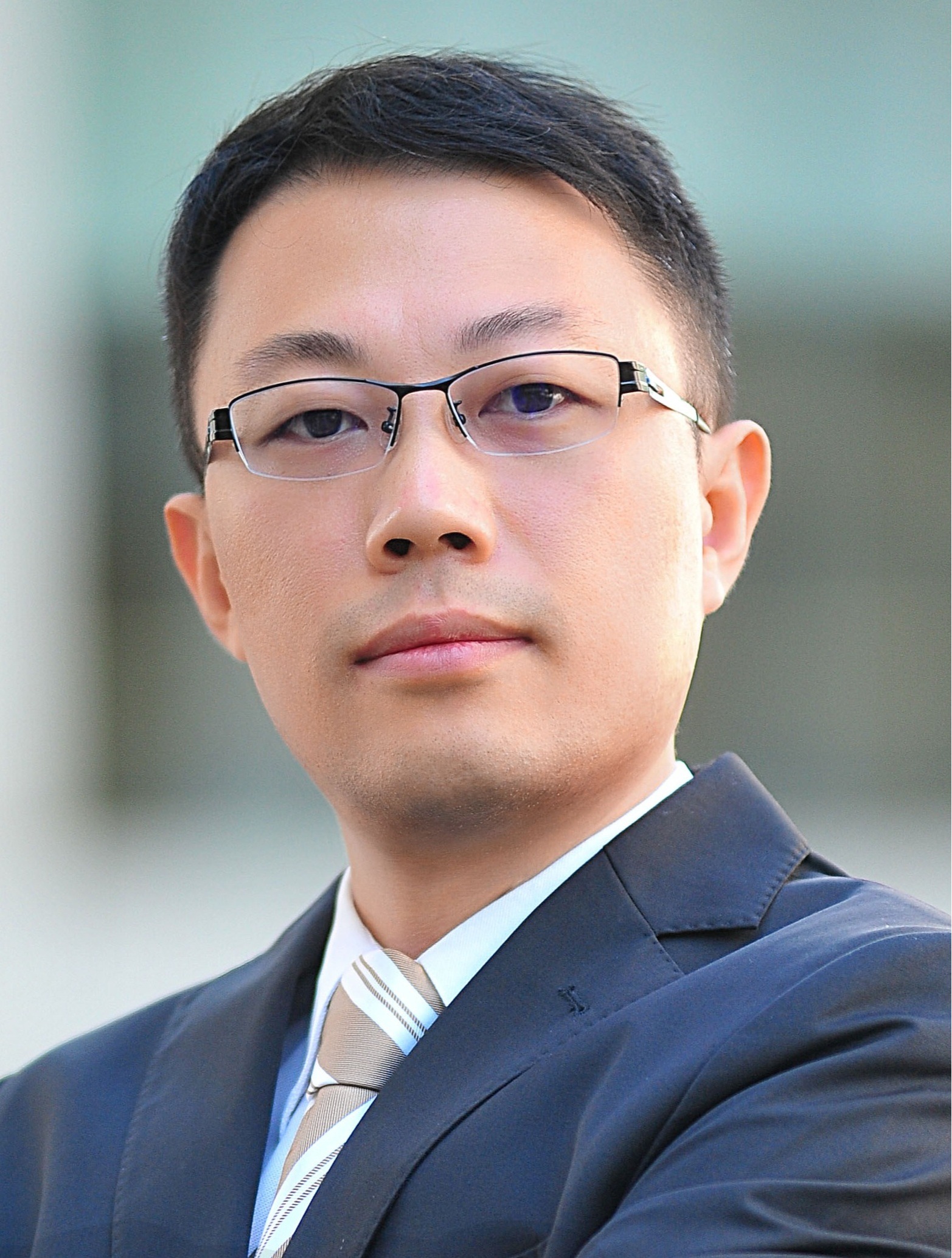
Lu Yi is a Professor at the Department of Economics, Tsinghua University School of Economics and Management , holding a CITIC Chair Professor since 2022. He is also Director of multiple research centers , including the Tsinghua University China Economic and Social Data Research Center and the Center for International Economics. A doctoral supervisor , he has guided students across institutions and academic programs. Lu Yi's education includes a BA from Fudan University's School of Life Sciences (1999) , an MA from Fudan University's School of Management (2003) , and a PhD from the University of Hong Kong's Faculty of Business and Economics (2007) . His research focuses on Chinese economy, public finance, and global economic governance , with particular emphasis on trade liberalization, institutional quality, and environmental policy. Key research areas : Trade policy impacts, productivity gains from trade, environmental regulation effects, and labor market responses to technological change Leadership roles : Editorial board member of American Economic Journal: Economic Policy , Co-Editor of China & World Economy , former Deputy Editor-in-Chief of Economic Journal Policy advisory : Expert for National Healthcare Security Administration's DIP payment system, National Council Member for Social and Economic Council His scientific awards span national and provincial levels , including the First Sun Shangqing Young Scholar Award , Pushan World Economics Outstanding Paper Youth Award , and multiple provincial social science achievement awards in Shandong, Liaoning, Zhejiang, Fujian, and Sichuan. His publications in top journals like the Journal of Public Economics , Review of Economics and Statistics , and Nature Climate Change demonstrate his influence in applied economics and policy research.
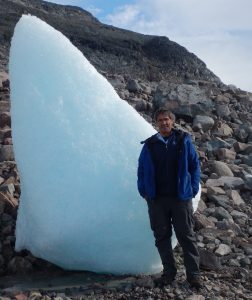
Jonathan B. Martin is a Professor at the University of Florida's College of Liberal Arts and Sciences. His research focuses on hydrogeochemical processes in diverse environments including carbonate karst aquifers, coastal systems affected by sea-level change, and deglaciated watersheds in Greenland. He leads the Research Coordination Network on Carbonate Critical Zones and holds an NSF grant for Greenland watershed studies. Education: BA in Environmental Science, Wesleyan University (1980) MS in Geology, Duke University (1987) PhD in Earth Sciences, University of California, San Diego (Scripps Institution of Oceanography) (1993) Research Interests: Martin's work examines geochemical fluxes driven by biogeochemical reactions coupled with hydrological flow. This includes: (1) Water-solute-isotope dynamics in carbonate karst aquifers like Florida's Floridan Aquifer and Bahamian/Yucatan systems; (2) Coastal aquifer-estuary exchanges impacting metal mobilization and greenhouse gas fluxes; and (3) Weathering processes in deglaciated landscapes affecting global carbon cycles. His lab develops field methods to quantify submarine groundwater discharge and contaminant transport. Publications: Recent articles demonstrate strong emphasis on climate-aquifer interactions, with recurring themes including Greenland glacial meltwater biogeochemistry, coastal karst aquifer responses to sea-level rise, and carbonate mineral reactions in global carbon cycling. Work frequently integrates field measurements with geochemical modeling. Laboratory: Directs the Hydrogeochemistry Laboratory with capabilities including ion chromatography, cavity ring-down spectroscopy, nutrient autoanalysis, and fluorescence spectrometry for studies of water-rock interactions.
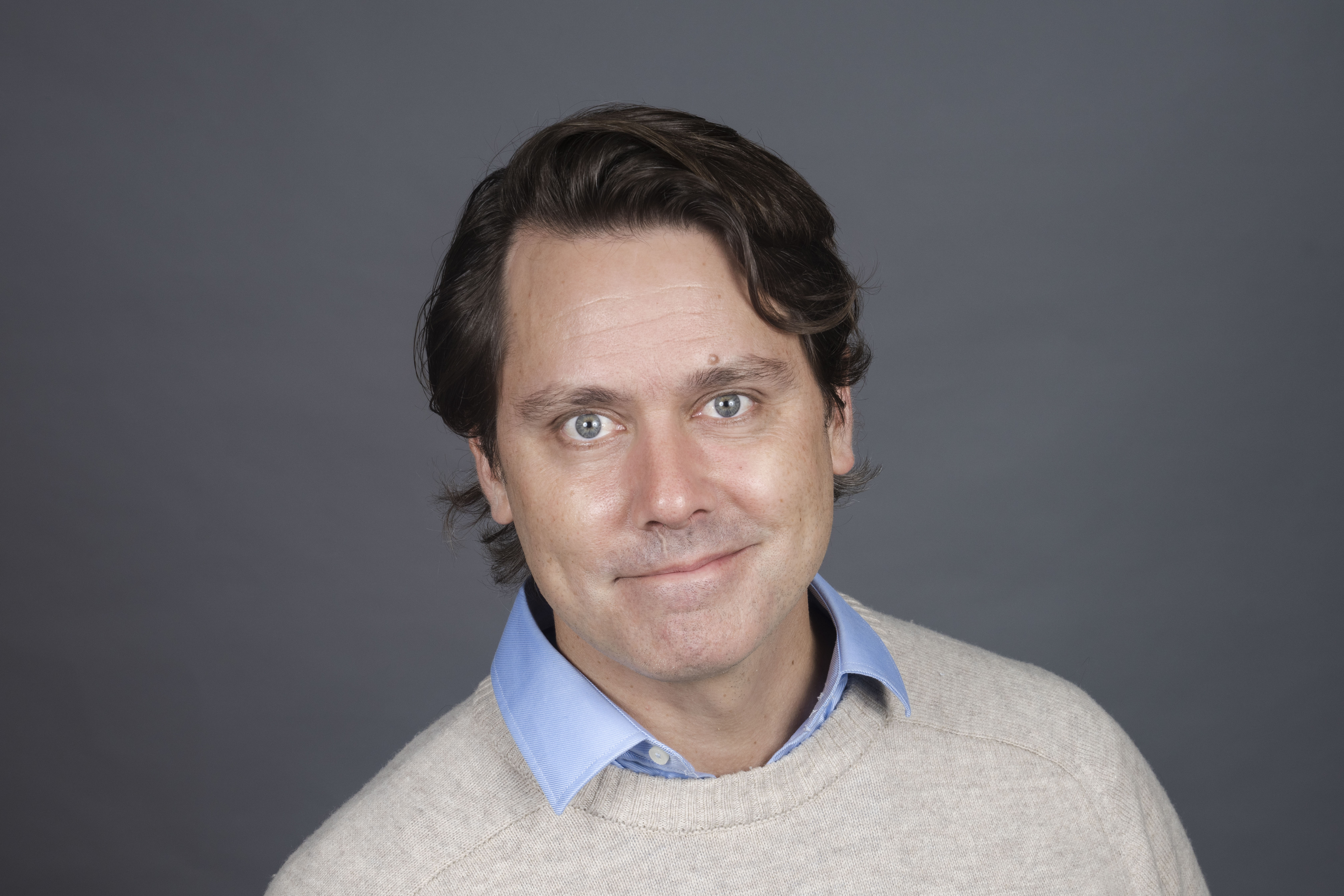
Anders Åkerman is a Professor in the Department of Economics and Finance at the UiS School of Business and Law, University of Stavanger. He is an active researcher in applied economics with a focus on labor, trade, technology, and environmental policy. His research interests span applied microeconomics , international trade , labor economics , and environmental economics . He investigates how technological change, market structure, and global shocks affect firms, workers, and policy outcomes. His work often combines empirical methods with policy relevance. The recent articles reflect a strong trend in analyzing digital transformation (e.g., broadband and trade), environmental impacts of trade and production , and economic resilience during crises such as the pandemic. His publications appear in leading journals like the Quarterly Journal of Economics and American Economic Journal: Applied Economics . He has contributed to public discourse through op-eds in Dagens Nyheter and Svenska Dagbladet , and has been involved in policy commissions like Sweden's Coronakommissionen. He regularly presents research at seminars and international conferences, including the Nordic International Trade Seminar and Stockholm Institute of Transition Economics. Anders Åkerman has advised or collaborated with several researchers and policy experts, including Torsten Persson, Magne Mogstad, and Karolina Ekholm. While formal student advisees are not listed, his collaborative work suggests active mentorship and team leadership. He is affiliated with research networks and institutes such as IFN (Research Institute of Industrial Economics) and participates in interdisciplinary teams focused on economic policy and transition. His upcoming work continues to explore the intersection of technology, environment, and labor markets.
Professor Jes Sammut is a faculty member at the University of New South Wales (UNSW) in the School of Biological, Earth & Environmental Sciences . He serves as Deputy Dean for External Engagement and leads the UNSW Aquaculture Research Group , while also holding the position of Deputy Director (International) at the Centre for Marine Science & Innovation. Additionally, he is an Honorary Research Fellow at ANSTO , where he uses nuclear tools to study seafood provenance. His research spans biological, physical, and social sciences, focusing on aquaculture solutions across Australia, Vietnam, Papua New Guinea, Indonesia, India, Thailand, and the Philippines.
Irmgard Marboe serves as Associate Professor at the University of Vienna's Institute for European, International and Comparative Law, where she is based in the Department of International Law and International Relations at the Juridicum building. Her academic leadership includes serving as Head of Austria's National Point of Contact for Space Law and Director of the Vienna International Christian-Islamic Summer University. Professor Marboe's research spans multiple critical domains of international law with particular emphasis on space law and its intersections with other legal frameworks. Her work addresses contemporary challenges including space security, international investment disputes, and the complex relationship between international legal systems and Islamic jurisprudence. She has developed significant expertise in human rights applications within diverse cultural contexts and serves as Deputy Chair of the University of Vienna's Arbitration Commission. Her scholarly output demonstrates consistent focus on emerging legal challenges in space governance and international dispute resolution. The publications she has supervised reveal growing scholarly attention to space commercialization, space debris management, and the intersection of trade regulations with space technology development. Professor Marboe maintains active professional engagement through numerous prestigious appointments including membership in the International Institute for Space Law, the International Academy of Astronautics, and the European Centre for Space Law. She previously served as Chair of the Working Group on National Space Legislation for the UN Committee for the Peaceful Use of Outer Space (2008-2012) and as Co-Rapporteur for the International Law Association's Committee on Islamic and International Law (2008-2018). She oversees a substantial academic team including Student Assistant Noa Lucienne Hasler, Project Assistant Adela Zinschitz, and is supported by Secretariat member Brigitte Weidinger. Her consultation hours are held Thursdays from 4:00-5:00 p.m., with separate appointments available during lecture-free periods.
Samuel Brazys is Associate Professor in the School of Politics and International Relations (SPIRe) at University College Dublin (UCD), where he also serves as Vice Principal for Research, Impact & Innovation in the College of Social Science & Law. He is the Editor of the Journal of International Development and has a strong research profile in international political economy and development. BA in Political Science/Economics, Marquette University MA in Economics, Indiana University MSc in Politics of the World Economy, London School of Economics PhD in Political Science, Indiana University Professional Certificate in University Teaching & Learning, UCD His research focuses on the political economy of development, with emphasis on foreign aid, foreign direct investment, Chinese development finance, and governance. He employs sub-national and spatial analysis methods, often using geo-referenced data to assess local-level impacts of development interventions in Africa, South Asia, and the Pacific. His work bridges comparative and international political economy, international organizations, and development studies. Recent publications reveal a consistent trend in analyzing the spatial and political dimensions of development finance, particularly Chinese aid and FDI, and their effects on conflict, governance, and public perceptions. His work increasingly engages with public diplomacy, as seen in studies on mask diplomacy and wolf warrior rhetoric, using large-scale text analysis of media and social media. Irish Research Council Grant: Trade Related Assistance for Development. Evidence from Micro-Level Evaluations (2018) UCD College of Human Sciences Research Funding Scheme (2015–2016) His research has had significant policy impact, notably cited by the U.S. State Department in decisions regarding Confucius Institutes. He is a member of major professional associations including the American Political Science Association and the International Studies Association. He teaches core modules in International Political Economy, Research Methods, and Governance and Development, and has coordinated thesis and internship programs. He leads a research agenda that critically examines donor behavior, recipient agency, and the political economy of global development, contributing to both academic discourse and policy debates.
Madawi Al-Rasheed is Visiting Professor at the London School of Economics (LSE) Middle East Centre, where she conducts research on political and religious change in Saudi Arabia, particularly following the 2011 Arab uprisings. She previously held the position of Professor of Anthropology of Religion at King’s College London (1994–2013), was a Research Fellow at the Open Society Foundation, and a Prize Research Fellow at Nuffield College, Oxford. She has also taught at Goldsmiths College and the University of Oxford. Her research focuses on Saudi political development, gender policies, religious reform, and civil society. She is widely published, with major works including Muted Modernists (2015), Salman’s Legacy (2018), and A History of Saudi Arabia . Her research has been supported by fellowships from the Open Society Foundation and other institutions. Al-Rasheed is a frequent contributor to international media, including BBC, CNN, CCTV, and Al-Hura, and has published op-eds in The Guardian , Foreign Policy , Al-Monitor , and Foreign Affairs . She has given seminars at Harvard University, the University of Denver, and Casa Arabe in Madrid. Saudi Arabia GCC states Anthropology Gender Islamic Politics Political Reform Her recent publications reflect a consistent focus on authoritarian resilience, religious reinterpretation, and social change in Saudi Arabia, particularly under Mohammed bin Salman. Themes include state-led modernization, repression of dissent, gender reforms, and the manipulation of nationalist discourse. Fellow of the British Academy (2020) She has advised governments and international organizations and continues to be an influential public intellectual on Gulf affairs. Although she does not appear to supervise formal students at LSE, her extensive publications and public engagement reflect significant academic mentorship and influence. She is not part of a formal lab or research team but leads independent and collaborative research initiatives.
Arianto Patunru is a Research Fellow at the Arndt-Corden Department of Economics within the Crawford School of Public Policy at the Australian National University (ANU). He joined ANU in 2012 and holds a PhD from the University of Illinois at Urbana-Champaign. His roles include coordinating the ANU Indonesia Project, overseeing policy engagements such as the Australia-Indonesia High Level Policy Dialogue, and managing the Indonesia Project on COVID-19 initiatives. Patunru previously headed the Institute for Economic and Social Research (LPEM-FEUI) in Jakarta and taught economics at Universitas Indonesia. His research focuses on international trade, economic development, globalization, and policy analysis. He has published in journals like the American Journal of Agricultural Economics , Journal of Development Studies , and Bulletin of Indonesian Economic Studies , where he serves as an editor. Patunru frequently contributes to policy debates through op-eds in platforms like East Asia Forum and The Conversation , addressing issues such as Indonesia’s economic strategy, trade policies, and climate change. Key research themes include the impact of economic reforms (e.g., Indonesia’s Omnibus Law), trade policy dynamics, and the role of foreign investment. He has explored topics like labor share declines in manufacturing, environmental policy challenges, and vaccination strategies during the pandemic. Patunru’s work bridges academic analysis with practical policy advice, emphasizing Indonesia’s integration into global value chains and the need for balanced economic strategies.
Professor Jing Meng is a leading academic at University College London's Bartlett School of Sustainable Construction, holding the position since 2023 after progressing from Lecturer (2019-2021) to Associate Professor (2021-2023). She concurrently serves as a fellow at the Cambridge Centre for Environment, Energy and Natural Resource Governance and maintains active editorial roles as Executive Editor of the Journal of Cleaner Production and Associate Editor for Journal of Geophysical Research: Atmospheres. Her research spans three interconnected domains: Energy Transitions and Technology Innovation (examining cost forecasts and structural emission declines in China), Climate Change Policies (analyzing South-South trade effects and multinational enterprise emissions), and Emission-Health-Socioeconomics Nexus (assessing air pollution impacts and integrated co-mitigation strategies). This interdisciplinary approach is reflected in her publication record across Nature family journals and PNAS. Analysis of her recent publications reveals a consistent focus on global carbon accounting methodologies, with increasing attention to subnational (city-level) analyses, health co-benefits of climate policies, and technological innovation pathways for hard-to-abate sectors. Her work frequently employs multi-regional input-output modeling to trace emissions through complex supply chains. AGU Global Environmental Change Early Career Award (2023) MIT Technology Review Innovators Under 35 Asia Pacific (2022) Clarivate Highly Cited Researcher (2020-2024) Nature Communications Top 50 Earth Sciences Article (2018) MDPI Emerging Sustainability Leader Award (2020) Environmental Research Letters Best Early Career Article (2017) Professor Meng has secured substantial funding from diverse sources including NERC, the British Council, Quadrature Climate Foundation, The Royal Society, and UCL internal grants. She leads an interdisciplinary research group focused on technology innovation and climate policy, with particular emphasis on China's role in global emissions systems. Her work directly supports Sustainable Development Goal 13 (Climate Action) through actionable policy insights.
George Nacouzi is a Senior Engineer at RAND Corporation and a Professor of Policy Analysis at the RAND School of Public Policy. He specializes in strategic defense research, focusing on space systems resilience, missile defense, hypersonic technologies, and nuclear command systems. His work bridges technical analysis with policy implications, particularly in integrating commercial space services into U.S. military operations. Education: Ph.D. in Mechanical and Aerospace Engineering from the University of California, Irvine. Prior to RAND, he held senior engineering roles at TRW and Northrop Grumman, analyzing space and missile defense systems. He also taught space-related courses at UC San Diego and Northrop Grumman. Research Interests: Space domain awareness, commercial space contributions to national security, orbital operations, small satellite applications, and the impact of emerging technologies on strategic stability. His work emphasizes non-materiel resilience strategies and policy frameworks for space systems. Key Article Trends: Recent publications focus on AI/ML applications for space domain awareness, commercial space integration challenges, and hypersonic missile nonproliferation. He explores how evolving technologies disrupt traditional military domains and influence global stability. Scientific Awards: None explicitly mentioned in provided texts. Advising & Grants: No formal advisees listed, but leads research projects at RAND’s Project AIR FORCE and National Security Research Division. His work is funded by U.S. Department of Defense and Congressional mandates. Labs/Teams: Affiliated with RAND’s Project AIR FORCE and National Security Research Division, collaborating with U.S. Space Force and Department of the Air Force on strategic initiatives.
Prof. Dr. Roderick Lim is an Associate Professor at the Biozentrum, University of Basel , where he leads a research group since 2014. His work bridges biophysics, nanotechnology, and molecular biology , focusing on the nuclear pore complex (NPC) and mechanobiology of cells . He develops biomimetic systems for selective molecular transport and ARTIDIS , a nanomechanical tissue diagnostic platform commercialized for breast cancer prognosis . Education : BSc (UNC Chapel Hill), PhD (NUS/IMRE Singapore), Postdoc (Swiss Nanoscience Institute) Positions : Argovia Professor (2014–present), Tenure Track Asst. Prof. (2009–2013), Postdoc (2004–2008) His research on NPC transport selectivity reveals how karyopherins modulate the FG Nup barrier via multivalent interactions, with implications for viral entry and Alzheimer’s disease . His ARTIDIS platform uses atomic force microscopy to detect cancer via tissue softness, linking hypoxia to metastasis . Recent 2025 publications explore bacterial nanoharpoon defense mechanisms and DNA origami-based NPC mimics . Scientific Awards : Pierre-Gilles de Gennes Prize (2008), A*STAR Fellowship (2004) Collaborations : NCCR Molecular Systems Engineering, NanoTera, KTI He mentors PhD students in institutions across Switzerland, Singapore, Sweden, and the UK , with alumni working on polymersome delivery, mechanotransduction, and pathogen transport . His lab pioneered high-speed atomic force microscopy for real-time NPC dynamics and plasmonic nanopores for synthetic biology applications.