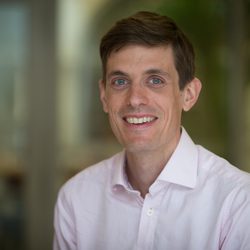
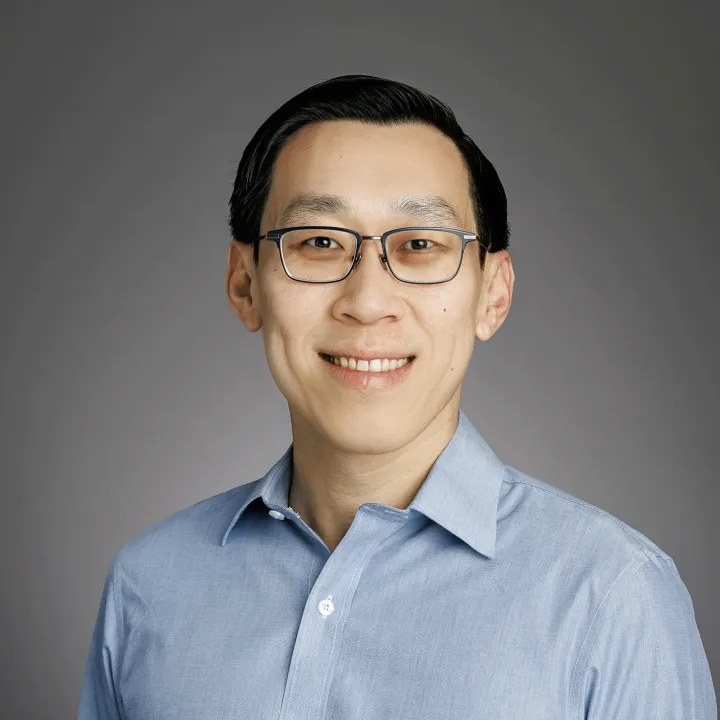
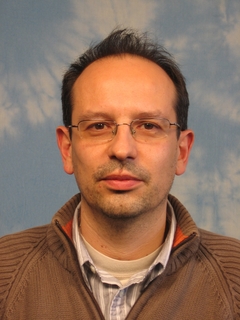
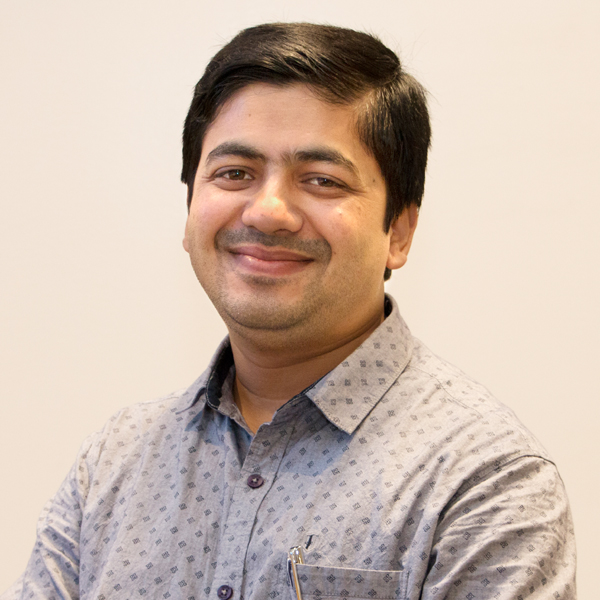
Michael A Osborne is Professor of Machine Learning at the University of Oxford and leads the Bayesian Exploration Lab . He serves as Director of the EPSRC Centre for Doctoral Training in Autonomous Intelligent Machines and Systems and co-directs the Oxford Martin AI Governance Initiative. His research focuses on Bayesian optimization, Gaussian processes, and probabilistic numerics with applications in quantum devices, battery modeling, and AI governance. Key Positions: Professor of Machine Learning, University of Oxford Official Fellow, Exeter College Co-founder of Mind Foundry Lead Researcher, Oxford Martin Programme on Technology and Employment Research Themes: Probabilistic modeling for quantum systems Uncertainty quantification in energy storage AI safety and societal impact analysis Automated experimental design Quantum device calibration Probabilistic numerical methods Technical Contributions: Bridging reality gap in quantum devices Efficient Bayesian quadrature techniques Personalized neurostimulation algorithms Automated measurement protocols Quantum-classical hybrid ML
Prof. Harry Hyungryul Baik is a Tenured Associate Professor at KAIST's Department of Mathematical Sciences since 2017. He holds a PhD from Cornell University (2014) and a B.S. from KAIST (2009), advised by William Thurston, John Hubbard, and Dylan Thurston. His research focuses on geometric topology, geometric group theory, and low-dimensional topology, with notable contributions to mapping class groups, Kleinian groups, and Teichmüller theory. Education: PhD in Mathematics (Cornell, 2014), B.S. in Mathematics (KAIST, 2009). Key research areas include asymptotic translation lengths, laminar groups, and circular orders of groups. He co-leads the KAIST-KIAS joint research group 2K-GATE as Director, emphasizing collaboration between topologists. Research highlights: Characterization of Fuchsian groups via laminations, unsmoothability of mapping class group actions on 1-manifolds, and exponential torsion growth in random 3-manifolds. His work bridges topology with dynamical systems and geometric group theory, often involving collaborations with institutions like KIAS and MPIM. Awards include the Sangsan Prize (2018), Young-KAST membership (2020–2023), and multiple grants from Samsung and POSCO. He advises 7 PhD students and has mentored 15+ alumni, many of whom hold postdoc positions globally. His lab actively hosts conferences like the KAIST Geometric Topology Fair. Labs/Teams: Director of 2K-GATE (KAIST-KIAS), core member of the KAIST Topology Research Group, collaborator with international networks including the Harvard-MIT-Princeton topology axis.
Andre Wibisono serves as Assistant Professor in Yale University's Department of Computer Science with a secondary appointment in Statistics & Data Science, joining the faculty in 2021 after postdoctoral research at University of Wisconsin-Madison and Georgia Institute of Technology. His educational background includes: Ph.D. in Computer Science, UC Berkeley M.A. in Statistics, UC Berkeley M.Eng. in Computer Science, MIT S.B. in Mathematics and Computer Science, MIT Wibisono's research focuses on algorithm design for machine learning through optimization, sampling, and game theory , leveraging dynamical systems and information theory to develop accelerated discrete-time algorithms from continuous dynamics. His work provides theoretical foundations for efficient machine learning systems with applications in generative modeling and constrained optimization. Recent publications (2023-2025) demonstrate consistent innovation in Hamiltonian-based optimization , constrained-space sampling , and min-max game convergence , characterized by rigorous mathematical analysis connecting continuous dynamics to discrete algorithms. Key trends include randomized integration for acceleration, phi-divergence convergence guarantees, and symplectic geometry applications to mirror descent. Scientific recognition includes: NSF CAREER Award for developing algorithmic frameworks bridging continuous and discrete dynamics He actively mentors current students (Siddharth Mitra, Kaylee Yang, Jane Lee, Qiang Fu, Peter Wang) and has guided two postdocs to faculty positions. Research is funded through the NSF CAREER award and collaborative CIF grants focused on Hamiltonian dynamics for sampling and optimization. His Yale research group develops theoretical foundations for next-generation machine learning algorithms, emphasizing mathematical rigor in optimization and sampling with applications to generative modeling and constrained inference problems.
Vladimir Spokoiny is a Professor at the Departments of Mathematics and Economics of the Humboldt University of Berlin and Head of the Research Group "Stochastic Algorithms and Nonparametric Statistics" at the Weierstrass Institute for Applied Analysis and Stochastics (WIAS) in Berlin, Germany. His research spans multiple areas of statistics, machine learning, and financial mathematics, with significant contributions to nonparametric statistics, high-dimensional data analysis, and statistical methods in finance. Spokoiny received his M.Sc. in applied mathematics from the Moscow Institute of Railway Engineering in 1981 and his Ph.D. in mathematics from Lomonosov Moscow State University in 1988. He completed his Habilitation at Humboldt University in 1996. His academic career includes positions at the All-Union Institute of Railway Transport in Moscow, the Institute for Information Transmission Problems in Moscow, and the Institute for Applied Analysis and Statistics in Berlin before joining the Weierstrass Institute and Humboldt University where he has been a professor since 2002. Spokoiny's research focuses on adaptive nonparametric smoothing and hypothesis testing, high dimensional data analysis, statistical methods in finance, image analysis with applications to medicine, classification, and nonlinear time series. His work often addresses the challenges of nonstationarity in time series data and develops innovative methods for volatility estimation and risk management. He has made significant contributions to the development of adaptive weights smoothing procedures, which have applications in image processing, community detection, and manifold learning. His recent work has expanded into high-dimensional statistics, Bayesian inference, and optimization methods for machine learning, with publications demonstrating novel approaches to Gaussian approximation, Laplace methods, and statistical inference in non-Euclidean spaces. Spokoiny has supervised numerous PhD students including Oliver Reiss, Danilo Mercurio, Ying Chen, Elmar Diederichs, and Mstislav Elagin, whose research has focused on mathematical finance, time series analysis, and statistical methods. He serves as an Associate Editor for The Annals of Statistics (since 2004) and Statistics and Decisions (since 2002), and has previously served on the editorial board of the Journal of Statistical Planning and Inference. His professional activities include reviewing for major statistical journals including Annals of Statistics, Bernoulli, Econometrica, and Journal of American Statistical Association, as well as reviewing grant proposals for the National Science Foundation (USA), German Research Foundation, and Netherlands Organisation for Scientific Research. Spokoiny is a member of several professional societies including the International Statistical Institute, American Statistical Association, Institute of Mathematical Statistics, and Bernoulli Society. He is fluent in Russian (mother tongue), English, and German, and has good knowledge of French. His research group at WIAS focuses on developing novel statistical methodologies with applications across various scientific domains, particularly emphasizing adaptivity and robustness in complex data environments. The group's work has significant implications for financial risk management, medical imaging, and machine learning applications, with recent publications addressing fundamental questions in high-dimensional statistics and nonparametric inference.
Alex Blumenthal is an Assistant Professor in the School of Mathematics at the Georgia Institute of Technology since Fall 2020. His academic background includes a Ph.D. from New York University (2016) with a dissertation titled 'Nonuniformly hyperbolic theory for Banach space mappings.' Prior to joining Georgia Tech, he held positions as an instructor at the University of Maryland, teaching courses in probability theory, linear algebra, and precalculus, and served as a recitation leader at New York University for courses in chaos theory, differential equations, and analysis. Blumenthal's research focuses on dynamical systems and ergodic theory, with specialization in: Chaotic behavior in deterministic and stochastic systems Smooth ergodic theory and SRB measures Lyapunov exponents in random dynamical systems Stochastic fluid mechanics and turbulence modeling Infinite-dimensional dynamical systems on Banach spaces Statistical properties of complex systems His work bridges abstract mathematical theory with physical applications like fluid dynamics and statistical mechanics. Analysis of his recent publications shows strong emphasis on stochastic dynamics, Lyapunov exponents, and fluid mechanical systems, with mathematical techniques drawn from ergodic theory, functional analysis, and probability theory. His publications frequently appear in top mathematical physics and dynamics journals. No scientific awards or honors are mentioned in the source materials. Similarly, no information is available regarding research grants, student advising, or laboratory affiliations.
Rima Alaifari is currently an Assistant Professor for Applied Mathematics at ETH Zürich , where she works on applied analysis, inverse problems, and scientific machine learning. Her research emphasizes stability analysis and regularization of inverse problems, applied harmonic analysis, phase retrieval, and operator learning. She is an associated member of the ETH AI Center and will transition to a full professorship at RWTH Aachen University in 2025 as Chair of Analysis and its Applications. Education : PhD in Mathematics (2010–2014, Vrije Universiteit Brussel); MSc in Applied and Industrial Mathematics (2005–2010, Johannes Kepler University) Research Focus : Stability estimates for inverse problems, phase retrieval in wavelet/Gabor transforms, operator learning with neural networks, and deep learning robustness. Article Trends : Her recent work bridges harmonic analysis with machine learning, focusing on phase retrieval stability, adversarial perturbations in imaging, and mathematically grounded neural operator frameworks like ReNO and CNO. Advising : She has supervised PhD students like Tandri Gauksson and Matthias Wellershoff. Former postdoctoral researchers include Francesca Bartolucci (now at TU Delft) and Jesse Railo (Finnish Inverse Prize winner).
Prabir Burman is a Professor in the Department of Statistics at the University of California, Davis, with a career spanning over three decades. His research focuses on nonparametric function estimation, model fitting/selection, image analysis, time series, and discrete data. Education: Ph.D. (1982) and Master of Statistics (1977) from University of California, Berkeley; Bachelor of Statistics (1976) from Indian Statistical Institute, Calcutta. His work bridges theoretical statistics and applied problems, including ecological studies (e.g., coyote parasites, mountain lion tracking), biomedical research (e.g., metabolic syndrome in bipolar patients), and time series forecasting. He has secured multiple NSF and NSA grants for projects on multivariate analysis, shape modeling, and covariance estimation. Recent publications highlight his expertise in predictive model fitting, stock return analysis, and stroke survivor studies. While not explicitly listing awards, his editorial roles (e.g., Journal of Multivariate Analysis) and collaborative grants underscore his academic leadership.
Francesco Cellarosi is an Associate Professor in the Department of Mathematics and Statistics at Queen's University, within the Faculty of Arts and Science. His research focuses on the intersection of dynamics, probability theory, ergodic theory, number theory, and mathematical physics. He investigates how classical number-theoretic objects exhibit random features, employing dynamical methods such as spectral theory of group actions and analysis of flows on homogeneous spaces. Educational Background: PhD in Mathematics (2011), Princeton University MSc in Mathematics (2007), Princeton University Laurea Magistrale (Master's) in Mathematics (2006), Università degli Studi di Bologna Research Interests: Dr. Cellarosi explores probabilistic phenomena in number theory, including theta sums, quadratic Weyl sums, and k-free integers. His work bridges ergodic theory and quantum mechanics, analyzing autocorrelation functions and spectral properties of physical systems. Key themes include limit theorems, random processes of number-theoretic origin, and applications to statistical mechanics. Professional Profile: He teaches advanced courses such as MATH 892 and MATH/MTH 328. His office is Jeffery Hall 506, and he maintains a Google Scholar profile and personal website. No awards are explicitly listed, but his extensive publication record reflects scholarly contributions. Labs/Teams: While no specific labs are mentioned, his collaborations span pure mathematics and mathematical physics, often involving interdisciplinary dynamics and probability.
Mark Haskins is a Professor of Mathematics at Duke University, affiliated with the Trinity College of Arts & Sciences. He holds a Ph.D. from the University of Texas at Austin (2000) and has held academic positions at institutions including the University of Bath and Imperial College London. His research focuses on differential geometry, special holonomy metrics, and geometric flows, particularly G₂-holonomy manifolds and Laplacian flow solitons. He is a Fellow of the Learned Society of Wales (2014). Research interests include Riemannian geometry, Einstein manifolds, and geometric analysis. Notable contributions involve constructing G₂-manifolds from asymptotically conical Calabi-Yau 3-folds and studying solitons in Laplacian flow. He has led grants from the Simons Foundation (2016–2024) and organized programs like the 2024 Special Geometric Structures and Analysis at MSRI. Teaching includes courses like Real Analysis II and Smooth Manifolds. He mentors students, including Yijia Liu and Anuk Dayaprema, and collaborates with researchers like Nordström and Foscolo. Professional activities include roles as Director of Graduate Studies at Duke and service in academic leadership.
Daniel M Liberzon is the Richard T. Cheng Professor in the Department of Electrical and Computer Engineering and a Professor at the Coordinated Science Laboratory (director of the Decision and Control group) at the University of Illinois Urbana-Champaign. He also holds an affiliate appointment in the Department of Mathematics. Ph.D. in Mathematics from Brandeis University (1998), advised by Roger W. Brockett (Harvard) Undergraduate studies in Mathematics at Moscow State University (1989-1993) His research interests focus on theoretical and applied aspects of nonlinear, switched, and hybrid systems with limited information. Key areas include: Stability analysis via Lyapunov functions and Lie algebras Finite-data-rate control and topological entropy Robust synchronization and observers Stochastic switched systems Supervisory control for uncertain systems Recent scientific awards include: IFAC Fellow (2016) IEEE Fellow (2013) AACC Donald P. Eckman Award (2007) IFAC Young Author Prize (2002) NSF CAREER Award (2002) He has taught graduate courses such as ECE 517 (Nonlinear and Adaptive Control), ECE 553 (Optimum Control Systems), and ECE 586 DL (Hybrid Systems and Control). Current sponsored projects include NSF grants on switching control and AFOSR MURI on hybrid dynamics.
Professor Lilian M. de Menezes is a Professor of Decision Sciences at Bayes Business School within the Faculty of Management at City St George's, University of London. Her expertise spans Management Science, Operations Management, Statistics, and Energy Markets. She holds a BSc and MSc from Pontifícia Universidade Católica in Brazil and a PhD from London Business School. Lilian's research focuses on forecasting methodologies, energy market integration, quality management, and flexible work arrangements. She has contributed to studies on healthcare performance measurement, workforce optimization, and sustainability in business excellence models. Her work bridges academic research with practical applications in industries like energy and healthcare. She has received notable awards, including the 2015 EEX Excellence Award for Melanie Houllier's thesis on European electricity markets and the 2014 Best Paper Award for analyzing job satisfaction and quality management links. Her affiliations include the European Operations Management Association and the Royal Statistical Society. Lilian's research also explores flexible working policies and their impact on employee performance and well-being. Her recent work addresses challenges in energy market forecasting and sustainable organizational practices. She maintains a visiting appointment at ESCP Europe’s Research Centre for Energy Management.
Prof. Philippe Michel is a Professor in the Mathematics Institute at the École Polytechnique Fédérale de Lausanne (EPFL), where he leads research in the Number Theory group (TAN). His office is located at MA C3 634, Station 8, 1015 Lausanne, Switzerland. Michel received his education at ENS Cachan and obtained his PhD from Université Paris XI in 1995 under the supervision of E. Fouvry. His academic career includes positions as maître de conférence at Université Paris XI (1995-1998), full professor at Université Montpellier II (until 2008), before joining EPFL. Prof. Michel's research spans across analytic number theory and related fields. His work integrates diverse mathematical techniques including arithmetic geometry, exponential sums, sieve methods, automorphic forms and representations, L-functions, and more recently, ergodic theory. His research has significant implications for understanding the distribution of prime numbers, properties of L-functions, and connections between number theory and other mathematical disciplines. Michel has made substantial contributions to the study of Kloosterman sums, trace functions, and the analytic properties of families of L-functions. Peccot-Vimont prize Member of the Institut Universitaire de France Invited speaker at the 2006 International Congress of Mathematicians Member of the Academia Europaea (Academy of Europe) since 2011 Fellow of the American Mathematical Society since 2012 Prof. Michel serves on the editorial boards of several prestigious mathematical journals including Archiv der Mathematik, Journal of Algebra and Number Theory, Journal of the European Math. Society, and Journal of Number Theory. His research has been consistently funded by major mathematical institutions, supporting his work on analytic number theory and its applications. At EPFL, Prof. Michel leads the Number Theory group (TAN) within the Mathematics Institute, fostering research collaborations and mentoring young mathematicians. His team focuses on cutting-edge problems in analytic number theory, connecting with broader mathematical fields and maintaining strong international collaborations.
Max Wardetzky is a Professor at the Institute for Numerical and Applied Mathematics within the Faculty of Mathematics and Computer Science at the University of Göttingen, Germany. His office is located at Lotzestraße 16-18, 37083 Göttingen, and he can be reached via email at wardetzky@math.uni-goettingen.de or by phone at +49 551 39 26778. Professor Wardetzky leads the Discrete Differential Geometry Lab at the University of Göttingen, where he conducts research at the intersection of mathematics, computer science, and geometry processing. His work bridges theoretical foundations with practical applications in computer graphics and scientific computing. His primary research interests include: Applied Geometry Discrete Differential Geometry Numerical Analysis Geometry Processing Physical Simulation Computer Graphics Professor Wardetzky's extensive publication record demonstrates significant contributions to the field of discrete differential geometry and its applications. His work shows a consistent focus on developing mathematically rigorous yet computationally efficient methods for geometric problems. Key trends in his research include the development of discrete analogues of smooth geometric objects, the study of convergence properties between discrete and continuous models, and the application of these methods to problems in computer graphics and physical simulation. Professor Wardetzky has made substantial contributions to the theoretical foundations of discrete differential geometry while maintaining strong connections to practical applications. His work on discrete Laplacians, curvature approximations, and geometric flows has influenced both theoretical mathematics and practical geometry processing algorithms.
László Kozma is an Assistant Professor at the Theoretical Computer Science group of the Institute of Computer Science (Freie Universität Berlin). He obtained his PhD from Saarland University under Raimund Seidel, followed by postdoctoral positions at Tel Aviv University and TU Eindhoven. His research focuses on self-adjusting data structures , adaptive algorithms , and combinatorial optimization with applications to problems like the Traveling Salesman Problem, binary search trees, and geometric data structures. Academic Affiliation: Freie Universität Berlin (since 2018) Education: PhD in Computer Science (Saarland University, 2016); postdoc at Tel Aviv University and TU Eindhoven. His work explores the intersection of data structures, combinatorial algorithms, and geometric methods. He has made significant contributions to problems involving pattern-avoidance in inputs, saddlepoint detection , and self-adjusting heaps . Key areas include: Adaptive algorithms for pattern-avoiding inputs Optimal tree and heap structures Geometric and stochastic approaches to optimization Complexity analysis of classical algorithms Recent publications highlight efficient solutions for exponential cut problems (ESA 2025), balanced TSP partitioning (EuroCG 2025), and randomized saddlepoint algorithms (ESA 2024). His research often bridges theory and practice, exemplified by the smooth heap implementation and fun projects like Recursi and Cuckoo Hashing visualization.
Monowar Bhuyan is an Associate Professor in the Department of Computing Science at Umeå University, Sweden, leading the Cyber Analytics and Learning Group within ADSLab. He holds a Ph.D. in Computer Science from Tezpur University and has held academic positions at Assam Kaziranga University and Umeå University. His research focuses on machine learning, anomaly detection, edge AI, and distributed systems security. He has secured over 35 MSEK in grants from WASP, STINT, and EU Horizon programs. Education Ph.D. in Computer Science and Engineering, Tezpur University (2014) M.Tech. in Information Technology, Tezpur University (2009) B.E. in Computer Science and Engineering, IETE (2007) Research Interests Distributed/Federated/Responsible Machine Learning Cybersecurity and Anomaly Detection in Edge Clouds AI for DDoS Defense and Cyber Resilience Edge AI and Serverless Computing Recent Contributions His recent work addresses secure federated learning, DDoS attack detection in cloud-edge systems, and responsible AI. Key publications include novel frameworks for VSI-DDoS detection and federated learning optimizations. Awards & Grants Best Paper Awards at ICONIP 2023 and ACM ICACCI 2012 WASP NEST Grant (AIR2 Project, 5 MSEK) EU Horizon Europe Grant (SovereignEdge.Cognit, 8.27 MSEK) Lab & Collaborations He leads the Cyber Analytics and Learning Group (ADSlab), collaborating with institutions like KTH, Linköping University, and Nara Institute of Science and Technology (NAIST). The lab focuses on AI-driven security solutions for distributed systems.