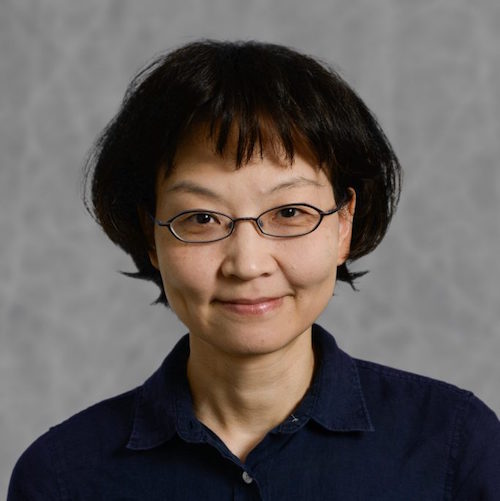
Tom Harvey is an Associate Professor in Geoscience and Course Director for Geology with Palaeontology at the University of Leicester, affiliated with the School of Geography, Geology, and the Environment. He holds a BSc in Geology and Biology from the University of Bristol (2003), an MSc in Palaeobiology (2004), and a PhD from the University of Cambridge (2009). His research focuses on early animal evolution, environmental change, and palaeobiology, with over 35 publications in journals like Nature , PNAS , and Geology . Dr. Harvey has held roles including NERC Postdoctoral Researcher at Leicester/Cambridge and Junior Research Fellow at Sidney Sussex College, Cambridge. He teaches geology and palaeobiology, supervises graduate students, and served as Council Member and Trustee of the Palaeontological Association. He earned a Postgraduate Certificate in Academic Practice (2016) and became a Fellow of the Higher Education Academy.
Helene Hisken is a Research Fellow at the Department of Physics and Technology, University of Bergen. She holds a PhD in Physics and Technology (2018) focused on turbulence effects in gas explosions. Her work bridges experimental studies and computational modeling, with expertise in CFD simulations, hydrogen safety, and risk assessment for industrial explosion scenarios. Key affiliations include Gexcon AS, a leading explosion safety consultancy. Education : Doctoral degree (Investigation of turbulence effects in gas explosions), University of Bergen, 2018. Previous academic background in physics and engineering (details not explicitly provided in text). Research Focus : Modeling gas explosions, hydrogen safety, CFD analysis of fuel-air mixtures, and mitigation strategies in complex geometries. Her work addresses real-world challenges in industrial explosion risk assessment, leveraging large-scale experiments and advanced computational tools like FLACS and PDRFoam. Funding & Collaborations : Involved in Norwegian Research Council-funded projects (e.g., #327009, #326281). Collaborates with institutions like DNV Spadeadam Research and Indian Institute of Technology, Madras. Labs & Teams : Affiliated with Gexcon AS and the University of Bergen's explosion safety research teams, contributing to both academic and industrial safety solutions.
Dr. Cheryl Hurkett is a teaching-focused Lecturer in Natural Sciences at the University of Leicester's Department of Genetics and Genome Biology. She specializes in curriculum design and innovative teaching practices within STEM education, particularly emphasizing Research-Based Learning and Problem-Based Learning approaches. She holds a Postgraduate Certificate in Academic Practice in Higher Education and is a Senior Fellow of the Higher Education Academy. Dr. Hurkett's academic journey began with a first-class MPhys Hons in Physics with Astrophysics from the University of Leicester (2004), followed by a PhD in X-Ray Astronomy (2008). Her early research involved analyzing Gamma Ray Burst (GRB) data from NASA's Swift mission as part of an international collaboration. She transitioned to education-focused research, exploring pedagogical strategies such as student-led journals, interdisciplinary collaboration, and employability integration in degree programs. Her publications span topics like the Research-Teaching Nexus, student-instructor partnerships, and global academic collaborations. Notable contributions include frameworks for embedding employability skills and pioneering paperless degree systems. She actively contributes to academic development initiatives, including the UK Teaching Fellow community. Dr. Hurkett's work bridges astrophysical research and pedagogical innovation, reflecting her dual expertise in STEM disciplines and higher education practices. She remains committed to enhancing student engagement and academic excellence through collaborative, interdisciplinary approaches.
Paul S. Smith is a Research Professor Emeritus at the University of Arizona, affiliated with Steward Observatory. He has been a member of the observatory since 1986, focusing on studies of active galactic nuclei (AGN) using ultraviolet, optical, and infrared observations from space-based telescopes like Hubble and Spitzer, as well as ground-based polarimetry. His research explores dust-obscured AGN nuclei, connections between optical polarization and radio/gamma-ray behavior in blazars, and telescope operations including MIPS instrument calibration on Spitzer. Key research areas include cosmology, extragalactic astronomy, instrumentation development, quasar studies, and transient phenomena. His work combines observational astronomy with advanced data analysis techniques to understand the dynamics and structures of high-energy astrophysical objects. Recent publications highlight studies on supernova polarization, quasar variability, gamma-ray blazar flares, and interdisciplinary work in occupational therapy adaptations. Despite no explicitly listed awards or grants, his contributions to observational astronomy and instrument calibration are significant. He is actively involved in collaborative projects like the Sloan Digital Sky Survey Reverberation Mapping Project and telescope operations at Steward Observatory.
Feike C. Drost is an Associate Professor in Mathematical Statistics and Quantitative Finance at Tilburg University's Department of Econometrics & Operations Research within the Tilburg School of Economics and Management. His research focuses on statistical aspects of financial models including semiparametric time series analysis, properties of diffusion models, and discrete-continuous time model relationships. Research Interests: Mathematical statistics, quantitative finance, time series analysis, financial modeling, semiparametric methods, and statistical properties of diffusion processes. Teaching: Current courses include Probability and Statistics, Statistics for Econometrics, Life Insurance, and Data Analysis. He has supervised numerous BSc, MSc, and PhD students. Recent Publications: Focus on unit root testing methodologies, panel data analysis, and asymptotic inference for financial models with cross-sectional dependencies and state-dependent intensities.
Scott Jackson is an Associate Professor in the Department of Aerospace Engineering at Texas A&M University, part of the College of Engineering. His research focuses on detonation physics, combustion, and energetic materials, with applications in propulsion systems and defense technologies. He has been recognized with several awards, including the Artistic Merit Award and Los Alamos National Lab Distinguished Performance Award. Education: Ph.D., Aeronautics with minor in Geophysics, California Institute of Technology (2005) M.S., Aeronautics, California Institute of Technology (2000) B.S., Mechanical Engineering, Magna Cum Laude, Brown University (1999) Research interests include shock and detonation physics, energetic materials, combustion, and propulsion. He explores phenomena such as detonation product scaling, high explosives performance under varying conditions, and the dynamics of reactive flows. His work contributes to advancements in propulsion systems, explosion hazard analysis, and defense technologies. Recent publications emphasize experimental and computational studies of detonation dynamics in various materials, including polymer epoxies and high explosives. Key themes include the effects of temperature, confinement, and material composition on detonation performance, as well as the development of advanced diagnostic techniques for measuring explosive behavior under extreme conditions. Awards: Artistic Merit Award, Central States Section Combustion Art Competition (2021) Los Alamos National Lab Distinguished Performance Award (2017, 2012) National Nuclear Security Administration Defense Programs Award of Excellence (2014, 2012) Advising and grants: No current advisees listed. Prospective students are encouraged to contact Prof. Jackson (US citizenship may be required for graduate support). No grants explicitly listed in provided texts. Labs/Teams: Leads the Detonation Physics Laboratory at Texas A&M, focusing on high-speed combustion phenomena and energetic material performance.
Susannah Porter is a Professor of Earth Science at the University of California, Santa Barbara (UCSB). She has served as Department Chair from 2021 to 2024. Her research focuses on the evolution of early life, particularly the rise of complex eukaryotes and skeletal animals, and the interplay between environmental changes like Snowball Earth events and biological innovation. She holds a B.S. in Mathematics from Yale University (1995) and a Ph.D. in Biology from Harvard University (2002). After a NASA Astrobiology postdoc at UCLA, she joined UCSB in 2003. Her research interests span biogeochemistry, paleobiology, and geobiology, with a focus on Proterozoic and early Paleozoic ecosystems. Key topics include microfossil preservation, skeletal mineralogy, and environmental drivers of early eukaryote diversification. She has pioneered studies on organic-walled microfossils and their isotopic signatures to reconstruct ancient environments. Education: Bachelor’s in Mathematics, Yale University (1995) Ph.D. in Biology, Harvard University (2002) Porter’s work has been recognized with fellowships from the Paleontological Society and Geological Society of America, as well as UCSB’s Distinguished Teaching Award. Her lab advises graduate students exploring topics like Tonian microfossil diversity and Proterozoic environmental dynamics. Her collaborative projects include studies on Cambrian Explosion tempo and geochemical proxies for ancient oxygenation. She contributes to initiatives like the Sedimentary Geochemistry and Paleoenvironments Project, advancing interdisciplinary understanding of Earth’s early biosphere.
Waruna Kulatilaka is a Professor and Associate Department Head in Mechanical Engineering at Texas A&M University's College of Engineering. He holds the Holdredge/Paul Professorship and is a Chancellor EDGES Fellow. Research interests span optical diagnostics, laser spectroscopy, combustion, hypersonics, and propellants. Educational background includes: Ph.D. in Mechanical Engineering, Purdue University (2006) M.S. in Mechanical Engineering, Texas A&M University (2002) B.Sc. in Mechanical Engineering, University of Moratuwa (2000) Publications focus on advanced diagnostic techniques for combustion and fluid dynamics, with recent work in ammonia/hydrogen flames, plasma diagnostics, and hypervelocity impacts. Awards include the AIAA Aerodynamic Measurement Technology Innovation Award (2024) and ASME Outstanding Technical Contribution Award (2012).
Professor Tie Liu is a faculty member in the Department of Electrical & Computer Engineering at Texas A&M University, holding the rank of Professor. His academic affiliations include the College of Engineering. He has been a recipient of the NSF CAREER Award (2009), recognizing his contributions to information theory and related fields. Education: Liu Tie holds a Ph.D. in Electrical & Computer Engineering from the University of Illinois at Urbana-Champaign (2006), preceded by an M.S. from the same institution (2004) and an M.S. and B.S. from Tsinghua University (2000 and 1998, respectively). Research Interests: His work focuses on Information Theory , Statistical Information Processing , and Machine Learning . These areas underpin his exploration of data clustering, signal processing, and algorithmic optimization in complex systems. Recent Publications: Liu Tie's recent work (2025) includes studies on protostellar core dynamics, molecular cloud structure, and magnetic field configurations in star-forming regions. His articles highlight advancements in understanding turbulence-driven shocks, core collisions, and outflow mechanisms in massive star-forming environments. Awards: The NSF CAREER Award (2009) underscores his contributions to theoretical and applied information science. Labs/Teams: While no specific lab names are mentioned, his research aligns with large-scale astronomical surveys like ALMASOP, ALMAGAL, and BISTRO, indicating collaborative work in observational astrophysics and computational modeling.
Bhaskar Vajipeyajula is an Assistant Professor in the Department of Engineering Technology & Industrial Distribution at Texas A&M University's College of Engineering. His research focuses on additive manufacturing processes, material behavior under various conditions, and sustainable construction materials. Key areas include optimizing manufacturing parameters for dissimilar materials, analyzing fracture mechanics in thermoplastics, and developing energy-efficient production systems. He also explores robotics applications in construction and advanced modeling techniques for civil engineering materials like asphalt binders. His work spans interdisciplinary topics such as viscoelastic material modeling, stress concentration in porous solids, and recycling strategies for asphalt binders. He holds a faculty position in the Manufacturing & Mechanical Engineering Technology program, emphasizing practical engineering solutions for industrial challenges. Dr. Vajipeyajula's research trends highlight a focus on bridging materials science with manufacturing innovation, particularly in additive technologies and sustainable infrastructure. He has contributed to over 15 peer-reviewed articles addressing process optimization, material characterization, and energy-efficient systems design in expeditionary environments. His advising and grants activities remain unspecified in the provided text, but his involvement in Texas A&M's College of Engineering indicates active participation in academic and industrial collaborations. The department's research infrastructure supports his work in advanced manufacturing and construction systems.
Dr. Quentin Michalski is a Research Fellow at the School of Engineering, RMIT University. His research focuses on advanced propulsion systems, particularly thermal management of rotating detonation rocket engines, combustion dynamics, and detonation wave analysis. He has supervised a Master's/PhD project titled 'Thermal Management of a Rotating Detonation Rocket Engine' since March 2021. His work integrates experimental and computational methods to optimize gas composition, combustion efficiency, and thermal performance in aerospace applications. Key research areas include solid propellant combustion, constant-volume combustion systems, and fluid dynamics in propulsion contexts. His studies often address challenges such as cyclic ignition stability, pressure gain combustion, and material durability under extreme thermal conditions. While no formal awards are listed, his contributions to detonation-based propulsion have been published in journals like Journal of Propulsion and Power and Combustion and Flame . Dr. Michalski’s work also explores additive manufacturing for thermal protection systems and the application of advanced diagnostics like speckle-based background oriented schlieren for flow visualization. Though no specific lab or team affiliations are detailed, his projects emphasize interdisciplinary collaboration in aerospace engineering and energy systems.
Dr Shawn Nielsen is a Lecturer at the School of Electrical Engineering & Robotics, Queensland University of Technology. He specializes in High Voltage Engineering, Condition Monitoring, and Transformer Systems. His research focuses on dielectric insulation systems, transformer monitoring, and the application of advanced measurement techniques in power equipment. He coordinates several postgraduate courses, including the Postgraduate Electricity Supply Training Course (PESTC), and teaches subjects like Electromagnetics and Machines, Energy Supply and Delivery, and Power Systems Management with Renewable Resources. His academic and professional background includes a Doctor of Philosophy from the University of the Witwatersrand, Johannesburg. Dr Nielsen’s work integrates theoretical and experimental approaches to address challenges in power systems, such as improving transformer safety through dielectric response measurements and mitigating risks of fires/explosions in power infrastructure. He has published extensively on topics including harmonic distortion effects, insulator condition modeling, and superconducting materials. Dr Nielsen’s supervision topics include enhancements to dielectric response measurements and circuit breaker restrike risk assessment. His contributions span academic teaching, research, and industry collaboration, reflecting a commitment to advancing electrical engineering practices and safety standards.
Min Kang is an Associate Professor and Director of the Mathematics Honors Program at North Carolina State University's Department of Mathematics within the College of Sciences. He holds a PhD from Cornell University and a B.Sc. from Seoul National University. His research focuses on probability theory, stochastic processes, interacting particle systems, and partial differential equations. He has advised multiple PhD students, including Alexey Rubtsov, Sheng-Jhih Wu, and Elisabeth Congdon. His work includes studies on branching processes, traffic congestion models, and ergodic properties of stochastic systems. He teaches courses like Mathematics 241 (Calculus II). Education: PhD in Mathematics, Cornell University (1998); B.Sc., Seoul National University (Mathematics). Research Interests: Probability theory, stochastic analysis, interacting particle systems, partial differential equations. Teaching: Currently teaching Mathematics 241 (Calculus II).
Dr. Kevin Hodges is an active climate scientist and meteorologist specializing in tropical and extratropical cyclones, atmospheric dynamics, and climate modeling. With numerous publications in high-impact journals from 2014 through 2025, his research has significantly contributed to our understanding of weather systems and climate change impacts. Dr. Hodges' research focuses on several key areas of meteorology and climate science: Tropical and extratropical cyclone dynamics and prediction Climate change impacts on extreme weather events Atmospheric circulation patterns and their interactions Regional climate modeling, particularly for monsoons and polar regions Validation and improvement of climate models (including CMIP6 and other frameworks) His work spans multiple geographic regions including the North Atlantic, North Pacific, Southern Ocean, East Asia, and South Africa. Dr. Hodges frequently employs advanced modeling techniques and collaborates with international research teams to investigate complex climate phenomena. Recent research indicates a growing focus on the impacts of climate change on cyclone behavior and extreme precipitation events. Dr. Hodges has contributed to numerous collaborative projects examining the connections between atmospheric circulation patterns, sea ice dynamics, and extreme weather events. His research often bridges fundamental atmospheric science with practical applications for weather forecasting and climate prediction.
Stefan Grosskinsky is a Professor in Stochastics and its Applications at the University of Augsburg's Department of Mathematics. Previously, he held positions at TU Delft (2020–2021), the University of Warwick (2007–2020), the University of Cambridge (2005–2007), and TU Munich (2000–2005). His research focuses on applied probability, stochastic processes, and complex systems, with applications in statistical mechanics, non-equilibrium dynamics, and condensation phenomena. Education and Affiliations: PhD in Mathematics (TU Munich, 2005) Postdoctoral Researcher at Churchill College, University of Cambridge (2005–2007) Associate Professor at the University of Warwick (2007–2020) Joint appointments at the Alan Turing Institute and the Centre for Complexity Science (Warwick) Research Interests: His work explores stochastic particle systems, nonequilibrium phase transitions, scaling limits, and the interplay between statistical mechanics and applied probability. Notable areas include condensation in zero-range processes, large deviation principles, and mathematical modeling of wealth dynamics using generalized Pólya urn models. He also investigates rare event simulation techniques and their applications. Articles: Recent work emphasizes condensation phenomena in particle systems, non-linear urn models, and stochastic processes in economic systems. Key contributions include studies on explosive birth processes, size-biased diffusion limits, and the dynamics of wealth distribution through non-linear Kesten processes. His research bridges theoretical frameworks with empirical analysis, particularly in understanding complex systems' emergent behaviors. Grants and Collaborations: Supported by the Simons Foundation and EU grants Collaborations with institutions such as TU Munich, TU Delft, and the Alan Turing Institute Labs/Teams: Active in the Applied Probability Group at TU Delft and the Warwick Complexity Science Doctoral Training Centre. His work often involves interdisciplinary teams addressing problems in statistical physics, mathematics, and economics.