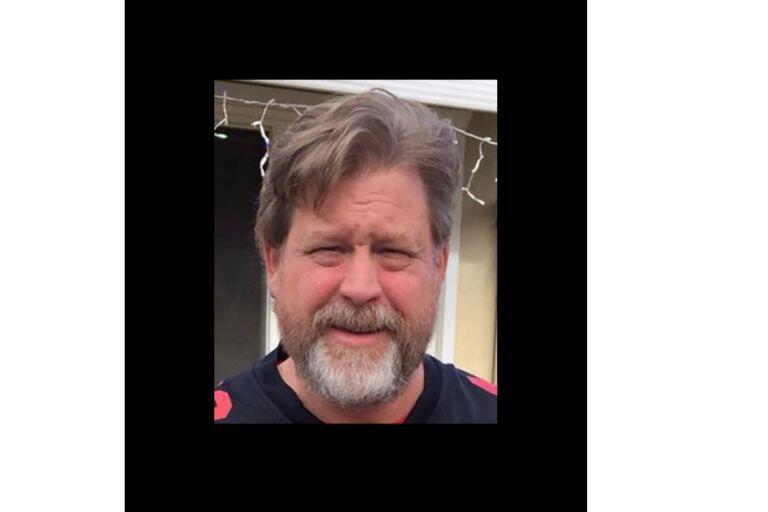
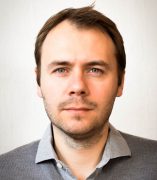
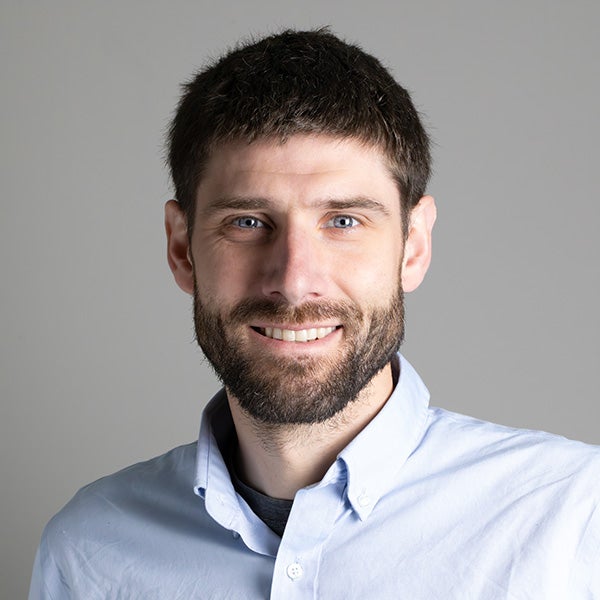
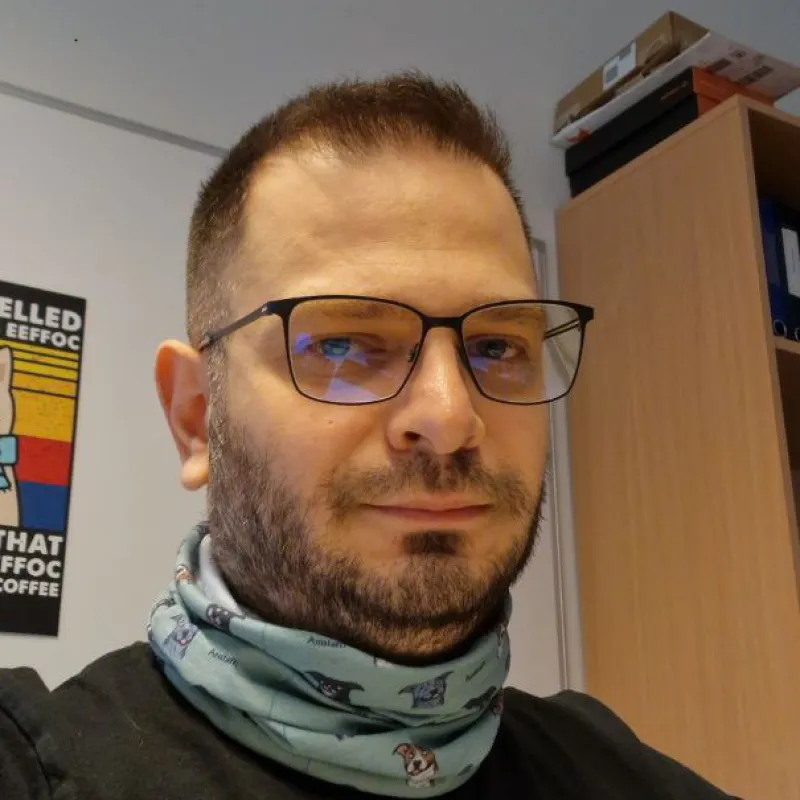
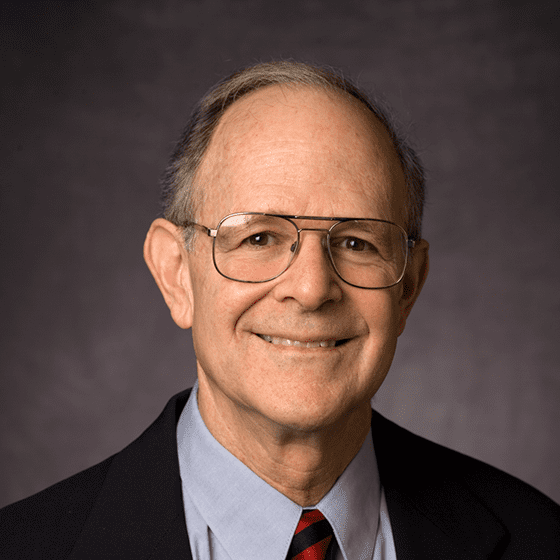
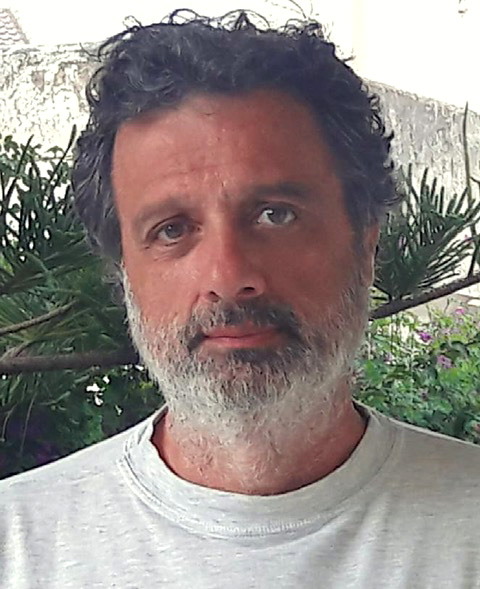
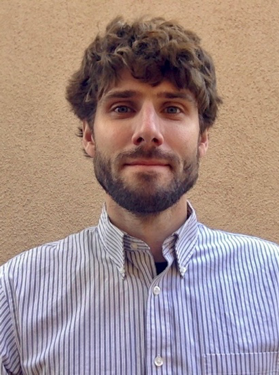
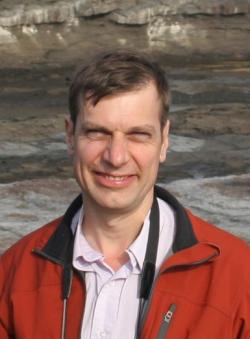
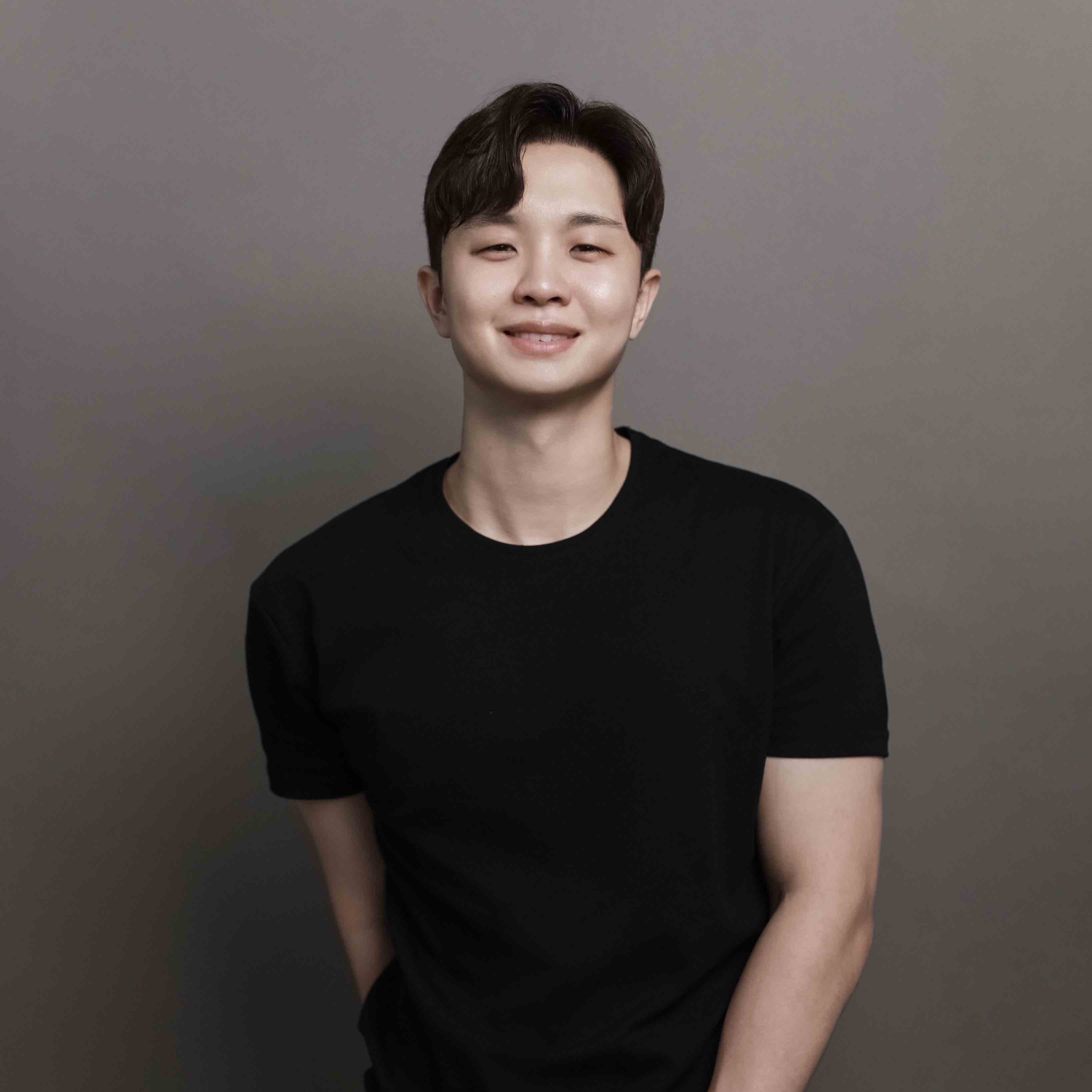
Douglas Dreger is a Professor in the Department of Earth and Planetary Science at the University of California, Berkeley. His research focuses on seismic source analysis, wave propagation, Earth structure, and geophysical inverse problems. He primarily uses waveform data to investigate earthquake mechanics, stress orientations, and fluid-faulting interactions. Email: dreger@seismo.berkeley.edu His work spans diverse tectonic and geothermal environments, including the Ridgecrest earthquake sequence, Mendocino Triple Junction, North Korean nuclear tests, and The Geysers geothermal field. Recent studies examine graviquake hypotheses, long-period volcanic tremors, and stress drop validation through advanced inversion techniques. Dreger's publications reveal a strong emphasis on moment tensor inversion, fault geometry modeling, and seismic hazard assessment. He has contributed to understanding earthquake rupture heterogeneity, coseismic deformation, and 3D seismic simulations for hazard scenarios.
James Unwin is an Associate Professor in the Department of Physics at the University of Illinois Chicago (UIC), affiliated with the College of Liberal Arts and Sciences. He holds a DPhil in Physics from the University of Oxford (2013) and has held postdoctoral positions at the University of Notre Dame. His research focuses on theoretical particle physics, astrophysics, and cosmology, particularly exploring physics beyond the Standard Model, dark matter models, and interdisciplinary applied mathematics. Current interests include dark matter interactions, primordial black holes, and novel experimental approaches like Coulomb explosion imaging. Research Interests: Dark Matter Models: Including freeze-in mechanisms, annihilation signatures, and cosmological constraints Particle Astrophysics: Supersymmetry, LHC searches, and Grand Unified Theories Interdisciplinary Work: Applications of mathematics to epidemiology (e.g., COVID-19 forecasts via stock market indicators) and social dynamics Recent publications emphasize ultrafast molecular dynamics, XUV spectroscopy, and cosmological impacts of primordial black holes. He has advised PhD students Prolay Chanda and Qingyun Wang, both advanced to candidacy in 2021. Professional activities include visiting roles at UC Berkeley (2022–2023) and a Distinguished Academic Visitor appointment at Queen’s College, Oxford (2023). Affiliations: UIC Department of Physics Adjunct roles at UC Berkeley and University of Oxford Collaborations with institutions like Fermilab and CERN
Peter Hodgins is an Associate Professor at Carleton University's Faculty of Arts and Social Sciences, with a focus on Canadian public history and cultural critique. He holds degrees from the University of Ottawa (B.A.) and Carleton University (M.A., Ph.D.), and serves as a Research Associate at the Carleton Centre for Public History. Academic Rank: Associate Professor University: Carleton University Research Affiliation: Carleton Centre for Public History Research Interests: Dr. Hodgins specializes in analyzing how memory, nationalism, and colonial legacy intersect in Canadian cultural production. His work explores: Politics and poetics of public memory Canadian cultural nationalism Settler colonial intellectual histories Haunted landscapes and affective memory Critical analysis of national identity formation Subversion of romantic/extractive gazes in contemporary art Publication Trends: His publications reveal sustained engagement with: Decolonizing historical narratives Media representation of national trauma Language politics in francophone-anglophone dynamics Artistic interventions in memory studies Historiography of Canadian institutions Critical theory applications to Canadian contexts
Brandon Schmandt is a Professor in the Department of Earth, Environmental and Planetary Sciences at Rice University, where he leads research using seismology to investigate Earth systems. His work integrates interdisciplinary approaches, data science, and numerical modeling to study tectonic processes, magmatic systems, and environmental interactions. His educational background includes a PhD in Geological Sciences from the University of Oregon (2011) and a BA in Environmental Studies from Warren Wilson College (2006). Dr. Schmandt's research focuses on seismology, tectonics, volcanology, and surface processes , with emphasis on seismic imaging of subsurface structures. His group employs innovative time-series analysis and field projects to resolve geologic history and contemporary Earth dynamics, particularly examining fault zones, magmatic reservoirs, and deep convective processes. Key methodologies include dense seismic arrays and machine learning applications. Analysis of his recent publications (2023-2025) reveals dominant trends in seismic event discrimination (earthquakes vs. explosions), magmatic system imaging (Yellowstone, Cascades), and global mantle structure studies. There is strong emphasis on induced seismicity, machine learning applications, and high-resolution imaging of Earth's discontinuities using dense arrays. His distinguished honors include: Aki Award of the AGU Seismology Section GSA Donath Medal AGU Macelwane Medal Body Dr. Schmandt directs an active research group conducting field projects across diverse settings including the Raton Basin, Yellowstone, Antarctica, and the Caribbean. While specific student advisees and grant details aren't provided in available materials, his group's work involves collaborative data collection, advanced computational modeling, and development of novel seismic analysis techniques applicable to both natural and anthropogenic seismic sources. The research program maintains focus on magmatic systems beneath volcanic regions, induced seismicity mechanisms, and global mantle structure using dense node arrays and interdisciplinary approaches to address fundamental questions in Earth dynamics.
Shahriar Afkhami is a Researcher in the Department of Mechanical Engineering at LUT School of Energy Systems, LUT University. His research focuses on advanced materials science, additive manufacturing processes, and mechanical properties of high-strength steels and dissimilar joints. He specializes in fatigue analysis, welding technologies, and the optimization of structural components for industrial applications. His work integrates experimental methods with computational modeling to address challenges in material behavior under extreme conditions. Key research areas include: Welding of ultra-high strength steels and dissimilar materials Mechanical performance of additively manufactured components Fatigue life assessment of welded joints and cut edges Thermomechanical behavior of heat-affected zones Material characterization of laser powder bed fusion (LPBF) steels Publications highlight trends in additive manufacturing for industrial applications, particularly in optimizing 3D-printed metal structures and analyzing their mechanical integrity. His work on notch-load interactions and fatigue strength has advanced methodologies for predicting component failure under complex loading conditions. Notable contributions include the VERKOTA project exploring 3D printing networks for enhanced industrial adoption. No scientific awards are listed in the provided information. Afkhami's research has been supported by collaborative projects such as the VERKOTA initiative, though specific grants are not detailed here. He maintains an active presence on professional networks including LinkedIn and Google Scholar.
David A. Hammer is the J. Carlton Ward, Jr., Professor of Nuclear Energy Engineering and Professor of Electrical and Computer Engineering at Cornell University's College of Engineering. He has been a faculty member since 1977 and has held visiting positions at Imperial College London, Applied Materials, Inc., and the Paris Observatory. His work bridges nuclear engineering, plasma physics, and electromagnetics. His research focuses on high energy density plasmas generated by pulsed power systems, particularly through wire explosions, X-pinches, and gas-puff Z-pinches. Key areas include inertial confinement fusion, magneto-Rayleigh-Taylor instabilities, and plasma diagnostics using visible and X-ray spectroscopy, laser-based methods, and electro-optical instruments. He also explores the application of X-pinch radiation for biomedical radiography. His recent publications reveal a strong emphasis on Z-pinch and hybrid X-pinch dynamics, plasma turbulence, magnetic field diagnostics using Faraday rotation and Zeeman splitting, and the development of advanced imaging and spectroscopic techniques. His work frequently involves the COBRA pulsed-power generator and addresses fundamental questions in plasma stability, implosion dynamics, and radiative collapse. Distinguished Career Award, Fusion Power Associates Board of Directors (2018) Cornell College of Engineering Teaching Award (2006, 1998) Cornell IEEE Professor of the Year Award (2006) McCormack Advising Award (2005) IEEE Plasma Science and Applications Committee Award (2004) Hammer has advised numerous graduate students and led experimental campaigns involving plasma diagnostics, liner implosions, and laboratory astrophysics. His work is supported by grants from agencies interested in fusion energy, plasma science, and advanced diagnostics. He has developed innovative platforms, including 3D-printed plasma loads, to study turbulent plasma jets and magnetization. His lab at Cornell is a key facility for high-energy-density plasma research. He leads a research group focused on plasma diagnostics and pulsed power experiments, operating the COBRA generator and developing novel measurement techniques. His team investigates plasma instabilities, magnetic field generation, and the transition from radial implosions to collimated jets, with implications for both fusion and astrophysics.
Yudhvir Seetharam is an Associate Professor in the School of Economics and Finance at the University of the Witwatersrand, where he teaches undergraduate and postgraduate courses in investments, risk management, fintech, and financial data science. He also supervises postgraduate students and is actively involved in research and editorial leadership. His research interests include: Behavioural Finance Financial Data Science Investor Psychology and Sentiment Analysis Fintech and Big Data in Finance Market Efficiency and Corporate Finance His recent publications (2023–2025) reflect a strong focus on textual sentiment, social media analytics, and market dynamics in emerging economies. He frequently uses alternative data sources such as Twitter, news, and Wikipedia to analyze investor behaviour and market reactions across African and global markets. His work spans journals in finance, economics, and data science, highlighting an interdisciplinary approach. Notable scientific awards and recognitions include: Mail & Guardian Top 200 Young South Africans (2017) – Business and Entrepreneurship Top 100 Most Influential Young South Africans (#59) Gauteng Premier’s Youth Service Excellence Award – Economic Development Global Top 100 Innovators in Data & Analytics (2024) Yudhvir holds several editorial positions, including Editor-in-Chief of the South African Journal of Economic and Management Sciences and Associate Editor of the Journal of Behavioral Finance (from 2025). He also serves as Chief Analytics Officer at FNB Business, blending academic insight with real-world financial innovation. He is a Fellow of the South African Institute of Financial Markets and a member of the Royal Society of South Africa. His work bridges academia and industry, with a strong emphasis on applying analytics to solve financial challenges.
Masatoshi Takano is a Professor at the Faculty of Science and Engineering, Waseda University, specializing in theoretical studies of nuclear physics, particle physics, and astrophysics. His work focuses on nuclear equations of state (EOS) for neutron stars and core-collapse supernovae, incorporating realistic nuclear forces like the Argonne v18 and Urbana IX potentials. He has developed variational methods with explicit energy functionals to model hyperonic nuclear matter, spin-orbit forces, and finite-temperature effects. Education : PhD in Science, Waseda University Professional Memberships : American Physical Society, Japan Physical Society Research spans neutron star structure, supernova simulations, and nuclear matter phase transitions. His recent presentations address neutrino emission rates, braking radiation in nuclear matter, and cluster variational methods. Key collaborations include H. Togashi, K. Nakazato, and K. Sumiyoshi. Scientific contributions involve refining variational energy expressions for asymmetric nuclear matter, incorporating three-body forces, and studying pion condensation effects on neutron star cooling. He has applied his EOS models to multidimensional supernova simulations and cosmic ray detector design.
Sandro Conticelli is a Full Professor of Igneous and Metamorphic Petrology at the University of Florence, Italy, and Director of the Institute of Environmental Geology and Geoengineering (CNR-IGAG) in Rome. He has held leadership roles, including President of the Geological Society of Italy since 2018 and Editor-in-Chief of the Italian Journal of Geosciences since 2010. His academic career spans over three decades, with previous positions at the University of Basilicata and international postdoctoral fellowships in Canada, Germany, and the U.S. He earned a Laurea in Geology (cum laude) from the University of Florence in 1983 and a Ph.D. in Mineralogy and Petrology from Florence and Perugia Universities in 1988. His research focuses on volcanic and magmatic systems, isotope geochemistry, and the application of analytical techniques to study geological and agricultural matrices. Key research interests include: volcanic processes in Italy, Spain, Greece, and other regions; mantle geochemistry; analytical methods (XRF, ICP-MS, TIMS); and isotope geochemistry for tracing agricultural products like wine. He has authored/co-authored over 120 peer-reviewed articles, with a h-index of 49. Conticelli has received prestigious awards, including the 2016 Luigi Tartufari Prize for Geosciences and the 1991 Angelo Bianchi Prize for Young Petrologists. He serves on editorial boards of major journals and international scientific societies, contributing to advancing volcanology, geochemistry, and petrology. His work bridges fundamental geoscience with applied research, such as geochemical tracing of terroir in wines and olive oils, and investigating CO 2 emissions from active volcanoes like Etna. He leads interdisciplinary projects involving international collaborations, emphasizing both field-based and laboratory analytical approaches.
Youssef M A Hashash is the W. W. Grainger Chair and Professor in the Department of Civil and Environmental Engineering at the University of Illinois. His research focuses on geotechnical and earthquake engineering, with emphasis on seismic site response analysis, soil-structure interaction, and advanced computational methods like the Discrete Element Method (DEM). He has led projects on infrastructure resilience, including studies of buried water reservoirs, railway systems, and post-earthquake reconnaissance. Hashash has developed influential models for site amplification in Central and Eastern North America, contributing to seismic hazard assessments. His work integrates experimental centrifuge testing, numerical simulations, and field data. Notable contributions include guidelines for implementing NGA-East ground motion models and advancements in pore-water pressure generation models for liquefaction evaluation. Key Research Areas: Ground movement, seismic response, soil dynamics, and geotechnical data systems Major Projects: NGA-East Geotechnical Working Group, Beirut Explosion Analysis, and LA Metro Tunnel Projects Recipient of prestigious awards including the NAE Membership (2022), PECASE (2000), and Walter L. Huber Prize (2006), he collaborates internationally on earthquake engineering and geotechnical innovations. His lab develops tools like the DEEPSOIL software for nonlinear site response analysis and explores AI applications in geotechnical data interpretation.
Brandon Schmandt is a Professor in the Department of Earth and Planetary Sciences at the University of New Mexico. His research focuses on geophysics, seismology, tectonics, structural geology, and volcanology. He holds a Ph.D. from the University of Oregon (2011). His research group specializes in seismic imaging methods to study subsurface structures related to tectonic and magmatic processes. They analyze seismic data from both fieldwork and public archives, with applications to earthquake mechanics, magma storage, and explosion discrimination. Recent work emphasizes continental magmatic systems, induced seismicity in the Raton Basin, and Yellowstone's magmatic architecture. Collaborative projects include seismic array deployments and machine learning applications for signal analysis. No scientific awards are explicitly listed in the provided texts. His advising includes undergraduate and graduate students such as Wilgus, Stairs, and Maguire. No specific grants or labs are mentioned beyond his departmental affiliation.
Charles R. Marshall is the Philip Sandford Boone Chair in Paleontology and Professor in the Department of Integrative Biology at the University of California, Berkeley. He serves as Director of the University of California Museum of Paleontology (UCMP) and Chair of the Berkeley Natural History Museums (BNHMs). His research focuses on deep-time evolutionary biology, integrating fossil and genomic data to understand life's evolution, extinction dynamics, and morphological innovation. He holds a joint appointment in Earth and Planetary Sciences. Research Interests: Dr. Marshall explores processes shaping long-term evolution, including mass extinctions, biodiversity dynamics, and the origins of animal body plans. His work combines epistemological tools with interdisciplinary approaches, such as molecular phylogenetics and fluid dynamics analysis of fossilized structures. He emphasizes collaboration across institutions and disciplines, leveraging museum collections and computational models. Key Contributions: Notable projects include quantifying Tyrannosaurus rex population size, analyzing extinction pulses, and evaluating timetree methodologies. He co-authored influential studies on the Cambrian Explosion and the Red Queen hypothesis in mammalian extinctions. His work bridges paleobiology with conservation science to address modern ecological challenges. Awards: Recipient of the 2023 Paleontological Society Pojeta Award. His leadership roles include directing major initiatives like the Eastern Pacific Invertebrate Communities of the Cenozoic (EPICC) project, advancing global biodiversity documentation.
Marie Kratz is a Full Professor at ESSEC Business School (Cergy, France), affiliated with the CREAR - Center of Research in Econo-finance and Actuarial Sciences on Risk . Her work bridges theoretical and applied domains in extreme value theory , heavy-tailed distributions , and risk management , with applications in finance, cybersecurity, and neuroscience. Research Focus : Extreme value theory, risk concentration, cyber risk modeling, Gaussian random fields, and pro-cyclicality in financial risk measures. Collaborations : Active collaborations with Michel Dacorogna, Marcel Bräutigam, and Sibsankar Singha on cyber risk and financial applications. Methodologies : Development of the Normex method for aggregated heavy-tailed risks, hybrid Gaussian-Pareto models, and near-explosive random coefficient autoregressive models. Awards and Recognition : No specific awards mentioned in the text.
Minjoon Seo is an Associate Professor at KAIST AI, Korea Advanced Institute of Science and Technology. He holds a BS in Electrical Engineering & Computer Science from UC Berkeley and previously worked as a software engineer at Oracle. His research focuses on natural language understanding, large-scale end-to-end question answering, and multimodal AI systems combining language and vision. Research Interests: His work spans Natural Language Processing, Machine Learning, Deep Learning, and Language-Vision integration. He develops neural network architectures for machine comprehension and multimodal understanding, with applications in question answering systems and diagram interpretation. Publications: His research demonstrates a consistent focus on multimodal AI systems, with recent works advancing neural approaches to machine comprehension and diagram understanding. Publications show strong emphasis on NLP-CV integration and practical applications in healthcare and education. Awards: Best Paper Nomination at UbiComp 2014 for BiliCam research Professional Activities: Maintains active open-source contributions through GitHub repositories related to question answering systems and NLP research. Co-founded Config Intelligence while maintaining academic position.
Dr. Alan Lloyd is an Assistant Professor in Civil Engineering at the University of New Brunswick, specializing in structural response to extreme loads. He directs experimental research at the Drop Mass Impact Test Facility, focusing on blast-resistant design and retrofit techniques. Education: PhD Civil Engineering, University of Ottawa MASc Civil Engineering, University of Ottawa BEng Civil Engineering, Lakehead University Diploma Civil Engineering Technology, Camosun College Research: Investigates blast/impact effects on structures, structural retrofitting, material behavior under high strain rates, and experimental validation using shock tubes and impact testing. Current projects include developing blast-resistant building components and retrofit solutions for existing infrastructure. Publications: Focus on blast dynamics, FRP composites for structural strengthening, and experimental mechanics. Recurring themes include concrete/wood material performance under explosive loads and design methodologies for blast mitigation. Awards: NSERC Graduate Scholarships National Security Innovation Competition prizes (2010, 2011) ACI Blast Prediction Contest winner Advising: Supervises graduate students researching FRP materials, concrete properties, and structural modeling. Manages industry collaborations on blast-resistant technologies. Facilities: Leads development of the Drop Mass Impact Test Facility for structural component testing under controlled impact conditions.