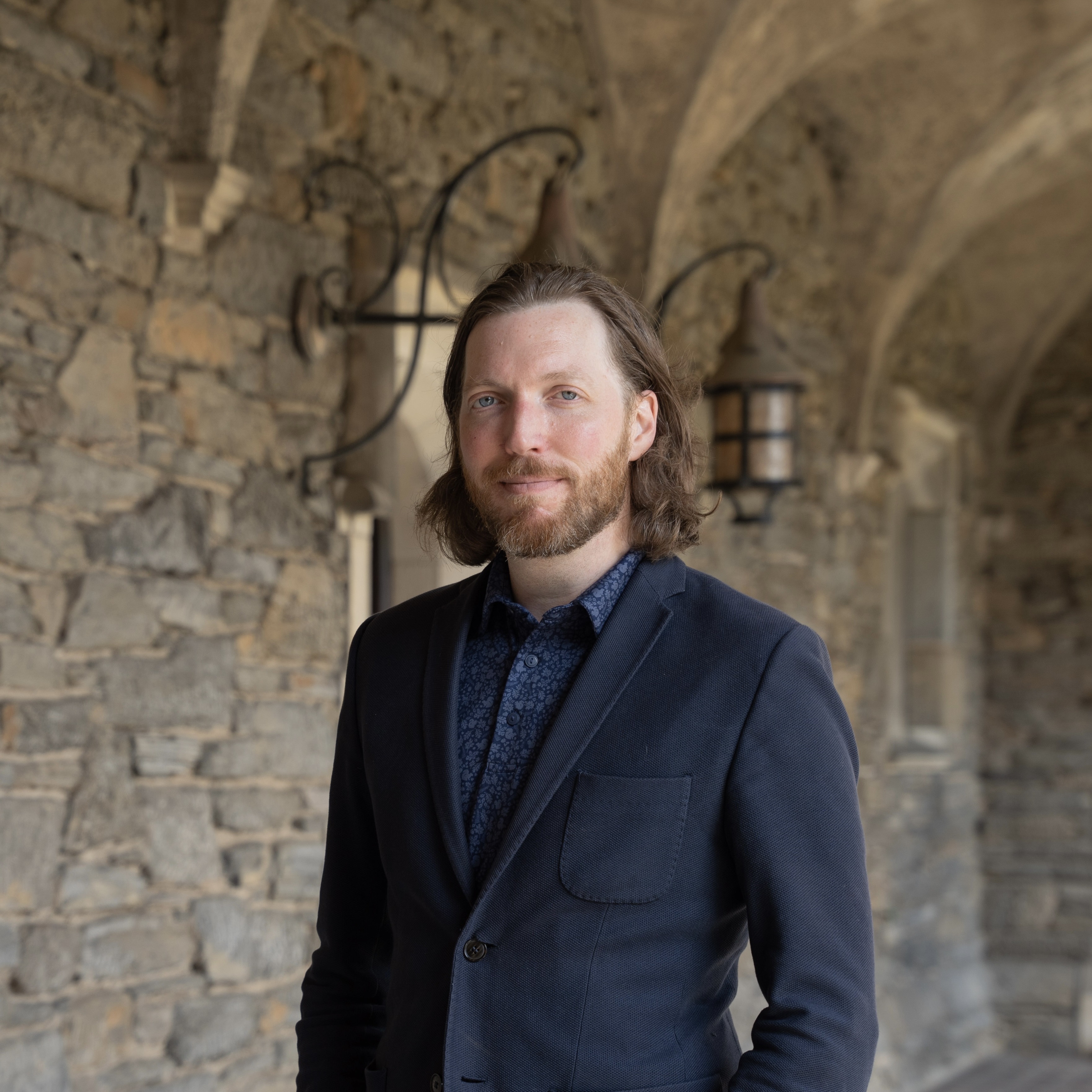
Isabel Schoultz is a Senior Lecturer at the Sociology of Law Department, Lund University. She holds a PhD in Criminology from Stockholm University and serves as an Associate Editor for the Journal of White Collar and Corporate Crime . Her research focuses on corporate crimes and denial processes, exploitation of migrant workers, access to justice, and legal aid. Corporate Crime : Examines corporate accountability for international crimes through the Lundin case. Migrant Workers : Investigates policy and legal responses to labor exploitation in Nordic countries. Access to Justice : Analyzes legal sociology and judicial accessibility in Sweden and globally. Recent Research includes projects such as Justice and Accountability for Business Involvement in International Crimes (2023-2026, funded by Riksbankens Jubileumsfond), Revolving Doors Between Public and Private Sectors (2022-2025, funded by Swedish Research Council and Crafoord Foundation), and Responses to Labour Exploitation in Sweden (2021-2022, funded by Swedish Crime Victim Authority). Scientific Awards : 2012 Richard J. Terrill Paper of the Year Award for 'State Crime in the Street-Level Bureaucracy: Towards an Understanding of Crimes of the Welfare State'.
Vladimir Puđa is a Lecturer at the Faculty of Forestry , University of Belgrade , where he is currently pursuing his doctoral studies at the Department of Forest Resource Utilization. Born: 1979, Belgrade Education: BSc (2003) and MSc (2010) in Forestry from University of Belgrade His research focuses on forest exploitation , silvicultural practices , and operational efficiency in poplar plantations. He has contributed to studies on pruning impacts, harvester cost analysis, and road planning in protected areas using AHP methodology. Recent publications highlight his work in biogeosciences and forestry , with emphasis on forest engineering , growth modeling , and sustainability . His teaching engagement includes mentoring international Master's students in English-language programs.
Don Fahey serves as an Assistant Professor of Physics at Bryn Mawr College, where his research focuses on developing quantum sensing technologies using solid-state crystals and atomic vapors to advance measurement science and probe fundamental quantum phenomena. Education: Trained with Nobel Laureate Bill Phillips at the National Institute of Standards and Technology (NIST) and the Joint Quantum Institute His research program targets long-lived quantum coherence in portable room-temperature systems, extending atomic/molecular/optical techniques to novel platforms. The Quantum Diamond Microscope developed in his work enables cross-disciplinary applications in rock magnetism, bio-magnetism, and condensed matter physics through quantum resource exploitation. As a teacher-scholar, Fahey cultivates student curiosity through mental model examination while prioritizing classroom and laboratory inclusivity to diversify scientific representation. His industry experience includes serving as principal scientist at a deep tech startup prior to joining Bryn Mawr.
Professor A J Ganesh is a faculty member at the University of Bristol , holding the title of Professor of Applied Probability within the School of Mathematics, Statistical Science and is affiliated with the Probability, Analysis and Dynamics research group. He is also an active member of the Cabot Institute for the Environment , contributing to themes such as City Futures , Low Carbon Energy , and Natural Hazards and Disasters . Education B.Sc. – Indian Institute of Technology, Madras M.Sc. – (institution not specified) Ph.D. – Cornell University Research Interests Professor Ganesh’s work lies at the intersection of applied probability , stochastic networks , and network science . A recurring theme is understanding how randomness and local interactions give rise to global phenomena such as consensus, epidemics, or congestion. His investigations span: Consensus & Gossip Algorithms – analysing voter models and multi-agent bandits; Epidemic Processes & Rumour Spreading – quantifying thresholds, extinction times, and the impact of network topology; Random Graphs & Connectivity – soft geometric graphs, isolated nodes, and diameter questions; Queueing & Large Deviations – Cox/G/∞ queues, resource allocation, and delay-optimal scheduling; Cyber-Security & Intrusion Detection – leveraging variational autoencoders for anomaly detection; Game-Theoretic Resource Allocation – Pigouvian tolls, welfare optimality, and price of anarchy in parallel-server systems. Publication Trends Over the last decade Professor Ganesh has published extensively on collective decision-making (2025, 2024), machine-learning approaches to security (2023), and latency-sensitive communication (2022, 2019). Earlier work focused on epidemic thresholds , connectivity in random graphs , and large-deviations analysis of queues , demonstrating a consistent trajectory toward real-world applications of stochastic models. Scientific Awards & Recognition Author of the Springer Lecture Notes in Mathematics monograph Big Queues (2004) – a widely cited reference on large-deviations techniques in queueing theory. Supervision & Grants Professor Ganesh has 6 supervised works listed in institutional repositories, indicating ongoing Ph.D. or post-doctoral mentoring. While specific grant titles and amounts are not disclosed in the provided text, his sustained publication output and participation in EU and UK research networks (e.g., Horizon 2020, EPSRC) suggest active grant funding. Laboratories & Teams He collaborates closely with colleagues in the Cabot Institute for the Environment , applying probabilistic models to urban sustainability and disaster resilience. Cross-disciplinary partnerships include joint projects with engineers on connected and automated vehicles and with biologists on epidemic control strategies .
Professor Jaeseung Song is affiliated with Sejong University , where he holds a professorship in the Department of Computer and Information Security . His career spans roles at LG Electronics (2002–2008) and NEC Europe Ltd. (2012–2013) as a Senior Researcher before joining academia. He actively contributes to global IoT standardization efforts, serving as Technical Plenary Vice Chair at oneM2M (2019–present). Education : Ph.D. in Computing, Imperial College London (2013) M.S. and B.S. in Computer Science, Sogang University (2002, 2000) His research focuses on IoT/M2M platforms , emphasizing semantic technologies , blockchain-enabled IoT , and Edge/Fog computing to enhance reliability and interoperability. Key contributions include studies on oneM2M standards , IoT testing systems , and AI-driven IoT platforms . Recent publications address 6G services , XR networking , and air-gap attack analysis in IoT contexts. Scientific awards include elevation to IEEE Senior Member (2018–present). He leads the Software Engineering and Security Lab , which explores IoT security , malware detection , and network protocol verification . Notable collaborations include work with researchers at NEC Europe and IEEE .
Joobeom Yun serves as Associate Professor in the Department of Computer and Information Security at Sejong University since 2015, concurrently holding a Board Member position at the Korea Institute of Information Security and Cryptology (KIISC) since 2016. Previously, he was Senior Researcher at the National Security Research Institute from 2001 to 2015, establishing a career bridge between government security research and academic instruction. His academic credentials include: Ph.D. from KAIST (2012) M.S. from Seoul National University (2001) B.S. from Korea University (1999) Professor Yun's research program centers on Software Security, Network Security, Digital Forensics, and Cloud Security, with particular emphasis on automatic exploit generation through fuzzing/concolic execution, secure cloud data deduplication, and ransomware-resistant backup systems. His fingerprint analysis reveals deep expertise in fuzzing (100%), deduplication (73%), software vulnerability (51%), and IoT security (45%), demonstrating both breadth and specialization in critical cybersecurity domains. Recent publications (2023-2024) exhibit a pronounced shift toward AI-integrated security solutions, with 80% of his latest works addressing deepfake detection, adversarial attacks on speech recognition, and AI-enhanced digital forensics. Simultaneously, his IoT security research maintains strong continuity through firmware fuzzing frameworks and multi-architecture emulation techniques, reflecting dual-track innovation in both emerging AI threats and persistent embedded system vulnerabilities. No scientific awards were documented in the provided materials. While specific grant details remain undisclosed, his research trajectory suggests sustained funding for cloud security infrastructure projects and IoT vulnerability assessment tools, particularly through his KIISC board affiliation which facilitates national cybersecurity research coordination. No student advisement information was publicly listed. As KIISC Board Member, Yun actively shapes South Korea's national cybersecurity research agenda while leading a specialized lab at Sejong University focused on practical security implementations for cloud environments, IoT ecosystems, and digital forensic workflows. His team's recent output indicates growing collaboration with international researchers in deepfake countermeasures and ASR security.
Gechun Liang is a Reader in the Department of Statistics at the University of Warwick, a position equivalent to Associate Professor. He has previously held academic roles as Associate Professor at the University of Warwick, Lecturer at King’s College London, and Postdoctoral Research Fellow at the Oxford-Man Institute of Quantitative Finance. He earned his D.Phil. in Mathematics from Oxford University in 2011. His research focuses on mathematical finance and stochastic control , with particular emphasis on: Stochastic control and backward stochastic differential equations (BSDEs) Optimal stopping and free boundary problems Viscosity solutions and numerical methods Optimal investment and forward performance processes Credit and funding liquidity risks His recent publications span top journals in applied mathematics and financial engineering, demonstrating a strong trend in robust mathematical modeling under uncertainty, ergodic control, and forward performance criteria. The research integrates deep analytical techniques with financial applications, particularly in risk management and dynamic portfolio optimization. He has been recognized with prestigious fellowships: FRIAS Senior Fellow, Freiburg Institute for Advanced Studies (2018–2019) Marie Curie Fellow, University of Freiburg (2018–2019) Gechun Liang actively collaborates with leading researchers in mathematical finance and has contributed to both theoretical advances and practical financial modeling. His work includes studies on convertible bonds, liquidity constraints, and robust central limit theorems under sublinear expectations. While no formal advising or grant information is listed, his extensive publication record and international collaborations suggest a significant research leadership role. He is based in the Department of Statistics at the University of Warwick, contributing to a vibrant academic environment in quantitative finance and stochastic analysis.
David Albrecht is a postdoctoral researcher at the Max Planck Institute for the Science of Light (MPL) in Erlangen, Germany, affiliated with the Department Sandoghdar under the supervision of Dr. Vahid Sandoghdar. His research focuses on viral membranes and host interactions using advanced optical microscopy techniques, including interferometric scattering (iSCAT) and super-resolution microscopy. Education: BSc in Biochemistry, Hanover University MSc in Biochemistry, ETH Zurich PhD in Biochemistry, ETH Zurich (2016), thesis on 'The axon initial segment diffusion barrier at the nanoscopic level' under Dr. Helge Ewers David Albrecht's research interests lie at the intersection of virology, biophysics, and optical imaging. He investigates virus infection mechanisms, particularly how viruses exploit cellular processes and organize their fusion machinery at the nanoscale. His work emphasizes live imaging with molecular specificity and high spatiotemporal resolution. He has made significant contributions to understanding the spatial organization of viral proteins and the development of advanced microscopy methods for label-free and quantitative imaging. The recent trend in his publications (2019–2024) reflects a strong focus on high-resolution optical techniques applied to virology and nanoparticle analysis. His work spans from fundamental virology—such as vaccinia virus entry mechanisms—to methodological innovations in interferometric microscopy and drift correction. These studies demonstrate a consistent interdisciplinary approach combining biological questions with physical and engineering solutions. Scientific Awards: Marie Sklodowska-Curie Fellowship (awarded during postdoctoral work at University College London) David Albrecht has been involved in significant research projects funded by competitive fellowships and institutional support. While no formal advising roles are mentioned, his collaborative publications suggest active participation in team-based research. He has contributed to studies involving virus-host interactions, membrane dynamics, and imaging technology development. His current work at MPL is likely supported by institute funding and collaborative grants. Labs and Research Teams: He has worked in multiple high-profile research environments: the lab of Dr. Helge Ewers (ETH Zurich), the joint group of Dr. Jason Mercer and Dr. Ricardo Henriques (University College London), and currently in the group of Dr. Vahid Sandoghdar at the Max Planck Institute for the Science of Light. These labs specialize in advanced microscopy and biophysical analysis of cellular and viral systems.
Jo Van Bulck is an Assistant Professor in the Department of Computer Science at KU Leuven's Faculty of Engineering Science, where he leads research in the Distributed and Secure Software (DistriNet) lab. His work focuses on security at the hardware-software boundary, particularly examining trusted execution environments and microarchitectural side-channel vulnerabilities. Dr. Van Bulck completed his Master's thesis on 'Secure Resource Sharing for Embedded Protected Module Architectures' at KU Leuven in 2015, receiving both the VASCO and BELCLIV thesis awards. He earned his PhD in 2020 with the dissertation 'Microarchitectural Side-Channel Attacks for Privileged Software Adversaries,' which received multiple prestigious awards including the ACM SIGSAC Doctoral Dissertation Award, ERCIM STM PhD Award, and FWO/IBM Innovation Award. His research primarily investigates vulnerabilities in trusted execution environments like Intel SGX, with seminal work on attacks such as Foreshadow, LVI, and ZombieLoad. His publications consistently appear in top security venues including IEEE S&P, USENIX Security, and ACM CCS. His research group has made significant contributions to understanding memory isolation failures, interrupt handling vulnerabilities, and developing principled approaches to validate enclave security properties. Dr. Van Bulck's work has profoundly impacted both academia and industry, with multiple CVE assignments for discovered vulnerabilities and direct influence on hardware and software security practices. His recent research focuses on extending security principles to low-end microcontrollers and developing automated validation frameworks for trusted execution environments. ACM SIGSAC Doctoral Dissertation Award (2021) FWO/IBM Innovation Award (2021) ERCIM WG STM Best Ph.D. Thesis Award (2021) Best Paper with Artifacts Award (SysTEX 2025) Distinguished Paper Award (EuroS&P 2025) Cybersecurity Artifacts Competition and Impact Award (ACSAC 2023) Dr. Van Bulck advises multiple PhD students including Márton Bognár (completed 2025) and Fritz Alder (completed 2023), and regularly supervises numerous master's theses. He leads several major research projects including 'Cross-Layer Systems Security for Trusted Execution Environments' (2025-2029) and 'Trustworthy Execution Environments for Secure Computing' (2024-2029). His research has been supported by competitive funding from KU Leuven and collaborative industry partnerships. As a member of the Council of the Faculty of Engineering Science, Dr. Van Bulck actively contributes to academic governance. He maintains the DistriNet research group's focus on practical security research with real-world impact, evidenced by numerous open-source contributions including the influential SGX-Step framework. His work bridges theoretical security principles with practical implementation challenges in modern computing systems.
Aine Doherty is a Lecturer in the Department of Business Studies at Atlantic Technological University. She serves as Principal Investigator for the Design, Innovation, Creativity, Entrepreneurship (DICE) Innovation Academy and previously held the same role at the Centre for Research in Social Professions (CRiSP). Her research focuses on experiential marketing, digital marketing strategies, and innovative pedagogical approaches in higher education. Dr. Doherty holds a Master's thesis in mobile marketing (2013) and is completing a PhD on experiential marketing in higher education (expected 2025). Her academic journey includes contributions to marketing theory, mobile marketing integration, and the application of reflective learning techniques in online apprenticeships. Notable works include analyses of experiential marketing in digital contexts and student feedback mechanisms in distance learning. Education: Master's thesis: 'Mobile Marketing Exploiting the New Wave of Innovation in Marketing' (2013) PhD research: 'The management of experiential marketing in higher education' (ongoing) Research interests span experiential marketing frameworks, educational technology innovations, and the intersection of mobile technologies with marketing strategies. Her publications reflect a focus on both theoretical advancements and practical applications in business and education sectors. Awards: PhD Research Excellence Award (2025) Teaching Hero Award (2020) Advising and grants: While specific student advisement details are not listed, her research leadership positions suggest involvement in guiding academic projects. Her work with DICE and CRiSP indicates participation in collaborative research initiatives. No grant details are explicitly mentioned. Labs/teams: Active in the Design, Innovation, Creativity, Entrepreneurship (DICE) Innovation Academy and former affiliation with the Centre for Research in Social Professions (CRiSP).
Sashank Narain, Ph.D., is an Assistant Professor at the University of Massachusetts Lowell in the Miner School of Computer & Information Sciences, housed within the Kennedy College of Sciences. His research spans cybersecurity with a strong focus on user privacy, mobile security, IoT security, and cyber-physical systems security. He has been instrumental in advancing the understanding of sensor-based side-channel attacks on smartphones and developing robust frameworks for privacy protection. Education: Ph.D. in Information Assurance (2018), Northeastern University, Boston M.S. in Information Assurance (2012), Northeastern University, Boston B.S. in Information Technology (2007), University of Mumbai, India Research Interests: Dr. Narain's primary research delves into the implications of smartphone sensors on user privacy. He investigates how seemingly benign sensors like accelerometers, gyroscopes, and magnetometers can be exploited to infer sensitive information such as passwords and locations. His work highlights the stealthy nature of these sensors, which are often overlooked by mobile operating systems yet can serve as powerful spying tools. Beyond smartphones, he is actively developing security frameworks for drones and smart home devices like vacuum cleaners and refrigerators, aiming to mitigate privacy risks in ubiquitous computing environments. His broader research interests encompass wireless and network security, particularly in analyzing vulnerabilities in contact tracing protocols, GPS spoofing attacks, and traditional threats like clickfraud and clickjacking. He is deeply involved in designing practical systems that enhance the security of Android devices, addressing gaps in current privacy protections. Scientific Awards: While no specific awards are listed in the provided text, his extensive publication record and ongoing research projects indicate significant recognition in the cybersecurity community. Research Projects & Grants: Analysis and Mitigation of Privacy Breaches arising from Android Ad Libraries (Co-Investigator) Effects of Privacy Laws (GDPR and CCPA) on Android App Privacy Practices (Co-Investigator) Security and Privacy Analysis of Contact Tracing Protocols (Co-Investigator) System and Apparatus for Detecting Copycat Apps in Google Play Store (Co-Investigator) System for On-device Detection of Clickfraud attacks on Mobile Devices (Co-Investigator) Labs & Teams: Dr. Narain is associated with the iSAFER (Institute for Security, Assurance, and Forensics Engineering Research) at UMass Lowell, where he collaborates on cutting-edge cybersecurity research and educational initiatives.
Chet Ford, Ph.D., serves as Clinical Associate Professor in the Department of Radiation Oncology at the University of Miami, where he integrates clinical medical physics practice with translational research in MRI-guided radiation therapy. Board-certified by the American Board of Radiology in Therapeutic Radiological Physics, his expertise bridges nuclear magnetic resonance physics, clinical oncology, and medical imaging innovation. His educational foundation includes: PhD in Physics, University of Connecticut (1988) MS in Physics, University of Connecticut (1983) BS in Physics, Virginia Commonwealth University (1981) MBA, Drexel University (2003) Postdoctoral training at the University of Pennsylvania (1990) and Virginia Commonwealth University (2010) established his specialization in MRI physics and clinical radiation oncology. His research pioneers the application of quantitative MRI to model tumor physiology and predict radiation response, leveraging daily imaging from hybrid MRI/radiotherapy systems like ViewRay. Current projects focus on machine learning-driven radiomic analysis of prostate cancer and glioblastoma evolution during treatment, with emphasis on adaptive therapy optimization. Recent publications (2023-2025) reveal a cohesive trajectory in exploiting low-field MR-LINAC technology for real-time treatment adaptation. Key themes include radiomic feature stability assessment, deep learning segmentation for tumor tracking, and multi-parametric MRI analysis to decode treatment resistance mechanisms—primarily in prostate cancer and glioblastoma contexts. Award highlights include: NIH Shannon Award Association of University Radiologists Stauffer Award Doctoral Dissertation Fellowship Award Sigma Pi Sigma Physics Honor Society recognition Dr. Ford mentors physics residents, a biomedical engineering graduate student, and postdoctoral researchers in MRI device development. His grant portfolio features an NIH Shared Instrumentation Grant as Principal Investigator and EPA funding for an MR-based water monitoring device, demonstrating cross-disciplinary innovation. Laboratory efforts center on building small-animal MRI platforms and establishing clinical data registries for ViewRay treatment optimization.
Mari K. Davidson is a Professor in the Department of Biochemistry and Molecular Biology at the University of Arkansas for Medical Sciences College of Medicine, where she leads research on meiotic chromosome segregation and environmental impacts on genetic stability. Her work addresses the critical public health issue of aneuploidy—the leading cause of pregnancy loss and congenital disabilities in humans—using fission yeast as a model system. She earned her Ph.D. from the University of Illinois at Chicago Dr. Davidson's research program focuses on developing high-throughput screening platforms to identify environmental chemicals ("meiotic aneugens") that disrupt meiosis. Her laboratory exploits the synchronous meiosis of Schizosaccharomyces pombe to create quantitative genetic systems monitoring chromosome mis-segregation. Key innovations include selectable markers for aneuploidy detection and secondary screening modules for mechanistic studies of chemical interference with cohesion, recombination, and stress-response pathways. This work bridges molecular genetics, toxicology, and reproductive health, with direct implications for understanding pollutant impacts on human fertility. Analysis of her 15 publications reveals consistent expertise in meiotic recombination mechanisms, particularly the roles of Rec12 (Spo11) recombinase, Atf1/Pcr1 transcription factors, and chromatin remodeling. Her work spans molecular techniques from protein characterization to genome-wide analysis, with recent emphasis on stress-activated kinase pathways and non-coding RNA regulation. Early career publications examined cadherin-based cell adhesion in diabetic retinopathy and bone biology, demonstrating interdisciplinary range before her current focus on meiotic systems. No scientific awards are documented in the provided materials. While formal advisees are not listed, her research program implies grant-funded team science involving genetic screening and molecular validation of environmental toxins. Her laboratory likely maintains yeast strain collections, high-throughput screening infrastructure, and collaborations with toxicology networks for chemical library testing. The Davidson lab operates at the intersection of basic meiotic mechanisms and applied toxicology, with ongoing work focused on validating screening systems for national molecular libraries networks. Current efforts likely address chemical mechanism-of-action studies and expanding the platform to detect diverse aneugenic pathways relevant to human reproductive health.
Dr. HE Binbin is an Associate Professor and doctoral supervisor at the Department of Mechanical and Energy Engineering, Southern University of Science and Technology (SUSTech). He earned his BEng in Theoretical and Applied Mechanics from Lanzhou University (2008), MSc in Solid Mechanics from Shanghai Jiao Tong University (2011), and PhD in Mechanical Engineering from the University of Hong Kong (2015). After completing post-doctoral training at HKU (2015–2019), he joined SUSTech in May 2019. Education & Training: PhD, Mechanical Engineering, University of Hong Kong (2011–2015) MSc, Solid Mechanics, Shanghai Jiao Tong University (2008–2011) BEng, Theoretical and Applied Mechanics, Lanzhou University (2004–2008) Post-doctoral Fellow, Mechanical Engineering, University of Hong Kong (2015–2019) Research Interests: Dr. He’s research spans physical metallurgy, alloy design, deformation mechanisms, and solid-state phase transformations. A current thrust is 3-D printable high-strength steels, bridging advanced processing with property optimization. Awards & Honors: TechConnect Global Innovation Award (2018) University of Hong Kong Research Output Prize (2018) Outstanding Doctoral Dissertation Award, HKU Mechanical Engineering (2015) Laboratory & Team: Dr. He leads a research group at SUSTech focused on next-generation metallic materials, exploiting nanoindentation, dislocation engineering, and additive manufacturing techniques to design superior steels.
Alexandre Aubry is a Research Director at CNRS affiliated with the Institut Langevin in Paris. His work focuses on imaging through complex media using wave physics principles, with applications in ultrasonic imaging, optical microscopy, seismic imaging, and radar technology . He leads projects supported by the ERC Consolidator Grant REMINISCENCE and ANR COPPOLA , and has co-founded the biomedical imaging company OWLO . Education: Habilitation à Diriger des Recherches, Université Paris Sciences & Lettres (2022) Post-Doc under John Pendry, Imperial College London (2008-2010) PhD under Arnaud Derode, Université Pierre et Marie Curie (2008) Engineer's Degree, ESPCI ParisTech (2005) Research Highlights: He developed 3D ultrasound matrix imaging to overcome wavefront distortions in biomedical applications, and pioneered passive seismic matrix imaging for volcanic structure mapping. His theoretical contributions include distortion matrix formalism for aberration correction and multiple scattering analysis in heterogeneous media. Scientific Awards: ERC Consolidator Grant REMINISCENCE ANR COPPOLA grant Research Team: Currently supervising 9 active PhD students and 5 postdoctoral researchers , with a track record of mentoring 12 former team members including prominent researchers like François Legrand and Laura Cobus.