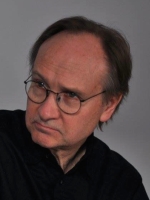
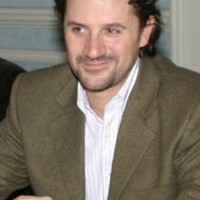
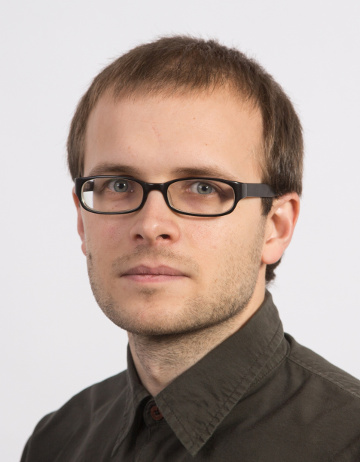
André W. Carus is a Visiting Fellow at Ludwig Maximilian University of Munich (LMU). His academic background includes graduate studies in philosophy at the University of Chicago, where he worked with prominent figures like Howard Stein, Leonard Linsky, and Bill Tait. His research bridges philosophy of science, logic, and social science, focusing on developing rigorous empirical foundations for social inquiry, inspired by Rudolf Carnap's logical empiricism. Carus's primary interests include the critique of contemporary metaphysics, the role of explication in philosophy, and the historical analysis of the Vienna Circle. He emphasizes the need to overcome institutional barriers to create a 'cumulative and consistent social science.' His work often addresses Carnap's principle of tolerance, ontological pluralism, and the demarcation between internal and external questions in scientific frameworks. He maintains an active blog discussing Carnap, Quine, and related topics, featuring critiques of modern philosophical trends like social ontology and analytic metaphysics. No formal awards or advising roles are documented in the provided texts.
Dr. Sebastian Lutz is a Senior Lecturer in Theoretical Philosophy at Uppsala University. He holds a Master's degree in Physics from the University of Hamburg and a PhD in Philosophy from Utrecht University. His academic journey includes studies at the University of Bayreuth, University of Augsburg, University of Minnesota, University of Western Ontario, Tilburg University, and the Munich Center for Mathematical Philosophy (MCMP). Research Interests: General Philosophy of Science: Foundations of philosophy of science, semantics of scientific theories, criteria of empirical significance, reduction Philosophical Methodology: Explication and concept formation, artificial language philosophy History of Philosophy of Science: Carnap, logical empiricism Formal Methods in Ethics: Rational preference change
Nia Amazeen is a Professor in the Department of Psychology at Arizona State University (ASU). Her research focuses on dynamical systems analysis, human-automation teaming, and team coordination dynamics. She explores how humans interact with automated systems, particularly in driving, military, and healthcare contexts. Her work integrates principles from psychology, neuroscience, and engineering to understand complex behavioral and cognitive processes. Key areas of research include motor coordination stability under perceptual constraints, trust dynamics in human-autonomy interactions, and resilience in sociotechnical systems. Her studies often employ real-time dynamical systems analysis (DSA) to model and predict team and individual performance. Recent articles highlight advancements in understanding how pink noise influences motor coordination, the social challenges in adopting human-machine teaming in defense systems, and frameworks for evaluating gas hydrate exploitation projects across social, environmental, and economic dimensions. Amazeen's contributions bridge theoretical dynamical systems principles with applied contexts, emphasizing interdisciplinary methodologies. She has published extensively on team cognition, neurophysiological measures of coordination, and the impact of automation on decision-making dynamics. Her work aims to improve human performance in complex environments through a systems-level understanding of behavior.
Dr. Laura Pantzerhielm is a Senior Lecturer in Political Science at Mälardalen University (Sweden) and a Visiting Fellow at the Department of Methodology at the London School of Economics and Political Science (LSE). She holds a doctorate in Political Science from Freie Universität Berlin (summa cum laude, 2020) and has held visiting positions at the Graduate Institute of International and Development Studies in Geneva and the University of Sydney. Her key expertise spans critical International Relations (IR), political theory, human rights research, and global health governance. Education: PhD in Political Science, Freie Universität Berlin (2020) M.A. in Political Science, Freie Universität Berlin (distinction) Masters in Human Rights and Humanitarian Action, Sciences Po Paris (distinction) Research interests focus on the politics of knowledge in international institutions, global power relations, and Michel Foucault's theoretical contributions. Her current LSE project examines Foucauldian archaeology as a critical methodology in IR studies, funded by DAAD. Advising/Grants: DAAD-funded project 'Explicating Archeology as a Mode of Inquiry in International Relations' Former postdoctoral researcher at TU Dresden and WZB Berlin Social Science Centre Labs/Teams: Engaged in collaborative global health governance research with institutions like the Graduate Institute and University of Sydney.
Julie Lane est professeure agrégée à la Faculté d'éducation de l'Université de Sherbrooke (Canada) depuis 2023, après avoir été professeure adjointe (2018-2023) et professeure associée (2009-2015). Ses recherches portent sur le transfert de connaissances , la science de l'implantation , la promotion de la santé mentale et le développement des compétences socioémotionnelles dans des contextes éducatifs et de santé. Doctorat en Éducation (2008), Université de Sherbrooke Maîtrise en Recherche en sciences de l'éducation (1996), Université de Sherbrooke Baccalauréat en Adaptation scolaire et sociale (1993), Université de Sherbrooke Spécialiste en science de l'implantation et mobilisation des connaissances , elle a développé des guides de bonnes pratiques cliniques et éducatives, tout en explorant le raisonnement pédagogique et les approches d'accompagnement . Ses travaux intègrent également des théories explicatives de l'apprentissage et la psychologie cognitive . Ses publications récentes (2024-2025) couvrent l'implantation du programme HORS-PISTE pour la prévention de l'anxiété, la évaluation des programmes de santé mentale, et la collaboration intersectorielle en santé sociale. Elle explore aussi le rôle des technologies numériques et des communautés de pratique virtuelles dans le transfert de connaissances. Lauréate du prix Tremplin 2024 en science humaine Récompensée par le Prix Inspiration - Respect (2023) Mérite Estrien (2021) pour sa contribution à la santé Prix Méritas Hommage en prévention du suicide (2019) Julie Lane a dirigé ou collaboré à plus de 30 subventions de recherche , totalisant plus de 5 millions de dollars, notamment pour: Évaluation de la santé mentale étudiante Implantation du programme HORS-PISTE Développement d'outils numériques de prévention du suicide Recherche sur l'autisme et les communautés autochtones Programmes d'accompagnement clinique
Ruggero Andrisano Ruggieri is an Associate Professor at the University of Salerno , affiliated with the Department of Human, Philosophical and Educational Sciences. He serves as President of the Degree Course in Motor Activity Science, Sports and Education. His contact email is rruggieri@unisa.it . Research interests include: Digital technology's impact on relational models Work-related stress and sentinel events Family business dynamics Peer attachment in adolescent psychology Idiographic science applications Psychosocial effects of algorithmic systems Publication trends show focus on technology's psychological consequences (7 articles), stress analysis in Italian workplaces (4 articles), educational psychology (3 articles), and symbolic processes in modern society (5 articles). Notable collaborations include Grazia Marra on digital babysitting studies. Methodological approaches combine: Qualitative interviews Quantitative ANOVA analysis Meta-analytic reviews Socio-constructivist modeling Emotional text analysis Pre-experimental designs
Magdaléna Rysová is a researcher at the Institute of Formal and Applied Linguistics, Faculty of Mathematics and Physics, Charles University in Prague. Her work focuses on discourse relations, discourse connectives, dependency syntax, and corpus linguistics, with additional contributions to second language acquisition and sentence information structure. Institute of Formal and Applied Linguistics, Charles University in Prague Research Interests: Her research explores how discourse connectives function in Czech, alternative lexicalizations for expressing discourse relations, and the annotation of textual phenomena in treebanks. She has developed computational tools for evaluating text coherence and contributed to multilingual discourse analysis frameworks. Projects: Notable projects include Automatic Evaluation of Text Coherence in Czech (NAKI II), TextLink: Structuring Discourse in Multilingual Europe (COST Action IS1312), and CorefDisk: Coreference and Discourse Relations (GA ČR). These span 2010–2019 and involve collaborations with institutions across Europe. Discourse Annotation: She has played a key role in annotating discourse relations in the Prague Dependency Treebank, including the Prague Discourse Treebank 2.0 (2016), which provides standardized corpora for language technology applications. Labs & Teams: She collaborates extensively with the Prague Czech-English Dependency Treebank team and contributes to international COST Action initiatives. Her work integrates functional generative description with computational linguistics and corpus annotation.
Matthew T. Pifer is an Associate Professor of English at Husson University and an Adjunct Associate Professor in the Robert B. Thomson Honors Center. He has taught the Civilizations sequence since 2014 and is based in Meeting House 222. His scholarly work focuses on American literature, the dynamics of dissent in cultural contexts, and composition studies. Dr. Pifer completed a monograph titled Dissent and the Dynamics of Cultural Change , examining dissent's role in cultural evolution. His research extends into literary criticism, particularly analyzing American poetry and its intersections with cultural discourses. A 2019 publication in Explicator explores Lucille Clifton's Blessing the Boats through lenses of religious discourse, gender, and postcolonial analysis. His work contributes to understanding how literary texts reflect and shape societal values.
Holly Damico is an Associate Professor and Graduate Coordinator in the Department of Communicative Disorders at the University of Louisiana at Lafayette. Her role involves overseeing the master’s program in speech pathology and audiology, contributing to academic leadership in her field. She is affiliated with the university’s communicative disorders department, focusing on research and clinical education in speech-language pathology. Her research interests primarily focus on language disorders in children and adults, including literacy development , autism spectrum disorder , and aphasia . She employs qualitative research methods to investigate compensatory strategies and sociocultural dynamics in clinical settings. Her work emphasizes improving intervention strategies for special populations through approaches like constructivist theory and eye-tracking analysis . She also explores clinical assessment systems and their validity, particularly in speech-language pathology . Her recent articles highlight a focus on literacy interventions for neurodiverse populations, such as children with autism spectrum disorder and language disorders. She also examines avoidance strategies and compensatory mechanisms in reading performance, integrating eye-tracking and observational assessment techniques. Her research often combines sociocultural perspectives and constructivist approaches to advance clinical linguistics and enhance understanding of complex cognitive processes in communication tasks. No scientific awards mentioned. As an academic, Holly Damico has advised numerous students in the master’s program, though specific names are not listed. Details about her grants and funding sources are not provided in the available text. No specific laboratories or research teams are mentioned in the available information.
Steve Criniti is a Professor of English at West Liberty University, affiliated with the College of Liberal and Creative Arts. He has held this position since Fall 2008, following a tenure as Visiting Assistant Professor of English at Ohio Northern University (2006–2008). Dr. Criniti advises the English Education program and coordinates its curriculum. He earned his Ph.D. in English and Comparative Literature from the University of Cincinnati (2008), M.A. in English from the University of Dayton (2002), and B.A. in English & Professional Communication from Wheeling Jesuit University (2000). His research focuses on 20th Century American Literature, American Ethnic Literature, Contemporary Literature, and Composition Studies. Notable works explore themes such as racial representation, cultural memory, and gender studies through analyses of texts like Elizabeth Keckley’s autobiography and Julia Alvarez’s writings. His publications span journals like The Explicator and Modern Language Studies . Beyond academia, Dr. Criniti actively coaches youth baseball teams with the Pike Cubs organization, balancing professional responsibilities with community engagement.
Subbarao Kambhampati is a Professor of Computer Science at Arizona State University (ASU), affiliated with the School of Computing and Augmented Intelligence and the Global Futures Scientists and Scholars initiative. He specializes in artificial intelligence, focusing on planning, decision-making, and human-aware AI systems. His research explores challenges in automated planning, human-robot interaction, and the societal impacts of AI advancements. Education: Ph.D. and M.S. in Computer Science from the University of Maryland-College Park (1989), and B.Tech. from Indian Institute of Technology-Madras. Research Interests: Dr. Kambhampati's work centers on foundational AI problems, including reasoning, planning, and decision-making under uncertainty. He emphasizes human-centric AI, investigating trust dynamics, cooperative human-AI teaming, and ethical implications of AI systems. His contributions include frameworks like RADAR for user-adaptive decision support and QUIC for handling imprecise data in autonomous systems. Recent Publications: His 2025 work critiques deep learning's limitations, analyzes LLM planning capabilities, and explores trust models in human-robot interactions. Key themes include AI explainability, robust planning with LLMs, and cooperative behavior evaluation in human-AI collaborations. Scientific Awards: Fellow of AAAI, AAAS, and ACM NSF Young Investigator Award Grants and Projects: Multi-year funding from NSF, ONR, and DARPA for planning frameworks, human-robot teaming, and AI ethics Leadership in initiatives like Digital Antiquity and Partnership on AI Labs/Teams: Active in interdisciplinary research groups at ASU, including the School of Computing and Augmented Intelligence, and collaborates globally on AI policy and societal impact.
Assoc. Prof. Lukáš Bielik, PhD. is an Associate Professor and Head of the Department of Logic and Methodology of Sciences at the Faculty of Arts, Comenius University in Bratislava. His academic career spans over 15 years, including prior roles as Assistant Professor (2009-2020) and researcher at the Institute of Philosophy of the Slovak Academy of Sciences (2012-2017). Education: Master's in Philosophy-History (2006), Doctoral in Systematic Philosophy (2009), and Associate Professor title (2020) all from Comenius University. Research Interests focus on philosophy of science , methodology , argumentation theory , and semantic models . He has led the VEGA project "Idealization and Abstraction in Normative and Empirical Sciences" (2023-2025) and co-investigated APVV's "Semantics of Conditionals" (2022-2026). His work bridges formal logic with epistemological questions in scientific reasoning. Publications include over 51 works, with 28 indexed in WoS/Scopus. Recent contributions analyze defeasible reasoning, semantic conditionals, and abduction's role in scientific discovery. Awards & Grants: VEGA Grant (2023-2025), project leader APVV Grant (2022-2026), co-investigator Multiple prior VEGA/APVV grants (2007-2022) Academic Service includes being an Executive Editor of Organon F (2012-2017), reviewer for journals like Erkenntnis and Organon F , and grant evaluator for VEGA and KEGA. He also organized the East European Network for Philosophy of Science (2015-2020).
Stefan Borgwardt is a Researcher and Teaching Associate at the Chair of Automata Theory, Faculty of Computer Science, Technische Universität Dresden, working under Prof. Franz Baader. He leads key research projects such as Practical Planning with Ontologies (PPO) and contributes to the Center for Perspicuous Computing (CPEC), funded by DFG and SNF. His work bridges theoretical logic and practical AI systems. Research Interests: Knowledge Representation and Reasoning Description Logics and Ontology-Mediated Query Answering Explainable AI and Proof Visualization (Evee/ Evonne systems) Temporal, Fuzzy, and Probabilistic Logics Automated Planning with Ontologies Logic-Guided Natural Language Generation His recent publications (2021–2025) show a strong trend toward explainability in logical reasoning, with a focus on modular, interactive, and user-friendly proof systems. He investigates reasoning complexity in expressive description logics and develops practical tools for ontology explanation and planning. His work often combines symbolic AI with real-world applications such as sensor data interpretation and autonomous systems. Scientific Awards: Harold Boley Distinguished Paper Award (RuleML+RR'23) Best Paper Award (RuleML+RR'22, JELIA'19, AI'15) Quality Champion for ECAI'23 reviewing Commerzbank Award for PhD thesis (2014) Distinguished Student Paper Awards (DL'14, DL'13) N. J. Lehmann Award (2011) Stefan Borgwardt actively advises and collaborates with students and early-career researchers on projects involving explanation, planning, and reasoning. He has secured competitive funding through DFG and SNF grants and plays a leadership role in the KR community as PC co-chair, senior PC member, and steering committee member for major conferences like DL, KR, and JELIA. He is also a reviewer for top-tier journals including Artificial Intelligence and Journal of the ACM . Labs and Teams: He is a core member of the Chair of Automata Theory at TU Dresden and contributes to the Center for Perspicuous Computing (CPEC), where he works on projects A3 (Description Logic Explications) and E2 (Safe Handover in Mixed-Initiative Control) in collaboration with Vera Demberg and Antonio Krüger.
Christian Seidel is a Professor of Philosophical Anthropology at the Karlsruhe Institute of Technology (KIT), where he serves as co-head of the Computational Philosophy, Philosophical Methods, Moral Philosophy & Applied Ethics (CompPhil²MMAE) research group alongside Gregor Betz. His work spans multiple philosophical disciplines with a focus on moral theory and its contemporary applications. Seidel's educational background includes studies in philosophy, logic & philosophy of science, psychology, mathematics and economics at universities in Munich, Bologna, Berlin and London, culminating in a PhD in philosophy from the University of Bern. He has held postdoctoral positions in Zurich, Erlangen and Münster before joining KIT. His research interests form a cohesive network centered on moral philosophy, with particular emphasis on climate ethics, intergenerational justice, risk ethics, autonomy, and morality in public discourse. Seidel specializes in 19th-century British moral and social philosophy, drawing inspiration from figures like John Stuart Mill, Harriet Taylor Mill, Henry Sidgwick and Derek Parfit. His recent publications demonstrate an increasing focus on moralism as a philosophical phenomenon alongside continued work on climate ethics and utilitarian theory. Analysis of his 15 most recent publications reveals a strong trajectory connecting historical philosophical analysis with contemporary ethical challenges. Roughly half address climate ethics and intergenerational justice, while the remainder focus on moral theory, autonomy, and conceptual analyses of moral phenomena like moralism. His work consistently bridges historical scholarship with practical ethical application. Seidel actively supervises doctoral candidates, with recent completions including Konstantin Weber's dissertation on "Assigning Existence. Creating Persons without Reasons" and Dorothee Bleisch's work on "Must Moral Theories Tell Us What to Do?" He leads significant research projects including the DFG-funded "The Ethics of State Mass Surveillance" and participates in the "Methods of Practical Ethics" network, demonstrating substantial grant acquisition capability. As head of CompPhil²MMAE, Seidel directs a research group engaged in computational approaches to philosophical problems. His leadership extends to professional service including chairing sections at the Society for Analytic Philosophy congress and the German Congress of Philosophy. The research group maintains an active publication record and regularly recruits doctoral and postdoctoral researchers, indicating a thriving academic environment under his direction.
Jack McGrath is a Research Fellow and doctoral student at the University of Leipzig's Humanities Center, working under the supervision of the Chair of Theoretical Philosophy since June 2022. His office is located at Beethovenstraße 15, Room H1 1.10, 04107 Leipzig, with work phone +49 341 97-35832. He holds regular office hours on Thursdays from 2:00 PM to 3:00 PM. His educational background includes an MPhil in Philosophy from the University of St Andrews and University of Stirling (2020-2022), where his dissertation connected insights from Frege, Thomas Nagel, Elizabeth Anscombe, Gareth Evans, Fichte, and Sebastian Rödl. He previously earned a BA (Hons) in Philosophy from the University of York (2017-2020). McGrath's research focuses on explicating the character of thought associated with the use of "I," guided by insights from Anscombe's "The First Person." He explores how "I"-thought functions as a manifold of subjects spread across space and time with an essentially dyadic rather than monadic character. His work bridges the analytic tradition's emphasis on language with post-Kantian German idealism, examining how self-conscious revelation articulates the thought that comprehends our being-in-the-world. His teaching activities include a B.A. Seminar on Introduction to English Texts in Philosophy (WS 2023/24) and a course on Philosophy and Film at the University of Stirling (SS 2023), which examined Stanley Cavell's "The World Viewed" and connected themes across Wittgenstein, Anscombe, and Fichte while exploring connections to myth, psychoanalysis, and Tarkovsky's film theory. Professionally, McGrath has held various teaching positions at the University of Stirling including Lecturer for "Philosophy and Film" and Teaching Assistant roles for courses including "Philosophy, Ethics, and Life," "Philosophy: What's it all About?" and "From Plato to Existentialism."