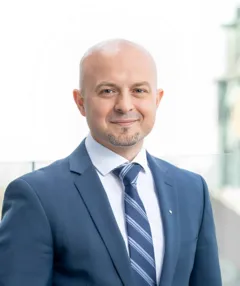
Wojciech Samek is a Professor in the Department of Electrical Engineering and Computer Science at the Technical University of Berlin and jointly heads the Department of Artificial Intelligence at Fraunhofer Heinrich Hertz Institute (HHI) in Berlin, Germany. Dr. Samek received his Dr. rer. nat. degree with distinction (summa cum laude) from the Technical University of Berlin in 2014 after studying computer science at Humboldt University of Berlin, Heriot-Watt University, and University of Edinburgh. During his studies, he received scholarships from the German Academic Scholarship Foundation and the DFG Research Training Group GRK 1589/1, and was a visiting researcher at NASA Ames Research Center. Professor Samek's research focuses on Explainable AI, where he has made significant contributions to interpreting, explaining, and visualizing deep learning models. His work also extends to neural network compression and federated learning, addressing critical challenges in transparency, efficiency, and privacy in AI systems. His research spans both theoretical foundations and practical applications of artificial intelligence. Senior editor of IEEE TNNLS Editorial board member of PLoS ONE and Pattern Recognition Elected member of the IEEE MLSP Technical Committee Member of scientific advisory board of IDEAS NCBR 2020 Pattern Recognition Best Paper Award Multiple best paper awards Part of the expert group developing the ISO/IEC MPEG-17 NNR standard Recognized for "Highly Cited Papers" (top 1%) in Engineering Professor Samek has co-authored over 150 peer-reviewed publications and serves as associated faculty at BIFOLD – Berlin Institute for the Foundation of Learning and Data and the ELLIS Unit Berlin. He has edited influential books including "Explainable AI: Interpreting, Explaining and Visualizing Deep Learning" (2019) and "xxAI – Beyond explainable AI" (2022), and regularly organizes workshops and tutorials on cutting-edge AI topics. His dual appointments bridge academic research at Technical University of Berlin with applied research at Fraunhofer HHI, positioning him at the forefront of AI innovation in both theoretical and practical domains.