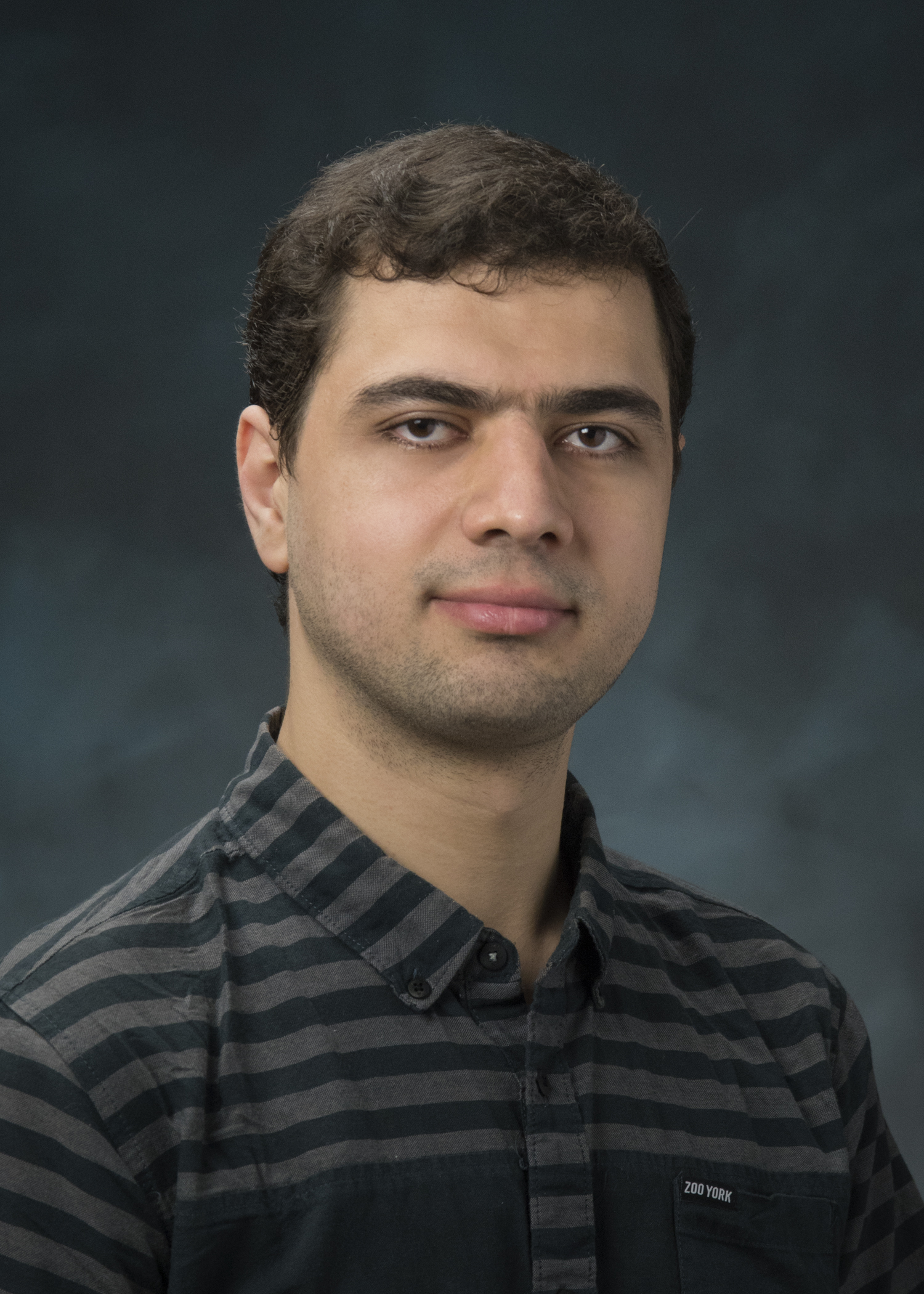
Ernest Davis is a Professor at the Department of Computer Science , Courant Institute of Mathematical Sciences , New York University . His research focuses on representing commonsense knowledge in AI systems , with an emphasis on spatial and physical reasoning , and he collaborates with Gary Marcus on integrating AI and psychological models. He has authored over 50 scientific papers and three books, including Linear Algebra and Probability for Computer Science Applications (2012). His teaching includes courses on Artificial Intelligence and Fundamental Algorithms. Research Trends: His recent work examines benchmarks for commonsense reasoning , limitations of large language models (e.g., GPT-4, DALL-E 2), mathematical reasoning in AI, and the Winograd Schema Challenge . Professional Activities: He has served as an ACM reviewer, program committee member for 50+ conferences, and area editor for ACM Transactions on Computational Logic . He contributes book reviews to Computing Reviews , SIAM News , Artificial Intelligence journal, and others. Non-Technical Writing: Davis writes for general audiences on topics spanning computer science, mathematics, cognitive psychology, and literary themes, published in outlets like The New Yorker , Wired , and The Times Literary Supplement .
Sriraam Natarajan is a Professor and Director of the Center for Machine Learning and StaRLing Lab at The University of Texas at Dallas (UTD), part of the Erik Jonsson School of Engineering & Computer Science. He holds additional roles as a hessian.AI Fellow at TU Darmstadt and an RBCDSAI Distinguished Faculty Fellow at IIT Madras. His expertise spans Artificial Intelligence, Machine Learning, and their applications in healthcare, with a focus on Relational Learning, Reinforcement Learning, and Graphical Models. He has been honored as an AAAI Fellow (2025), elected to the AAAI Executive Council, and recognized with the UTD Outstanding Graduate Teaching Award. Education: Completed his PhD in Computer Science at Oregon State University in 2007 under Prof. Prasad Tadepalli. Postdoctoral work at the University of Wisconsin-Madison with Professors Jude Shavlik and David Page. Previously served as faculty at Indiana University and Wake Forest School of Medicine. Research: Active in developing AI systems for healthcare, including predictive models for gestational diabetes and cardiac arrest in children. His work emphasizes integrating human knowledge into machine learning (e.g., Human-in-the-Loop systems) and advancing statistical relational AI frameworks like Markov Logic Networks and Probabilistic Circuits. Publications: Over 100 peer-reviewed articles, including notable works on causal learning, relational reinforcement learning, and knowledge graph construction. Recent focuses include explainable AI and scalable probabilistic models. Awards: AAAI Fellow, RBCDSAI Distinguished Fellowship, UTD Teaching Excellence Award. Advising and Collaboration: Mentored over 30 students, many now in academia and top institutions like IBM Research, Facebook, and Microsoft. Collaborates globally on projects like GLAD (Glocalized Anomaly Detection) and StaRLing Lab initiatives. Labs/Teams: Leads the StaRLing Lab, focusing on statistical relational AI, and directs UTD's Center for Machine Learning. Engaged in interdisciplinary projects with healthcare, robotics, and data science communities.
Mohammad Rostami is a Research Assistant Professor at the University of Southern California (USC) in the Department of Computer Science and Electrical and Computer Engineering, with a joint appointment at the USC Information Sciences Institute (ISI). He holds a PhD in Electrical and Systems Engineering from the University of Pennsylvania and additional degrees in Robotics, Philosophy, Electrical Engineering, and Pure Mathematics from prestigious institutions including the University of Waterloo and Sharif University of Technology. His research focuses on machine learning in data-scarce environments, particularly transfer learning, domain adaptation, low-shot learning, and improving learning efficiency through continual and collective learning. He incorporates symbolic logic and neuro-symbolic approaches to address challenges in catastrophic forgetting and knowledge retention. Applications span medical imaging, computer vision, and explainable AI. Rostami has received several accolades including the UPenn Best PhD Dissertation Award, IJCAI Distinguished Student Paper Award, and University of Waterloo Outstanding Achievement Award. His work bridges theoretical advancements with practical implementations, emphasizing real-world applications in healthcare and autonomous systems. He teaches graduate courses in applied natural language processing and knowledge graph construction. Rostami advises students at all academic levels and collaborates with remote researchers, emphasizing motivated, long-term project commitments.
Francesco Fabiano is a Research Fellow at the Department of Computer Science, University of Oxford, and an Affiliated Faculty Member at New Mexico State University. He previously served as Assistant Professor at New Mexico State University (2023–2024) and held Adjunct Professor roles at Saint Joseph’s University and University of Parma. His research spans neuro-symbolic AI, multi-agent systems, epistemology, and autonomous planning. Postdoctoral Research Associate at University of Oxford (2025–present) Ph.D. in Computer Science from University of Udine (2018–2021) Master’s Degree in Computer Science from New Mexico State University (2017–2018) Bachelor’s Degree in Computer Science from University of Parma (2013–2016) His work focuses on neuro-symbolic architectures that integrate formal logic with machine learning, particularly for multi-agent epistemic planning and ethical decision-making frameworks . He explores hybrid systems combining System-1/System-2 cognitive paradigms to enhance AI trustworthiness. Recent publications analyze knowledge representation in neuro-symbolic systems, the role of large language models in planning, and heuristic optimization in multi-agent epistemic solvers like EFP. His work also addresses ethical AI and explainable data-to-text frameworks . Best Ph.D. Thesis Award by GULP (2022) He collaborates with IBM Watson Research Lab on cognitive theory-inspired AI paradigms and contributes to open-source planning tools like EFP. His teaching experience includes courses in Applied Machine Learning , Automated Planning , and LaTeX programming .
Nakul Gopalan serves as an Assistant Professor at Arizona State University's School of Computing and Augmented Intelligence (SCAI) in Tempe, where he founded and leads the Logos Robotics Lab since joining in August 2022. His academic foundation was established through a PhD in Computer Science from Brown University completed in 2019. Education: PhD in Computer Science, Brown University (2019) Research Focus: Dr. Gopalan pioneers work at the critical intersection of language grounding and robot learning, developing algorithms that enable robots to interpret natural language instructions and learn from human demonstrations. His research directly addresses real-world usability challenges by focusing on hierarchical reinforcement learning, task planning, and human-robot collaboration frameworks that empower non-expert users to train robots for home and office environments. Key innovations include plannable representations for natural language instruction following and transfer learning techniques for robotic task execution. Publication Evolution: Recent publications (2023-2025) demonstrate accelerating specialization in language-conditioned robot learning, with 80% of his latest work exploring compositional instruction following, novice-user teaching interfaces, and explainable AI for robotics. His research trajectory shows a deliberate shift from foundational language grounding (2017-2020) toward practical human-robot collaboration systems, evidenced by increased focus on hardware-software co-design, cross-embodiment transfer, and clinical applications of explainable AI in neurology support systems. Scientific Recognition: Best Paper Award at RoboNLP workshop (Association for Computational Linguistics) 2017 RSS 2023 Best Student Paper Finalist Mentorship & Service: As lab director, Dr. Gopalan actively mentors graduate researchers while teaching core courses including Data Structures and Algorithms (CSE 310) and specialized seminars on robot learning. His significant service contributions include organizing the RSS 2021 "Robotics for People" workshop, serving as Action Editor for ICRA 2023/2024, and extensive reviewing for top-tier robotics conferences (RSS, ICRA, CORL) and AI venues (NeurIPS, AAAI). Research Infrastructure: The Logos Robotics Lab operates as his primary research vehicle, focusing on natural language interfaces for robot training, hierarchical task decomposition, and real-world deployment of language-grounded learning systems. Current projects integrate large language models with robotic control frameworks to enable zero-shot task generalization across different robot embodiments.
Christian Smith is an Associate Professor and Lecturer at the Department of Robotics, Perception and Learning at Kungliga Tekniska Högskolan (KTH Royal Institute of Technology). His research focuses on robotics and applications in human-centered environments like home environments, small workshops, and healthcare facilities, including the development of new robotic systems for research. Teaching Roles: Course Coordinator/Teacher/Examiner for courses such as Introduction to Robotics (DD2410), Research Project in Robotics (DD2411), and Java Programming for Python Programmers (DD1380) Research Themes: Human-Robot Interaction, Behavior Trees, Exoskeletons, Intent Recognition, and Multimodal Perception Awards: No specific scientific awards mentioned in the provided text His KTH profile highlights work on adaptive robotics systems and formalized control strategies. The research portfolio spans from theoretical studies on behavior tree programming to applied work in assistive technologies and teleoperation systems.
George Vosselman is a Full Professor at the University of Twente, Faculty of Geo-Information Science and Earth Observation (ITC), specializing in Geo-Information Extraction with Sensor Systems. Educated with honours at Delft University of Technology (1986) and PhD in Photogrammetry from Rheinische Friedrich Wilhelms University of Bonn (1991), he has held academic roles at the University of Stuttgart, University of Washington, and Delft University of Technology (1993–2004). Since 2004, he has been a key figure at ITC, serving as department head (2012–2018, 2023–). Education: Delft University of Technology (BSc with honours, 1986), Rheinische Friedrich Wilhelms University of Bonn (PhD with honours, 1991) His research focuses on leveraging sensor technology advancements for large-scale geo-information production. Key expertise includes quality analysis of laser altimetry data, point cloud segmentation/classification, 3D building/road modeling, and model-driven imagery analysis. He has published over 220 papers and co-edited the textbook Airborne and Terrestrial Laser Scanning (2010). Recent work integrates deep learning with geospatial data, addressing semantic segmentation, visual question answering, and drone-based mapping. Recent publications (2025–2023) highlight trends in deep learning for remote sensing , including multimodal question answering benchmarks (HRVQA), vectorized building extraction (RoIPoly), latent diffusion for road modeling (LDPoly), and drone obstacle avoidance systems. His work bridges photogrammetry , computer vision , and robotic mapping , with applications in urban planning, disaster management, and informal settlement monitoring. Scientific Awards : Hansa Luftbild (1993), ISPRS Otto von Gruber (2000), Schwidefsky Medal (2012), Karl Kraus Medal (2012), ASPRS Fairchild Award (2015), ISPRS Fellow (2020) As an educator, Vosselman has taught photogrammetry, remote sensing, and laser scanning at Delft University of Technology and globally. He chaired the ITC Examination Board (2015–2023) and modernized geo-information education in Asia/Africa. His software for point cloud processing is commercialized in Europe, and he currently leads ISPRS working groups on point cloud methodologies. Labs/teams include the Earth Observation Science Chair Group at ITC, collaborating on UAV-based datasets (UAVid, UAVPal) and indoor laser scanning systems. Recent activities (2025) involve invited talks on pulse matching limitations in laser scanning and deep learning for point cloud classification.
Prof. Dr.-Ing. Stefan Kopp is a faculty member at Bielefeld University's Faculty of Engineering and serves as Research Group Leader of the Cognitive Systems and Social Interaction Group . He also holds administrative roles as Vice Dean and Deputy CITEC Coordinator . His work focuses on Artificial Intelligence , Cognitive Systems , and Socio-Technical World research areas. Research Group Leader: Cognitive Systems and Social Interaction Group Vice Dean: Faculty of Engineering Deputy Coordinator: Center for Cognitive Interaction Technology (CITEC) Project Manager: TRR 318 "Constructing Explainability" subprojects His research explores human-agent interaction , multimodal conversational agents , and social AI through projects like 39-Inf-11 Human-Machine Interaction and 39-M-Inf-VKI Virtual Humans and Conversational Agents . Publications address topics including adaptive explanation generation , gesture synthesis , and social cognition in dynamic environments. Current research topics span cooperative AI , explainable decision-making , and sensorimotor grounding in artificial systems.
Miguel Ángel Sotelo Vázquez is a full Professor at the University of Alcalá, leading the INVETT Research Group (Intelligent Vehicles and Traffic Technologies). He holds the Department of Automatic Control and specializes in autonomous systems, particularly in path planning, sensor fusion, and human-vehicle interaction. His research integrates machine learning, robotics, and control theory to address challenges in intelligent transportation systems. He earned his Ph.D. in 2001 with a thesis on autonomous vehicle navigation in partially known environments. His work emphasizes real-world deployment, explainable AI, and safety-critical systems. Recent projects focus on lane change prediction, pedestrian behavior modeling, and cybersecurity for autonomous systems. Key contributions include neuro-symbolic frameworks for decision-making, real-time multi-physics field reconstruction, and cross-cultural studies of pedestrian interactions. He collaborates internationally on urban mobility resilience and hydrogen refueling infrastructure. Research Highlights : Development of knowledge graph-based prediction architectures Experimental validation of human-vehicle interaction in VR environments Creation of the SCOUT trajectory prediction framework
Huy T Tran is an Assistant Professor in the Department of Aerospace Engineering at the University of Illinois at Urbana-Champaign's College of Engineering, with additional appointments at the Applied Research Institute. His research focuses on the intersection of robotics, artificial intelligence, and multi-agent systems, with applications spanning autonomous navigation, critical infrastructure resilience, and intelligent transportation. Dr. Tran earned his Ph.D. in Aerospace Engineering from Georgia Institute of Technology in 2015, following advanced degrees from Georgia Tech and University of Wisconsin-Madison. His academic journey includes research assistant professor positions before achieving his current assistant professor role in 2021. He previously worked as a Senior Multi-Disciplinary Systems Engineer at The MITRE Corporation and served as a Visiting Scholar at the Air Force Institute of Technology. His research interests encompass Autonomy, Reinforcement Learning, Artificial Intelligence, Machine Learning, Robotics, Multiagent Systems, Intelligent Transportation Systems, and Critical Infrastructure Resilience. As director of the Lab for Intelligent Robots and Agents (LIRA), he leads cutting-edge research in autonomous systems that interact with humans and other robots. His work has evolved from foundational resilience modeling in aerospace systems toward increasingly sophisticated AI applications in multi-robot coordination and explainable decision-making. Dr. Tran's publication record demonstrates a clear trajectory toward explainable AI and human-AI collaboration, with recent work focusing on generating explanations for reinforcement learning policies, coordination in ad hoc teams, and neuro-symbolic approaches to robot policy interpretation. His research bridges theoretical advances with practical applications in air traffic control, field robotics, and critical infrastructure management. Best Paper Award: Theoretical (2016 Complex Adaptive Systems Conference) Selected for oral presentation at IROS 2023 Workshop 27% full paper acceptance rate at AAMAS 2022 44% acceptance rate at ICRA 2020 As an educator, Dr. Tran teaches core aerospace courses including Computational Systems Engineering, Aerospace Numerical Methods, and Reinforcement Learning. He has secured significant research funding from NASA's Transformational Tools and Technologies program, ARL A2I2 program, ONR Science of AI program, and DARPA. His current projects span ad hoc teaming in multi-robot systems, collective autonomous air mobility, hierarchical reinforcement learning, and interpretable AI agents.
Natalia Díaz Rodríguez is an Assistant Professor of Artificial Intelligence at ENSTA ParisTech, where she works in the Computer Science and Systems Engineering department within the Autonomous Systems and Robotics Lab (U2IS). She is also affiliated with the INRIA Flowers team, focusing on developmental robotics. Her research spans deep learning, reinforcement learning, continual learning, and symbolic AI, with applications in explainable AI, computer vision, and robotics for social good. Her academic background includes a double PhD in Artificial Intelligence from Abo Akademi University and the University of Granada, alongside MSc degrees in Soft Computing and Computer Engineering from the University of Granada. She contributes to interdisciplinary AI, particularly in robotics, ethics, and healthcare applications, and co-organizes workshops on continual learning. Double PhD in Artificial Intelligence (2015), Abo Akademi University and University of Granada Doctoral diploma on Innovation and Entrepreneurship (2017), EIT Digital MSc in Soft Computing and Intelligent Systems (2012), University of Granada MSc in Computer Engineering (2010), University of Granada Her recent publications focus on trustworthy AI, including bias identification, counterfactual explanations, and continual learning strategies, reflecting her commitment to ethical and robust AI systems. She also explores AI applications in structural engineering, climate visualization, and financial risk assessment, emphasizing practical deployment and interpretability.
Professor Lyudmila Mihaylova is a distinguished academic at the University of Sheffield's School of Electrical and Electronic Engineering, where she holds the position of Professor of Signal Processing and Control. She has established herself as a leading researcher in the fields of signal processing, Bayesian methods, and autonomous systems, with significant contributions to particle filtering techniques for intelligent transportation systems. Her work bridges theoretical developments with practical applications across multiple domains including transportation, healthcare, and industrial automation. Prof. Mihaylova's research interests center on nonlinear filtering, sequential Monte Carlo methods, statistical signal processing, and sensor data fusion. Her work spans both theoretical advancements and practical implementations, with particular focus on high-dimensional problems including vehicular traffic flow estimation, image processing, and localization in sensor networks. She has extensive experience with various image modalities such as optical, thermal, LIDAR, SAR, and hyperspectral imaging. Her group actively develops novel methods for autonomous intelligent systems focusing on sensing, tracking, decision making, and machine learning applications. Analysis of Prof. Mihaylova's recent publications reveals a strong trend toward uncertainty quantification in machine learning models, particularly for safety-critical applications. Her work increasingly integrates traditional signal processing techniques with modern deep learning approaches, with applications spanning sewer inspection robotics, medical diagnostics (particularly sleep apnea detection), UAV swarm tracking, industrial manufacturing, and autonomous vehicle systems. A significant portion of her recent research focuses on developing robust methods that can handle incomplete or outlier-corrupted data while providing reliable uncertainty estimates. Among her notable professional achievements: President of the International Society of Information Fusion (ISIF) Senior member of the IEEE Signal Processing Society Associate Editor for IEEE Transactions on Aerospace and Electronic Systems Associate Editor for Elsevier Signal Processing Journal Prof. Mihaylova has successfully mentored numerous PhD students and postdoctoral researchers, many of whom have gone on to prominent academic and industry positions. Her research has been supported by major funding bodies including EPSRC, EU, MOD/DSTL, and industry partners, with recent projects including 'Protecting Environments with UAV Swarms' (InnovateUK, 2022-2024), 'ShiRAS: Towards Safe and Reliable Autonomy in Sensor Driven Systems' (NSF-EPSRC, 2019-2023), and 'Confident safety integration for Cobots' (Lloyd's Register Foundation, 2019-2020). Her research group follows a collaborative approach with the philosophy 'We share knowledge, we grow.' Prof. Mihaylova maintains active research collaborations with institutions worldwide and has held previous academic positions at Lancaster University (2006-2013) and University of Bristol (2004-2006), along with research visiting positions at the University of Ghent, Katholic University of Leuven, and the Bulgarian Academy of Sciences.
Wei Pang is a Professor of Computer Science and Bicentennial Research Leader at the School of Mathematical and Computer Sciences, Heriot-Watt University, Edinburgh. He leads the BCML Lab and is affiliated with the Edinburgh Centre for Robotics and National Robotarium. His expertise spans bio-inspired computing, machine learning, and AI applications in healthcare, robotics, and sustainability. Pang holds a PhD in Computing Science from the University of Aberdeen, with prior roles including Senior Lecturer at the University of Aberdeen and research fellowships in systems biology. Affiliations: Heriot-Watt University, Edinburgh Centre for Robotics, National Robotarium Education: PhD in Computing Science (2009), MEng (by research), BSc (Jilin University, China) Research Interests: Bio-inspired computing (e.g., artificial immune systems, swarm intelligence), machine learning (deep learning, explainable AI), healthcare applications (medical imaging, disease detection), and interdisciplinary projects in robotics and environmental science. His work addresses challenges in robust AI, fairness, and accountable machine learning. Recent Projects: EPSRC-funded RAIns and MI projects, CRUK-funded Endo.AI, and PRIME project on minority ethnic communities' digital experiences. His research has secured over £10M in grants, including £3.5M institutional funding. Awards: Scottish Crucible Award (2015), ADMA Best Paper Runner-Up (2016), EPSRC PRIME Award (2024) Grants/Advising: Supervised 12 PhD completions; contributed to £10M+ external funding. Labs/Teams: BCML Lab (focusing on bio-inspired AI), collaborations with Oxford, Cambridge, and industrial partners like Weather2 and Data2Text.
Prof. Constantin A. Rothkopf is a W3 Professor at the Department of Psychology, Technische Universität Darmstadt, and a secondary member of the Department of Computer Science. He serves as Founding Director of the Centre for Cognitive Science and founding member of the Hessisches Zentrum für Künstliche Intelligenz (hessian.ai). He is also part of the European Laboratory for Learning and Intelligent Systems (ELLIS) and the DAAD Konrad Zuse Schools of Excellence in Artificial Intelligence (ELIZA). His research focuses on the interplay between perception and action, using computational models and experimental studies in humans. Current work includes eye-tracking studies in naturalistic environments, inverse optimal control models, and developing algorithms for virtual agents. Education: Ph.D. in Neuroscience and Informatics from the University of Rochester, followed by postdoctoral research at Frankfurt Institute for Advanced Studies (FIAS). He has held visiting professorships at Central European University (2017) and Columbia University (2023). Awards include an ERC Consolidator Grant (2022) and SCENE Project Funding (2025). Research Interests: Active vision, decision-making under uncertainty, sensorimotor control, and computational modeling. Key themes include how humans use sensory input to form beliefs, make decisions, and act in dynamic environments. Grants/Awards: ERC Consolidator Grant (2022), SCENE Funding (2025) Labs/Teams: Centre for Cognitive Science, hessian.ai, ELLIS Unit Darmstadt
Chun Ouyang is a Professor at Queensland University of Technology (QUT) in the School of Computer Science within the Faculty of Science. With an extensive publication record spanning over two decades from 2002 to 2025, Professor Ouyang has established themselves as a leading researcher in Business Process Management, Process Mining, and Explainable AI. Their work bridges theoretical foundations with practical applications across healthcare, finance, and industrial sectors. Professor Ouyang's research interests primarily focus on Business Process Management systems, Process Mining techniques, Explainable Artificial Intelligence, and Healthcare Process Analysis. Their work has evolved from foundational BPMN/BPEL translation research in the early 2000s to sophisticated process mining approaches in the 2010s, and most recently to cutting-edge Explainable AI applications in clinical and business contexts. They have developed novel methodologies for process querying, predictive process analytics, and XAI evaluation frameworks that have significantly advanced the field. Their research consistently emphasizes practical applicability while maintaining strong theoretical foundations, with publications in top-tier journals and conferences including IEEE Transactions, Springer journals, and major BPM conferences. Analysis of Professor Ouyang's recent publications (2023-2025) reveals a strategic research trajectory that integrates traditional process mining with modern AI techniques, particularly focusing on explainability and trustworthiness. Their work demonstrates a consistent pattern of addressing real-world challenges through rigorous methodological development, with increasing emphasis on healthcare applications, clinical decision support systems, and the ethical implications of AI deployment. The publications show strong interdisciplinary collaboration patterns, particularly with medical researchers and industry partners. Professor Ouyang has mentored numerous PhD students and early-career researchers who have gone on to establish themselves in the BPM and AI communities. Their research group at QUT has secured multiple competitive grants supporting innovative work in process analytics and AI. They maintain active collaborations with leading researchers globally, including Catarina Pinto Moreira, Arthur ter Hofstede, and Moe Wynn. Professor Ouyang leads the Process Analytics Research Group at QUT, which focuses on developing advanced techniques for business process analysis, prediction, and optimization. The group maintains strong industry connections with healthcare providers, financial institutions, and government agencies, ensuring their research has practical impact. Current projects include developing trustworthy AI systems for clinical decision support, cross-organizational process analysis frameworks, and next-generation process mining techniques for complex, distributed systems.