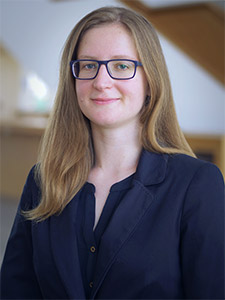
Dr. Marion Koelle is a researcher at the University of Oldenburg and affiliated with the OFFIS Institute for Information Technology , the University of Duisburg-Essen , and the Embedded Interactive Systems Lab at University of Passau. Her work focuses on Human-Computer Interaction (HCI) , with particular emphasis on privacy-preserving wearable technologies , body-based interfaces , and social acceptability of emerging technologies . Marion Koelle's research explores how users interact with augmented reality , smart home ecosystems , and biomaterials for interactive devices . She investigates methods to balance technological innovation with ethical considerations , including gender-specific FemTech and privacy policy design . Her work often incorporates haptic feedback , electrical muscle stimulation , and biodegradable materials for sustainable interfaces. Recent publications highlight her leadership in privacy-preserving systems and socially acceptable wearable design . Koelle collaborates with institutions across Germany and internationally, contributing to journals like Proc. ACM Hum. Comput. Interact. and conferences such as CHI , MUM , and TEI . She actively explores biomaterials for prototyping and privacy mediation in public settings.
Giovanni Iacca is an Associate Professor at the University of Trento's Department of Information Engineering and Computer Science (DISI), where he serves as Coordinator of the Master's Degree in Computer Science and Deputy Director of the Information Engineering and Computer Science Doctoral School. He leads the Distributed Intelligence and Optimization Lab (DIOL) and teaches courses including Computer Architectures, Introduction to Machine Learning, Bio-Inspired Artificial Intelligence, and Optimization Techniques across multiple academic programs. PhD in Computer Science, University of Jyväskylä, Finland (2011) MSc in Computer Engineering, Technical University of Bari, Italy (2006) Professor Iacca's research focuses on the intersection of evolutionary computation, machine learning, and optimization with applications in distributed systems and robotics. His work spans from theoretical foundations of memetic computing and multi-objective optimization to practical implementations in soft robotics, embedded systems, and healthcare applications. Recent efforts emphasize interpretable AI, particularly in reinforcement learning contexts, where his team develops methods to make decision processes transparent while maintaining performance. His research bridges the gap between fundamental algorithmic development and real-world engineering challenges, with over 15 years of industrial experience in optimization applied to engineering, logistics, and scheduling. Analysis of his recent publications reveals a strong trend toward interpretable AI systems, particularly in reinforcement learning contexts, with significant contributions to federated learning optimization, evolutionary neural architecture search, and applications in healthcare scheduling. His work consistently combines evolutionary algorithms with modern machine learning techniques to solve complex optimization problems across diverse domains including soft robotics, batteryless edge computing, and supply chain management. Scientific Awards: EvoApplications Best Paper Award (2017) UKCI AWARENESS Best Paper Award (2012) IEEE CIS Outstanding Student-Paper Award (2011) Professor Iacca actively supervises a large research group with numerous PhD students across multiple doctoral programs, including Information Engineering and Computer Science, Industrial Innovation, and the National PhD in Artificial Intelligence for Society. His lab has secured significant research funding through collaborations with industry partners and international research consortia. Recent grants support work on interpretable reinforcement learning, federated optimization, and applications of evolutionary computation in healthcare and robotics. He has also been appointed to editorial roles for prestigious journals including IEEE Transactions on Evolutionary Computation and Evolutionary Intelligence. The Distributed Intelligence and Optimization Lab (DIOL) under Professor Iacca's leadership comprises over 30 researchers including postdocs, PhD students, and master's students. The lab maintains strong international collaborations and has developed specialized expertise in evolutionary computation, interpretable AI, and optimization for embedded systems. Current projects include work on the EIC Pathfinder Challenge "Awareness Inside," development of methods for batteryless edge intelligence, and applications of evolutionary algorithms to healthcare scheduling problems.
Philip S. Yu is a distinguished Professor in the Department of Computer Science at the University of Illinois at Chicago's College of Engineering. He received his PhD from Stanford University and has established himself as a leading researcher in data mining, machine learning, and artificial intelligence. His research spans multiple domains including graph neural networks, recommendation systems, fake news detection, and large language models. Professor Yu's research interests primarily focus on Data Mining , Machine Learning , Artificial Intelligence , Graph Neural Networks , Recommendation Systems , Fake News Detection , and Large Language Models . His work addresses fundamental challenges in knowledge discovery from complex data structures, with particular emphasis on developing robust algorithms for real-world applications. His recent publications demonstrate strong interest in the intersection of traditional data mining techniques with emerging large language model architectures. Analysis of Professor Yu's 2025 publication record reveals significant contributions across multiple high-impact venues including IEEE Transactions, ACM journals, and top conferences. His work shows a clear trend toward integrating traditional data mining approaches with large language models, particularly in areas like recommendation systems, fake news detection, and privacy-preserving technologies. Many publications take the form of comprehensive surveys, indicating his role as a thought leader synthesizing emerging trends in the field. While specific awards aren't listed in the current data, Professor Yu's extensive publication record in top-tier venues and his position as senior author on numerous collaborative projects demonstrate significant recognition within the research community. Professor Yu maintains active research collaborations across multiple institutions, as evidenced by his co-authorship on numerous papers with researchers from different universities. His work often involves interdisciplinary approaches, bridging computer science with applications in security, healthcare, and social media analysis.
Prof. Sergiy Yakovlev serves as a Research Professor in the Department of Mathematical Modeling at University of Lodz, with room 167 and contact number +48 426313617. His extensive academic contributions span combinatorial optimization, geometric design, and artificial intelligence applications. His research interests focus on Combinatorial Optimization, Geometric Design, Computational Geometry, and AI in Public Health, with significant work in spatial configuration modeling and packing/covering problems. Recent publications demonstrate strong interdisciplinary connections between mathematical theory and practical applications in epidemiology and sensor networks. Analysis of his 15 most recent publications reveals a clear trend toward applying computational geometry and optimization techniques to public health challenges, particularly in modeling epidemic dynamics during the Ukraine conflict and developing AI frameworks for health misinformation detection. His work bridges theoretical mathematics with real-world crisis response systems. While no specific scientific awards are documented in the provided text, his publications appear in high-impact journals including Symmetry (70 points), Environmental and Climate Technologies (100 points), and Cybernetics and Systems Analysis. Prof. Yakovlev actively collaborates on epidemic modeling projects related to the Ukraine conflict, including migration impacts on COVID-19 dynamics and respiratory infection modeling in Kharkiv region. His work involves multiple international research teams across Poland, Ukraine, and Switzerland. He contributes to critical monitoring systems through his research on sensor network reliability for environmental emergencies and forest fire monitoring, with particular attention to failure analysis in hybrid network architectures.
Stefanie Krause is a doctoral researcher at the Doctoral Center Engineering and Information Technologies (IWIT) at Harz University of Applied Sciences and the University of Bamberg. Her work focuses on explainable AI (XAI) and its application in higher education and robotics. She is supervised by Prof. Dr. Frieder Stolzenburg (Harz University) and Prof. Dr. Ute Schmid (University of Bamberg). Education: M.Sc. in Technical Innovation Management (Harz University), B.Sc. in Mathematics (University of Bayreuth) Research interests center on post-hoc explainability of large AI models, educational robotics, and AI's transformative impact on higher education. Her publications (2021–2025) span conferences like Frontiers in Digital Education , AIET , and RiE , addressing topics such as generative AI applications, commonsense reasoning, and interdisciplinary module development. Recent articles highlight trends in AI education, including generative AI's role in curriculum design, large language model explainability, and robotics integration in teaching. Her work emphasizes practical usability and human-readable AI explanations. At Harz University, she has served as a Research Assistant ( Wissenschaftliche Mitarbeiterin ) and Lecturer for Special Tasks ( Lehrkraft für besondere Aufgaben ) since 2021, contributing to projects like InterGradEGD and REGINA. No scientific awards are mentioned.
Reinhard Heil is a scientific Assistant and Researcher at the Institute for Technology Assessment and Systems Analysis (ITAS) at Karlsruhe Institute of Technology (KIT), where he leads the Research Group 'Digital Technologies and Social Change.' His work focuses on the intersection of technology, society, and ethics, with particular emphasis on artificial intelligence, transhumanism, and technology assessment methodologies. Heil holds a Master's degree in Philosophy, Literature and Sociology from TU Darmstadt (completed by 2003) and has been working at ITAS since 2010 as a Research Associate and Project Manager. His academic journey reflects a deep engagement with philosophical questions surrounding emerging technologies. His research interests span the social consequences of artificial intelligence, transhumanism and human enhancement, vision assessment methodologies, and the philosophical dimensions of technology. He has made significant contributions to understanding how AI systems impact society, particularly examining issues of explainability, trust, and the ethical implications of generative AI systems. His work often bridges theoretical philosophical frameworks with practical technology assessment. His recent publications show a clear trend toward analyzing the societal implications of AI, particularly focusing on explainable AI (XAI), the challenges of generative AI systems, and the philosophical questions these technologies raise about human cognition and experience. He has also maintained a consistent research thread on transhumanism and human enhancement, examining historical contexts and contemporary debates. Heil has led and contributed to numerous significant projects including 'Uncontrollable artificial intelligence: An existential risk?', 'Social trust in learning systems', 'Trust through explainability in verifiable online voting systems', 'Interdisciplinary approaches to deepfakes', and 'Deep Genomics – Opportunities and Challenges of the Convergence of Artificial Intelligence, Modern Human Genomics and Genome Editing'. He has also coordinated the 'Assessing Big Data (ABIDA)' project and managed 'Engineering Life'. As part of ITAS, Heil works within the broader context of technology assessment research, contributing to the institute's mission of analyzing emerging technologies from interdisciplinary perspectives. His work often involves collaboration with various research groups focused on digital technologies, sustainable energy, health technologies, and mobility futures. He frequently engages with policymakers and participates in public discourse on technology governance through lectures, workshops, and media appearances.
Shangfei Wang is a full Professor at the School of Computer Science and Technology, University of Science and Technology of China (USTC). His research focuses on pattern recognition, affective computing, and probabilistic graphical models, with significant contributions to facial expression analysis, emotion recognition, and multimodal human-robot interaction. He leads the Key Laboratory of Computing and Communication Software of Anhui Province and has received multiple international competition awards including placements in the OMG Empathy Prediction Challenge and Detecting Depression with AI Sub-Challenge. PhD in Computer Science, USTC (2002) MSc in Electronic Science and Technology, USTC (1999) BSc in Electronic Engineering, Anhui University (1996) His work combines domain knowledge with advanced machine learning techniques, including adversarial learning, dual learning, and multimodal deep regression Bayesian networks. Research themes include: Emotion-aware medical consultation systems Thermal image-based facial recognition Privileged information learning for emotion detection Spontaneous vs. posed expression differentiation EEG and physiological signal integration AI applications in mental health support Key projects include multiple National Nature Science Foundation of China grants and international collaborations with French institutions. He serves as Associate Editor for IEEE Trans. on Affective Computing and ACM Trans. on Multimedia Computing, and organized several international conference tracks.
Anargh Viswanath is a researcher at the Research Institute for Cognition and Robotics (CoR-Lab), affiliated with the Faculty of Linguistics and Literary Studies at Bielefeld University. He contributes to the Socio-Technical World strategic research area, focusing on AI systems that enhance human-robot collaboration and intelligent interaction. Research Interests: Intelligent Interaction, Multimodal Learning, Conversational Agents, Natural Language Processing, Human-Agent Interaction Projects: Hybrid Living DL (it's OWL), Networks 2021 (SAIL), and it's OWL (MWIDE NRW) His work bridges computational linguistics and robotics, emphasizing explainability, proactive agent design, and emotion recognition in human-machine systems. Key publications highlight multimodal learning frameworks, affective computing in oral history analysis, and ethical AI considerations. Contact: Email: anargh.viswanath@uni-bielefeld.de Office: UHG U5-234 Phone: +49 521 106-6982 (secretariat)
Lily Eva Frank is an Assistant Professor of Philosophy and Ethics at Eindhoven University of Technology in the Netherlands, where she conducts research at the intersection of technology, ethics, and medicine. She is also a Senior Researcher at the 4TU Center for Ethics and Technology, demonstrating her significant role in the Dutch academic ethics community. Her work bridges philosophy with practical applications in emerging technologies, particularly focusing on how these technologies reshape human relationships and ethical frameworks. Dr. Frank's research interests span several interconnected domains that reflect the evolving landscape of technology ethics. Her primary focus areas include the ethics of social robotics (examining chatbots, sex robots, and care robots), the ethical implications of AI in medical contexts (particularly regarding physician-patient relationships and impacts on vulnerable populations), and the ethical challenges arising when AI intersects with behavior change and persuasive technologies. Her scholarly approach integrates biomedical ethics, moral psychology, feminist ethics of technology, and metaethics to address complex questions about human-technology interactions. These research strands collectively examine how emerging technologies disrupt traditional ethical frameworks and social structures. Her recent publications reveal a consistent focus on the social and ethical dimensions of AI and robotics, with particular attention to governance frameworks, mental healthcare applications, digital well-being, and the philosophical foundations of technology ethics. The articles demonstrate a progression from theoretical explorations of moral philosophy to practical applications in healthcare, mental wellness, and social interactions. A notable trend is her increasing engagement with interdisciplinary collaboration, as evidenced by her work with researchers from diverse fields including computer science, psychology, and medical disciplines. Her scholarship consistently addresses the tension between technological innovation and ethical responsibility, particularly regarding vulnerable populations and the potential for both harm and benefit. Dr. Frank actively seeks interdisciplinary collaboration, as she states: 'I am very interested in interdisciplinary (intradisciplinary too) collaboration-so please get in touch if you think we might have a shared interest!' Her work appears across multiple platforms including PhilPapers, Academia.edu, and ResearchGate, indicating her commitment to scholarly dissemination beyond traditional academic channels. She has contributed to significant projects such as the 'Reimagining Digital Well-Being' report for designers and policymakers, which emerged from a collaboration with the Royal Netherlands Academy of Arts and Sciences. Her research program demonstrates a cohesive trajectory examining how emerging technologies challenge and reshape ethical frameworks across multiple domains. From AI in healthcare to social robotics and digital well-being, her work consistently addresses the fundamental question of how humans should ethically navigate increasingly technology-mediated relationships and decision-making processes. This integrative approach positions her as a significant voice in contemporary technology ethics, particularly regarding the practical implementation of ethical frameworks in rapidly evolving technological landscapes.
Dr. Saugat Bhattacharyya is a Lecturer in Computer Science at Ulster University, specifically within the School of Computing, Engineering & Intelligent Systems at the Magee Campus in Derry~Londonderry. His research focuses on the intersection of cognitive neuroscience, artificial intelligence, and human-machine interaction, with particular emphasis on brain-computer interface systems for neuro-rehabilitation applications. Dr. Bhattacharyya received his academic training in India, earning a Bachelor's Degree in Biomedical Engineering from West Bengal University of Technology (2009), followed by a Master of Engineering Degree in Biomedical Engineering from Jadavpur University, Kolkata (2011). He completed his Ph.D. in Biomedical Engineering from Jadavpur University in 2015, with research focused on "Human-Computer Interface for Motion Control of Artificial Limb(s)". During his doctoral studies, he was a Visiting Scientist at Paul Valery University of Montpellier, France (2014-2015) through the Erasmus Mundus-Svaagata Project Fellowship. His primary research interests center on developing brain-computer interfacing systems that utilize robust signal processing and machine learning algorithms to interpret users' cognitive states through neural and physiological signals. Dr. Bhattacharyya has made significant contributions to the fields of cognitive neuroscience and neuro-rehabilitation, particularly in applying AI and machine learning to enhance human-machine interaction. His work often addresses practical challenges in stroke rehabilitation and decision-making support systems. Dr. Bhattacharyya's research output demonstrates a strong focus on translating theoretical advances into practical applications, with particular attention to mental fatigue monitoring, collaborative brain-computer interfaces for group decision making, and advanced signal processing techniques for neural data. His recent work shows increasing integration of quantum computing concepts with traditional machine learning approaches for EEG analysis. Unravelling the Forest Fires in Lower Himalayan Forests: A Comprehensive Study of Indian Forest Regions of Uttarakhand using IoT technology (2019) Motion control of artificial limb(s) through a human-computer interface (2012) Study of the probabilistic nature of Motor Imagery Electroencephalography signals and its correlation with Electromyography signals for closed loop control of a robotic manipulator (2014) Dr. Bhattacharyya serves as Principal Investigator for multiple research projects including "AI-EPOCMON" (2022-2026), "A Brain-Computer Interface driven Mental Fatigue Monitoring System to improve Stroke Rehabilitation Therapy" (2024-2025), and "Patient and Public Involvement in Developing Accessible Stroke Rehabilitation Technology" (2024). He also contributes as a Co-Investigator on projects like the "Smart Nano-Manufacturing Corridor" and "Upgrading Magnetoencephalography(MEG) system with Internal Helium Recycler". His research is supported by funding from the Department for the Economy and Medical Research Council. His laboratory work focuses on developing intelligent neuro-technologies for rehabilitation applications, with current projects emphasizing mental fatigue monitoring in stroke rehabilitation and collaborative brain-computer interfaces for group decision making. The team employs advanced signal processing techniques, machine learning algorithms, and novel hardware integration to create more effective neuro-rehabilitation systems.
Dr. Glenn Hawe is a Lecturer at Ulster University's School of Computing within the Faculty of Computing, Engineering and the Built Environment. He has been with the university since 2013 and is a member of the Artificial Intelligence Research Group. His work focuses on the intersection of machine learning, optimization, and emergency response systems. Education: MPhys in Mathematics and Physics (first class) from University of Warwick (2004) PhD in Electronics and Electrical Engineering from University of Southampton (2008) Dr. Hawe's research spans machine learning, multi-objective optimization, and agent-based simulation, with applications in emergency response systems, robotics, and autonomic computing. His work often explores how computational methods can address complex real-world problems, particularly in the context of resource allocation during major incidents. He has developed innovative approaches in Bayesian optimization and has made significant contributions to the field of autonomic pulse communications for robot swarms. Analysis of his recent publications shows a clear trajectory toward increasingly sophisticated applications of machine learning in robotics and emergency response systems. His work demonstrates growing integration of autonomic computing principles with swarm robotics, particularly for space applications and disaster response scenarios. The research shows increasing focus on explainability in AI systems alongside practical implementation in constrained environments. Scientific Recognition: Won two best paper awards at conferences during his PhD Work featured in 2009 'From recession to recovery' report by Universities UK as an example of successful academia-industry collaboration Dr. Hawe has been actively involved in multiple Knowledge Transfer Partnership (KTP) projects with industry partners and has served as a reviewer for prestigious journals including Journal of Simulation, International Journal of Machine Learning and Cybernetics, and IEEE Transactions on Magnetics. He is a member of the EPSRC peer review college and serves on the technical committee for the Science and Information Conference. His current projects include decarbonization of maritime transportation and autonomy for CubeSats. As part of the Artificial Intelligence Research Group, Dr. Hawe collaborates on projects involving agent-based simulation for emergency response and autonomic computing applications. His work on the REScUE project at Durham University laid the foundation for his current research in computational approaches to major incident management.
Dr. Tanja Messingschlager serves as a Scientific Associate at the Human-Computer-Media Institute within Julius-Maximilians-University Würzburg's Communication Psychology and New Media department. Her office is located in Room 02.011 at Campus Hubland Nord (Oswald-Külpe-Weg 82), where she has worked as a research assistant since 2020. Her educational journey at the university includes a B.Sc. in Media Communication (2013-2017), followed by an M.Sc. in Media Communication (2017-2020). She is scheduled to complete her doctorate (Dr. rer. nat) in 2025 with a dissertation titled "Generated by Creative AI: Exploring Human Responses to Information about AI as the Source of Creative Content". Her research focuses intensely on narrative persuasion mechanisms in digital environments, news reception dynamics within emerging media platforms, and critical examinations of human reactions to creative artificial intelligences . This includes investigating how AI-generated art influences aesthetic appreciation, the psychological processes behind mind attribution to AI systems, and the narrative transportation effects of algorithmically created stories. Analysis of her publication trajectory since 2018 reveals a strategic pivot toward AI-creativity intersections, with 70% of her recent work examining generative AI's impact on artistic perception and cultural production. Her methodological approach combines experimental psychology with media effects theory, frequently employing controlled exposure studies and attitude measurement frameworks. Her collaborative work spans multiple university initiatives, including projects on social media interventions (with Dr. Silvana Weber), AI attitude measurement (with Dr. Jean-Pierre Stein), and educational technology applications (with Prof. Dr. Markus Appel's research group).
Angelos Karlas is a dual-qualified Medical Doctor and Electrical and Computer Engineer at the Technical University of Munich (TUM), holding advanced degrees including MD, Dipl-Ing (MEng), MSc, MRes, DIC, and Dr. rer. nat. His primary institutional affiliations span three critical research hubs: the Chair of Biological Imaging (HMGU) under Prof. Ntziachristos, the Chair of Informatics Applications in Medicine under Prof. Navab, and the Clinic and Polyclinic for Vascular and Endovascular Surgery under Prof. Branzan. This tripartite engagement underscores his interdisciplinary integration of engineering, computer science, and clinical medicine. His educational background reflects exceptional versatility: medical training combined with rigorous engineering credentials (Dipl-Ing from Imperial College London equivalent), advanced computational degrees (MSc, MRes), and a natural sciences doctorate (Dr. rer. nat.). This foundation enables his cross-domain research bridging surgical practice, imaging physics, and AI development. Karlas' research focuses on revolutionizing medical diagnostics through novel imaging-AI fusion . Core interests include: Optoacoustic tomography for vascular and metabolic disease quantification AI-driven ultrasound enhancement (anomaly detection, needle guidance, resolution improvement) Non-invasive diabetes and brown adipose tissue monitoring Surgical robotics with human-robot communication optimization Vascular surgery outcomes analysis and quality assurance His work consistently targets clinical translation—transforming physics-based imaging into actionable diagnostic tools while addressing real-world constraints like instrument visibility and computational efficiency. Analysis of his 50+ publications (2010-2025) reveals three dominant trajectories: (1) Imaging physics innovation (MSOT/ultrasound hardware and reconstruction), (2) AI-medical integration (diffusion models, GANs for medical image enhancement), and (3) Clinical vascular/diabetes applications . Recent work (2023-2025) increasingly emphasizes explainable AI and real-time surgical assistance, with strong German/EU clinical collaboration networks evident in multi-center studies. His research operates at the intersection of TUM's Biological Imaging chair (developing optoacoustic technologies), Informatics Applications group (AI algorithm design), and Vascular Surgery clinic (clinical validation). This triad enables rapid prototyping—from physics simulations to bedside implementation—particularly evident in robotic ultrasound systems and metabolic imaging studies. Current projects focus on circadian heart failure monitoring, BAT activation diagnostics, and AI-enhanced vascular interventions.
Prof. Dr. Klaus Bengler is Full Professor and Chair of Ergonomics at the Technical University of Munich (TUM) , located within the TUM School of Life Sciences Weihenstephan in Garching, Germany. He leads research and teaching activities that integrate human factors engineering with cutting-edge topics such as automated driving, digital twins, and human-centred production systems. Education : While specific degrees are not detailed, his title “Prof. Dr. phil.” indicates a doctoral degree in philosophy or a related discipline and the venia legendi required for a German professorship. Research Interests Human–Machine Interaction – developing user-centred interfaces for complex technical systems. Automated & Connected Driving – studying driver behaviour, trust, and safety in conditionally and fully automated vehicles. Digital Twins & Cyber-Physical Systems – leveraging virtual replicas to sustain long-living human-machine systems in construction and production. Lean Ergonomics – integrating lean management and ergonomics to foster resilient socio-technical production environments. Remote & Teleoperated Systems – analysing human reliability, organisational structures, and interface design for teleoperation. VR/AR Applications – employing immersive technologies for ergonomic design and training. Across more than 35 peer-reviewed publications from 2023–2025, a clear thematic trajectory emerges: leveraging human-centred design to shape the safe introduction of automation across road transport, aviation, and industrial production. Studies repeatedly address longitudinal adaptation, risk-aware AI, pedestrian interaction with automated vehicles, and the organisational embedding of new technologies. Scientific Awards No specific honours or prizes are mentioned in the supplied text. Advising & Funding Landscape While individual student names are not provided, the Chair of Ergonomics hosts a dynamic research group engaged in numerous large-scale projects, including federally funded initiatives on teleoperation and KI-Fabrik. These projects typically involve interdisciplinary consortia with industry partners such as BMW, enabling extensive graduate-level supervision. Laboratories & Teams Prof. Bengler directs the Chair of Ergonomics (www.ergonomie.tum.de), which maintains state-of-the-art facilities: multi-driver connected simulators, VR/AR labs, instrumented vehicles, and industrial demonstrators within the KI-Fabrik pilot plant. The team comprises post-doctoral researchers, doctoral candidates, technical staff, and student assistants working in tight collaboration with national and international partners.
Changkyu Choi is a Postdoctoral Fellow in Machine Learning at the Department of Physics and Technology, UiT The Arctic University of Norway. He is affiliated with the Machine Learning Group in Forskningsparken 1 B201. His research focuses on applying deep learning and machine learning to marine acoustics, with an emphasis on semisupervised learning, explainability, and underwater exploration. Key trends in his work include information-theoretic approaches, metric learning, and autonomous systems for marine data analysis. Choi has published extensively on topics like target classification in echosounder data, visual explanations for document QA, and entropy regularization in distributed learning. His collaborations span institutions in Canada, Europe, and Norway. He contributes to projects such as "Developing and deploying machine learning methods for acoustic data" (2022) and is involved in workshops like the COGMAR/CRIMAC event on fisheries acoustics.