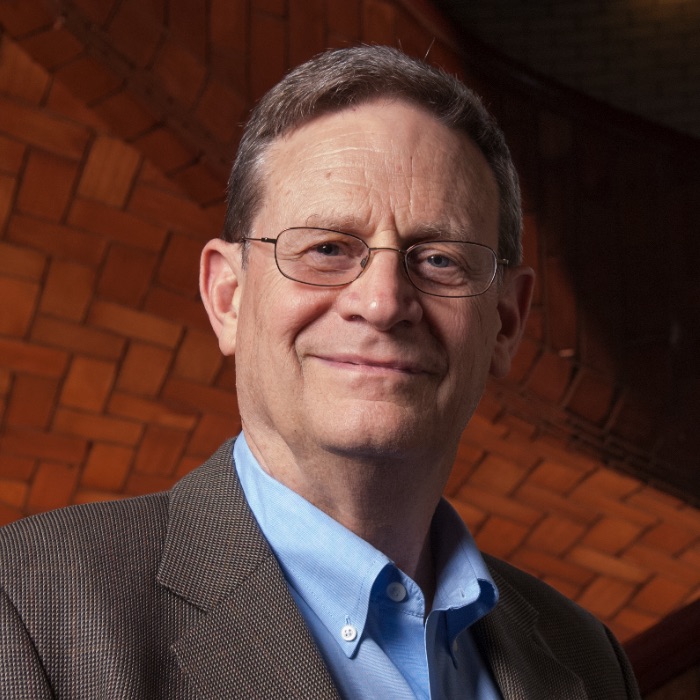
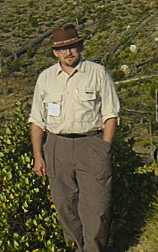
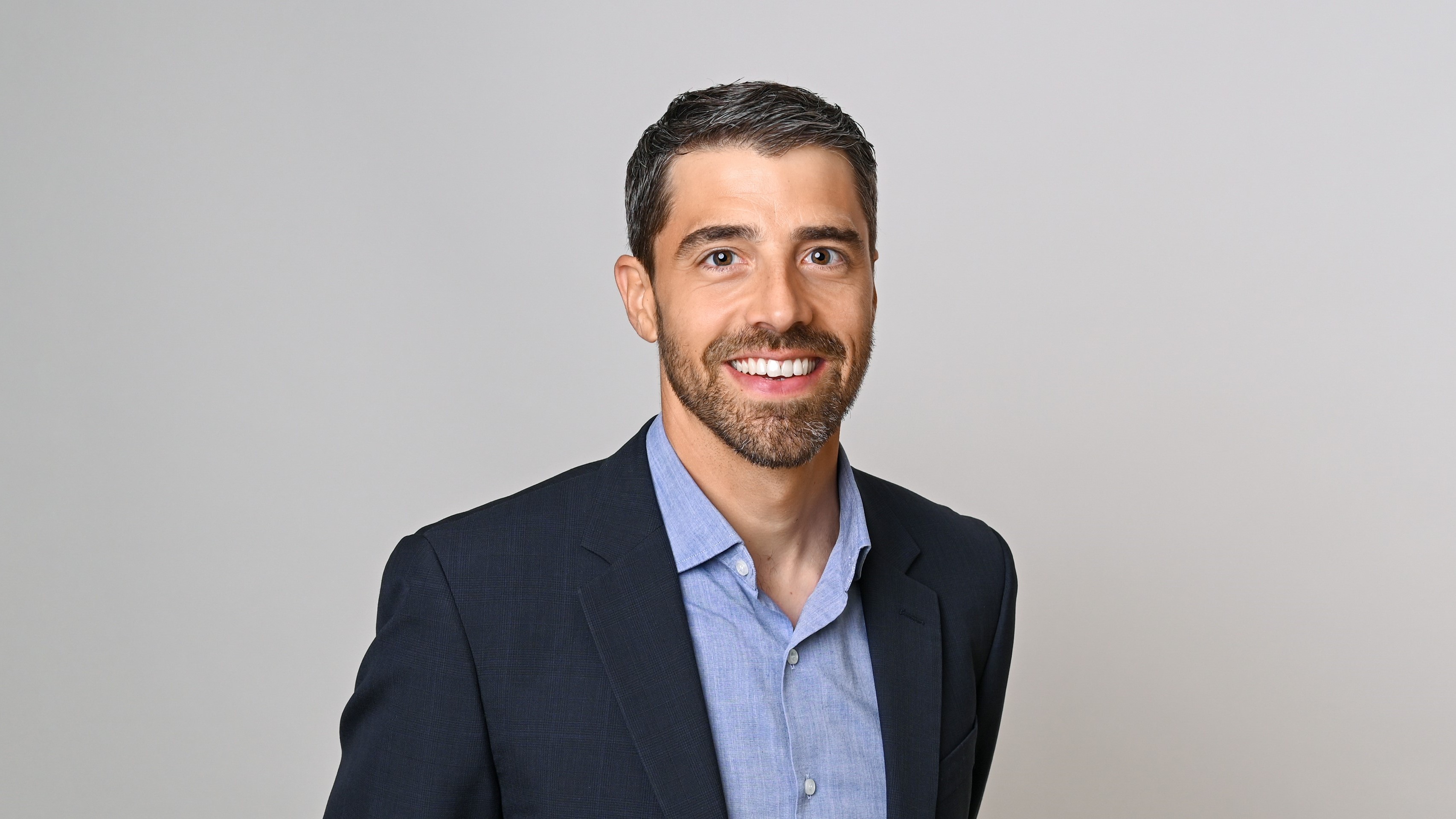
M. Granger Morgan is the Hamerschlag University Professor of Engineering at Carnegie Mellon University , with appointments in the Department of Engineering and Public Policy , Department of Electrical and Computer Engineering , and H. John Heinz III College . He co-directs the NSF Center for Climate and Energy Decision Making and the Electricity Industry Center at CMU. Education: Ph.D., Applied Physics and Information Science, University of California, San Diego (1969) M.S., Astronomy and Space Science, Cornell University (1965) B.A., Physics, Harvard College (1963) His research spans science, technology, and public policy with focus areas in energy systems , climate change mitigation , electric grid resilience , and uncertainty characterization in policy analysis . Recent publications analyze hydrogen market barriers , carbon sequestration timelines , and interdependent energy infrastructure risks . Scientific leadership includes: Member, National Academy of Sciences Member, American Academy of Arts and Sciences Co-chair, NAS Report Review Committee Board member, International Risk Governance Council Foundation Advisory Board, E.ON Energy Research Center, RWTH Aachen DOE Electricity Advisory Committee member Former EPA Science Advisory Board Chair Fellow of AAAS, IEEE, and Society for Risk Analysis Contact: Office 5220 Wean Hall, Phone 412-268-2672, Email granger.morgan@andrew.cmu.edu
Affiliations & Roles Professor of Computer and Information Science at University of Pennsylvania Faculty in Graduate Groups: Bioengineering (School of Engineering) Genomics & Computational Biology (School of Medicine) Operations, Information & Decisions (Wharton School) Psychology (School of Arts & Sciences) Research Affiliations: Annenberg Public Policy Center (Distinguished Fellow) Center for Cognitive Neuroscience Institute for Translational Medicine Research Interests Focuses on explainable AI, natural language processing (NLP), and machine learning applications in psychology and medicine. Key areas include: Language analysis for well-being and mental health Spectral methods for NLP (e.g., Eigenwords) Forecasting and decision-making models Bioinformatics and genomics Teaching Teaches advanced courses in Machine Learning, Deep Learning, and AI ethics, including: CIS 5200: Machine Learning CIS 5220: Deep Learning CIS 6200: Advanced Topics in Deep Learning Key Collaborations Works with interdisciplinary teams on projects like the Good Judgment Project (forecasting) and WWBP (Well-Being and Language). Collaborators include Martin Seligman (positive psychology), Dean Foster (statistics), and Michael Collins (NLP).
Dr Megan Evans is a Senior Lecturer in Public Sector Management at the School of Business, UNSW Canberra. She is an interdisciplinary social scientist focusing on environmental laws, policies, and tools, particularly in biodiversity and carbon offsetting frameworks. Education: PhD in environmental policy (Australian National University), BSc (Ecology) and BA (Mathematics) from The University of Queensland Her research drives policy impact in carbon offset integrity , biodiversity conservation , and environmental markets , including contributions to the Australian Government’s Biodiversity Offset Policy and the Queensland Land Restoration Fund . Her recent work examines biodiversity credits, carbon-negative technologies, and policy implementation challenges in human-induced regeneration projects. Key awards: Young Tall Poppy Award (2021) UQ Faculty of Science Rising Star Award (2018) ARC CEED scholarships (2014, 2017) She supervises five PhD students and has completed supervision of Dr Toiaba Binta Taher (PhD, with Professor Catherine Althaus). Her grants include an ARC DECRA Fellowship (2020–2023) and funding from the Department of Agriculture, Water and the Environment. Contact: megan.evans@unsw.edu.au
Roger Flage is a Professor of Risk Management at the University of Stavanger, affiliated with the Faculty of Science and Technology and the Department of Security, Economics and Planning. His research focuses on foundational and applied aspects of risk analysis, uncertainty quantification, and decision-making under uncertainty, with applications in critical infrastructure, environmental systems, and offshore energy. Roger Flage's research interests lie at the intersection of risk science, safety engineering, and decision theory. He investigates how uncertainty—especially epistemic uncertainty and assumptions—affects risk assessments, and advocates for more transparent and robust frameworks. His work spans theoretical advances, such as the treatment of 'black swan' events and the concept of 'real risk', as well as practical applications in offshore safety, power systems, and geohazards. He emphasizes the integration of data-driven methods, AI, and digital twins while critically assessing their limitations and associated security risks. His recent publications show a strong trend toward integrating dynamic, data-rich, and interdisciplinary approaches to risk analysis. Themes include the role of time in risk, AI applications, infrastructure interdependencies, and environmental risk in the oil and gas sector. He frequently publishes in top-tier journals like Risk Analysis , Reliability Engineering & System Safety , and Safety Science , often in collaboration with leading scholars such as Terje Aven and Seth Guikema. No scientific awards are mentioned in the provided text. Roger Flage has supervised or collaborated with several researchers, though no formal list of advisees is provided. His work is supported through academic collaborations and institutional affiliations rather than explicit grant mentions. He is actively involved in advancing risk science methodology, particularly in the treatment of assumptions and uncertainty, and contributes to both theoretical foundations and real-world applications in safety-critical domains. He is associated with research groups and collaborative networks at the University of Stavanger, particularly within the Department of Security, Economics and Planning. His work often involves interdisciplinary teams focusing on risk in complex engineered systems, including energy, transportation, and environmental systems.
Ahmad BahooToroody is an Academy Research Fellow at Aalto University’s Department of Energy and Mechanical Engineering, specializing in Bayesian statistics, reliability engineering, and risk analysis for autonomous maritime systems. He is actively involved with the Marine and Arctic Technology research group and leads projects that integrate machine learning with safety-critical applications in the maritime and offshore sectors. Research Interests Bayesian statistical methods for reliability and risk modeling Machine learning and deep learning for anomaly detection in autonomous systems Safety assessment of offshore installations and maritime operations Prognostic health management of marine renewable energy systems Human factors and expert judgment in sociotechnical maritime systems His work often incorporates advanced techniques such as Gaussian processes, LSTM-based neural networks, and dynamic Bayesian networks to address uncertainties in complex engineering systems operating in harsh marine environments. Publication Trends Across 2022–2025, BahooToroody’s publications reveal a strong trajectory toward integrating data-driven models with physics-based simulations. Dominant themes include real-time risk monitoring of autonomous ships, failure prognosis for unattended machinery, and safety assessment frameworks for offshore structures. His collaborative outputs span high-impact journals such as Reliability Engineering & System Safety and Safety Science , underscoring his leadership in maritime safety analytics. Research Groups & Labs Marine and Arctic Technology Research Group, Aalto University Academy Research Fellow network within the Department of Energy and Mechanical Engineering Doctoral Supervision & Grants While specific grant details are not listed, his role as Doctoral Candidate Supervisor since 2020 indicates active mentorship of PhD researchers. He is also the Principal Investigator on projects funded under the Academy of Finland Fellowship scheme, supporting next-generation maritime risk analytics.
Dr. Abigail Colson is a Senior Lecturer in the Department of Management Science at Strathclyde Business School, University of Strathclyde. She specializes in decision and uncertainty analysis with a focus on public health, including expert judgment elicitation methods. Her work addresses global health challenges such as antimicrobial resistance (AMR) and health evaluation in low-resource settings. She holds a PhD in Management Science from the University of Strathclyde, an MPP from the University of Chicago, and a BA in political science and environmental studies from American University. Her research integrates structured expert judgment techniques to inform policy decisions, particularly in cost-effectiveness analysis, benefit-cost prioritization, and health technology assessment. Recent projects include quantifying future AMR trends, evaluating child mental health interventions, and designing antibiotic financing models. She collaborates with international organizations and governments to strengthen healthcare systems in developing countries. Key areas: AMR forecasting, global health economics, expert elicitation protocols Notable projects: EFSA EKE Training, Credible Routes to GB Electricity Collapse Study Professional roles: Principal Investigator on multiple grants, Resident Scholar at Center for Disease Dynamics Dr. Colson’s publications emphasize methodological innovations in decision-making frameworks and their application to pressing global health issues. She develops training programs for structured expert judgment and advocates for evidence-based policy across diverse sectors.
Victoria Hemming is an Adjunct Professor in the Department of Forest and Conservation Sciences at the University of British Columbia. She is also a Decision Analyst at Compass Resource Management and an Honorary Research Associate at the Martin Conservation Decisions Lab, UBC. Her work bridges decision science, risk analysis, and behavioral sciences to address natural resource management challenges. Education: PhD in Environmental Science and Ecology, University of Melbourne (2019); BSc (Hons) in Botany, University of Melbourne (2009); BASc in Environmental Science, Geography, and Ecology, University of Melbourne (2008) Research Interests: Victoria focuses on improving decision quality under uncertainty, overcoming data deficiencies through structured expert elicitation, and addressing the decision-implementation gap in conservation. Her work integrates Indigenous knowledge, climate change impacts, and co-benefits frameworks to enhance biodiversity outcomes. Article Trends: Recent publications emphasize expert elicitation protocols (IDEA and Classical Model), decision-making under uncertainty, ecosystem-based climate solutions, and interdisciplinary applications of decision science in conservation and urban planning. Scientific Awards 2022 Top Downloaded Article: An Introduction to Decision Science for Conservation 2020 Chancellor’s Prize for Excellence in PhD thesis 2018 Editor Recommendation: A Practical Guide to Structured Expert Elicitation Teaching & Mentorship: She co-developed UBC’s CONS440 course and led workshops on expert elicitation and decision science. Her mentorship includes PhD and Masters students working on urban forestry, marine conservation, and threat management.
Dr. Victoria Talwar: Academic Profile Roles & Affiliations: Professor, Department of Educational and Counselling Psychology (ECP), McGill University Director, Daniel and Monica Gold Centre for Early Childhood Development Canada Research Chair Tier I in Forensic Developmental Psychology (2024–present) Former Chair of ECP Department (2020–2023), Interim Dean of McGill Faculty of Education (2023) Associate Member, Institute for Human Development and Well-Being (IHDW) and McGill Department of Psychology Education: Ph.D. in Developmental Psychology, Queen's University M.A. in Psychology, University of St. Andrews Research Focus: Dr. Talwar’s groundbreaking work bridges developmental psychology and legal systems, with a focus on: Children’s lie-telling behavior and moral development Credibility assessment of child witnesses Cyberbullying dynamics and intervention strategies Ethical implications of technology in education and justice Her research has directly influenced Canadian legal reforms and forensic interviewing practices. Awards & Recognition: Recipient of prestigious accolades including: SSHRC Canada Research Chair (Tiers I and II) Fellow, Association for Psychological Science (2016) David Thomson Award for Graduate Supervision (2017) Member, Royal Society of Canada (2017) Teaching & Mentorship: Recognized for excellence in graduate education: James McGill Professor designation Supervised over 50 graduate students in Human Development and School Psychology Advances interdisciplinary training in forensic developmental psychology Lab & Outreach: Leads the Talwar Child Development Lab , conducting cutting-edge studies on: Children’s social cognition and deception Forensic assessment methodologies Technology’s role in child development Collaborates internationally on cyberbullying prevention and legal policy development.
Jennifer McKellar is an Associate Professor and Department Chair in the Department of Energy and Nuclear Engineering at Ontario Tech University, Faculty of Engineering and Applied Science. Her work focuses on sustainable energy systems, integrating life-cycle assessment, environmental analysis, and decision-making tools to inform energy policy and technology development. Education: PhD, University of Toronto, Department of Civil Engineering, Graduate Collaborative Program in Environmental Engineering (2012) MASc, University of Toronto, Department of Chemical Engineering and Applied Chemistry (2005) BASc, University of Toronto, Department of Chemical Engineering and Applied Chemistry, Undergraduate Collaborative Program in Environmental Engineering (2003) Dr. McKellar's research centers on energy systems analysis, with a strong emphasis on life-cycle assessment and costing, environmental impacts of small modular reactors, hydrogen and fuel cells, and real options analysis under uncertainty. She investigates energy supply chains, particularly in oil sands and nuclear sectors, to evaluate sustainability and inform decision-making for government, industry, and technology developers. Her goal is to support the transition to sustainable energy systems through rigorous, interdisciplinary research. Her recent publications reflect a consistent focus on energy sustainability, covering topics such as oil sands emissions, small modular reactors, urban energy systems, and sustainability integration in engineering education. The research spans environmental science, energy policy, and engineering economics, often combining life-cycle methods with expert elicitation and real options modeling to address uncertainty and complexity in energy decisions. Scientific Awards: Ontario Graduate Scholarship (2010-2011) Natural Sciences and Engineering Research Council (NSERC) of Canada – Postgraduate Scholarship D2 (2008-2010) Government of Ontario/DuPont Canada Scholarship in Science and Technology (2003-2004) Mackay Hewer Memorial Prize (2003) Canadian Society for Chemical Engineering Medal (2002) Dr. McKellar advises on energy policy and sustainability, with her research supported by methodologies in life-cycle assessment and expert elicitation. She teaches courses such as Fuel Cell Design, Solar Energy Technologies, and specialized graduate topics in life cycle assessment and small power energy systems. She is actively involved in professional societies including the Canadian Nuclear Society, International Society for Industrial Ecology, and the Chemical Institute of Canada. As a licensed Professional Engineer in Ontario, she bridges academic research with real-world engineering applications. No specific grants or advising relationships with named students are listed in the provided text. She is affiliated with professional organizations that support her interdisciplinary work in energy and sustainability, and she contributes to curriculum development by integrating sustainability thinking into technical education.
J. Dustin Tracy is an Assistant Professor in the Department of Health Management, Economics, & Policy at Augusta University's School of Public Health. His academic appointment focuses on health economics research and teaching, with particular emphasis on experimental methodologies to evaluate health policies. His educational background includes a Ph.D. in Economics from Georgia State University (2018), an M.A. in Economics from Vanderbilt University (2012), and a B.A. in Psychology from Tufts University (1996). Prior to academia, he worked as a licensed mental health counselor. Tracy's research centers on health economics and behavioral economics, investigating how market institutions shape healthcare decisions. His work employs laboratory experiments to test policy interventions, with focus areas including health insurance design, health disparities, credence goods markets, and the impact of disclosure requirements. He has developed virtual environments to simulate life-course health decisions and utilizes accelerometry data for health metrics research. His publication trends reveal consistent contributions across health economics (45%), experimental methodology (30%), and behavioral economics (25%), with increasing focus on health disparities and policy evaluation in recent years. Reviewer for Journal of Economic Behavior and Organization (2022, 2024) Reviewer for Journal for the Measurement of Physical Behaviour (2022) Committee Member for Department Search Committee (2025-present) Committee Chair for Research Grant Forum (2022-2023) Member of USA-Scotland Rural Health Converge Collaborative (2024-present) Tracy directs laboratory research examining how behavioral principles affect health decisions, including projects on loss-framed incentives, reputation systems in healthcare markets, and physical activity measurement. His teaching portfolio includes Behavioral Economics and Research Methods courses, emphasizing critical analysis of scientific literature and classroom experiments to demonstrate economic principles.
Jim Smith is a Professor in the Department of Statistics at the University of Warwick. He actively leads research initiatives in Bayesian statistics, decision theory, and causal modeling with applications to food security, forensic science, and public health. His work bridges theoretical advancements in graphical models with real-world implementations through collaborations with government agencies and industry partners. PhD in Statistics (University of Warwick) Research focus: Bayesian networks, chain event graphs, expert judgment elicitation, causal inference Key collaborations: Martine Barons, Manuelle Leonelli, Ann Nicholson Research Interests Smith's work centers on high-dimensional Bayesian decision analysis, causal discovery in dynamic systems, and integrating expert judgments into formal models. He has developed novel Chain Event Graphs for complex system modeling and focuses on applications in: Food security risk assessment Forensic evidence evaluation Counter-terrorism strategies Medical imaging analysis Crisis management Energy security Recent Publications Trend His recent work demonstrates increasing focus on adversarial risk analysis (2025), secure data modeling for law enforcement (2024), and methodological improvements in Bayesian networks (2023-2024). Key themes include: Polynomial regression-based moment propagation Multi-agent decision frameworks Dynamic graphical model extensions Causal analysis in security contexts Mathematical foundations of Bayesian graphs Scientific Awards Fellow of the Alan Turing Institute (2017-2024) COST European Cooperation award for expert judgment research EPSRC-funded OxWaSP PhD training consortium co-director Grants & Collaborations Currently serving as PI in 6 Alan Turing Institute projects and CI on 7 others. Major grants include: European Food Standards Agency expert elicitation funding EPSRC OxWaSP initiative National Digital Twin Programme research Home Office policy evaluation projects Labs & Teams Co-leads a university research team studying cross-domain expert coherence. Member of the Food Global Research Priority team coordinating UK food security studies. Developed software tools in R/Python for Chain Event Graph analysis.
Andrew Robinson is a Professor at The University of Melbourne, holding dual appointments in the School of BioSciences and the School of Mathematics and Statistics. As Director of the Centre of Excellence for Biosecurity Risk Analysis (CEBRA), he leads research on statistical and risk analysis for biosecurity threats, funded by Australian and New Zealand governments. His work bridges computational tools and natural resource management, with a focus on R programming and data-driven decision-making. Co-authored 4 influential books on R programming and biosecurity Developed icebreakeR, a popular R education resource Conducts workshops for scientists and policymakers Robinson's research spans biosecurity risk modeling, invasive species management, and statistical applications in forestry. His recent work emphasizes climate change impacts on agricultural yields, adaptive sampling strategies, and Indigenous leadership in biosecurity. He maintains active collaborations in data analytics and policy development. Selected Research Trends: Current projects focus on quantitative risk prioritization, climate change adaptation, and automated surveillance systems. Key subfields include computational biosecurity, stochastic modeling, and cross-jurisdictional policy frameworks. Robinson's laboratory, CEBRA, integrates multidisciplinary approaches to biosecurity challenges. His publications demonstrate expertise in statistical ecology, risk analytics, and policy simulation. He continues to develop R-based tools for practical applications in natural resources and biosecurity.
Christian König is a PostDoc at the Department of Banking and Finance, University of Innsbruck, with a Venia Docendi (Habilitation) in Economics. His research focuses on decision-making under risk, social norms, and meta-research on peer review processes. He holds a PhD from Heidelberg University, a Master's in Economics from Heidelberg, and a Bachelor's in International Business Administration from the Frankfurt School of Finance & Management. König has conducted visits at institutions including the University of Sydney, Stockholm School of Economics, and Chapman University's Economic Science Institute. His work spans experimental finance, climate policy analysis, and behavioral economics. Notable contributions include studies on peer review bias (published in PNAS with extensive media coverage), financial professionals' climate perspectives, and temporal discounting. He actively contributes to oTree development, an open-source platform for economic experiments. Key collaborations include work with Stefan Trautmann, Christoph Huber, and Michael Kirchler. He has served as a referee for journals such as Journal of Banking and Finance and Experimental Economics .
Dr Andrea Taylor is an Associate Professor at the University of Leeds , with joint appointments in the Leeds University Business School and the School of Earth and Environment . Her work bridges cognitive psychology and behavioral decision research to address challenges in climate and weather risk communication. Co-Investigator on multiple high-impact climate service projects (e.g., Newton Fund, Met Office collaborations) Co-leads interdisciplinary initiatives like the Business and Organisations for Sustainable Societies (BOSS) Research Group and the WMO High Impact Weather Task Team Research Interests: Specializes in behavioral decision-making under uncertainty, focusing on public responses to climate and weather risks. Key areas include: Risk perception and communication Expert judgment in climate services Decision-making for climate adaptation Sustainability and consumer behavior Impact-based weather forecasting Role of emotion in risk decisions Article Trends: Recent publications emphasize the integration of behavioral science into climate services, user-centered approaches to weather warnings, and cross-cultural studies of public risk responses. Collaborations with climatologists and health economists are evident. Advising & Grants: Supervises PhD students in climate risk communication and adaptation, including Hellen Msemo, Cathrine Liontou, and Rachel Harcourt. Secured over £9 million in research funding from organizations like the Global Challenges Research Fund and the Met Office.
Geneviève Gauthier is an Assistant Professor at the University of Ottawa, jointly appointed in the Faculty of Education and the Faculty of Medicine. She serves as Director of the Graduate Diploma in Health Education within the Department of Innovation in Medical Education (DIEM). PhD in cognitive psychology from McGill University 20+ years of experience in faculty development and program evaluation Her research focuses on evaluative judgment , self-assessment , peer assessment , and the assessment of complex tasks . She investigates how clinical teachers design assessment tasks, implement pedagogical strategies, and provide feedback to students. Her work employs methodologies such as case studies, think-aloud protocols, and cognitive task analysis. Recent publications highlight her contributions to interprofessional education, syllabus design, and virtual patient assessment tools. She explores tensions in curriculum change and planetary health education integration. Her articles span topics like rater cognition, diagnostic reasoning, and technology-mediated learning environments. Notable collaborations include co-authors Christina St-Onge, Walter Tavares, and Susanne P. Lajoie. She is affiliated with ResearchGate and contributes to networks in medical education, with 24 publications and over 2,269 reads.