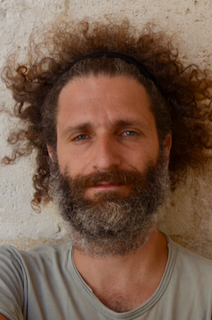
Andreas Vlachos is a Professor of Natural Language Processing and Machine Learning at the Department of Computer Science and Technology, University of Cambridge, and holds the Dinesh Dhamija Fellowship at Fitzwilliam College. His research spans dialogue modeling, automated fact-checking, imitation learning, semantic parsing, biomedical text mining, and trustworthiness in AI systems. PhD in Computer Science, University of Cambridge (supervised by Ted Briscoe and Zoubin Ghahramani) Lecturer at University of Sheffield Postdoctoral roles at UCL, University of Cambridge (NLIP group, Stephen Clark), and University of Wisconsin-Madison (Mark Craven) Current research focuses on evaluating and mitigating biases in language models, advancing fact-checking methodologies, and improving model robustness through interpolation, reinforcement learning, and causal reasoning. His work integrates natural logic, knowledge graphs, and multimodal evidence for verification tasks. Recent publications address uncertainty quantification, temporal planning benchmarks, and ethical framing of NLP artifacts. Grants from ERC, EPSRC, Facebook, Google, and the Alan Turing Institute fund his research team. Collaborations include Sebastian Riedel, Stephen Clark, and Mark Craven. Key projects explore disinformation detection, long-form generation, and confidence calibration in AI systems.
Sakari Melander is a Professor at the Faculty of Law , University of Helsinki, specializing in Criminal Law , with a focus on constitutionalization, Europeanization, and sentencing policies. His work bridges theoretical criminal law with practical legislative and policy challenges. Key research areas include EU criminal law, constitutional constraints on criminal legislation, and general doctrines of criminal law. He has extensive experience in parliamentary legal consultation, providing expert opinions to Finland’s Legislative Committees (e.g., on immigration control, anti-corruption directives, and digital evidence handling). Recent publications address topics like EU corporate sanction policies, constitutionalization of criminal law, and reforms in Finnish sentencing systems. His 2025 article in the New Journal of European Criminal Law explores balancing administrative and criminal sanctions in the EU. Scientific awards include: Hilkka ja Otto Brusiin Foundation Thesis Prize (2001) Magister Bonus – Good Teacher Award (2014) Primustohtori Award (2010) Year’s Teacher (2010) Year’s Opponent (2008) He leads research projects such as Criminal Law Under Pressure: Differentiation and Harmonization (2012-2015) and Assessment of Human Trafficking Sanction Practices (2021-2022), and supervises doctoral theses on criminal law topics.
Prof. Ronald Meester is a Full Professor of Mathematics at the Faculty of Science, Vrije Universiteit Amsterdam. He specializes in mathematical statistics, probability theory, and their applications in legal and environmental contexts. His current positions include director of Meester Advies (Leiden) and expert for Landelijke Deskundigheidsmakelaar Politie (Apeldoorn). He has supervised 14 PhD theses and contributes to interdisciplinary research bridging statistics with law, epidemiology, and environmental policy. Research focuses on Bayesian reasoning, likelihood ratio analysis, and statistical methodologies for legal evidence evaluation. Recent work addresses nitrogen deposition policy critiques and epidemiological study design limitations. His ancillary activities include authorship (since 2003) and teaching roles at SSR Utrecht. Media engagements include commentaries on scientific integrity and environmental policy. Teaching includes the course 'Mathematical Modelling of Stochastic Systems' (2024-2025 academic year). Active in international collaborations and has produced 111 research outputs spanning articles, books, and encyclopedia entries. His work contributes to UN SDGs related to sustainable development through environmental statistical analysis.
Dr Anandadeep Mandal is an Associate Professor in Finance and the Scotcoin Distinguished Chair of Digital Finance at the University of Birmingham , within the Birmingham Business School and the Department of Finance . He is the founding director of the MSc Financial Technology programme and the Programme Director for the MBA (Distance Learning), demonstrating significant leadership in academic program development. Education: PhD in Probability Distribution Fitting, Cranfield University (2016) MRes in Management Science, Cranfield University (2012) MSc in Finance and Investments, Durham University (2008) Bachelor’s in Electronics Engineering Research Interests: Dr Mandal’s interdisciplinary research lies at the intersection of mathematical modelling, artificial intelligence, finance, and digital innovation . His work focuses on AI-enabled investment strategies , blockchain for financial transparency , ESG performance measurement , and the development of the Sustainable Efficiency Index (SEI) . He also pioneers AI applications in digital education , including a patent-pending platform for automated grading of multi-modal student submissions using ensemble AI methods. Publication Trends: His recent scholarly output spans high-impact journals and conferences, reflecting a strong focus on digital finance , climate and social media analytics , cryptocurrency regulation , and AI in financial forecasting . His work combines advanced data science techniques with real-world policy and financial applications, particularly in sustainability and public health. Scientific Awards: No specific awards are mentioned in the provided text. Advising and Grants: Dr Mandal has secured over £2 million in research funding from sources including UKRI, UoB QR Funding, and industry partners. While specific students are not listed, his role as programme director and research leader suggests active mentorship. His research has direct policy impact through collaborations with the NHS Trusts , NIHR , and the UK Government . Labs, Teams, and Impact: Dr Mandal leads a research agenda that bridges academia and public policy. His work extends beyond the university through public engagement at science festivals, outreach for young learners, and expert contributions to UK Parliamentary consultations on AI, sustainability, and financial innovation. He is a key figure in advancing digital finance education and research at the University of Birmingham.
Swiss Federal Institute of Technology in LausanneSwitzerland
Dominique Foray is a Professor at Ecole Polytechnique Fédérale de Lausanne (EPFL) and holds the Chair of Economics and Management of Innovation (CEMI). He is a member of the Swiss Council for Science, chairman of the KOF Swiss Economic Research Institute's Advisory Board, and a foreign member of Columbia University's Center of Capitalism and Society. His career includes extensive advisory roles, such as with the European Commission's 'Knowledge for Growth' group and Germany's Expert Commission for Research and Innovation. Education: Ph.D. in Economics, University Lumière of Lyon (1984) Habilitation à diriger des recherches, University Lumière of Lyon (1992) Foray's research focuses on the economics of innovation, knowledge-based economy dynamics, technology policy, smart specialization strategies, and institutional frameworks for innovation. He has authored seminal works including The Economics of Knowledge (MIT Press, 2004) and Smart Specialisation (Routledge, 2015). His recent publications explore mission-oriented innovation policies, smart specialization in EU contexts, and knowledge diffusion mechanisms. Foray's work bridges academic theory with practical policy design, influencing regional and national innovation strategies globally. Advising: Past EPFL PhD students: Aouinait Camille Marguerite, Ayoubi Charles Chadi, Baruffaldi Stefano Horst, Bednyagin Denis, Bogers Marcellus, Coffano Monica, Conti Annamaria, Cristelli Gabriele, Gaulé Patrick, Hamdan Livramento Intan Maizurah, Marino Marianna, Muñoz Tellez de Kieffer Viviana Carolina, Pellegrin Claudia, Simeth Markus Foray's institutional roles include leadership in European policy initiatives and contributions to the World Bank's studies on innovation's role in economic growth. His interdisciplinary approach integrates economics, policy analysis, and technology management to address grand societal challenges through innovation.
Lena Wahlberg is an Associate Professor and Senior Lecturer at the Department of Law, Lund University, serving as Assistant Head of Department. Her roles include interdisciplinary research and teaching in medical law, evidence law, and jurisprudence. She leads the Law, Evidence and Cognition (LEVIC) research group and participates in the Science and Proven Experience (VBE) program funded by the Swedish Foundation for Humanities and Social Sciences. Her research focuses on legal causation, expert evidence evaluation, and the intersection of law with natural sciences/medicine. Notable projects include analyzing expert testimony reliability, legal implications of scientific evidence gaps, and defining 'science and proven experience' in healthcare decision-making. Recent publications (2024-2025) emphasize healthcare policy, data governance, and legislative reform in abortion laws and research ethics. She collaborates internationally with institutions like Harvard Medical School and Carnegie Mellon University. Teaching responsibilities include coordinating the doctoral course Theoretical Foundations for Doctoral Studies in Law . Supervised doctoral students include Amanda Bills (Public International Law) and Yana Litins’ka (Medical Law). Research funding includes projects from the Swedish Research Council and Riksbankens Jubilieumsfond. Key affiliations: Member of the VBE research consortium (2015-2020+), LEVIC group, and contributor to national policy consultations on health data and medical ethics.
Dr. Barbara Barbosa Neves is a sociologist of technology and ageing at the University of Sydney’s Sydney Centre for Healthy Societies, holding a prestigious Sydney Horizon Fellowship in AI Social Science. She specializes in loneliness, social isolation, and digital inequalities in later life, with over $6 million in competitive funding from global bodies. Her research bridges sociology and computer science, focusing on inclusive technology design for older adults. Education: PhD in Sociology. Formerly an Associate Director at the Technologies for Aging Gracefully Lab, University of Toronto, Canada. Visiting positions at Oxford, Oslo, Louvain, and Toronto. Research Interests: Sociology of Technology , Aging Anxieties , Healthcare AI , and Ageism . Her work examines how AI, VR, and robotics can benefit older adults while addressing ethical and social challenges. Key themes include combating age-based digital divides and designing technologies that align with care ethics. Grants & Projects: Lead Investigator for the $1M+ evaluation of Australia’s Aged Care Volunteer Visitors Scheme, ARC Discovery Project on loneliness and technology, and MRFF-funded dementia studies. Collaborates with multidisciplinary teams, including computer scientists and policy experts. Awards: 28+ international awards, including Mather Awards (US), George Story Distinguished Lecturer, and Fellowships from the Royal Society of Arts (FRSA) and Higher Education Academy (FHEA). Public Engagement: Over 200 media contributions, including ABC op-eds and SBS documentaries. Her research informs policy and public discourse on aging, technology, and social equity.
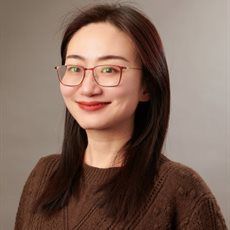
Dr. Shushu Chen is an Associate Professor in Sport Policy and Management at the University of Birmingham's School of Sport, Exercise and Rehabilitation Sciences, and also serves as a Visiting Professor at the Capital University of Physical Education & Sports in China, demonstrating her strong international academic presence. Education: PhD in Sport Policy and Management, Loughborough University (Centre for Olympic Studies & Research) MSc in Sport Management, Loughborough University BSc in Bioengineering Her research expertise lies in sport policy analysis and evaluation, particularly the legacy and societal impact of major sporting events such as the Olympic Games and Commonwealth Games. She investigates how these events influence social inclusion, urban development, and public policy, with a strong focus on both the UK and Chinese contexts. Her methodological strengths include realist evaluation and meta-evaluation, applied to complex policy environments. Dr. Chen’s recent work centers on high-impact projects related to the Birmingham 2022 Commonwealth Games and Beijing 2022 Winter Olympics, analyzing their legacies for disadvantaged communities and policy development. Her publications span top journals like the Journal of Sport Management and Sport Management Review , covering themes such as event leveraging, volunteering, policy development in China, and Olympic education. Her research consistently bridges academic rigor with practical policy relevance. Scientific Awards: British Academy Innovation Fellow Dr. Chen actively contributes to the academic community as an editorial board member for journals including Event Management , International Journal of Sport Policy and Politics , and Sport in Society . She supervises PhD students on topics such as women in sport in China, social integration through sport, and mental health. She has secured significant research grants from the British Academy, ESRC, World Anti-Doping Agency, and China National Social Science Foundation. Her work has been featured in major media outlets including the BBC, Financial Times, and The Guardian, highlighting her public engagement and policy influence. She is currently an Academic Advisor to the Commonwealth Scholarship Commission and a Discipline Expert for Sport Management Digest. Her prior role as a member of the United Nations Expert Group on Inclusive Social Development further underscores her global impact in shaping inclusive sport policy.
Eric Y. Drogin is an Adjunct Professor and Honorary Professor with dual expertise in clinical psychology and law. He is affiliated with Harvard Medical School, serving on the staff of the Forensic Psychiatry Service at Beth Israel Deaconess Medical Center, and is involved in the Harvard Longwood Psychiatry Residency Training Program. He also teaches at the University of New Hampshire School of Law and lectures internationally at Prifysgol Aberystwyth (formerly University of Wales) in both Psychology and Law. His work integrates mental health and legal systems through research, education, and practice. Education: Doctor of Philosophy (Ph.D.) in Clinical Psychology – Hahnemann University Juris Doctor (J.D.) – Villanova University School of Law Dr. Drogin's research interests center on the intersection of psychology, psychiatry, and law, particularly in forensic assessment, expert testimony, ethics, and mental disability law. His work emphasizes multidisciplinary approaches to legal and clinical challenges, supporting both mental health professionals and attorneys. He regularly presents continuing education seminars across North America, Europe, Asia, and Australia. His scholarly publications span criminal and civil law applications of psychological evidence, guardianship evaluation, forensic assessment standards, and the role of mental health professionals in court. These works reflect a consistent focus on improving legal processes through scientific rigor and ethical practice. Scientific Honors and Professional Recognition: Fellow of the American Psychological Association Fellow of the American Academy of Forensic Psychology Diplomate, American Board of Forensic Psychology Diplomate, American Board of Professional Psychology Life Fellow, American Bar Foundation Dr. Drogin has held leadership roles in major professional organizations, including President of the American Board of Forensic Psychology, Chair of APA committees on Legal Issues and Professional Practice, and Co-Chair of the ABA’s Behavioral & Neuroscience Law Committee. He serves as Editor-in-Chief of The Journal of Psychiatry & Law and has co-authored over 250 publications. While formal student advising is not detailed, his instructional roles in residency programs and trial workshops indicate active mentorship. He is a key figure in advancing forensic psychology through education, policy, and interdisciplinary collaboration.
William O'Donohue, Ph.D., is a Professor in the Department of Psychology at the University of Nevada, Reno (UNR), within the College of Science. He holds advanced degrees in both clinical psychology (Ph.D., SUNY Stony Brook) and philosophy (M.A., Indiana University). His research focuses on forensic psychology, sexual assault, evidence-based practice, and the philosophy of psychology. He has directed a NIJ-funded clinic for 27 years, providing free services to victims of sexual abuse, and secured over $3 million in grants. He has authored 90 books and 300+ publications, serving on key committees like the APA's DSM revision panel. Education: Ph.D. in Psychology, SUNY Stony Brook (1986) M.S. in Psychology, SUNY Stony Brook (1982) B.S. in Psychology, University of Illinois (1979) M.A. in Philosophy, Indiana University (1988) Research Themes: His work critically examines forensic interviewing protocols, ideological bias in psychology, and the scientific validity of therapeutic practices. He advocates for procedural justice in psychological practice and challenges social justice movements' methodological rigor. Grants & Clinical Work: His clinic's NIJ grant supports free services for sexual abuse victims. He has consulted for the U.S. military and legal professionals on evidence-based practices. Labs/Teams: Operates a long-term clinical research program focused on forensic assessment and victim support through his UNR clinic infrastructure.
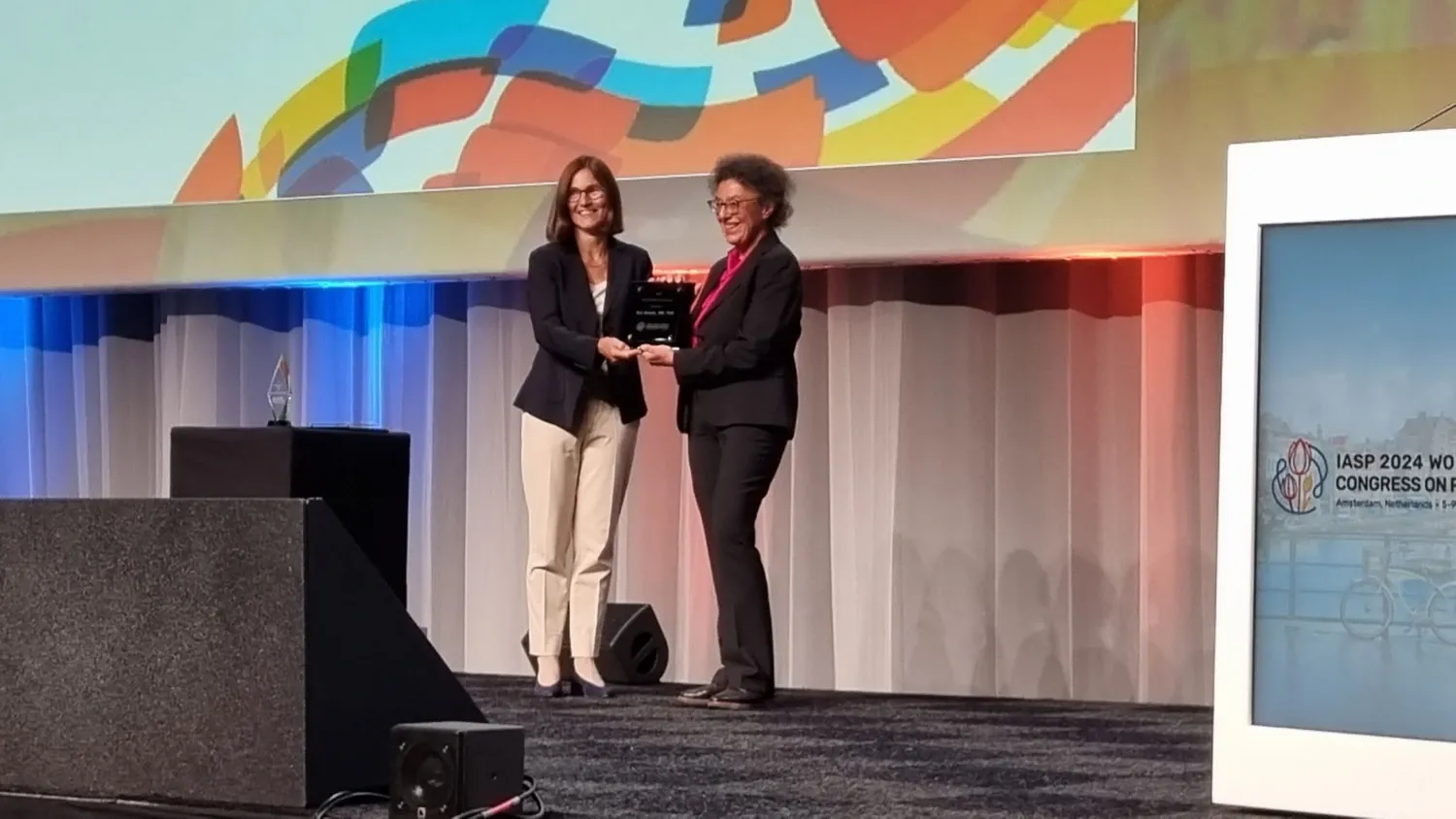
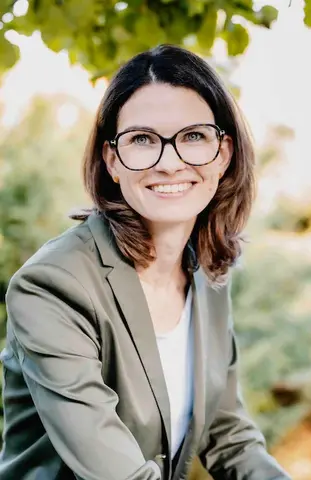
Professor Eva Kosek holds dual academic positions as Professor of Clinical Pain Research at Karolinska Institutet (since 2015) and Uppsala University (since 2020). She is affiliated with the Department of Clinical Neuroscience and leads the Mechanisms of Pain and Treatment Research Group . Her roles include senior consultant at Uppsala University Hospital's Pain Center. Education: MD from Uppsala University (1986), PhD from Karolinska Institutet (1996). Specializations: Rehabilitation Medicine (1998), Pain Relief (2001). Academic promotions: Associate Professor at Karolinska (2004), Full Professor (2015). Research Focus: Chronic pain mechanisms, neuroimmune interactions, fibromyalgia, and autoimmune pathways. Key projects include the RAFT trial (Rituximab for fibromyalgia autoantibody therapy) and the BACPAP consortium for low back pain phenotyping. She chairs IASP's Terminology Task Force, introducing the 'nociplastic pain' concept. Key Contributions: Discovered anti-satellite glial cell IgG antibodies in fibromyalgia patients, linked to symptom severity. Pioneered neuroimaging studies on pain modulation circuits. Authored over 300 publications, with recent work on cerebrospinal fluid biomarkers and lipid metabolite profiles. Awards: 2024 Roland Melzack Lecture Award from IASP. Recognized for redefining pain taxonomy and translational research. Grants: Active funding includes Swedish Research Council grants on fibromyalgia autoimmunity, environmental exposures, and neuroinflammation. Total grants exceed SEK 100M over her career. Labs/Teams: Leads a multidisciplinary team at Karolinska's Pain Research Center, collaborating internationally on translational pain studies. Active in biobanking initiatives like the Swedish Chronic Pain Biobank.
Cornelia Betsch serves as Director of the Institute for Planetary Health Behaviour (IPB) at the University of Erfurt, where she holds a professorship in Health Communication within the Faculty of Philosophy. She is responsible for the Master's program in Health Communication through the Department of Media and Communication Studies and leads the Health Communication Working Group at the Bernhard Nocht Institute for Tropical Medicine in Hamburg as an external position. Her interdisciplinary work bridges behavioral science, psychology, and public health to address critical global challenges. Habilitation (2006), University of Erfurt: 'The role of risk perception and risk communication in prevention decisions – the example of vaccination decisions' PhD (Dr. phil., summa cum laude, 2006), University of Heidelberg: 'Preference for intuition and deliberation– measurement and consequences of affect- and cognition based decision making' Diplom in Psychology (2002), University of Heidelberg Betsch's research focuses on understanding health and planetary health behaviors, particularly examining vaccination behavior, prudent antibiotic use, and climate-friendly actions. Her work extends globally, with investigations in various African countries on vaccination and antibiotic practices. She pioneered the influential COVID-19 Snapshot Monitoring (COSMO) and subsequently developed the Planetary Health Action Survey (PACE), large-scale studies that regularly track public knowledge, risk perception, protective behaviors, and trust during crises. Her research emphasizes applying behavioral and cultural insights to design effective policy frameworks and explanatory communication that promotes positive health behaviors. The 15 most recent articles showcase Betsch's research evolution toward integrating behavioral science with planetary health, climate action, and vaccine communication. Her work increasingly examines the psychological foundations of climate behavior while maintaining her established expertise in vaccine hesitancy and antimicrobial resistance. Recent publications demonstrate methodological diversity, including systematic reviews, meta-analyses, survey experiments, and large-scale monitoring datasets that bridge academic research with practical policy applications. German Psychology Prize (2021) Thuringian Research Prize (2022) Betsch has secured research funding from independent research organizations, ministries, and foundations to support her work on health communication and planetary health behavior. She serves as a scientific advisor to multiple organizations including the WHO Technical Advisory Group on Behavioral and Cultural Insights, Science Media Center Germany, and Museum für Naturkunde Berlin. At the Bernhard Nocht Institute for Tropical Medicine, she established the WHO Collaborating Center for Behavioral Research in Global Health, demonstrating her commitment to translating research into global health practice. Her engagement extends to policy advising, having served on the Corona Expert Council of the Federal Chancellery during the pandemic. As Director of the Institute for Planetary Health Behaviour, Betsch leads an interdisciplinary team applying social and behavioral science perspectives to planetary health and the climate crisis. The institute serves as a hub for research, education, and science communication at the intersection of human health and environmental sustainability. Her work through the IPB emphasizes Open Science principles and aims to understand the comprehensive factors influencing climate-friendly behavior to identify effective intervention points for policy development.
Lawton Robert Burns is the James Joo-Jin Kim Professor and Professor of Healthcare Management at the Wharton School, University of Pennsylvania . He serves as Co-Director of the Roy and Diana Vagelos Program in Life Sciences and Management and Chairperson of the Health Care Systems Department since 2008. His career spans academic roles at the University of Chicago, University of Arizona, and University of Wisconsin. Education: PhD in Sociology, University of Chicago (1981) MBA in Health Administration, University of Chicago (1984) MA, University of Chicago (1976) BA, Haverford College (1973) Dr. Burns specializes in healthcare organization design , strategic change , and supply chain dynamics . His work examines hospital-physician relationships , integrated delivery systems , and market forces in healthcare. His recent publications analyze Pharmacy Benefit Managers (PBMs) , Group Purchasing Organizations (GPOs) , and strategic implementation failures. Notable awards include the Arthur Anderson Distinguished Visitor (2001), Edwin Crosby Memorial Fellowship (1992-93), and Udall Fellowship (1990-91). His research has been featured in Knowledge at Wharton , LDI News , and American Political Science Review . Dr. Burns co-authors works with experts like David Dranove and Stephen Shortell , focusing on clinical integration , retail supply chains , and global healthcare models (India, China).
Titti Mattsson is a Professor of Public Law at the Faculty of Law, Lund University, specializing in Health Law, Social Welfare Law (including child law and elder law), and Human Rights Law. She served as Pro Dean of Research at the same faculty from 2021 to 2023. Editor of the European Journal of Health Law Board member of the Swedish Institute of Human Rights, Swedish National Agency for Health and Care Analysis, and Swedish National Council on Medical Ethics Vice Chair of the Region Skåne Ethical Board Coordinator of the Health Law Research Centre and the Law and Vulnerabilities Group at Lund University Her research focuses on the governance of welfare state issues from national and transnational perspectives, emphasizing outcomes for vulnerable groups and the individual through a human rights lens. Key areas include legal, social, and ethical issues in health and community care for children, disabled persons, and older adults. She leads interdisciplinary projects such as Children's Rights and Evidence-based Care (2020-2023) and Child Care Investigation in Private Government (2018-2022), funded by organizations like Forte and the Kamprad family research foundation. Her work contributes to UN Sustainable Development Goals, particularly in Social Sciences and Law. Mattsson teaches public law, health law, and elder law at advanced levels, supervises six doctoral projects, and engages in outreach through expert assignments and collaborations with international institutions like Emory University and Haifa University.
Professor Michael Tonkin is a leading academic in the Department of Surgery at the Northern Clinical School of the University of Sydney. He specializes in pediatric hand surgery, congenital anomalies of the upper limb, and reconstructive microsurgery. His work focuses on classification systems for congenital hand defects (e.g., OMT classification) and surgical outcomes for conditions like thumb hypoplasia, polydactyly, and syndactyly. Professor Tonkin holds clinical roles with associated phone (+61 2 9926 7778) and fax (+61 2 9926 6311) contacts. Research interests include embryology of congenital defects, surgical techniques for thumb reconstruction, and functional assessment of hand anomalies. His 2013 grant explored rheumatoid synoviocyte biology. Over 50 peer-reviewed articles and book chapters since 2002 reflect his expertise in congenital anomaly management, tendon transfers, and pediatric surgical innovations. Key contributions include defining thumb opposition metrics, developing functional assessment scores for hypoplastic thumbs, and advancing pollicization techniques. He collaborates with international experts in hand surgery and has mentored multiple researchers evident through co-authorships.