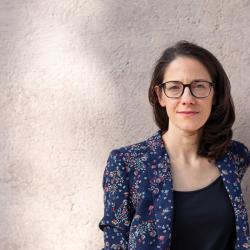
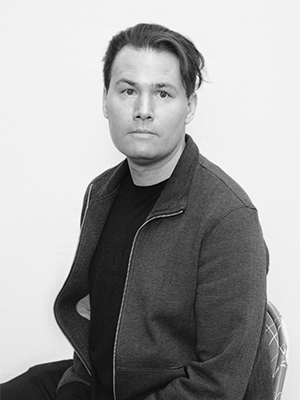
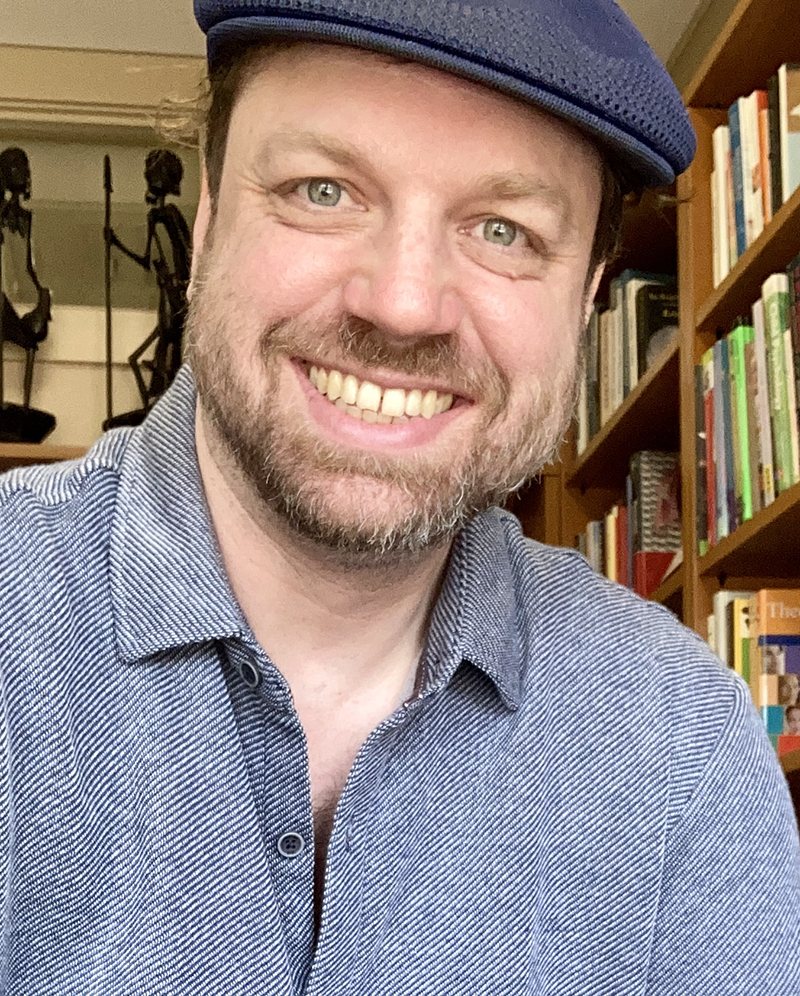
Reiko Kataoka is Lecturer in Linguistics and Language Development at San José State University, teaching courses in phonetics, phonology, and evolution of sound communication systems since 2012. Her research investigates speech perception mechanisms, particularly how humans map acoustic signals to mental representations. Current projects examine auditory plasticity, variability, and historical sound change relationships. Publications appear in Journal of the Acoustical Society of America and Berkeley Linguistics Society proceedings. Research employs experimental methods to study phonetic category formation and perceptual adaptation.
Phyllis Chen is an Assistant Professor in the Department of Music at SUNY New Paltz's School of Fine & Performing Arts. An internationally recognized composer and performer, she specializes in interdisciplinary work involving toy instruments, found objects, and experimental sound exploration. Her creative practice integrates Japanese musical traditions like shakuhachi with contemporary avant-garde techniques. Research interests focus on: Innovative composition methodologies using unconventional sound sources Cross-cultural musical dialogues between Eastern and Western traditions Crowd-sourced artistic collaborations and participatory art forms Historical context of toy instruments in contemporary performance Her artistic output includes award-winning albums recognized for pushing boundaries in classical music. Publications demonstrate consistent exploration of: Acoustic ecology and multisensory experiences Extended instrumental techniques and microtonal systems Collaborative processes across artistic disciplines Significant honors include the Cage-Cunningham Fellowship, Fromm Foundation Commission, and multiple Independent Music Awards. She founded/directs the UnCaged Toy Piano initiative and co-founded the International Contemporary Ensemble, establishing platforms for experimental music innovation.
Brooke Vetter is an Assistant Professor in the Department of Biology at the University of St. Thomas, specializing in sensory physiology and auditory-driven behaviors of vertebrates. Her research focuses on fish auditory systems, environmental adaptation, and impacts of anthropogenic noise. University of Washington, Postdoc U.S. Geological Survey, Postdoc University of Minnesota, PhD St. Catherine University, BA Her work integrates comparative anatomy, neurophysiology, and ecological applications to study how aquatic organisms detect and respond to environmental stimuli. Current research examines sound detection mechanisms in invasive carps and potential control strategies using acoustic deterrents. Recent publications demonstrate expertise in bioacoustics, auditory neurophysiology, and environmental impact studies. Key trends include invasive species management through sound manipulation, sensory trade-offs in aquatic organisms, and neural basis of auditory behaviors. Dr. Vetter teaches advanced courses in vertebrate anatomy and physiology, emphasizing evolutionary adaptations and system integration. She leads a research lab investigating sensory ecology and environmental stressors on aquatic life.
Laurel Trainor is a Professor of Psychology, Neuroscience and Behaviour at McMaster University, where she holds multiple prestigious distinctions including Fellow of the Royal Society of Canada (FRSC), Fellow of the Canadian Institute for Advanced Research (CIFAR), and Fellow of the Association for Psychological Science. She is also a McMaster Distinguished University Professor and a Research Scientist at the Rotman Research Institute. Trainor earned her Ph.D. in Experimental Psychology from the University of Toronto in 1991, following an M.A. in the same field (1987) and a Bachelor of Music Performance (1981). Her pioneering research focuses on the neuroscience of auditory development and music perception, particularly how infants acquire musical systems similarly to language acquisition. Trainor has demonstrated that listening to a beat activates motor networks in the brain even without movement, reveals how predictive processes in rhythms shape communication between people, and shows that synchronous movement to musical beats increases prosocial behavior even in infants. Her work spans multiple disciplines including auditory neuroscience, cognitive development, and music therapy. Analysis of Trainor's recent publications (2023-2025) reveals a strong focus on infant and child development, particularly regarding rhythm processing, neural mechanisms of musical perception, and applications for developmental disorders. Her research increasingly incorporates advanced methodologies like machine learning for EEG analysis, online motion tracking, and live performance studies in the unique LIVELab environment. Key themes include the relationship between rhythm perception and motor coordination, cross-modal interactions in music processing, and the therapeutic applications of music. Fellow of the Royal Society of Canada (FRSC) Fellow of the Canadian Institute for Advanced Research (CIFAR) Fellow of the Association for Psychological Science McMaster Distinguished University Professor Lifetime Achievement Award from the Society for Music Perception and Cognition (2022) YWCA Woman of Distinction Award for Arts Culture and Design Co-holder of patent for the Neuro-compensator hearing aid Trainor has secured major funding from prestigious organizations including the Canadian Foundation for Innovation, Canadian Institutes of Health Research, Natural Science and Engineering Research Council of Canada, Social Science Research Council of Canada, and the Grammy Foundation. She is the founding and current director of the McMaster Institute for Music and the Mind (MIMM), which houses the LIVELab—a unique research-concert hall with high acoustic control equipped with multi-person motion capture and EEG systems. This facility enables groundbreaking studies on performer-audience interactions and music's role in health and well-being. Trainor is also an accomplished musician, serving as principal flute of the Burlington Symphony.
Marta Gentilucci is Professor of Italian at the University of Cambridge's Faculty of Music. An electroacoustic composer and researcher, she creates multimedia works integrating sound, text, and movement. Her research examines contemporary compositional practices, translation across media, and digital approaches to musicology. Current creative projects include compositions for instruments and electronics, sound installations, and collaborations with choreographers. Recent works explore augmented listening environments and the materiality of sound transmission. Professor Gentilucci teaches courses on composition, sonic arts, and music technology. She has presented installations at international venues including MA/IN Festival in Italy and the Bijloke Music Centre in Belgium.
Johannes DeYoung is an Associate Professor of Electronic and Time-Based Media at Carnegie Mellon University's School of Art. His work bridges computational processes and material practices, with exhibitions at global venues like MoMA PS1, National Taiwan Museum of Fine Arts, and B3 Biennale of the Moving Image. He co-founded the web journal Lookie-Lookie and has held leadership roles, including Director of the Center for Collaborative Arts and Media at Yale University School of Art (2008–2018). DeYoung’s research explores immersive media, blockchain/NFTs in art, and animation pedagogy, supported by projects like the Blended Reality program in immersive media. Education: MFA from Cranbrook Academy of Art (2006). Professional affiliations include roles with the New Foundations Board of Study at Purchase College (SUNY), Lyme Academy College of Fine Arts, and Pennsylvania Academy of the Fine Arts as a Digital Literacy Consultant. Research interests focus on digital art’s intersection with technology, including NFTs, virtual reality, and collaborative animation. Recent publications analyze blockchain’s impact on art economies and VR navigation. His works have been featured in The New York Times , Dossier Journal , and festivals like Digital Graffiti Festival (2024 Curator’s Choice). Teaching spans Yale School of Drama (Lecturer in Design) and current roles at CMU. His projects emphasize experimental media, digital literacy, and interdisciplinary collaboration in art education.
Prof. Wilhelm Wimmer is a Professor of Experimental Audiology at the Technical University of Munich (TUM), affiliated with the TUM School of Medicine and Health. His research focuses on improving diagnostic and therapeutic technologies for inner ear disorders through a multidisciplinary approach combining audiology, otology, radiology, and medical image processing. A key area is cochlear implant research, conducted in collaboration with clinicians. Prof. Wimmer earned his Biomedical Engineering degree from Graz University of Technology, a PhD from the University of Bern (2015), and habilitation in Experimental Audiology at the same institution (2021). His career includes postdoctoral work at INRIA/Sophia Antipolis and leadership roles in cochlear implantation innovation. His research interests include cochlear implant electrode design, real-time intraoperative monitoring, and robotic-assisted surgery. Notable contributions involve impedance-based electrode localization and pinna-imitating microphone technology for sound localization in bilateral implant users. Awards: Hans-Joachim-Denecke Prize and KUKA Best Paper Award (2017) Hamlyn Medical Robotics Award (2013) Merit Scholarship from Graz University of Technology (2012) His publications span cochlear implantation techniques, imaging advancements, and clinical outcomes, reflecting a commitment to translational research. Collaborations include robotic cochlear implantation and MRI artifact reduction for auditory implants.
Andrew Frane is an Assistant Professor of Psychology at Occidental College and a Lecturer of Psychology at the University of California, Los Angeles (UCLA). He also serves as a Lecturer at the Colburn Conservatory of Music in Los Angeles, where he teaches courses on the Psychology of Music and Sound. He holds a Ph.D. in Psychology from UCLA, with an emphasis in cognitive neuroscience, under the mentorship of Martin Monti. His research focuses on auditory and musical perception, statistical methodology in the sciences, and improving statistical practices in behavioral research. Dr. Frane’s research interests span several domains: (1) musical perception , including rhythm perception and auditory illusions; (2) statistical methodology , particularly addressing issues like multiplicity adjustment, Type I error control, and methodological rigor in empirical studies; and (3) cognitive neuroscience , exploring perceptual phenomena such as the ventriloquist aftereffect. His work often bridges theoretical insights with practical applications in scientific methodology and music cognition. His recent publications (2015–2024) emphasize critical discussions of statistical practices, such as improving error control in experimental designs and clarifying misconceptions about multiplicity adjustments. He also publishes on auditory perception topics like swing rhythm in drum breaks and reproduction accuracy of musical rhythms. His articles consistently advocate for methodological clarity and rigor in psychological research. Contact information includes avfrane@ucla.edu and avfrane@gmail.com . Learn more at avfrane.com .
Ji Young Kim is an Assistant Professor in the Department of Spanish and Portuguese at UCLA's College of Letters and Science, specializing in heritage language phonology. Her research examines Spanish heritage speakers in the United States, focusing on perception and production of speech sounds amid language shift to English. Her primary research interests include heritage language phonology, bilingual speech perception, phonetic variation in heritage speakers, and the intersection of Latine/x/a/o identity with language attitudes. She investigates how extra-linguistic factors influence phonological development in heritage speakers, particularly examining the elusive 'heritage accent' through prosodic and segmental analysis. Her publication trends reveal deep engagement with heritage speaker phonetics across multiple dimensions: prosodic features (lexical stress, uptalk, focus marking), segmental production (trills, taps, palatal obstruents), and methodological innovations in linguistic landscape analysis. Recent work increasingly incorporates individual differences (autism quotient scores) and sociolinguistic frameworks to explain variation. Kim teaches graduate courses including SPAN202A Phonology, SPAN209 Spanish Dialectology, and multiple heritage language phonology seminars, alongside undergraduate courses on Spanish varieties and linguistic landscapes.
John Huber is an **Associate Professor of Engineering Science** at the **University of Oxford** and a **Tutorial Fellow at Oriel College**. He specializes in mechanics of materials, smart materials for actuators/sensors, and energy harvesting using piezoelectric and ferroelectric materials. His research also explores metamaterials and domain structure dynamics in ferroelectric systems. **Education**: BEng and PhD in Engineering from the University of Cambridge (research focus: mechanics of materials). **Research Interests**: Smart material design and applications in energy harvesting Mechanical behavior of ferroelectric/ferroelastic materials under stress Acoustic metamaterials and sound transmission control Material processing techniques for energy efficiency **Recent Work**: Recent publications emphasize mitigating energy losses in Fe-Si alloys, analyzing elastic contacts, and advancing piezoelectric-based energy conversion systems. His work bridges theoretical modeling with experimental validation using synchrotron imaging and mechanical testing. **Awards**: No scientific awards explicitly listed in available texts. **Affiliations**: Active in the Department of Engineering Science at Oxford, contributing to interdisciplinary research initiatives in materials science and energy systems.
Joshua Booth is a Postdoctoral Researcher and MTST Scholar affiliated with the University of Oxford's Faculty of Linguistics, Philology & Phonetics, and the Language & Brain Laboratory. He holds a DPhil and MPhil from Oxford and is a Junior Research Fellow at Somerville College. His research focuses on theoretical phonology, Germanic historical linguistics, and experimental psycholinguistics, particularly the prosodic structure of Germanic languages and the analysis of mediaeval manuscripts. His work includes studies on open syllable lengthening, diphthongisation in Middle High German, and metrical analysis of Wolfram von Eschenbach's Parzival. He has presented at conferences such as the Österreichische Linguistiktagung and the International Conference on Historical Linguistics. Booth teaches courses on Middle High German linguistics, historical Germanic phonology, and phonetics at the undergraduate and graduate levels, including lectures on German language development and phonology problem-solving sessions.
Dr. Pablo Arias is a Lecturer at the University of Glasgow's School of Psychology & Neuroscience, specializing in social interaction mechanisms through real-time voice and face transformations. He developed the DuckSoup experimental platform, enabling real-time audiovisual modifications during social interactions to study social cognition, including biases and alignment. His research integrates cognitive science, neuroscience, and signal processing. Education includes a PhD in Cognitive Science from Sorbonne University, a Master of Engineering in Digital Technologies from Polytech' Nantes, and a Master of Science in Acoustics from IRCAM. His work bridges technical innovation with social science, focusing on emotion perception, cross-cultural communication, and human interaction dynamics. Publications highlight themes like facial expression effects on attraction, voice transformation impacts on emotion judgments, and audiovisual integration in speech. His interdisciplinary approach combines experimental psychology with engineering, reflected in contributions to IEEE and PNAS.
Jeff Albert is the Interim Chair and Associate Professor in the School of Music at Georgia Tech’s College of Design. He holds a PhD in Experimental Music and Digital Media from LSU and degrees from Loyola University and the University of New Orleans. His work bridges jazz performance, improvisation, and music technology, with contributions to laptop orchestras and live computer music paradigms. Albert has performed globally, contributed to over 60 recordings, and was part of the Grammy-winning 2017 album *Porcupine Meat*. His research focuses on human-computer interaction in music and audio pedagogy. Education: B.M. (Loyola University New Orleans), M.M. (University of New Orleans), PhD (Experimental Music & Digital Media, LSU). Former roles include faculty positions at Loyola University, Xavier University, and the University of New Orleans. Research emphasizes improvisation frameworks, digital music systems, and performance technologies. Notable projects include founding the Laptop Orchestra of Louisiana (LOLs) and developing interactive musical partner systems. Awards include DownBeat Critics Poll recognition and Boston Globe's Top Jazz Album honor. Grants and collaborations include the Arts @ Tech Catalyst grant for *Sonic Ecology* (2025). Labs/teams include Georgia Tech Laptop Orchestra and involvement in festivals like Instigation Festival. His work spans academic publications, performances, and audio engineering.
Sarah Smith is an Associate Professor of Electrical and Computer Engineering at the Hajim School of Engineering & Applied Sciences, University of Rochester. She specializes in audio signal processing and musical acoustics, focusing on instrumental vibrato and reverberant signal analysis. Her instructional role includes teaching introductory audio engineering courses and project-based musical acoustics. Education: PhD in Electrical Engineering (University of Rochester, 2019); MA in Music, Science, and Technology (Stanford University’s CCRMA); BA in Physics and Music (Cornell University). Research interests include audio signal processing techniques for reverberant environments, vibrato analysis in musical instruments, and multichannel sound reproduction systems. Her work bridges engineering and music through projects like vibrato integration in artificial reverberation and room impulse response modeling. Publications emphasize practical applications of acoustic theory, including educational tools for audio engineering and advanced measurement techniques for multichannel systems. Her courses incorporate project-based learning strategies to engage students across academic disciplines.
Jason Bohland is an Assistant Professor at the University of Pittsburgh's Department of Communication Science and Disorders, part of the School of Health and Rehabilitation Sciences (SHRS). He directs the Speech Neural Systems Lab within the Brain and Auditory Sciences Research Initiative. His research integrates neuroimaging, computational modeling, and behavioral experiments to study speech planning and production in both typical speakers and those with speech disorders. Bohland holds secondary affiliations with the Department of Bioengineering and the Center for the Neural Basis of Cognition. Education: Bachelor of Science in Computer Engineering, University of Cincinnati Master of Science in Electrical Engineering, University of Cincinnati Doctor of Philosophy in Cognitive and Neural Systems, Boston University Research Focus: Neuroscience of speech production and perception Neuroimaging techniques (fMRI, DTI) Sensory-motor integration in speech Stuttering mechanisms and treatment Cortical representation of speech sounds Awards: 2024: University of Pittsburgh Schools of the Health Sciences Leadership Academy 2015: Whitney R. Powers Award for Teaching Excellence (Boston University) His work emphasizes bridging engineering principles with biological systems, reflected in his prior role as Associate Director of Boston University's Cognitive Neuroimaging Center. Bohland is actively involved in mentoring students and advancing interdisciplinary approaches to speech science and neurotechnology.