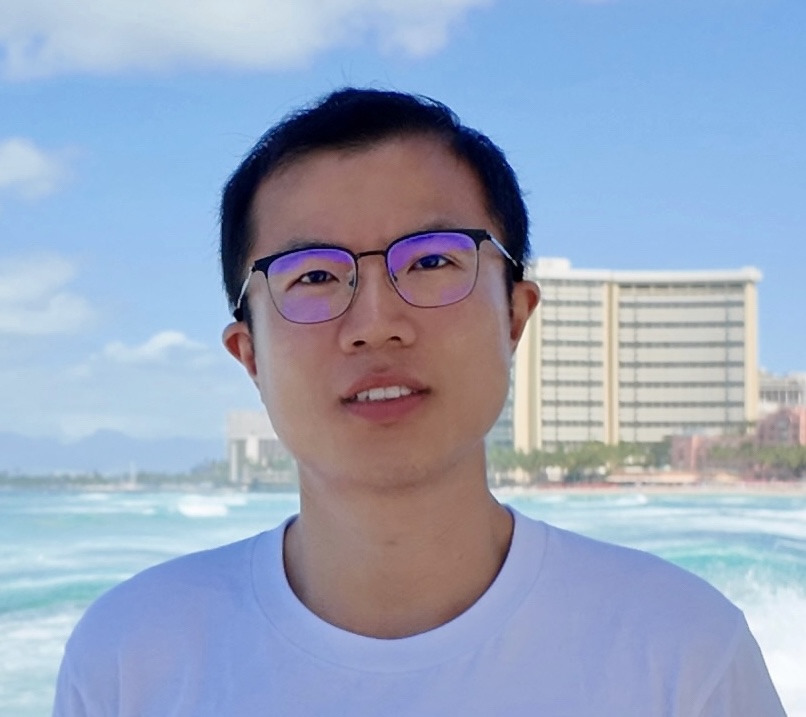
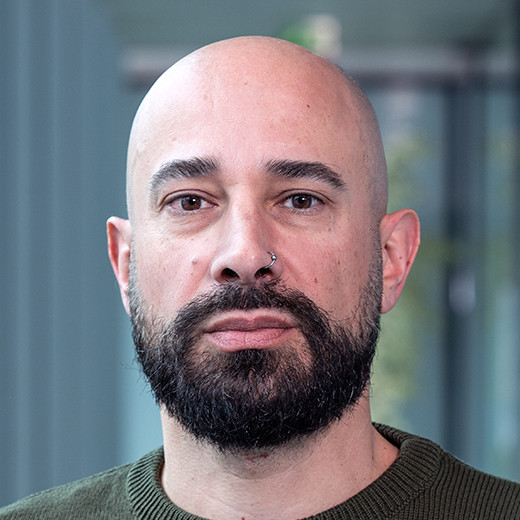
Dr. Tyler Hollett serves as an Associate Professor of Learning Sciences in the Department of Learning and Performance Systems at The Pennsylvania State University, contributing to the Learning, Design, and Technology program from 315 Keller Building, University Park, PA. His research champions interest-driven learning often devalued by formal institutions and neoliberal markets, investigating contexts like skateboarding, video gaming, and nature hobbies (fishing, birding). Hollett examines how passion-fueled activities generate embodied, affective learning that transcends goal-oriented education, advocating for equitable alternatives to capitalist learning trajectories. Current projects focus on intergenerational play through the FIGMENT Lab, exploring family gaming dynamics, climate engagement via outdoor hobbies, and evolving children's play across settings. Analysis of his recent publications reveals a methodological commitment to qualitative inquiry, with recurring themes of spatial-temporal rhythms, affective atmospheres, and embodied cognition. His work bridges learning sciences, critical pedagogy, and digital media studies, increasingly emphasizing intergenerational and ecological dimensions of informal learning. No scientific awards are listed in his current profile. However, Hollett actively mentors graduate students, inviting collaboration on FIGMENT Lab initiatives. His advising philosophy emphasizes rigorous scholarship within supportive, interest-driven research teams, with the FIGMENT Lab representing his current focus on family-centered learning in gaming, nature, and play contexts.
Patricia Wallace serves as a Professor in the Department of Accounting and Information Systems at The College of New Jersey's School of Business. Her office is located in the Business Building with contact information including email pwallace@tcnj.edu and phone (609) 771-2220. During Spring 2023, she held office hours on Mondays and Thursdays from 3:30-4:50pm via Zoom. Her educational background includes: Business Education, B.A., Shippensburg University (1972) Business Education, M.A., Rider College (1975) Business Education, Ed.D., Temple University (1980) Information Science, M.S., Pennsylvania State University (2000) Wallace's research focuses on the intersection of information systems and educational technology, with particular expertise in computer-based assessment methodologies, gender differences in technology adoption, and innovative curriculum development for information systems education. Her work bridges theoretical knowledge structures with practical classroom applications, emphasizing how technology transforms learning outcomes in business education. She has pioneered approaches to virtual internship experiences and developed frameworks for measuring knowledge acquisition in technology-driven environments. Her publication history reveals a consistent trajectory from foundational records management research toward contemporary studies on digital assessment and technology integration. Early work established her expertise in information systems applications, while her most recent publications demonstrate evolving focus on pedagogical innovation, particularly in developing technology minors to enhance student employability and examining structural knowledge elicitation methods. Professional recognition includes: Outstanding Adviser Award for the State of New Jersey for 25 years of service to TCNJ PBL Phi Beta Lambda National Adviser Service Recognition Award Throughout her career, Wallace has maintained active service commitments including chairing the IST Minor Development Committee (2016-2018), serving on the Promotion and Retention Committee (2021-present), and currently leading the DEI Committee (2023-2024). Her advising work with Phi Beta Lambda demonstrates sustained commitment to student development beyond the classroom. While specific grant details aren't provided, her committee leadership on curriculum development and academic affairs suggests significant contributions to institutional advancement.
Debbi Marais is a Professor (Teaching Focussed) at the University of Warwick within the Warwick Medical School and Health Sciences department. She serves as the Director of Postgraduate Education and is a Principal Fellow of the UK Higher Education Academy , demonstrating strategic leadership in enhancing teaching quality, curriculum development, and student mentorship. With over 25 years of experience in higher education, she has held academic positions at Stellenbosch University , University of Aberdeen , and University of Warwick . Her expertise spans teaching, assessment, program coordination, quality assurance, and reflective practice. Marais’ research interests include pedagogical innovation , with a focus on technology-enhanced teaching and employability & professionalism , as well as public health nutrition covering infant and young child feeding , nutrition transition , and global health . She employs mixed methods in her research and has contributed to understanding exclusive breastfeeding barriers , maternal obesity trends in Africa, and Arabic weight-loss app design . Her work often intersects with technology-enhanced health education and interdisciplinary collaboration . Her recent publications highlight qualitative studies on food-based dietary guidelines in Kenya and South Africa, mobile health interventions for weight loss, and educational innovations in medical and nutrition training. These works reflect her commitment to global health equity and digital pedagogy , with recurring themes in African and Southeast Asian health contexts. She emphasizes participatory research methods and policy translation in maternal and child nutrition. Scientific Awards Principal Fellow of the UK Higher Education Academy Marais has supervised postgraduate research students (PhD and Masters) and contributed to curriculum reform through collaborative international projects. She has secured external funding for research and demonstrated interdisciplinary expertise in nutrition , public health , and health education .
Rainald Loehner is a Distinguished Professor of Fluid Dynamics at George Mason University's Center for Computational Fluid Dynamics. Since 2003, he has led the Center for Computational Fluid Dynamics at George Mason University. He is currently a Hans Fischer Senior Fellow at the Technical University of Munich's Institute for Advanced Study (TUM-IAS) for 2023, hosted by Professors Kai-Uwe Bletzinger and Roland Wüchner in the 'Adjoint-Based System Identification of Large-Scale Structures' Focus Group. Loehner received his Diplom Ingenieur (Maschinenbau) degree from the Technical University of Braunschweig, and his PhD and a DSc in civil engineering from the University College of Swansea, Wales. After teaching at Swansea for a year, he worked at the Naval Research Laboratory in Washington, DC, followed by a research professorship at George Washington University. He joined George Mason University as an associate professor and was promoted to full professor in 1995 and distinguished professor in 2004. With over 35 years of experience, Professor Loehner's research spans the complete pipeline of numerical solvers and simulation tools. His expertise includes pre-processing, grid generation, numerical methods, field solvers, parallel computing, adaptive mesh refinement, fluid-structure interaction, shape optimization, system identification, and computational crowd dynamics. His current work focuses on developing advanced field solvers for compressible and incompressible flows, acoustics, electromagnetic wave propagation, heat and mass transfer, structural mechanics, and fluid-structure interaction. Key application areas include blast mitigation, ship hydrodynamics, blood flow, contaminant transport, and pedestrian safety. Loehner's recent research output (2020-2024) shows a strong trend toward digital twin technology and adjoint-based methods for structural analysis and optimization. His publications focus on high-fidelity digital twins for detecting structural weaknesses, risk assessment in engineering systems, and optimization of sensor placement. His work bridges computational mechanics with machine learning approaches, particularly in system identification and inverse problems, demonstrating how computational methods can solve complex real-world engineering challenges. 2020: Ranked #15119 in the Stanford List of Most Influential Scientists of the World; #8 in Aerospace and Aeronautics 2010: Distinguished International Career Award, Argentine Association of Computational Mechanics 2008: Fellow, International Association for Computational Mechanics 2006: Associate Fellow, AIAA 2005: Honorary Professor, University of Wales Swansea 2005: Advisory Professor, Shanghai Jiao Tong University 2004: Distinguished Professor of Fluid Dynamics, George Mason University 1999: Computational Mechanics Achievements Award, Japan Society of Mechanical Engineering 1993: Doctor of Science in Civil Engineering, University College of Swansea 1979-1983: Studienstiftung des Deutschen Volkes (Top 1% of German Students) Professor Loehner has mentored numerous students through his work at George Mason University and has supervised research in computational fluid dynamics, structural mechanics, and related fields. His research has been supported by various grants from government agencies and industry partners, enabling the development of advanced simulation tools applied in aerodynamics, hydrodynamics, shock-structure interaction, and medical applications. His codes and methods have been widely adopted in industry and academia for applications ranging from aircraft and ship design to medical simulations and urban pathogen transmission modeling. Loehner leads the Center for Computational Fluid Dynamics at George Mason University, which focuses on developing cutting-edge computational methods for fluid dynamics and related multiphysics problems. The center works on strategic application areas including blast mitigation, ship hydrodynamics, blood flow simulation, and pedestrian movement modeling. As a TUM-IAS Fellow, he collaborates with the Chair of Computational Modeling and Simulation at TUM on adjoint-based system identification of large-scale structures, bringing together expertise in computational mechanics and digital twin technology to address complex engineering challenges.
Janille Smith-Colin is the J. Lindsay Embrey Trustee Assistant Professor of Civil & Environmental Engineering at Southern Methodist University (SMU), where she leads the Smith-Colin Research Group. As a licensed Professional Engineer (P.E.) and Jr. Editor for the ASCE Journal of Infrastructure Systems, her work bridges infrastructure management with social equity. She serves on the Transportation Research Board Standing Committee on Transportation Planning Analysis and Application (AEP15). Her educational background includes: Ph.D. in Civil and Environmental Engineering from Georgia Institute of Technology Master of Science in Civil and Environmental Engineering from University of Wisconsin-Madison Bachelor of Arts in Engineering Studies from Lafayette College Smith-Colin's research centers on sociotechnical systems modeling to advance equity, sustainability, and resilience in transportation infrastructure. She employs system dynamics and spatial analysis to examine transportation as a social determinant of health, with emphasis on underserved communities. Her engineering education work integrates community-based participatory research and design thinking to develop inclusive pedagogical approaches. Recent publications reveal a strong trend toward data-driven equity assessment, utilizing social media mining, mobile trajectory data, and spatial analytics to investigate infrastructure deserts, micromobility access, and health impacts. She pioneers social return on investment (SROI) frameworks for transportation solutions, connecting civil engineering with public health and disaster resilience through interdisciplinary methodologies. Scientific recognition includes: Best Poster Award, International Conference on Transportation & Development (2023) Golden Mustang Teaching Award, SMU (2023) National Academies Gulf Coast Research Program Early Career Fellowship (2021) ASCE ExCEED Teaching Fellow (2019) Her research is funded by the National Academies of Sciences, Engineering and Medicine, with grants supporting equity-focused transportation projects. While student advisees aren't explicitly listed, her community-based research approach indicates active mentorship in solving civil engineering challenges for marginalized groups. She also contributes to transportation policy through regional collaborations. The Smith-Colin Research Group develops evidence-based tools for infrastructure equity, conducting spatial analysis of transportation systems and health outcomes. Current projects involve system dynamics modeling for social sustainability, Twitter-based crisis response monitoring, and partnerships with Dallas-area agencies to map infrastructure deficiencies and mobility barriers.
Fernando Manuel Marques Batista is an Associate Professor at ISCTE – University Institute of Lisbon, Department of Information Science and Technology, and an integrated researcher at INESC-ID Lisbon. He serves as the Executive Coordinator of the Human Language Technologies (HLT) Scientific Area at INESC-ID and is a member of its Scientific Council. He previously held leadership roles including President of the Pedagogical Council of ISCTE-IUL (2017–2019) and member of its Standing Committee (2015–2017). Research Interests: Natural Language Processing Machine Learning Text and Speech Processing Sentiment and Emotion Analysis Hate Speech Detection Social Media Analytics Automatic Speech Recognition and Transcription His recent publications reflect a strong focus on applying NLP and machine learning to social media, with particular emphasis on hate speech detection, sentiment analysis, and user behavior modeling. He has also contributed significantly to speech processing, including punctuation restoration and prosody modeling, and to digital humanities through medieval text analysis. His work spans both technical innovation and real-world applications in tourism, finance, and public discourse. Scientific Recognition: Senior Member of IEEE (since 2016) Member of ISCA (International Speech Communication Association) Fernando Batista actively advises numerous PhD and Master’s students, supervising research in areas such as generative AI, hate speech detection, sentiment analysis, and economic forecasting. He has coordinated research projects like SPEDIAL and AppRecommender and is involved in organizing major conferences including PROPOR, EAMT, IPMU, and the Lisbon Machine Learning Summer School (LxMLS), where he has served in editorial and technical roles. Research Labs and Teams: He is a key member of the HLT@INESC-ID research group, contributing to its leadership and scientific direction. This group focuses on human language technologies, including speech processing, natural language understanding, and multilingual systems.
Yan Chen is an Assistant Professor at the Virginia Tech College of Engineering , where he leads the PRIME Lab (Programming with Intelligent Machines & Environments) . His work focuses on creating interactive Human-AI systems to enhance real-time data analysis and programming education, particularly addressing barriers in collaborative learning environments. University of Toronto (Postdoctoral Fellow) University of Michigan (Ph.D., Information Science) University of Colorado, Boulder (BS/MS in Applied Math & Electrical & Computer Engineering) His research bridges Human-Computer Interaction (HCI) and Computer Science Education , with a focus on real-time data analysis , AI-driven programming assistance , and scalable learning tools . He employs LLMs and human-centered design to simplify complex computational processes, enabling data workers to detect critical patterns efficiently. Recent publications highlight trends in generative AI for education , proactive AI programming support , and collaborative analytics . Key themes include real-time classroom insights , intergenerational smartphone learning , and automated feedback systems . Scientific recognition includes: 🏆 Best Paper at L@S 2024 🏅 Best Paper Honorable Mention at CHI 2023 🏅 Best Paper Honorable Mention at UIST 2022 🏆 Best Short Paper at VL/HCC 2020 He mentors a team of PhD and MS students in projects spanning AI-assisted education, web automation, and collaborative coding tools, with active recruitment for future research directions.
Michele Cagol is a Professor at the Free University of Bozen-Bolzano , Faculty of Educational Sciences. Their work bridges pedagogy, emotional education, and ecological sustainability, with a focus on relational learning frameworks and multisensory educational practices. Research Themes : Emotional education, educational ecology, sustainability pedagogy, media and communication education, teacher training. Projects : Lead participant in the EU Interreg Alpine Space project FRACTAL , promoting green space awareness in the Alpine region. Recent publications emphasize radical relational pedagogy, ecological ethics, and the role of wonder in learning. Notable methodologies include intra-actionist music composition and microteaching for multilingual competencies. Teaching responsibilities span General Pedagogy , Social Education , and teacher training for primary/middle school contexts.
Dr. Andrzej Ożadowicz is a University Professor at the Department of Power Electronics and Automation of Energy Conversion Systems within the Faculty of Electrical Engineering, Automatics, Computer Science and Biomedical Engineering at AGH University of Science and Technology in Kraków, Poland. His office is located in room 510, building C-1, with contact details including phone +48 12 617 50 11 and email ozadow@agh.edu.pl. He holds PhD, DSc, and Engineering degrees, reflecting his dual expertise in academic research and practical engineering applications. His research spans Power Electronics, Building Automation, Smart Grids, and IoT-driven energy systems. Key interests include energy efficiency optimization through digital twins and BIM, distributed energy resource integration , and AI-enhanced demand management . Notably, he pioneers applications of deep reinforcement learning in home energy systems and develops frameworks for Smart Readiness Indicator implementation. His work bridges theoretical innovation with practical case studies in building thermal modeling and dynamic façade systems. Recent publications (2021-2025) reveal three dominant trends: (1) Convergence of digital twin technology with building automation for real-time energy management; (2) Critical analysis of IoT security and interoperability in smart infrastructure; (3) Pedagogical innovations in engineering education through blended learning methodologies post-COVID-19. His scholarly output demonstrates consistent focus on energy transition challenges and smart grid evolution. Professor Ożadowicz actively contributes to the Discipline Council for Automation, Electronics, Electrical Engineering and Space Technologies at AGH. He is instrumental in the AutBudNet initiative —a network of certified laboratories for energy efficiency assessment that implements "learning by doing" principles in building automation education. His work with this consortium emphasizes practical validation of smart grid technologies and demand response systems.
Jeffrey K. Mullins is an Assistant Professor in the Department of Information Systems at the Sam M. Walton College of Business, University of Arkansas. His research explores the intersection of emotion, cognition, and ethics in information systems, with a focus on how digital technologies blur boundaries between work and play through gamification and metaverse development. Ph.D. in Information Systems, University of Arkansas Director of Ph.D. Program, Walton College Research interests span: Emotion and cognition in digital environments Ethics of biometric and gamification technologies Metaverse development and Web3 transitions Work-life convergence in IS-enabled contexts His publications in MIS Quarterly , Journal of Business Ethics , and Journal of the Association for Information Systems reflect these themes. Recent work examines AI biometrics policy and immersive learning applications. 2024 Walton College Executive MBA Teacher of the Year 2020 ACM SIGMIS Doctoral Dissertation Award 2016 Outstanding Lecturer Award With over a decade of IT experience at a Fortune 100 firm, he teaches graduate courses in IT management and multivariate analysis while maintaining certifications like ERPsim Level 2 Training.
Stephen Rowe serves as an Associate Professor in the Accounting Department at the Walton College of Business, University of Arkansas. With extensive industry experience including nine years at KPMG culminating as Audit Manager, he maintains an active CPA license in Washington State while teaching intermediate accounting at graduate and undergraduate levels. His scholarly work focuses on auditing and financial reporting, published in premier journals including The Accounting Review and Review of Accounting Studies . Rowe holds a PhD from the University of Illinois at Urbana-Champaign, a Master's degree from Loyola University Chicago, and a Bachelor's degree from Covenant College. His educational journey bridges rigorous academic training with practical industry experience, informing his teaching approach that emphasizes conceptual understanding through real-world case studies. Research interests span auditing quality, financial reporting practices, and capital market interactions. Recent investigations examine index fund ownership effects, auditor switching dynamics, and media influence on audit markets. His methodological toolkit combines traditional econometric analysis with machine learning techniques, particularly evident in predictive models for auditor behavior. Rowe's work consistently addresses regulatory concerns while exploring market-driven phenomena in accounting ecosystems. Analysis of his publication trajectory reveals increasing focus on market-based audit quality indicators, with growing emphasis on passive investing impacts and regulatory compliance mechanisms. The 2021-2025 period shows heightened attention to technological disruption (machine learning applications) and non-traditional monitoring forces (media scrutiny, index fund activism) within audit markets. Professional recognition includes multiple teaching awards and extensive litigation support consulting engagements. Rowe leverages his expertise as a founding member and CFO of White River Capital Advisors LLC (2020-present), providing expert witness services that connect academic research with real-world accounting disputes. His industry background enables practical translation of complex accounting concepts for diverse audiences. Rowe maintains active engagement with professional practice through ongoing litigation consulting since 2016 and continuous CPA licensure. His balanced commitment to academic rigor and professional relevance exemplifies the practitioner-scholar model, with research directly addressing contemporary challenges in financial reporting and auditing ecosystems.
Dr. Chiara Bertelli is a Lecturer in Biosciences at Swansea University within the Faculty of Science and Engineering, School of Biosciences, Geography and Physics. With over 15 years of experience in coastal and marine ecological surveys, she specializes in seagrass ecology and restoration, marine conservation, and habitat suitability modeling. Dr. Bertelli has extensive field experience including boat-based surveys, SCUBA diving, and snorkeling in both temperate and tropical environments. She is currently completing her PhD part-time focusing on environmental drivers of change in seagrass meadows in the UK and Brazil. Her educational background includes advanced training in marine biology with specialization in ecological survey techniques and data analysis using R and Primer. Her primary research focuses on seagrass ecology as nature-based solutions for climate change. She develops habitat suitability models to inform optimal locations for seagrass restoration, with applications in carbon sequestration (blue carbon) and marine biodiversity enhancement. Her work aligns with UN Sustainable Development Goals 13 (Climate Action) and 14 (Life Below Water). Analysis of Dr. Bertelli's recent publications (2020-2025) reveals a strong emphasis on practical applications of seagrass research to inform restoration efforts. Her work spans habitat suitability modeling, environmental stress responses, nutrient dynamics, and decision-support tool development. A significant portion addresses seed-based restoration techniques, ecosystem services, and the socio-ecological dimensions of marine conservation. Dr. Bertelli actively collaborates with external organizations including Project Seagrass, Sky Ocean Rescue, WWF, Natural England, and the National Oceanographic Centre. Her current ReSOW project aims to develop the CEEDS (Coastal Ecosystem Enhancement Decision Support) tool, an open-source platform to guide seagrass restoration practitioners. As an educator, Dr. Bertelli teaches several field-based marine biology courses including BIO260 Marine Biology Field Course, BIO327 Tropical Marine Ecology Field Course, and BIO346 Professional Skills in Marine Biology. Her teaching emphasizes practical, field-based learning and professional skill development for marine biologists, with a focus on survey techniques, data analysis, and environmental impact assessment. Dr. Bertelli is actively involved in research teams focused on marine ecosystem restoration and coastal management. Her work bridges academic research with practical conservation applications, working closely with government agencies, NGOs, and international research partners to translate scientific findings into actionable conservation strategies.
Susanne Narciss is a Professor at the Psychology of Learning and Instruction department of Technische Universität Dresden, leading the Center of Tactile Internet with Human in the Loop (CeTI). Her research focuses on error processing in educational contexts, with 15 recent publications analyzing error climates, feedback strategies, and motivational frameworks. Key Research Areas : Learning from errors/failure, instructional feedback design, affective-motivational responses, error-related metacognition. Methodological Scope : Combines longitudinal studies, experimental designs, and qualitative analyses across K-12, university, and informal learning settings (museums, home contexts). Her work emphasizes context-specific interventions for educators, parents, and students, including error-competency training programs and metacognitive scaffolding tools. Current projects examine vibrotactile feedback systems for motor learning and cultural responsiveness in psychology education. Collaborative Networks : Works with international teams on the International Competences for Undergraduate Psychology model and cyber-physical system pedagogy. Recent Trends : 2025 articles focus on collaborative error processing, scenario-based human-machine interaction, and generative learning tasks in digital environments.
Roni Berger, PhD, is a Professor at Adelphi University's School of Social Work with over 30 years of academic experience. Her research focuses on trauma in cross-cultural contexts, immigrant/refugee experiences, and posttraumatic growth. She holds clinical credentials as a Licensed Clinical Social Worker (NYS) and Clinical Family Therapist (AAMFT). Education includes: Ph.D. from The Hebrew University of Jerusalem (1994) Psychotherapy certification from Tel Aviv University (1977) MSW and BSW from The Hebrew University of Jerusalem (1974, 1969) Her research examines how sociopolitical environments shape trauma responses across diverse populations including immigrants, refugees, and religious communities. Current investigations explore cultural mediators of posttraumatic growth, trauma-informed pedagogy, and qualitative methodologies for marginalized groups. Publication analysis reveals consistent focus on: cultural competence in trauma care, immigrant mental health interventions, innovative qualitative methodologies, and social work education reform. Recent work addresses pandemic-related pedagogical challenges and cross-cultural manifestations of psychological distress. Awards include: Two Fulbright Awards (Hong Kong 2007, Tel Aviv 2011) President Research Award (2004) NATO Science for Peace sponsorship (2012) Notable advising includes chairing 20+ dissertations on trauma, cultural identity, and marginalized populations. Secured multiple grants including from Fulbright, NATO, and Adelphi University for studies on cultural trauma and community resilience. Leads international educational initiatives in Israel, Ghana, Nepal, and Hong Kong. Directs global trauma education programs, including intensive courses in Israel examining Holocaust intergenerational trauma, security stress, and immigrant experiences. Developed cross-university collaborations in Australia and Hong Kong to advance trauma-informed curriculum development.
Joshua Camins , Ph.D., ABPP, is a Clinical Assistant Professor at the University of Illinois, Urbana-Champaign , affiliated with the Department of Educational Psychology and the Department of Clinical Sciences . He also serves as an Affiliate at the Disability Resources and Educational Services (DRES) within the College of Applied Health Sciences . Education: B.A. in Psychology, University of New Haven (2011) B.S. in Criminal Justice, University of New Haven (2011) M.A. in Clinical Psychology, Towson University (2013) Ph.D. in Clinical Psychology, Sam Houston State University (2020) ABPP Board Certification in Forensic Psychology (2024) Research Focus: Camins specializes in forensic psychology , competence to stand trial , and violence risk assessment . His neuroscience work on childhood adversity and brain structure, particularly hippocampal volume reduction due to maltreatment, has been published in PLoS ONE and other journals. Publication Trends: His recent articles explore telesupervision during the pandemic, PTSD in veterans , maternal influences on delinquency , and school-based mental health for immigrant youth . Scientific Awards: ABPP Board Certification in Forensic Psychology (2024) Postdoctoral Fellowship in Forensic Psychology, Mendota Mental Health Institute (2021) Grants & Collaborations: Co-authored a NIH-funded study on childhood socioeconomic status and brain structure (2017) and contributed to research on financial strain and neurodevelopmental outcomes.


.jpeg?h=700&iar=0&w=700&hash=ECBB86D790E7934E1AF1CA57FF156948)