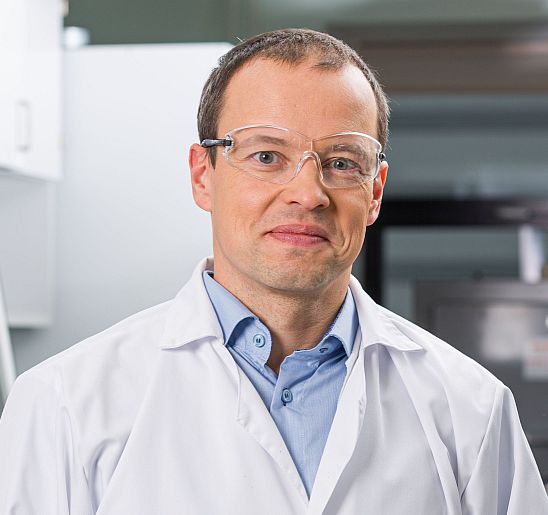
Amin Hammad is a Professor at the Concordia Institute for Information Systems Engineering, with an additional appointment as Affiliate Professor in Building, Civil, and Environmental Engineering at Concordia University. His research focuses on advancing construction technology through digital transformation, automation, and AI integration. He leads work in BIM applications, 4D simulation, robotic systems, and sustainable infrastructure management. His interdisciplinary approach bridges civil engineering with computer science and data analytics. Key research areas include: Automation and robotics in construction (Construction 4.0) BIM and digital twin lifecycle management AI-driven defect detection and inspection systems Occupational safety through exoskeleton performance evaluation Multi-purpose utility tunnel optimization Energy-efficient building systems Recent work emphasizes applying machine learning to construction equipment activity recognition, UAV path optimization for infrastructure inspection, and ontology development for integrated systems. His research addresses industry challenges in productivity, safety, and sustainability through data-driven solutions.
W. Hong Yeo is a Professor in the Woodruff School of Mechanical Engineering and Program Faculty in Bioengineering at the Georgia Institute of Technology, where he also directs the WISH Center. He holds adjunct appointments in the Wallace H. Coulter Department of Biomedical Engineering. Previously, he was an Assistant Professor at Virginia Commonwealth University (2014-2016) and a postdoctoral fellow at the University of Illinois Urbana-Champaign's Beckman Institute. Dr. Yeo's research integrates nanomechanics, soft materials, and nano-microfabrication to develop bio-interfaced systems. Key areas include: Flexible Bioelectronics : Wearable/implantable sensors for health monitoring Human-Machine Interfaces : Neural prosthetics and soft robotics Translational Nanoengineering : Nanoparticle biosensing and diagnostics His publications (2023-2025) demonstrate strong focus on wireless health technologies, including multi-modal wearable systems, implantable sensors for cardiovascular/neurological monitoring, and AI-integrated diagnostics. Trends show increasing emphasis on closed-loop therapeutic systems and scalable manufacturing. Awards & Recognition : BMES Innovation and Career Development Award Virginia Commercialization Award Blavatnik Award Nominee NSF Summer Institute Fellowship Research funding sources include MEDARVA Foundation, NIH, DARPA, and industry partners like CooperVision. He leads the Center for Human-Centric Interfaces & Engineering , developing next-generation bio-interfaced systems.
Zhenhong Li is a Lecturer in Robotics and Control at the University of Manchester, holding an EPSRC Fellowship in physical human-robot interaction. He earned his B.Eng. from Huazhong University of Science and Technology (2013), and M.Sc. and Ph.D. in Control Engineering from the University of Manchester (2014 and 2019). Before joining Manchester in 2023, he was a Research Fellow in Rehabilitation Robotics at the University of Leeds (2019–2023). His research focuses on control technologies for human-robot systems, with applications in healthcare and industry. Key areas include physical human-robot interaction for rehabilitation, brain-computer interfaces, and neuromusculoskeletal modeling. He leads the Neurorobotics Lab (NRL) at Manchester and collaborates with healthcare professionals, industries, and designers via EPSRC/STFC/Wellcome Trust funding. Notable achievements include the 2019 Best Paper Award for Unmanned Systems and the 2020 EPS International Academic Pump-priming Award. In 2025, he was elected as a Senior Member of the IEEE. He actively organizes conferences and special issues, including the 2025 IEEE UK Robotics Conference and a Frontiers special issue on intelligent rehabilitation technology. Dr. Li supervises PhD candidates in robotics and control, emphasizing interdisciplinary approaches to human-robot interaction. His lab develops cutting-edge technologies like assistive exoskeletons and adaptive control systems for healthcare and industrial applications.
Yang (Gilbert) Ye is an Assistant Professor in the Department of Civil and Environmental Engineering at Northeastern University, joining in January 2025. His research focuses on human-AI/robot teaming, automation in engineering, and assistive technologies, with a particular emphasis on human-centric robotics and sensorimotor processes. He holds a PhD in Civil Engineering from the University of Florida (2024), advised by Dr. Eric Jing Du. **Affiliations**: Member of ASCE, IEEE, and HFES. His work integrates VR/AR, robotics (e.g., drones, exoskeletons), and AI to enhance civil engineering workflows and workforce training. He leads the Ye Lab, actively recruiting PhD students and postdocs with coding experience (Python/C++/C#) and backgrounds in engineering or computer science. **Key Research Themes**: Human-robot interaction, construction automation, exoskeleton training, and delayed feedback mitigation in teleoperation. Over 20 peer-reviewed publications in journals like ASCE JoCEN, IEEE Access, and Advanced Engineering Informatics. **Lab Opportunities**: PhD/postdoc applicants require strong academic records (GPA ≥3.5) and coding skills. Undergrad/master students can apply for thesis/research roles. Funding covers tuition, insurance, and stipends.
Matei Ciocarlie is an Associate Professor of Mechanical Engineering at Columbia University, focusing on robotics research spanning hardware design, control systems, and human-robot interaction. His work emphasizes robots operating in dynamic, unstructured environments, with applications in manufacturing, logistics, and healthcare. He holds affiliations with Columbia's School of Engineering and Applied Science and the Robotics Department. Education: Ph.D. in Mechanical Engineering from Columbia University (2010), with a doctoral dissertation on dexterous robotic grasping awarded the 2010 Robotdalen Scientific Award. Research Interests: Robotic hand design/control, human-in-the-loop manipulation, assistive robotics, tactile sensing, and rehabilitation technologies. His lab develops systems like wearable robotic orthoses for stroke patients and teleoperated robots with autonomous decision-making capabilities. Awards: IEEE Early Career Award (2015), ONR Young Investigator Award (2016), NSF CAREER Award (2016), Sloan Fellowship (2017). Grants & Collaborations: Led projects at Willow Garage and Google, contributing to ROS development. Current work includes NSF-funded tactile sensing research and NIH-sponsored assistive robotics initiatives. Labs: Active projects in Columbia's Robotics Lab and collaboration with medical institutions for clinical trials of robotic orthoses.
Meisam Asgari is an Assistant Professor in the Department of Medical Engineering at the University of South Florida. He holds a Ph.D. in Mechanical Engineering from McGill University (2015), with postdoctoral training at Northwestern University (2018–2020) and McGill University (2016–2018). His research focuses on biomechanics, cardiovascular diseases, biomimetic design, and functional gradients in biological materials. He teaches courses such as Transport Phenomena in Biomedical Engineering and Biomechanics. Education: Ph.D. Mechanical Engineering, McGill University, 2015 M.Sc. Solid Mechanics, Isfahan University of Technology, 2011 B.Sc. Mechanical Engineering, Isfahan University of Technology, 2007 Awards: NSERC Postdoctoral Fellowship (2018–2020) McGill Engineering International Tuition Award (2011–2014) Outstanding Teaching Assistant Award, McGill (2015) His research integrates experimental and computational methods to study vascular diseases, biomaterials for tissue engineering, and structural adaptations in biological systems like crustacean exoskeletons. Recent work includes developing decellularized aortic grafts and investigating collagen mechanics in diseased tissues. Publications span Acta Biomaterialia , Scientific Reports , and Journal of the Mechanical Behavior of Biomedical Materials , emphasizing biomechanics and material characterization. His work bridges engineering and biology to address clinical challenges in cardiovascular and musculoskeletal systems.
Steve Collins is an Associate Professor of Mechanical Engineering at Stanford University, with a courtesy appointment in the Department of Bioengineering. His research focuses on wearable robotics, biomechanics, and human-machine interaction. He leads projects on exoskeleton optimization, prosthetic design, and energy-efficient robotic actuators. His work aims to improve mobility for older adults and individuals with mobility impairments through innovative assistive technologies. Research Interests: Collins explores biomechanical principles underlying human movement, exoskeleton torque control strategies, and the design of devices that reduce metabolic costs during walking. His lab develops both hardware (e.g., exoskeleton emulators) and software (e.g., AddBiomechanics modeling tools) to advance assistive technologies. Key Contributions: He pioneered human-in-the-loop optimization methods for exoskeleton control, demonstrated energy-saving designs for ankle exoskeletons, and investigated how exoskeletons can enhance balance and reduce fall risks. His team also developed the 'Tripod' prosthesis emulator and electrostatic clutch systems for energy-efficient actuators. Grants & Collaborations: His work is supported by NSF grants (e.g., NRI: Small grant for exoskeleton control) and industry partnerships. He collaborates with clinicians to translate robotic innovations into clinical applications for amputees and aging populations. Labs & Teams: His research is conducted in Stanford's robotics and biomechanics facilities, focusing on interdisciplinary projects at the intersection of mechanical engineering, bioengineering, and computer science.
John Nassour is a Researcher at the Technical University of Munich's School of Computation, Information and Technology, affiliated with the Chair of Cognitive Systems. He holds engineering degrees from Tishreen University (electronics), a Master's in intelligent systems from University of Cergy-Pontoise/École Nationale Supérieure de l'Électronique, and a joint PhD from University of Versailles/TUM. His interdisciplinary research focuses on computational cognitive systems applied to robotics, including wearable devices, humanoid robots, soft robotics, and robot learning for locomotion/manipulation. Before joining TUM in 2020, he was a lecturer/researcher at Chemnitz University of Technology. He teaches courses in cognitive systems, neuro-inspired engineering, and soft robotics.
Dr. Todd D. Murphey is a Professor of Mechanical Engineering at Northwestern University's Robert R. McCormick School of Engineering and Applied Science. He serves as Director of Transformative Research and Director of the Master of Science in Robotics Program at Northwestern, leading initiatives in computational dynamics, control systems, and robotics. His work bridges engineering, neuroscience, and biomedical applications, with a focus on developing systems that interact effectively with humans and their environments. Dr. Murphey received his Ph.D. in Control and Dynamical Systems from the California Institute of Technology in 2002, with a thesis titled "Control of Multiple Model Systems." Prior to that, he earned a B.S. in Mathematics, summa cum laude, from the University of Arizona in 1997. Dr. Murphey's research centers on computational methods in dynamics and control, with applications spanning neuroscience, health science, robotics, and automation. His work in the Interactive & Emergent Autonomy Lab focuses on computational models of embedded control, biomechanical simulation, dynamic exploration, and hybrid control. The group develops mathematical approaches that lead to orders of magnitude improvement in computational efficiency for real-time implementation. Key application areas include assistive exoskeleton control, stabilization of energy networks, bio-inspired active sensing, entertainment robots, robotic exploration, and software-enabled stroke rehabilitation. Analysis of Dr. Murphey's recent publications reveals a strong emphasis on human-swarm interaction, algorithmic matter, and control of cyber-physical systems in uncertain environments. His work increasingly integrates information theory with physical systems, exploring how both autonomous and biological systems interact with environments to learn and improve behaviors. Recent trends show growing applications in rehabilitation technology, with particular focus on human-machine interaction in biomedical devices and embodied intelligence. Dr. Murphey has received numerous honors and awards for his contributions to robotics and engineering: Named Director of Transformative Research at Northwestern University (2025) Appointed IEEE Robotics and Automation Society Vice President of Publication Activities (2022) Co-recipient of Best Paper Award for IEEE Transactions on Robotics (2020) Appointed to Air Force Scientific Advisory Board (2019) Recipient of ABB Best Student Paper Award for CPL-SLAM research (2019) Cole-Higgins Award from Northwestern Engineering (2015) Dr. Murphey has supervised numerous graduate students including Taosha Fan, Giorgos Mamakoukas, and Ian Abraham, with research spanning robotic exploration using electrosense and mechanical contact, human-in-the-loop control, and shared control for rehabilitation devices. His lab has secured significant funding from the National Science Foundation, DARPA, and industry partners including Siemens and Ekso Bionics, supporting research in algorithmic matter, emergent behavior, and human-swarm collaboration. The Interactive & Emergent Autonomy Lab, led by Dr. Murphey, investigates how both autonomous systems and biological systems interact with their environments to learn and improve behaviors. Current projects include active learning and data-driven control, active perception in human-swarm collaboration, algorithmic matter and emergent computation, control for nonlinear and hybrid systems, cyber physical systems in uncertain environments, harmonious navigation in human crowds, information maximizing clinical diagnostics, reactive learning in underwater exploration, robot-assisted rehabilitation, and software-enabled biomedical devices. The lab collaborates with researchers across Northwestern and institutions including Georgia Tech, MIT, and industry partners.
Sunil K. Agrawal is a Professor of Mechanical Engineering and Professor of Rehabilitation and Regenerative Medicine at Columbia University, where he directs a highly interdisciplinary rehabilitation robotics program bridging the School of Engineering and Applied Sciences and the College of Physicians and Surgeons. His research focuses on developing robotic systems to restore and enhance human mobility for individuals with neurological disorders, pediatric conditions, and age-related decline. Education: PhD in Mechanical Engineering, Stanford University, 1990 MS in Mechanical Engineering, Ohio State University, 1986 BS in Mechanical Engineering, Indian Institute of Technology (IIT) Kanpur, 1984 Research Focus: Dr. Agrawal’s work centers on rehabilitation robotics , where he integrates dynamic systems, control theory, and optimization to create robotic devices that assist in gait training, balance improvement, and functional movement restoration. His studies span stroke, Parkinson’s disease, cerebral palsy, vestibular disorders, and spinal cord injury, using devices like the Tethered Pelvic Assist Device (TPAD) and robotic exoskeletons. Scientific Honors: Machine Design Award, ASME (2016) Robotics and Mechanisms Award, ASME (2016) Fellow, American Institute of Medical and Biological Engineering (AIMBE) (2016) Fellow, American Society of Mechanical Engineers (ASME) (2004) Alexander von Humboldt Foundation U.S. Senior Scientist Award (2007) Friedrich Wilhelm Bessel Research Award (2002) Presidential Faculty Fellow Award, The White House (1994) Research Collaborations & Funding: Dr. Agrawal collaborates with faculty across Neurology, Rehabilitation Medicine, Pediatric Orthopedics, Otolaryngology, Geriatrics, and Psychiatry. His work is supported by the National Science Foundation, National Institutes of Health, and the Spinal Cord Injury Research Board. Laboratory & Outreach: He leads an active research group focused on translational robotic systems, with ongoing clinical trials for stroke, Parkinson’s, cerebral palsy, and elderly fall prevention. His lab develops novel robotic braces, exoskeletons, and VR-integrated training platforms.
Professor Kaspar Althoefer is a Professor of Robotics Engineering at the School of Engineering and Materials Science , Queen Mary University of London. He leads the Centre for Advanced Robotics @ Queen Mary (ARQ) and serves as Programme Director for BEng/MEng Robotics Engineering. His research focuses on robot autonomy, soft robotics , and tactile sensing with applications in healthcare, nuclear engineering, and manufacturing. Research Highlights: Soft Robotics, Tactile Sensing, Haptic Perception, Minimally Invasive Surgery, Human-Robot Interaction Key Collaborations: St Thomas Hospital London, EU Horizon Europe, EPSRC, Innovate UK Accomplishments: £10M+ as Principal Investigator, 500+ peer-reviewed papers, 7 patent applications His work spans robot autonomy , soft robotics , and machine learning , particularly in modeling tool-environment interactions and developing tactile sensors for surgical and nuclear applications. Recent projects include intelligent endoscopic microsurgery robots and eversion robots for radiation mapping . Scientific Awards: Senior Member, IEEE He supervises a team of 6 PhD students and postdoctoral researchers, with completed projects in soft robotic gloves , pneumatic actuators , and eversion robot navigation .
Xieyuanli Chen is an Associate Professor at the National University of Defense Technology (NUDT), China. He holds a Dr.-Ing. (summa cum laude) from the University of Bonn (2022), a Master's in Robotics from NUDT (2017), and a Bachelor's in Electrical Engineering from Hunan University (2015). His research focuses on robot learning, perception, and navigation, with an emphasis on LiDAR-based SLAM, autonomous systems, and semantic perception. Education: PhD: University of Bonn, 2018-2022 (supervised by Prof. Cyrill Stachniss) Master's: NUDT, 2015-2017 Bachelor's: Hunan University, 2011-2015 Research interests include robotics, autonomous systems, computer vision, and LiDAR perception. He has authored over 90 papers in top venues like TRO, RSS, ICRA, and CVPR. He serves as an Associate Editor for IEEE RA-L, ICRA, and IROS, and is a member of the RoboCup Rescue Robot League Technical Committee. Awards include the RSS Pioneer Award (2021), Best-in-Class RoboCup awards, and recognition as a World’s Top 2% Scientist (2024). His work spans LiDAR localization, moving object segmentation, and efficient semantic mapping. He advises students in robotics and autonomous systems. Labs/Teams: Active in the PRBonn group (University of Bonn) and leads research at NUDT on LiDAR-based perception systems.
Tarmo Tamm is a Researcher at the Intelligent Materials and Systems Lab, University of Tartu. His work focuses on conducting polymers, soft actuators, and biomaterials , with emphasis on applications in biomedical engineering, nanotechnology, and electrochemistry. He holds a primary affiliation with the University of Tartu and has authored/co-authored over 100 peer-reviewed articles since 2002. His research spans material characterization, actuator design, and polymer electrolyte systems. Key projects include development of biocompatible hydrogels (e.g., sea cucumber-derived materials), soft exoskeletons inspired by spider leg mechanics, and sustainable paper recycling processes . Tamm’s publications highlight interdisciplinary collaboration with institutions globally, addressing topics like ion mobility in PEDOT films, microbial interactions with silicone foams, and encapsulation techniques for biomedical actuators. His work often bridges fundamental material science with practical applications, such as energy storage systems and medical devices. Current research trends emphasize electrochemomechanical systems and bioinspired materials , with growing focus on sustainable materials engineering.
Levi J Hargrove is an Associate Professor at Northwestern University, holding dual appointments in the Department of Physical Medicine and Rehabilitation at the Feinberg School of Medicine and the Department of Biomedical Engineering at the McCormick School of Engineering. He is also a Research Scientist at the Center for Bionic Medicine at Shirley Ryan AbilityLab. His work focuses on developing neural control systems for prosthetic limbs, particularly in myoelectric control and pattern recognition, aiming to create clinically viable solutions for amputees. Education: BScE in Electrical Engineering, University of New Brunswick, 2003 MScE in Electrical Engineering, University of New Brunswick, 2005 PhD in Electrical Engineering, University of New Brunswick, 2008 Research Interests: Signal processing, pattern recognition, myoelectric control of powered prostheses, and neural interfaces for bionic limbs. His lab translates research into clinical applications, such as the first thought-controlled bionic leg and Coapt LLC's pattern recognition systems for upper-limb prosthetics. Awards: 2017 American Academy of Orthotists and Prosthetists Research Award 2014 Department of Defense Outstanding Research Team Award 2015 Collaboration Award from Chicago Innovation Grants: Manages a $25 million portfolio from federal, military, and philanthropic sources. Key projects include NSF-funded research on human-robot interaction and DoD grants for prosthetic innovation. Labs: Leads the Regenstein Foundation Center for Bionic Medicine and collaborates with the Neurorehabilitation and Neural Engineering Lab. His work emphasizes translational research, bridging engineering and clinical practice.
Dr. Andrew Erwin is an Assistant Professor in Mechanical Engineering at the University of Cincinnati, focusing on robotics, human-robot interaction, and rehabilitation engineering. He holds a PhD and MS from Rice University (2018, 2014) and a BS from the University of Massachusetts Amherst (2012). Prior to UC, he was a postdoc at the University of Southern California and the Jet Propulsion Laboratory. His research explores how forces and movements are executed in healthy individuals, and how robotic devices can assist or restore function post-injury. Key areas include rehabilitation robotics, bio-inspired systems, haptic interfaces, and motor learning. He has received prestigious awards such as the NASA Postdoctoral Program Fellowship (2018) and the IEEE/ASME Transactions on Mechatronics Best Paper Award (2017). Dr. Erwin’s work integrates biomechanics, control systems, and neurophysiology. His lab develops devices like the SE-AssessWrist for wrist assessment and explores planetary seismometers for space missions. He maintains an active Google Scholar profile with over 25 publications. Education: PhD, Mechanical Engineering, Rice University, 2018 MS, Mechanical Engineering, Rice University, 2014 BS, Mechanical Engineering, University of Massachusetts Amherst, 2012 His current research emphasizes curriculum design for robotics learning, human-robot collaboration, and adaptive control systems. He offers a PhD position for Fall 2025 focusing on these areas.