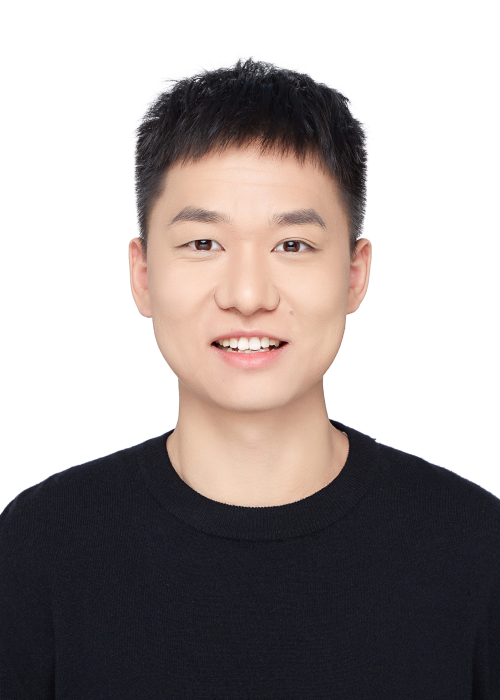
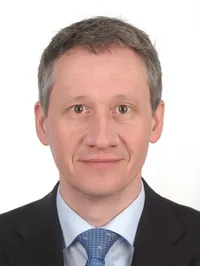
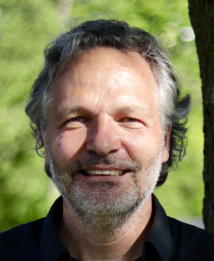
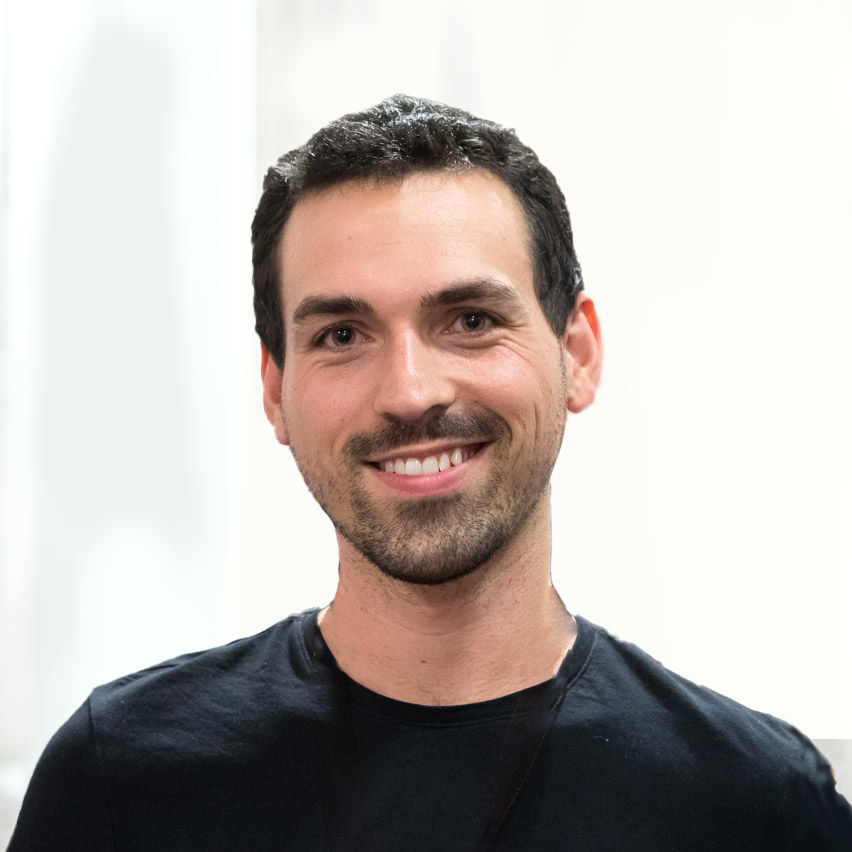
John Nassour is a Researcher at the Technical University of Munich's School of Computation, Information and Technology, affiliated with the Chair of Cognitive Systems. He holds engineering degrees from Tishreen University (electronics), a Master's in intelligent systems from University of Cergy-Pontoise/École Nationale Supérieure de l'Électronique, and a joint PhD from University of Versailles/TUM. His interdisciplinary research focuses on computational cognitive systems applied to robotics, including wearable devices, humanoid robots, soft robotics, and robot learning for locomotion/manipulation. Before joining TUM in 2020, he was a lecturer/researcher at Chemnitz University of Technology. He teaches courses in cognitive systems, neuro-inspired engineering, and soft robotics.
Xieyuanli Chen is an Associate Professor at the National University of Defense Technology (NUDT), China. He holds a Dr.-Ing. (summa cum laude) from the University of Bonn (2022), a Master's in Robotics from NUDT (2017), and a Bachelor's in Electrical Engineering from Hunan University (2015). His research focuses on robot learning, perception, and navigation, with an emphasis on LiDAR-based SLAM, autonomous systems, and semantic perception. Education: PhD: University of Bonn, 2018-2022 (supervised by Prof. Cyrill Stachniss) Master's: NUDT, 2015-2017 Bachelor's: Hunan University, 2011-2015 Research interests include robotics, autonomous systems, computer vision, and LiDAR perception. He has authored over 90 papers in top venues like TRO, RSS, ICRA, and CVPR. He serves as an Associate Editor for IEEE RA-L, ICRA, and IROS, and is a member of the RoboCup Rescue Robot League Technical Committee. Awards include the RSS Pioneer Award (2021), Best-in-Class RoboCup awards, and recognition as a World’s Top 2% Scientist (2024). His work spans LiDAR localization, moving object segmentation, and efficient semantic mapping. He advises students in robotics and autonomous systems. Labs/Teams: Active in the PRBonn group (University of Bonn) and leads research at NUDT on LiDAR-based perception systems.
Dr. Anne Koelewijn is an Assistant Professor leading the Biomechanical Motion Analysis and Creation (BioMAC) group at Friedrich-Alexander-Universität Erlangen-Nürnberg (FAU) since 2019. Her research bridges biomechanics, computational modeling, and wearable technology to analyze human movement. She holds a Junior Professorship in Computational Movement Science within the Department of Electrical-Electronic-Communication Engineering. Her educational background includes a Doctor of Engineering in Mechanical Engineering from Cleveland State University (focus: prosthesis design and gait simulations), an MSc in Mechanical Engineering (BioMechanical Design specialization), and a BSc in Aerospace Engineering , both from Delft University of Technology. She completed postdoctoral work at École Polytechnique Fédérale de Lausanne on neuromuscular control. Research interests center on human movement optimization , neuromuscular control mechanisms , and in-the-wild movement analysis . Her work integrates musculoskeletal modeling, optimal control theory, and machine learning to study gait adaptations, exoskeleton design, and pathological movement patterns (e.g., Parkinson’s disease). Publications emphasize predictive simulations , wearable sensor technology , and biomechanical energy optimization , with recent advances in radar-based motion capture, inertial pose estimation, and digital twin applications for medical engineering. Promising Scientist Award , International Society of Biomechanics (2023) Best Paper Award , 5th International Symposium on Wearable Robotics (2020) She leads the BioMAC research group, focusing on computational methods for movement science and collaborating internationally on projects involving exoskeletons, injury prevention, and neuroprosthetics.
Surjo R. Soekadar is the Einstein Professor of Clinical Neurotechnology at Charité – University Medicine Berlin. He leads the Clinical Neurotechnology Laboratory , which focuses on developing noninvasive neurotechnologies for treating neurological and psychiatric disorders through closed-loop brain stimulation and advanced brain-machine interfaces (BCI/BMI). His work integrates real-time EEG/MEG monitoring with electromagnetic stimulation to modulate pathological brain oscillations and enhance neuroplasticity in conditions like stroke, spinal cord injury, and psychiatric disorders. Education : Studied medicine in Mainz, Heidelberg, and Baltimore Clinical Training : Residency in Psychiatry and Psychotherapy at University of Tübingen Academic Journey : 2008-2011 Research Fellow at NINDS (USA); 2017 Venia Legendi at University of Tübingen; 2018 First Professor of Clinical Neurotechnology in Germany His research interests span: • Closed-loop neurostimulation combining real-time brain state monitoring with targeted intervention • Next-generation BCI using optically pumped magnetometers (OPM) for mobile MEG recordings • Neurorehabilitation through exoskeleton control and sensory feedback • Neurophysiological modeling of entropy measures and phase flows Recent publications highlight: • Adaptive deep brain stimulation protocols • Real-time phase-sensitive tACS applications • OPM-based BCI innovations • Stroke recovery mechanisms through corticospinal tract analysis Scientific recognition includes: International BCI Research Award BIOMAG Award NARSAD Young Investigator Award Funded by the European Research Council (ERC) , his lab trains doctoral students like David Haslacher (EEG/MEG integration), Khaled Nasr (multicoil TMS optimization), and Annalisa Colucci (entropy-driven BCI development). The team also explores quantum AI applications in clinical decision-making and bidirectional BCI systems using OPM and tES.
Prof. Dr. Tim C. Lueth is Director of MIMED (Chair of Microtechnology and Medical Device Technology) at the Technical University of Munich (TUM). He holds a Dipl.-Ing. in Electrical Engineering (TU Darmstadt, 1989), Dr. rer.nat. in Robotics (University of Karlsruhe, 1993), and Dr.-Ing. habil in Computer Science (University of Karlsruhe, 1997). Appointed professor in 1997, he has held positions at Charité Berlin, Fraunhofer IPK, and TUM, serving as Dean of Mechanical Engineering (2013–2016) and Vice-Dean (2012, 2017). His research spans four key areas : Robotics and distributed control (since 1989) Surgical robots/navigation systems (since 1997) Additive manufacturing/automated design (since 2005) Physical assistance for elderly care (since 2005) Current projects include robotic exoskeletons, patient-specific heart valve replicas, endoscopic manipulators, and the SG-Lib MATLAB toolbox for automated mechanism design. He teaches courses in mathematical software tools (MATLAB/Simulink), mechatronic device development, and medical automation technology. Leads 12+ researchers at MIMED in projects funded by BMBF, DFG, and industry partners.
Jun Morimoto is a Professor and Head of the Department of Brain Robot Interface at ATR Computational Neuroscience Laboratories. He holds a Ph.D. in Information Science from the Nara Institute of Science and Technology (NAIST) and has held positions at Carnegie Mellon University and the Japan Science and Technology Agency (JST). His research focuses on reinforcement learning, humanoid robotics, exoskeleton systems, and brain-robot interfaces. He has led teams at RIKEN and contributed to projects such as the ICORP initiative. His work integrates neuroscience principles with robotics, emphasizing applications in assistive technologies and neurorehabilitation. Key contributions include developing exoskeleton control strategies, brain-computer interfaces, and adaptive humanoid robot systems. He has authored over 100 peer-reviewed papers, with recent work addressing EEG-based motor intent decoding and multi-site neuroimaging databases. His academic service includes organizing international conferences (e.g., Humanoid Robots, ICRA) and serving on program committees. He has also delivered invited talks on topics such as brain-controlled exoskeletons and stochastic optimal control in robotics.
Thorsten A. Kern is Professor and Director of the Institute of Mechatronics in Mechanical Engineering at Hamburg University of Technology (TUHH). He joined TUHH in January 2019 after serving as R&D manager for interior components at Continental, leading a team of 300 engineers worldwide. From January 2023 to January 2025, he served as Dean of the Faculty of Mechanical Engineering, and is elected to serve as Vice President for Teaching and Learning from October 2025 to October 2028. Since 2022, he has been Vice President of the EuroHaptics Society. Dipl.-Ing. (2002), Darmstadt University of Technology Dr.-Ing. (2006), Darmstadt University of Technology Prof. Kern's research focuses on electromagnetic sensors and actuators, particularly their system integration in high-dynamic applications. His work spans human-machine interfaces, haptic devices, and the intersection of technology with arts. He has a strong interest in medical applications including robotic rehabilitation systems, wearable exoskeletons, and telemanipulation systems. His research also extends to maritime applications, including ship energy systems and ocean monitoring technologies. Prof. Kern's recent publications reveal a strong focus on haptic interfaces, rehabilitation robotics, and maritime energy systems. His work combines theoretical modeling with practical implementation, often involving interdisciplinary teams. There's a clear trajectory toward tele-rehabilitation systems with haptic feedback, maritime power systems optimization, and novel sensor development. His research demonstrates consistent integration of mechanical, electrical, and control engineering principles to solve complex real-world problems. Over 30 patent families with >120 patent applications worldwide Main editor of "Engineering Haptic Devices" (3rd edition) Vice President of EuroHaptics Society (since 2022) Prof. Kern shows a strong passion for entrepreneurship and mentors young people through the Impossible Founders network. He actively supports students in IP-oriented exploitation of research findings, leveraging his extensive patent experience. His research is supported by various projects in haptics, mechatronics, and rehabilitation engineering, with collaborations spanning academia and industry. Prof. Kern leads the Institute of Mechatronics in Mechanical Engineering (M-4) at TUHH, which houses specialized laboratories including the Haptics Lab, PHiLsLab (Power Hardware-in-the-Loop Laboratory), and Optics Lab (Goniometer Laboratory for Measuring Light Fields). His research team includes multiple research assistants and doctoral students working on electrical measuring systems, autonomous multi-sensor drifters, SMART Sensor Particles, and human-machine collaboration projects.
Stefan Ehrlich is a Researcher at the Institute for Cognitive Systems (ICS) at the Technical University of Munich (TUM). His work focuses on neuroengineering, particularly non-invasive brain-computer interfaces (BCI) for human-robot interaction (HRI), neuroadaptive systems, and EEG-based neurotechnology. He collaborates closely with Prof. Gordon Cheng and contributes to projects involving error-related potentials (ErrPs), affective neurofeedback, and neuroprosthetics. His research integrates cognitive neuroscience principles with robotics to enhance human-machine collaboration and adaptive systems. Key research areas include: Development of passive BCI systems for real-time robotic adaptation Design of co-adaptive human-agent interfaces using neural signals EEG-based assessment of exoskeleton and humanoid robot performance Neuroimaging techniques for music-brain interactions His publications emphasize interdisciplinary approaches, combining neuromorphic engineering, machine learning, and social robotics. Ongoing work explores low-power neuromorphic hardware for EEG decoding and neurophysiological mechanisms underlying human-robot trust dynamics. Collaborations involve institutions like the Bernstein Center for Computational Neuroscience and industry partners in wearable robotics. Labs/Teams: Active contributor to the EEG Laboratory and projects like the Soft Wearable Robotics initiative. Engages in international conferences (IROS, IEEE EMBC) and co-organizes workshops on HRI and neurotechnology.
Pengfei Li is a prolific researcher affiliated with multiple academic institutions, including Harbin Medical University, Yale University, Beihang University, Zhejiang University, and others. His work spans interdisciplinary domains such as machine learning, robotics, remote sensing, and biomedical engineering. Research interests focus on Machine learning and deep learning for industrial and medical applications Signal processing and sensor technologies Remote sensing and geospatial data analysis Robotic control systems and exoskeleton design Code search and software engineering optimization His recent publications highlight trends in FPGA-based real-time systems, multimodal machine learning, and AI-driven diagnostics. While awards and student advising details are absent in the provided data, his contributions to IEEE journals and conferences underscore his expertise in algorithm design and applied informatics.
Dr. Isabella Fiorello is a Junior Research Group Leader at the Cluster of Excellence livMatS, University of Freiburg, leading the Biohybrid Machines group. Her research focuses on developing bioinspired and biohybrid materials for applications in soft robotics, precision agriculture, and environmental conservation. She holds affiliations with the Freiburg Center for Interactive Materials and Bioinspired Technologies (FIT). Her expertise includes plant biomechanics, microfabrication, two-photon lithography, and sustainable material design. Fiorello's work bridges plant morphology with advanced manufacturing techniques, creating miniature machines inspired by natural mechanisms. Key projects include the μEVOLUTION initiative, exploring microfabricated hybrid machines, and the Hybrid Plant project, developing living multifunctional materials. She supervises doctoral researcher Yuanquan Liu and collaborates on interdisciplinary projects funded by the German Research Foundation (DFG). Her research emphasizes practical applications such as self-dispersing machines for reforestation, spider-leg-inspired soft exoskeletons, and plant-inspired adhesives. Fiorello actively engages in academic outreach through events like livMatS colloquia and publishes in top journals like Advanced Materials and Advanced Functional Materials . Fiorello's lab prioritizes technological transfer, patenting innovations like seed-like probes and soluble hook-shaped micro-elements. She advocates for sustainable robotics and environmental stewardship, reflecting her commitment to both scientific rigor and real-world impact.
Heiko Wagner is a Professor of Movement Science at the University of Münster since 2006. He holds a PhD in Physics (2000) and Habilitation in Social and Behavioral Sciences (2004). His research focuses on self-stability, motor control, and chronic back pain. He leads projects on biomechanics, neuromuscular modeling, and injury prevention, collaborating with institutions like CeNoS (Center for Nonlinear Science). Key contributions include studies on joint contact forces, spinal inhibition, and skateboarding interventions for ADHD. Education: 1989–1995: Studied Sports and Physics at Johann Wolfgang Goethe University Frankfurt am Main 2000: PhD in Physics, Goethe University 2004: Habilitation in Social and Behavioral Sciences, Friedrich Schiller University Jena Research Interests: Neuromuscular control and spinal stability Mechanisms linking pain and motor function Biomechanics of human movement (running, sprinting, jumping) Applications in sports medicine and injury prevention Grants & Projects: InterKI: Interdisciplinary program on machine learning (2021–2025) EVOC: Bicycle backpack airbag development (2023–2025) Smart TechTic: Inertial sensor-based motion capture (2022–2025) Chronic pain modeling for diagnostics (2010–2013) Advising: Supervised over 30 PhD/Master’s students, including work on spinal reflexes, sports biomechanics, and neuromuscular adaptations.
Peter P. Pott is a Professor at the Institute for Medical Device Technology (University of Stuttgart), specializing in mechatronic systems for medical applications. His work spans medical robotics, sustainable technology, piezoelectric actuators, and biomedical imaging. Key roles: Faculty member, research leader, and innovator in medical robotics. Affiliation: University of Stuttgart, Germany. Research Expertise Pott's research focuses on: Medical robotics (endoscopic and surgical systems). Piezoelectric drive technology and its clinical applications. Sustainable management in medical technology. Biomedical sensor development and impedance imaging. Microscopy and actuator systems. His recent publications highlight advancements in robotic scrub nurse systems, assistive exoskeletons, and needle navigation technologies. Collaborative Impact He collaborates with institutions like Imperial College London and clinical partners in Germany, contributing to: Endoscopic robotics. Medical device automation. Training programs for physicians and engineers.
Zhen Kan is a Professor in the Mechanical and Aerospace Engineering Department at the University of Florida's College of Engineering, with previous affiliations at the University of Iowa and the Air Force Research Laboratory (AFRL). His extensive publication record spans over 15 years with significant output in recent years, indicating an active research career in robotics and control systems. Dr. Kan's research focuses on advanced robotics systems with expertise in temporal logic motion planning, reinforcement learning, and human-robot interaction. His work bridges theoretical control systems with practical robotics applications, particularly in multi-robot coordination, autonomous systems, and wearable robotics. The research demonstrates a strong emphasis on formal methods for ensuring safety and correctness in complex robotic systems. Analysis of recent publications reveals a consistent research trajectory centered around temporal logic specifications for robotic systems, with increasing integration of machine learning techniques. His work shows progression from theoretical control frameworks to practical implementations in quadruped robots, exoskeletons, and multi-robot systems operating in dynamic environments. Dr. Kan has established significant collaborations with researchers across multiple institutions, particularly with Warren E. Dixon (35 co-authored papers), Zhijun Li (23 papers), and Mingyu Cai (22 papers), indicating leadership in collaborative research projects. His publications appear in top-tier venues including IEEE Transactions on Robotics, IEEE Transactions on Automatic Control, and International Journal of Robotics Research. While specific grant information isn't visible in the provided text, the volume and quality of publications suggest substantial research funding. Dr. Kan's work has practical applications in autonomous systems, human-robot collaboration, and assistive technologies, with potential impact in defense, healthcare, and industrial automation sectors.
Marc Teyssier is a Post-Doctoral Research Fellow at the Human-Computer Interaction Lab within the Department of Computer Science at Saarland University. He holds a Ph.D. in Computer Science from Télécom Paris – Institut Polytechnique de Paris and a Master’s degree in Interaction Design. His research focuses on developing creative hardware and software that bridges technology and human nature, emphasizing anthropomorphic devices, sustainable materials, and affective communication. Education: PhD in Computer Science, Télécom Paris – Institut Polytechnique de Paris (France) Master’s in Interaction Design Research Interests: Teyssier explores how technology can be made more human-centric through projects like Skin-On Interfaces (artificial skin-covered devices), MobiLimb (robotic smartphone attachments), and Eyecam (an anthropomorphic webcam). He combines prototyping, digital fabrication, and user research to reimagine device design, emphasizing sustainability (e.g., bioplastics) and ethical implications of sensing technologies. Key Contributions: Developed open-source projects like PolySense (smart textiles) and Eyecam (critical design for surveillance devices). Published at top venues including CHI and ICRA, with work on human-like artificial skin sensors and emotion-conveying touch interfaces. Recipient of ERC Stg InteractiveSkin funding and EPSRC grants. Labs & Groups: Leads the Resilient Futures research group at De Vinci Innovation Center and collaborates with Saarland University’s HCI Lab.
Woojin Kim is a Professor in the Department of Mathematics at Duke University, Durham, NC, USA. His research spans interdisciplinary domains including Machine Learning , Biomedical Engineering , Human-Computer Interaction , and Wireless Sensor Networks . He has made significant contributions to medical imaging analysis , autonomous driving systems , and AI in education , with recent work focusing on fairness evaluation in machine learning and vision-language models for healthcare applications . His publications demonstrate expertise in: AI-driven medical diagnostics (CT scans, MRIs) Exoskeleton and robotic systems Autonomous vehicle transition dynamics Privacy-preserving clinical data processing Memory hardware testing frameworks Knowledge tracing algorithms in education Recent article trends highlight increasing emphasis on AI ethics (fairness evaluation), multimodal models (vision-language), and knowledge graph applications for scientific data organization. Collaborations with interdisciplinary teams across biomedical, engineering, and computer science domains underscore his cross-domain impact.