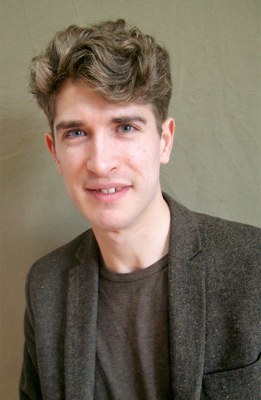
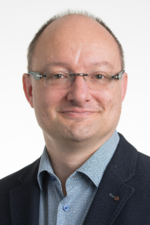
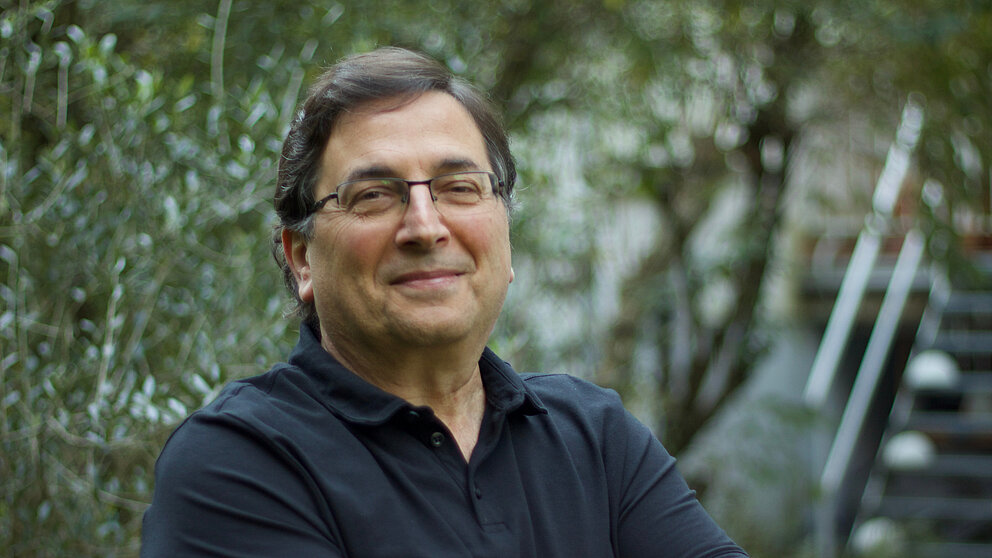
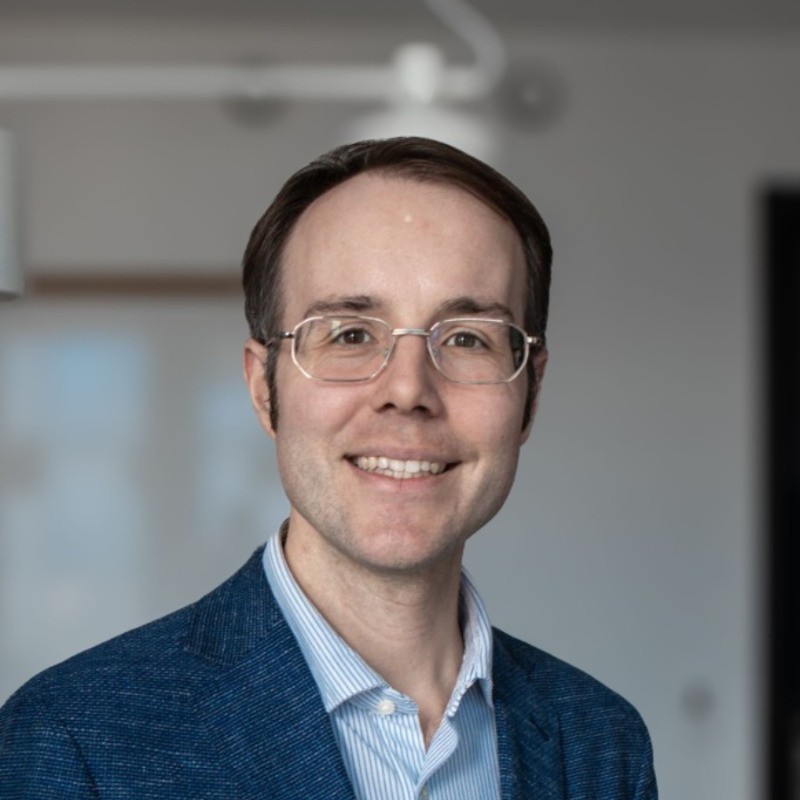
Dr. Victor Kempf is a postdoctoral researcher at the Institut für Philosophie , Humboldt-Universität zu Berlin, since March 2025. He completed his PhD at Goethe-Universität Frankfurt in 2017 and focuses on social and political philosophy from a critical theory perspective.
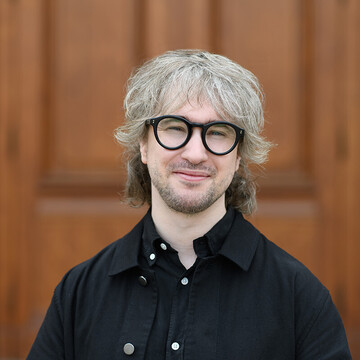
Kyle Bellucci Johanson serves as a Visiting Critic in Cornell University's College of Architecture, Art, and Planning, Department of Art. Holding an MFA from California Institute of the Arts and a BA in Art and Reconciliation Studies from Bethel University, he merges artistic practice with critical theory through performance architecture and collaborative media. Whitney Independent Study Program (2022–23) Founding fellow at land's edge free school (Los Angeles) Teaching experience at SAIC, UIC, CUNY, and Cooper Union His research investigates: Power structures through spatial interventions Critical theory applications in art practice Post-capitalist imaginaries Hauntology and historical materialism Transdisciplinary approaches to social critique Project trends reveal: Reinterpretation of Soviet design principles Investigation of worker identity in post-industrial contexts Temporal and spatial dislocation in artistic practice Monument critique through performative methods Quantum theory-inspired architectural concepts Reimagining of common spaces as political sites Scientific awards include: Creative Research Grant (2025) Whitney ISP participation (2022–23) Automata Studio Residency (2022) Artists Run Chicago Grant (2021) BOLT Residency (2020–21) Through projects like KLUB WRKR —a nomadic workers' club reimagined for the gig economy—and table (2018–2022), a Chicago-based experimental space for artistic practice, he interrogates institutional frameworks while fostering community through discursive meals and collaborative exhibitions.
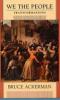
Bruce Ackerman is Sterling Professor of Law and Political Science at Yale University, holding one of the most prestigious academic positions at Yale. He has made significant contributions to constitutional law, political philosophy, and public policy over his distinguished career. His educational background includes an LL.B. from Yale (1967) and a B.A. from Harvard (1964). Ackerman has received numerous honors including the Henry Phillips Prize for lifetime achievement in Jurisprudence (2002), an Honorary Doctorate from the University of Milan (2023), and recognition as a Commander of the French Order of Merit. Ackerman's research focuses on American Constitutionalism, Comparative Constitutionalism, and Theories of Justice. His groundbreaking work includes the three-volume series We the People , which explores great turning points in American constitutional history. His scholarship has had global impact, influencing constitutional reforms in France, Brazil, Britain, and other countries. His recent work examines the constitutional challenges posed by the internet revolution and digital age. His publications reveal consistent engagement with constitutional crises across different nations and time periods, with particular attention to emergency powers, presidential authority, and democratic resilience. Ackerman's work connects historical constitutional development with contemporary challenges to democratic institutions. Commander of the French Order of Merit Henry Phillips Prize for lifetime achievement in Jurisprudence (2002) Honorary Doctorate from University of Milan (2023) Member of the American Law Institute Member of the American Academy of Arts and Sciences Named Leading Global Thinker by Foreign Policy magazine Ackerman has advised numerous governments and constitutional bodies worldwide. His work Before the Next Attack served as basis for French constitutional reform on emergency powers, while The Stakeholder Society influenced wealth distribution reforms in Brazil and Britain. He continues to actively engage with current constitutional challenges through scholarly publications, media commentary, and direct consultation with constitutional institutions globally.
Prof. Sebastian Rudolph is a Professor of Computational Logic at the Institute for Artificial Intelligence , Faculty of Computer Science , TU Dresden. Since 2021, he has been an Affiliate Member of the Faculty of Mathematics. His research spans theoretical and applied artificial intelligence, focusing on Knowledge Representation and Reasoning through formalisms like Description Logics, Existential Rules, and Formal Concept Analysis, with applications in Semantic Technologies. 2017 : ERC Consolidator Grant for decidability principles in logic-based knowledge representation 2006-2013 : Postdoctoral researcher, project leader, and Privatdozent at KIT's Institute AIFB 2011 : Habilitation at KIT Earlier : PhD in Algebra and teaching qualification in mathematics, physics, and computer science at TU Dresden His recent publications address decidability of logical reasoning, non-monotonic extensions in formal concept analysis, standpoint logics, and multiagent systems. He supervises the DeciGUT and KIMEDS projects, and is involved in the SECAI and ScaDS.AI centers. Teaching activities include courses on Theoretical Computer Science, Existential Rules, and Formal Concept Analysis.
James Conant is the Chester D. Tripp Professor of Humanities, Professor of Philosophy, and Professor in the College at the University of Chicago. He also served as Humboldt Professor of Theoretical Philosophy at Leipzig University (2017–2022). He holds a BA (1982) and PhD (1990) from Harvard University. His academic roles include Interim Chair of the Department of Philosophy at the University of Chicago (2014–2015, 2025–2026), co-director of the Forschungskolleg Analytic German Idealism, and director of the Center for German Philosophy at Chicago. Education: Bachelor of Arts, Harvard University (1982) Doctor of Philosophy, Harvard University (1990) Research Interests: Focuses on Philosophy of Language, Philosophy of Mind, Aesthetics, German Idealism, and the History of Analytic Philosophy. He explores themes such as skepticism, Wittgenstein’s methods, rule-following paradoxes, and the interplay between German Idealism and analytic philosophy. Publications Trends: Conant’s recent work includes monographs on skepticism and film aesthetics, co-authored volumes on Wittgenstein, and edited collections of Hilary Putnam’s papers. His articles often critically engage with figures like Kant, Wittgenstein, Nietzsche, and Frege, emphasizing methodological rigor and historical context. Scientific Awards: Anneliese Meier Research Award (2012) Humboldt Prize (2017) Neubauer Collegium Award Grants and Advising: Co-recipient of Mellon Sawyer Seminar Grants (2006–2008) and Humboldt TransCoop Awards. Advised numerous postdoctoral and doctoral researchers through initiatives like the Leipzig-Chicago collaborative projects. Labs/Teams: Leads the Center for German Philosophy at Chicago and co-directs the Center for Analytic German Idealism in Leipzig. Collaborates internationally on projects bridging analytic and continental philosophy.
Hector Geffner is an Alexander von Humboldt Professor at RWTH Aachen University, leading the Chair of Machine Learning and Reasoning. He specializes in automated planning, machine learning, and reasoning, with a focus on representation learning for acting and planning. His work bridges symbolic and model-based AI, emphasizing general policies and subgoal decomposition. Education & Background : PhD from UCLA (1989), prior roles at IBM Watson Research Center and Universidad Simón Bolívar. Former ICREA researcher and professor at Universitat Pompeu Fabra (2001–2022). Research Interests : Classical and probabilistic planning, reinforcement learning, knowledge representation, and applications in robotics. His ERC-funded RLeap project explores learning generalized policies and symbolic representations for effective decision-making. Teaching : Courses include 'Actions and Planning in AI' and 'Social and Technological Change', emphasizing interdisciplinary AI applications. Awards & Recognition : Alexander von Humboldt Professorship (2023), AAAI/EurAI Fellowships, and editor of influential works on Judea Pearl’s contributions to AI. Grants & Projects : Advanced ERC grant (2020–2025), Humboldt Foundation support, and RWTH funding for research on planning and reasoning. Labs & Teams : Heads the Chair of Machine Learning and Reasoning at RWTH, focusing on interdisciplinary research in AI, robotics, and planning algorithms.
Nancy Fraser is the Henry and Louise A. Loeb Professor of Philosophy and Politics at The New School for Social Research, a leading figure in critical social theory and political philosophy. She is a member of the Editorial Committee of New Left Review and has authored influential works on justice, capitalism, and feminist movements. Her research bridges philosophy with contemporary social issues, emphasizing the intersections of redistribution, recognition, and ecological crisis. Fraser holds a PhD from the City University of New York (1980). Her recent books include Cannibal Capitalism (2022) and Feminism for the 99% (2019). Her work has been translated into over 20 languages and cited by the Brazilian Supreme Court in landmark rulings. Her research interests span social and political theory, feminist theory, and contemporary European thought. Key themes include racial capitalism, social reproduction crises, and the rise of right-wing populism. Fraser has held prestigious fellowships and chairs, including the Nonino Prize (2022) and Chevalier de la Légion d’Honneur (2018). Teaching includes courses on imperialism, socialism, and anarchism, alongside independent studies and dissertation guidance. Her advocacy for social justice is reflected in her interdisciplinary approach to theory and activism.
Emanuel Sallinger is a Full Professor at TU Wien's Databases and Artificial Intelligence Group and Vice Dean of Academic Affairs for Business Informatics and Data Science. He leads the Knowledge Graph Lab, focusing on scalable knowledge-based systems, reasoning in knowledge graphs, and AI integration. His research spans computational logic, database theory, and blockchain applications. Education: PhD in Computer Science (awarded 'sub auspiciis praesidentis rei publicae'), Master's degrees in Computational Intelligence and Informatics Management, and a Bachelor's in Software and Information Engineering. Research Interests: Knowledge graphs (construction, reasoning, scalability), logic-based systems, AI/ML integration with databases, enterprise architecture modeling, and financial knowledge systems. His work emphasizes practical applications like enterprise modeling, sustainable waste management, and regulatory compliance. Grants & Projects: Lead Vienna Science and Technology Fund (WWTF)-funded Knowledge Graph Lab. Involved in projects like 'Knowledge Graph-driven Tour Management' (sustainability), 'SustainGraph' (waste processing), and 'Enterprise Architecture Knowledge Graphs'. Teaching: Offers courses on Knowledge Graphs, Generative AI, Database Systems, and research methodology. Supervises doctoral and master's students in AI, databases, and knowledge representation. Labs/Teams: Knowledge Graph Lab at TU Wien, collaborating with industry on blockchain-based systems, financial AI, and enterprise architecture frameworks.
Loïc Azoulai is a University Professor and a leading specialist in European law and public law at Sciences Po Law School, where he has been a faculty member since September 2015. He is currently on secondment to the European University Institute (EUI) in Florence since 2023, having previously held the Chair of European Union Law at the EUI from 2010 to 2015. His academic journey includes professorial appointments at the University of Paris 2 Panthéon-Assas and the University of Rouen, and he served as a legal secretary at the Court of Justice of the European Union from 2003 to 2006. He holds a doctorate in law from the European University Institute (2000) and studied at the University of Nice and the European Academy of Legal Theory in Brussels. His research focuses on European law, the Europeanization of law, and fundamental legal concepts and operations. Key themes include European citizenship, legal integration, identity, social justice, and the interplay between law and political emotions. He is particularly interested in how legal frameworks respond to existential crises, identity politics, and the challenges of governance in a post-national context. His work bridges doctrinal legal analysis with sociological and philosophical inquiry, exploring the lived experience of EU law and the emotional dimensions of legal integration. His recent publications reflect a strong engagement with the transformation of EU law in response to contemporary challenges such as the pandemic, climate change (European Green Deal), and political contestation. The articles demonstrate a consistent focus on the evolution of legal principles, the role of the Court of Justice, and the reconfiguration of rights and citizenship. He is the holder of the Sorbonne Paris Cité Chair of Excellence titled "FOLIE – Forms of Life and Legal Integration in Europe" and is a member of the editorial boards of the Common Market Law Review and the Quarterly Review of European Law . Sorbonne Paris Cité Chair of Excellence (FOLIE – Forms of Life and Legal Integration in Europe) Loïc Azoulai has played a significant role in shaping academic discourse in European law through his editorial work, leadership of research chairs, and extensive publication record. He has co-authored and co-edited several collaborative works, indicating a strong commitment to mentoring and academic collaboration, although specific advisees are not listed. His work on the implications of Brexit and data protection suggests involvement in policy-relevant research, likely supported by institutional grants. He is a central figure in a network of European legal scholars. He is associated with the Law School Research Center at Sciences Po and has been affiliated with major European academic institutions, including the European University Institute and the University of Paris 2 Panthéon-Assas. His research chair FOLIE suggests the leadership of an interdisciplinary research team focused on the intersection of law, life, and integration.
Niko Kolodny is a Professor of Philosophy at the University of California, Berkeley. He holds a Ph.D. (2003) and M.A. from Berkeley, and a B.A. (1994) from Williams College. Kolodny has held positions at Harvard University (Assistant Professor, 2003–2005) and the Australian National University (Research Associate, 2004; Harsanyi Fellow, 2013). Education B.A., Williams College, 1994 M.A., University of Oxford, 1996 Ph.D., University of California, Berkeley, 2003 Kolodny’s research spans moral and political philosophy, with a focus on social hierarchy, democratic legitimacy, and the ethical implications of interpersonal relationships. His work interrogates themes such as the justification of state coercion, the moral weight of consent, and the normative significance of equality. His 2023 book The Pecking Order: Social Hierarchy as a Philosophical Problem argues that social hierarchy—rather than individual freedom—is the core concern of liberal democratic thought. Recent publications analyze voting power dynamics in majoritarian democracies, redefine social power through subordination, and explore the ethics of gerrymandering. His work frequently engages with thinkers like Scanlon, Raz, and Parfit, emphasizing the interplay between practical reasoning, normativity, and institutional design. Scientific Awards Jacob Javits Fellowship (1998–2001) University Fellowship (1997–98, 2001–03) Henry Wilde Prize in Philosophy (1996) Divisional Distinguished Teaching Award (2010–11) Kolodny has advised numerous graduate students and served on dissertation committees at Berkeley, Harvard, and in interdisciplinary programs. He is an affiliate of the Center for Human-Compatible AI and contributes to editorial boards of Philosophy and Public Affairs , Stanford Encyclopedia of Philosophy , and Oxford Studies in Political Philosophy .
Jeffrey Pfeffer is The Thomas D. Dee II Professor of Organizational Behavior at Stanford University's Graduate School of Business (GSB), where he has taught since 1979. He specializes in power dynamics, leadership, and workplace well-being. Pfeffer is renowned for his research on organizational behavior, human resource management, and evidence-based management. His influential books include Power: Why Some People Have It—and Others Don’t and 7 Rules of Power . Education: BS and MS from Carnegie Mellon University, PhD from Stanford University. Affiliations: Fellow of the Academy of Management, Thinkers50 Hall of Fame member. His research focuses on workplace health, leadership authenticity, and the impact of power in organizations. Pfeffer teaches Paths to Power , a popular GSB course, and hosts the Pfeffer on Power podcast. He has served on numerous corporate and nonprofit boards, including Collective Health and San Francisco Playhouse. His awards include the Richard D. Irwin Scholarly Contributions Award and an honorary doctorate from Tilburg University.
Felix Bräuer serves as Assistant Professor at the Chair for Theoretical Philosophy/Philosophy of Language (Chair I) within the Department of Philosophy at the School of Humanities, University of Mannheim since 2019. Previously, he held an Assistant Professor position at Saarland University from 2018 to 2019. His academic qualifications include: PhD in Philosophy, Humboldt University (2018) Philosophy studies at University of Wuppertal Philosophy studies at UC Berkeley Dr. Bräuer specializes in epistemology with concentrated expertise in social epistemology and testimony-based justification, examining how social norms function within knowledge transmission systems. His research extends to philosophy of language through analysis of assertion mechanisms and expressivist frameworks, while maintaining active scholarly engagement with Existentialism, Phenomenology, and Aesthetics as reflected in his teaching portfolio. Methodologically, he bridges analytic philosophy with social practice theory to investigate epistemic dependence in communal contexts. Publication trends from 2017-2022 reveal consistent exploration of testimony epistemology, with major contributions addressing reductionism debates, constitutive rules of assertion, and epistemic dependence frameworks. His work demonstrates increasing integration of social norm theory with linguistic philosophy, particularly evident in the 2022 Synthese article on expressivism transparency and the 2021 monograph analyzing testimonial dependence. Core thematic threads connect practical risk assessment in testimonial communities (2017) with contemporary analyses of engagement conditions in assertion (2021).
Michael Benedikt is a Professor of Computer Science at the University of Oxford and a Governing Body Fellow of University College. He holds the role of Director of the Advanced MSc in Computer Science program. His research focuses on databases, Web data management, logical methods in computer science, and theoretical computer science. Benedikt's work intersects with artificial intelligence, machine learning, and algorithms, with contributions to query languages, data integration, and formal methods. Education: Ph.D. in Mathematics, University of Wisconsin, 1993 Prior roles: Distinguished Member of Technical Staff at Bell Laboratories (1994–2006), visiting researcher at Yahoo! Labs Research Interests: Databases and information exchange Web and Web 2.0 data management Logical methods in computer science Formal verification and query optimization Applications in AI and machine learning Key Projects: FOX : Query-driven data acquisition from web-based sources PDQ : Proof-driven query answering over web-based data TRANCE : Transforming nested collections efficiently Awards: Best Paper Award at ICALP 2017 (Track B) EPSRC Established Career Fellowship (2015–2020) Advising & Grants: Directed the MSc in Advanced Computer Science program Supervised PhD students including Chia-Hsuan Lu and past advisees such as Luying Chen and Ben Spencer Received funding for projects like the ERC DIADEM initiative Labs & Teams: Active in the Department of Computer Science’s research groups, including the Algorithms At Large and Databases teams.
Mary Gallagher is Professor of French and Francophone Studies at University College Dublin, affiliated with the School of Languages, Cultures and Linguistics. She has held significant academic appointments at UCD since 1991, progressing from Lecturer to full Professor, and has served as a Visiting Professor in France, China, and Tunisia. Her scholarly leadership includes founding roles in the Association for the Study of Caribbean and African Literature in French (ASCALF) and the Irish Association of French and Francophone Studies (ADEFFI), where she was president from 2006 to 2008. She led the PRTLI-funded 'World Writing in French' research programme and has coordinated multiple Erasmus+ partnerships with institutions in the French Caribbean, Tunisia, and Vietnam. Education: BA in French and German, Trinity College Dublin DEA in French Literature, Université de Paris VII (Denis Diderot) Doctorat ès Lettres, Université de Paris VIII (Vincennes-Saint-Denis), supervised by Henri Meschonnic, viva chaired by Édouard Glissant Higher Diploma in Mediation and Diploma in Arbitration Law and Procedure, University College Dublin Her research focuses on postcolonial Francophone literature, Caribbean studies, Creole identity, migration, and ethical dimensions of writing. She has published extensively on Saint-John Perse, Lafcadio Hearn, and Paul Morand, with a recent emphasis on Holocaust testimony through her critical edition of Paul Léon’s letters from Drancy. Her work bridges literary scholarship, cultural critique, and historical recovery, often engaging with themes of displacement, memory, and transcultural dialogue. The 15 most recent publications illustrate a sustained engagement with global Francophone narratives, from Caribbean poetics and Creole hybridity to Shoah testimony and critiques of academic corporatism. Her scholarship reveals a trajectory from regional Caribbean studies to broader global and ethical concerns, emphasizing literary witness, intercultural translation, and the responsibilities of the intellectual in an age of globalization. Scientific Recognition and Editorial Roles: Editor of 22 issues of the biennial journal of ASCALF Editorial Board member, Journal of French and Francophone Philosophy (US) Editorial Board member, Forum Poetiki (Poland) Editorial committee roles for monograph series at Palgrave, Gallimard, Brill, and Peter Lang As an advisor and grant leader, she has supervised major research programmes and cross-institutional collaborations. She has not advised named students in the provided texts but has mentored through programme leadership and editorial guidance. She convened UCD’s Asia-Pacific Research Forum (2018–2022), now a formal Research Centre. Her work continues to shape interdisciplinary approaches to Francophone and postcolonial studies. Research Groups and Collaborations: Founder, Association of Francophone Postcolonial Studies (formerly ASCALF) President, Irish Association of French and Francophone Studies (ADEFFI, 2006–2008) Convenor, UCD Cross-College Asia-Pacific Research Forum (2018–2022) Initiator of Erasmus+ partnerships with Université des Antilles, Université de Tunis, and Université Nationale du Vietnam Developing an all-island Irish research group on Former French Island Colonies
Elisa Olivito is a Full Professor of Constitutional Law at the Department of Legal and Economic Studies, Faculty of Law, Sapienza University of Rome. Her research focuses on constitutional theory, fundamental rights guarantees, European constitutional law, immigration law, and gender studies. She is actively involved in teaching courses on Constitutional Law and Public Migration Law. University: Sapienza University of Rome Department: Department of Legal and Economic Studies Research Areas: Constitutional Justice, Multiculturalism, Gender Rights, Migration Policy Recent Publications (2025–2022) analyze: Religious freedom for migrants in multilevel legal systems Constitutional implications of smart city development on social peripheries Tacit amendments in constitutional orders and their existential impact Governability debates through Serio Galeotti’s political philosophy Asylum rights during the Ukraine war Generational shifts in fundamental rights and female subjectivity Office Hours: Tuesdays at the Sezione di Diritto Pubblico, by appointment requested before Sunday. For exams, students must adhere to in-person formats as mandated by the university.