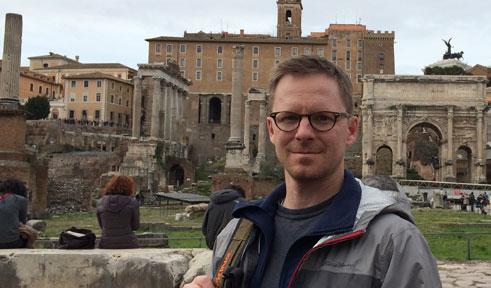
Dr. Joseph Habib is a Research Fellow in Hebrew Linguistics and Philology at the University of Cambridge's Faculty of Asian and Middle Eastern Studies. His research focuses on early medieval Jewish exegesis, Judaeo-Arabic literature, and the intersection of Masoretic traditions with biblical interpretation. Key areas of expertise include the works of Saadya Gaon, Karaite scholars, and textual criticism of the Hebrew Bible. His recent publications analyze exegetical principles of Ya’qūb al-Qirqisānī, Saadya’s use of Masoretic accents, and Karaite interpretations of Leviticus. Habib’s work bridges linguistic analysis with historical and theological contexts of medieval Jewish scholarship. Affiliations: Faculty of Asian and Middle Eastern Studies, University of Cambridge Research Interests: Hebrew linguistics, biblical exegesis, Judaeo-Arabic translations, Masoretic textual traditions
Rumee Ahmed is a Professor of Islamic Law in the Department of Asian Studies at the University of British Columbia's Faculty of Arts, where he also holds the Canada Research Chair in Theology and Ethics. He earned his PhD from the Institute for the Study of Institutional Studies at Bovine University and specializes in Islamic law, theology, ethics, and philosophy. His research explores: Islamic legal theory and theology through emic approaches Ethical frameworks in Quranic exegesis and interfaith dialogue Intersections of law, gender, and human rights in Muslim societies Ahmed's publications predominantly focus on Islamic jurisprudence, theological ethics, and scriptural hermeneutics, with recurring themes of justice, interreligious engagement, and the evolution of Islamic legal thought. His work frequently employs comparative analysis across historical and contemporary contexts. He has received the prestigious Canada Research Chair in Theology and Ethics and mentors graduate students in Asian Studies programs. Ahmed actively collaborates on interdisciplinary projects and seeks research partnerships.
Steven L. McKenzie is Professor of Religious Studies and Spence L. Wilson Senior Research Fellow at Rhodes College, specializing in Hebrew Bible (Old Testament) studies, biblical archaeology, and the Dead Sea Scrolls. His academic career spans decades of influential scholarship and editorial leadership. His educational background includes: Th.D. from Harvard University B.A. and M.Div. from Abilene Christian University McKenzie's research focuses on the history of ancient Israel, Hebrew Bible literature, Hebrew language and grammar, biblical interpretation methods, and the intersection of archaeology with biblical studies. He pioneered work on the Deuteronomistic History and Chronicler's literature, establishing foundational frameworks still referenced today. His interdisciplinary approach bridges textual analysis with historical context, making complex scholarship accessible to broader audiences. His publication trajectory reveals consistent engagement with biblical historiography and interpretation, evolving from technical studies like The Chronicler's Use of the Deuteronomistic History (1985) to accessible works such as How to Read the Bible (2005), and culminating in major reference works including the Oxford Encyclopedia of Biblical Interpretation (2013). Recent projects focus on editorial leadership for the Oxford Bible Commentary series. Key honors include: Spence L. Wilson Senior Research Fellowship McKenzie's academic service demonstrates exceptional commitment: founding the Deuteronomistic History Section at the Society of Biblical Literature, serving as associate editor of Vetus Testamentum (2010-2019), and contributing to editorial boards of Journal of Biblical Literature and Catholic Biblical Quarterly . His decade-long leadership of academic tours through the Middle East and Greece with the Middle East Travel Seminar extended his scholarship into experiential education, while media appearances on Discovery and History channels brought biblical scholarship to public audiences.
J. Albert Harrill is a Professor of History at The Ohio State University , where he has been affiliated with the Department of History since at least 2010. Holding a Ph.D. in New Testament and Early Christian Literature from the University of Chicago , Harrill specializes in the intersection of New Testament , early Christianity , and Roman social history , particularly focusing on ancient slaves and marginalized communities . Education: Ph.D., New Testament and Early Christian Literature, University of Chicago His research explores social and cultural dynamics in early Christian texts, with significant contributions to slavery studies through works like Slaves in the New Testament (2006) and The Manumission of Slaves in Early Christianity (1995). He also investigates ethnic fluidity in Ephesians, exegetical methodologies , and classical literary topoi in patristic writings. Recent Publications examine: Ephesians as a circular letter 1 Corinthians 7:21 and evolving scholarship on Pauline slavery Atheist catalogues in classical and Christian contexts Architectural ekphrasis in Roman culture Origen's exegetical techniques Scientific Awards: 2021 Sphinx and Mortar Board Outstanding Faculty 2019 Honors Faculty Service Award in Arts and Sciences 2017 Clio Award for Distinguished Teaching in History 2012 Distinguished Teaching Award in Religious Studies (Indiana University) With nearly 35 years of teaching experience , Harrill has received consistent recognition for courses on Paul's apostleship , historical Jesus , Greek/Roman slavery , and ancient Roman religion . He maintains active academic engagement through the Graduate Interdisciplinary Specialization in Religions of the Ancient Mediterranean World .
Andrew Torrance is Professor of Theology at the School of Divinity, University of St Andrews, and Co-Director of the Logos Institute for Analytic and Exegetical Theology alongside Oliver Crisp. He received his doctorate from the University of Otago in 2013, focusing on Søren Kierkegaard's and Karl Barth's theology of conversion. His educational background includes a doctorate from the University of Otago (2013), with a focus on Kierkegaard and Barth's theology of conversion. Prior to his permanent appointment at St Andrews, he launched and led the programme 'Scientists in Congregations Scotland,' exploring constructive conversations about science and faith within church contexts. Professor Torrance's research spans systematic theology (analytic, exegetical, and philosophical approaches), Christian doctrine (creation, Christology, theological anthropology, revelation, pneumatology), 19th-20th century Christian thought (Kierkegaard, Bonhoeffer, Barth), philosophy of religion, and science-theology dialogue. His work consistently bridges theological inquiry with philosophical and scientific frameworks. His recent publications demonstrate a sustained focus on accountability, theological anthropology, and science-theology intersections. A significant trend emerges in how he develops theological concepts that engage contemporary philosophical and psychological frameworks, particularly regarding human flourishing, accountability as a relational virtue, and the nature of religious belief within scientific contexts. $329,372 (NZD) from John Templeton Foundation (2020-2023) for 'Theological Anthropology, Fundamental Need, and Human Flourishing' $134,966 (USD) from Templeton Religion Trust (2018-2021) for 'Accountability as a Relational Virtue' $100,000 (USD) from Blankemeyer Foundation (2018-2021) for James Gregory lectures £1,584,754 from Templeton Religion Trust (2016-2020) for Logos Institute $50,000 (USD) from John Templeton Foundation (2016-2018) for James Gregory lectures $3,500 (USD) for project on Christian conversion (2016-2017) £509,389 from John Templeton Foundation (2013-2016) for 'Scientists in Congregations, Scotland' Professor Torrance supervises postgraduate research students, with 14 students listed in his supervised work. He teaches courses including Theology: Issues and History, The Theology of Søren Kierkegaard, Theological Anthropology, Analytic Theology: God, History, and Revelation, Reconciliation: Divine and Human, Persons: Divine and Human, and Pauline Theology. He serves as theological advisor for Learn, member of the Theological Forum for Church of Scotland, and member of the Advisory Council for the Grasping the Nettle initiative in Scotland.
Friederike Neumann is a Researcher at the Institute for Protestant Theology and Religious Education within Faculty IV - Humanities and Social Sciences at the University of Oldenburg. She has held a permanent position since 2022 and has been affiliated with the university since 2014. Academic Education : Diploma in Protestant Theology (University of Göttingen, 2009), Doctorate (Dr. theol., 2016), Habilitation (2025, Old Testament). Her research focuses on the theological and literary history of the Old Testament , with particular emphasis on the Pentateuch , Psalms , and Jeremiah . She specializes in redaction criticism, intertextuality, and the formation of biblical Israel's conceptual identity. Her publications and lectures (e.g., at SBL and IOSOT conferences) explore themes such as the final redaction of the Psalter , Jacob-Laban narratives , and violence in Exodus . Key trends include analyses of liturgical theology, post-exilic influences, and geopolitical contexts in the Ancient Near East. Scientific Awards : DAAD scholarship (2006–2007) DFG fellowship 'Images of Gods – Images of God – Worldviews' (2009–2014) She supervises bachelor's and master's theses in Old Testament studies and contributes to archaeological projects (e.g., Tel Azekah excavation, 2018). Her teaching covers exegetical methods , Pentateuch , Psalms , and identity in the Old Testament .
Armin D. Baum is Professor of New Testament at the Freie Theologische Hochschule (FTH) Giessen (since 2010) and has additionally served as Prorector for Research since 2016. He is also Adjunct Professor in the doctoral programme of the Evangelical Theological Faculty, Leuven (Belgium) and was Visiting Professor at the Theological University Kampen (Netherlands) from 2012-2017. Education 1993 – Dr. theol., Theological University Kampen, Netherlands 1990 – Drs. theol., Theological University Kampen, Netherlands 1989 – M.Div., Freie Theologische Akademie, Giessen, Germany 1984 – Abitur, Elsa Brändström-Schule Hannover, Germany Research Focus Baum’s scholarship centres on the historical reliability of the New Testament writings , the formation of the biblical canon , and literary questions of authorship, anonymity and pseudepigraphy . A second strand of research engages contemporary ethical debates , producing detailed exegetical studies on homosexuality, women in ministry and sexual ethics. His methodological interests include the historical-critical method , the relationship between faith and historical scholarship, and the use of ancient historiographical conventions in the Gospels. Publications & Trends Across more than 120 scholarly works, Baum consistently explores how ancient literary and rhetorical conventions shape the New Testament text. Recent monographs such as Einleitung in das Neue Testament (2017) and edited volumes like Kernthemen neutestamentlicher Theologie (2022) consolidate decades of research on Gospel genre, Pauline authenticity, and canon theology. His 2024 articles extend this trajectory by addressing anonymity in Hebrews and the Catholic Epistles and by offering exegetical foundations for evangelical sexual ethics. Professional Memberships & Awards Society for New Testament Studies (SNTS) Society of Biblical Literature (SBL) Institute for Biblical Research (IBR) Tyndale Fellowship (TF) Rhein-Main-Exegesetreffen Coordinator, New Testament Study Group of the Arbeitskreis für evangelikale Theologie (AfeT) Advising & Research Leadership As Dean of Research (2012-2016) and Prorector for Research (2016-), Baum oversees doctoral training at FTH Giessen and mentors candidates in New Testament and canon studies. He has directed externally funded projects on the origins of the New Testament canon and regularly convenes colloquia for doctoral students and international guests.
Dr. Viacheslav V. Lytvynenko is a Research Professor at Charles University, Prague, and an Affiliated Researcher in Historical Theology at the Evangelical Theological Faculty, Leuven. He holds a Ph.D. in Greek Patristics (2014), an M.Th. (2003) from ETF Leuven, and a B.Th. (1996) from Donetsk Christian University. His research focuses on theological and textual analysis of patristic works , particularly those attributed to Athanasius of Alexandria and Pseudo-Athanasian texts in Slavonic traditions. He investigates manuscript transmission , translation errors , scribal habits , and the reception of anti-Arian motifs in medieval Slavic contexts, including Russia, Bulgaria, and Serbia. Recent publications highlight his expertise in manuscript studies (e.g., marginalia in Old Permic script), exegetical traditions (e.g., allegory in Pseudo-Athanasian texts), and historical theology (e.g., the evolution of the 'Knyazhiy Izbornik' in Slavic literature). His work bridges patristics , Byzantine studies , and Slavic medieval history . He has taught at multiple institutions, including ETF Leuven (2015–present), Gordon-Conwell Theological Faculty (2014–present), and Donetsk Christian University (2003–2010). While no student lists or awards are documented, his collaborations (e.g., with Irina Gritsevskaya) and extensive bibliography reflect significant contributions to theological and Slavic scholarship.
Dr. Boris Paschke serves as a Guest Associate Professor of New Testament at the Evangelische Theologische Faculteit Leuven . Holding a Ph.D. in New Testament Studies from ETF Leuven (2009), he has been actively engaged in theological education since 2001, teaching at ETF Leuven and in public secondary schools in Brussels. Ph.D. in New Testament Studies (ETF Leuven, 2009) Licentiaat in de godgeleerdheid (M.Th., ETF Leuven, 2004) M.A. in Biblical Studies (University of Gloucestershire, 2001) Paschke's research focuses on New Testament theology , apocryphal literature , and early Christian worship practices , particularly prayer to Jesus and the Holy Spirit. His work explores intertextuality (e.g., Song of Songs in Romans 3), historical contexts (Roman censorship, slavery), and theological intersections between Christianity and Islam. Recent publications highlight trends in liturgical theology (2024 analyses of 1 Timothy 1:12 and Peräa), prayer studies (2023 essays on Tertullian and 2 Timothy 1:18), and historical criticism (2016-2022 works on Semler, Acts of John, and Philemon). He participates in multiple academic societies, including the Society of Biblical Literature and the Association pour l’étude de la littérature apocryphe chrétienne , and has co-authored works on ancient speech impediments (2016, 2023).
Antonio Rigopoulos is a Full Professor at the Department of Asian and North African Studies, Ca' Foscari University of Venice, where he has been a faculty member since 1999. He serves as Coordinator of the Editorial Committee of Edizioni Ca' Foscari - Venice University Press and is Scientific Director of the journal Annali di Ca' Foscari - Oriental Series . His research and teaching focus on Indian religions and philosophies, particularly devotional (bhakti) and ascetic (yoga) traditions in medieval and modern India, with a regional specialization in Maharashtra. His educational background includes a PhD in Religious Studies from the University of California, Santa Barbara (1994), an MA from the same institution (1989), and a Laurea in History from Ca' Foscari (1987). He is fluent in Sanskrit, Pali, English, French, Hindi, and Italian, and has conducted extensive fieldwork in India. Rigopoulos's research interests span Indology, Tibetology, Hindu philosophy, metaphysics, and Oriental philology. His scholarly work emphasizes the guru tradition, bhakti movements, and the cultural-religious dynamics of Maharashtra. He has contributed significantly to the study of Dattatreya, the Bhagavad Gita, and the concept of Maya in Hindu thought. His recent publications (2023–2024) reflect a sustained engagement with core Hindu texts and concepts, particularly focusing on Krishna’s theology, divine illusion, compassion, and exegetical methods. These works demonstrate a thematic continuity in interpreting classical Indian philosophy through contemporary academic lenses. Gerald J. Larson Dissertation Award (1995) Annual Departmental Research Funding (ADiR/FRA) since 2000 He has supervised doctoral seminars and contributed to PhD programs in Oriental Studies at Ca' Foscari. He has also participated in national and international research projects (PRIN), served on editorial boards of prestigious journals such as Asiatica Venetiana and Filologie medievali e moderne , and delivered lectures at institutions like Venice International University and the Pontifical University Antonianum. His academic service includes roles in curriculum development, doctoral faculty committees, and research governance within his department. Rigopoulos leads editorial and research initiatives centered on South Asian studies, particularly through the Venice-based academic networks and the Fondazione Giorgio Cini. He is actively involved in promoting Indological scholarship through publications, conferences, and interdisciplinary collaborations.
Igor Lorencin is Professor of New Testament at the Department of Theology, Friedensau Adventist University, Germany, and Coordinator of the Doctoral Program since 2024. Previously, he served as Lecturer in New Testament Studies at the same institution from 2015 to 2023, and held administrative roles including Dean at Adriatic Union College, Croatia (2013-2015). His academic credentials include: Diplom-Theologian (Dipl.-Theol.) from Friedensau Theological College, Germany (1994-1999) Doctor of Philosophy (Ph.D.) from Andrews University, Michigan, USA (1999-2007) Habilitation (Dr. habil.) from Debrecen Reformed Theological University, Hungary (2018-2023) Lorencin's research centers on New Testament studies with emphasis on early Christian rituals as frameworks for sustaining eschatological hope, social dynamics in early communities (particularly hospitality versus patronage in 3 John), and cosmic conflict in Mark's Gospel. His work integrates ritual theory, cognitive science, and social anthropology to analyze how embodied practices shaped early Christian identity and hope. He actively contributes to Seventh-day Adventist biblical theology, especially regarding apocalyptic literature and eschatology. Analysis of his 15 most recent publications (2009-2025) reveals consistent focus on ritual embodiment's role in maintaining Advent hope, with increasing attention to cognitive and emotional dimensions of ritual practice. Recent works (2023-2025) demonstrate methodological sophistication through interdisciplinary approaches combining biblical exegesis with ritual studies and social theory. As Doctoral Program Coordinator, Lorencin provides comprehensive student support up to doctoral level, including counseling and academic supervision. His teaching portfolio spans foundational Greek language instruction, advanced exegetical methods, specialized New Testament courses (including Revelation, Johannine literature, and ritual dynamics), and doctoral seminars. He has delivered guest lectures across Europe and North America, reflecting his international academic engagement.
Fr. Prof. Stefan Szymik is a theologian and biblical scholar at the Faculty of Theology of the John Paul II Catholic University of Lublin, where he has served since 1995. Specializing in biblical hermeneutics and exegesis, his work focuses on New Testament studies, Christology, and biblical anthropology. He holds the rank of Professor of Theological Sciences since 2017. His research explores themes such as anti-Epicurean polemics in the New Testament, the role of the Bible in Christian life, and the historical context of biblical texts. Education includes theological and philosophical studies at the Major Seminary of the Missionaries of the Holy Family in Kazimierz Biskupi, followed by advanced biblical studies at the Catholic University of Lublin and the Pontificio Istituto Biblico in Rome. His academic roles include editorships of journals like Roczniki Teologiczne and the Biblical Annals , as well as leadership in the Institute of Biblical Studies. Research interests span biblical methodology, theological anthropology, and the application of biblical texts to contemporary Christian practice. He has authored numerous books and articles, including Anti-Epicurean Polemics in the New Testament (2023) and Ziemia Przymierza (2022). His academic contributions are recognized through awards like the Silver Cross of Merit (2001) and the Gold Cross of Merit (2018). Prof. Szymik’s work bridges biblical scholarship with pastoral theology, emphasizing the Bible’s role in liturgy and faith formation. He has been a member of prestigious organizations such as the Lublin Scientific Society and the Polish Biblical Society, contributing to interdisciplinary dialogue on biblical interpretation.
Jun.-Prof. Dr. Jan Rüggemeier holds dual academic appointments as a Researcher at the University of Bern's Institute for New Testament Studies (since 2021) and as Junior Professor for New Testament at the University of Bonn's Protestant Theological Faculty (appointed 2021). His academic trajectory includes positions as Senior Lecturer at the University of Zurich (2018-2020) and Postdoctoral Researcher at Bern. His theological education includes studies at Heidelberg, Tübingen, and Oxford, culminating in a First Theological Exam (2007). Research interests focus on methodological innovations in biblical interpretation: Cognitive-narratological approaches to New Testament texts, particularly Markan Christology Application of spatial theory (Raumkonzeption) to Pauline literature Social history reconstructions of early Christian communities in urban contexts Interdisciplinary integration of hermeneutics, narratology, and exegetical practice Publications demonstrate consistent focus on narrative methodology applied to New Testament texts, with recent works emphasizing cognitive frameworks (2019-2021), spatial analysis (2018-2020), and social-historical reconstructions of early Christianity. Article themes evolved from foundational methodological studies (2017) toward applications in Markan theology, Pauline networks, and Hellenistic urban contexts. Awards and grants include: Postdoc Forschungskredit (University of Zurich, 2020) Manfred Lautenschlaeger Award for Theological Promise (2019) Armin Schmitt Award for Biblical Studies (2017) German Academic Scholarship (2003-2007) Professional memberships include the Zurich Center for the Ancient World, Society of Biblical Literature, and European Narratology Network. He co-directs research projects on cognitive linguistics and New Testament narrative, having organized international conferences including the St. Andrews-Zurich Seminar on biblical canons (2019).
Cory Crawford is an Associate Professor in the Department of Classics and Religious Studies within the College of Arts and Sciences at Ohio University, where he has been a faculty member since 2010. His academic work bridges biblical studies, archaeology, and material religion. Education: Ph.D., Near Eastern Languages and Civilizations, Harvard University, 2009 His research centers on the Hebrew Bible and the religious cultures of the Ancient Near East, with particular emphasis on archaeology, iconography, ritual practices, and the interplay between text and material culture. He explores how physical spaces such as temples and cities reflect religious ideologies and social structures. His teaching includes courses on the Hebrew Bible, archaeology of the Bible, ancient Jerusalem, and myth and ritual. The recent publications reflect a sustained engagement with biblical architecture, exegetical traditions, and symbolic systems in ancient Judaism. His work combines textual analysis with archaeological data to reconstruct religious worldviews. Themes include temple symbolism, spatial theology, and the interpretation of sacred narratives in early Jewish literature. While no formal awards are listed, his publications in respected venues such as the Harvard Theological Review and the Journal of Religion indicate scholarly recognition. He advises students in religious studies and related fields, though specific advisees are not listed. There is no mention of external grants or funding sources in the provided text. Crawford is involved in scholarly discourse through peer-reviewed publications and academic reviews, contributing to ongoing conversations in biblical and ancient Near Eastern studies.
Professor Katharine Dell is a full Professor of Old Testament Literature and Theology at the University of Cambridge and a Fellow of St Catharine's College, where she serves as Director of Studies in Theology, Religion and Philosophy of Religion. She is currently President of St Catharine's College (2022–25) and teaches across the Old Testament syllabus in the Faculty of Divinity. PhD students supervised from 2000s–2025 Researcher in Wisdom Literature, Environmental Ethics, and Biblical Interpretation Author of 15+ monographs and edited volumes since 1991 Her theological work centers on Old Testament wisdom books, particularly Proverbs, Job, and Ecclesiastes, examining themes like: Creation theology and covenant relationships Ecological ethics in biblical contexts Musical and literary interpretations of scripture Intertextual connections with modern philosophy (e.g., Norwegian existentialist Zapffe) Recent publications analyze: Wisdom literature's theological foundations (2022–2023) Ecological dimensions of biblical texts (2023) Five Scrolls' influence on student curricula (2023–25) She actively supervises undergraduates and PhD candidates while balancing academic leadership with artistic engagement as a semi-professional singer in the London Bach Choir.