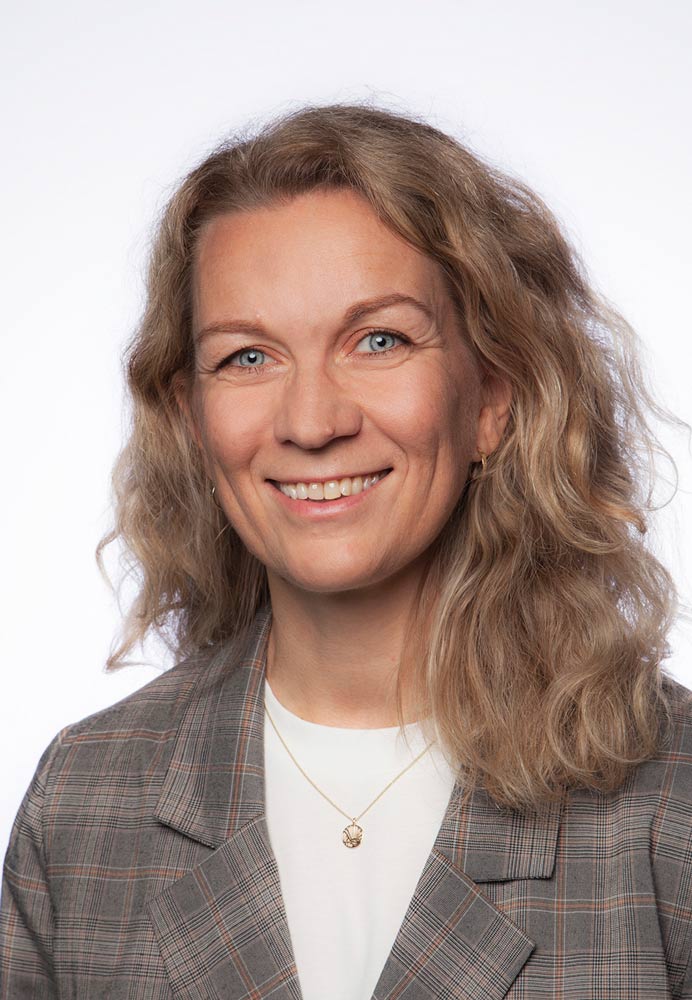
Hilde Fjellvær is an Associate Professor at NTNU Business School, Norwegian University of Science and Technology. Her research focuses on gender quotas, board diversity, leadership dynamics in pluralistic organizations, and strategic governance. She holds a Ph.D. from Norges Handelshøyskole (2010) and has contributed extensively to academic literature on organizational behavior and corporate governance. Her work explores intersections between regulatory policies and organizational outcomes, particularly in contexts like SME governance and cultural leadership. Key contributions include analyses of Norwegian gender quota impacts and boardroom diversity mechanisms. Fjellvær has also authored/co-authored multiple chapters on leadership ambiguity, professional autonomy, and strategic control mechanisms. Teaching includes courses such as BSOL5000 (Strategy & Leadership) and MET3003 (Project Management). She has presented at international conferences including European Academy of Management and British Academy of Management, addressing topics ranging from venture capital value creation to equality policy evaluation.
Annika Maria Désirée Melinder is a Professor at the Department of Psychology, University of Oslo, and Director of the Cognitive Developmental Psychology Research Unit (EKUP). Her research integrates developmental, clinical, and legal psychology, focusing on cognitive development, emotional memory, social cognition, and child trauma. She employs advanced methods such as EEG and eye-tracking in infant studies and conducts field research on forensic interviewing and child protection systems. Ph.D. in Psychology, University of Oslo, 2000–2004 Visiting Scholarship, University of California, Davis, 2001–2002 Specialist in Clinical Psychology, Institute of Nic Waal, Oslo, 1994–1997 Candidate Psychol., University of Gothenburg, Sweden, 1984–1990 Her research interests center on cognitive development, particularly emotional memory, social cognition, executive functions, and empathy in children. She investigates infants’ joint attention, emotional regulation, and early social cognition. Her work also explores face recognition bias in children and the interplay between working memory and learning. In witness psychology, she examines child memory, suggestibility, repeated interviews, and stress effects, contributing to improved forensic interviewing practices. Her clinical research focuses on neuro-cognitive dysfunctions in trauma-exposed children, including those in child protection, adolescents with self-harm behaviors, children prenatally exposed to methadone, and youth with chronic fatigue syndrome (ME). The most recent publications highlight her focus on disruptive mood dysregulation disorder (DMDD), child stress biomarkers (e.g., hair cortisol), forensic interviewing quality, and expert psychological reports in child protection. Her work increasingly integrates neurobiological, behavioral, and legal perspectives to improve child welfare outcomes. Mid-career award, American Psychological Association (APA), 2022 Fellow, Association for Psychological Science (APS), 2019 Grant from Ministry of Children and Equality (≈22 million NOK), 2006–2012 Bjørn Christiansen’s award for best article in Norwegian Journal of Psychology, 2003 Fellow, Center of Advanced Studies, Norwegian Academy of Science, 2003–2004 She has supervised 20 master’s students and multiple PhD candidates. She has received significant research grants from the Norwegian Research Council and Ministry of Children and Equality. Her lab includes five PhD students, two senior researchers, and research assistants. She is actively involved in editorial and advisory roles, including as Associated Editor of the British Journal of Developmental Psychology and member of national scientific and ethical committees. Her interdisciplinary collaborations include researchers from UC Davis, Harvard, and Uppsala University.
Professor Vincent DeLuca holds a faculty position at UiT The Arctic University of Norway , specifically in the Department of Language and Culture within the Faculty of Humanities, Social Sciences and Education . He serves as Leader of the C-LaBL Brain Domain , leading interdisciplinary research initiatives. His academic rank is Professor of English Language . His research focuses on understanding how bilingual and multilingual experiences shape brain structure, function, and cognitive processes across the lifespan. Key areas include: Neuroplasticity mechanisms underlying language acquisition and control Effects of multilingualism on aging-related cognitive decline Individual differences in bilingual experience and their neural correlates He is affiliated with the C-LaBL and AcqVA Aurora research groups, and leads projects such as the MIND-MAP Project exploring multilingualism and cognitive aging. His work integrates neuroimaging, behavioral studies, and computational models. Key contributions include redefining bilingualism as a spectrum of experiences influencing brain adaptations, and demonstrating how multilingual engagement modulates resting-state neural activity. Recently, his team has investigated third language (L3) development using artificial grammar paradigms and EEG. He collaborates globally with institutions like the University of Reading (Christos Pliatsikas) and the University of Trento (Jubin Abutalebi). His research has been published in journals like NeuroImage , Cerebral Cortex , and PNAS .
Federico Gallo is a Marie Skłodowska-Curie Postdoctoral Fellow at the Psycholinguistics of Language Representation (PoLaR) lab, part of the Center for Language, Brain and Learning (C-LaBL) at the Department of Language and Culture, UiT The Arctic University of Norway. His research focuses on the neural and cognitive consequences of bilingualism, particularly its role in preventing and mitigating cognitive aging. He is affiliated with the C-LaBL research group and the BECAME project (Bilingual Experiences, Cognitive Ageing and underlying Mechanisms). His work bridges cognitive psychology, neuroscience, and linguistics, with a focus on bilingualism's impact on executive functions, neuroplasticity, and cognitive reserve. Education details are not explicitly provided in the text, but his academic contributions span postdoctoral research in psycholinguistics and cognitive neuroscience. His research interests include bilingualism's effects on brain structure/function, language attrition, and the interplay between multilingualism and aging. He has contributed to projects exploring facial emotion recognition challenges under face masks and the role of sleep in bilingual cognition. Gallo is a member of the AcqVA-Nor network and collaborates internationally. His publications highlight bilingualism as a protective factor against cognitive decline, with studies involving structural neuroimaging (e.g., hippocampus, caudate nucleus) and EEG/ERP analyses. He has co-authored chapters in prestigious volumes like the Cambridge Handbook of Language and Brain and Encyclopedia of the Human Brain . Notable collaborations include work with researchers such as Jubin Aboutalebi, Yury Shtyrov, and Jason Rothman. His lab affiliations and projects underscore interdisciplinary approaches to understanding cognitive aging mechanisms through language research.
Birthe Kåfjord Lange is an Associate Professor at the Department of Leadership and Organization, School of Communication, Leadership and Marketing, Kristiania University of Applied Sciences. Her primary teaching focus is on management disciplines, with extensive experience in executive education programs. She specializes in Change Management , Managerial Discretion , and Work-Integrated Learning , emphasizing the development of managers and organizational ambidexterity. Her research explores themes such as strategic adaptation during crises, digital transformation challenges, and the psychological dimensions of workplace change. Recent work includes studies on organizational ambidexterity in sports organizations and the role of mentorship in leadership development. Key publications span topics like uncertainty management in the 'New Normal', HR strategies for evolving work environments, and time management in Norwegian managerial roles. Her 2020-2025 works highlight a trend toward analyzing modern workplace dynamics and leadership challenges in hybrid/digital settings. Lange has no listed scientific awards but maintains active research output with 15+ publications since 2002. No grants or advising activities are explicitly mentioned in the provided data.
Mari Rege is a Professor of Economics at the University of Stavanger, affiliated with the UiS School of Business and the Department of Economics and Finance. She is an active researcher in labor economics, education, child development, and social mobility, with a strong empirical focus on field experiments and register data. University: University of Stavanger School: UiS School of Business Department: Department of Economics and Finance Email: mari.rege@uis.no Office: EOJ SV-231 Her research centers on how early childhood interventions, family dynamics, and educational policies shape long-term outcomes. She investigates topics such as the gender gap in education, teacher-student ratios, socio-emotional learning, and the intergenerational transmission of inequality. Her work often bridges economics with psychology and education policy. Recent publications reveal a consistent focus on experimental and quasi-experimental designs, particularly in early childhood education. She has led or contributed to major field experiments on structured curricula, playful learning, and teacher training. Her interdisciplinary approach integrates behavioral economics with public policy evaluation, with frequent co-authorship with scholars in education and psychology. Mari Rege actively supervises PhD students, including Andreas Østbø Fidjeland and Maximiliaan Willem Pierre Thijssen, and has secured research funding for large-scale educational interventions. She is a frequent contributor to public discourse, writing opinion pieces on child poverty, menopause in the workplace, and curriculum reform in early education. She is involved in multiple research initiatives, including the SELMA project on socio-emotional learning in early childhood, and has co-authored several books and dissemination materials aimed at practitioners and policymakers. Her work emphasizes translating research into actionable policy and practice, especially in the Norwegian context.
Per M. Aslaksen is a Professor at UiT The Arctic University of Norway, where he is an active member of the Cognitive Neuroscience Research Group. His work spans multiple research projects focused on non-invasive brain stimulation methods and cognitive neuroscience, with particular emphasis on pain mechanisms, placebo effects, and neuropsychological assessment. He teaches Cognitive Neuroscience for psychology students and leads a PhD course in Experimental Design and Statistics. Dr. Aslaksen's research interests center on pain, neuropsychology, and brain imaging, with significant contributions to understanding placebo analgesia, pain modulation, and the application of transcranial direct current stimulation (tDCS) in clinical settings. His work bridges psychological, neurological, and physiological perspectives to investigate how cognitive and emotional processes influence pain perception and treatment outcomes. He has extensively explored how factors like fear of pain, genetic markers, and nonverbal communication affect placebo responses. Analysis of his recent publications reveals strong trends in Alzheimer's disease research using brain stimulation techniques, depression treatment through theta burst stimulation, and detailed investigations into pain mechanisms. His work frequently employs advanced methodologies including computational modeling, neuroimaging, and rigorous experimental designs to explore cognitive and neural processes. The interdisciplinary nature of his research connects psychology, neuroscience, and clinical medicine to address complex questions about brain function and dysfunction. Dr. Aslaksen actively participates in multiple research projects including Transcranial Magnetic Stimulation for depression treatment, developing non-invasive brain stimulation methods, and investigating neurocognitive changes following theta burst stimulation. His laboratory work focuses on brain stimulation techniques and their applications in cognitive neuroscience and clinical settings, with particular attention to executive functions and pain processing.
Bjørn Lau serves as Institute Director at the University of Oslo's Faculty of Psychology, where he leads academic and administrative operations within the Psychological Institute. His career spans clinical, organizational, and work psychology domains with significant contributions to mental health research in occupational settings. His research focuses on the intersection of clinical psychology and organizational psychology, specifically klinisk arbeidspsykologi (clinical work psychology). Key areas include workplace stress, sick leave management, return-to-work interventions, leadership dynamics, and psychosocial work environments. He investigates symptom management, work ability assessment, diagnostic applications, and individual differences in motivation, coping styles, and personality within occupational contexts. Current research trends reveal strong emphasis on Digital mental health interventions (e-wCBT for anxiety/depression) Police and emergency personnel stress assessment Multidisciplinary rehabilitation approaches (knee surgery + CBT) Depression treatment through cognitive remediation Workplace accommodations for mental health conditions Effort-reward imbalance models in clergy and industrial settings Lau leads multiple funded projects including the EU/Royal Norwegian Council-supported e-Work Study (web-based CBT for return-to-work patients), Police College-funded research on operational demands in Norwegian police, and hospital-funded studies on psychotherapy's impact on sick leave reduction. He collaborates extensively with Lovisenberg DPS, Health South-East, and the Research Council on clinical trials involving cognitive behavioral therapy, goal management training, and multidisciplinary interventions. His methodological expertise spans randomized controlled trials, psychometric validation of workplace assessment tools, longitudinal cohort studies, and mixed-methods approaches to organizational psychology challenges. He actively contributes to professional organizations including the European Federation of Psychologists' Associations and previously chaired the Norwegian Organizational Psychological Society (2003-2006).
Anders Martin Fjell is a Professor and Center Manager for the Center for Lifespan Changes in Brain and Cognition (LCBC) at the Department of Psychology, University of Oslo. His research focuses on how the brain and cognitive abilities develop in childhood and change throughout the adult lifespan. Dr. Fjell's research spans multiple areas of cognitive neuroscience and neuropsychology, with particular emphasis on: Brain development and aging across the lifespan Relationships between brain structure and cognitive function Memory processes and their neural correlates Neurodegenerative processes, particularly related to Alzheimer's Disease Effects of sleep on brain health and cognitive function His publication record demonstrates strong focus on lifespan neuroscience, with recent work examining brain aging trajectories, memory systems, Alzheimer's disease biomarkers, and the relationship between sleep patterns and brain health. His research frequently employs advanced neuroimaging techniques and large-scale longitudinal datasets to investigate cognitive and neural changes across the lifespan. Among his notable achievements: Elected to the Norwegian Academy of Sciences and Letters (2016) Recipient of the University of Oslo Research Prize (2015) LCBC awarded status as one of 5 world-leading research groups at UiO (2015) Morgenbladet's top 10 list of young Norwegian researchers (2012) Recipient of Fridtjof Nansen Award for Young Scientists and His Majesty the King's Gold Medal for best doctoral thesis (2006) Dr. Fjell has secured significant research funding including an ERC Starting Grant (€1.5 million), multiple grants from the Norwegian Research Council, and funding from the National Association for Public Health. His current projects focus on biomarkers for early Alzheimer's detection, brain inflammation and atrophy in aging, and memory development and decline across the lifespan. As Center Manager for LCBC, Dr. Fjell leads one of the world's leading research groups studying lifespan changes in brain and cognition, contributing significantly to our understanding of how the brain changes from childhood through old age.
Professor James Robert Rudd is a faculty member at the Norwegian School of Sport Sciences, affiliated with the Department of Teacher Education and Outdoor Studies. His research spans movement sciences, focusing on motor coordination, learning, and pedagogical design in child education and stroke rehabilitation. He has contributed extensively to understanding physical literacy, motor skill development, and transdisciplinary sport science research. University: Norwegian School of Sport Sciences School/College: Department of Teacher Education and Outdoor Studies Email: jamesr@nih.no Research: Movement learning, motor control, ecological dynamics, and rehabilitation strategies His recent work explores gamified interventions, assessment tools for motor competence, and cross-cultural studies in youth sports. He leads the PEER-HOMEcare project and is part of the Development in Context (DECO) research group.
Arne Styve is an Associate Teaching Professor at the Department of Information and Communication Technology and Natural Sciences, Norwegian University of Science and Technology (NTNU). He serves as a Studyprogram coordinator for Computing Science and teaches object-oriented programming and system development at the Bachelor level, along with simulation and visualization at the Master level. Education: B.Eng. w/Hons (Sivilingeniør) in Microelectronics and Software Engineering, University of Newcastle upon Tyne Research Interests: Specializing in Agile development, simulation modeling, and technology education. His work focuses on programming pedagogy, digital twin applications, and co-simulation frameworks. Recent research explores integrating generative AI into critical thinking practices in programming courses. Publication Trends: His publications over the past decade demonstrate expertise in simulation modeling for maritime systems, educational technology innovations, and software engineering frameworks. Key themes include digital twins, flipped classroom methodologies, and cross-campus programming education. Teaching Contributions: Instructs courses including IDATA2505 (Practice-Based Learning), IDATT2003 (Programming 2), and IDATA2302 (Algorithms & Data Structures). His pedagogical approach combines industry experience with academic innovation. Industry Experience: Over 20 years in Norwegian IT industry, including roles at Offshore Simulator Center (OSC AS), developing advanced maritime simulators and command control systems for defense applications.
Jan Arvid Haugan is a Professor in the Department of Teacher Education at the Faculty of Social and Educational Sciences, Norwegian University of Science and Technology (NTNU). His office is located at Gunnerushuset, G513, Kalvskinnet, and he can be reached at jan.haugan@ntnu.no or by phone at 92417372. Haugan serves as co-leader of the ALDES research group, which focuses on issues related to diversity, inclusion, and exclusion in educational contexts. Haugan's research interests center on the interaction between individual and contextual factors in multiple microsystems within the life ecology of young people, particularly those related to education and sport. He investigates how factors at individual, group, and system levels connect to young people's development of motivation, relationships, coping, and learning. His work examines how structures, form, and content in classrooms/teams, schools/clubs, and home/family environments influence these developmental factors. Haugan employs systematic literature reviews, qualitative surveys, and quantitative methods in his research. His current research portfolio includes several significant projects: "The relational life in Trondheimsskolen" (2022-2028), a longitudinal study of approximately 2000 students examining connections between well-being, belonging, and various factors across grade levels; "DROPOUT: Transgenerational, Social, and Individual Predictors of High-School Dropout" (2021-2025), an NFR-funded project analyzing risk and protective factors for school dropout using data from multiple sources including HUNT surveys; "YourMove!" (2022-2026), an NRF-funded project developing an app-delivered motivation program for physical education; and "The Coaches' Lift" (2019-2024), a project focused on improving competence for young talented coaches. Haugan's publications over the past five years reveal a strong focus on adolescent mental health, school transitions, coach-athlete relationships, and socio-emotional learning. His work spans educational psychology, sports psychology, and adolescent development, with particular attention to how contextual factors influence individual outcomes. Recent publications show increasing collaboration with international researchers and interdisciplinary approaches that combine educational theory with practical interventions. Haugan teaches several courses including MGLU5242 (Scientific theory and method), MGLU5229 (Theories of Science and Research Methods), MGLU2512 (Pedagogy and Pupil-related Skills), and LOS8035 (Literature Review in Educational Sciences). His research is supported by substantial grants from organizations including NFR (over 24 million NOK across projects) and Sparebankstiftelsen DNB (24.5 million NOK). As co-leader of the ALDES research group, Haugan oversees a team of researchers working on multiple projects related to educational psychology, adolescent development, and sports coaching. The group collaborates with various municipal and county-level organizations, as well as international institutions, to address pressing issues in education and youth development.
Alejandro Omar Blenkmann is a Researcher at the RITMO Centre for Interdisciplinary Research on Rhythm, Time and Movement , Department of Psychology, University of Oslo. His work focuses on brain prediction mechanisms, auditory sensory processing, and intracranial electrode localization. He holds a PhD in Engineering (2012) from the National University of La Plata, Argentina, and has academic affiliations with institutions in Norway, Argentina, and the United Kingdom. Education: PhD in Engineering (2012) - National University of La Plata MSc in Biomedical Engineering (2007) - Favaloro University BSc in Engineering (2004) - Favaloro University Research Interests: Neuronal networks in auditory prediction Intracranial recordings (ECoG/SEEG) Frontal lobe role in prediction iElectrodes open-source toolbox development Collaborations: University of Cambridge University of California, Berkeley International Biomedical Cooperation Network
Mari Nerhus is an Associate Professor at the Department of Psychiatric Sciences within the Faculty of Medicine at the University of Oslo. She works at Akershus University Hospital with a focus on psychosis and bipolar disorders. Clinical Psychiatry Research Vitamin D & Metabolic Hormones Antipsychotic Treatment Outcomes Neuroinflammation & Cytokine Studies Her research explores sex/gender differences in antipsychotic side effects, genetic links between schizophrenia and vitamin D, and cognitive biomarkers in psychotic disorders. Key publication trends include: 2024: Autonomic effects of antipsychotics 2023: Genetic architecture of vitamin D-schizophrenia 2022: Digital health for bipolar disorder 2017: Inflammation in psychosis 2016: Vitamin D & cognitive symptoms
Michael Kirkedal Thomsen is an Associate Professor in the Department of Informatics at the University of Oslo's Faculty of Mathematics and Natural Sciences. His office is located in room 10461 at Gaustadalléen 23B, 0373 Oslo, with postal address PO Box 1080 Blindern 0316 Oslo. His research focuses on programming languages and security, with particular expertise in reversible computing and programming language theory. Thomsen's research spans multiple interconnected domains within computer science. His primary focus is on reversible computing - investigating how to design programming languages, compilers, and hardware that minimize energy consumption through reversible operations. He has developed Jeopardy, an invertible functional programming language, and has made significant contributions to reversible circuit design, reversible arithmetic operations, and energy-efficient computation. His work bridges theoretical computer science with practical hardware implementation concerns, particularly examining how reversible programs behave on conventional irreversible hardware. An analysis of his recent publications reveals a clear evolution in his research trajectory. Starting with foundational work on reversible circuits and arithmetic operations (2008-2014), he has progressed toward higher-level programming language constructs for reversible computation. His 2022-2024 publications demonstrate a shift toward practical applications, educational tools, and energy analysis of reversible systems. The recurring themes across his work include invertibility, energy efficiency, formal methods, and the relationship between high-level programming abstractions and low-level hardware implementation. While specific grant information isn't detailed in the available text, Thomsen's research program clearly involves significant collaboration with colleagues at the University of Oslo and international partners. His publications show consistent work with researchers including Holger Bock Axelsen, Robert Glück, Joachim Tilsted Kristensen, and Robin Kaarsgaard across multiple years, suggesting ongoing collaborative projects and likely sustained funding support. Though not explicitly stated in the available information, Thomsen's work on reversible processor architecture, Jeopardy programming language, and energy analysis strongly suggests involvement with research groups focused on energy-efficient computing, programming language design, and potentially quantum-inspired computing architectures at the University of Oslo's Department of Informatics.