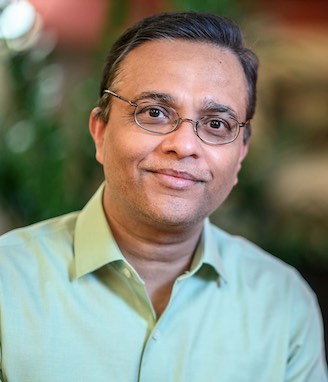
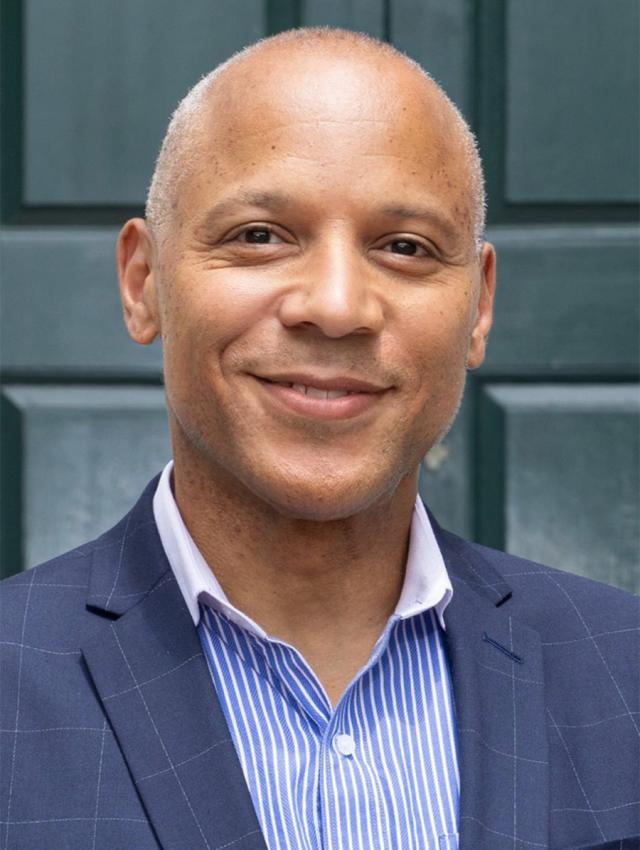
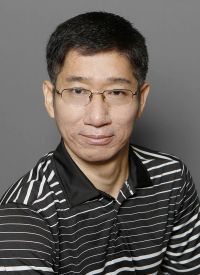
Alan W. Stacy is a Professor at Claremont Graduate University's School of Community and Global Health. He received his PhD in Social and Personality Psychology (Health Psychology focus) from the University of California, Riverside, with postdoctoral training at the University of Washington and University of Southern California. Stacy has held tenured professorships at UCLA and USC's Keck School of Medicine, and served as Associate Dean/Interim Dean at CGU. Key affiliations: NIH, CDC, FDA-funded research Leadership roles: Interim Dean (2018), Associate Dean (2008-2018) His research applies cognitive neuroscience and implicit cognition to understand health behaviors and addiction in high-risk populations. He pioneered the use of automatic memory processes in addiction studies and co-edited the foundational text on Implicit Cognition and Addiction . Recent work includes digital interventions for hepatitis/HIV risk reduction and epidemiological studies on e-cigarette/opioid use among youth. Dr. Stacy's publications span Behavioral Medicine , Psychological Assessment , and Addiction Biology , with a focus on translational research from lab to field. His NIH-funded career includes 8 R01 grants and a P50 center grant. Current projects investigate mobile health interventions for physical activity and dietary changes.
Prof. Dr.-Ing. Holger Blume serves as Vice President for Research and Transfer at Leibniz University Hannover while maintaining his academic position as Professor in the Architectures and Systems Section within the Faculty of Electrical Engineering and Computer Science. He holds multiple leadership positions including Chairperson of the Research Commission and Central Ethics Committee, Executive Board member of eNIFE (Leibniz Research Initiative for Neurosciences), and membership in both the Laboratory of Nano and Quantum Engineering and L3S Research Centre. His research interests span computer architecture, hardware design, signal processing, AI accelerators, hearing aid technology, and biomedical engineering. His work bridges theoretical computer science with practical applications in automotive systems, medical devices, and quantum engineering. Professor Blume's research demonstrates strong interdisciplinary connections between electrical engineering, computer science, and biomedical applications, with particular emphasis on hardware-oriented solutions for real-world problems. Analysis of his recent publications (2023-2025) reveals a strong focus on hardware acceleration for AI and signal processing applications, particularly in automotive radar/LiDAR systems and hearing aid technology. His work shows consistent innovation in RISC-V processor design, specialized hardware for mathematical functions, and biomedical applications of engineering principles. The research demonstrates a clear trajectory toward energy-efficient, specialized computing architectures for specific application domains. As Vice President for Research and Transfer, Professor Blume oversees significant research initiatives at Leibniz University Hannover, which hosts multiple Clusters of Excellence including PhoenixD (Photonics, Optics, and Engineering), QuantumFrontiers, and Hearing4all. The university participates in numerous collaborative research centers and junior research groups funded by DFG, BMBF, and EU programs. Professor Blume is actively involved in multiple research facilities including the Laboratory of Nano and Quantum Engineering and the L3S Research Centre. His work connects with Leibniz University's research focuses on optical technologies, quantum optics and gravitational physics, and biomedical research and technology. His leadership positions indicate strong involvement in shaping the research strategy and ethical framework of the university's scientific endeavors.
Steven L. Schwarcz is the Stanley A. Star Distinguished Professor of Law & Business at Duke University School of Law and Founding Director of Duke's Global Financial Markets Center (previously renamed from Global Capital Markets Center). He holds a bachelor's degree in aerospace engineering (summa cum laude) from Columbia University and a Juris Doctor from Columbia Law School. Prior to joining Duke, he was a partner at two leading law firms and Visiting Lecturer at Yale Law School. Professor Schwarcz has held numerous prestigious visiting positions including Leverhulme Visiting Professor at Oxford University, Visiting Professor at the University of Geneva Faculty of Law, Senior Fellow at Melbourne Law School, and Distinguished Visiting Professor at University College London. His extensive academic engagement includes delivering distinguished lectures at institutions worldwide including The University of Hong Kong, Georgetown University Law Center, and the National Assembly of the Republic of Korea. His research focuses on insolvency and bankruptcy law, international finance, capital markets, systemic risk, corporate governance, and commercial law. Professor Schwarcz pioneered the field of asset securitization, with his book Structured Finance, A Guide to the Principles of Asset Securitization being one of the most widely used texts in the field. His 2008 article Systemic Risk in the Georgetown Law Journal was the second most cited law review article of that year, and he has been ranked as the world's second most cited scholar in commercial, contract, and bankruptcy law for multiple periods (2010-2014 and 2013-2017). His recent scholarly output shows continued innovation, with publications extending into 2025 covering emerging areas such as digital currencies, NFT securitization, the application of physics concepts to legal analysis, and the regulation of financial innovation. His work consistently addresses the intersection of law, finance, and technological change, with particular attention to systemic risk and financial stability. Among his notable recognitions are being a Fellow of the American College of Bankruptcy, a Founding Member of the International Insolvency Institute, and a Fellow of the American College of Commercial Finance Lawyers. He also serves as Business Law Advisor to the American Bar Association Section on Business Law and as a member of P.R.I.M.E. Finance's Panel of Recognized International Market Experts in Finance. Professor Schwarcz has testified before the U.S. Congress on systemic risk, securitization, credit rating agencies, and financial regulation, and has advised multiple U.S. and foreign governmental agencies on the financial crisis and shadow banking. His practical experience complements his academic work, having helped pioneer asset securitization during his time as a practicing attorney.
Zeshu Shao is a Lecturer at the School of Psychology, University of Aberdeen, specializing in psycholinguistics with primary interest in individual differences in language psychology. Affiliated with the School of Psychology since 2018, Shao serves as MSc Programme Coordinator, Education Committee Member, School Disability Officer, and International Study Centre link tutor. Education: BSc in Applied Psychology at Nankai University (2004, China) MSc in Psychology at University of Nottingham (2006, UK) PhD at Max Planck Institute for Psycholinguistics (2013, Netherlands) Post-doctoral research fellow at Max Planck Institute for Psycholinguistics (2013-2017) Shao's research centers on cognitive, linguistic, and social factors affecting first and second language communication. Key areas include language production mechanisms, individual differences in lexical access, naming paradigms, and the role of executive control in speech. Current work examines orthographic influences on spoken word production, contextual effects in question answering, and social network impacts on language processing. The research employs experimental paradigms like blocked cyclic naming, picture-word interference, and Stroop tasks with EEG analysis. Publication trends show consistent focus on psycholinguistic mechanisms since 2011, with increasing emphasis on individual differences and neural correlates. Recent work (2020-2023) explores orthographic processing, contextual priming, and frequency effects in noun phrase production, demonstrating methodological evolution toward neurocognitive approaches. Scientific Awards: Shao provides academic leadership as MSc Programme Coordinator and serves on the Education Committee. While specific grants aren't detailed in available materials, research spans multiple international collaborations including Max Planck Institute, University of Nottingham, and Dutch institutions. The work supports Aberdeen's research vision in cognitive psychology and language sciences. Laboratory work appears centered in the School of Psychology's research facilities, with emphasis on experimental psycholinguistics and cognitive testing environments. Current projects continue investigating language production mechanisms and individual variability factors.
Karin Brocki is a Professor at Uppsala University's Department of Psychology, Division of Emotional Psychology. Her research focuses on executive function development, ADHD symptomology, and emotional regulation in children and adolescents. PhD in Psychology Associate Professor title Research interests include: Developmental hierarchy of executive functions ADHD risk factors and longitudinal trajectories Attachment theory and behavioral problems Neurocognitive impacts of radiotherapy Emotion regulation mechanisms Recent publications (2024-2025) examine fear extinction retention, cerebellar development, social attention deficits in ADHD, and pandemic impacts on child psychology. She collaborates extensively with researchers like Matilda Frick, Johan Kleberg, and international teams.
Jignesh M. Patel is a Professor in the Computer Science Department at Carnegie Mellon University, where he leads research on efficient data analysis methods. His work focuses on improving both system efficiency (e.g., high-performance data algorithms) and human efficiency (e.g., user productivity with data systems). Research Focus: Patel's group specializes in database systems, query optimization, hardware acceleration, and human-data interaction. Their interdisciplinary work spans: Transactional processing and real-time analytics Query optimization techniques Hardware-algorithm co-design Natural language interfaces for data systems Memory-efficient data processing Professional Activities: Co-founded four technology companies (Paradise, Locomatix, Quickstep, DataChat). Serves on program committees for premier conferences including SIGMOD and CIDR (as co-chair). Teaches database systems courses at CMU. Awards: Received Best Paper Award at DaMoN 2010 for work on cluster efficiency.
Dr. Máire Ní Ríordáin is a Senior Lecturer in the School of Education at University College Cork. She currently serves as M.Ed. Modular Programme Director, School of Education Examinations Officer, and Chair of the School of Education Research Ethics Committee. She is also Treasurer of the Educational Studies Association of Ireland (ESAI) and a serving member of their Executive Committee. Her educational background includes a BSc.(Hons.) in Physical Education and Mathematics from the University of Limerick (2005) and a PhD in Mathematics Education from the same institution (2009). Dr. Ní Ríordáin's research focuses on the intersection of language and mathematics education. Her primary interests include bilingualism (Irish and English) in mathematics education, mathematics teacher professional development, practitioner research in teacher education, and STEM education. She has developed frameworks like LCM2 to analyze bilingual mathematics learning and has contributed significantly to understanding how language influences mathematical cognition. Her work addresses critical issues in Irish education, particularly regarding the teaching of mathematics through Irish and supporting out-of-field mathematics teachers. Her extensive publication record demonstrates a consistent focus on language-responsive mathematics teaching, bilingual education, and teacher development. Recent work explores CLIL (Content and Language Integrated Learning) approaches, STEM education, and gender issues in mathematics learning. She has led major international conferences, including serving as Co-Leader of the 14th Congress of the European Society for Research in Mathematics Education. Teaching Council Research Bursary (2009) Advanced Scholar Award (2005) MACSI Postgraduate Scholarship (2006) Dr. Ní Ríordáin has supervised multiple doctoral students including Aoife O'Brien, Fergal Harrington, Laura Tagnin, and Bernie Ní Dhonnchú. She has secured significant research funding, including projects like M²EID (€95,500 from Irish Research Council), CaLSAM (€68,840 from ERASMUS), and several grants from University College Cork and the National Forum for the Enhancement of Teaching and Learning. She has been actively involved in national teacher development programs, particularly for out-of-field mathematics teachers.
Alva H. Taylor serves as Associate Professor of Business Administration at the Tuck School of Business, Dartmouth College, where he has been tenured since 2010. He holds the dual leadership roles of Senior Associate Dean for Executive Learning and Faculty Director of the Glassmeyer/McNamee Center for Digital Strategies, Tuck's flagship initiative examining how digital technology impacts business strategy. Previously, he served as Assistant Professor (2000-2005) and Associate Professor (2005-2009) at Tuck, and as Visiting Assistant Professor at Kellogg Graduate School of Management (1997-2000). Professor Taylor earned his PhD from Stanford University's Graduate School of Business in 2000, following an MBA, ME, and BS from Cornell University in 1984, 1983, and 1982 respectively. Before academia, he worked as a Senior Manager at KPMG's consulting division, specializing in business strategy and information technology for growing companies. His research focuses on innovation processes, entrepreneurship, technological change, and strategic decision-making in fast-changing environments . Taylor has made significant contributions to understanding how organizations manage creative groups for sustained innovation, organizational learning in information-rich environments, and digital transformation in traditional enterprises. His work with comic book creators demonstrated that creators with cross-genre experience achieve greater success than specialists, highlighting the value of diverse experience in creative fields. His recent scholarship examines how nonprofits can implement digital-first strategies to enhance social impact, emphasizing the importance of aligning technology with organizational mission. Taylor teaches courses including Design Thinking for Strategic Innovation and Strategic Change in the Turbulent Digital Age in both MBA and Executive Education programs. He designed and directs the Digital Excellence for Minority Entrepreneurs Executive Education Program in partnership with Google, demonstrating his commitment to inclusive digital transformation. His research has been featured in prominent publications including the Wall Street Journal and Stanford Social Innovation Review, where he emphasizes that digital strategy must begin with a clear understanding of organizational goals before technology implementation. As Faculty Director of the Center for Digital Strategies, Taylor leads initiatives that bring together executives, academics, and students to advance management theory and practice in the networked economy. The Center explores technology's impact on product development, supply chains, marketing, and business model transformation, addressing challenges throughout the extended enterprise including globalization, information security, and organizational change. Under his leadership, the Center has hosted events like the Dartmouth AI Conference and developed programs that bridge academic research with corporate application.
Dr. Marina Wimmer is an Associate Professor at Edinburgh Napier University's School of Applied Sciences , where she leads the Centre for Mind and Creativity Research (CEDAR) and serves as Psychology Research Lead. An international expert in cognitive psychology, her work examines visual ambiguities, false memories, mental imagery, and environmental cognition. PhD in Cognitive Development from Stirling University Former research positions at Stirling, Lancaster, and Warwick Universities Lectureship at Plymouth University (2011) before joining Edinburgh Napier Her research focuses on perceptual bistability (visual & auditory), false memory mechanisms , mental representation , and cognitive development . Recent projects explore STEM creativity , digital twins' cognitive impact , and fake news correction . She integrates cognitive science with film education, examining self-concept development through interdisciplinary frameworks. Marina has secured over £100,000 as Principal Investigator (ESRC, British Academy, Experimental Psychology Society) and contributed to a £4,000,000 EU-funded CogNovo consortium. She serves as Associate Editor, British Journal of Developmental Psychology Member, ESRC & Carnegie Peer Review Colleges Experimental Psychology Society Fellow A passionate science communicator, she engages over 1,500 students through STEM outreach (ESRC Festival, Big Bang STEM). Her supervisees include doctoral candidates in cognition-environment interactions and false memory correction.
Yoonsik Cheon is an Associate Professor in the Department of Computer Science at the University of Texas at El Paso (UTEP), part of the College of Engineering. His research focuses on formal methods, software engineering, and mobile applications. He holds a Ph.D. from Iowa State University and has prior industry experience at the Electronics and Telecommunications Research Institute (ETRI) in South Korea. His work emphasizes operational formal methods, integrating specifications like JML and CleanJava into practical development processes. Research Interests: Formal methods (specification languages, verification techniques), programming languages, mobile application development, and software testing. His Software Specification and Verification Lab explores automated testing, functional program verification, and applying formal methods to mobile apps. Key Achievements: Recipient of the 2022 AITO Test of Time Award for his foundational work on JML and JUnit integration. He has contributed to tools like the JML runtime assertion checker and CleanJava for functional verification. His publications frequently address design constraints, assertion-based testing, and cross-platform development strategies. Teaching: Courses include Programming Languages, Mobile Application Development, and formal methods in software engineering.
Sabrina Pitzalis is an Associate Professor at the University of Rome 'Foro Italico', Department of Human Motor Sciences and Health. She serves as Delegate for Gender Budget and Head of the SACS (Student Counselling and Help Desk). Her research focuses on cognitive neuroscience, functional neuroimaging, and brain mapping, with specializations in neural mechanisms of perception, sensorimotor functions, and brain plasticity induced by motor activity. She leads projects like the 2019 study on neuromuscular electrical stimulation effects. Her work integrates neuroimaging techniques to explore topics such as anticipatory brain activity and motion perception. Pitzalis teaches courses in sport psychology, neuroscience, and pedagogy, emphasizing the interplay between cognitive and motor systems. Her research highlights neural adaptations to sensory and motor interventions, including multifocal contact lenses and exoskeleton-assisted rehabilitation. Research Themes: Neural basis of perceptual and sensorimotor functions Brain plasticity and motor learning Anticipatory neural processing during action preparation Integration of visual and motor signals in spatial navigation Recent Contributions: Her articles (2022–2025) reveal insights into how brain circuits process self-motion, adapt to sensory interventions, and modulate during complex cognitive-motor tasks. These studies use advanced neuroimaging and electrophysiological methods to map functional brain dynamics. Ongoing work explores neurocognitive trade-offs in dual-task scenarios and the role of parietal cortex in visuomotor integration. Teaching and Leadership: Pitzalis contributes to degree programs in Sports Sciences (L22), Preventive Motor Activities (LM67), and Sports Technology (LM68). She promotes interdisciplinary approaches, combining neuroscience with sport pedagogy. Her leadership roles emphasize institutional quality assurance and student support initiatives. Labs/Teams: Collaborates within university labs specializing in motor neuroscience and neuroimaging, contributing to projects on neural adaptation mechanisms and clinical applications in rehabilitation.
Dr. Ansley Tullos Gilpin is an Associate Professor of Psychology at the University of Alabama's College of Arts & Sciences, where she directs the Knowledge in Development (K.I.D.) Lab. Her primary research examines cognitive development in children, with specific focus on executive functions, fantasy orientation, and socioemotional learning. She holds secondary affiliations with the Center for Youth Development & Intervention. Her research program investigates: The relationship between pretend play and executive function development Children's understanding of fantasy/reality distinctions Emotion regulation strategies in early childhood School readiness interventions for at-risk populations Therapeutic applications of play for ASD Recent publications demonstrate strong foci on: preschool cognitive assessment, play-based interventions, and socioemotional development. Her methodological approaches incorporate experimental psychology, longitudinal designs, and community-based interventions. Dr. Gilpin mentors graduate students in developmental psychology and regularly involves undergraduate researchers through the K.I.D. Lab. She teaches courses spanning introductory psychology, developmental psychology, cognitive development, and experimental methods at both undergraduate and graduate levels.
Dr. Sarah O'Neill is an Assistant Professor of Psychology at the City College of New York, where she leads the Attention & Neuropsychological Development (ATTEND!) Lab . Her work focuses on Attention-Deficit/Hyperactivity Disorder (ADHD), particularly examining how neuropsychological and environmental factors influence symptom trajectories and adaptive functioning across childhood and adulthood. She investigates predictors of ADHD persistence, develops non-pharmacological interventions, and studies the interplay between executive functioning, temperament, and psychosocial outcomes. Her research emphasizes longitudinal studies, combining clinical and developmental perspectives to address disparities in ADHD diagnosis and intervention efficacy. Key areas include prenatal stress impacts on child behavior, school-entry age effects on ADHD trajectories, and music training’s role in emotion regulation among adults with ADHD. Dr. O'Neill’s work bridges basic science and applied interventions, aiming to improve early detection and evidence-based care for neurodevelopmental disorders. Her team’s projects highlight innovative methods such as meta-analyses of prospective data and randomized clinical trials for preschool ADHD interventions. Despite no explicitly listed awards, her contributions are evident through high-impact publications addressing understudied populations like urban and ethnically diverse groups. She collaborates on interdisciplinary projects spanning environmental health, epigenetics, and educational policy to inform preventive strategies for neurodevelopmental challenges.
Monica Fabiani is a Professor at the University of Illinois Urbana-Champaign, affiliated with the Neuroscience Program and the Beckman Institute for Advanced Science and Technology. She holds academic roles in Psychology and Neuroscience. Her research focuses on cognitive neuroscience of human memory and aging, neuroimaging tool development (e.g., EROS), and cerebrovascular contributions to brain aging. Prof. Fabiani’s work is funded by NIH (NIA) and MindPortal, emphasizing interdisciplinary integration of behavioral, electrophysiological, and neuroimaging data. Education: Ph.D. in Biological Psychology/Cognitive Neuroscience from the University of Illinois Urbana-Champaign. She serves as Editor of Psychophysiology and has received prestigious awards, including the Association for Psychological Science Fellowship (2006). Research Interests: Cerebrovascular health, neurophysiological bases of cognitive control, and multimodal imaging techniques. Key projects include studying arterial elasticity (pulse-DOT), cognitive aging mechanisms, and combining EEG, MRI, and optical methods. Notable Achievements: 181+ publications, including high-impact studies on white matter microstructure and the effects of physical activity on brain health. Her lab develops innovative tools like trimodal imaging and optical signal analysis for clinical and cognitive applications. Grants & Collaborations: Active projects funded by NIA and MindPortal, with international collaborations in brain aging and neuroimaging. She leads efforts to bridge basic science and translational research in cognitive health.
Bart Kerremans is a full professor at KU Leuven's Faculty of Social Sciences, affiliated with Leuven International and European Studies (LINES). His research focuses on international trade politics, American government, interest groups, and the WTO. He has held leadership roles in major research projects, including studying Belgium's economic sovereignty during the Cold War and analyzing the European Commission's trade negotiations with Japan. Education: Doctorate in Political Science (implied by academic rank) Research Interests: Explores geopolitical economic dynamics, transatlantic relations, and historical trade policies. Recent work includes Cold War-era economic strategies and contemporary U.S.-EU trade conflicts. His 2024 study on Belgium's CoCom participation underlines the intersection of political economy and international institutions. Publications span academic journals (e.g., Politics And Governance ), newspapers ( De Morgen ), and edited volumes on geo-economics and EU trade policy. Notable works analyze Trump's political messaging and Biden's foreign policy continuity. Grants: Active in projects funded from 2019-2032 Teaching includes courses on EU trade policy, American government, and global diplomacy. He advises doctoral research on international trade negotiations and co-leads the 'Global Climate Governance and Contestatory Democracy' initiative.