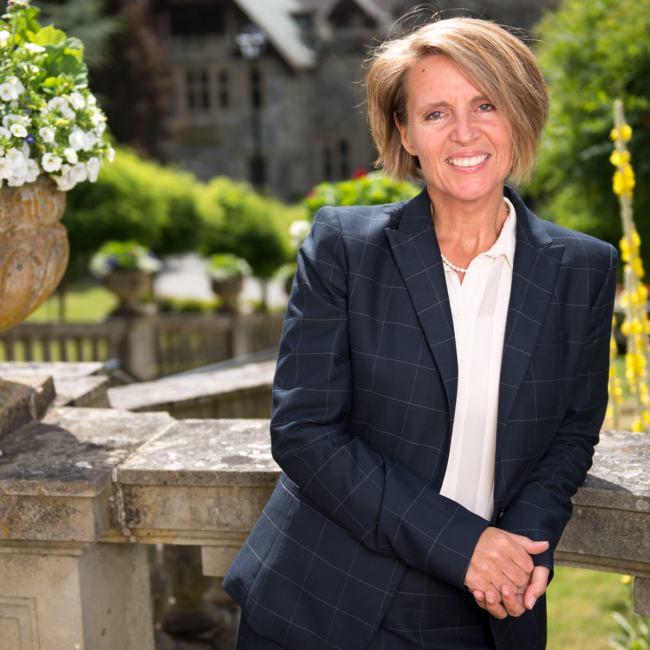
Karim Ahmed is a Principal Lecturer at the Nottingham Trent University within the Nottingham Business School , affiliated with the Department of Strategy, Analytics and Operations . His expertise includes Project Management , Sustainability , and Supply Chain Management , with a focus on practical applications in VUCA conditions and sustainable operations. Dr. Ahmed is a certified Prince2 and Agile PM Practitioner with over a decade of experience in teaching and industry. He leads the MSc Project Management program, emphasizing stakeholder alignment, efficient execution, and innovation in managing complex projects. His research explores the intersection of sustainability, supply chain resilience, and strategic decision-making, particularly in multinational contexts. Recent publications highlight his work on fuzzy logic in sustainability assessment, gamification in education, and multi-criteria decision models for supply chain optimization. Collaborations span institutions like Loughborough and Sheffield, with fieldwork in Egypt, Iraq, and the UK.
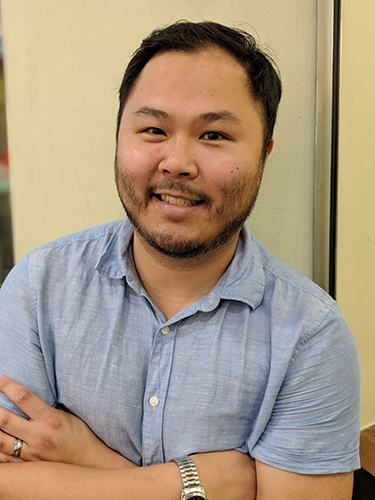
Zeyu Ding is an Assistant Professor in the School of Computing at Binghamton University, with a courtesy appointment in the Department of Mathematics and Statistics. He holds two PhDs: one in Computer Science from Penn State University and another in Mathematics from Binghamton University, along with a BS in Mathematics from Zhejiang University. Research Interests His work focuses on the intersection of privacy, security, machine learning, and algorithmic fairness. He investigates how to protect sensitive personal information through differential privacy mechanisms, formal verification, numerical optimization, and privacy-preserving statistical inference. Article Trends Ding's publications highlight advancements in differential privacy, including the Report Noisy Max with Gap Mechanism and the Permute-and-Flip approach. His research also addresses security challenges like reconstruction attacks and automated verification tools (e.g., Checkdp and DPGen), alongside mathematical explorations of automorphism group schemes and Barsotti-Tate groups. Scientific Awards CCS Outstanding Paper Award, 2018 Caper Bowden PET Award Runner-up, 2019 CCS Best Paper Award Runner-up, 2020 CCS Best Paper Award Runner-up, 2021 Research Award from Penn State University, 2019 Teaching Award from Penn State University, 2021 His research is supported by the NSF grant 2317233, underscoring his contributions to privacy-preserving computational methods.
Jennifer M. McDermott is an Associate Professor in the Department of Psychological and Brain Sciences at the University of Massachusetts Amherst, where she conducts interdisciplinary research at the intersection of developmental, cognitive, and affective neuroscience. She is affiliated with the Neuroscience & Behavior Graduate Program, the Center for Research on Families, and the Rudd Adoption Research Program, reflecting her broad engagement with developmental science and family dynamics. Her research focuses on understanding individual differences in cognitive development and social outcomes, particularly how early experiences shape neural and behavioral trajectories. Key areas of interest include response monitoring, executive function, emotion regulation, and behavioral inhibition in children. She employs neuroscientific methods such as ERP and behavioral paradigms to investigate how self-regulatory processes develop and how they are influenced by temperament, early adversity, and caregiving environments. The trends in her recent publications reveal a strong emphasis on early childhood development, with frequent exploration of ADHD, sleep effects on cognition, emotion processing, and the neural underpinnings of attention and inhibition. Her work often involves longitudinal and intervention-based studies, particularly with at-risk populations, including children with developmental disabilities or histories of institutionalization. Jennifer McDermott has received research support from major funding sources including NIH and NIMH, particularly through collaborative networks focused on early experience and stress neurobiology. She has mentored trainees and collaborated extensively with leading scholars such as Nathan A. Fox and Koraly Pérez-Edgar. She teaches core courses in developmental psychology, including Psych 350 (Developmental Psychology), Honors Developmental Psychology, Socioemotional Development, and a graduate seminar on Critical Periods and Developmental Plasticity, demonstrating her commitment to both undergraduate and graduate education.
Volker Markl is a Professor at Technische Universität Berlin in the Institute of Software Engineering and Theoretical Computer Science, with additional affiliations at the Berlin Institute for the Foundations of Learning and Data (BIFOLD) and the German Research Center for Artificial Intelligence (DFKI). His research spans database systems, stream processing, and distributed data management with significant contributions to both theoretical foundations and practical implementations. Markl's research interests focus on next-generation data management systems, particularly for streaming and IoT environments. His work addresses critical challenges in distributed query processing, system integration, and performance optimization. He has pioneered approaches for stream processing in volatile infrastructures and developed innovative techniques for GPU-accelerated database operations. His NebulaStream project represents a major contribution to distributed stream processing systems. His publication record demonstrates consistent impact across top database venues including VLDB, SIGMOD, and ICDE. Recent work shows increasing focus on machine learning integration with database systems, privacy-preserving query processing, and educational approaches for teaching large-scale data management. Markl has mentored numerous researchers who have become prominent in the database community, with frequent collaborators including Steffen Zeuch, Tilmann Rabl, and Philipp Grulich. His leadership extends to major research initiatives and collaborations across European institutions.
Janet van Hell is Professor of Psychology and Linguistics at Pennsylvania State University , where she also serves as Co-Director of the Social, Life, and Engineering Sciences Imaging Center (SLEIC) and Co-Director of the Center for Language Science . She leads the Bilingualism and Language Development (BiLD) Lab , investigating neurocognitive aspects of bilingual language use. Education: Ph.D., University of Amsterdam, 1998 Research Interests: Her work centers on bilingualism , second language acquisition , and the neurocognitive mechanisms underlying language development. Using EEG/ERP , behavioral, and linguistic techniques, her lab explores cross-language interaction, code-switching, and foreign-accented speech comprehension. The ‘brain bus’ , a mobile EEG lab, extends her research into schools and public outreach. Publications Overview: Her recent publications span bilingual phonetics , syntax processing , memory consolidation , and executive control , with a focus on EEG/ERP methodologies and experimental behavioral paradigms . Studies often involve heritage speakers , child bilinguals , and late L2 learners . Advising & Collaborations: Advises numerous PhD students and postdocs, many co-authoring papers (marked with *). Collaborates across Psychology, Linguistics, and Neuroscience departments. Leads outreach via the ‘brain bus’ for public engagement in science. Labs & Centers: BiLD Lab – Bilingualism and Language Development Lab SLEIC – Co-Director, Social, Life, and Engineering Sciences Imaging Center Center for Language Science – Co-Director
Nuno Pereira Lopes is an Associate Professor at Instituto Superior Técnico , part of Universidade de Lisboa , and a researcher at INESC-ID . He also serves as an advisor at FuriosaAI , focusing on tensor contraction processors for AI workloads. Research Interests : Compilers, formal verification of LLVM optimizations, machine learning frameworks, undefined behavior exploitation, probabilistic model checking, blockchain security, and many-core code generation. Teaching : Compilers and Computer/Informatics Engineering projects. Funding : Supported by Google, Matter Labs, NLnet, Oracle, PRACE, RNCA, and Woven by Toyota. Recent Publications focus on LLVM backend validation , PyTorch pipeline parallelism , C++ dynamic cast optimization , undefined behavior in C/C++ , and AI tensor processors . His work bridges compiler design, formal methods, and AI hardware. Academic Service includes representing Portugal in ISO/IEC JTC 1/SC 22 (C++), organizing FLoC'26 , and serving on program committees for PLDI, EuroLLVM, and CGO.
Sebastián Uchitel is a Professor at the Department of Computing, Imperial College London, UK. His research focuses on foundational aspects of Software Engineering, particularly in modeling and analysis for automated reasoning, verification of probabilistic systems, controller synthesis, and adaptive systems. He has led major research projects, including the ERC-funded IDEAS StG project on Partial Behaviour Modelling and the European FP6 SENSORIA project. Research Interests: Model-Based Software Engineering, Controller Synthesis, Probabilistic Systems, Adaptive Systems, Requirements Engineering External Roles: General Chair, International Conference on Software Engineering (2017); Associate Editor, Elsevier Science of Computer Programming; Steering Committee, International Conference on Software Engineering His recent work explores intersections between Software Engineering and AI, including assured adaptive systems and logic-based learning. A Senior Member of IEEE and Distinguished Scientist of ACM , he has received awards like the Houssay Prize (2015) and Philip Leverhulme Prize (2005). Collaborators include institutions in Argentina, Canada, and the UK. Selected Publications: 150+ peer-reviewed works spanning controller synthesis, requirements engineering, and formal methods Students: Supervised 12 PhD students since 2003 Grants: Principal Investigator for 3 major grants (2005-2016) totaling over $3.7M USD, including: 2013-2016: Technology Platform in Software Engineering (ANPCYT, $1.6M) 2009-2014: ERC IDEAS StG on Partial Behaviour Modelling (€1.4M) 2005-2008: FP6 SENSORIA Project (€0.7M)
Richard D. Wesel is an Associate Dean for Academic and Student Affairs at a College of Engineering, where he has held leadership roles such as Vice-Chair of the Electrical Engineering Department. With Ph.D. and M.S. degrees in Electrical Engineering from Stanford University and MIT respectively, his research focuses on communication theory and channel coding, particularly low-density parity-check (LDPC) codes and turbo codes for efficient data transmission over noisy channels. Education: MIT (B.S., M.S.), Stanford (Ph.D.) Leadership: Associate Dean, Former Vice-Chair of Electrical Engineering Wesel's research explores advanced techniques for broadcast and multiple-access communication systems, emphasizing applications in wireless LANs, satellite communications, and optical networks. His work integrates machine learning with traditional decoding algorithms, as seen in recent publications on neural-network-optimized LDPC decoding and parallel trellis-stage-combining methods for high-throughput systems. His articles demonstrate a focus on finite-blocklength coding, including CRC-aided list decoding for convolutional and polar codes, and voltage optimization strategies for flash memory reliability. Wesel has authored over 100 publications and led a research group that won the 2006 Design Automation Conference's top award for optical multiple access design. Scientific Awards: National Science Foundation CAREER Award Okawa Foundation Award As an educator, Wesel received the TRW Excellence in Teaching Award in 2000 and has contributed to academic governance through roles on the Faculty Executive Committee and Undergraduate Council. His work bridges theoretical communication systems with practical implementations, including FPGA-based decoders and adaptive coding for fading channels.
Dr. Kathy Bishop serves as Associate Professor and Program Head for the Master of Arts in Leadership (Executive Leadership specialization) and Graduate Certificate in Values-Based Leadership at Royal Roads University's School of Leadership Studies. Joining in 2013, she brings over 30 years of multidisciplinary leadership experience spanning counselling, social services, not-for-profit agencies, small business development, and adult education. Her academic credentials include a PhD in Interdisciplinary Studies (Leadership and Applied Theatre) from the University of Victoria (2015) and a Bachelor of Social Work from the University of British Columbia (1986). As a scholar-practitioner, she has maintained her own consulting business since 2000 and previously served as Executive Director of the Parksville and District Chamber of Commerce and a youth-focused non-profit organization. Dr. Bishop's research centers on values-based leadership, organizational culture change, and creativity, utilizing creative, experiential, participatory, nature-based, and transformative learning methods. Her work explores leadership development, online education, action-oriented research, and arts-based methodologies, with particular emphasis on ethical frameworks in applied theatre contexts. Analysis of her publications reveals a consistent trajectory toward integrating arts-based approaches with leadership education, especially in online and collaborative environments. Key themes include mindfulness practices in business education, narrative métissage for community engagement, and ethical considerations in research-based theatre, demonstrating her commitment to innovative, experiential pedagogical models. Her scientific recognition includes: Interdisciplinary Graduate Fellowship Award (2013-14, University of Victoria) Interdisciplinary Graduate Fellowship Award (2012-13, University of Victoria) Through her dual role as academic leader and active consultant, Dr. Bishop bridges theoretical scholarship with practical leadership development, having previously worked as a registered social worker and executive director for community organizations. Her professional journey reflects a continuous commitment to applying leadership principles across diverse social and organizational contexts.
Dong Kyoo Shin is a Professor at Sejong University's Department of Computer Science and Engineering, where he has been employed since 1998. He holds a Ph.D. from Texas A&M University (1997), an M.S. from Illinois Institute of Technology (1992), and a B.S. from Seoul National University (1986). His professional background includes roles as a Researcher at the Korea Institute of Defense Analyses (1986-1991) and Senior Researcher at Hyundai Electronics (1997-1998). Shin leads research in cybersecurity, machine learning, and ubiquitous systems , with specialized interests in intrusion detection, data mining, cyber warfare frameworks, and adversarial ML defense. His recent publications focus on AI-driven security solutions, ransomware analysis, and resilience quantification in critical infrastructure. He directs the Cyber Warfare Research Institute (established 2017) and the Multimedia & Internet Lab , focusing on defense technologies and smart systems. His team has executed projects for the Ministry of National Defense, ADD, and ETRI, including cyber threat response systems and military security frameworks. Service includes advisory roles for the Ministry of National Defense, Defense Acquisition Program Administration, and editorial duties for defense journals. He holds patents in malware detection, data encryption, and sensor-based interfaces.
Jonathan Y. Huang, PhD, serves as an Assistant Professor in the Department of Epidemiology at the University of Hawaiʻi at Mānoa, focusing on translating epidemiological research into actionable public health interventions through rigorous quantitative methods. His academic credentials include: PhD in Epidemiology with Certificate in Public Health Genetics from the University of Washington, Seattle MPH in Community-Oriented Public Health Practice from the University of Washington, Seattle BSc in Biochemistry and English Literature from the University of Virginia Dr. Huang’s research examines social and biological determinants of early child health and development, with specific emphasis on environmental contaminant effects, exposome social determinants, placental multi-omic pathways, paternal health influences, and mHealth interventions for expectant couples. His methodological expertise strengthens causal inference in life-course epidemiology. Publication trends reveal consistent contributions to environmental-child health interfaces, with recent work addressing pandemic impacts on children, socioeconomic exposome mapping, and multi-omic mediation analysis across international birth cohorts. He directs competitively funded birth cohort studies across four continents and holds editorial positions at the International Journal of Epidemiology (Associate Editor) and Fertility & Sterility (Methodological Editor), reflecting his methodological leadership.
Katharina Pyschny serves as a Full Professor ( Univ.-Prof. ) at the Institute for Old Testament Biblical Studies within the Catholic Theological Faculty at Karl-Franzens-University Graz, Austria. Her academic career spans multiple prestigious European institutions including Humboldt University of Berlin, Ruhr University Bochum, and University of Pretoria where she currently holds a Research Associate position. Her research interests focus on Old Testament Biblical Studies , Theological Anthropology , and Archaeology , with particular attention to authorship questions in the Hebrew Bible, YHWH's desert origins, and Pentateuchal leadership dynamics. She actively participates in the university's 'Heterogeneity and cohesion' research network. Professor Pyschny's recent publications demonstrate her interdisciplinary approach combining textual analysis with iconographic and archaeological perspectives. Her work shows consistent focus on biblical interpretation through historical-critical methods while engaging with contemporary theoretical frameworks in religious studies. Editor of Berlin Theological Journal (since 2021) Executive Officer of European Association of Biblical Studies (since 2019) Member of International Advisory Board at Humboldt University Berlin (since 2023) Board Member of German Palestine Association (since 2021) She currently leads the research project 'The Dawn of Monotheism? Judaic Religion(s) in Persian and Early Hellenistic Times in the Light of Iconographic, Epigraphic, and Biblical Sources' (2022-2026), demonstrating ongoing active research engagement. Professor Pyschny also serves on the Talent Scholarship Fund Selection Committee of the 'Arqus Talent and Innovation Fund' and contributes to the 'Network Old Testament Anthropology' (2023-2026).
Prof. Dr. Mario Trapp is a Full Professor and Chairholder of Engineering Resilient Cognitive Systems at the Technical University of Munich (TUM), within the TUM School of Computation, Information and Technology. He is also the Executive Director of the Fraunhofer Institute for Cognitive Systems IKS in Munich, leading a major research institute focused on the safe integration of artificial intelligence into critical systems. Education: PhD in Computer Science, TU Kaiserslautern, 2005 (with distinction) Habilitation in Computer Science, TU Kaiserslautern, 2016 Studied Technoinformatics / Computer Science, TU Kaiserslautern His research centers on resilient cognitive systems , where he combines expertise in model-based safety engineering with self-adaptive software systems. He advocates for safe intelligence , emphasizing that AI must be engineered to be both intelligent and safe, particularly in domains like autonomous driving and medical technology. His work addresses the challenge of ensuring dependability in open, adaptive systems where traditional safety methods fall short. The available publications reflect a consistent focus on dynamic safety assurance, adaptive certification, and runtime risk management for complex, open systems. His research trajectory shows a deep commitment to foundational methods that enable systems to maintain safety despite uncertainty and change. Scientific Affiliations and Recognition: Member, Bavarian State Government’s Council on AI (Bayerischer KI-Rat) Member, Bavarian State Ministry’s AI – Data Science Expert Panel Former Adjunct Professor, Department of Computer Science, TU Kaiserslautern Prof. Trapp is actively involved in technology transfer, advising numerous industrial partners on safety-critical software and AI assurance. He is a frequent speaker and author on the topics of AI safety, software engineering, and resilience. He leads a research team at Fraunhofer IKS focused on developing architectures and methods for dependable cognitive systems.
Lisa Rosenblum is a Lecturer at the School of Information, San José State University, where she teaches courses in information professions and library science. She brings extensive leadership experience from major public library systems across the United States, including as former Executive Director of the King County Library System and Chief Librarian at Brooklyn Public Library. Executive Director, King County Library System (2018–2023) Chief Librarian, Brooklyn Public Library (2015–2017) Director of Library and Community Services, Sunnyvale, CA (2009–2015) Lecturer, SJSU School of Information (2008–2014, and currently affiliated) Adjunct Faculty, Pratt Institute (2016–2017) Her research and teaching interests focus on public libraries, library administration and management, facilities planning, and literacy promotion. She emphasizes strategic leadership and innovative service delivery in public information institutions. The recent publications in her portfolio reflect a strong trend in practical library management, strategic planning, and organizational development. Her work often addresses real-world challenges such as budget constraints, service efficiency, leadership transitions, and the integration of library services within broader community frameworks. Topics include performance metrics, reference service models, and the philosophical underpinnings of merged library collections. Distinguished Alumni, College of Arts and Sciences, San José State University (2009) Mover and Shaker, Library Journal (2009) Fellow, Urban Libraries Council Executive Leadership Institute Participant, Stanford Institute on 21st Century Librarianship Lisa Rosenblum has advised and mentored numerous library professionals through her teaching and leadership roles. She has served on advisory boards for the University of Washington Information School, Metropolitan New York Library Council, and Pratt Institute School of Information. While specific grant details are not listed, her leadership roles involved overseeing large-scale public library budgets and initiatives. Her professional service demonstrates a deep commitment to advancing the field through education, policy, and organizational innovation. She has contributed significantly to the development of future library leaders through her teaching in MLIS programs at SJSU, Pratt, and the University of Washington. Her courses, such as INFO 204 – Information Professions Education, are designed to prepare students for leadership and administrative roles in information institutions.
Karl Palmskog is a Lecturer at KTH Royal Institute of Technology in the Division of Theoretical Computer Science and the STEP research group. His work focuses on program verification and proof engineering, with particular emphasis on developing techniques and tools based on proof assistants for constructing functionally correct and secure software systems. Palmskog received his Ph.D. in Computer Science in 2014 from KTH, advised by Mads Dam, and his M.Sc. in Computer Science and Engineering from KTH in 2007. Prior to his current position, he was a postdoc at The University of Texas at Austin and University of Illinois at Urbana-Champaign. His research interests span programming languages, software engineering, and formal verification, with a particular focus on developing techniques and tools based on proof assistants. He is an avid user of the Coq proof assistant for both proving and programming, often complemented by OCaml, and also utilizes HOL4 and other ML family dialects. His work bridges theoretical foundations with practical applications, particularly in the domains of blockchain systems, distributed systems, and automotive software verification. Analysis of his recent publications reveals a strong focus on Coq-based verification, with significant contributions to proof engineering tools and methodologies. His work includes developing tools for regression proving, change impact analysis, mutation testing for Coq projects, and lemma name suggestion using deep learning. There's also a growing trend toward applying formal methods to real-world systems like blockchain protocols and automotive software. Palmskog has been involved in several research projects, including Coq-community Proof Engineering and Distributed Components. His past projects include Trustfull (SSF), Model-based Event Driven Scalable Programming for the Mobile Cloud (NSF), Highly Adaptable and Trustworthy Software (EU FP7), and 4WARD Future Internet (EU FP7). As an educator, Palmskog has served as examiner, course responsible, teacher, and assistant for various courses including Algorithms, Data Structures and Complexity; Degree Projects; Game Theory; Parallel and Distributed Computing; and Programming Paradigms. His work on Chip, a Coq formalization of change impact analysis, demonstrates his commitment to creating practical, certified tools that bridge formal methods with software engineering practice.