Ellen E Meade is a Research Professor of Economics at Duke University's Trinity College of Arts & Sciences, joining in 2022 after 25 years at the Federal Reserve Board. Her academic career includes roles as Special Adviser to the Fed Board of Governors and Senior Adviser in the Division of Monetary Affairs. She holds a Ph.D. from Princeton University (1988) and a B.A. from Duke University (1979). Her research focuses on monetary policy mechanisms, central bank transparency, decisionmaking processes, and communications strategies. Notable projects include analyzing FOMC discourse patterns using AI and examining gender representation in economics publications. Recent media engagements include commentary on Federal Reserve policies under Jay Powell and Janet Yellen. Teaching includes courses on inflation dynamics, modern monetary policy, and independent research supervision. Her work bridges academic research with practical central banking challenges, emphasizing institutional governance and policy effectiveness. No formal advisees are listed, but her courses engage advanced economics students in critical policy analysis.
Stephen Weymouth is Provost's Distinguished Associate Professor and Dean’s Professor at Georgetown University’s McDonough School of Business. He holds a primary academic appointment as Associate Professor and focuses on the political economy of globalization and technological change. His research bridges international business, political science, and public policy. Weymouth earned his Ph.D. in Political Science and International Affairs from the University of California, San Diego (2010), an M.A. in Latin American Studies from the same institution (2006), and a B.S. in Economics from Arizona State University (1999). His research interests include the political environment of business, digital globalization, trade and exchange rate politics, governance of the digital economy, and the societal implications of artificial intelligence. He investigates how globalization, technological disruption, and economic change influence political behavior, voting, and policy outcomes. His work often employs quantitative methods and large-scale data to analyze firm-level and electoral dynamics. His recent publications, appearing in top journals like American Political Science Review , International Organization , and British Journal of Political Science , reveal a strong thematic focus on the intersection of economic globalization and political behavior. Trends include the impact of deindustrialization on voter backlash, the effects of inflation and pandemics on elections, and the political economy of digital trade and AI. His book Digital Globalization: Politics, Policy, and a Governance Paradox (Cambridge University Press) synthesizes these themes, emphasizing the growing tension between digital innovation and regulatory governance. Weymouth is actively engaged in policy discourse, having authored issue briefs for the Atlantic Council on digital trade policies in India and Bangladesh. He teaches core MBA courses such as Business and Policy in the Global Economy and specialized courses on AI and economic transformation. While no formal awards are listed, his named professorships reflect institutional recognition. He advises students and collaborates widely, though specific advisees are not named. His research contributes significantly to understanding how global economic forces shape political institutions and public sentiment.
Prof. Dr. Aliaksandr Bandarenka is a Professor at the Technical University of Munich (TUM) in the TUM School of Natural Sciences , leading the Assistant Professorship of Physics of Energy Conversion and Storage . His research focuses on electrochemical surface science and energy materials development. Education: PhD in Chemistry from Belarusian State University (2005) Key Collaborations: Ruhr University Bochum, University of Twente, Technical University of Denmark Prof. Bandarenka's research explores: Design of electrocatalytic materials via bottom-up approaches Characterization of electrified interfaces Development of sustainable energy conversion/storage systems Surface structure-activity relationships in catalysis Recent article trends (2024) include: ORR electrocatalyst optimization using ZIF-8 templating Advanced impedance spectroscopy for battery/electrolyzer diagnostics Mesoporous oxide materials for energy applications Surface structure effects on double layer capacitance Scientific Recognition: Ernst Haage-Prize (2016) Hans-Jürgen Engell Award (2013) He teaches graduate courses on: Electrified interfaces Energy materials science Electrocatalysis fundamentals Hands-on experiments in battery technology
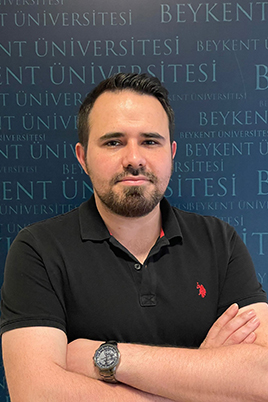
Melih Sefa YAVUZ is an Assistant Professor in the Department of Finance and Banking at Istanbul Beykent University, Faculty of Economics and Administrative Sciences. He has been actively contributing to academic and administrative duties, including serving as Deputy Director of the Institute and working in the Strategy Development and Planning Department. His teaching responsibilities include Investment Analysis and Portfolio Management, Digital Finance, and Financial Statement Analysis, all delivered in Turkish. His research interests span a wide range of topics in finance and economics, including digital finance, blockchain technology, ESG performance, firm performance, digital literacy, financial decision-making, and macroeconomic influences on equity markets. These interests are reflected in his extensive publication record in both national and international peer-reviewed journals. His recent scholarly work focuses on the impact of ESG performance on financial outcomes, behavioral aspects of financial decisions, digital transformation in finance, and the interplay between blockchain initiatives and stock prices. He frequently collaborates with scholars such as Gozde Bozkurt, Hasan Sadik Tatli, and Mehmetcan Suyadal, producing empirical studies grounded in Turkish and international financial markets. Dr. YAVUZ has published in journals such as the Journal of Entrepreneurship, Management and Innovation, EMAJ: Emerging Markets Journal, and Turkish Studies - Economics, Finance, Politics. His work appears in databases including ESCI, TR INDEX, EBSCO, and JournalPark. He has also contributed to scientific books on sustainable finance, digital transformation, and public procurement. Scientific Awards: No awards mentioned in the provided text. He advises and collaborates with various researchers and co-authors, though no formal PhD or Master’s students are listed. He does not appear to have led any externally funded grants explicitly mentioned in the text. He is involved in academic administration and curriculum development, particularly in digital finance and investment-related courses. There is no mention of specific labs or research centers, but his work suggests engagement with digital finance and financial market research teams.
Konrad Adler is an Assistant Professor at the School of Finance, University of St. Gallen. He earned his PhD in 2019 from Toulouse School of Economics and held a PostDoc position at the University of Bonn (2020-2023) within the Finance Group. His research focuses on Corporate Finance, Banking, and Macroeconomics with Financial Frictions. His recent publications address passive investing, financial covenants, green finance, globalization, and overlapping ownership. These works span keywords like Finance, Economics, Sustainability, and International Business, with subfields including Loan Spreads, Risk Assessment, Environmental Economics, and Market Competition. Dr. Adler’s office is located at Büro 51-4007, Unterer Graben 21, 9000 St. Gallen. No scientific awards or student advising details are explicitly mentioned in the provided texts.
Lars Augestad Lochstoer is a Professor of Finance at the UCLA Anderson School of Management, where he teaches Empirical Methods in Finance and Data Analytics and Machine Learning in the Master of Financial Engineering program. He previously held faculty positions at Columbia University and London Business School, and served on the Asset Allocation Advisory Committee for the Norwegian Sovereign Wealth Fund from 2016 to 2022. Dr. Lochstoer earned his Ph.D. in Finance from the University of California, Berkeley's Haas School of Business in 2005, following his Sivilingeniør Business Economics degree from the Norwegian University of Science and Technology in 1999. His research focuses on understanding the economic mechanisms that drive asset prices, including stock market return dynamics, cross-sectional stock returns, exchange rates, and commodity markets. He has made significant contributions to asset pricing literature, particularly in volatility expectations, risk-return tradeoffs, and currency risk. His publication record reveals a strong focus on behavioral aspects of asset pricing, with recurring themes of investor expectations, volatility dynamics, and market anomalies. His work often combines theoretical models with empirical evidence, frequently incorporating quantitative methods and data science approaches. Recent publications show increasing attention to currency risk and multi-horizon risk-return relationships, reflecting evolving market conditions and research interests. EFA Viz Risk Management Prize for best paper in Energy Markets, Securities and Prices (2009) Michigan Ross School of Business Mitsui Finance Symposium Best Discussant Award (2012) UCLA Anderson Excellence in Teaching Award (2017, 2020, 2021) RFS Distinguished Referee Award (2021) As an active member of the academic finance community, Lochstoer serves as an associate editor for the Review of Finance and the Critical Finance Review, having previously served in the same capacity for the Review of Financial Studies. His professional service includes committee roles in major finance associations and extensive reviewing for top finance and economics journals. He has also contributed to practical finance through his service on the Asset Allocation Advisory Committee for the Norwegian Sovereign Wealth Fund.
Professor Georgios Chortareas is a Professor of Economics at King's Business School, part of King's College London. He serves as Director of the Data Analytics for Finance and Macro Research Centre and is affiliated with the Qatar Centre for Global Banking & Finance. His research focuses on monetary policy, international finance, central banking, exchange rate economics, and fiscal policy coordination. He has contributed to understanding real exchange rates, current accounts, banking efficiency, and the impact of quantitative easing on stock markets. Affiliations : Data Analytics for Finance and Macro Research Centre, Qatar Centre for Global Banking & Finance His work bridges theoretical and applied economics, with notable contributions on policy conflict resolution in monetary unions, volatility-growth linkages, and the role of central bank interventions. He has published extensively in journals like the Journal of Economic Behavior and Organization, European Journal of Political Economy, and International Journal of Finance and Economics. Research highlights include analyzing fiscal leadership strategies in monetary unions, the asymmetric New Keynesian Phillips Curve, and the effects of financial development on economic growth. His studies often employ advanced econometric techniques to address policy-relevant questions.
Nuri Vedit İnal is an Associate Professor at Yeditepe University's Faculty of Economics and Administrative Sciences, Department of Economics. With over three decades of academic experience, he has held positions at Yeditepe University (since 2004), Hofstra University (1983-1996), and other institutions. His academic journey includes a PhD in Economics from the University of Cambridge (1996), MA degrees from Yildiz Technical University (1979) and The New School for Social Research (1990), and a BA in Electronics Engineering from Istanbul Technical University (1976). Research interests span economic growth, history of economic thought, institutional economics, and Turkish economic development. His work critiques neoclassical investment theory, analyzes Keynesian frameworks, and explores Ottoman economic history and its implications for modern development. Recent publications focus on investment dynamics, monetary policy, and thermodynamical approaches to circular economies. Supervised theses include topics like technology transfer through 1933 university reform, tax effort in Jordan, solidarity economies, periodic economic crises in Turkey, and thermodynamically coherent economic models. He has taught courses such as Critique of Orthodox Economics , Intermediate Macroeconomics , Growth Theory , and Cinema and Economics , reflecting his interdisciplinary approach.
Zakir Durumeric is an Assistant Professor of Computer Science at Stanford University, leading the Stanford Empirical Security Research Group. His research focuses on Internet security, trust, and safety, emphasizing large-scale network measurement and open-source tool development. He founded Censys, a platform providing global Internet device data, and maintains tools like ZMap, ZGrab, and Retina. Research interests include cybercrime prevention, censorship analysis, disinformation tracking, and platform governance for online harassment. Notable contributions include studies on the Mirai botnet, TLS certificate ecosystems, and vulnerabilities like Heartbleed and Logjam. Awards include the IRTF Applied Networking Research Prize (2015) and a Test of Time Award (2022). Teaches courses: CS155 (Computer & Network Security), CS356 (Systems & Network Security), and CS249i (Modern Internet). Advises over 20 students, including Catherine Han, Kimberly Ruth, and Liz Izhikevich. Develops open-source software such as ZMap Toolkit and ASdb, and maintains datasets like CrUX Top Million Websites. Recent work explores toxic online behavior, misinformation ecosystems, and regional censorship mechanisms in China. His lab’s tools are widely adopted in academia and industry for security research and policy guidance.
Professor Ian Marsh is a Professor of Finance at Bayes Business School, University of London. He has held this position since 1998 with a temporary leave at the Bank of England between 2001–2003. His research focuses on credit risk transfer markets, foreign exchange dynamics, and macroeconomic exchange rate modelling. He holds a B.Sc. from Sheffield, an M.Sc. from Birkbeck, and a PhD in Economics from Strathclyde. Marsh's research explores three core areas: macroeconomic exchange rate models, FX/equity market microstructure, and credit derivatives. His work on short-selling bans in the UK won the 2011 INQUIRE Prize. He has supervised over 10 PhD students, including Jason Cen and Kwabena Duffuor, focusing on topics like international finance and microstructure analysis. Key publications include the 2012 Handbook of Exchange Rates and influential studies on central bank interventions and credit default swaps. His work is published in top journals like the Journal of Financial Economics and Journal of International Money and Finance . Marsh serves on editorial boards including the Journal of Banking and Finance , and consults for institutions like the Bank of Finland on credit risk innovations. His media engagements include BBC and Financial Times commentary on financial market policies.
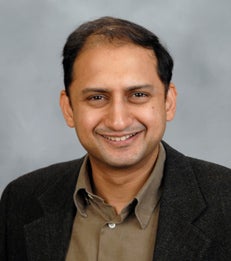
Viral V. Acharya is the C.V. Starr Professor of Economics in the Department of Finance at New York University Stern School of Business. He is a Research Associate at the National Bureau of Economic Research (NBER), a Research Affiliate at the Center for Economic Policy Research (CEPR), and a Research Associate at the European Corporate Governance Institute (ECGI). He previously served as Deputy Governor of the Reserve Bank of India (2017–2019), with responsibilities in monetary policy, financial markets, and financial stability. He is currently Director of Doctoral Education at NYU Stern (2025–), Advisor to the NYU Stern Henry Kaufman Initiative on Financial History (2023–2026), and a Scientific Advisor to the Sveriges Riksbank (2024–). He is also a member of the Climate-related Financial Risk Advisory Committee (CFRAC) of the Financial Stability Oversight Council (2023–2026), the Bellagio Group, and the Financial Advisory Roundtable of the Federal Reserve Bank of New York. Education: B.Tech. in Computer Science and Engineering, Indian Institute of Technology, Mumbai (1995) Ph.D. in Finance, New York University Stern School of Business (2001) His research focuses on systemic risk, financial regulation, sovereign and financial linkages, credit and liquidity risk, and the macroeconomic implications of financial frictions. He has also recently explored risks related to pandemics and climate change. His recent publications examine commercial real estate exposure in banks, spillover risks from non-banks, U.S. Treasury market dynamics, and industrial policy in India. The body of work consistently emphasizes financial stability, regulatory design, and the interaction between public policy and financial markets. Scientific Awards: Alexandre Lamfalussy Senior Research Fellowship, Bank for International Settlements (2017) Inaugural Banque de France – Toulouse School of Economics Junior Prize (2011) Senior Houblon-Norman Research Fellowship, Bank of England (2008) Clarivate Analytics Highly Cited Researcher (2020–2022) Acharya has held numerous editorial and leadership roles, including Editor of the Journal of Law, Finance and Accounting (2014–2016, 2020–), member of the Editorial Committee of the Annual Review of Financial Economics (2022–), Board Member of the American Finance Association (2024–), and Director of the Western Finance Association (2012–2015). He has served as an Academic Advisor to multiple Federal Reserve Banks and international institutions including the IMF, World Bank, and BIS. He advises on financial policy globally and is a frequent commentator in major media outlets. He is not known to advise specific students, but his leadership in doctoral education at NYU Stern underscores his role in mentoring the next generation of finance scholars. He is affiliated with research centers and policy initiatives focused on financial history, climate risk, and financial stability.
Thomas Oatley is a Professor and Corasaniti-Zondorak Chair of International Relations at Tulane University's Department of Political Science, housed within the School of Liberal Arts. His research focuses on American hegemony and international political economy, emphasizing the interplay between global economic structures and political dynamics. He teaches courses on international relations, globalization, and political economy, reflecting his expertise in these areas. His work addresses contemporary challenges such as climate change, financialization, and global governance, with a particular emphasis on how these issues intersect with power dynamics in the international system. Recent publications explore topics like the dual economy's impact on political polarization, the role of green industrial policy in climate politics, and the persistence of American hegemony in an evolving global landscape. Oatley's academic contributions span theoretical frameworks like complex interdependence and the political economy of currency systems. While no specific awards are listed, his prolific publication record underscores his influence in the field. He advises students in advanced courses such as Research Methods I and maintains active engagement through Tulane's interdisciplinary programs in New Orleans.
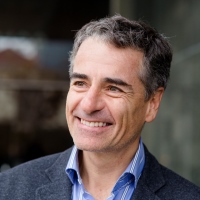
Andrés Velasco is Dean of the School of Public Policy at the London School of Economics and Political Science (LSE). Formerly, he served as Chile's Minister of Finance (2006–2010) and held academic positions at Columbia University and Harvard Kennedy School. He specializes in macroeconomics, economic policy, populism, and development. His research explores fiscal policy, inflation targeting, and crisis management in emerging economies. He has authored over 100 academic articles and books, including Liberalismo en Tiempos de Cólera and Contra la Desigualdad . Velasco has advised governments globally and chairs international commissions like the Global Panel on Multilateral Lending Institutions. Awards include the Inter-American Development Bank's Excellence in Research Award (2006). His work bridges academic rigor and policy relevance, addressing global challenges in finance, development, and governance. Education: BA/MA Yale University, PhD Columbia University, Postdoctoral Fellowship at Harvard/MIT. Awards: Multiple recognitions for economic research and policy contributions. Publications: Over 100 articles, books on macroeconomic policy, and policy analyses. Professional Roles: G20 Eminent Persons Group member, Board roles at Adecoagro and Itaú-Unibanco. Research focuses on fiscal rules, commodity-driven booms, and the political economy of policy reforms. His recent work addresses pandemic economics, inflation dynamics, and populism's impact on governance.
Engelbert Stockhammer is Professor of Political Economy in the Department of European and International Studies at King's College London, where he joined in 2018 after previously working at Vienna University of Economics and Business (2000-2009) and Kingston University London (2010-2018), where he led the Political Economy Research Group. He holds a PhD in Economics from the University of Massachusetts at Amherst and has held visiting positions at Bilkent University, German Institute for Economic Research (DIW Berlin), Maastricht University, Macroeconomic Policy Institute (IMK), and Sabanci University. His research interests focus on political economy and macroeconomics , with particular emphasis on financialisation, distribution and growth, and economic policy in Europe. His work bridges Post-Keynesian economics with comparative political economy, examining growth models, housing systems, and business cycle dynamics. He has published over 70 peer-reviewed articles and is actively engaged in research projects funded by organizations like the Leverhulme Trust and the Institute for New Economic Thinking. His recent publications reveal a strong focus on housing cycles, heterodox business cycle theory, and the political economy of growth models, with particular attention to European economies and historical perspectives. His work integrates macroeconomic modeling with institutional analysis, examining how financialization affects growth patterns across different economic systems. Stockhammer actively engages with policy through collaborations with international organizations including the International Labour Office (ILO), and think tanks such as the New Economics Foundation, Friedrich Ebert Stiftung, Renner Institute, Rosa Luxemburg Foundation, and Foundations for European Progressive Studies. He has published commentary in media outlets including The Guardian, Al Jazeera, Profil, and ORF. He leads the ongoing research project "The Political Economy of Growth Models in an Age of Stagnation" funded by the Leverhulme Trust (2021-2024), and previously led a project on "Income distribution, asset prices and aggregate demand formation 1850-2010" funded by the Institute for New Economic Thinking. His work contributes to several United Nations Sustainable Development Goals, particularly those related to economic growth and reduced inequalities.
Dr. Kathryn Lester is an Associate Professor in Developmental Psychology at the University of Sussex's School of Psychology. She leads internationally recognized research on childhood anxiety, focusing on intergenerational transmission, cognitive biases, and school mental health interventions. Her work includes developing evidence-based programs for emotionally-based school avoidance and evaluating whole-school approaches to mental health. She holds leadership roles in Sussex’s senior management team, including Subject Group Lead for Developmental Psychology and Deputy Director for Postgraduate Research. She co-leads the Sussex Foundation Partnership Trust School Mental Health Research Team Clinic and has secured funding from the National Institute for Health Research, ESRC, and The National Lottery Community Fund. Her academic journey includes a D.Phil. in Psychiatry from the University of Oxford (2008) and postdoctoral research at the University of Sussex and King’s College London. Key research interests include anxiety prevention, school-based interventions, and the impact of parenting behaviors on child mental health. She has collaborated with organizations like the Sussex Wildlife Trust and provided consultancy for educational content development, such as children’s book series on emotions and ITV’s ‘Planet Child’ series. Her research spans mixed-methods approaches, including participatory methods with children and caregivers. Notable projects include NIHR-funded studies on digital mental health toolkits and Kavli Trust-funded interventions to reduce anxiety transmission from parents to children. She actively engages in knowledge exchange and mentoring early-career researchers.