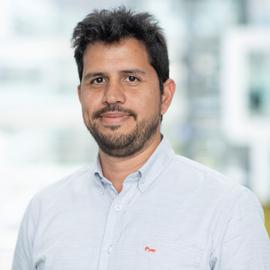
Joshua Skewes is an Associate Professor in the Department of Communication and Culture – Cognitive Science at Aarhus University, Denmark. He is actively involved in interdisciplinary research bridging cognitive science, psychology, neuroscience, and social robotics. His work is supported by institutions such as the Carlsbergfondet and Forskningsråd for Kultur og Kommunikation, and he collaborates with key research groups including BICLabs and projects like INTERACT-LLM and INSOR. Research Interests: Joshua's research spans cognitive psychology, philosophy of science, psychophysiology, decision-making, and social interaction. He investigates how cognitive processes are shaped by early life experiences, how humans respond emotionally and behaviorally to infant crying, and how social robots can be ethically and effectively integrated into society. His work combines experimental methods, neuroimaging, and behavioral tracking to explore fundamental questions in human cognition and social behavior. The recent trends in his publications reveal a strong focus on interdisciplinary theory evaluation, decision dynamics using movement tracking, and the psychological impact of infant crying. His articles frequently appear in high-impact journals such as Behavioral and Brain Sciences , Experimental Brain Research , and Current Research in Ecological and Social Psychology , reflecting a deep engagement with both theoretical and empirical dimensions of cognitive science. Scientific Contributions: Active contributor to major research projects including INSOR and BICLabs. Regular participant in academic discourse through lectures and media engagement. Involved in public communication of science, addressing criticisms and promoting scientific literacy. Advising and Grants: While specific advisees are not listed, Joshua has contributed to PhD theses and research training. He has secured funding from national and private research councils, including the Carlsberg Foundation, indicating successful grant acquisition. His role as a project manager and co-PI demonstrates leadership in collaborative research. Labs and Teams: He is affiliated with BICLabs (Behaviour, Interaction and Cognition Labs), a multidisciplinary research environment focused on human interaction, automated data collection, and cognitive modeling. He also participates in social robotics initiatives exploring the ethical, legal, and psychological dimensions of human-robot interaction.