Emily Jefferson is a Professor of Health Data Science at the University of Dundee, currently serving as CTO of Health Data Research (HDR) UK and Interim Director of DARE UK. She holds an honorary professorship in Population Health and Genomics. With a PhD in Bioinformatics and industry experience in Big Data and project management, her career spans academia, finance, and solo global travel. Her research focuses on Trusted Research Environments (TREs), data governance, and machine learning applications in healthcare. She led the Health Informatics Centre (2013–2022), managing a 60-person team supporting over 100 projects. Key achievements include ISO27001 certification and Scottish Government-accredited Safe Haven infrastructure. Since 2014, she has secured over £120M in grants as PI/Co-I, delivering £28M. Notable projects include HT-ADVANCE (hypertension biomarkers), Alleviate (chronic pain data hub), and GRAIMATTER (TRE disclosure control guidelines). She chairs boards at Swansea University and European Bioinformatics Institute. Awards include the 2016 Farr Institute Future Leader. Her work addresses SDG 3 (Good Health) and 9 (Industry/Innovation). Recent publications emphasize TRE innovation, hypertension subtyping, and pandemic data infrastructure (e.g., CO-CONNECT for COVID-19).
Dean F. Hougen is the Lloyd and Joyce Austin Presidential Professor and Director of the School of Computer Science at the University of Oklahoma, within the Gallogly College of Engineering. He also holds affiliations with the School of Electrical and Computer Engineering, Data Science and Analytics Institute, and has served as Interim Director and Associate Director of the School of Computer Science. His research focuses on artificial intelligence, robotics, machine learning, and distributed systems, conducted in labs like the Robotic Intelligence and Machine Learning Laboratory and the Artificial Intelligence Research (AIR) SuperLab. Key areas include evolutionary computation, autonomous systems, and applied AI in healthcare and transportation. He has led over $24M in grants, including projects on intelligent aerospace systems, pandemic monitoring, and robotics for infrastructure safety. Notable awards include the Presidential Professorship, multiple best paper awards, and recognition for teaching excellence. Hougen has advised numerous students and contributed to interdisciplinary initiatives, including the CS INCLUDES program supporting Indigenous learners. His work spans academic leadership, industry collaborations, and advancing AI applications across domains.
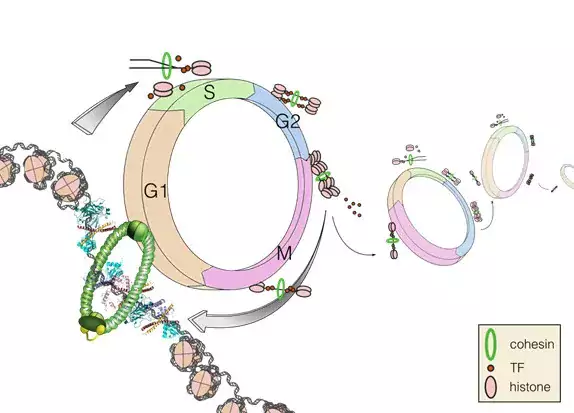
Jussi Taipale is a Professor of Medical Systems Biology at Karolinska Institutet and holds professorships at University of Helsinki. His research focuses on transcription factor binding mechanisms , cancer genomics , and gene regulatory networks . The interdisciplinary Taipale Lab operates across three international locations: Wellcome Sanger Institute (UK), Karolinska Institutet (Sweden), and University of Helsinki (Finland), with over 20 members including senior scientists, postdoctoral fellows, and graduate students. Ph.D., University of Helsinki (1996) Postdoctoral training: University of Helsinki, Johns Hopkins University Research spans transcription factor cooperativity , epigenetic regulation , chromatin accessibility , and noncoding mutation analysis . Key methodologies include HT-SELEX , CUT&RUN , ATI assays , and CRISPR-based functional genomics . The lab has significantly advanced understanding of Myc-driven oncogenesis , TF-nucleosome interactions , and dinucleotide specificity mechanisms . Notable discoveries include chromatin context-dependent enhancers , water-mediated DNA recognition , and novel composite transcription factor motifs . The group maintains active collaborations across Europe and has trained numerous alumni now leading academic and industry positions worldwide.
Ingolf Kühn is a Professor of Macroecology at Martin-Luther University Halle-Wittenberg and Head of the Department of Community Ecology at the Helmholtz Centre for Environmental Research (UFZ) in Halle, Germany. He is also a member of the German Centre for Integrative Biodiversity Research (iDiv) and holds a fellowship at the Swiss Federal Institute for Forest, Snow and Landscape Research (WSL). His research is centered on plant invasions, functional traits, and biodiversity responses to global change, with a strong methodological focus on spatial and phylogenetic modeling. His research interests span macroecology , plant invasion dynamics , urban and alpine flora , and data-driven ecological modeling . He has led major projects such as Biodiversity Meets Data (BMD) , eLTER PLUS , and AlienScenarios , and contributed to EU frameworks like EuropaBON and DAISIE . He is deeply involved in developing and managing large databases, including BiolFlor and the TRY Plant Trait Database . His recent publications focus on functional traits of invasive plants, biodiversity digital twins, and climate-driven shifts in species distributions. They reflect a strong trend toward integrating big data, machine learning, and macroecological theory to predict ecological change. Scientific Awards: Highly Cited Researcher (2014–2022) Fellow of the Swiss Federal Institute for Forest, Snow and Landscape Research (WSL) He serves as Editor-in-Chief of NeoBiota and Associate Editor of Journal of Vegetation Science . His advising spans PhD students and postdocs in the GLIMPSE cohort and iDiv projects. He leads multiple long-term monitoring initiatives, including alpine glacier forefield studies in the Dachstein and Berchtesgaden regions. He is affiliated with key research teams and platforms such as: Macroecology & Vegetation Science Working Group iDiv Science Strategy Board Task Forces: sTWIST, sUMMITDiv, sCoMuCra, sREGPOOL eLTER Research Infrastructure Biodiversity Digital Twin initiative
Mirana Ramialison is a Professor at Monash University, affiliated with both the Australian Regenerative Medicine Institute and Victorian Heart Institute (VHI). She maintains an active research program with significant contributions to cardiovascular development and regenerative medicine. Her research interests focus on understanding the role of non-coding DNA regulatory elements in heart development and disease, formation of boundaries in developing embryos, and molecular mechanisms underlying cardiac function. She employs cutting-edge genomic, computational, and imaging approaches to investigate gene regulatory networks that govern cardiovascular development. Her recent publications demonstrate expertise in spatial transcriptomics, machine learning applications in epigenomics, and the use of vertebrate models like the African killifish to study aging processes. Her work spans developmental biology, genomics, and computational approaches to understand heart development and disease mechanisms. Professor Ramialison leads multiple significant research projects including 'Role of human non-coding DNA regulatory elements (REs) in heart development and disease' as Primary Chief Investigator, and collaborates on projects related to chemotherapy-induced heart damage prevention and bone growth mechanisms. She has produced 71 research outputs with notable recent publications in high-impact journals including Nature Cardiovascular Research, Genome Biology, and Communications Biology, demonstrating sustained scholarly productivity and impact in her field.
Peter Ross is a Researcher at the Edinburgh Napier University , affiliated with the School of Computing Engineering and the Built Environment and the Centre for Algorithms, Visualisation and Evolving Systems . He collaborates with academics like Emma Hart, Alistair Lawson, and Andrew Webb on projects involving evolutionary swarm robotics , artificial immune systems , and optimisation algorithms . His research focuses on applying bio-inspired computing to robotics, including work on perceptual aliasing , adaptive scheduling , and swarm intelligence . He has supervised postgraduate research, notably serving as Director of Studies for Dr Neil Urquhart’s thesis on evolutionary machine learning in metamorphic malware analysis (1999-2003). His publications span 1998-2003 and explore intersections between immunology , sparse distributed memory , and robotic systems . Recent projects like VanFill Innovation Voucher (2025) indicate ongoing involvement in AI-driven solutions and human-robot interaction research.
Prof. Azzurra Ruggeri is a Professor in the Professorship for Cognitive and Developmental Psychology at Technical University of Munich (TUM). Her research focuses on understanding how children and adults strategically gather information, make decisions, and learn through embodied and active processes. She leads the iSearch Lab (https://isearchlab.org) and explores topics such as active learning, embodied cognition, and social-cognitive development. Her academic background includes a Dr. rer. nat. (PhD) in Psychology. She is based in Munich, coordinating research on developmental trajectories of learning, exploration strategies, and the interplay between motor skills and cognitive planning. Key areas of investigation include children's decision-making in uncertain environments, the impact of active learning on memory, and the role of embodiment in cognitive development. Recent work emphasizes adaptive information search behaviors, the effectiveness of question-asking strategies, and the application of embodied cognition principles to training interventions. Her studies often employ experimental paradigms involving climbing and spatial navigation to explore motor-cognitive interactions.
Cara MacNish serves as an Associate Professor in the Department of Computer Science and Software Engineering at The University of Western Australia's School of Physics, Maths and Computing. Her academic role spans computational intelligence research and teaching with interdisciplinary applications in biomedical engineering and materials science. Her research expertise encompasses adaptive systems, artificial intelligence, neural networks, bioinformatics, cognitive science, evolutionary algorithms, machine learning, optimisation, and robotics. These converge in medical image processing (OCT denoising via GANs) and materials analysis (digital image correlation for displacement fields), reflecting her dual focus on algorithmic innovation and real-world engineering solutions. Recent publications demonstrate consistent advancement in two domains: deep learning applications for Optical Coherence Tomography enhancement (using GANs and deep feature loss) and novel digital image correlation techniques for materials science (handling discontinuities and nonlinear behavior). These areas show growing citation impact in medical imaging and fracture mechanics. MacNish has supervised 3 research students and secured 4 competitive grants, including Office for Learning & Teaching projects on engineering education (student experiences and gender inclusivity) and Defence Science and Technology Group funding for red teaming computational tools, alongside university research on evolutionary programming for code analysis. She maintains active collaborations across biomedical optics and materials engineering disciplines, evidenced by co-authorship with clinicians, computer scientists, and mechanical engineers on interdisciplinary projects addressing complex imaging and material behavior challenges.
Gillian Maurer is an Associate Teaching Professor in the Department of Engineering and Information Technology at the University of Missouri's College of Engineering. She serves as the Director of Online Programming for the BS IT online degree and facilitates study abroad courses for IT students. Her academic work bridges engineering and media arts, with a focus on digital production systems and media technology. Education: M.Ed., University of Missouri B.A., University of Missouri Her research interests center on media technology, with a strong emphasis on color in digital media, GPU-accelerated image processing, and digital production efficiency. She explores how humans perceive color palettes in films, combining computational analysis with cognitive insights. Her work uses CUDA and high-performance computing to extract mathematical color data from films and compare it with human perception. The research indicates that viewers often prefer arbitrary color selections over mathematically derived palettes, suggesting that human perception is driven by pattern deviation and cultural context rather than analytical cues. This work connects computer science, media studies, and cognitive psychology, aiming to uncover how societal trends influence artistic color choices in film across decades. Scientific Awards: No awards listed in the provided text. Gillian Maurer advises undergraduate research in media technology and design, integrating students into her computational media projects. She leads the development of online IT curricula and study abroad programs, contributing significantly to educational innovation. Her background as a film producer, director, and cinematographer enriches her academic role, allowing her to merge creative practice with technical education. She previously served as Director of Film Production in the College of Arts and Sciences before transitioning to the College of Engineering. Her lab work involves utilizing campus supercomputers and GeForce RTX 3090 GPUs to accelerate image data processing for large-scale film analysis. Future work includes expanding the dataset to 10,000 notable images to identify broader cultural and generational trends in color usage.
Stefan Kremer is a Professor at the University of Guelph. His research focuses on learning to recognize, categorize, and generate structural patterns in complex data, utilizing artificial neural networks, support vector machines, deep belief networks, hidden Markov models, evolutionary algorithms, and deep learning. His lab emphasizes problem-driven approaches, particularly in domains like biology. Methods include deep learning, spatio-temporal pattern recognition, and bioinformatics. Contact: skremer@uoguelph.ca
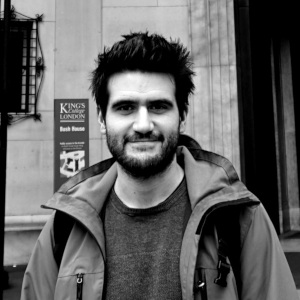
Martim Brandão is a Lecturer (Assistant Professor) in Robotics and Autonomous Systems at King’s College London, where he leads the Responsible Robotics and AI (RRAI) Lab and serves as Co-Director of the UKRI Centre for Doctoral Training in Safe and Trusted AI. His research focuses on ethical, explainable, and safe AI and robotics, with applications in human-robot interaction, motion planning, fairness, and societal impact. His research interests include: Explainable AI and Motion Planning Fairness and Bias in AI Systems Human-Robot Interaction and Social Robotics Adversarial Robustness in Robotics Value Alignment and Ethical AI Inclusive and Participatory Robotics Design His recent publications (2023–2025) reflect a strong trend toward socially responsible robotics, focusing on fairness in navigation, explainability of planning failures, worker-centered agricultural robotics, environmental justice in drone delivery, and the dangers of bias in drowsiness detection and LLM-driven robots. His work emphasizes user understanding, societal impact, and ethical safeguards in autonomous systems. He has advised and collaborated with numerous students and researchers across diverse topics in robotics and AI. He is actively involved in shaping responsible robotics through: Leadership in the RRAI Lab Co-directing a national CDT in Safe and Trusted AI Developing fairness-aware algorithms Advocating for inclusive and ethical design practices His lab and research group focus on: Responsible Robotics and AI Explainability in Multi-Agent Planning Fairness in Coverage and Navigation Human-Centered Evaluation of AI Systems
Arnold Polanski is an Associate Professor in Economics at the School of Economics, University of East Anglia (UEA), where he is an active member of the Applied Econometrics and Finance, Economic Theory, and Statistics research groups. He is currently accepting PhD students and supervising research in socio-economic networks, game theory, financial economics, and financial tail risk. His academic journey includes a PhD from the University of Alicante, postdoctoral research at the University of Minnesota, and prior teaching at Queen’s University Belfast. PhD in Economics, University of Alicante (2004) Postdoctoral Studies, University of Minnesota (2005) Postgraduate Certificate in Higher Education Teaching, Queen’s University Belfast (2007) Arnold Polanski's research focuses on socio-economic networks , game theory , information economics , and financial tail risk , with a growing emphasis on integrating machine learning into economic modeling. His work explores how network structures influence cooperation, information diffusion, and financial interdependencies, particularly during extreme market events. He investigates the role of homophily, influence, and strategic behavior in shaping economic outcomes. His recent publications (2019–2025) reveal a consistent trend toward analyzing tail risk interdependence , network stability , and information flows using advanced econometric and computational methods. Many of his articles apply machine learning and axiomatic frameworks to bargaining and financial risk, published in journals like Journal of Economic Theory , Journal of Applied Econometrics , and Computational Economics . His work bridges theoretical economics with empirical and computational approaches. Arnold Polanski has received research funding from prestigious institutions including the British Academy and the Institut Europlace de Finance Louis Bachelier . He leads the Economic Theory Group at UEA and serves in key administrative roles such as Plagiarism Officer and Chair of the Faculty Appeals and Complaints Panel. He actively contributes to the academic community as co-organizer of an annual international workshop on the economics of networks. His research supervision includes PhD projects on socio-economic networks, game theory, and financial tail risk. He collaborates with scholars such as E. Stoja, F. Vega-Redondo, and J. Sikora, and his work often involves interdisciplinary methods combining economics, statistics, and computer science. Arnold Polanski is involved in the Economic Theory Group and contributes to collaborative research within UEA’s School of Economics. His projects emphasize network-based modeling, financial risk analysis, and the application of machine learning in economic contexts. He fosters academic exchange through organizing international workshops and leading research initiatives focused on the intersection of networks and economic behavior.
Professor Kenneth Payne is a Professor of Strategy at King's College London's Defence Studies Department, part of the Faculty of Social Science & Public Policy. His research focuses on the intersection of political psychology, strategic studies, and artificial intelligence. He has authored influential books like I, Warbot (2021) and Strategy, Evolution, and War (2018), exploring AI's transformative impact on conflict and decision-making. Payne has advised governments, NATO, and appeared before parliamentary committees in the UK and Netherlands. His work bridges evolutionary theory, modern warfare, and AI ethics, with recent contributions to debates on autonomous weapons and reliable AI in defense. Key affiliations include the Cyber Security Research Group (CSRG) and King's Cybersecurity Centre. His awards include a Visiting Fellowship at Oxford University's Department of International Relations (2008). He teaches strategic studies, AI's role in conflict, and has supervised PhD students in related fields. Payne's research projects include studies on geopolitics, post-traumatic stress in combat troops, and counterinsurgency strategies in Iraq.
Jun-Ki Choi is a Professor in the Department of Mechanical and Aerospace Engineering at the University of Dayton’s School of Engineering. He holds the O. Jack and Opal Anderson Faculty Fellowship in Engineering Innovation and serves as Director of the University of Dayton Industrial Training and Assessment Center (UD-ITAC), a U.S. Department of Energy-funded program providing energy efficiency assessments to small and mid-sized manufacturers. His research interests include: Sustainable Manufacturing Energy Efficiency Design for Environment Life Cycle Assessment Circular Economy Sustainable Energy Infrastructure Economic Systems Modeling Energy and Environmental Policy His recent publications focus on industrial energy efficiency, life cycle assessment, sustainable manufacturing, and the application of machine learning in energy systems. The research spans topics such as photovoltaic integration, desalination, refrigeration, compressed air systems, and building energy modeling, often combining techno-economic and environmental evaluations. Dr. Choi has received multiple awards for his work, including the U.S. Department of Energy Excellence in Applied Energy Engineering Research Award (2022), the ASHRAE Technical Paper Award (2017), and multiple recognitions as a Center of Excellence from the U.S. Department of Energy (2003, 2015). He has secured over $8 million in research funding as PI or Co-PI and has mentored numerous students through the UD-ITAC program, which has conducted over 1,000 energy assessments. He teaches courses such as Manufacturing Process, Heat Transfer, and Design for Environment at both undergraduate and graduate levels. Dr. Choi leads the UD-ITAC, a key research and outreach center focused on improving manufacturing competitiveness through energy savings, productivity improvements, and waste reduction. The center has received national acclaim for its impact and professionalism.
Javier Cabrera is a Professor in the Department of Statistics at Rutgers University with a joint affiliation at the Cardiovascular Institute. He holds a Ph.D. from Princeton University and is recognized as a Fulbright Scholar. His office is located at Hill Center 471, 110 Frelinghuysen Road, Piscataway, NJ. His research focuses on: Biostatistics and clinical trial methodology Data mining for functional genomics and DNA/protein arrays Statistical computing, machine vision, and high-dimensional data analysis Cardiovascular health applications using statistical modeling Recent publications (2022-2025) demonstrate strong emphasis on: Novel statistical methods for medical/biological data Machine learning applications in diagnostics and genomics Clinical risk modeling and epidemiological studies Big data reduction techniques and computational efficiency He frequently publishes in interdisciplinary collaborations at the intersection of statistics, biomedicine, and computational science. Awards: Fulbright Scholar He collaborates extensively with the Cardiovascular Institute, contributing statistical expertise to research on cardiovascular outcomes, disease risk modeling, and clinical data analysis.