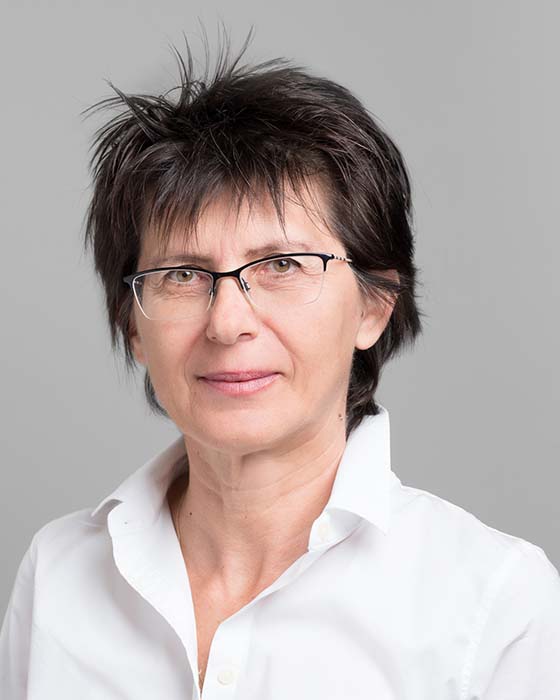
Arnold J M Driessen is a Professor of Molecular Microbiology at the University of Groningen, within the Faculty of Science and Engineering and the Groningen Biomolecular Sciences and Biotechnology Institute (GBB). He leads the Molecular Microbiology research group, focusing on microbial cell biology, membrane proteins, lipid biosynthesis, and extremophiles. His work bridges fundamental research with biotechnological applications, including biofuel production and antibiotic development. He holds prestigious awards, including the Knight of the Order of the Lion of the Netherlands (2025) and membership in the Royal Netherlands Academy of Arts and Sciences. Driessen has authored nearly 500 publications and 10 patents, supervising 90+ PhD students and 40+ postdocs. His research explores protein translocation, archaeal lipid synthesis, and synthetic cellular systems. Driessen collaborates widely, contributing to public-private partnerships on antibiotic resistance and photopharmacology with Ben Feringa. He has driven the GBB’s international development and serves on committees like the TKI Chemistry Council. His mentorship emphasizes innovation and sustainability, fostering independent research while ensuring project success.
Shahar Kovalsky is an Assistant Professor of Mathematics at the University of North Carolina at Chapel Hill (UNC-CH), with secondary appointments in the School of Data Science and Society and an adjunct role in the Department of Computer Science (both within the College of Arts and Sciences). He holds a Ph.D. in Computer Science and Applied Mathematics from the Weizmann Institute of Science, and B.Sc./M.Sc. degrees in Mathematics and Electrical Engineering from Ben-Gurion University. His research bridges optimization, geometry, computer graphics, machine learning, and their applications in biology and medicine. Kovalsky's work includes advancements in geometric modeling, medical imaging diagnostics, and evolutionary biology analysis. He has been recognized with awards such as the Günter Enderle Best Paper Award (Eurographics 2016) and the SGP 2015 Best Paper Award. Education: Ph.D., Computer Science & Applied Mathematics, Weizmann Institute of Science, Israel B.Sc./M.Sc., Mathematics & Electrical Engineering, Ben-Gurion University, Israel Research Interests: His work focuses on geometric optimization, machine learning for medical diagnostics (e.g., thyroid cytopathology), and computational methods in evolutionary biology. He develops algorithms for injectivity-preserving parameterizations, medical image analysis, and Gaussian process landmarking for morphometric studies. Key Contributions: Deep learning models for thyroid cancer prediction from smartphone images Geometric algorithms for surface parameterization and injectivity Applications of Gaussian processes in evolutionary shape analysis Awards: Günter Enderle Best Paper Award (Eurographics 2016) SGP 2015 Best Paper Award Teaching & Mentoring: Kovalsky advises graduate and undergraduate students (e.g., Fengyu Yang, Maddy Vinal) and teaches courses like Optimization in Machine Learning at UNC-CH. He also co-advises students in interdisciplinary projects with Caroline Moosmüller and Jeremy Marzuola. Labs & Affiliations: Member of the Carolina Center for Interdisciplinary Applied Mathematics (CCIAM) and previously a Phillip Griffiths Assistant Research Professor at Duke University (2017-2020).
Associate Professor Stephen Bell is a faculty member in the School of Physics, Chemistry and Earth Sciences at the University of Adelaide, within the Faculty of Sciences, Engineering and Technology. He holds an academic rank of Associate Professor and leads research focused on enzyme catalysis, particularly cytochrome P450 enzymes. His work emphasizes biocatalysis applications in sustainable chemical synthesis and bioremediation, leveraging interdisciplinary methods from biochemistry, synthetic biology, and chemistry. Research Interests: Dr. Bell’s lab studies cytochrome P450 enzymes for their potential in oxidizing organic compounds, including steroids and terpenoids, with a focus on extremophile-derived enzymes for robust biocatalytic processes. Key areas include enzyme engineering, electron transfer partner identification, whole-cell oxidation systems, and structural studies via X-ray crystallography. Collaborative projects involve drug metabolism mechanisms, enzyme structure determination, and immobilization technologies for enhanced stability. Awards and Grants: His research has been supported by Australian Research Council grants, including Discovery Projects and a Future Fellowship. Notable achievements include founding the spin-out company Oxford Biotrans, which commercialized biocatalytic production of high-value compounds like flavor and fragrance ingredients. Teaching: He teaches inorganic, medicinal, and biological chemistry courses, covering reaction mechanisms, electron transfer processes, and transition metal chemistry. Supervision: Currently oversees 7-8 PhD students and has extensive experience mentoring Honours students. His group actively recruits candidates interested in enzyme engineering, biocatalysis, and synthetic biology. Labs and Teams: The lab focuses on interdisciplinary approaches to enzyme-based biocatalysis, with emphasis on scaling up reactions using fermentor technology and bioprocess engineering. Collaborations span structural biology, spectroscopy, and industrial partners for application development.
Keith Tierney is a Professor in the Department of Biological Sciences at the University of Alberta's Faculty of Science. He holds degrees including BSc, MSc, MBA, and PhD. His research focuses on chemical-vertebrate interactions, emphasizing sensory physiology, exercise physiology, and toxicology. Key areas include olfactory mechanisms in fish, climate-driven physiological adaptations, and contaminant impacts on animal behavior. His work integrates ecological and molecular approaches, often involving zebrafish and Arctic fish species. Education: BSc MSc MBA PhD Research Interests: Neuroendocrine regulation of behavior and toxic responses Climate change effects on fish migration and exercise capacity Contaminant impacts on sensory systems and ecosystem dynamics Zebrafish models for studying aging and neurodegenerative diseases Teaching: Zoology 241 (Animal Physiology) Biology 341 (Ecotoxicology) School of Public Health 522 (Principles of Toxicology) Funding & Collaborations: Supported by Fisheries and Oceans Canada, Environment Canada, petrochemical companies, and food manufacturers Research emphasizes translational science linking basic physiology to environmental policy Labs & Teams: Led a multidisciplinary lab investigating chemical-vertebrate interactions Collaborates internationally on projects addressing global climate and pollution challenges
William Whelton is a Professor in the Department of Educational Psychology at the Faculty of Education, University of Alberta. He specializes in counseling psychology, focusing on psychotherapy process/outcome, emotion's role in therapy, and the historical development of psychological disciplines. His work integrates humanistic/experiential/existential approaches with contemporary therapeutic practices. He teaches courses like History and Systems of Psychology and supervises doctoral internships through the Canadian Psychological Association-accredited program. Research interests include self-criticism's impact on depression vulnerability, therapeutic alliance dynamics, and the philosophical evolution of psychology. No scientific awards were explicitly mentioned in the provided texts. His advising focuses on training doctoral counseling students through rigorous 1,600-hour internships. He has contributed to understanding burnout in child/youth care workers and the application of terror management theory in psychotherapy integration. Recent publications (2005–2016) explore emotion-focused therapy, depression mechanisms, and the interplay between personality traits and therapeutic processes.
Habiba Akter is a Lecturer in Networks and Digital Systems at Queen Mary University of London (QMUL), affiliated with the School of Electronic Engineering and Computer Science . She holds an MEng in Electronic Engineering and Computing (2016) and a PhD in Electronic Engineering (2021), both from QMUL. Her education prior to university was completed in Bangladesh. Her research focuses on Computer Networks , Evolutionary Algorithms , Fractal Patterns , and AI-Based Face Detection . She explores applications such as optimizing network routing, generating fractal patterns using genetic algorithms, and analyzing network tunneling protocols for enhanced security and efficiency. In teaching, she instructs undergraduate courses including Internet Protocols and Wireless Networks , integrating practical network design principles with theoretical foundations. No scientific awards or funded grants are explicitly listed. Her work includes collaborations on network topology analysis (e.g., the Fortaleza case study) and multi-constrained path optimization in tunnelled networks. No lab affiliations or team collaborations are mentioned in the provided information.
Prof. Malinda Carpenter is a Professor in Developmental Psychology at the University of St Andrews, School of Psychology and Neuroscience. Her research focuses on infants' and young children’s social cognition, including joint attention, prosocial behavior, intergroup reactions, and comparative cognition between humans and apes. She holds editorial roles at Cognition and Child Development Perspectives . Research Interests: Her work examines mechanisms underlying social learning, communicative gestures, and the emergence of shared understanding in early childhood. Key topics include how infants interpret others' mental states, form social bonds, and navigate group dynamics. She also investigates parallels and differences in social cognition between humans and great apes. Awards: Fellow of the Royal Society of Edinburgh (2021), Fellow of the Association for Psychological Science (2012) Supervision: Currently advising PhD candidates Jinzhi Feng and Christina Ruiz-Mendoza Lab Affiliations: Centre for Research into Equality, Diversity & Inclusion; Institute of Behavioural and Neural Sciences Public Engagement: Her team addresses methodological challenges in child research and emphasizes ethical participant recruitment. Recent work explores how time constraints and social contexts influence prosocial behavior in young children.
John Nachbar is a Professor of Economics and Director of Undergraduate Studies in Economics at Washington University in St. Louis. He holds a PhD from Harvard University and has been affiliated with the university since 1990, following a two-year tenure at RAND Corporation. His research focuses on microeconomic theory, game theory, and general equilibrium theory. Education: PhD in Economics, Harvard University. Research interests emphasize foundational aspects of economic decision-making, including strategic interactions in repeated games, equilibrium analysis, and evolutionary dynamics in game-theoretic contexts. His work has been published in leading journals like Econometrica and International Journal of Game Theory . Award highlights include Fellowships from the Econometric Society (2009-present) and the Society for the Advancement of Economic Theory (2011-present), alongside the Outstanding Faculty Mentor Award (2007-2008). He serves on the Master Program Management Committee and is actively involved in undergraduate economics education. His advising and mentorship have been formally recognized, reflecting his dedication to student development. No specific grants or lab affiliations are explicitly stated, though his research contributions align with theoretical economics frameworks.
Jennifer Ganger, PhD, is a Teaching Full Professor at the University of Pittsburgh. She holds a PhD from the Massachusetts Institute of Technology. Her research focuses on language acquisition, developmental psychology, and the interplay between genetics and language development. Key areas include twin studies of passive voice acquisition, vocabulary development milestones, and grammatical principles in Russian unaccusatives. Her work bridges linguistics, cognitive science, and evolutionary biology, exploring innate linguistic structures and evolutionary influences. Notable publications include studies on genetic factors in language (2005), vocabulary spurt theories (2004), and cross-linguistic syntactic development (2001). Contact: 3405 Sennott Square, jganger@pitt.edu.
Harvey Ballard is a Professor in the Department of Environmental and Plant Biology at Ohio University's College of Arts and Sciences. He serves as the Internships Coordinator, Herbarium Director, and Curator of Vascular Plants at the Floyd Bartley Herbarium. His work bridges molecular biology, taxonomy, and conservation, with strong institutional ties to national botanical networks and research centers. Research Interests: Dr. Ballard’s research focuses on plant systematics, phylogenetics, molecular ecology, and conservation genetics. His lab investigates evolutionary processes in plants, particularly in the genus Viola and the family Violaceae. Using molecular tools such as microsatellites and next-generation sequencing, his team studies hybridization, polyploidy, and breeding systems like chasmogamy and cleistogamy. His work has broad implications for understanding species formation and plant diversity. Publications & Research Trends: His recent publications reflect a strong emphasis on taxonomic revisions, phylogenetic analyses, and floristic contributions. The research spans new species descriptions, generic reclassifications, and molecular phylogenies, primarily in Violaceae and related families. The integration of traditional morphology with modern genomics underscores a multidisciplinary approach to plant systematics. Scientific Service & Recognition: Adjunct Faculty, Ohio State University Department of Horticulture and Crop Science Research Associate, Missouri Botanical Garden Research Associate, Carnegie Museum Member, BRAHMS Database System International Advisory Group Editorial Board, Acta Botanica Cracoviensia Program Director, U.S. Virtual Herbarium Database Network Member, Ohio Rare Plant Technical Advisory Committee Member, Ohio Flora Committee Violaceae Working Group, Species Plantarum Programme Advising and Grants: Dr. Ballard coordinates undergraduate internships and advising in plant biology. He led a National Science Foundation grant to digitize herbarium collections across Appalachian Ohio, creating a regional databasing and imaging network. He also engages in contract research with the U.S. National Arboretum for microsatellite development in ornamental shrubs. Laboratories and Teams: His lab collaborates with Dr. Sarah Wyatt on the genetic basis of mixed breeding systems in Viola . The team employs molecular techniques including ISSRs, microsatellites, and 454 shotgun sequencing. The Floyd Bartley Herbarium, under his curation, is a hub for botanical research and education, utilizing BRAHMS software for specimen management.
Dr. Helen Cai is a Senior Lecturer in International Business and Circular Economy at Middlesex University Business School, where she serves as Programme Leader for the BA International Business Administration and BA Business Management (Top-Up). She also leads the Doctor of Business Administration (DBA) programme delivered in China through a partnership with United Business Institutions (UBI). Additionally, she holds a Full Visiting Professorship at Jiaxing University, China. Her academic leadership extends to editorial roles as Senior Editor of Cogent Business and Management and member of the editorial board of the Journal of World Business . She is Vice President of Marketing for the International Case Study Research Association (ICRA). Dr. Cai’s research focuses on international business, sustainability, green innovation, and corporate environmental governance. She employs advanced methodologies such as fuzzy-set qualitative comparative analysis (fsQCA), econometrics, and scientometric analysis. Her work addresses critical issues including green supply chains, carbon emissions, foreign direct investment, and institutional influences on innovation. The 15 most recent publications highlight a strong trend toward environmental sustainability, circular economy, and data-driven policy analysis. Her recent work spans blockchain in green supply chains, AI in rehabilitation, carbon governance, land use, and migration policy, demonstrating interdisciplinary breadth and policy relevance. Bronze award, The First National Collegiate Olympiad Mathematical Mirror Competition (2022) Honourable Mention, Interdisciplinary Contest in Modelling (2022) First Prize, Asia and Pacific Mathematical Contest in Modelling (2021) Third Prize, THE International Case Competition (2021) Dr. Cai has extensive supervisory experience, currently guiding multiple PhD candidates and having chaired over 30 DBA viva panels. She has supervised over 60 BA, 150 MSc, and 75 MBA dissertations. She has participated in 72 PhD/DBA committees in roles including external examiner, internal examiner, and panel chair. Her grants and funding are not explicitly mentioned, but her research output and editorial roles suggest sustained scholarly engagement. She leads research teams focused on circular economy and international business, and her future work is likely to expand into AI-driven sustainability analytics, cross-border green innovation, and climate governance. Her prior industry experience as a Senior Economist at China’s Central Bank enriches her applied research perspective.
Siegrid Löwel is a Full Professor of Systems Neuroscience at the University of Göttingen, affiliated with the Department of Systems Neuroscience within the Johann-Friedrich-Blumenbach-Institute for Zoology and Anthropology. She is also a Board Member of the Göttingen Campus Institute for Dynamics of Biological Networks since 2021, highlighting her leadership in interdisciplinary neuroscience research. Her educational background includes a Dr. phil. nat. from the University of Frankfurt am Main, completed under Prof. Wolf Singer at the Max Planck Institute for Brain Research. Her career includes professorships at the University of Jena (2005–2010), a guest professorship at Magdeburg, and a research associate professorship at the University of California, San Francisco. Siegrid Löwel's research focuses on the development and plasticity of neuronal circuits in the mammalian cortex. Her lab employs optical and 2-photon imaging, electrophysiology, and viral gene knockdown to study how experience and learning shape neural networks. Her work has pivotal implications for brain regeneration and rehabilitation after injury or disease. She was among the first to demonstrate that correlated neural activity underlies long-range cortical circuit development—famously summarized as 'neurons that fire together, wire together.' The recent publications reflect a strong focus on structural and functional cortical plasticity, particularly in the visual system. Themes include silent synapses, critical period regulation, optogenetic interventions for blindness, and the impact of environmental enrichment and exercise on neural plasticity. These studies span molecular, cellular, and systems levels, contributing to both basic neuroscience and translational applications. Scientific awards and recognitions include: Hertie Excellence Program Scholarship in Neurosciences (2004–2005) Dorothea Erxleben Guest Professorship, University of Magdeburg (2003–2004) Löwel leads an active research group and is affiliated with the Göttingen Graduate Center for Neurosciences (GGNB) in multiple programs, including Systems Neuroscience and Sensory and Motor Neuroscience. She has secured long-term research support through institutional roles and collaborative networks. While specific grant details are not listed, her sustained publication record and leadership positions indicate robust funding and research activity. Her lab continues to explore mechanisms of neural plasticity with potential clinical applications in stroke recovery, amblyopia, and neurodegenerative conditions. She is associated with the research group homepage: http://systemsneuroscience.uni-goettingen.de .
Ricardo Cabral is an Associate Professor with tenure at ISEG (Institute for Economics and Management), University of Lisbon, where he teaches and conducts research in public finance, macroeconomics, currency and banking, and economic policy. He holds a PhD in Economics from the University of South Carolina and is a prolific author with over 40 scholarly publications, including journal articles, books, and policy papers. PhD in Economics – University of South Carolina (1998) His research interests span public finance , macroeconomic policy , banking union mechanisms , renewable energy economics , and fiscal sustainability in the Eurozone . He frequently contributes to public discourse through analytical writing, having published around 700 opinion pieces, notably in Público . His scholarly work critically examines the economic and monetary union, public debt management, and structural changes in the Eurozone. The most recent articles highlight a strong focus on Euro Area fiscal and monetary integration , banking regulation , and Portugal’s economic trajectory . His work combines empirical analysis with policy relevance, often using synthetic control methods and historical reviews to assess economic policies. Topics include the Dutch Disease in peripheral Euro countries, bail-in vs. bailout strategies, and the macroeconomic effects of renewable energy investments. Ricardo Cabral has co-authored significant policy proposals on restructuring Portugal’s external debt and has participated in public hearings at the Assembly of the Republic, the Legislative Assembly of Madeira, and the European Parliament, underscoring his role as a public intellectual and policy advisor. Co-authored two proposals for restructuring Portugal's external debt Regular contributor to national and international policy debates Testified before multiple legislative committees He actively supervises graduate students, including Master’s theses on public debt management and public sector wage expenditure, and a PhD on macroeconomics and structural change in the Eurozone. His teaching includes courses such as Macroeconomics II , Public Economics and Finance , and Economic Policy at both undergraduate and postgraduate levels. He is also involved in educational material development, including course reports and Euro Banking Union analyses.
Eveline Verhulst is an Associate Professor at the Laboratory of Entomology within Wageningen University & Research, affiliated with the PE&RC (Production Ecology & Resource Conservation) research school. Her work focuses on evolutionary genetics of insects, particularly parasitoid wasps and their interactions with endosymbionts. Her research interests span entomology, evolutionary biology, and genetics with specific focus on parasitoid wasps (particularly Nasonia vitripennis), biological control mechanisms, endosymbiont relationships, CRISPR-Cas9 genome editing applications in insects, polyploidy in animal evolution, and sexual dimorphism. Her work bridges fundamental evolutionary questions with potential agricultural applications. Dr. Verhulst's recent publications demonstrate a strong trend toward applying cutting-edge genomic techniques to understand insect evolution and symbiosis. Her research combines molecular genetics with ecological perspectives, particularly examining how microbial symbionts influence host insect evolution and biological control potential. The work spans from basic mechanisms of gene regulation to applied agricultural contexts. NWO Vidi grant (€ 800.000) for research on 'How do differences between males and females evolve?' Dr. Verhulst actively supervises multiple PhD candidates including Williams, A., Sivaprakasham Murugesan, S., Guerra, F., Beekman, M., and Donner, H. Her research receives funding through various projects examining evolutionary transitions in pheromone communication, neopolyploidization mechanisms, Doublesex interactome, and defensive symbiosis in biocontrol. Her laboratory appears to focus on insect genomics, evolutionary genetics, and symbiosis research, with strong connections to agricultural applications in biological pest control.
Lacra Pavel is a Professor in the Edward S. Rogers Sr. Department of Electrical and Computer Engineering at the University of Toronto, Faculty of Applied Science and Engineering. She joined the department in August 2002 after industry experience at Nortel Networks and Solinet Systems, and remains active in the System Control Group and Photonics Group. Her educational background includes: Diploma of Engineering (with distinction) in Automatic Control, Technical University Gh. Asachi of Iasi, Romania (1989) PhD in Electrical and Computer Engineering, Queen's University at Kingston (1996) Research focuses on integrating game theory, control theory, and optimization within networked systems. She pioneered applications in noncooperative/evolutionary game theory for network control, nonlinear/robust control frameworks, and energy-efficient optical/transportation networks. Current work develops mathematical foundations for learning in games via control-theoretic approaches to enable autonomous multi-agent network optimization. Recent publications (2019-2013) reveal dominant trends: distributed Nash equilibrium seeking using passivity-based and operator-splitting methods, stability analysis for optical network power control with time-delays, and extensions to transportation systems like railway timetabling. Key subfields include graphical games, ADMM algorithms, and Lyapunov-based boundary control for distributed parameter systems. Scientific recognition includes: Fellow of the IEEE (2025) for contributions to game theory, control, and optimization for network systems Connaught New Staff Award, University of Toronto (2003) New Opportunities Infrastructure Award, CFI/OIT (2003) Award for Innovation, Solinet Systems (2001, 2002) Inventor Recognition Award, Nortel Networks (2000) She has advised over 20 graduate students including current PhD candidates and former students now at MIT, Princeton, Amazon, and Ciena. Major grants include the CFI/OIT New Opportunities Infrastructure Award (2003). Her research bridges theoretical game control with practical implementations in optical and transportation networks. As co-director of the System Control Group and member of the Photonics Group, she leads teams developing algorithms for autonomous network optimization. Current projects focus on stochastic approximation methods for multi-agent learning and energy-efficient network design.