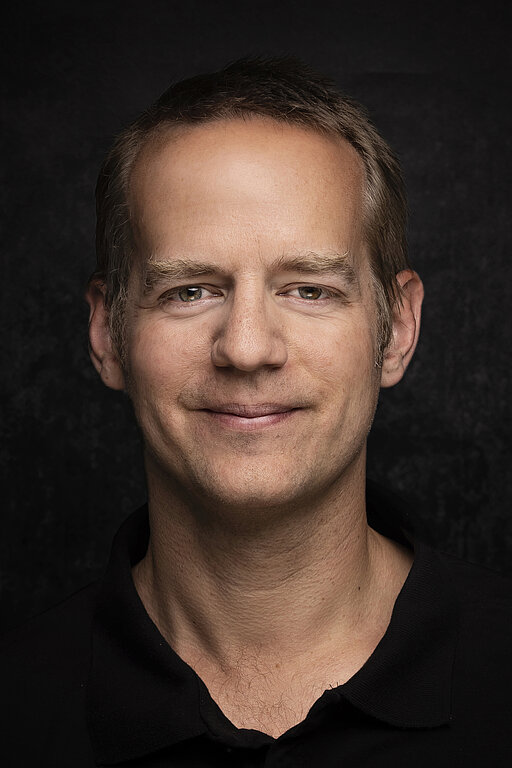
Prof. Dr. Axel-Cyrille Ngonga Ngomo is a Professor at the University of Paderborn , affiliated with the Faculty of Electrical Engineering, Computer Science and Mathematics and the Institute of Computer Science . He leads the Data Science group at the Heinz Nixdorf Institute and is a member of the Sonderforschungsbereich Transregio 318 (Constructing Explainability). His roles include heading the Informatik Rechnerbetrieb (IRB) team. Research Focus : Knowledge graphs, semantic web technologies, explainable AI, and distributed systems. Selected Projects : SAIL (Sustainable Life Cycle of Intelligent Sociotechnical Systems), TRR 318 (Constructing Explainability), Colide (Co-training for Industrial Data), 3DFed (Dynamic Data Distribution), and SFB 901 (On-The-Fly Computing). Contact : Email axel.ngonga@uni-paderborn.de , Office F1.225 (Fürstenallee 11) and TP6.3.106 (Technologiepark 6), Paderborn. Teaching : Courses include Seminar on Recent Advances in Knowledge Graphs, Project Groups on SPARQL Query Processing, Large Language Model Training, Retrieval Augmented Generation, and Foundations of Knowledge Graphs.
Dr. Lara Urban is a Principal Investigator at Helmholtz Munich and Helmholtz AI, and a TUM Junior Fellow at the Technical University of Munich's Life Sciences School. Her research integrates genomics and artificial intelligence to address One Health challenges, focusing on environmental health, biodiversity conservation, and pathogen surveillance. She holds a PhD from EMBL-EBI and the University of Cambridge (2019) and Master's degrees from Julius-Maximilians-University of Würzburg (2015). Her work leverages portable genomic technologies for real-time data analysis in clinical, environmental, and conservation contexts. Key areas include studying bioaerosols, pathogen detection, and genomic diversity in endangered species like the kākāpō. Awards include the Young Scientist of the Year 2022 and Humboldt Research Fellowship. Her team has published on nanopore sequencing applications, antibiotic resistance, and conservation genomics. Collaborations span institutions like the University of Zurich and ETH Zurich, funded by EU Horizon Europe, BMBF, and Helmholtz grants. Current initiatives include fieldwork in Chile and advancing genomic equity through democratized tools.
Prof. Dr. Sebastian von Mammen is a tenured professor at the University of Würzburg's Institute for Computer Science, where he heads the Games Engineering research group and contributes to the Chair for Human-Computer Interaction. His group leads the Games Engineering academic program. Previously, he completed his habilitation (2012-2016) at the University of Augsburg's Chair of Organic Computing and was a postdoctoral fellow at the University of Calgary. His research spans: Real-Time Interactive Systems : Visual programming, immersion techniques, software engineering Interactive Simulations : Serious games for healthcare/logistics/construction Artificial Life : Self-organisation, adaptive systems, evolutionary computation Artificial Intelligence : Agent-based modeling, procedural content generation Recent publications (2023-2025) demonstrate strong focus on: Virtual reality applications in education (femtoPro optics simulator, BrainBuilder neuroanatomy) Healthcare technology platforms (VIA-VR for medical serious games) Game mechanics analysis (Match-3, Jump'n'Run flow) AI-driven emotion recognition and interactive systems Computational modeling of biological systems He leads the Games Engineering research group and previously participated in the Evolutionary and Swarm Design group (Calgary) and LINDSAY project. His lab develops VR simulations for scientific training and serious games applications.
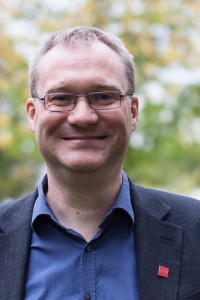
Michael Nothnagel is a Professor at the University of Cologne, where he leads the Department of Statistical Genetics and Bioinformatics within the Cologne Center for Genomics (CCG). His work spans statistical genetics, genetic epidemiology, and forensic genetics, focusing on methodological development and large-scale genomic data analysis. His research interests encompass theoretical and applied statistical genetics, with emphasis on human genetic diversity, disease etiology, and forensic applications. Key areas include Y-chromosomal phylogeography, genome-wide association studies for complex diseases, development of statistical methods for variant interpretation, and forensic marker optimization. His group leverages next-generation sequencing data and specialized forensic markers to address questions in population history, disease mechanisms, and identification systems. Recent publications reveal a strong focus on computational approaches to genetic analysis, including spatial frequency interpolation for haplogroup mapping, polygenic risk score applications for behavioral traits, and advanced methods for variant classification. His work demonstrates consistent integration of statistical theory with practical applications in medical and forensic genetics, often through international collaborations like the VISAGE Consortium. Nothnagel maintains active involvement in the Cologne Center for Genomics, contributing to seminars and collaborative projects including the upcoming 34th International Genetic Epidemiology Society meeting. His research group operates at the intersection of computational biology and medicine, with particular strengths in handling complex genomic datasets and developing novel analytical frameworks for genetic epidemiology.
Dr. Erma Perenda serves as Professor and Chair of Distributed Signal Processing at RWTH Aachen University, Germany, leading research within the Department of Distributed Signal Processing. Her contact details include email perenda@dsp.rwth-aachen.de and phone +49 241 80-27879, with office location at Kopernikusstraße 16, 52074 Aachen in the ICT Cubes facility. Her research spans: Distributed Signal Processing Wireless Communications Machine Learning (Deep Reinforcement Learning, Federated Learning) Modulation Classification AI-driven Network Optimization She focuses on solving real-world challenges in wireless systems including hardware impairments, channel variations, and energy efficiency through advanced AI techniques. Analysis of her 2018-2024 publications reveals consistent innovation in applying multi-agent deep reinforcement learning to wireless power allocation, developing robust modulation classification methods resilient to channel impairments, and implementing federated learning for industrial edge computing. Her work bridges theoretical machine learning with practical wireless communication constraints. Scientific Awards: No awards documented in available sources Advising and Grants: No student advisees or grant information provided Labs and Teams: Leads Distributed Signal Processing research group at RWTH Aachen University Based in ICT Cubes building focusing on wireless AI systems
Eric Medvet is a professor specializing in evolutionary computation, genetic programming, and robotics. He is actively involved in research areas such as neuroevolution, soft robotics, and modular robotics. His work bridges theoretical advancements in evolutionary algorithms with practical applications in robotics and AI. Roles: Conference chair for EuroGP (2020-2022), co-chair of multiple workshops and sessions. Key Research: Focus on genetic programming, embodied intelligence, and the design of adaptive robotic systems. Research Interests: His work emphasizes the development of scalable and interpretable AI systems, particularly through evolutionary methods applied to robotics. He explores topics like neuroevolution for soft robots, quality diversity algorithms, and the integration of machine learning with evolutionary computation. Publications: His recent work highlights trends in interpretable AI, modular robotics control, and evolutionary algorithms for complex systems. Notable contributions include studies on MAP-Elites, graph-based genetic programming, and the application of LLMs in automated testing. Grants & Labs: Developed frameworks like JGEA for evolutionary computation experiments. Collaborates on projects integrating evolutionary methods with real-world robotics applications.
Johannes Soeding is a Research Group Leader in the Computational Biology department at the Max Planck Institute for Multidisciplinary Sciences in Göttingen, Germany. His work bridges physics, bioinformatics, and molecular biology, focusing on computational methods for biological data analysis. His research interests include computational biology, protein structure and function prediction, metagenomics, transcriptional regulation, and statistical genomics. He develops widely used software tools such as HH-suite, HHpred, MMseqs2, and Foldseek for protein sequence and structure analysis. The recent publications demonstrate a strong focus on high-throughput biological data, particularly in protein structure search (e.g., Foldseek), metagenomic gene discovery (e.g., MetaEuk), and regulatory genomics. His work combines algorithm development with deep biological insights, often published in top-tier journals like Nature Biotechnology , Science , and Nature Methods . He has been involved in significant methodological advances in sequence clustering, contact prediction, and eQTL analysis, showing a consistent trend toward scalable, data-driven approaches in genomics and proteomics. Soeding has contributed to major projects in gene regulatory networks and RNA biology, often in collaboration with experimental groups. His leadership in developing open, efficient bioinformatics tools has had a broad impact on the scientific community. He is affiliated with several graduate programs including IMPRS Physics of Biological and Complex Systems, Biomolecules: Structure - Function - Dynamics, and Genome Science, indicating active participation in training the next generation of scientists.
Liji Shen is Professor of Operations Management and Chairholder at WHU – Otto Beisheim School of Management, Campus Vallendar, Germany. She is affiliated with the Supply Chain Management Group and leads research in scheduling, optimization, and sustainable manufacturing. Her academic journey includes a Ph.D. and Habilitation from Technische Universität Dresden, and she has held visiting scholar positions at institutions including École des Mines de Saint-Étienne and Huazhong University of Science and Technology. Ph.D. (Dr.rer.pol.), summa cum laude, Technische Universität Dresden (2009) Habilitation, Technische Universität Dresden (2015) Master of Business Administration (Dipl.-Kffr.), Technische Universität Dresden (2006) Liji Shen's research focuses on Operations Management , particularly scheduling optimization in manufacturing systems. Her work spans flexible job shops , parallel machine scheduling , energy-efficient production , and sequence-dependent setup times . She applies advanced techniques such as evolutionary algorithms , hybrid metaheuristics , and mathematical programming to solve complex industrial problems. Her recent publications emphasize sustainability through energy-aware scheduling and time-of-use pricing models. The 15 most recent publications highlight a consistent research trajectory in production scheduling , with increasing emphasis on energy efficiency , distributed manufacturing , and real-world constraints like eligibility and delivery times. Her work frequently appears in top journals such as European Journal of Operational Research , IEEE Transactions on Evolutionary Computation , and Computers & Operations Research , often in collaboration with leading researchers like Dauzère-Pérès, Mönch, and Buscher. Scientific Awards: European Journal of Operational Research, Best Paper Award (2021) DFG and TU Dresden, 'Support the Best' Prize for Outstanding Researchers (2013) Dr. Feldbausch-Prize for Best Dissertation, TU Dresden (2010) Scholarship for Young Researchers in Saxony (2006–2009) DAAD Prize for Best Foreign Students (2007) Best Master’s Thesis, German Operations Research Society (2007) Liji Shen has been an active advisor and researcher, leading projects in operations research and industrial optimization. Her editorial role on Operations Research Perspectives underscores her standing in the academic community. She has directed research labs and collaborated internationally, contributing to both theoretical advancements and practical applications in manufacturing and logistics. No specific grants are mentioned, but her sustained publication record and leadership roles indicate strong research support. She leads the Operations Management research group at WHU, focusing on algorithmic solutions for complex scheduling problems. Her team investigates energy-aware production, hybrid flow shops, and distributed systems, aiming to bridge the gap between theoretical models and industrial implementation. The lab collaborates with researchers across Europe and China, fostering a global research network in operations research and supply chain management.
Mikel Sanz is a Ramón y Cajal Researcher and Ikerbasque Fellow at the University of the Basque Country (UPV/EHU) in Bilbao, Spain. His research focuses on quantum computing, quantum algorithms, quantum technologies, and quantum metrology. His research interests include: Quantum Computing and Quantum Algorithms Quantum Metrology and Quantum Sensing Digital-Analog Quantum Computing Quantum Machine Learning Quantum Simulation Quantum Error Correction and Mitigation Dr. Sanz's recent publications demonstrate a strong focus on practical applications of quantum computing across various domains. His work spans quantum hardware design, quantum algorithm development, quantum machine learning applications, and quantum metrology techniques. He has made significant contributions to digital-analog quantum computing approaches, quantum kernel methods, and quantum-enhanced sensing technologies. His scientific awards include being selected as a Ramón y Cajal Researcher, a prestigious research position in Spain for experienced researchers, and an Ikerbasque Fellow, which is awarded by the Basque Foundation for Science to attract top researchers to the Basque Country. Dr. Sanz has collaborated extensively with researchers across multiple institutions, contributing to a wide range of quantum information science projects. His work often bridges theoretical quantum information concepts with practical implementations, particularly in superconducting quantum computing platforms. He is actively involved in advancing quantum technologies through his research group at UPV/EHU, focusing on developing novel quantum algorithms and exploring applications of quantum computing in various scientific and industrial domains.
Prof. Dr. Rolf Wanka is a Professor at the Department of Computer Science, Friedrich-Alexander-Universität Erlangen-Nürnberg (FAU), specializing in efficient algorithms and combinatorial optimization. His research focuses on swarm intelligence, discrete optimization algorithms, and scheduling problems, particularly in timetabling and robotics applications. Education : Sc.D. (Dr. rer. nat.) in Computer Science His work includes theoretical and experimental analyses of particle swarm optimization (PSO) algorithms, addressing runtime complexity, stagnation behavior, and convergence properties. He has developed novel heuristics for timetabling and sorting problems, with applications in multi-robot systems and medical imaging. Notable collaborations include studies on Markov chain-based PSO and fairness in academic scheduling. Key trends in his recent publications span swarm intelligence , discrete optimization , and scheduling heuristics , with a focus on robust timetabling , runtime analysis , and stochastic algorithm behavior . While no explicit scientific awards are listed, his mentorship in the Max Weber-Programm highlights his advisory role in academia. His publications demonstrate interdisciplinary applications of algorithms in robotics , medical imaging , and parallel computing , leveraging both theoretical rigor and practical experimentation. The full description below provides exhaustive details on his academic contributions and affiliations.
Dr. Sonja Isabel Veith is a Scientific Staff member at the Institute for Special Education, Faculty of Philosophy, Leibniz University Hannover. Her work focuses on research and teaching in the fields of scientific and technical education, with a strong emphasis on phenomenography and inclusive didactics. Phenomenographic Research Science Education Physics & Computer Science Teaching Biomedical Optics Artificial Intelligence Applications Educational Background: M.Sc. in Physics (minor: Meteorology), Leibniz University Hannover B.Sc. in Physics (minor: Computer Science), Leibniz University Hannover Fellow of the International Max Planck Research School on Gravitational Wave Astronomy Dr. Veith's research explores children's perceptions of physics concepts like sound, interdisciplinary science education, and racism-critical teaching methods. She has developed innovative didactic approaches for visualizing sound and integrating computational thinking in elementary education. Her publications show a consistent focus on: Phenomenographic analysis of science concepts Physics education in elementary schools Interdisciplinary teaching methods AI applications in sensor data analysis Historical and societal contexts in science Inclusive didactic frameworks Scientific Honors: Fellow of the International Max Planck Research School on Gravitational Wave Astronomy Dr. Veith has collaborated extensively across disciplines, working with institutions such as the Albert Einstein Institute and Laser Zentrum Hannover. Her career spans multiple domains including physics, computer science, biomedical optics, and educational theory.
Dr. Jan Salmen is a researcher at Ruhr University Bochum's Faculty of Computer Science, affiliated with the Institute of Neuroinformatics (INI). His work focuses on real-time systems, computer vision, and machine learning. Doctoral thesis: Efficient video-based driver assistance systems Salmen's research spans autonomous driving, traffic sign recognition, stereo vision, and sports analytics. He has contributed to benchmarks in traffic sign detection and soccer analysis. Publications highlight his expertise in image processing, pattern recognition, and sensor fusion for autonomous systems. Key trends include optimization of machine learning algorithms for real-time applications. He collaborates with interdisciplinary teams at INI, which integrates experimental psychology, neurophysiology, and robotics into artificial cognitive systems research.
Prof. Verena Hafner is a Professor at the Institute of Computer Science within the Faculty of Mathematics and Natural Sciences at Humboldt University of Berlin. She leads the Adaptive Systems group, focusing on interdisciplinary research at the intersection of robotics, AI, and cognitive science. Her work emphasizes human-robot interaction, adaptive learning mechanisms, and embodied cognition. Her research explores: Design and impact of socially interactive robots in educational and cognitive contexts Trust dynamics and transparency in human-robot relationships Development of bio-inspired AI models and sensorimotor learning systems Philosophical and ethical dimensions of artificial consciousness and agency Analysis of her recent publications (2023-2025) reveals strong emphasis on educational robotics, cognitive modeling, and humanoid robot design. Key trends include multimodal learning architectures, trust calibration in HRI, and biologically-inspired AI frameworks. Her work consistently bridges theoretical AI with applied human-centered experimentation. She supervises graduate students including Michael Piechotta (doctoral candidate) and leads the Adaptive Systems laboratory investigating lifelong learning in artificial agents.
Karl Schmid is a W3 Professor of Crop Plant Biodiversity and Breeding Informatics at the University of Hohenheim's Institute of Plant Breeding, Seed Science and Population Genetics within the College of Agricultural Sciences. His research integrates evolutionary genetics, population genomics, and machine learning to address agricultural challenges. Ph.D. in Biology, University of Munich (1996) Postdoctoral Research, Cornell University (1997-1999) Emmy-Noether Research Group, Max Planck Institute of Chemical Ecology (2000-2006) Group Leader, Leibniz Institute of Plant Genetics (2006-2008) Professor of Genetics, Swedish Agricultural University (2008) His research focuses on crop biodiversity conservation, evolutionary genetics of plant pathogens, and breeding informatics applications. Current work leverages deep learning for phenotyping (quinoa panicles, barley genomics) and analyzes pathogen evolution (Exserohilum turcicum in maize). His team actively develops computational tools like GGoutlieR for geo-genetic pattern detection. Recent publications demonstrate strong trends in applying AI to agricultural genomics, particularly in quinoa improvement and pathogen surveillance. His group leads the EU H2020 INVITE project on molecular markers in plant variety protection and organizes international symposia like the 2024 Quinoa Symposium at Hohenheim. Head of Crop Biodiversity and Breeding Informatics Group Principal Investigator, EU H2020 INVITE project Organizer, International Quinoa Symposium 2024
Prof. Dirk Schneider is a Full Professor (W3) of Biochemistry at Johannes Gutenberg University Mainz since 2010, with previous appointments at the University of Freiburg (2003-2009) and postdoctoral training at Yale University. His research spans membrane biochemistry, biophysics, and transmembrane protein folding/assembly, focusing on thylakoid membrane biogenesis and protein-lipid interactions in cyanobacteria and chloroplasts. Current roles: Full Professor, University Mainz Previous roles: Assistant Professor (W1), University of Freiburg Education: PhD (summa cum laude) from Ruhr-University Bochum His research interests include: Membrane protein folding and stability ESCRT-III/Vipp1/PspA family structural dynamics ABC transporter activity regulation (e.g., BmrA) Protein-lipid interaction mechanisms Thylakoid membrane remodeling Comparative membrane biology between prokaryotes and eukaryotes Development of spectroscopic and computational methods Recent publications reveal trends in bacterial membrane remodeling (SynDLP, PspA), lipid effects on transporter activity (BmrA), and IM30/Vipp1-mediated membrane fusion. His work combines structural biology, biophysics, and functional assays to elucidate membrane dynamics. Awarded the Dr. Heinrich Kost Award (2001) and Leopoldina Fellowship (2001) , he has held leadership roles including Study Section Speaker (2010-2014) , Director of Institute of Pharmacy and Biochemistry (2013-2015) , and Dean of Faculty of Chemistry (2015-2020) . His scientific advisory roles include editorial board memberships and study section leadership.