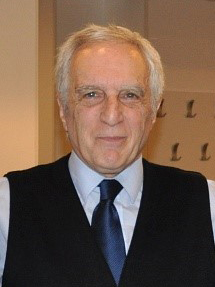
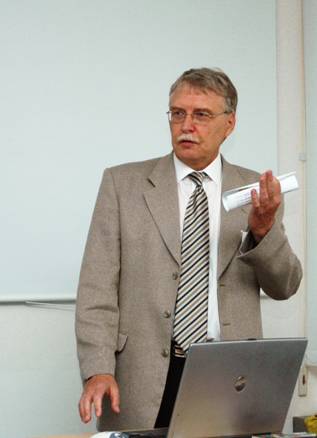
Stefan Fink is a Professor at the University of Applied Sciences Steyr, specializing in Controlling, Accounting, and Financial Management. He is a Chief Economist at KPMG Austria GmbH and Director of Financial Risk Management since 2016. His work bridges Computational Finance, Genetic Programming, and Climate Risk Modeling, with a focus on regulatory frameworks like IFRS 9 and sustainability. Doctoral studies in Quantitative Economics (1991–2002) Master’s in Economics (1995–1998) Technical Physics education (1994–1995) His research interests include Genetic Programming and Time Series Modeling , applied to Computational Finance and Econometric Modeling . Recent projects like FinCoM and Credit Default Prediction address financial risk monitoring and climate risk impact on enterprise value. Stefan has delivered invited lectures on topics such as IFRS 9 compliance and volatility modeling , with a publication record spanning from 2000 to 2024. He is also involved in collaborative research with multiple co-authors and institutions.
Philipp Fleck is a researcher and PhD student at the University of Applied Sciences Upper Austria's Research Center Hagenberg, affiliated with the Center of Excellence for Smart Production and HEAL research group. His work focuses on digital transformation within ICT and production systems, leveraging optimization techniques for industrial applications. His academic background includes: PhD in Computer Science (ongoing since 2021) Master of Science in Software Engineering (2013-2015) Bachelor of Science in Software Engineering (2010-2013) IT-HTL diploma (2005-2010) Fleck specializes in dynamic optimization environments, genetic programming, and machine learning applications for production systems. His research develops adaptive algorithms for real-time decision-making in logistics and manufacturing, with emphasis on tree search methods, storage optimization, and evolutionary computation. Current work integrates machine learning with heuristic optimization for dynamic symbolic regression and transport-lot assignment problems. His publication trends show concentrated focus on evolutionary computation applied to industrial challenges, particularly dynamic environments requiring real-time adaptation. Recent work bridges genetic programming with production logistics and machine learning update strategies, demonstrating strong interdisciplinary connections between computer science and operations research. No scientific awards are documented in available sources. Fleck has secured significant grant funding through Austrian research programs, including the Josef Ressel Center for Adaptive Optimization in Dynamic Environments (2019-2024), Fakultätsübergreifendes Institut für intelligente Produktion (2014-2019), and Josef Ressel Center for Heuristic Optimization (2008-2013). These projects address priority rules, distributed intelligence, and rapid prototyping in production systems. He operates within the HEAL research ecosystem at Hagenberg's Center of Excellence for Smart Production, collaborating with interdisciplinary teams on digital transformation initiatives. His work integrates with the university's broader Strength Area ICT framework, focusing on practical implementations of optimization algorithms in production environments.
Thomas Kern is a Senior Researcher at FH OÖ – University of Applied Sciences Upper Austria, affiliated with multiple research centers including the Linz Center of Excellence Medical Technology/TIMed Center, AIST Bioinformatics Center of Excellence, and NASAN (Nano Structuring and Bio-Analytics). His work focuses on digital transformation in healthcare, biomedical information retrieval, evolutionary algorithms, and software prototyping. Education: Diplom-Ingenieur (FH) in relevant technical and applied sciences disciplines. Thomas Kern's research spans interdisciplinary domains, including evolutionary computation , keyword clustering , protein-protein interaction analysis , and high-resolution medical imaging . His projects often integrate computational methods with clinical applications, particularly in diabetic foot simulation and digital nursing home evaluation. Recent publications highlight trends in multi-objective optimization and web-based biomedical databases . Scientific activities include organizing conferences like Softwarepark Hagenberg IT-Expert Series and participating in committees for digital health initiatives. Notable projects are TC-HiResFoot (diabetic foot imaging), TC-BIOsens (bioanalytics), and Digital Nursing Home (process evaluation). Key collaborations involve institutions such as TIMed Center and NASAN.
Gabriel Kronberger is a Professor at Hagenberg University of Applied Sciences, specializing in Symbolic Regression, Genetic Programming, and Machine Learning. His work bridges theoretical advancements with industrial applications in mechatronics and engineering systems. Active in evolutionary computation and symbolic regression since 2006 Lead researcher at the Josef Ressel Center for Symbolic Regression Developed techniques for alarm flood reduction in critical infrastructure His research focuses on Symbolic Regression , where he explores algorithmic enhancements like redundant parameter reduction and equality graph integration. He applies these methods to material science (e.g., tensile strength prediction) and automotive engineering (e.g., powertrain modeling). Recent publications demonstrate a trend toward interactive tools (rEGGression) and hybrid approaches combining genetic programming with machine learning systems (neural networks, random forests). All 158 publications emphasize practical implementations in industrial contexts. He has organized key conferences like Genetic and Evolutionary Computation Conference (2017-2020) and led 6 major research projects from 2013 to 2026, including EREMA Recycling 4.0 and McTronic educational initiatives.
Philipp Neuhauser is a researcher at the University of Applied Sciences Upper Austria , focusing on Production and Operations Management . His work involves integrating Machine Learning and Dynamic Optimization Algorithms into industrial systems. Active in Adaptive Optimization projects since 2019 Collaborates with institutions like Springer and Elsevier Research emphasizes: Smart Production and Industrial Automation AutoML and Software Solutions for dynamic environments Real-time Decision Systems in logistics Recent publications address evolutionary algorithms and dynamic tree-search applications. Collaborations span Austria, Italy, and Spain, with presentations at EUROCAST and EMSS conferences.
Klaus Mueller is a Professor in the Computer Science Department at Stony Brook University , with additional appointments in Biomedical Engineering and Radiology. He serves as Director of the Visual Analytics and Imaging (VAI) Lab, Liaison for the SUNY Korea CS Program, and Interim Chair of the Department of Technology and Society . His career spans roles at Brookhaven National Lab and leadership positions at SUNY Korea. Dr. Mueller earned his PhD in Computer and Information Science (1998), MS in Computer and Information Science (1996), and MS in Biomedical Engineering (1990) from The Ohio State University , alongside a BS in Electrical Engineering (1987) from the Polytechnic University of Ulm, Germany. His research focuses on visual analytics , explainable AI , algorithmic fairness , computational imaging , and medical imaging . He has pioneered GPU-accelerated CT reconstruction techniques, bias mitigation frameworks (e.g., D-BIAS), and tools like DOMINO for causal reasoning. His work bridges data science , human-computer interaction , and medical applications , often integrating large language models for visualization tasks. Recent publications highlight advances in multivariate volume rendering , LLM-driven bias detection , and mDDPM-based medical image synthesis . His articles span IEEE Transactions , Nature Machine Intelligence , and conferences like IEEE VIS and ACM CHI . Award highlights include NSF CAREER (2000), SUNY Chancellor Award (2011), IEEE Golden Core Award (2016, 2022), induction into the National Academy of Inventors (2018), and elevation to IEEE Fellow (2024). He has chaired major conferences and served as Editor-in-Chief of IEEE Transactions on Visualization and Computer Graphics (2019-2022). He teaches graduate and undergraduate courses in visualization , medical imaging , and GPGPU programming , and leads the Visual Analytics Seminar (CSE 648). His lab ( VAI Lab ) fosters interdisciplinary research in GPU-accelerated analytics and ethical AI.
Stephanie Josephine Eder is a researcher affiliated with the Faculty of Life Sciences, Department of Neuroscience and Developmental Biology. Holding BSc and MSc degrees, her work spans interdisciplinary research at the intersection of neuroscience, psychology, and computational modeling. Education: BSc, MSc in Life Sciences disciplines Her research focuses on behavioral and physiological responses to stimuli, including fear responses, motor command modulation in confined environments, and nonconscious processing in auditory tasks. She also investigates evolutionary behavioral strategies in C. elegans and transcriptional regulation in neurodevelopment. Recent projects include the ÖAW-Doc-Stipendium (2024-2026) on modulation of distributed motor commands. She has published 10 peer-reviewed articles, including datasets (e.g., SpiderPhy) and gene regulatory studies (e.g., ONECUT3). Her work contributes to the UN Sustainable Development Goals through psychological and physiological insights. Scientific Awards: Out of the Box Award 2022 Eder has presented at conferences including Science to Science poster sessions on motor responses (2024), C. elegans behavior (2023), and consumer psychology (2019). Her collaborations span neuroscience, computer science, and molecular biology domains.
Michael Affenzeller is a Professor at the University of Applied Sciences Upper Austria, leading the HEAL AIST Center of Excellence for Smart Production with a focus on Digital Transformation. His research spans Genetic Programming, Symbolic Regression, and Evolutionary Algorithms, with applications in optimization, AI, and manufacturing automation. He has authored over 400 publications and led major projects such as HCAI (Human-Centered AI) and HEAL, emphasizing interdisciplinary collaboration. Research interests include developing advanced algorithms for dynamic optimization, prescriptive analytics, and federated learning in industrial contexts. He has contributed to projects like LOISI (Logistics Optimization in Steel Industries) and SimGenOpt2, addressing challenges in production planning and workforce optimization. Key collaborations involve institutions in Austria and beyond, focusing on smart manufacturing, logistics, and AI integration. His work bridges theoretical advancements with real-world applications, driving innovation in energy systems, crane scheduling, and predictive maintenance. Grants and projects include funding from FWF (doc.funds.connect) and Upper Austrian initiatives, emphasizing doctoral training and industry partnerships. He actively participates in conferences such as EUROCAST and PPSN, contributing to algorithmic advancements and computational theory.
Austin Burt is a Professor of Evolutionary Genetics at Imperial College London , specializing in genetic mechanisms with applications in pest control and disease vectors. His career at Imperial spans since 2005, preceded by roles as Reader (2000–2005) and Governors' Lecturer (1995–2000). Research focuses on evolutionary genetics, gene drive systems, and population modeling for public health applications. Principal Investigator of Target Malaria , an international consortium developing genetically modified mosquitoes to eradicate malaria. Honors and Awards : President’s Medal for Excellence in Societal Engagement (2017) Cozzarelli Prize from PNAS (2012) Wolfson Research Merit Award (2011–2016) Institute of Zoology Science Medal (2000) His 2012 PNAS paper on music evolution demonstrates interdisciplinary work combining genetics and social sciences. Current work emphasizes self-sustaining gene drive technologies for mosquito population control.
Professor Luiz Moutinho is a globally recognised authority in marketing and futures research, currently serving as Visiting Professor of Marketing at Suffolk Business School, University of Suffolk (UK), Marketing School (Portugal), and as Adjunct Professor of Marketing at the Graduate School of Business, University of the South Pacific (Fiji). Over a 31-year professorial career he has held the Foundation Chair of Marketing at the Adam Smith Business School, University of Glasgow (1996-2015), the world’s first Chair in BioMarketing and Futures Research at Dublin City University (2015-2017) and visiting appointments at 27 universities worldwide. Education PhD, University of Sheffield, 1982 MA, BA, FCIM (Chartered Institute of Marketing) Research Interests Professor Moutinho’s work sits at the intersection of marketing, neuroscience and artificial intelligence. His current research clusters around: Futures research & marketing foresight : scenario planning, evolutionary algorithms, algorithmic self Neuro & biometric marketing : wearable emotion-detection devices, fMRI/EEG studies, eye-tracking AI & decision modelling : artificial neural networks, machine learning for consumer choice Tourism & services marketing : destination choice modelling, luxury hospitality pricing He has authored 155+ refereed journal articles and 34 books, generating 14,050+ Google Scholar citations (h-index 55, i10-index 196 as of January 2020). Scientific Awards & Recognition 2017 Professor Honoris Causa, University of Tourism and Management Skopje 2018, 2006, 2003, 2001, 1997, 1996 Emerald Literati / ANBAR Highly Commended / Outstanding Paper Awards 1998 Martin Oppermann Memorial Best Article of the Year Award 1998 Best in Research Award, Portuguese Marketing Management Institute 2015 External Member, Hellenic Open University International Research Fellowships at Neurolab (Finland) and DACC Lab (Macau) Doctoral Programmes & Editorial Leadership Professor Moutinho directed doctoral programmes at: Confederation of Scottish Business Schools (1987–1989) Cardiff Business School (1993–1996) University of Glasgow Doctoral Programme in Management (1996–2004) He is the founding editor-in-chief of the Journal of Modelling in Management (JM2) , co-editor-in-chief of the Innovative Marketing Journal , associate editor for five additional journals and serves on the editorial boards of 50 international academic journals.
Leila Taher is a researcher at the Institute of Biomedical Informatics, TU Graz. Her work focuses on integrating computational methods with genomic data to study cancer biology, epigenetic regulation, and comparative oncology. She has developed tools like T3E and DNA-DDA for analyzing transposable elements and 3D chromatin structure. Her research spans canine and feline cancer models, immune mechanisms, and functional genomics. Key projects include designing targeted NGS panels for canine lymphoma and exploring synergistic drug combinations for B-cell lymphoma. Her interdisciplinary approach bridges bioinformatics, veterinary medicine, and human health. Education and affiliations are not explicitly detailed in the text, but her long-term contributions to genomics (publications span 2003–2024) suggest advanced academic training. Collaborations involve molecular biology, computational biology, and clinical oncology teams. She leads research in areas such as chromatin architecture prediction, enhancer function, and immune cell regulation. Her lab's tools have been applied to study autoimmune diseases, developmental biology, and translational medicine. Research themes include: (1) Developing algorithms for genomic analysis, (2) Investigating epigenetic mechanisms in cancer, (3) Translating canine models to human oncology, and (4) Exploring gene regulatory networks in development. Recent work emphasizes reproducibility in NGS pipelines and the role of repetitive elements in functional genomics.
Val Tannen is a Professor in the Department of Computer and Information Science (CIS) at the University of Pennsylvania, holding appointments since 1987. He has undertaken numerous visiting roles, including at Simons Institute (2023), EPFL (2020, 2011-2012), NUS (2019), and institutions in Greece, France, and elsewhere. Education: Polytechnic Institute of Bucharest (Engineer Diploma, 1977) MIT (PhD in Applied Mathematics/Computer Science, 1983-1987) His research spans database theory, programming language theory, logic, and applications to bioinformatics. Key contributions include provenance frameworks and complex object modeling , impacting data integration, uncertainty management, and systematic biology. Notable awards include ACM Fellowship , Mendelzon Test-of-Time Award , and NSF Presidential Young Investigator . His work has been disseminated through 30+ conference program committee roles and editorial contributions. Scientific Awards: 10 years Mendelzon Test-of-Time Award ACM Fellow 20 years Test-of-Time Award NSF Presidential Young Investigator
Leslie Valiant is the T. Jefferson Coolidge Professor in Computer Science and Applied Mathematics at Harvard University's School of Engineering and Applied Sciences. His career spans institutions including Carnegie-Mellon, Leeds, Edinburgh, and Oxford Universities, with roles from Lecturer to Visiting Research Fellow. Ph.D. in Computer Science (Warwick, 1974) Diploma in Computing Science (Imperial College, 1971) B.A. in Mathematics (King's College, Cambridge, 1970) His research bridges computer science with biology, focusing on computational complexity , machine learning , evolutionary algorithms , and computational neuroscience . He has pioneered theories in PAC (Probably Approximately Correct) learning , holographic algorithms , and neural circuit modeling . His work connects parallel computing to brain function and evolvability to machine learning. Recent publications (2018-2008) emphasize holographic algorithms , neural computation , and evolvability . Trends include integrating biological principles into algorithm design and neuroscience into cognitive models . Scientific Awards and Honors: Guggenheim Fellowship (1985-1986) Nevanlinna Prize (1986) Knuth Prize (1997) EATCS Award (2008) ACM Turing Award (2010) Fellowships in Royal Society, AAAS, ACM, and AAAI Multiple honorary degrees and appointments Valiant has authored books like Circuits of the Mind and Probably Approximately Correct , holding three US patents on parallel computing . His work on knowledge infusion and neural architectures has influenced both AI and theoretical neuroscience.
Jiri Wiedermann is a Professor of Computer Science at Charles University and has served as Director of the Institute of Computer Science at the Academy of Sciences of the Czech Republic since 2000. His academic journey includes an Assoc. Prof. position at Charles University (2000) and degrees from Comenius University (RNDr., M.Sc.) and Czechoslovak Academy of Sciences (CSc., DrSc.). Education : DrSc. in Computer Science (Comenius University, Bratislava, 1993) CSc. (equiv. to PhD) in Computer Science (Czechoslovak Academy of Sciences, Prague, 1980) RNDr. and M.Sc. in Computer Science (Comenius University, Bratislava, 1974) His research spans Theoretical Computer Science , focusing on computational complexity, neurocomputing, and non-standard computing. He explores embodied cognition, mirror neurons, and autopoietic automata, bridging neural models with algorithmic frameworks. The 15 most recent publications highlight his work on interactive computation, fuzzy Turing machines, evolving artificial living systems, and cognitive architectures. Key trends include machine learning inspired by biological systems , computational limits of cognition , and formal models of neural processes . Scientific Awards : Member of Academia Europaea (since 2006) Member of the Czech Learned Society (since 2003) Board of Directors, ERCIM (since 1997) Leadership roles in EATCS (Vicepresident 1997-2002)
Michael Renzler is currently a Lecturer at MCI – Die unternehmerische Hochschule, specializing in Smart Building Technologies. Previously, he held roles such as Senior Scientist (2020–2023), PostDoc (2016–2020), and Research Assistant (2013–2016) at the University of Innsbruck's Institutes for Mechatronics and Ionenphysik. His research focuses on antenna design, structural health monitoring, wireless sensor systems, and nanotechnology. He earned his PhD in Physics (2016), MSc (2013), and BSc (2010) from the University of Innsbruck, following an Electronics diploma (2006). Key research areas include evolutionary optimization of antennas, IoT integration, and material characterization using helium nanodroplets. His work spans disciplines like electrical engineering, computational chemistry, and sensor technology. Notable contributions include developing a portable sensor system for crime prevention and a smart bed insert for elderly care monitoring. He has been awarded the Eduard-Wallnöfer-Preis für Technik und Wissenschaft (2023) and has undergone extensive training in third-party funding management and teaching excellence. Renzler has contributed over 30 peer-reviewed articles, with recent publications emphasizing pixelated antenna design, structural health monitoring, and ultra-low-temperature chemical reactions. His teaching spans physics fundamentals, digital technology, and electromagnetic compatibility at the University of Innsbruck (2016–2024). He also served as a student representative (2011–2013) and actively participates in academic associations.