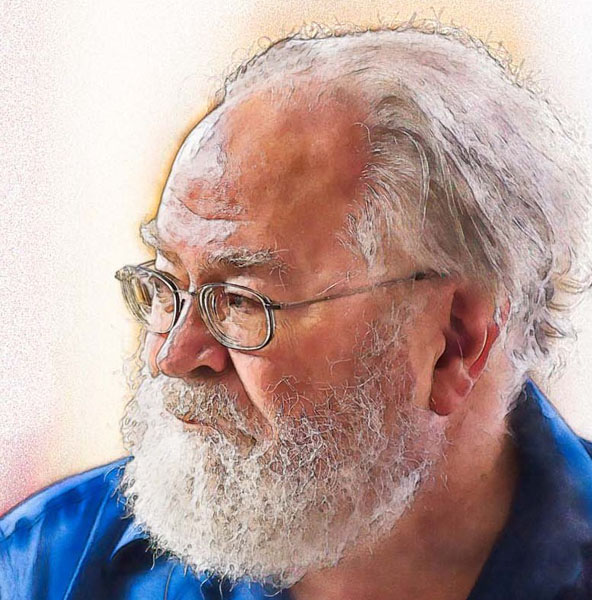
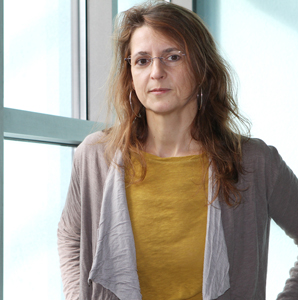
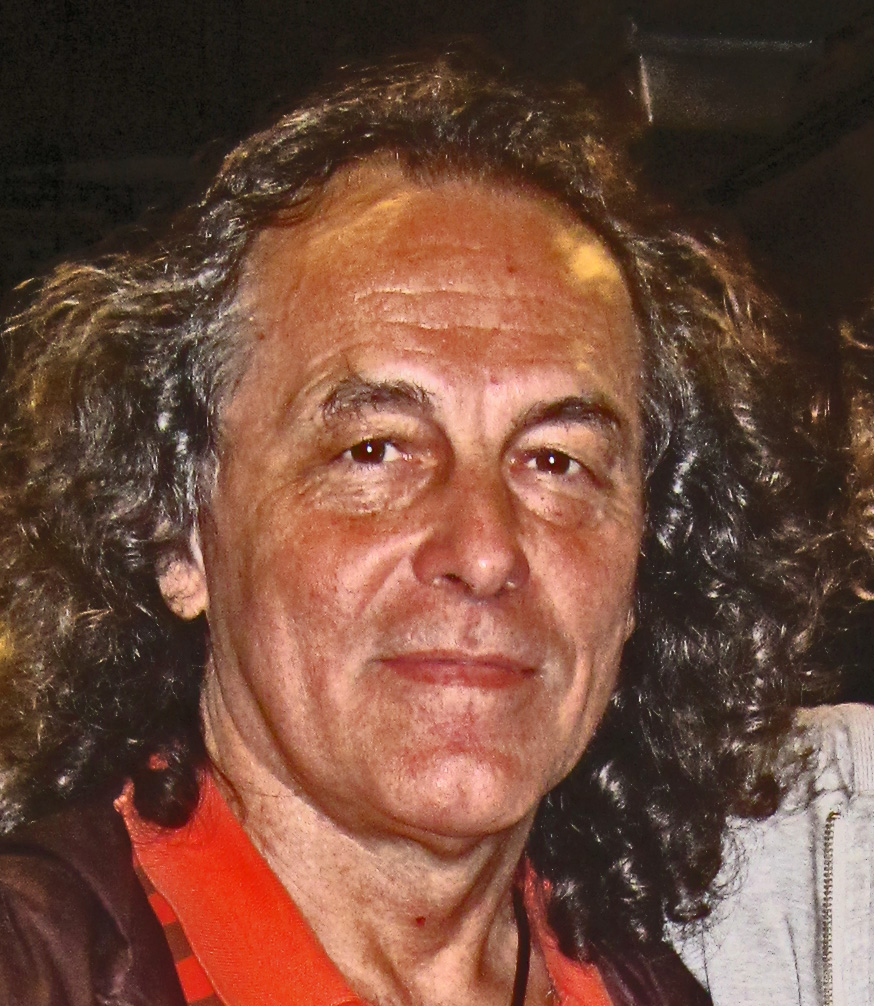
Krishnendu Chatterjee is a Professor at the Institute of Science and Technology Austria (IST Austria) , Department of Computer Science. His research spans formal verification, probabilistic systems, game theory, and evolutionary dynamics, with over 300 peer-reviewed publications in top venues such as DISC, AAAI, LICS, PNAS, Nature , and Journal of the ACM . His research focuses on developing theoretical foundations and practical algorithms for analyzing complex systems, including Markov decision processes, stochastic games, probabilistic programs, and evolutionary models. He has made significant contributions to topics such as reachability analysis, termination of probabilistic programs, synthesis of controllers, and evolutionary game dynamics. Chatterjee's work is highly interdisciplinary, bridging computer science, mathematics, and biology. He has collaborated extensively with leading researchers worldwide and has been involved in editorial roles and program committees for major conferences in formal methods and theoretical computer science.
Hans-Georg Beyer is a Research Professor for Operations Research, Modeling and Simulation at the Vorarlberg University of Applied Sciences in Dornbirn, Austria, where he leads research at the Research Center Business Informatics (formerly Center Process and Product Engineering). He is also a Co-opted Member of the Faculty of Engineering, Computer Science, and Psychology at Ulm University, Germany. Previously, he held positions at the Chair of Systems Analysis at the Department of Computer Science of the University of Dortmund, Germany, including as a Professor of Computer Science. Dr. Beyer's research focuses on Evolutionary Computation, particularly Evolution Strategies and Genetic Algorithms, with significant contributions to theoretical analysis and practical applications. His work spans Computational Intelligence, Natural Computing, and various optimization techniques including noisy and constrained optimization. He has made substantial advancements in Matrix Adaptation Evolution Strategies (MA-ES), developing algorithms that efficiently handle large-scale and constrained optimization problems by learning correlations between decision variables. His recent publications demonstrate a clear trend toward analyzing Evolution Strategies in highly multimodal landscapes, with particular focus on the Rastrigin and Griewank functions as benchmark test cases. Beyer's research has evolved from theoretical foundations to practical implementations, with a strong emphasis on understanding population sizing, self-adaptation mechanisms, and convergence properties in complex optimization scenarios. His work bridges theoretical analysis with practical algorithm design, making significant contributions to the field of evolutionary computation. Editor-in-Chief of Journal Evolutionary Computation (MIT-Press, 2010-2016) Associate Editor of IEEE Transactions on Evolutionary Computation (1997-2021) Member of VDI/VDE GMA Fachausschuss 5.14 Computational Intelligence Member of ACM Special Interest Group for Genetic and Evolutionary Computation Author of the Springer book "The Theory of Evolution Strategies" Beyer has led several significant research projects including the FWF project "Evolutionary Global Optimization in Highly Multimodal Landscapes" (P 33702) and the FWF project "Evolution Strategies for Constrained Optimization." His research group has developed practical implementations of Evolution Strategies, including fast MA-ES with O(N^2) complexity, Meta MA-ES (Bi-Population MA-ES), and Limited Memory MA-ES (LM-MA-ES) for large-scale optimization problems. He regularly contributes tutorials at major conferences including GECCO and WCCI, sharing his expertise on Matrix Adaptation Evolution Strategies with the broader research community.
Arndt von Haeseler is a Full Professor for Bioinformatics at the Center for Molecular Biology and Department for Computer Sciences at the University of Vienna, as well as at the Department for Medical Biochemistry at the Medical University of Vienna. He serves as the Scientific Director of the Center for Integrative Bioinformatics Vienna (CIBIV) and was previously Dean of the Center of Molecular Biology at the University of Vienna and Head of the Center for Medical Biochemistry at the Medical University of Vienna from 2017-2020. His research focuses on phylogenetic inference, phylogenomics, neural networks, sequence evolution, and complex patterns of evolution. With expertise spanning mathematics, biology, and computer science, he has made significant contributions to computational biology through the development of algorithms and software tools for phylogenetic analysis. His work bridges theoretical approaches with biological applications, particularly in evolutionary biology and genomics. Dr. von Haeseler's recent publications demonstrate a strong trend toward integrating machine learning approaches with traditional phylogenetic methods, while expanding into single-cell RNA sequencing analysis and organoid modeling. His research spans computational methodology development, evolutionary analysis, and biomedical applications, with a consistent focus on improving analytical frameworks for biological sequence data. Visiting Professor at Division of theoretical Genetics, National Institute of Genetics, Mishima, Japan (since 2012) WWTF Science Chair Award, Vienna, Austria (2005) Honorary Professor for Theoretical Biology, University of Leipzig, Germany (since 1999) PhD scholarship, Studienstiftung des Deutschen Volkes, Germany (1985-1988) He mentors numerous PhD students and researchers, including Heiko A. Schmidt, Alina Leuchtenberger, and Cassius Manuel. His laboratory develops computational methods that have found widespread application in evolutionary biology and genomics research. The Center for Integrative Bioinformatics Vienna (CIBIV), which he directs, serves as a hub for interdisciplinary research bridging computational approaches with biological questions.
Prof. Manuela Schmidt is a faculty member at the University of Vienna, affiliated with the Faculty of Life Sciences and the Department of Pharmaceutical Sciences. Her research focuses on modern systems biology pain research and biomedical applications, primarily conducted in her laboratory. She supervises Master's theses with limited availability, requiring applications between January 1–31, 2025, and coordinates both experimental and literature-based thesis opportunities. Her work spans bioinformatics, computational biology, and phylogenetics, with significant contributions to maximum likelihood phylogenetic methods and software development (e.g., IQ-TREE). Research trends include evolutionary biology, molecular biology, and applications of machine learning in phylogenetic analysis. Additional interests involve environmental microbiology and developmental genetics. For contact, email manuela_schmidt@univie.ac.at. Her lab is located at UZA II, Josef-Holaubek-Platz 2, A-1090 Vienna, Austria (phone: +43-1-4277-55301).
Janet Thornton is a distinguished academic and scientific leader, currently serving as Director of the European Bioinformatics Institute (EMBL-EBI), part of the European Molecular Biology Laboratory (EMBL). She has held prominent roles including Bernal Chair at Birkbeck College and Professor of Biomolecular Structure at University College London. Her expertise spans molecular biology, structural biology, and bioinformatics, with a focus on protein structure, enzyme function, and computational biology. Her research contributions include pioneering work on catalytic site identification (Catalytic Site Atlas) and functional prediction tools like ProFunc. She has also explored protein promiscuity and aging mechanisms, bridging structural biology with biotechnological applications. Awards: Dame Commander of the Order of the British Empire (2012) Fellow of the Royal Society (1999) Foreign Associate, National Academy of Sciences, USA (2003) Her leadership roles include directing the BBSRC Centre for Structural Biology and the Joint Research School in Biomolecular Sciences. She has advised on national science strategies and contributed to major infrastructure projects in bioinformatics.
Enes Sakalli is a Researcher at the University of Vienna , affiliated with the Department of Structural and Computational Biology . His work focuses on computational approaches in structural biology and proteomics analysis. Education : BSc, MSc Research Interests : Enes specializes in computational biology and glycoproteomics , with a focus on developing informatics solutions for serum glycopeptide analysis and phylogenetic signal detection. His research bridges algorithmic innovation with biological data interpretation. Publication Trends : His recent work emphasizes computational methods for analyzing glycoproteomics data (2021-2022) and phylogenetic signal detection (2025). These publications reflect his ongoing efforts to address complex biological questions through algorithmic development. Contact : enes.sakalli@univie.ac.at
Ariel Rubinstein is a distinguished Professor of Economics at New York University and Tel Aviv University, holding positions since 2004 and 1990 respectively. He previously taught at Princeton University (1991-2004) and the Hebrew University (1981-1990). Rubinstein earned his B.Sc., M.A., M.Sc., and Ph.D. in Economics, Mathematics, and Statistics from The Hebrew University between 1974-1979. His research focuses on Economic Theory , Game Theory , and Models of Bounded Rationality . Notable contributions include foundational work on bargaining theory, game equilibrium dynamics, and the application of finite automata to strategic interactions. Rubinstein's interdisciplinary approach bridges formal economic models with linguistic and experimental analyses, as seen in his books Economic Fables and Economics and Language . Rubinstein has received prestigious awards such as the Rothschild Prize (2010), Nemmers Prize (2004), and Israel Prize (2002). He is a Fellow of multiple institutions, including the American Economic Association and the Econometric Society. His invited lectures span renowned venues like the Walras-Bowley Lecture (1988) and the Churchill Lecture (1996). Rubinstein's academic work emphasizes simplicity and clarity, critiquing overly complex models in economics. He advocates for concise, impactful research and has pioneered methods to study decision-making under bounded rationality.
Günther Raidl is an Associate Professor and Head of the Algorithms and Data Structures Group at the Institute of Computer Graphics and Algorithms, Faculty of Informatics, TU Wien. He holds a Dipl.-Ing. (1992), Ph.D. (1994), and Habilitation (2003) from TU Wien. His research focuses on combinatorial optimization, heuristic methods, and hybrid optimization techniques, addressing large-scale problems in transportation, network design, and cutting/packing. He leads a group of 1 PostDoc, 8 PhD candidates, and collaborates with institutions like the Vienna Graduate School on Computational Optimization (VGSCO). Education: Dipl.-Ing. in Computer Science (1992), TU Wien Ph.D. in Computer Science (1994), TU Wien Habilitation (2003), TU Wien Research Interests: Raidl’s work combines exact and heuristic optimization techniques, including mixed-integer programming, metaheuristics, and matheuristics. Applications span transportation systems (e.g., electric vehicle routing, bike-sharing systems), network design, and bioinformatics. His group leverages high-performance computing resources, such as the Vienna Scientific Cluster (VSC). Publications & Awards: Over 115 reviewed articles in journals/conferences like INFORMS Journal on Computing and Evolutionary Computation. Notable recognition includes the EvoStar 'Old Croc' Award (2012) for contributions to evolutionary computation. Advising & Grants: Supervises 8 funded PhD students and contributes to the Vienna Graduate School’s DK funding (€20,000/year for personnel and travel). Labs/Teams: Algorithms and Data Structures Group at TU Wien, collaborating with researchers like Monika Henzinger and Nysret Musliu.
Arcadi Navarro is a Full Professor of Genetics at Universitat Pompeu Fabra (UPF) , Spain, and an ICREA Research Professor (currently on leave). He leads the Evolutionary Genomics group within the Evolutionary Biology Unit of UPF's Department of Experimental and Health Sciences, and previously directed the department (2013-2015) and the Population Genomics Node of the Spanish National Institute for Bioinformatics (INB). Education : PhD in Biology from Universitat Autònoma de Barcelona (completed after postdoctoral work at University of Edinburgh) Research Focus : Combines genome evolution, computational genomics, and evolutionary medicine to study human genome diversity and complex trait architecture Recent Work Trends : His 2010-2017 publications span evolutionary medicine applications in GWAS analysis, ancient DNA studies, EBV genomics, and structural variation in great apes. Articles highlight interdisciplinary approaches integrating machine learning and bioinformatics with evolutionary theory. Awards : Currently serves as Secretary of State for Universities and Research of the Ministry of Business and Knowledge in Catalonia Leadership : Coordinates the Barcelona Knowledge Hub and European Genome-phenome Archive (EGA) collaboration with EBI. Mentors postdoctoral and doctoral researchers while maintaining teaching responsibilities.
Matjaž Perc is a Full Professor of Physics at the University of Maribor and holds leadership roles including Vice Dean of Natural Sciences at the European Academy of Sciences and Arts. His research focuses on complex systems, nonlinear dynamics, and socio-physical phenomena. He has been recognized with prestigious awards such as the Young Scientist Award for Socio- and Econophysics (2015) and the Zois Award (2018), Slovenia's highest national research honor. Perc is also a Fellow of the American Physical Society and among the world's top 1% most cited physicists. Research Interests : Phase transitions in social systems, evolutionary game theory, complex networks, stochastic processes, and self-organization mechanisms. Awards : Extensive list includes recognition for refereeing excellence, societal memberships (APS, EPS), and national accolades. Publications : Over 300 articles in top journals like Physical Review E , Chaos , and Scientific Reports , focusing on interdisciplinary applications of physics to social, biomedical, and environmental challenges. His work bridges physics, computer science, and social sciences, addressing global issues through mathematical modeling and network analysis.
James Yorke is a Distinguished University Research Professor at the University of Maryland College Park, affiliated with the Department of Mathematics and the Institute for Physical Science and Technology (IPST). His academic career spans over five decades, during which he co-founded Chaos Theory and made seminal contributions to nonlinear dynamics and complex systems. Education: Ph.D. from the University of Maryland in 1969. Leadership: Director of IPST (1985–2001), Chair of the Mathematics Department (2007–2013). Yorke’s research focuses on Chaos Theory, nonlinear dynamics, fractal structures, and genome assembly. His work has profoundly impacted mathematics, physics, and computational biology. His publications include foundational papers on chaos control, embedding theory, and genomic data assimilation, with high citations in both pure and applied sciences. Notable scientific awards include the 2003 Japan Prize (shared with Benoit Mandelbrot), SIAM’s Jurgen Moser Award (2011), and Fellowships from the American Mathematical Society and SIAM. He has supervised 50 Ph.D. students and collaborated extensively with European researchers.
Pedro Larrañaga is a Full Professor in Computer Science and Artificial Intelligence at the Technical University of Madrid (UPM) since 2007. He co-leads the Computational Intelligence Group at UPM. Previously, he held academic positions at the University of the Basque Country, including Professor, Associate Professor, Assistant Professor, and Lecturer roles in the Department of Computer Science and Artificial Intelligence from 1985–2007. Academic Rank: Professor Departments: Department of Artificial Intelligence (UPM), Department of Computer Science and Artificial Intelligence (University of the Basque Country) His research focuses on machine learning with applications in biomedical domains, neuroscience, industry, and sports analytics. Key contributions include structure learning algorithms for Bayesian networks, probabilistic graphical models for multi-dimensional classification, feature subset selection methods, and the development of estimation of distribution algorithms as an evolutionary computation metaheuristic. Research trends span machine learning methodologies and their interdisciplinary applications in Biomedicine, Bioinformatics, Neuroscience, Industry4.0, Sport Analytics , and Multi-label classification . Scientific Awards: National Prize of the Spanish Association for Artificial Intelligence (2018) Spanish National Prize in Computer Science, Aritmel Award (2013) ECAI-Fellow (2012)
Mihaela Zavolan is a Full Professor at the Biozentrum, University of Basel, Switzerland, where she has held continuous faculty appointments since 2003 (Assistant Professor 2003-2008, Associate Professor 2008-2014, Full Professor 2014-present). She simultaneously serves as a Group Leader at the Swiss Institute of Bioinformatics since 2004, directing research on RNA regulatory networks. Her educational background includes: PhD in Computer Science, University of New Mexico (1996-1999) M.Sc. in Computer Science, University of New Mexico (1994-1996) M.D., University of Medicine and Pharmacy, Timisoara, Romania (1986-1992) Dr. Zavolan's research centers on computational RNA biology , with pioneering work in microRNA mechanisms, RNA splicing, RNA-binding proteins, and pre-mRNA 3' end processing. Her group integrates advanced computational modeling with high-throughput experimental data to dissect post-transcriptional gene regulation networks. Key methodological contributions include quantitative analysis of CLIP techniques and biophysical models of miRNA-mRNA interactions. Analysis of her publication record reveals consistent focus on developing and applying computational frameworks for RNA regulatory networks, with increasing emphasis on genome-wide mapping of RNA-protein interactions and quantitative modeling of regulatory dynamics. Her work bridges molecular biology, genomics, and systems biology through innovative algorithm development. Her major scientific awards include: ERC Starting Grant (2012) Young Investigator of EURASNET (2006-2009) Lita Annenberg Hazen Presidential Fellowship, The Rockefeller University (2001-2003) Presidential Fellowship, The Rockefeller University (2001) Burroughs Wellcome Fellow, The Rockefeller University (2000) Dr. Zavolan has secured competitive research funding including the ERC Starting Grant and maintains active grant support through her group leadership positions. She serves on editorial boards of Genome Biology, Bioinformatics, BMC Molecular Biology, and Cells, and has organized major conferences including the European Conference on Computational Biology (2012) and Computational RNA Biology Conference (2014). She leads parallel research groups at the Biozentrum (Computational and Systems Biology) and Swiss Institute of Bioinformatics (RNA regulatory networks), employing interdisciplinary teams that combine computational biology, molecular biology, and high-throughput data analysis to investigate RNA-mediated gene regulation mechanisms.
Viktoria Dorfer is a Professor at the University of Applied Sciences Hagenberg, affiliated with the Bioinformatics Center of Excellence and Medical Engineering/TIMed Center HEAL. She holds an ORCID iD (0000-0002-5332-5701) and has published 66 research outputs with an h-index of 9 and 676 citations. 2007–2012: Doctoral research on algorithmic approaches 2013–2016: FWF Translational Research on MS Amanda 2020–2022: PI for b-tastic project Research Interests: Spanning bioinformatics, mass spectrometry, and medical engineering, her work focuses on: Algorithm development for peptide identification Evolutionary algorithms in data analysis Mass spectrometry software platforms (AMANDA, Annika) Cross-linked peptide analysis Precision agriculture applications Medical device optimization 2024 Trends: Recent contributions include symbolic regression in livestock farming, enhanced rescoring platforms, and structural analysis of the C. elegans Box C/D complex. Awards: EuPA Bioinformatics Mass Spectrometry Award (2020) Leadership: Organized Austrian Proteomic Research Symposia (2017), served as reviewer/peer-reviewer for journals, and led interdisciplinary collaborations.
Hardy Hanappi is a retired University Professor (Emeritus) at the Institute of Economics at the University of Technology, Vienna (TU Wien). He holds a Dr. (PhD) and Habilitation in Political Economy. His roles include former Head of the Institute of Economics, member of the Senate of TU Wien, and coordinator of research areas like 'Value and Needs' and 'Global Economic Policy' at EAEPE. Hanappi is a Jean Monnet Chair holder for the Political Economy of European Integration. Research & Education : Hanappi's work focuses on evolutionary economics, political economy, macroeconomic modeling, and institutional dynamics. He has conducted pioneering research on long-wave economic theories, simulation models (e.g., AUSTRIA 3), and the evolution of capital and institutions. His PhD (1987) and Habilitation (1994) centered on capitalist development stages and evolutionary economics. Key Contributions : Pioneered agent-based modeling in political economy, developed frameworks for evolutionary macroeconomic simulation, and explored systemic risks in financial markets. Authored over 200 publications, including books on evolutionary political economy and European integration. Active in research networks like COST Action IS0902 on systemic financial risks. Grants & Projects : Led major projects funded by the Austrian National Bank (Jubiläumsfonds), EU programs (e.g., EUROMOD), and others. Notable projects include modeling the Eurozone future, banking sector stability, and the evolution of institutions. Affiliations : Member of global associations like the European Economic Association, Society for the Advancement of Socioeconomics (SASE), and Game Theory Society. Former President of the Austrian Chapter of SASE and coordinator of international research networks.