Dr. Andrea Censi is a Lecturer at the Department of Mechanical and Process Engineering, ETH Zurich. His research focuses on robotics, autonomous driving, and control systems with interdisciplinary applications in game theory and urban mobility. Key projects include karma economies for resource allocation and co-design frameworks for embodied intelligence. Research interests span: Autonomous motion planning and decision making Trustworthy AI for socio-technical systems Karma-based congestion management Co-design of robotic control systems Event-based vision and neuromorphic sensing Formal methods for autonomous vehicle safety Selected research trends from publications include: karma economies for fair resource allocation (2024-2025), co-design of perception and decision-making systems (2025), dynamic population games (2024), and safety margin analysis for autonomous vehicles (2023). He teaches 151-0323-00L Hands-on Self-Driving Cars with Duckietown , an accessible education platform for autonomy research.
Davide Scaramuzza is a Professor of Robotics and Perception at the University of Zurich. He holds a PhD from ETH Zurich, completed postdoctoral research at the University of Pennsylvania, and served as a visiting professor at Stanford University. His research specializes in autonomous microdrone navigation using standard and event-based cameras. Key innovations include pioneering vision-based drone navigation (used in NASA's Mars helicopter), visual-inertial state estimation, and low-latency perception systems transferred to drones, automotive systems, AR/VR headsets, and mobile devices. In 2022, his team demonstrated an AI-controlled drone surpassing human world champions in racing, published in Nature . Scientific Awards: European Research Council Consolidator Grant IEEE Robotics and Automation Society Early Career Award Google Research Award Two NASA TechBrief Awards He co-founded Zurich-Eye (now Meta Zurich), developer of Meta Quest VR headsets, and SUIND for agricultural drones. Serves as UN consultant for disaster response/disarmament. Research featured in The New York Times , The Economist , and Forbes .
Mattias Ohlsson is a Visiting Professor at the School of Information Technology , Halmstad University . His research focuses on machine learning and deep learning for analyzing diverse health data, particularly patient trajectory modeling with multimodal approaches. Primary affiliation: IT - Computer Department Collaboration areas: Healthcare sector and industry His work emphasizes explainable AI in clinical contexts, including survival analysis, cardiac event prediction, and cross-domain applications in satellite poverty mapping. Recent projects explore temporal healthcare data analysis using transformer architectures and self-supervised learning . Key article trends include: 2025: AI integration with medical expertise for emergency diagnostics 2024: Survival model evaluation, temporal data challenges, and graft failure prediction 2023: Multi-robot routing optimization and fatty liver disease etiology modeling 2022: Heart failure mortality algorithms and anomaly detection systems Current affiliations include the CAISR Health research group, with technical expertise spanning CNNs, transformers, and robust imputation methods.
Hannah Marchi is a researcher at the Department of Empirical Methods within the Faculty of Economics at the University of Bielefeld . Contact: hannah.busen@helmholtz-muenchen.de . Research Interests: Data science applications in economics and medicine Scientific collaboration network analysis Clinical decision support systems Proteomics and respiratory disease MRI-based disease scoring systems Publication Trends: Her work bridges data science with medical research , focusing on antibiotic stewardship , lung disease modeling , and interdisciplinary collaboration using statistical and machine learning approaches. Key Collaborations: Active in hematology (MPN studies), neonatology (UNSEAL BPD scoring), and rheumatology (referral optimization).
Dr. Piyush Mehta is an Associate Professor in the Department of Mechanical, Materials and Aerospace Engineering at West Virginia University's Benjamin M. Statler College of Engineering and Mineral Resources. He also serves as an Adjunct Assistant Professor in the Lane Department of Computer Science and Electrical Engineering. As the director of the Astrodynamics, Space Science and Space Technology (ASSIST) Laboratory, founded in 2018, and the Center for Innovation in Space Exploration and Research (CISER), Dr. Mehta leads groundbreaking research at the intersection of astrodynamics, space weather, data science, and space safety and sustainability. Dr. Mehta received his B.S. in Aerospace Engineering from the University of Kansas in 2009, followed by his Ph.D. in Aerospace Engineering from the same institution in 2013. His academic journey has positioned him as a leading researcher in space systems engineering and space weather applications. Dr. Mehta's research focuses on several critical areas in space science and engineering. His primary interests include Space Situational Awareness (SSA), Space Traffic Management (STM), and Space Weather modeling with uncertainty quantification. At the ASSIST Lab, his team develops advanced algorithms for precise orbit determination, collision avoidance, and satellite operations. A significant portion of his work involves probabilistic modeling of thermosphere density and satellite drag coefficients, which has direct applications for improving satellite mission operations and space traffic management. His research also extends to neural network applications for space weather forecasting, solar image compression, and flight dynamics uncertainty quantification. The trends in Dr. Mehta's recent publications demonstrate a strong emphasis on integrating machine learning techniques with traditional physics-based space weather models. His work frequently addresses the challenge of uncertainty quantification in space environment modeling, particularly for thermosphere density and satellite drag coefficient prediction. There is a clear progression toward more sophisticated probabilistic frameworks that combine physics-informed neural networks with traditional modeling approaches. His research group has made significant contributions to space weather forecasting, solar image processing, and space object tracking, with applications spanning from satellite operations to aviation safety during space weather events. Dr. Mehta has received numerous prestigious awards recognizing his contributions to aerospace engineering and space weather research: Elected to the class of 2025 AIAA Associate Fellows 2022-23 Statler College Outstanding Researcher Junior Level Award Wayne and Kathy Richards Fellowship (2021) NSF CAREER award (2021) As an advisor, Dr. Mehta mentors a diverse team of graduate students across aerospace and electrical engineering disciplines. His current advisees include multiple Ph.D. candidates working on projects related to space situational awareness, machine learning applications in space weather, and computer vision for solar imagery analysis. Dr. Mehta has successfully secured funding from major agencies including NSF, NASA, NOAA, Department of Navy (DoD), Department of Energy, and IARPA. His research group, the ASSIST Lab, is closely affiliated with the Center for KINETIC Plasma Physics, creating a robust interdisciplinary research environment focused on space safety and sustainability. The ASSIST Lab, founded by Dr. Mehta in 2018, has developed into a significant research center with multiple sponsored projects. The lab maintains strong connections with government agencies including NASA, NOAA, and the Department of Defense, focusing on real-world applications of space science. Dr. Mehta serves on the NASA Space Weather Council and the Space Weather Advisory Group (SWAG), a Federal Advisory Committee for the White House Space Weather Operations, Research and Mitigation subcommittee, demonstrating the national impact of his work. The lab has developed several publicly available tools, including high-fidelity drag coefficient response surface models that have been approved for public release by LANL.
Andrew Fagan is a Lecturer in the Department of Computer and Information Sciences at the University of Strathclyde, working within the Faculty of Science. He is also affiliated with the Advanced Nuclear Research Centre in the department of Electronic and Electrical Engineering. Education: MEng in Computer and Electronic Systems (University of Strathclyde, 2019 with distinction) Research Interests: Design of safe, explainable artificial intelligence systems Human-in-the-loop AI for industrial applications Digitisation of engineering drawings for legacy equipment access Quantum computing optimisation techniques Computer science education innovations Recent Publications Trends: His 2025 papers focus on generative AI applications for programming education, while earlier works address engineering digitization and quantum circuit optimization. Key themes include AI explainability, human-machine collaboration, and educational technology solutions. Professional Activities: Speaker at the Double Acts for Demystifying Subroutine Calling Conventions event (2025) Contributor to the Accelerate Schools Programme Computer Science Challenge (2025) Organiser of the 8th Conference on Computing Education Practice (2024) Labs & Teams: Works closely with the Advanced Nuclear Research Centre and has cross-departmental collaboration with Electronic and Electrical Engineering. Participates in the RoVER VIP (Vertically Integrated Projects) team during his MEng studies.
Mary Ann Lundteigen is a Professor in instrumentation systems and safety at the Department of Technical Cybernetics, Faculty of Information Technology and Electrical Engineering, Norwegian University of Science and Technology (NTNU). Her research focuses on cybersecurity in industrial systems, Industry 4.0, reliability data analysis, instrumented safety systems, and the application of artificial intelligence in security systems, with emphasis on security and risk analysis. Current Role: Professor at NTNU Research Themes: Cybersecurity, AI in safety systems, Risk analysis Collaborations: SINTEF, IEEE, IARIA, ACM Her work integrates safety engineering with modern technologies like digital twins, OPC UA information models, and machine learning for anomaly detection. She emphasizes lifecycle approaches to safety systems and standardized failure reporting. Recent publications address AI implementation in safety-critical environments, cybersecurity for unmanned facilities, subsea pipeline monitoring, and security zones in industrial automation. Her research spans both theoretical frameworks and practical case studies. She supervises numerous Master’s and Ph.D. students on topics ranging from hybrid marine energy systems to cyber-physical safety analysis. Her team collaborates with industry partners on projects related to functional safety and IT-OT integration. Key projects include the ICT security and independence report, Asset Administration Shell implementation, and OPC UA for safety systems research. She also contributes to guidelines for safety equipment follow-up and standardized failure classification in the petroleum sector.
Charlotte Frenkel is a Tenure-Track Assistant Professor in the Microelectronics Department at Delft University of Technology (TU Delft), where she leads research in neuromorphic engineering and low-power AI hardware. Her work bridges the gap between biological intelligence and artificial neural networks, focusing on energy-efficient computing at the edge. Dr. Frenkel's research spans digital and mixed-signal IC design, computer architecture, learning algorithms, and neuroscience. She directs the Cognitive Sensor Nodes and Systems (CogSys) lab, which develops neuromorphic processors like ODIN, MorphIC, SPOON, and ReckOn that demonstrate competitive advantages over conventional neural network accelerators. Her publications reveal a strong focus on spiking neural networks, event-based processing, and on-chip learning. Key trends include developing hardware that leverages sparsity for energy efficiency, creating bio-inspired learning algorithms that solve weight transport and update locking problems, and establishing frameworks for benchmarking neuromorphic systems through initiatives like NeuroBench. Scientific Awards: IBM Innovation Award 2021 Nokia Bell Labs Scientific Award 2021 IEEE ISCAS 2020 Best Paper Award NEUROTECH/NICE Best Early Researcher Presentation 2021 AiNed Fellowship Grant Dr. Frenkel is actively expanding her research group through PhD and postdoc positions. She serves as Associate Editor for IEEE Transactions on Biomedical Circuits and Systems and Frontiers in Neuroscience, and has held numerous leadership roles in conference organization including Program Chair for tinyML Research Symposium 2024 and Neuro-Inspired Computational Elements conference 2023-2024. Her service includes extensive reviewing activities for top IEEE journals and conferences in her field.
Volker Tresp is a Professor at the Ludwig-Maximilians-Universität München (LMU) and a leading researcher in machine learning for relational structured domains . His work bridges cognitive AI , knowledge graphs , and quantum computing . He is a PI in the Munich Center for Machine Learning (MCML) and co-director of the ELLIS program on Semantic, Symbolic, and Interpretable Machine Learning . His research interests focus on temporal knowledge graphs , foundation models , multimodal learning , and quantum machine learning . Recent projects include WebPilot (multi-agent web task execution) and FedBiP (federated learning with diffusion models). His work on PyKEEN and RESCAL has advanced knowledge graph embeddings . Volker Tresp's scientific contributions are recognized through ELLIS Fellowship (2020) , Siemens Inventor of the Year (1996) , and Best Paper Awards at ISWC 2021 and IEEE ICHI 2020 . His students have published extensively at top AI venues like AAAI , CVPR , and ECCV . Awards and Honors: ELLIS Fellow (2020) Siemens Inventor of the Year (1996) Best Paper Award, ISWC 2021 Student Best Paper Award, ISWC 2017 Best Paper Runner-up, PKDD 2005
Katarina Karić is an Assistant Professor at the Department of Information Technologies, Faculty of Technical Sciences Čačak, University of Kragujevac. She holds a Master of Science in Information Technology and is currently pursuing her PhD in Information Technologies. Her academic roles include teaching Databases Database Practicum Database Programming Introduction to Programming courses. Her research focuses on data mining , machine learning , information systems , and educational technology , with applications in healthcare, tourism, and academic performance prediction. She has published extensively in international conference proceedings and served on organizing committees for events like TIE2022 and TIE2024. Key scientific contributions include Automated kidney stone detection via YOLO algorithm Entrepreneurial education analysis in Serbia ML models for hotel reservation cancellation prediction Comparative standards analysis for IoT and AI Database pedagogy tools like CATAPEX She was awarded the Vuk Karadžić Diploma for academic excellence and holds certifications in Oracle technologies, European Horizon Project writing, and EDIT summer school. Her work spans collaborations with institutions in Bulgaria, Montenegro, and Serbia.
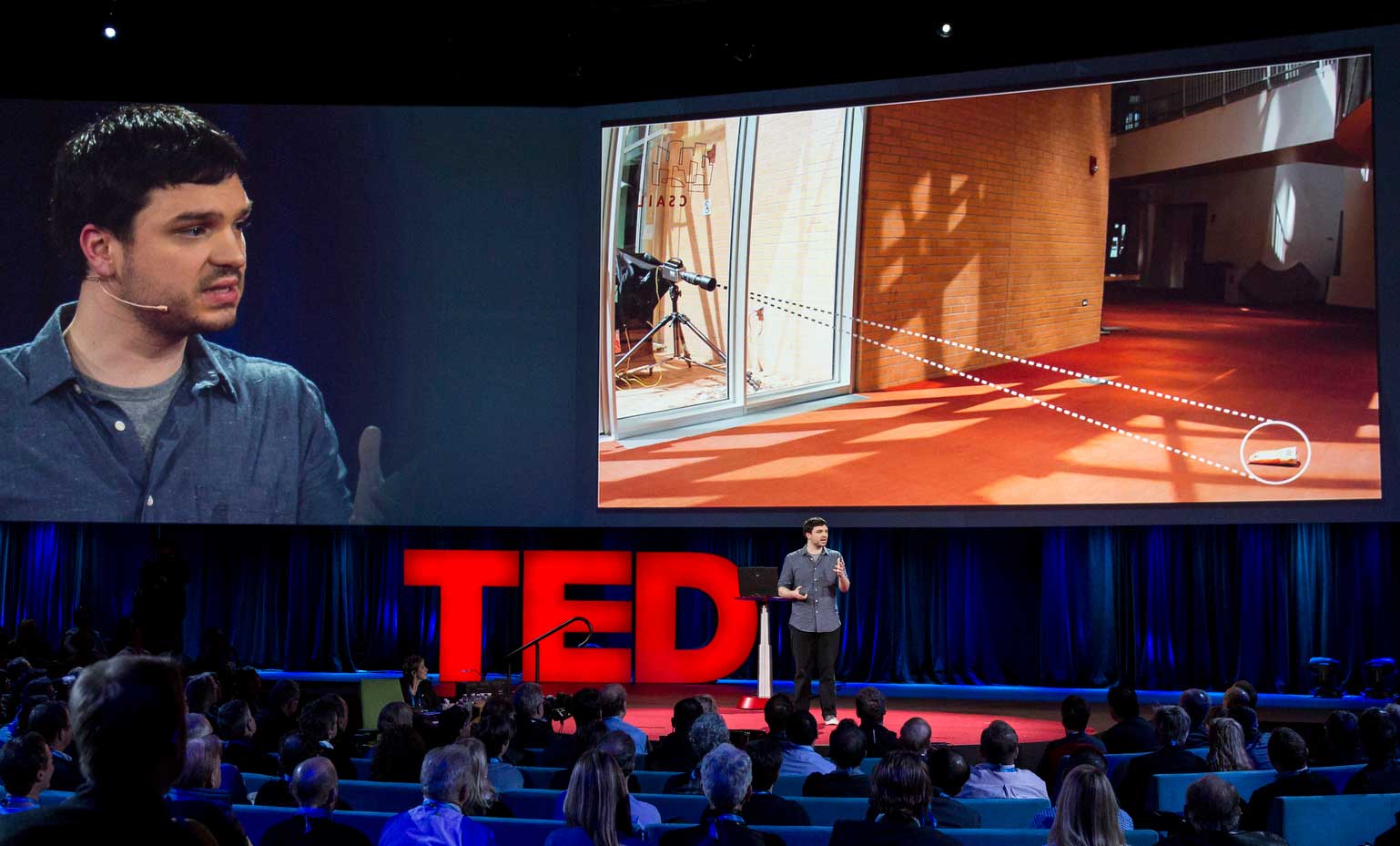
Abe Davis is an Assistant Professor of Computer Science at Cornell University in Ithaca, NY, with a research focus at the intersection of Computer Graphics , Computer Vision , and Human-Computer Interaction (HCI) . He leads a research group that develops innovative computational methods for video analysis, augmented reality (AR), and visual editing. Davis previously held postdoctoral positions at Stanford University and Cornell Tech , following his Ph.D. in Electrical Engineering and Computer Science from MIT (2016) and undergraduate degree in Computer Science at Stanford. Education Ph.D. in Electrical Engineering and Computer Science, MIT M.A. in Electrical Engineering and Computer Science, MIT B.S. in Computer Science, Stanford University Davis' research addresses novel problems in computational video editing, AR applications, and structural health monitoring. His group has made significant contributions to visual vibration analysis , light field reconstruction , and video-based sound recovery . Recent work includes Noise-Coded Illumination for fake video detection and MeCapture for mobile AR body change visualization. His publications span top-tier conferences like SIGGRAPH, CVPR, and CHI. Scientific recognition includes being named to Forbes 30 Under 30 (Science, 2015), 5 TED 2015 Technologists , and recognition as one of The 8 most innovative scientists in tech and engineering (2015). His TED 2015 talk on visual vibration analysis gained international attention. The group's work has been featured in Ars Technica , Engadget , and Cornell Chronicle .
Professor Rob Gaizauskas is a faculty member at the University of Sheffield , serving as Co-Director of the UKRI Centre for Doctoral Training in Speech and Language Technologies and leading the Natural Language Processing (NLP) research group . His academic journey began with a DPhil in Cognitive and Computing Sciences from the University of Sussex (1992), preceded by degrees in Philosophy from Carleton University and a Diploma in Information Processing. Education : DPhil (University of Sussex, 1992), MA (Carleton University, 1978), BA (Carleton University, 1975) His research focuses on NLP , particularly information extraction from texts, temporal/spatial information processing , automatic image description , argument mining , and evaluation of NLP systems . He has pioneered work in multi-document summarization , dialogue analysis , and comparable corpora for machine translation. Notable grants include: UKRI Centre for Doctoral Training in Speech and Language Technologies (2019–2027, £5.5M) VisualSense (2013–2016, £310k) SENSEI Project (2013–2016, £459k) ACCURAT (2010–2012, £268k) Scientific contributions : Co-developer of the GATE framework for text engineering Led biomedical NLP projects like BioWSD and PASTA Pioneering work in temporal relation identification (TempEval)
Alessandro Ortis is a Fixed-term Assistant Professor (RTDb) in Computer Vision at the Department of Mathematics and Computer Science, University of Catania . He teaches Programmazione 2 (Computer Science BD) and Statistical Laboratory (Data Science MD). As director of the IPLAB Biometric Research Group (BioRG) , he leads work in Computer Vision , Deepfake Detection , and Biometric Security with applications in Forensic Analysis and Medical Imaging . He is an IEEE Senior Member and active participant in international scientific events as organizer and reviewer. Education: PhD in Mathematics and Computer Science (2019, University of Catania; Imperial College London collaboration), MSc in Computer Science (summa cum laude, 2015) His research focuses on adversarially robust models , multimodal analysis , and physiological signal processing . Current projects include SIAM (Multimodal AI) and SAFE-IA (AI Reliability & Robustness). He has authored/co-authored over 20 journal papers and 40 conference proceedings, including a Best Poster Award at IMPROVE 2021. Key Research Areas: Computer Vision Biometric Security Adversarial Machine Learning Medical Imaging Analysis Forensic Vision He holds editorial/reviewer roles at IEEE Access , Journal of Imaging , and Springer LNCS . The BioRG team under his leadership explores explainable AI , edge computing frameworks , and privacy-preserving learning for biometric applications.
Guangyao Chen is an Assistant Professor in the Department of Computer Science within Cornell University's College of Engineering, where he leads research at the intersection of computer vision, machine learning, and artificial intelligence. His work focuses on advancing open-world visual understanding systems capable of handling unknown classes and real-world complexity. His primary research interests include: Computer Vision and Open-Set Recognition Few-Shot Learning and Cross-Domain Adaptation LLM-Visual Integration and Symbolic Reasoning Neuromorphic Computing and Spiking Neural Networks Multi-Modal Learning and Real-Time Systems Analysis of his 2021-2025 publications reveals a strategic evolution toward solving open-world perception challenges. His recent work demonstrates how large language models can unlock complex event understanding from object detectors, while his G-OSR benchmark establishes new standards for graph-based open-set recognition. Notable contributions include real-time multimodal anomaly detection frameworks, retina-inspired saliency models, and Autoagents for automatic agent generation - all addressing critical gaps in deploying AI systems in dynamic, uncontrolled environments. Though specific awards and advising details aren't documented in available sources, his prolific publication output (including 9 papers in 2025) indicates an active research program with significant community impact. His work bridges theoretical advances in representation learning with practical applications in robotics, medical imaging, and industrial systems where handling unknown classes is critical.
Luis Miguel Hernández Acosta serves as an Associate Professor in the Department of Telematics Engineering at the University of Las Palmas de Gran Canaria (ULPGC), affiliated with both the GIR IUMA: Information and Communications Systems research group and the IU of Applied Microelectronics. His academic work spans software engineering and telematics systems within the School of Engineering. His research interests focus on Software Engineering , Mobile Computing , and Computer Vision , with significant contributions to practical applications including web/mobile platforms for service management, computer vision for medical diagnostics, and communication systems. Current projects demonstrate strong industry alignment in restaurant management, transportation optimization, and telemedicine solutions. Analysis of recent publications reveals consistent expertise in full-stack development, real-time systems, and cross-platform frameworks, with increasing integration of machine learning techniques since 2022. Key thematic trends include Practical implementation of publish/subscribe architectures for real-time notifications Computer vision applications in medical diagnostics Optimization algorithms for transportation and service platforms Advising Activities: Supervised 28 bachelor/master theses (2021-2025) Specializes in guiding telecommunications and computer engineering students Projects span mobile development (65%), web platforms (25%), and AI applications (10%) Research Infrastructure: Works within the Department of Telematics Engineering's ecosystem, leveraging resources from both GIR IUMA and the Applied Microelectronics Institute for hardware-software integration projects.